
Written by: Ali-Reza Adl-Tabatabai, Founder and CEO, Gitar
Key Takeaways
-
Vibe coding lets beginners build apps by describing ideas in plain English, with AI generating the code, so no programming knowledge is required.
-
AI researcher Andrej Karpathy coined the term in 2025 to describe focusing on high-level goals while AI handles technical implementation, and by 2026, 92% of US developers use AI coding tools daily.
-
Beginner-friendly tools include Cursor for autocomplete, Replit for easy setup, and ChatGPT for conversational help, and you can start with simple projects like to-do apps.
-
Follow five steps: pick a tool, describe clearly, generate code, test, and refine via chat to avoid mistakes like vague prompts or skipping validation.
-
Scale prototypes to production with Gitar’s auto-fixing of CI failures and review feedback so your team ships reliable, high-quality software.
Vibe Coding Basics for Complete Beginners
Merriam-Webster defines vibe coding as writing computer code in a somewhat careless fashion, with AI assistance, where you tell an AI program what you want and let it generate the product without needing to understand how the code works. AI researcher Andrej Karpathy coined the term in early 2025 to describe focusing on high-level goals while AI handles code implementation.
This approach makes app building accessible to people with limited programming experience by shifting from writing code line by line to guiding an AI assistant conversationally. This accessibility has driven rapid adoption: by 2026, 92% of US developers use AI coding tools daily, and developers estimate that around 42% of committed code is AI-assisted.
Why Developers Call It “Vibe Coding”
The term comes from Andrej Karpathy’s February 2025 post describing a new approach where you “fully give in to the vibes, embrace exponentials, and forget that the code even exists”. It feels like trusting an AI to create your perfect playlist: you communicate the vibe you want, and the technology handles the technical details.
Now that you understand what vibe coding means and where the term started, you can look at the tools that make this workflow practical for beginners.
Top Vibe Coding Tools for Beginners (2026 Edition)
When you evaluate vibe coding tools, focus on ease of use, learning curve, and available features on free plans. The table below compares four beginner-friendly options and highlights which tool supports different parts of the learning experience.
|
Tool |
Best For Beginners |
Free Tier Limitations |
|---|---|---|
|
Cursor |
Smart autocomplete, familiar VS Code interface |
Limited AI requests monthly |
|
ChatGPT |
Conversational coding help, explanations |
Usage limits |
|
Replit |
All-in-one platform, no local setup needed |
Basic projects only, limited compute |
|
Base44 |
No-code approach, visual interface |
25 monthly credits |
Base44, Manus, and Lovable offer user-friendly experiences for beginners with guided interfaces that require minimal technical knowledge. Test each tool by building a simple to-do app so you can see which interface feels most natural.
Five Steps To Start Vibe Coding Confidently
-
🛠️ Pick your tool – Choose Cursor, Replit, or ChatGPT based on your comfort level and preferred interface.
-
📝 Describe clearly – Write specific prompts such as “Create a to-do app with add, delete, and mark complete features.”
-
⚡ Generate code – Let the AI create your application from your description.
-
🧪 Test and run – Check whether your app behaves as expected for real user actions.
-
🔄 Refine through chat – Ask the AI to fix bugs, improve performance, or add features based on your tests.
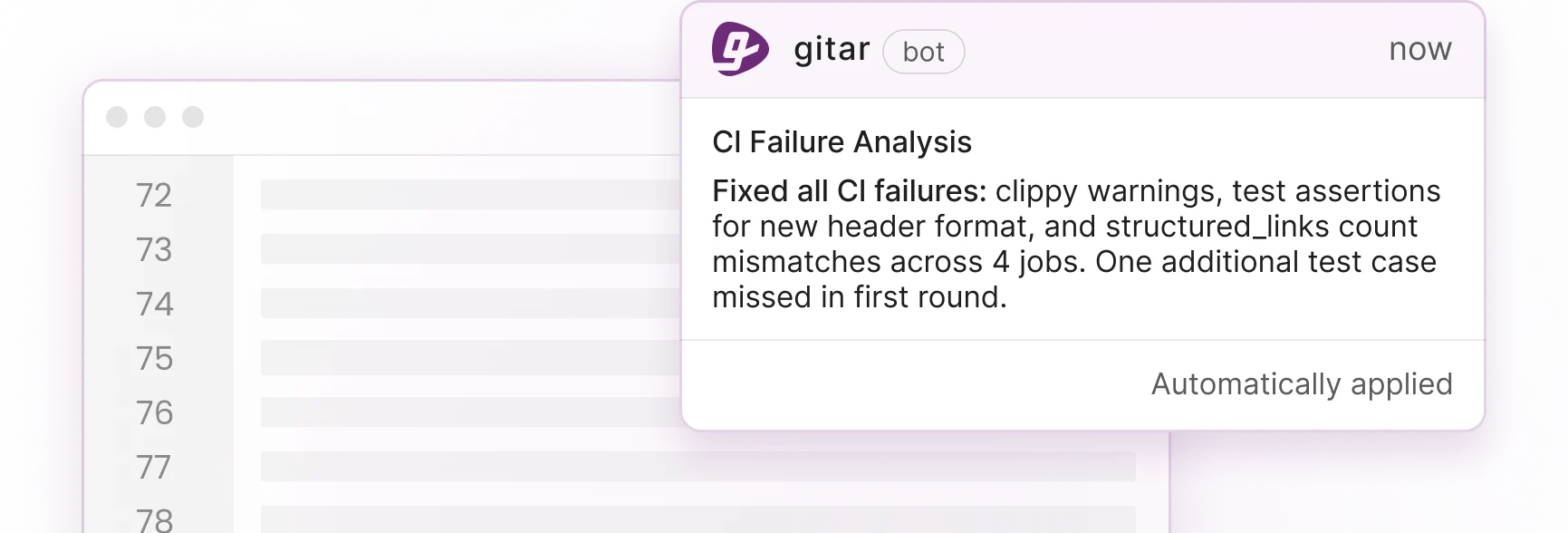
Once you have a working prototype, Gitar can help you keep code quality high as your project grows and your CI pipeline becomes more complex.
Vibe Coding Example: Build a To-Do App in 10 Minutes
This example walks through a simple to-do app using Cursor so you can see each step in action.
Step 1: Open Cursor and create a new project.
Step 2: Type this prompt: “Create a simple to-do web app with the ability to add tasks, delete tasks, and mark them as complete. Use HTML, CSS, and JavaScript.”
Step 3: Watch as Cursor generates the complete code structure.
Step 4: Click the preview button to see your app running.
Step 5: Test adding, completing, and deleting tasks.
Step 6: Refine by asking: “Make the completed tasks show with strikethrough text.”
Step 7: Add styling with a prompt such as: “Make it look modern with a clean, minimal design.”
🎉 You just built your first app without writing a single line of code yourself.
Common Vibe Coding Mistakes and How To Avoid Them
Vibe coding beginners often try to build entire multi-page websites at once, which results in cluttered designs and broken layouts. Start small and focus on one section at a time so you can keep the project manageable.
Other common pitfalls include:
-
Vague prompts – Instead of “make it better,” specify “add a dark mode toggle button.”
-
Ignoring errors – Always test your app and fix issues before you add new features.
-
No testing – Check your app on different screen sizes and browsers.
-
Overcomplicating – Keep designs simple with two or three colors and clean layouts.
-
Skipping validation – Always add input validation using schemas like Zod so you can protect your app from bad data.
How ChatGPT Supports Vibe Coding
ChatGPT supports vibe coding through conversational prompts that feel natural to write. Try prompts such as:
-
“Build a weather app that shows current conditions for any city.”
-
“Create a simple calculator with a clean interface.”
-
“Make a photo gallery that displays images in a grid.”
ChatGPT provides detailed explanations alongside code, which makes it useful for learning. It also offers integrated code execution and testing through features like Code Interpreter and Canvas.
Scaling Your Vibe-Coded Prototype to Production
Vibe coding helps you start quickly, but quality concerns appear as projects grow. Developer favorability toward AI-generated code dropped from 77% in 2023 to 60% in 2026 because teams worry about reliability. Stack Overflow surveys show that 41% of AI-generated code is churned before merge, which creates review bottlenecks and slows delivery.
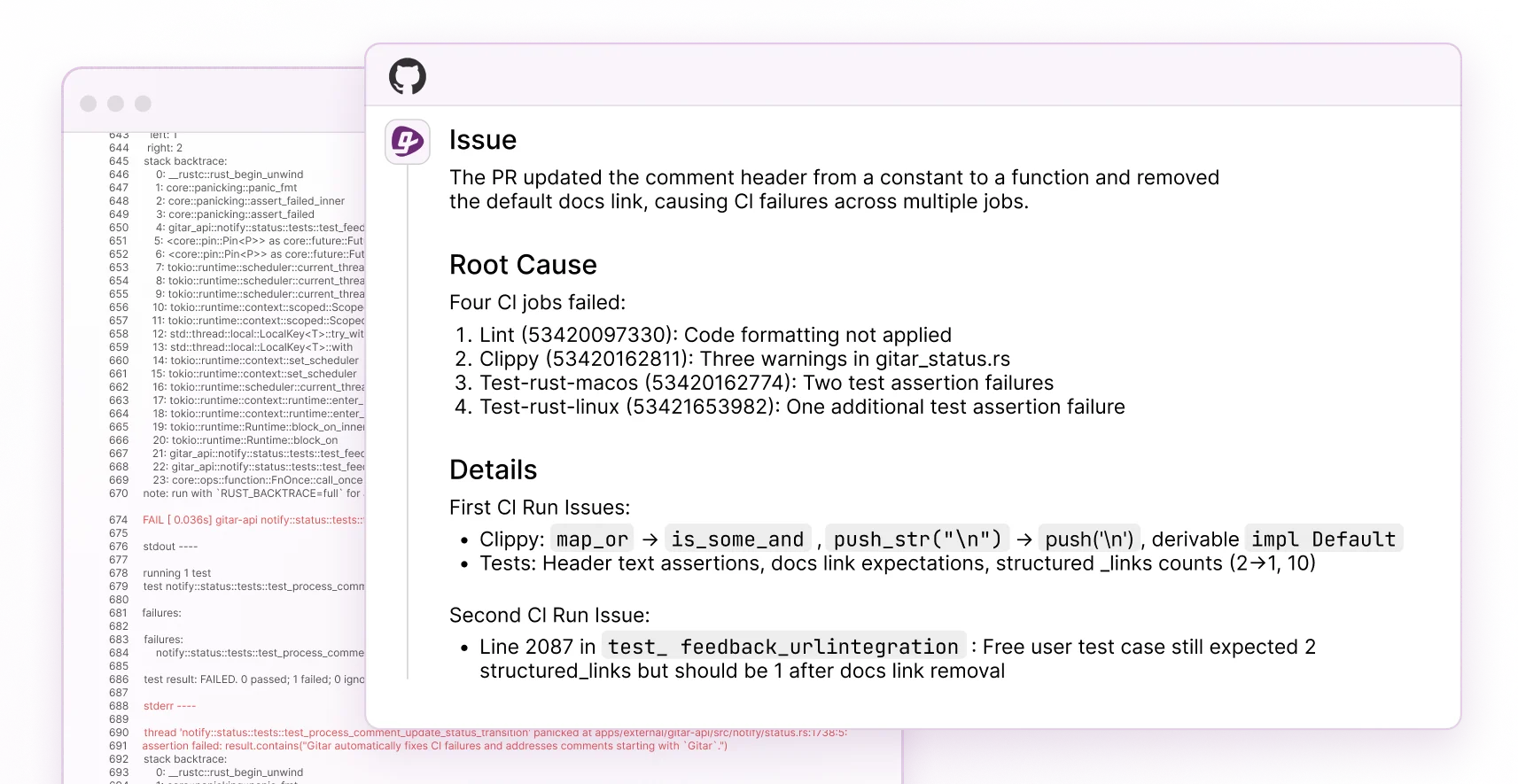
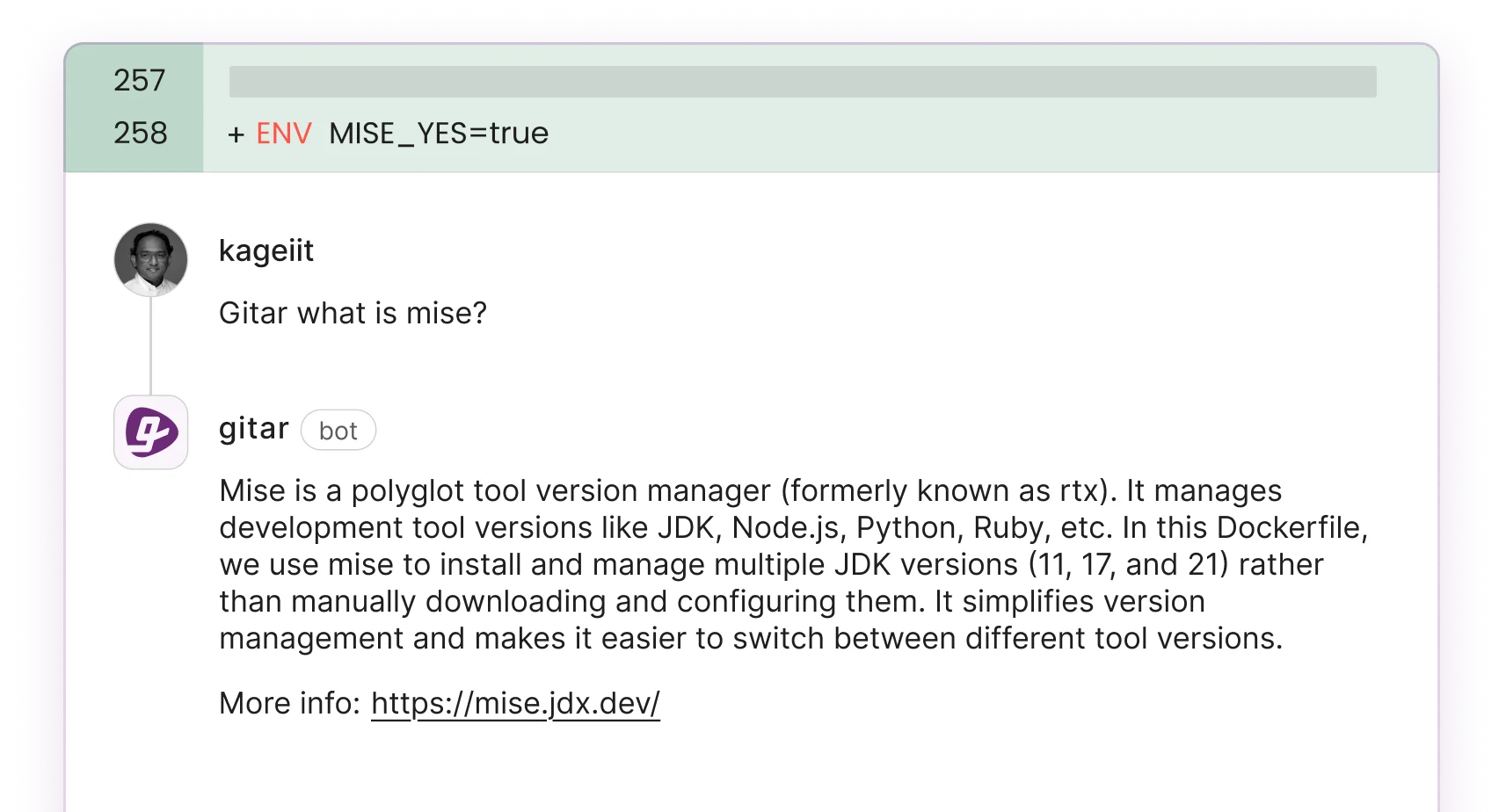
Production-ready tooling helps teams move past these bottlenecks. Gitar automatically fixes CI failures and addresses review feedback, so your vibe-coded prototype can become production-ready software without constant manual intervention. The Gitar documentation explains how to integrate these capabilities into your existing workflows.
|
Capability |
Traditional Tools |
Gitar |
|---|---|---|
|
Auto-fix CI failures |
No |
Yes |
|
Guarantee green builds |
No |
Yes |
|
Review implementation |
Suggestions only |
Actual fixes |
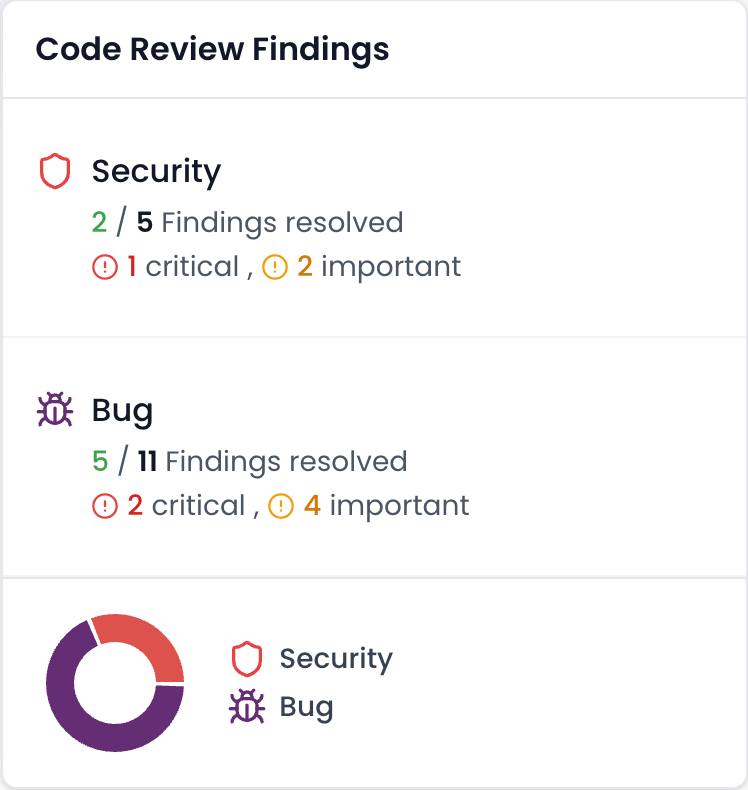
Scale your vibe-coded prototype with Gitar’s 14-day free trial so your team can see these production benefits in a real project.
Frequently Asked Questions
What is vibe coding for dummies?
Vibe coding for dummies means building apps by talking to AI in plain English instead of learning programming languages. You describe what you want, such as “make a shopping list app,” and the AI writes all the code for you. This approach works well for complete beginners who have strong ideas but no coding experience.
How to vibe code correctly?
To vibe code correctly, start with specific, clear prompts that describe exactly what you want your app to do. Break complex projects into smaller pieces, test frequently, and iterate by chatting with the AI to refine features. Always confirm that your app works properly before you add new functionality, and restart a feature if the implementation becomes too complicated.
What are vibe coding tools?
Vibe coding tools are AI-powered platforms that generate applications from natural language descriptions. Popular options include Cursor for code editing, Replit for all-in-one development, Lovable for visual app building, and ChatGPT for conversational coding help. Each tool has different strengths, and some focus on beginners while others target experienced developers.
What are some vibe coding examples?
Real vibe coding examples include Refetch, a Hacker News alternative built in 15 hours, Mealmuse, an AI meal planning app from grocery photos, and ChoresAI, a chore verification app using photo uploads. These apps show how vibe coding can create functional, user-friendly applications across different industries and use cases.
Is vibe coding a real skill?
Vibe coding is a legitimate skill that combines creative problem-solving with AI collaboration. It does not require traditional programming knowledge, but successful vibe coders understand user needs, write clear prompts, test applications thoroughly, and iterate based on feedback. This skill is becoming essential for entrepreneurs, designers, and anyone who wants to build digital products quickly.
Conclusion
Vibe coding opens app development to everyone, regardless of technical background. You can prototype ideas in minutes using tools like Cursor, Replit, or ChatGPT. Start small, write specific prompts, and test frequently so you can avoid common beginner mistakes and keep your projects maintainable.
When you feel ready to move from prototype to production, Gitar helps your team maintain quality at scale by fixing CI failures and handling review feedback automatically.