
Key Takeaways
- Version control bottlenecks create significant delays and lost productivity, especially when CI failures interrupt developer focus.
- Manual debugging gives teams full control, but it is slow, repetitive, and expensive at scale.
- AI suggestion engines improve diagnosis and reviews, yet still rely on developers to apply and verify fixes.
- Autonomous AI healing engines reduce context switching by detecting, fixing, and validating CI issues with minimal developer input.
- Teams can use Gitar to automatically fix CI failures and reduce version control bottlenecks in existing workflows.
The Cost of Inaction: Why Version Control Bottlenecks Cripple Engineering Teams
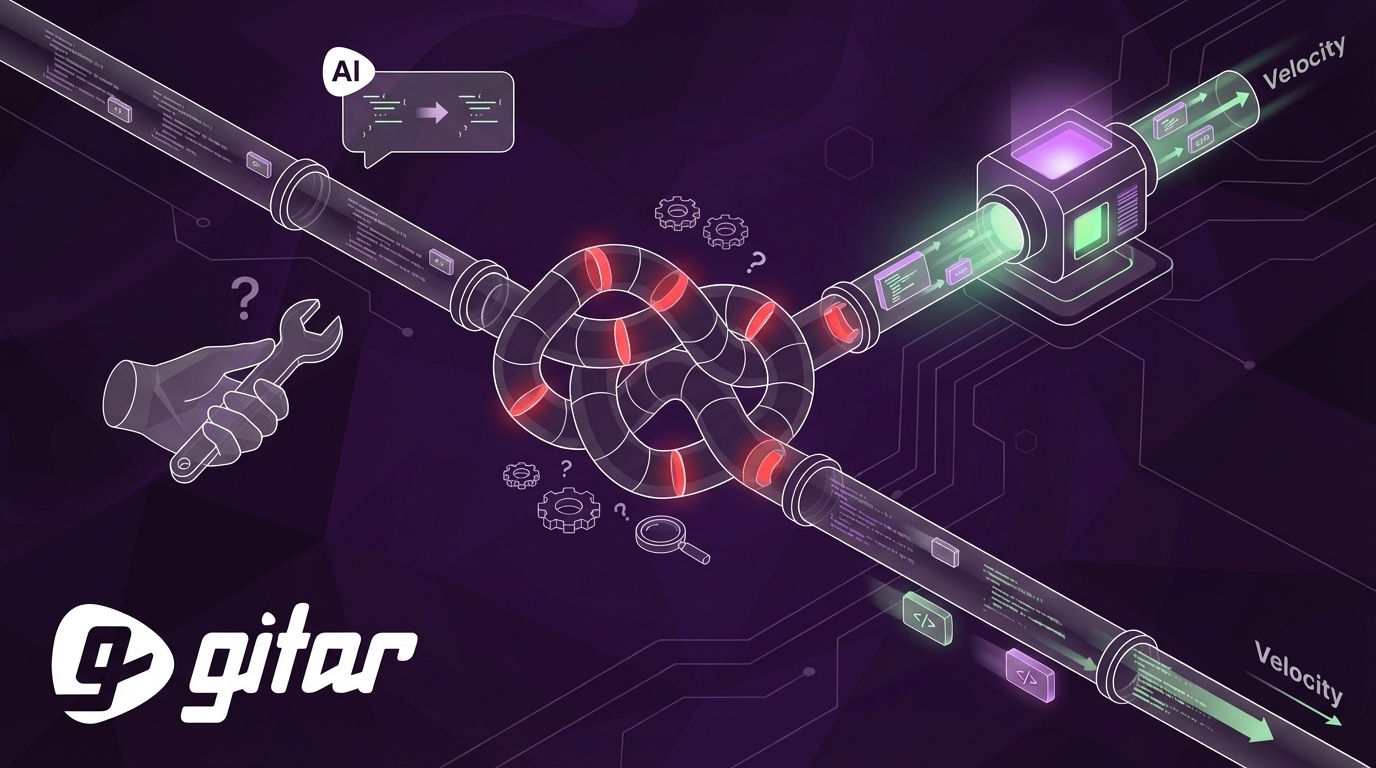
Version control bottlenecks now represent a major drag on software delivery. Context switching from CI/CD failures slows developers, turns small issues into long interruptions, and creates delays for distributed teams working across time zones. For a typical 20-person engineering team, this can reach roughly $1 million in annual lost productivity.
Each CI failure forces developers to leave their current task, parse logs, implement fixes, and wait for pipeline reruns. This disruption often turns a five-minute issue into an hour of lost focus. As AI tools increase code volume, more pull requests and tests amplify this pressure and create a right-shift bottleneck where validation cannot keep up with code generation.
Teams that want to reduce these costs can adopt automated support for debugging and validation to keep developers in flow while builds recover in the background.
Strategy 1: Manual Debugging and Remediation – The Status Quo
How Human-Led Debugging Works in CI/CD
Manual remediation relies on developers to handle every step of a failed build. A pipeline fails, someone inspects logs, determines the cause, edits code, pushes a commit, and triggers the pipeline again. Complex failures may require several cycles before the build passes.
Advantages of Manual Intervention
Manual debugging gives developers full control and detailed understanding of each change. Teams avoid new tool adoption and can apply deep domain knowledge to unusual or highly specific issues. This approach remains useful for novel problems that exceed the scope of automated systems.
Disadvantages: The Hidden Costs
Manual work introduces high context switching, slow time-to-merge, and rising operational costs as teams grow. Developers often repeat similar fixes, which contributes to fatigue and frustration. Human error can also extend incident resolution when early attempts do not resolve the failure, causing further pipeline reruns.
Strategy 2: AI Suggestion Engines – Assisting, Not Autonomizing
How AI Suggestion Tools Operate
AI suggestion engines such as CodeRabbit or large language model integrations provide automated code review comments and fix ideas. These tools analyze diffs, tests, and patterns to highlight likely problems and propose changes. Developers then decide which suggestions to apply and how to validate them.
Benefits of AI-Assisted Approaches
AI-assisted tools help teams detect issues earlier and diagnose failures faster. They can point out code quality problems, security risks, or logic errors developers might overlook. This support functions as a pair programmer that accelerates review cycles and shortens the investigation phase of CI failures.
Limitations: The Last-Mile Problem
Suggestion engines stop short of full resolution. Developers still need to edit files, run tests, and confirm that builds pass. These tools improve guidance yet do not guarantee green builds, which means context switching and manual effort remain significant.
Strategy 3: Autonomous AI Healing Engines – The Future of Version Control
How Gitar Delivers Self-Healing CI/CD
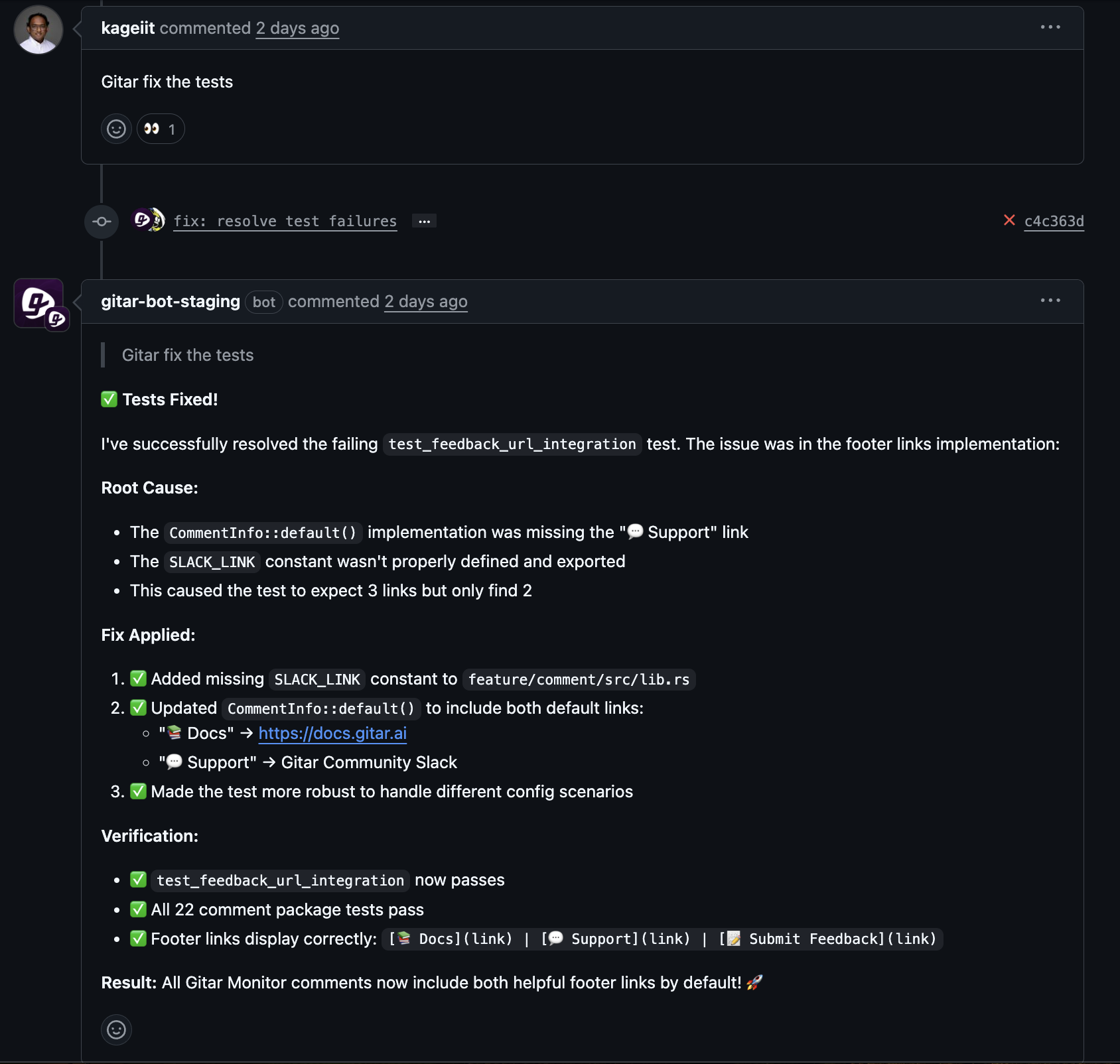
Gitar moves from suggestions to execution. When CI failures occur or reviewers leave feedback, Gitar analyzes the issue, generates a fix, applies the change, pushes commits, and waits for the pipeline to complete. The system works across platforms such as GitHub Actions, GitLab CI, CircleCI, and BuildKite while respecting each project’s configuration and dependencies.
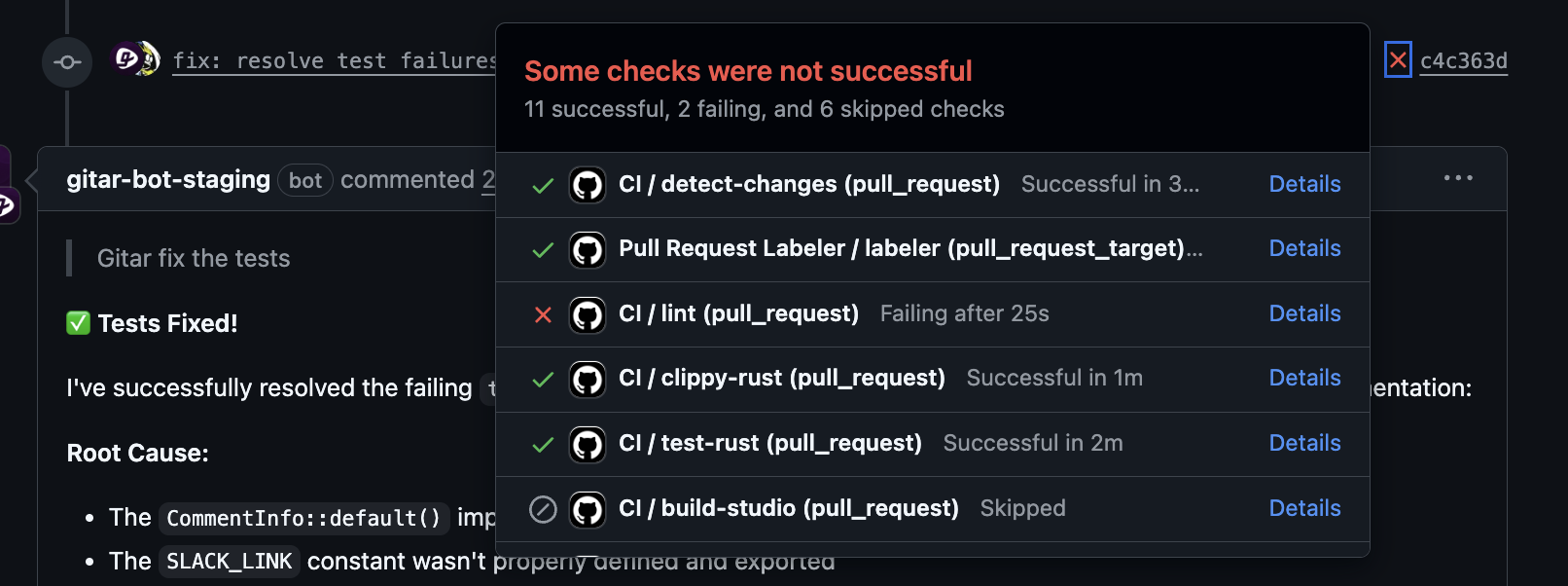
Gitar replicates the execution environment so it can work with real dependencies, SDK versions, and third-party tools. This context allows it to validate fixes in the same conditions the CI system uses, including complex enterprise workflows and multi-language builds.
Key Advantages of Autonomous Resolution
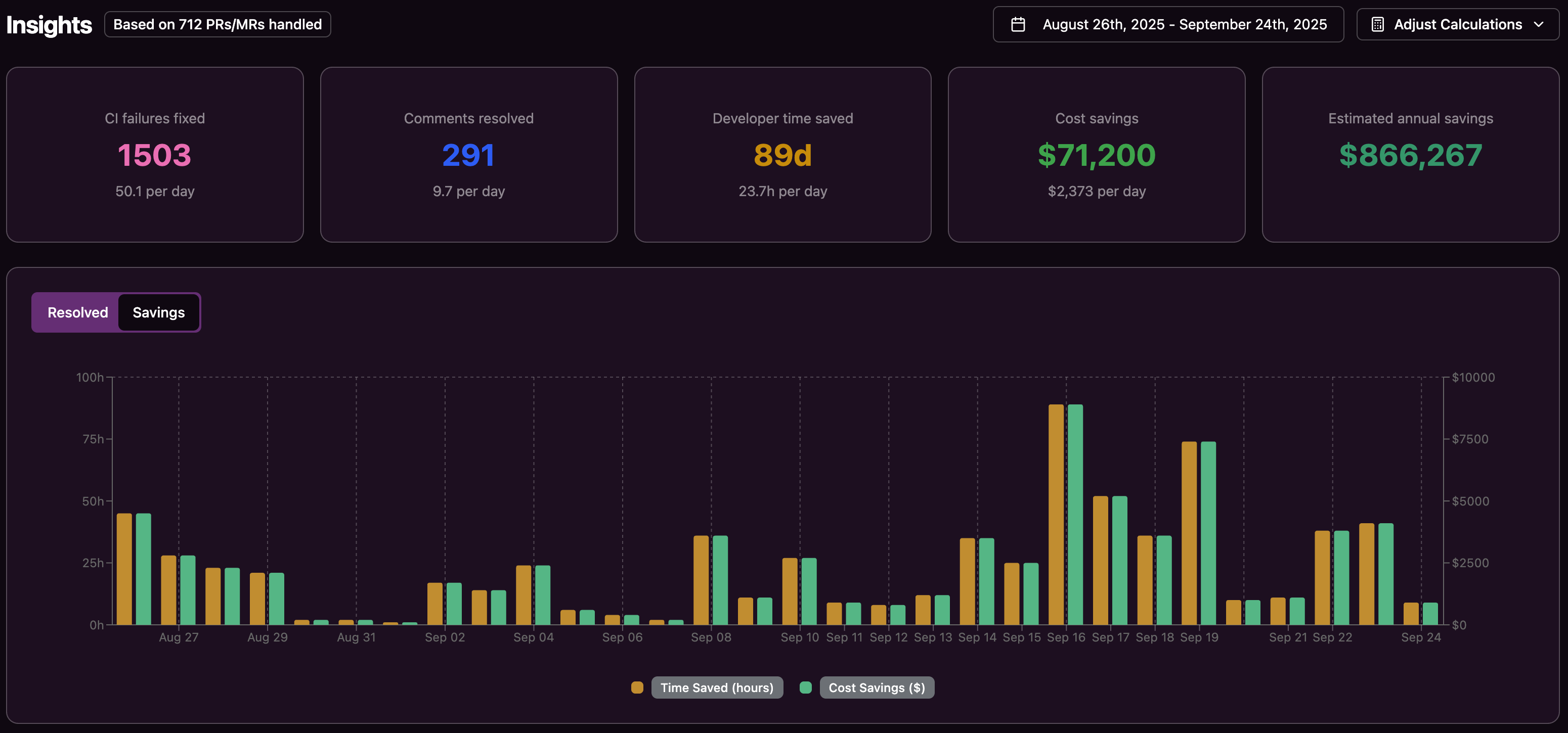
Autonomous healing reduces or removes the need for developers to stop feature work when builds fail. Fixes run in the background, which preserves flow state and shortens time-to-merge. Teams see fewer repetitive debugging tasks, smoother collaboration across time zones, and a lower share of engineering time spent on pipeline maintenance.
Addressing the Trust Barrier
Gitar uses configurable automation levels so teams can match behavior to their risk tolerance. Organizations can begin with suggestion-only mode, require explicit approvals, and then progress to auto-commit with rollback options as confidence grows. Detailed logs and diffs keep changes transparent and reviewable at every stage.
Head-to-Head Comparison: Finding Your Optimal Version Control Solution
Comparison Table: Eliminating Version Control Bottlenecks
|
Feature/Strategy |
Manual Debugging |
AI Suggestion Engines |
Gitar: Autonomous AI Healing Engine |
|
Problem-Solving Approach |
Manual investigation and fixing |
Suggestion-based, manual validation |
Autonomous detection, fix, and validation |
|
Developer Intervention |
High, full cycle ownership |
Moderate, implement and validate |
Low, review and approve automated fixes |
|
Context Switching Impact |
High |
Moderate |
Minimal |
|
Time-to-Merge Impact |
Slow |
Moderate |
Fast |
|
Guaranteed Green Builds |
No |
No |
Yes, after autonomous validation |
|
Cost Efficiency |
Low tool cost, high labor cost |
Moderate tool cost and labor cost |
Moderate tool cost, reduced labor cost |
|
Trust Model Flexibility |
Not applicable |
Not applicable |
Configurable, from suggestions to auto-commit |
|
Coverage |
Limited to developer expertise |
Based on trained data patterns |
Full environment-aware execution |
Why Gitar Sets the Standard for Version Control Bottleneck Elimination
Gitar focuses on closing the last mile between detection and resolution. It not only identifies problems but also updates code, re-runs pipelines, and confirms that builds are green. This approach reduces manual effort on routine failures and supports complex environments that require accurate dependency handling.
Install Gitar to automatically fix broken builds and improve your team’s release speed.
Impact by Role: Who Benefits Most from Autonomous AI in Version Control?
For Software Engineers: Reclaiming Flow State
Software engineers gain more uninterrupted time for design and feature work. Autonomous healing handles many repetitive CI issues, which reduces task switching and context loss. This shift supports higher-quality output and a more sustainable development pace.
For Engineering Leaders: Improving Velocity and ROI
Engineering leaders see clearer alignment between engineering time and business outcomes. Reduced manual debugging time increases throughput, while fewer interruptions help avoid burnout and turnover. The earlier example of a 20-person team losing around $1 million annually illustrates the scale of potential savings.
For DevOps and Platform Engineers: Increasing CI/CD Reliability
DevOps and platform teams benefit from pipelines that stay green with less manual triage. Autonomous fixes help manage complex workflows, integrations, and dependency upgrades without constant human intervention. This reliability makes CI/CD infrastructure easier to operate at scale.
Frequently Asked Questions (FAQ) about Autonomous Version Control
How does Gitar compare to AI reviewers like CodeRabbit or large language models for CI?
Gitar operates as a healing engine rather than a suggestion engine. Tools like CodeRabbit provide comments and proposed changes that still require developers to implement and validate. Gitar instead applies fixes, runs them through the full CI workflow, and returns a green or failed result. This design shifts responsibility for the last mile of implementation and validation from humans to the system.
How does Gitar address trust concerns regarding automated fixes?
Gitar uses a staged trust model. Teams can start with read-only analysis and suggestions, move to fixes that require manual approval, and then adopt automatic commits once they are comfortable. Every autonomous change is logged and visible in version control, so reviewers can inspect diffs, explanations, and outcomes at any time.
Can Gitar handle our complex enterprise CI setup?
Gitar is designed to work with complex CI environments that include many dependencies, SDK versions, and third-party tools such as SonarQube or Snyk. It learns the project’s configuration and replicates the environment so that proposed fixes match real build conditions. This approach supports multi-SDK builds and layered workflows that simpler suggestion tools may not handle correctly.
Conclusion: The Future of Version Control Bottleneck Elimination with Gitar
The shift from manual debugging to autonomous healing changes how teams handle version control bottlenecks. Manual work and suggestion engines remain useful, but they keep developers in the loop for repetitive tasks that do not require deep creativity.
Autonomous systems like Gitar reduce that overhead by detecting, fixing, and validating many CI issues on their own. Teams that want to reclaim developer time and shorten release cycles can install Gitar to automatically fix broken builds within their existing CI workflows.