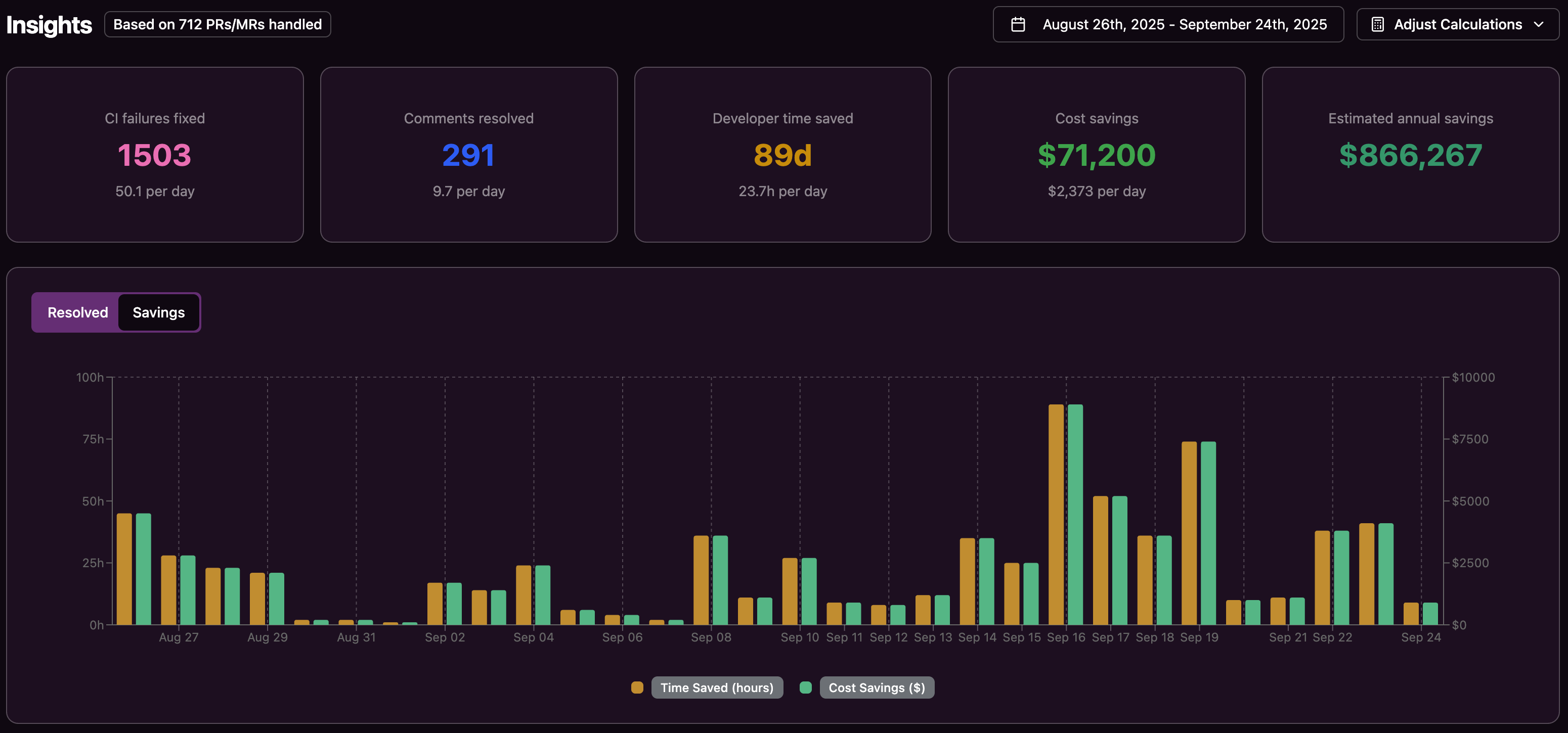
CI pipeline failures and code review delays slow down engineering teams, costing developers hours of productivity each day. For a 20-person team, this can add up to $1 million annually in lost time. Autonomous AI testing with self-healing CI offers a way forward, automatically detecting and fixing issues to keep developers focused and speed up delivery.
Why CI Failures and Delays Hurt Developer Productivity
CI/CD Issues Drain Time and Resources
CI pipeline failures hit hard when a pull request fails due to a small error like a failing test or linting issue. These disruptions steal valuable time from developers, stalling progress.
Build failures in projects have led to over 2,000 hours of lost productivity. Beyond immediate fixes, these problems delay releases and erode team momentum, creating a significant financial impact.
For teams of 20 developers, losing just one hour per day to CI issues adds up fast. This conservative estimate can mean $1 million in annual productivity losses, a serious concern for engineering leaders.
Context Switching Costs More Than You Think
CI failures don’t just take time to fix; they disrupt focus. Frequent interruptions from technical issues force developers to switch tasks repeatedly, reducing efficiency.
Picture this: a developer pushes code, starts a new task, then gets a notification that the CI pipeline failed over a minor issue. A quick fix turns into a major interruption as they must stop, switch back, investigate, correct the error, and wait for the pipeline to rerun before returning to their original work. This mental juggling slows progress and raises the risk of mistakes.
Delays in Moving Code to Production
Getting code from commit to deployment has grown more complex. Unreliable CI/CD processes can create bottlenecks and reduce trust in the system, slowing down merges and overall delivery speed.
Distributed teams face extra challenges. A developer in one time zone might push a PR, only to wait a full day for feedback from a teammate elsewhere. Even small changes can stretch a merge from hours to days. With AI coding tools generating more code, the volume of pull requests and tests rises, making validation and merging the new hurdle.
How Autonomous AI Testing Boosts Efficiency
Autonomous AI testing changes the game for CI/CD management. Unlike tools that only suggest fixes, these systems take full control, spotting failures, creating solutions, and validating results without needing developer input.
This approach tackles the shift in bottlenecks from code writing to validation and merging, especially as AI coding tools speed up code creation. By automating the entire process, it frees up developers to focus on building features.
Key aspects of autonomous AI testing include:
- Constant monitoring to catch CI failures instantly.
- Deep analysis of logs and code to pinpoint root causes.
- Automatic fixes applied and tested without manual effort.
- Consideration of complex setups and dependencies for accurate solutions.
This technology turns CI/CD into a background process, reducing interruptions and speeding up development. Ready to cut through CI bottlenecks? Install Gitar and fix broken builds automatically.
Meet Gitar: Your Self-Healing CI Solution
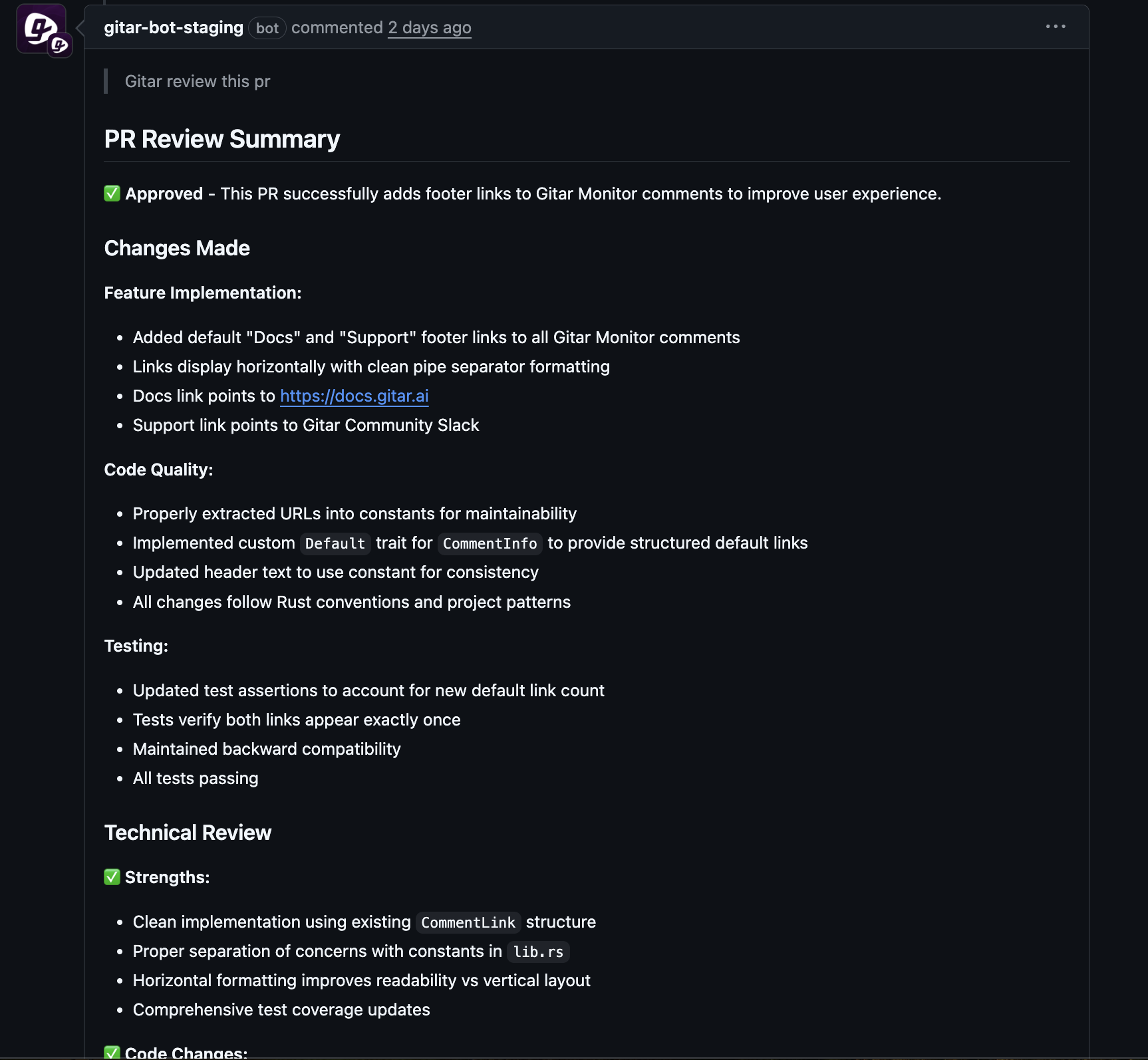
Gitar is an AI agent designed to eliminate the frustration of failing CI builds and slow code reviews. When a pull request faces issues or feedback, Gitar steps in, analyzes the problem, applies a fix, and updates the request, creating a smooth, hands-off process.

Gitar stands out with its focus on full automation. Here’s what it offers:
- Complete handling of CI failures like linting errors and test issues directly in the PR.
- Action on reviewer feedback to keep projects moving, even across time zones.
- Accurate replication of complex environments with specific tools and dependencies.
- Customizable automation levels, from suggestions to full commits as trust grows.
- Compatibility with platforms like GitHub Actions, GitLab CI, and CircleCI.
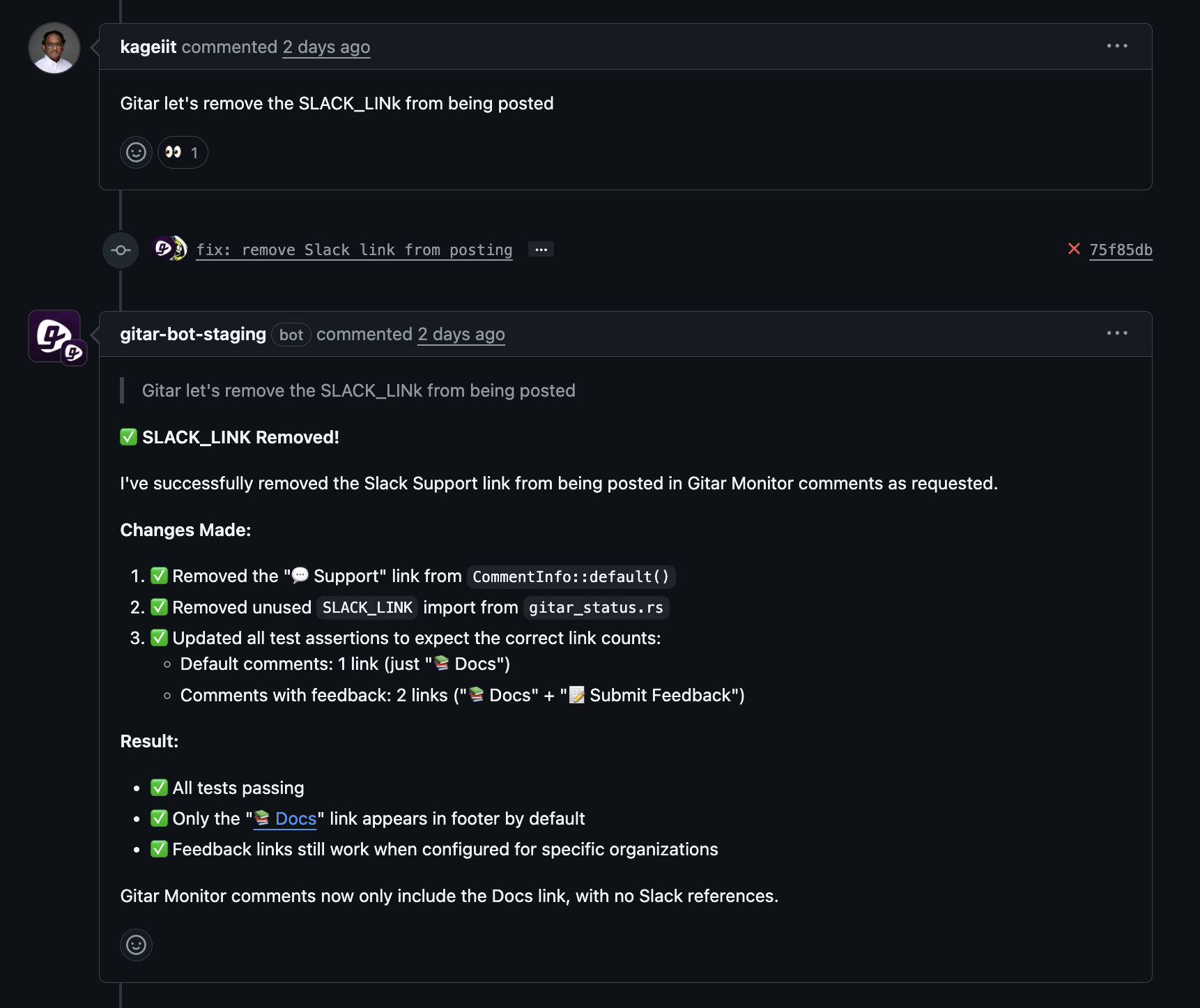
Unlike tools that only suggest fixes, Gitar acts as a true healing engine. It applies solutions, runs them through the CI pipeline, and confirms success before notifying the team.
What Gitar Delivers for Your Team
Keep Developers Focused Without Interruptions
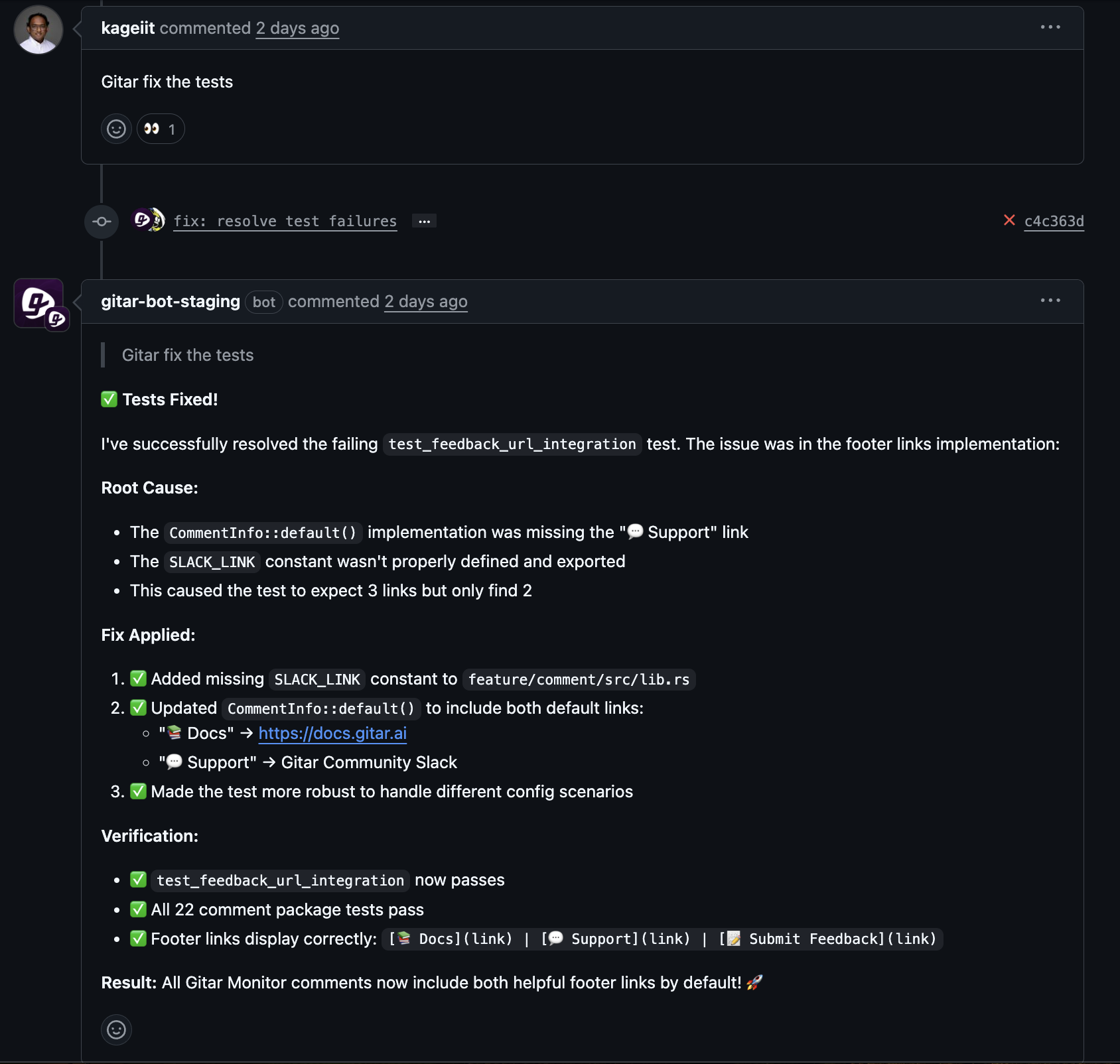
Gitar prevents context switching by handling CI failures in the background. Developers can stay in their flow, working on critical tasks while Gitar resolves issues like failing tests or formatting errors.
The result is clear: longer periods of focus, better work quality, and the ability to push code and move on without waiting for manual fixes.
Speed Up Merges and Delivery
Gitar cuts down the time from code submission to merge by automating fixes for common issues. This means faster approval cycles and quicker delivery of features to production.
For leaders tracking metrics, this reduces lead time for changes, helping teams ship code faster and regain lost productivity.
Improve Code Quality Effortlessly
Gitar doesn’t just fix problems; it enhances code quality. It can add tests to boost coverage or enforce standards across pull requests, keeping your codebase strong with minimal effort.
Support Distributed Teams Across Time Zones
For teams spread across regions, Gitar handles feedback and fixes while others are offline. A comment left overnight gets addressed, so the PR is ready for review by morning, turning code reviews into a fluid, non-blocking process.
How Gitar Compares to Other Tools
|
Feature/Capability |
Gitar (Self-Healing CI) |
AI Code Reviewers (e.g., CodeRabbit) |
Manual Debugging |
|
Problem Focus |
CI failures and code feedback |
Code feedback and suggestions |
Reactive fixes after failures |
|
Action Taken |
Automatic fixes with validation |
Suggestions needing manual work |
Fully manual fixes |
|
Validation |
Ensures success through full CI |
No CI pipeline validation |
Manual testing |
|
Developer Effort |
Minimal or none, based on settings |
Often requires manual action |
Full effort needed |
|
Environment Support |
Replicates complex setups |
Limited to code suggestions |
Relies on developer knowledge |
|
Time to Fix |
Minutes, fully automated |
Depends on manual steps |
30-60 minutes on average |
Gitar’s strength lies in acting as a healing engine, not just a suggestion tool. It takes full responsibility for fixes, validating them in your CI environment, which is vital for complex enterprise setups with varied dependencies.
Want to see autonomous CI healing in action? Install Gitar and start fixing builds automatically.
Common Questions About Autonomous AI Testing
How Does Gitar Manage Unique CI Environments?
Gitar adapts to complex setups by mirroring enterprise environments, including specific SDKs, dependencies, and tools like SonarQube. This ensures fixes are relevant and reliable, unlike general AI tools with limited context.
How Is Self-Healing CI Different From AI Code Reviewers?
AI code reviewers often suggest fixes that developers must apply manually. Gitar goes further by automating the entire process, applying solutions and validating them through the CI pipeline for guaranteed results.
Can I Trust AI to Fix Code Without Breaking Things?
Gitar offers a flexible trust model. Start with a conservative setting where fixes are suggestions for review, then move to automatic commits as confidence grows. All changes include rollback options and are tested in the CI pipeline first.
How Does Gitar Help New Engineers Onboard Faster?
Gitar simplifies CI/CD for new hires. They can focus on coding while Gitar handles pipeline issues, reducing the learning curve and speeding up their first merges.
Will Gitar Fit Into Our Current Workflow?
Gitar works as a GitHub or GitLab app, monitoring repos and addressing issues without disrupting existing processes. It communicates via PR comments, operating quietly in the background.
Speed Up Innovation with Gitar
CI failures and review delays drain productivity, with developers losing significant time to repetitive tasks. This slows innovation and raises costs for engineering teams.
Gitar’s self-healing CI changes this by automating issue detection and resolution. Developers regain focus, merges happen faster, and delivery speeds improve.
Moving to autonomous solutions lets teams prioritize creative work over manual debugging. Ready for a better development experience? Install Gitar and fix CI issues automatically.