
Merge conflicts slow down software development, costing teams valuable time and creating delays across projects. While tools like GitHub Copilot help with coding, the real challenge often comes after—getting code merged through CI/CD pipelines without issues. This article highlights the impact of manual conflict resolution and shows how AI solutions like Gitar tackle these problems by detecting and fixing conflicts early, keeping developers focused on their work.
Why Manual Merge Conflict Resolution Slows Teams Down
Merge conflicts disrupt workflows when developers push pull requests only to face failing CI checks or incompatible changes. These conflicts happen when multiple team members edit the same file or code section in conflicting ways, and version control systems can’t merge them automatically. Common causes include parallel edits to the same code, mismatched changes in related files, or differences in formatting like tabs versus spaces.
The process behind these issues adds to the frustration. Git compares changes using a three-way merge algorithm but stops when it detects conflicting edits in the same file section, requiring manual fixes. This interruption forces developers to step in and resolve the problem, often at the cost of their momentum.
How Conflicts Impact Productivity and Deadlines
Merge conflicts cost more than just time spent fixing them. Data shows developers can lose up to 30% of their workday on CI and code review challenges, with conflicts playing a major role. For a team of 20 developers at an average hourly cost of $200, this equals about $1 million in lost productivity each year, a figure many overlook.
Beyond direct time loss, conflicts force developers to switch tasks unexpectedly. After submitting a pull request and starting new work, a conflict notification pulls them back to the old task. They must relearn the context, find the issue, fix it, and then try to refocus, turning a quick fix into a significant disruption.
Distributed teams face even bigger delays. A developer in one time zone might push a PR needing input from a colleague halfway across the world. With a 12-hour time difference, feedback rounds stretch out. Add a merge conflict, and what could take minutes drags into days.
Limitations of Traditional Conflict Resolution
Textual conflicts, where Git flags overlapping edits, are the most frequent issue developers encounter. Fixing them often involves manually editing files, deciding which changes to keep, and committing the resolution. This hands-on process demands focus and carries a risk of errors.
Many AI tools offer suggestions for resolving conflicts but stop there. Developers still need to apply and test the fixes themselves, which means they face the same interruptions and uncertainty about whether the solution will work in the full CI setup. Additionally, most tools lack insight into complex enterprise environments, ignoring build dependencies or specific configurations, often leading to fixes that fail when fully applied.
Fix Conflicts Early with Gitar’s AI Automation
Gitar changes the game by moving beyond simple suggestions to active problem-solving. This AI tool doesn’t just spot merge conflicts or CI failures; it fixes them directly. With an understanding of your full development environment, Gitar applies solutions to pull requests and ensures all CI checks pass, delivering merge-ready code without manual effort.

Gitar stands out by mimicking your exact setup, including SDK versions, dependency chains, and tools like SonarQube. This deep context means fixes work within your specific CI/CD pipeline, removing the trial-and-error of manual resolution.
Key benefits of using Gitar for conflict resolution include:
- Automatic CI fixes for lint errors, test failures, and build issues, with direct code updates for green builds.
- Full replication of enterprise setups, handling multi-SDK dependencies and security scans for reliable solutions.
- Flexible trust settings, offering suggestion-only mode for review or direct commits with rollback options.
- Support for platforms like GitHub Actions, GitLab CI, and CircleCI, ensuring compatibility across tools.
- Faster merge times by automating conflict fixes and cutting down on manual debugging.
How Gitar Improves Conflict Handling and PR Processes
Early Detection and Automatic Fixes
Gitar monitors pull requests across your repositories continuously. When a push triggers a CI failure or potential conflict, it steps in immediately. The tool analyzes the issue within the broader codebase context and applies a fix that aligns with the intent of the changes.
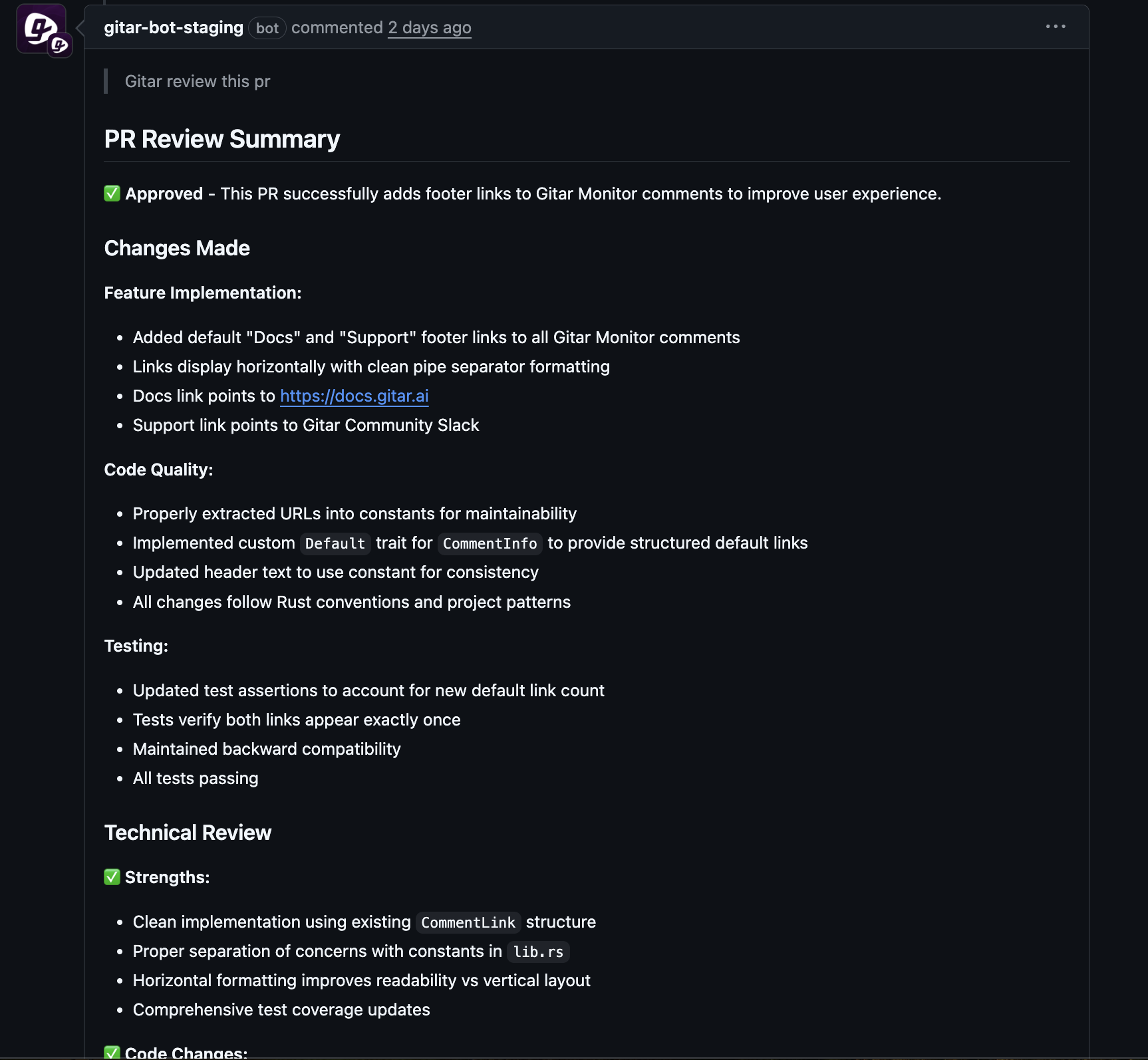
For common textual conflicts, Gitar merges competing edits into a cohesive result. For dependency issues, it adjusts versions or configurations as needed. Even in complex cases, like changes spanning code and tests, Gitar ensures consistency across files and validates the fix against the entire CI pipeline.
Reducing Interruptions for Developers
Teams often notice Gitar’s value when it resolves a CI failure before the developer even spots the problem. Instead of a failure alert, you see a new commit in your pull request with a clear note on the fix. This approach prevents the mental shift back to a past task, saving time and focus.
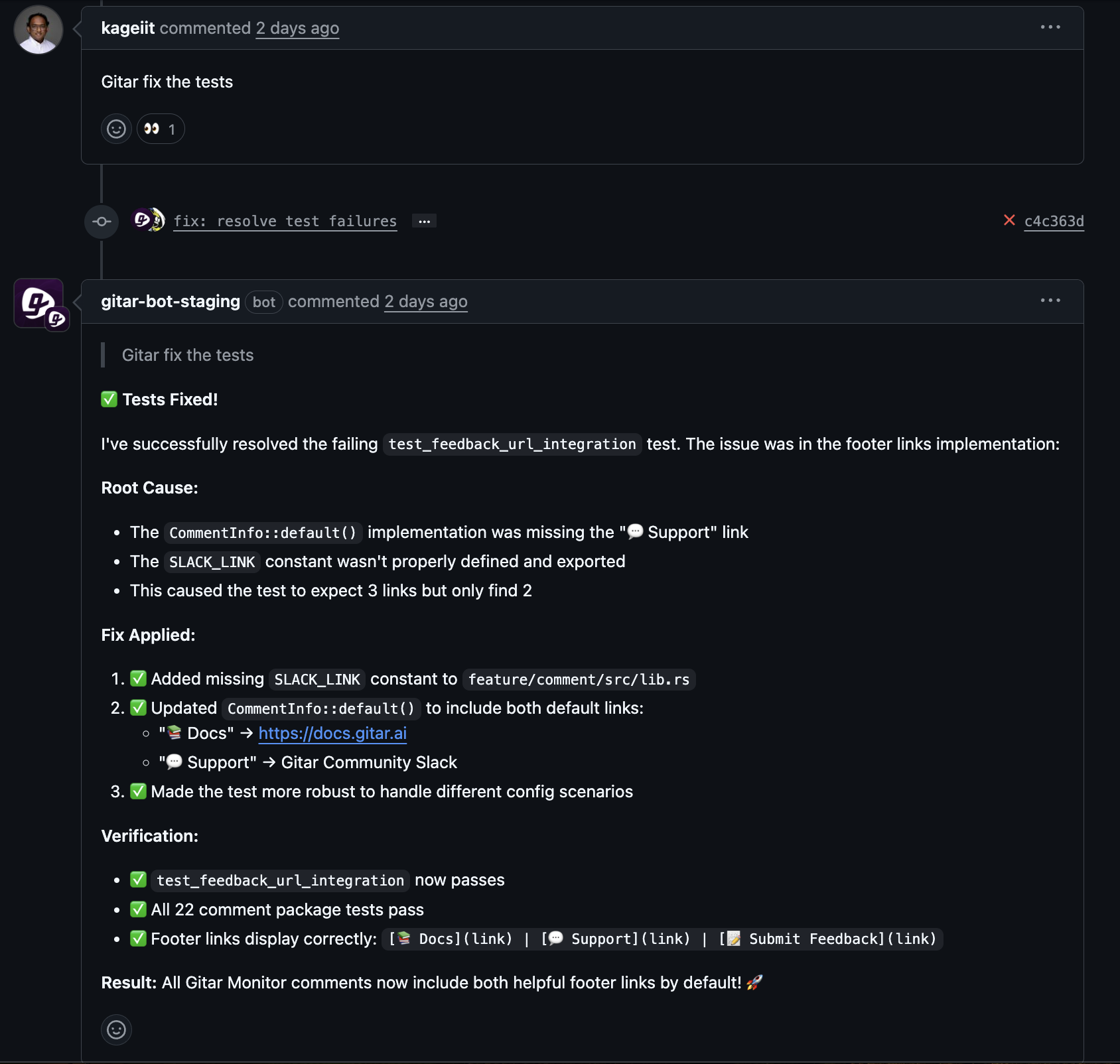
Picture a developer wrapping up a feature, pushing the code, and moving to the next task. Normally, a lint error would pull them back. With Gitar, the error gets fixed automatically while they stay focused on their current work. Studies indicate task switching can cut productivity by up to 40%. By maintaining focus, Gitar helps developers stay productive.
Boosting CI/CD Efficiency
Gitar enhances the entire CI/CD pipeline by cutting down on repeated cycles of trial and error. Normally, developers push fixes, wait for CI results, and repeat until everything passes. This wastes time and resources. Gitar delivers validated fixes on the first try, reducing failed builds and easing the load on infrastructure.
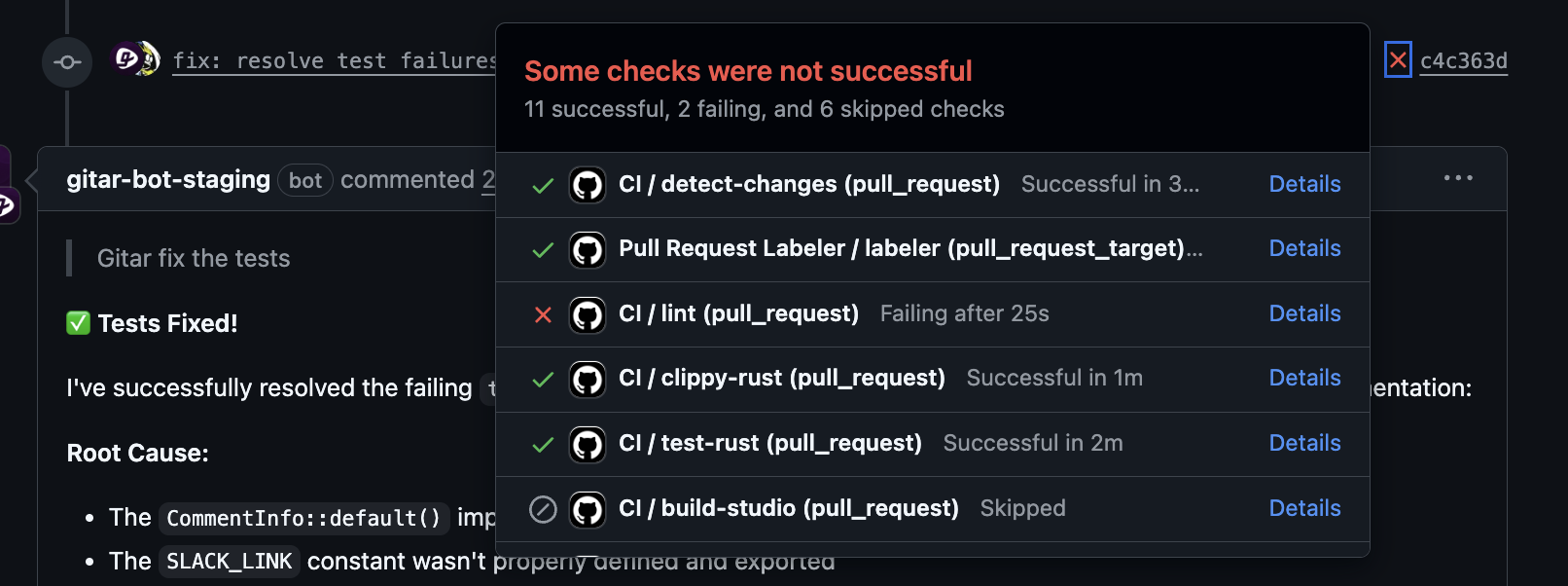
For DevOps teams, this means more predictable timelines, lower costs, and fewer urgent fixes. Gitar handles common issues like dependency mismatches automatically, reducing the need for escalated support.
How Gitar Outperforms Suggestion-Based AI Tools
Many AI tools for development identify merge conflicts or CI failures but rely on developers to apply fixes. Gitar goes further by autonomously handling the entire process, from detection to validation, ensuring builds pass without manual input.
|
Feature |
Gitar (Autonomous Fix Engine) |
Manual Resolution |
AI Suggestion Tools |
|
Conflict Handling |
Detects, fixes, and validates automatically |
Requires full manual effort |
Offers ideas, needs developer action |
|
Automation Level |
Complete, ensures passing builds |
None, fully human-led |
Partial, implementation still manual |
|
Effect on Workflow |
Keeps focus, minimal disruption |
Causes frequent interruptions |
Helps slightly but still distracts |
|
Context Awareness |
Matches full enterprise setup |
Depends on developer knowledge |
Limited to basic context |
Unlike suggestion tools, Gitar applies fixes and tests them against your CI environment. This removes uncertainty and keeps developers focused on coding, not debugging. Its ability to match complex setups ensures solutions fit your specific needs, avoiding generic fixes that often fail in practice.
Adopting Gitar: A Step-by-Step Trust-Building Plan
Introducing AI automation for merge conflicts works best with a gradual approach. Gitar’s rollout is designed to build confidence while delivering value from day one.
Phase 1: Setup and Initial Use. Start by connecting Gitar to selected GitHub or GitLab repositories and linking it to your CI system. Teams begin in a suggestion-only mode, where Gitar posts fixes for review and one-click approval. This lets developers see the logic behind each change while maintaining control.
Phase 2: Growing Confidence. As teams see Gitar handle routine issues like lint errors or test failures accurately, trust builds. Clear explanations with each fix help developers understand the reasoning, making it easy to approve solutions and witness CI checks pass effortlessly.
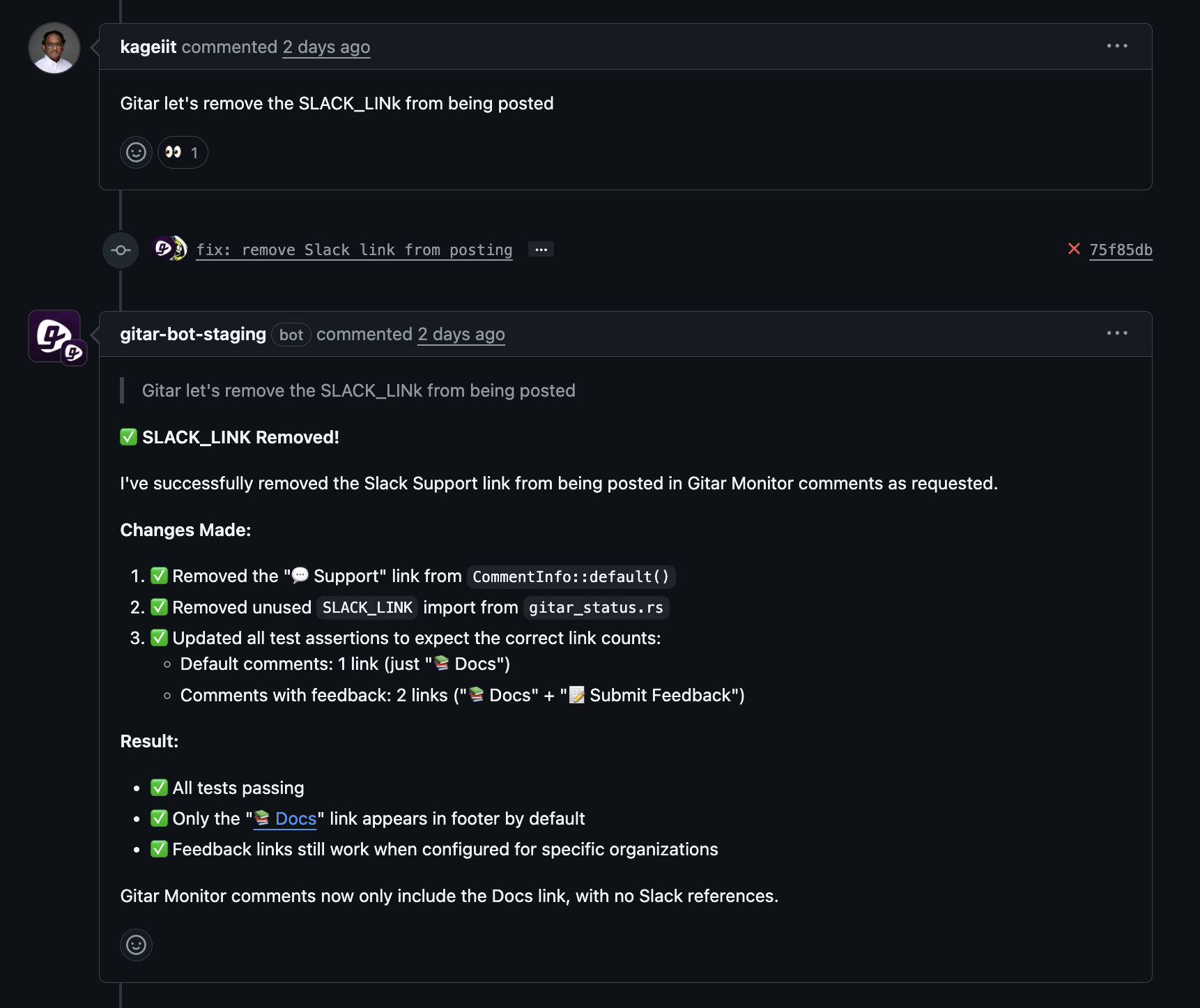
Phase 3: Full Automation. Once comfortable, teams can switch to direct-commit mode for certain repositories or issues, with rollback options available. Reviewers can also instruct Gitar via pull request comments, turning it into a collaborative partner for tasks like refactoring code.
Common Questions About AI for Merge Conflicts
What Conflicts Can AI Handle Well?
AI excels at fixing textual conflicts, the most common type, where developers edit the same code lines or face formatting differences. Gitar also manages build failures, dependency mismatches, lint issues, and test errors. It handles rule-based problems effectively, though complex logic disputes may still need human input. Even then, Gitar often provides a starting point for refinement.
How Does Gitar Ensure Safe, Quality Fixes?
Gitar validates fixes by matching your full CI environment, ensuring they work in context. It offers suggestion-only mode initially for review before automation. All changes undergo CI testing before commits, and detailed logs explain every action, providing transparency. Teams can adjust automation levels and always revert changes if needed.
Will Gitar Shorten Our PR Merge Times?
Gitar cuts PR merge times by fixing CI failures and conflicts automatically, reducing delays from debugging or feedback loops. It’s especially helpful for distributed teams, where time zone gaps slow reviews. By acting on reviewer comments directly, Gitar speeds up revisions, letting developers focus on core logic over technical fixes.
Does Gitar Work with Our Current Tools?
Gitar integrates easily with GitHub, GitLab, and CI platforms like GitHub Actions, CircleCI, and Jenkins. Setup takes under an hour, with no changes needed to existing workflows. A web dashboard lets teams customize settings per repository, monitor activity, and meet enterprise needs like on-premise options or security compliance.
What if Gitar Makes an Error?
Gitar logs every change as a standard Git commit with clear notes, making reviews and reversals simple. In suggestion mode, no fix applies without approval. Even with automation, extensive CI validation reduces risks, and rollback options cover any issues. Teams can also limit Gitar’s scope by repository or change type for added control.
Reclaim Developer Time with Early Conflict Detection
Merge conflicts and CI failures drain up to 30% of developer time, disrupt focus, and delay projects. For a team of 20, this can mean $1 million in yearly losses. Yet, many accept this as part of development.
Gitar shifts the game by using AI to spot and fix conflicts early, automating resolutions, and ensuring builds pass. This lets developers prioritize meaningful work over debugging, speeding up delivery.
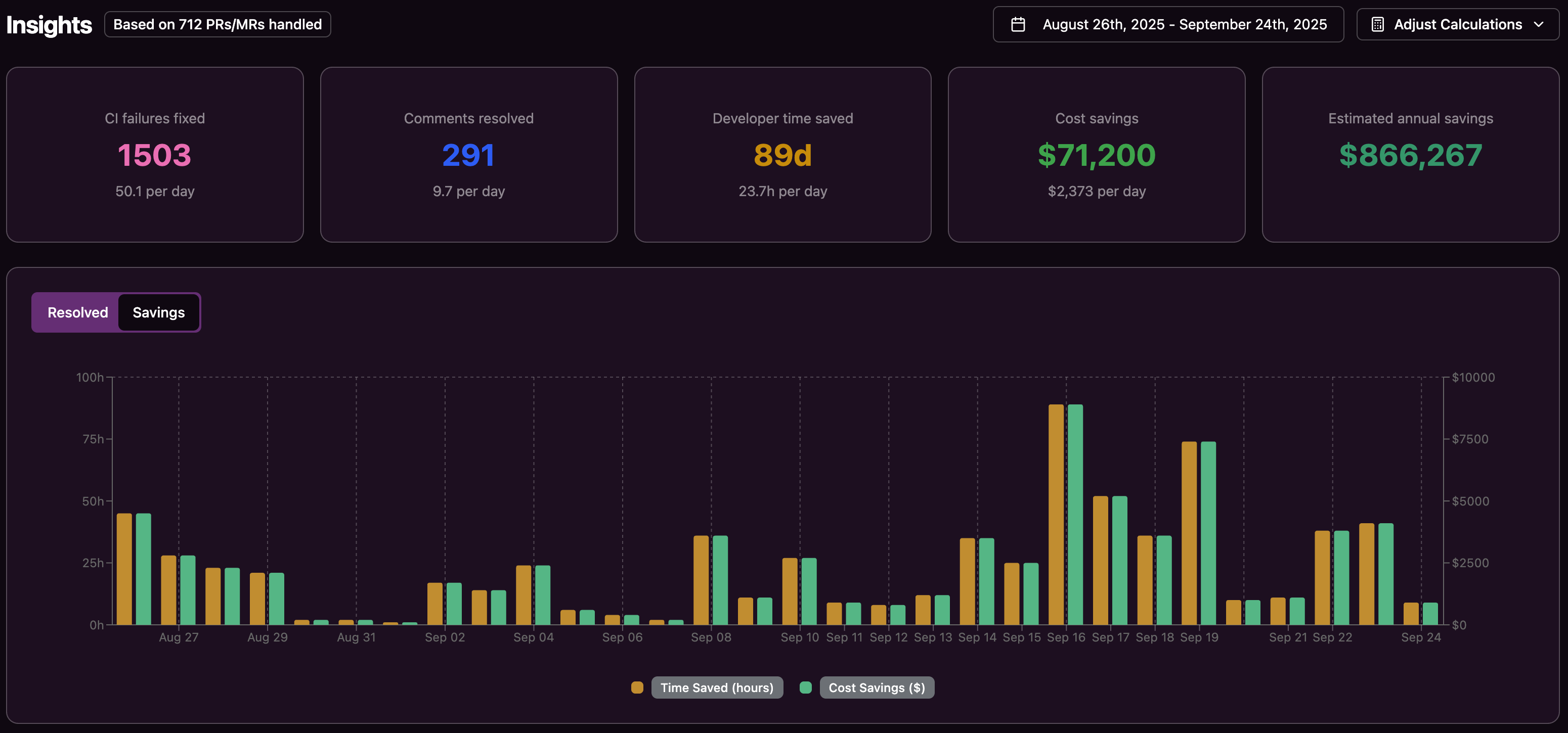
Starting with Gitar is low-risk, beginning with reviewable suggestions before moving to full automation. Merge conflicts become a minor background task, not a major roadblock.