
Manual comment tracking in asynchronous code reviews slows down your team, delays code delivery, and disrupts productivity. Developers often face constant context switching, long feedback loops, and stalled pull requests, turning quick reviews into drawn-out processes. For distributed teams, time zone differences can make a single comment exchange stretch across days.
Gitar, an AI-powered agent, offers a practical solution by automating feedback resolution and creating a smoother workflow. It tracks comments, implements fixes, and speeds up the merge process, letting developers stay focused on their tasks.
Why Manual Comment Tracking Slows Down Asynchronous Code Reviews
Manual tracking creates hidden costs that affect efficiency. Let’s break down the key issues holding teams back.
Context Switching Drains Focus and Time
Switching tasks during code reviews takes a toll on productivity. Developers lose about 23 minutes of focus per context switch, and with multiple interruptions daily, this adds up to significant wasted time.
After submitting a pull request, developers often shift to other work, only to be pulled back by feedback or CI failures. Rebuilding their mental context to address comments becomes a slow, frustrating task, especially with complex threaded discussions across different code sections.
Feedback Delays Stall Pull Requests
Long feedback cycles create bottlenecks in delivery. Traditional manual methods increase code review turnaround time, often pushing back project deadlines.
In asynchronous systems, pull requests spend much of their lead time waiting for action. Idle time dominates over active work in many async review processes. Developers switch tasks during these waits, piling up incomplete work and slowing overall throughput.
These delays can also harm code quality. Poor comment resolution often leads to technical debt, creating risks for future development.
Time Zones Create Extra Hurdles for Distributed Teams
Distributed teams face unique challenges with manual tracking. A simple comment from a reviewer in one time zone might not be seen by the developer in another until hours later, stretching small fixes into days of back-and-forth.
This delay worsens with complex feedback requiring clarification. Without efficient tools, teams risk misunderstandings, duplicated efforts, and frustration. Ineffective tracking can also slow onboarding and delay critical updates like security patches.
Install Gitar to fix broken builds and deliver quality code faster
How Intelligent Threaded Discussions Improve Code Reviews
Automating comment tracking can streamline the review process. Let’s explore what makes threaded discussions effective and how AI takes it further.
What Makes Threaded Discussions Effective?
Effective threaded discussions do more than organize comments. They link feedback to specific code sections, offer clear replies, and mark resolved issues to keep merges on track.
The real value comes from automation, with systems that track comment status, understand context, and act on feedback directly. Structured threads help remote teams eliminate delays and maintain developer focus.
Meet Gitar: AI That Resolves Feedback and CI Issues
Gitar stands out by automating code review tasks with an AI agent. It doesn’t just organize feedback, it analyzes comments, creates fixes, and updates pull requests, turning manual reviews into an efficient process.

Key ways Gitar helps:
- Resolves feedback by interpreting comments and pushing commits to the PR branch.
- Fixes CI failures like linting errors or test issues automatically.
- Replicates complex CI environments for accurate fixes across SDKs and platforms.
- Offers a trust model, starting with suggestions for review and scaling to direct commits.
- Integrates with tools like GitHub Actions, GitLab CI, CircleCI, and BuildKite.
Book a demo to see how Gitar streamlines code reviews
Key Benefits of Gitar for Asynchronous Code Reviews
Gitar reshapes the review process with practical improvements. Here’s how it helps teams save time and stay focused.
Preserve Developer Focus by Minimizing Interruptions
Gitar reduces the mental load of context switching. Each task switch costs developers valuable time, but Gitar handles feedback and CI fixes, letting coders stay on their current work.
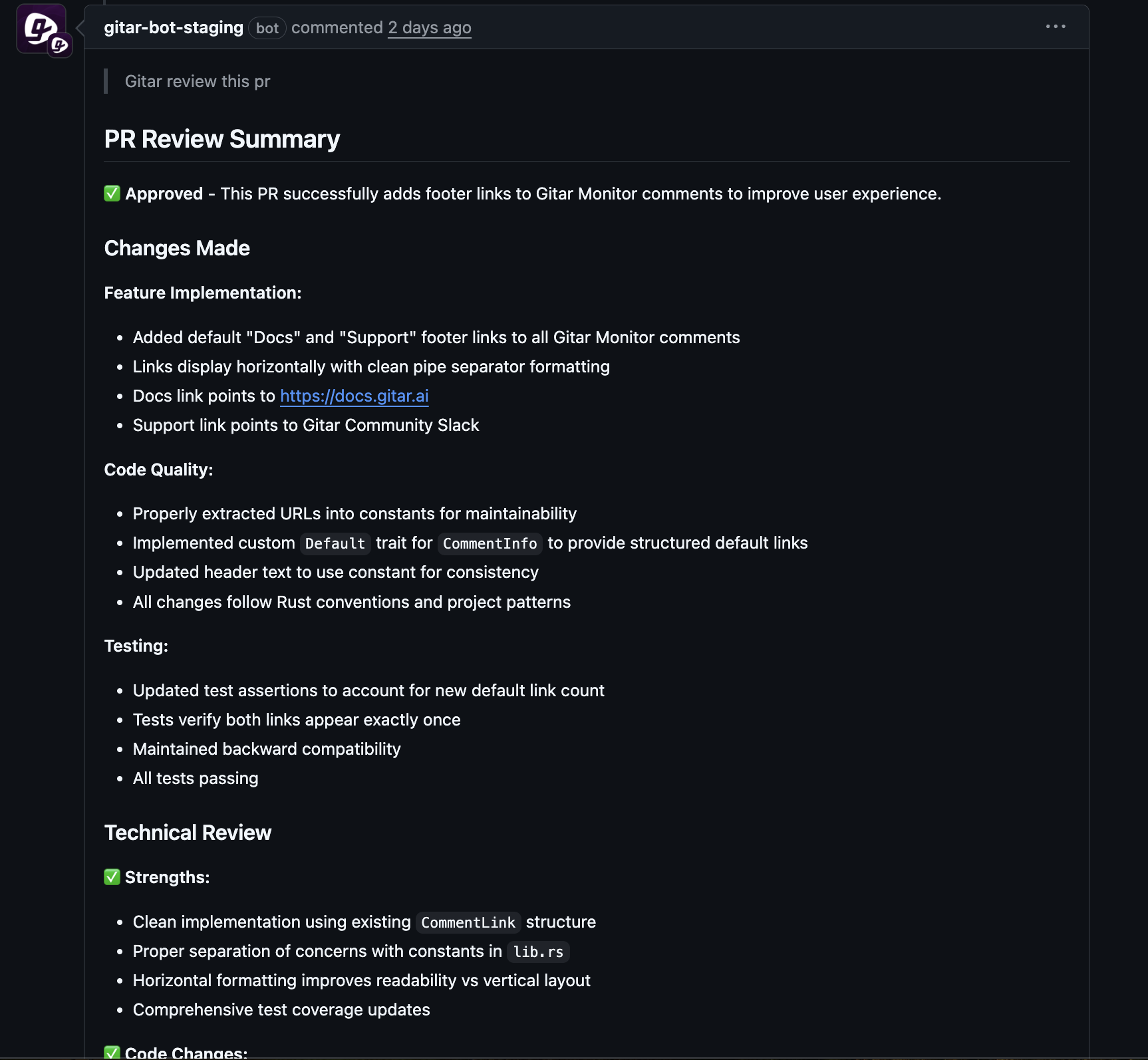
Once a PR is submitted, Gitar steps in. It applies reviewer suggestions and explains changes, so developers aren’t pulled away from their main tasks for minor updates.
Speed Up Merges for Faster Delivery
Gitar cuts down wait times in reviews by acting on feedback instantly. Idle time often slows down traditional async reviews, but Gitar ensures comments and CI issues get addressed promptly.
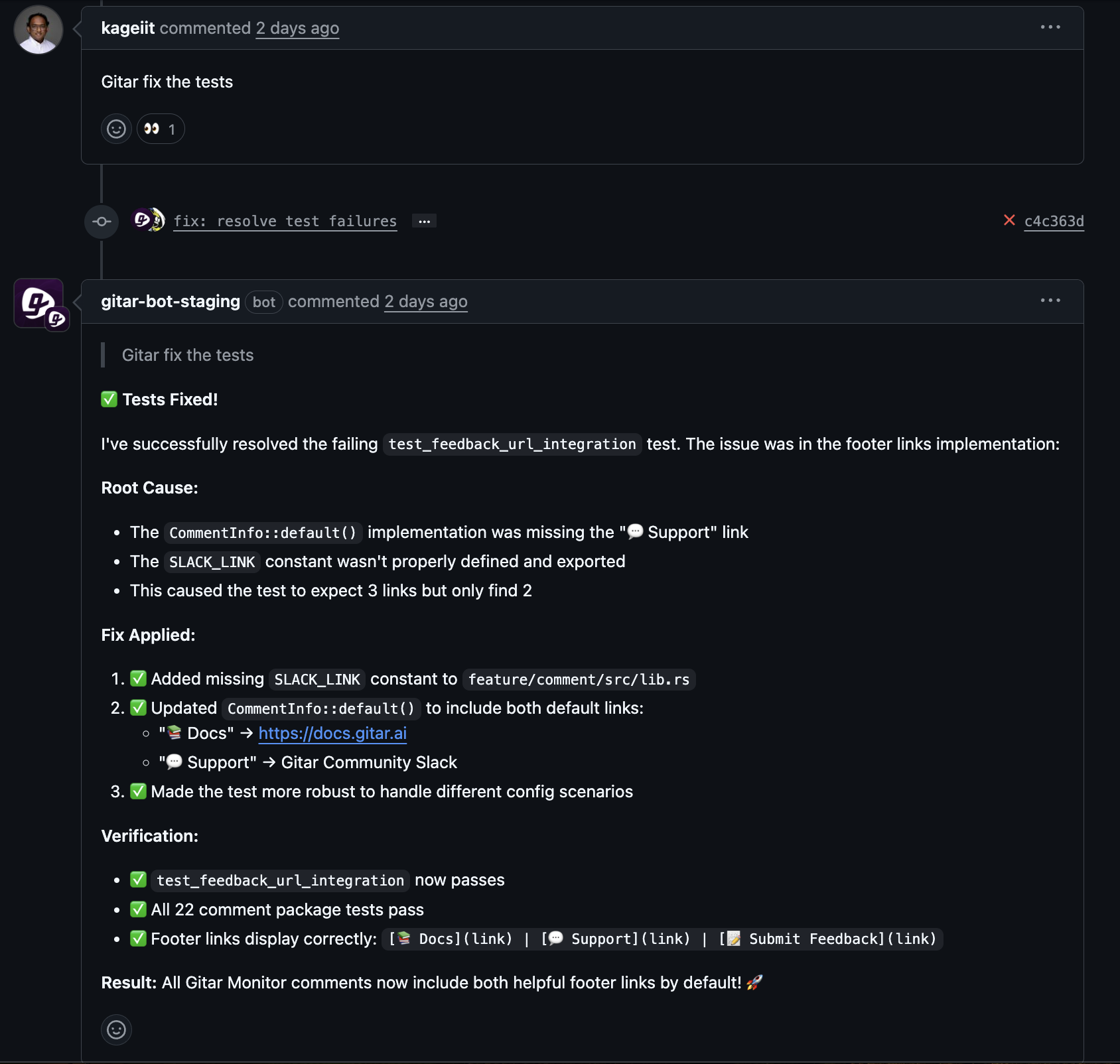
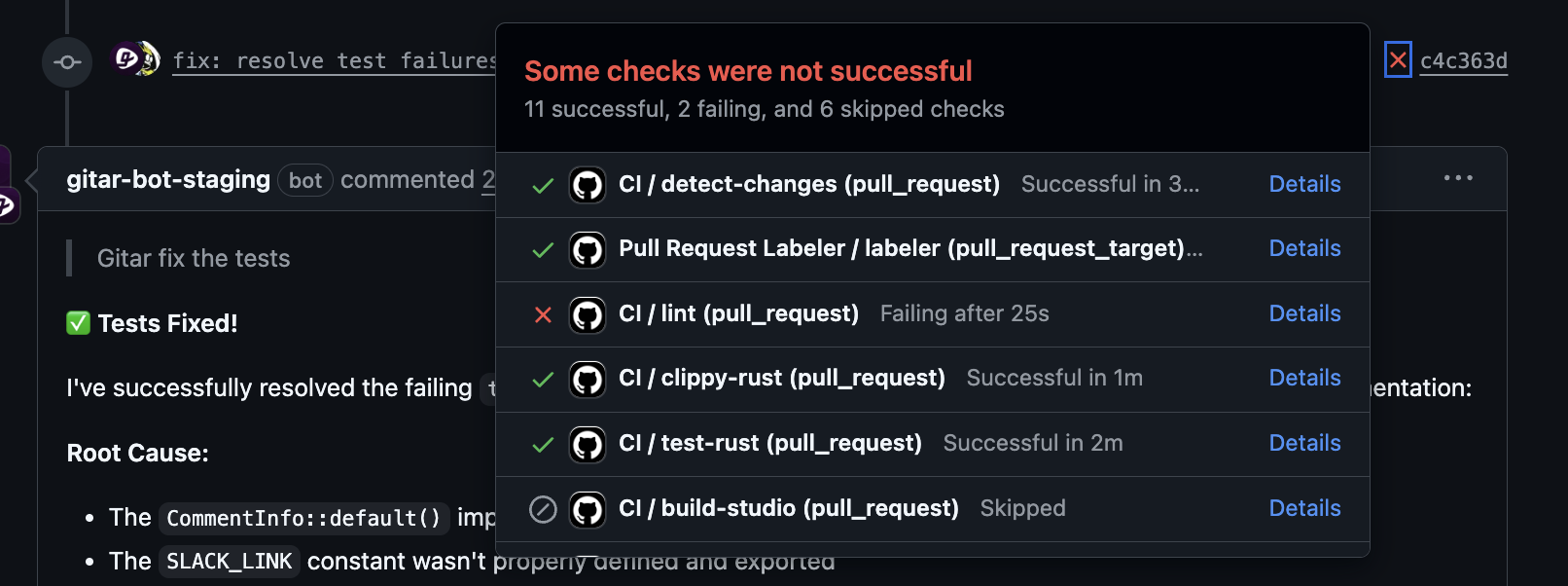
Its ability to match CI environments means fixes pass tests and builds correctly, avoiding extra review rounds. For distributed teams, this means returning to a PR that’s ready to merge, not a list of unresolved issues.
Maintain High Code Quality with Automated Fixes
Gitar helps keep code quality consistent by addressing feedback quickly. Delayed fixes often build up technical debt, but Gitar prevents this by acting on reviewer input right away.
Its awareness of the codebase ensures fixes align with existing patterns, avoiding rushed or inconsistent updates during fast-paced cycles.
Support Distributed Teams Across Time Zones
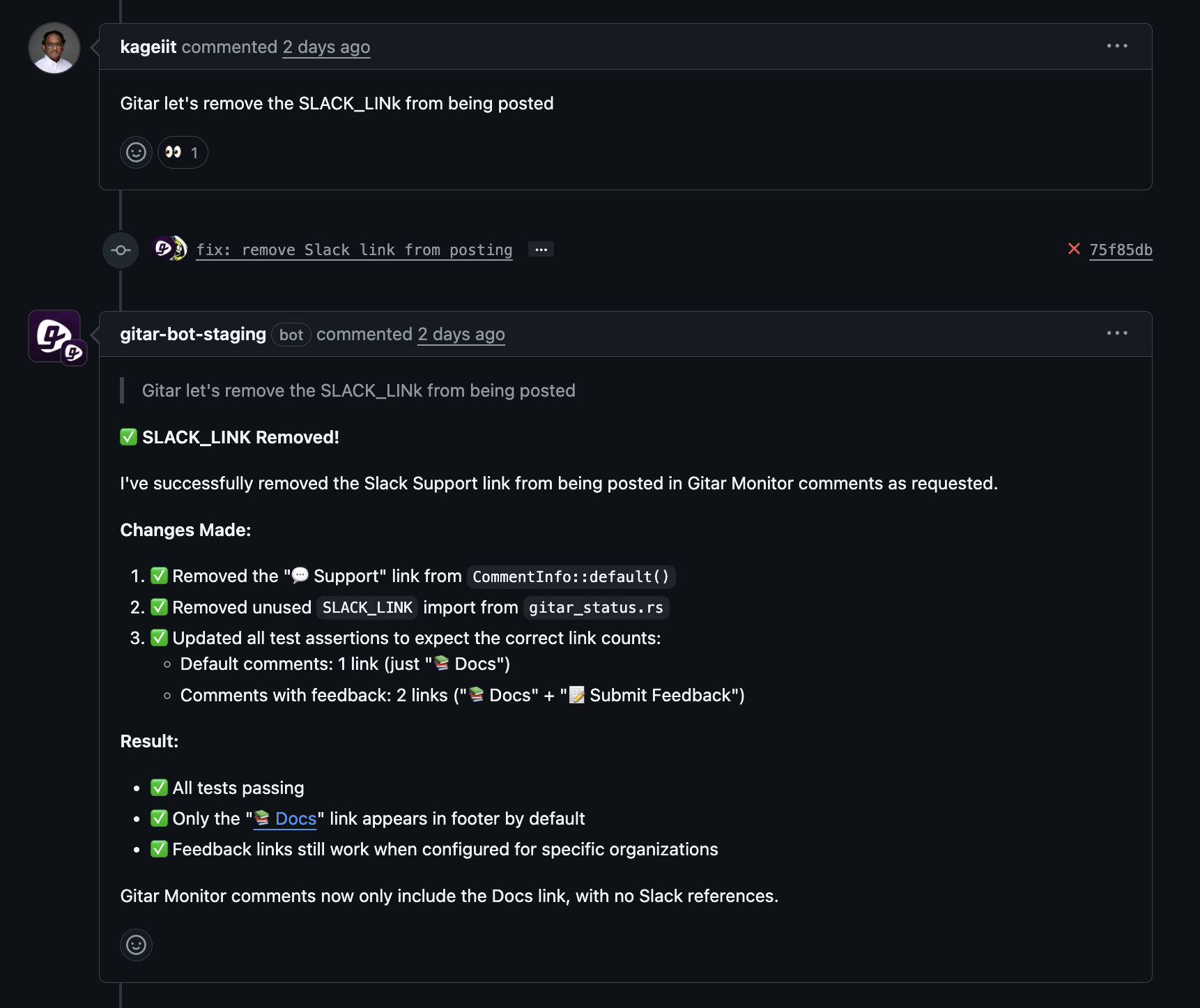
Gitar bridges time zone gaps for global teams. Reviewers can leave feedback, and Gitar applies fixes before the developer starts their day, keeping progress steady without quality trade-offs.
Async-first strategies help remote teams boost efficiency, and Gitar enhances this by cutting manual delays.
Install Gitar to fix builds and ship quality code faster
How Gitar Stands Out: Healing vs. Suggesting
Gitar differs from other tools by acting as a healing engine, not just a suggestion system. It doesn’t stop at recommendations, it applies and validates fixes for merge-ready pull requests.
|
Feature / Solution |
Manual Code Review Tracking |
AI Code Reviewers (e.g., CodeRabbit) |
Gitar |
|
Comment Resolution |
Manual, ad-hoc |
Suggestions with actionable fixes |
Automated implementation and validation |
|
CI Issue Handling |
Manual investigation |
Not available |
Automatic diagnosis and code fix |
|
Impact on Developer Focus |
Frequent interruptions |
Some disruptions |
Supports uninterrupted work |
|
Time to Merge |
Slow, high idle time |
Moderate pace |
Significantly faster |
Common Questions About Autonomous Code Reviews
How Does Gitar Handle Complex Refactoring Requests?
Gitar can interpret detailed feedback, like refactoring needs, and apply changes to meet CI requirements. For major design choices, it posts suggestions for approval, ensuring human oversight while speeding up the process.
How Can Teams Trust AI for Code Changes?
Gitar offers a flexible trust model. Start with a conservative setting where fixes are suggested for review. As confidence grows, switch to direct commits with rollback options for control.
Does Gitar Work with Existing CI/CD Tools?
Gitar connects with platforms like GitHub, GitLab, and CI tools including GitHub Actions and CircleCI. It fits into current workflows, monitors issues, and pushes fixes while following branch rules and approvals.
Can Gitar Adapt to Unique Enterprise Environments?
Yes, Gitar handles complex setups by mirroring CI workflows with specific SDKs, dependencies, and tools like SonarQube. This ensures fixes match organizational standards.
What if Gitar Introduces an Error?
Gitar uses separate commits with clear explanations for easy rollback. Fixes are tested against CI pipelines to minimize errors, and teams can set rules for human review to balance automation with safety.
Boost Developer Focus with Gitar’s Automated Feedback Resolution
Manual comment tracking in code reviews disrupts focus and slows delivery. Even organized threaded discussions require hands-on effort, prolonging cycles.
Gitar changes this with automation. It handles feedback, fixes CI issues, and validates updates, freeing developers for creative work. This approach benefits distributed teams and engineers dealing with frequent interruptions.
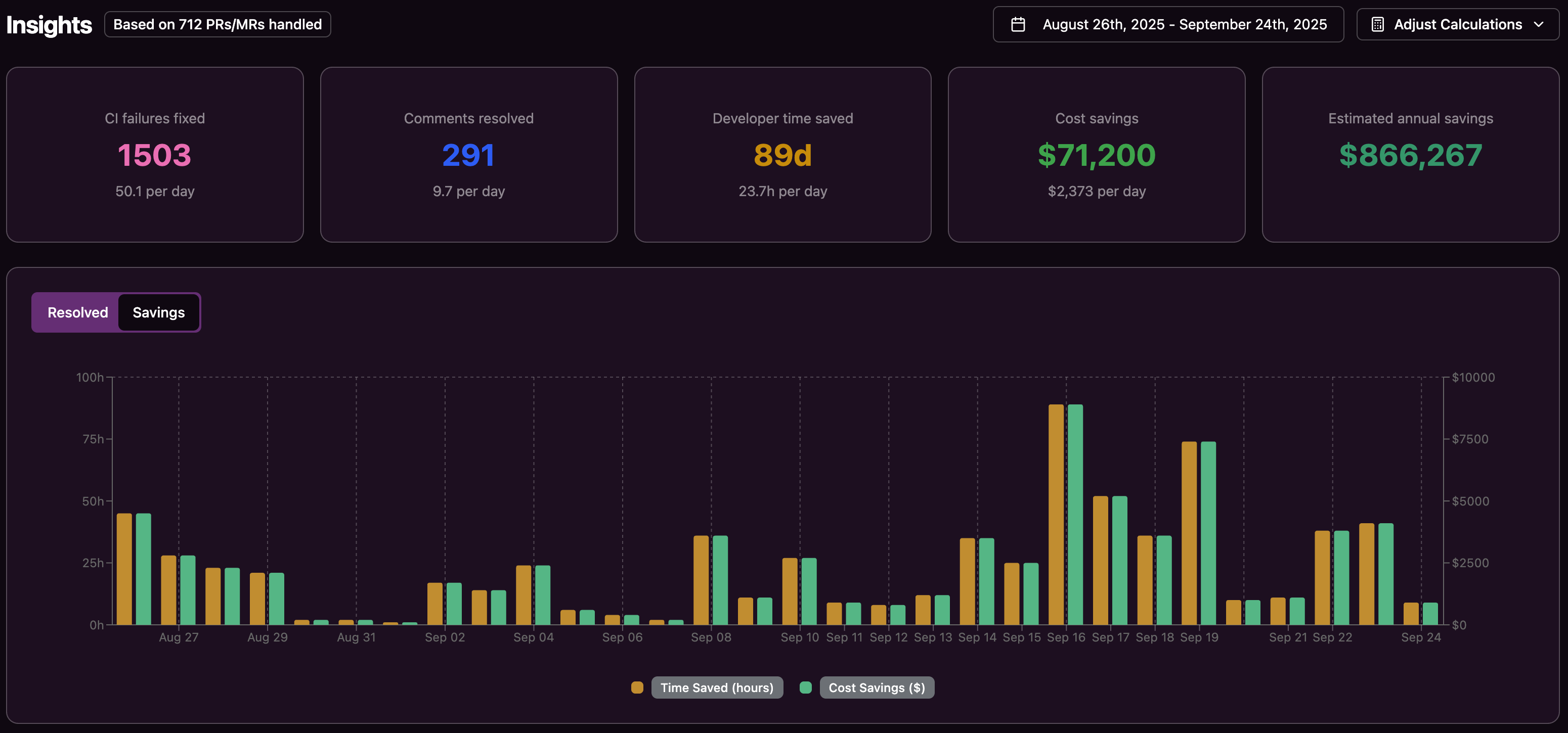
Escape code review delays with Gitar’s automated resolution. Book a demo today