
CI build failures often interrupt developers’ focus, pulling them away from coding and into time-consuming debugging. This article explains how feature flags can isolate new code to prevent disruptions, while automated solutions like Gitar fix issues quickly. Together, they help maintain developer focus and speed up delivery timelines.
Why CI Failures Hurt Productivity
CI build failures drain developer time and resources. Up to 30% of a developer’s day can be spent on CI and code review issues. For a team of 20, that adds up to about $1 million in lost productivity each year, making CI problems a major cost for engineering teams.
These issues also slow down the entire development process. CI and code reviews now take more time than writing code. Teams often get stuck validating and merging changes instead of building new features, which limits overall progress.
The Cycle of “Vibe Coding” and Red Builds
Developers often code in a flow state, pushing changes with confidence. But then a notification hits: a red build or failed test. That sudden stop breaks momentum and pulls focus away from creative work.
Flaky tests are especially frustrating. They might pass locally but fail in CI due to timing issues or external dependencies. These inconsistent failures create doubt, turning optimism into worry about whether code will pass.
Over time, this cycle erodes confidence. Developers shift from bold problem-solving to cautious coding, fearing CI failures. The joy of creating gets replaced by stress over potential disruptions.
The Hidden Cost of Context Switching
CI failures don’t just take time to fix, they disrupt mental focus. Understanding failure points cuts debugging time and helps deliver better code faster. Yet, the usual process remains manual and distracting.
When a failure occurs, developers stop their current task, check logs, figure out the issue, switch contexts to fix it, and then wait for the pipeline to rerun. What should take minutes often stretches into hours due to mental strain and setup differences.
Build errors, like outdated tool versions or mismatched dependencies, add more complexity. These issues might not appear locally but surface in CI, turning quick fixes into lengthy troubleshooting sessions.
Waiting for pipelines to finish compounds the frustration. In large setups, runs can take 15 to 30 minutes. This downtime stalls progress, forcing developers to either sit idle or start another task, only to get pulled back when results arrive.
Broader Impacts on Team Morale and Delivery
Frequent CI issues affect more than individual work; they shape team culture. A fear of breaking builds can lead to overly cautious coding, delayed merges, and slower feature releases as stability takes priority over innovation.
Flaky tests cause over 58% of CI problems, disrupting workflows and wasting time. Many failures stem from environmental quirks rather than actual code errors, offering little value for the hassle they create.
For distributed teams, delays grow worse. A failure flagged overnight in one timezone can stall progress for 12 hours or more, pressuring quick fixes that risk new issues. In competitive markets, these slowdowns mean missed chances and weaker responsiveness.
Ready to tackle CI delays? Try Gitar to automatically fix builds and ship quality code faster.
How Feature Flags Contain CI Risks
Feature flags change how teams manage code deployment. They let developers ship new features in a disabled state, keeping potential issues isolated from the main system until ready for release.
This method creates a clear separation. New code stays behind flags, preventing it from affecting core functionality during development. It shifts deployment from a high-stakes event to a manageable, step-by-step process.
Feature flags also balance speed and stability. Unlike traditional branching, which risks messy merges or outdated code, flags allow continuous integration while controlling exposure, reducing friction in CI workflows.
Isolating New Code to Limit Disruptions
Feature flags act as a barrier, keeping new code separate from production systems. Even if issues exist, they stay contained within the flagged area, avoiding broader impacts on the application.
Teams can break features into smaller parts with individual flags. If one piece causes trouble, only that part gets turned off, leaving the rest active. This targeted control minimizes risk.
Developers gain confidence knowing their experiments won’t break shared systems. This freedom encourages bolder ideas and faster progress without the fear of widespread failures.
Debugging becomes easier too. Issues stay within flagged boundaries, so teams focus on specific areas rather than the entire codebase, cutting down time to identify and fix problems.
Gradual Rollouts for Safer Deployments
Feature flags enable teams to activate new code slowly, starting with a small user group like 1% or 5%. This approach lets them monitor performance and feedback before a full launch.
Slow rollouts work well for features with uncertain performance or user impact. Testing in real conditions with a limited audience reveals issues that staging environments might miss.
Teams can also tailor rollouts by region, device, or user type to ensure varied testing. For instance, a new checkout flow can be tested across different networks and behaviors for better insights.
Data from these rollouts guides future decisions. Teams learn how features behave, how users engage, and what surprises arise, using this to improve current and upcoming work.
Quick Rollbacks to Fix Issues Instantly
Feature flags allow instant rollbacks without redeploying code. Unlike traditional rollbacks, which involve reverting changes and rebuilding, flags disable problematic features in seconds.
This speed changes how teams handle problems. They can turn off issues immediately, then take time to analyze and fix them properly, reducing pressure and rushed mistakes.
Fast rollbacks support bolder deployment plans. Knowing problems can be contained quickly, teams release more often, shortening cycles and delivering value sooner.
In complex setups like microservices, quick disablement stops failures from spreading. Isolating issues prevents cascading effects, protecting interconnected systems from broader damage.
Gitar: Automated Fixes for CI Issues
Feature flags reduce the scope of CI failures, but they don’t prevent them. Gitar steps in with automated fixes, addressing issues as they arise, often before developers notice, for a smoother workflow.
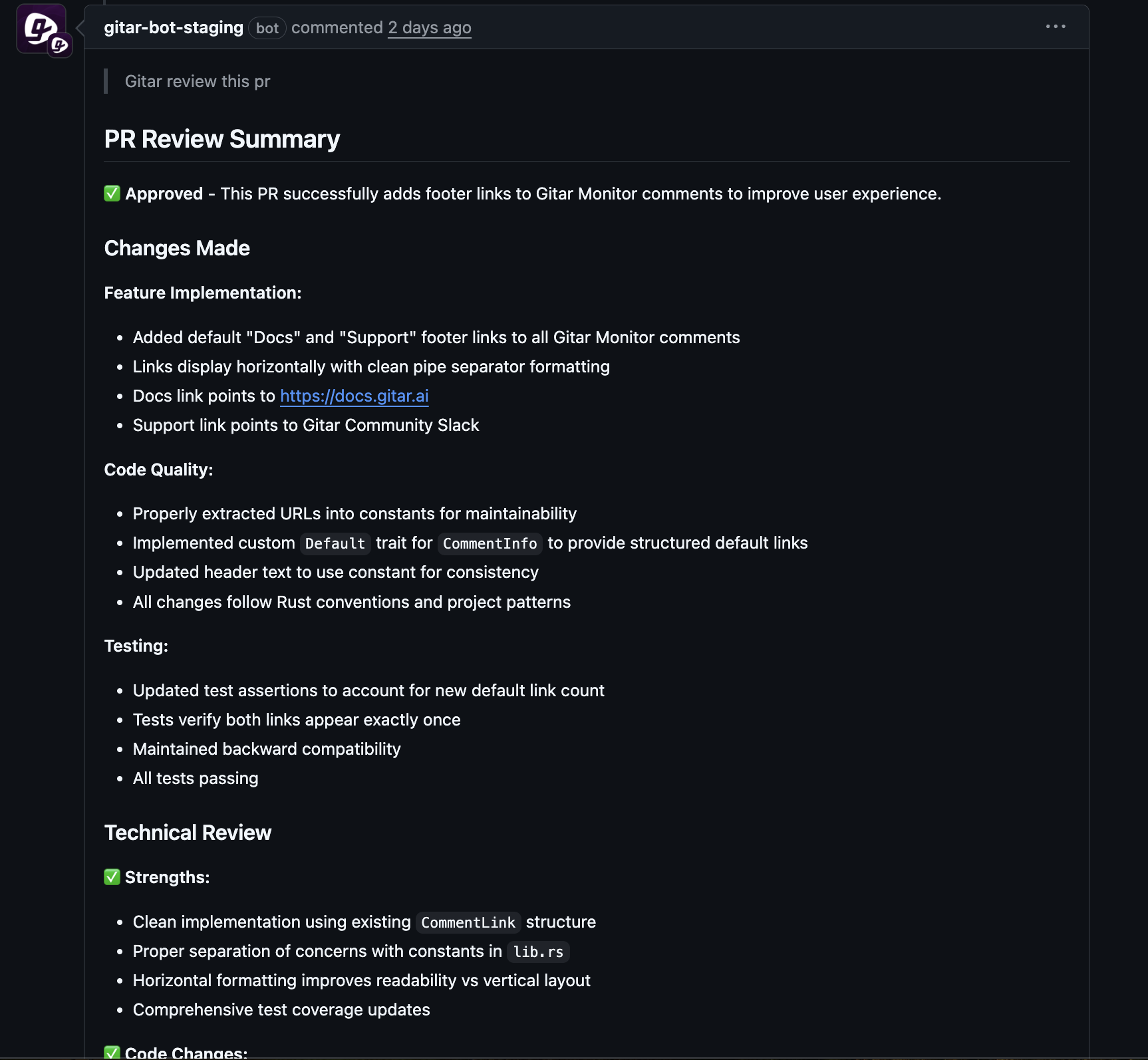
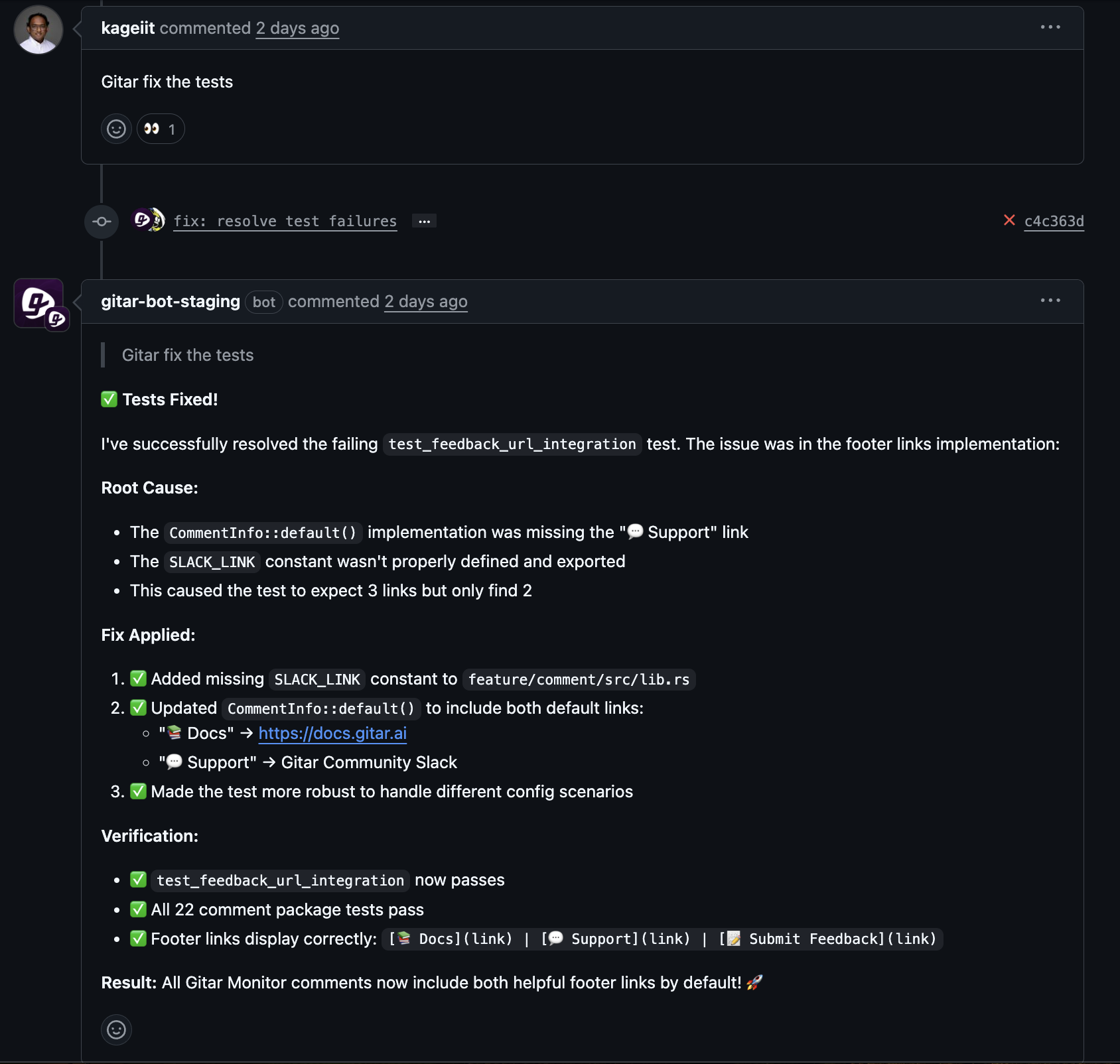
Gitar acts as a smart CI tool. It detects failures, analyzes logs, creates fixes, and commits them directly to the pull request branch. This cuts out manual debugging, saving significant time.
Instead of waiting for developers to spot and solve problems, Gitar watches pipelines constantly and acts instantly. Many issues get resolved without interrupting the developer’s focus.

Here’s what Gitar offers:
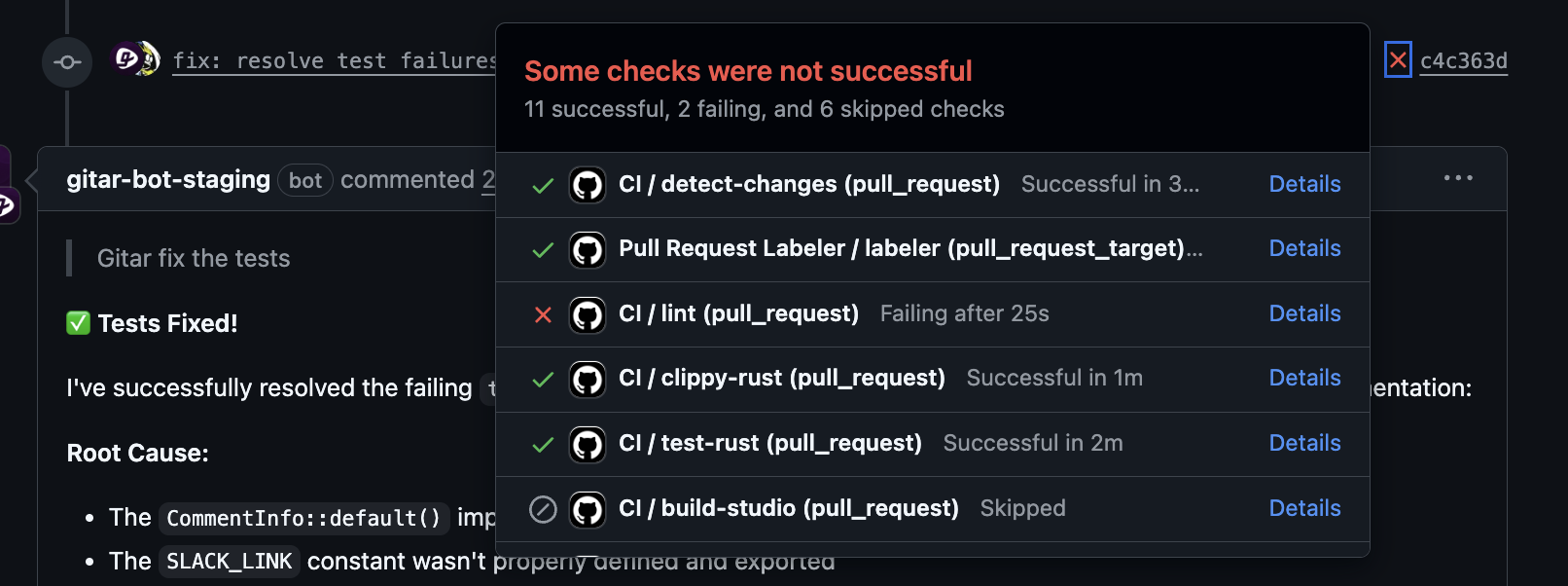
- Automatic CI Fixes: Handles linting errors, test failures, and build issues by generating and applying solutions directly.
- Environment Matching: Replicates complex setups, including SDK versions and third-party scans, to ensure accurate fixes.
- Flexible Trust Settings: Starts with suggestion mode for review, moving to full automation with rollback options as confidence grows.
- Context-Sensitive Fixes: Connects with local tools to align solutions with the project’s broader goals and patterns.
- Wide Platform Support: Works with GitHub Actions, GitLab CI, CircleCI, BuildKite, and more, fitting into any existing system.
Want to eliminate CI hassles? Install Gitar to fix builds automatically and keep your team moving forward.
Combining Feature Flags and Automated Fixes for Better Results
Feature flags and Gitar create a strong pairing. Flags prevent issues from spreading, while Gitar resolves them quickly within those boundaries. This duo reduces risks and boosts development speed.
Teams can iterate faster with less worry. Feature flags provide a safety net for new code, and automated fixes ensure CI problems don’t stall progress. The result is a workflow that balances innovation and stability.
For distributed teams, this setup minimizes delays across time zones. Flags isolate changes, and Gitar fixes issues instantly, keeping work moving without waiting for others to step in.
Preventing Issues and Solving Them Fast
Feature flags work upfront by isolating new code, limiting any potential damage. This protection starts during development and lasts through deployment, keeping risks in check.
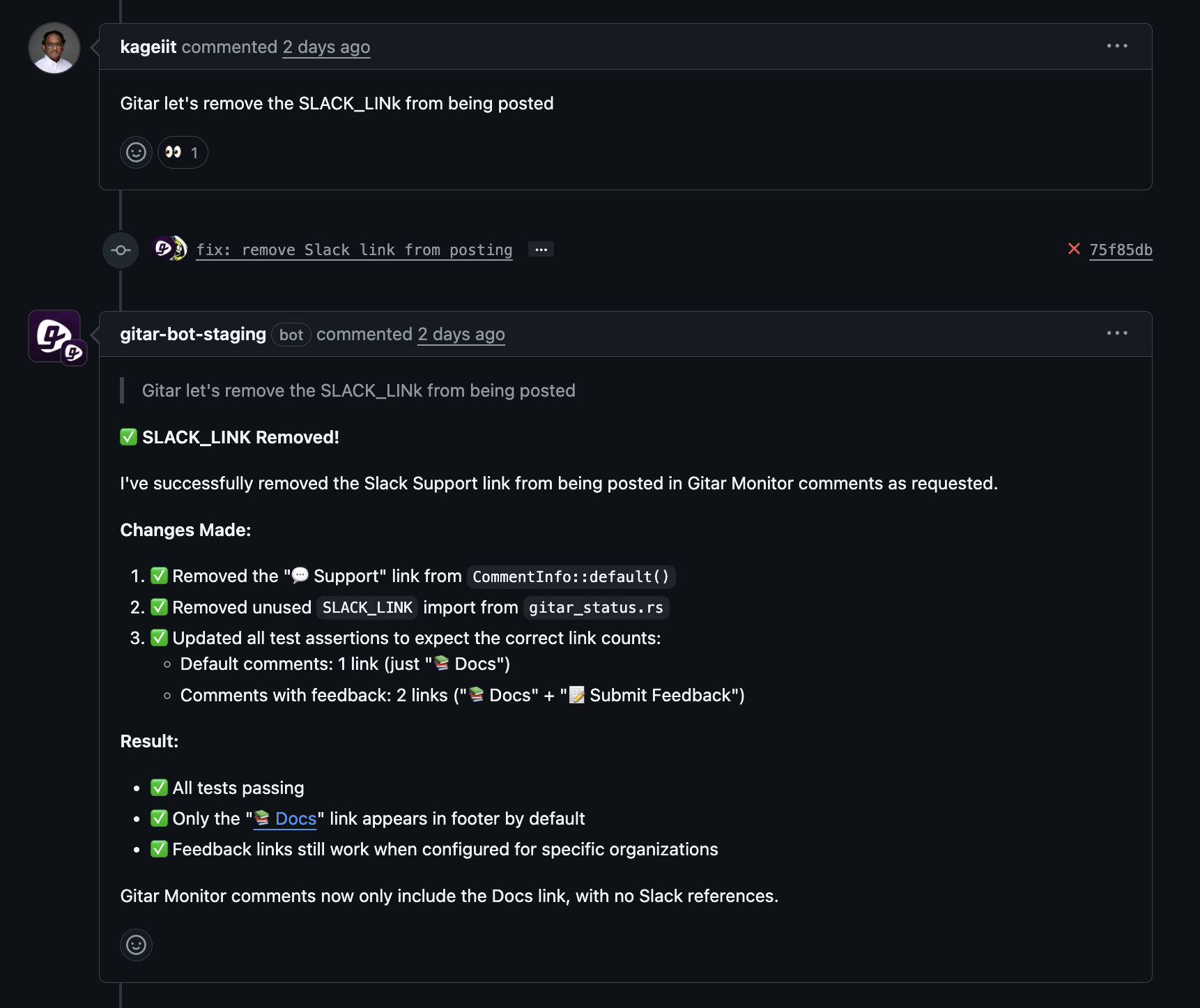
Gitar reacts swiftly when issues appear. It analyzes failures, applies fixes, and updates the branch, turning a disruptive process into a quiet background task.
This combination shines against common CI headaches. Flaky tests often cause random failures with no real code issues. Flags limit their impact, and Gitar addresses the root causes.
Teams can also experiment more within flagged areas. Failures stay contained and get fixed fast, encouraging bolder approaches and quicker cycles without added risk.
Speeding Up Development Cycles Safely
Normally, teams choose between moving fast or staying safe. Feature flags and Gitar remove that choice by supporting rapid changes with strong safeguards in place.
Developers can push updates often within flagged zones. Gitar handles small issues like lint errors automatically, keeping focus on coding rather than fixing.
This pace helps during early feature exploration. Teams test ideas quickly, get feedback, and adjust, with automation preventing minor issues from piling up as debt.
Flags can also split features into smaller, testable chunks. Each piece develops on its own, and Gitar resolves integration hiccups as they combine, streamlining the process.
Cutting Recovery Time for CI Failures
Mean Time to Recovery (MTTR) measures how fast teams bounce back from CI issues. The usual cycle of spotting, diagnosing, fixing, and validating takes time and risks errors at every step.
Feature flags and Gitar shrink this timeline. Flags narrow the problem area for faster diagnosis, and automation skips manual steps, moving straight to a tested fix.
CI failures drain productivity when someone must investigate and fix them. Automating this within contained zones eliminates that burden, keeping developers focused on impactful work.
These time savings build up. Consistent automation in controlled areas keeps improving efficiency, speeding up recovery with each issue handled.
Experience faster recovery now. Install Gitar to automate fixes and boost your team’s output.
Feature Flags and Gitar vs. Manual CI Debugging
|
Aspect |
Feature Flags + Gitar |
Manual CI Debugging |
|
Issue Containment |
New code stays isolated, limiting failure impact to specific areas |
Failures can hit main branches, affecting multiple features |
|
Fixing Process |
Gitar automates fixes, needing little developer input |
Manual work causes delays and pulls focus away |
|
Context Switching |
Minimized, helping developers stay in flow |
Frequent, disrupting focus and slowing progress |
|
Delivery Speed |
Faster with quick fixes and controlled rollouts |
Often delayed by long debugging and reruns |
This comparison shows clear differences. Manual debugging creates ongoing friction, slowing teams over time. Feature flags with Gitar tackle each pain point directly for better efficiency.
Containment stands out as a key advantage. Without flags, a single failure can ripple across features and timelines. Routine maintenance often triggers more CI failures than new features, amplifying the impact in traditional setups.
In complex environments, fix speed matters more. Manual debugging needs deep knowledge across areas, while automation applies consistent solutions, reducing wait times.
Common Questions on Feature Flags and Automated CI
How do feature flags cut down CI failures?
Feature flags let developers deploy new code in a disabled state, keeping it separate from the main pipeline until stable. Issues stay within specific areas, preventing wider build failures and protecting core systems. This isolation supports fast iteration with less risk.
Does Gitar integrate with existing feature flag tools?
Yes, Gitar works with any CI/CD setup and version control system, regardless of your flagging approach. It focuses on pipeline failures, fixing issues within isolated contexts to ensure green builds. You can keep using your current flag system while gaining automation benefits.
What CI failures can this combo address?
Feature flags and Gitar handle build errors, test failures, environment mismatches, and dependency conflicts. Flags limit the spread, and Gitar fixes issues quickly, covering common problems like script errors, tool incompatibilities, and lint violations in varied setups.
How does this prevent disruptions from optimistic coding?
With flags isolating code and Gitar fixing failures automatically, developers can code freely without build anxiety. Issues get resolved often before they’re noticed, letting teams stay focused on creating rather than debugging.
How does this help distributed teams collaborate?
This approach cuts delays across time zones. Flags keep changes separate, and Gitar fixes issues instantly. Reviewers can request updates for Gitar to handle, ensuring progress continues without waiting for others, fostering async teamwork focused on high-value tasks.
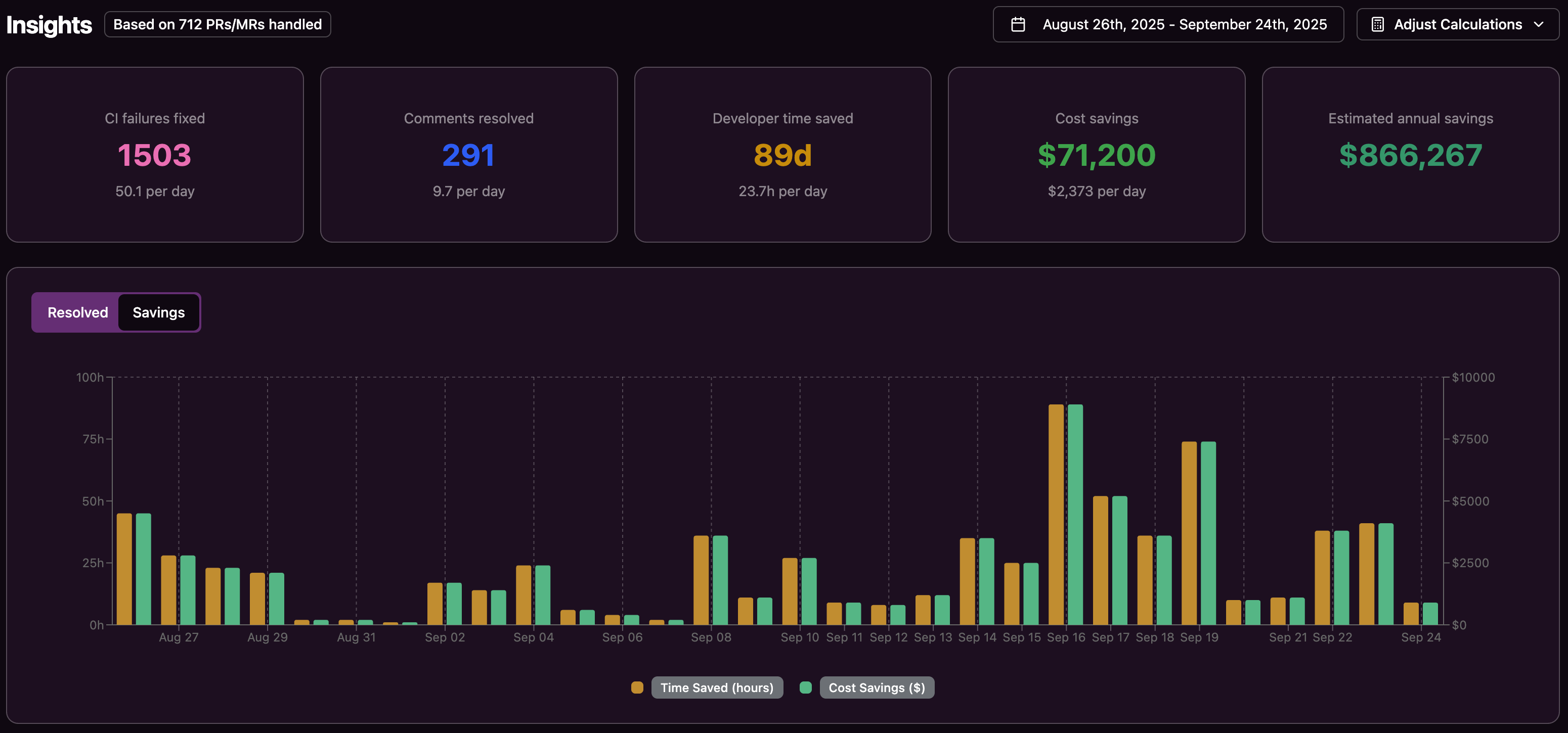
Final Thoughts: Restore Focus with Feature Flags and Automation
Today’s software development needs tools that support both speed and quality. Feature flags and Gitar’s automated fixes offer a modern way to handle CI disruptions and keep developers focused.
Feature flags isolate new code, creating safe zones for experimentation without risking system stability. This setup allows gradual testing and activation, while also boosting confidence to try new ideas.
Gitar adds fast, accurate fixes for issues within those zones. By removing manual debugging, it turns CI failures into minor background tasks, saving time and reducing frustration.
Together, they enable teams to iterate confidently. Flags provide protection, and automation ensures quick resolutions, supporting a workflow that meets competitive demands.
Looking ahead, combining isolation and automation sets a new standard for efficient development. The aim isn’t just to lessen CI disruptions but to build systems where they’re managed seamlessly.
For teams focused on productivity and faster delivery, adopting feature flags and automation is essential. Those who start now will be ready for future challenges and market needs.
Ready to end CI interruptions? Install Gitar today to automate fixes and deliver quality software faster.