
Engineering teams often struggle with pull request delays. Developers write code quickly, but getting it merged can take hours or even days. Urgent hotfixes wait in review queues, security patches sit idle during CI failures, and critical production fixes get lost among routine updates. This manual process costs teams significant time and delays releases, impacting productivity.
An effective solution is autonomous AI that handles pull requests independently. With AI, you can fix issues and merge code without constant human oversight. Install Gitar now to fix broken builds automatically and deliver quality software faster.
Why Pull Requests Slow Down Development Teams
Delays Cost Time and Cause Stress
Delayed pull requests create widespread issues for engineering teams. A security patch that should deploy in hours might take days, exposing systems to risks. Hotfixes for customer issues can lead to prolonged outages if not merged quickly, harming both reputation and revenue.
The financial impact adds up fast. For a team of 20 developers, spending just one hour daily on CI failures and review delays can cost around $1 million yearly in lost productivity. This figure excludes the impact of delayed features or the frustration developers face from constant interruptions, which disrupts their focus and workflow.
Many developers find fixing broken builds and waiting for approvals more frustrating than solving complex technical problems. These repetitive tasks break their concentration, turning creative work into tedious troubleshooting.
Manual Reviews Can’t Keep Up with Modern Demands
Traditional pull request workflows struggle to match the pace of current software development. Large pull requests often overwhelm reviewers, leading to errors and delays. Critical changes can get buried among less urgent updates.
Manual processes introduce multiple bottlenecks. Reviewers frequently lack context about a change’s importance, slowing down decisions. Limited reviewer availability and poor prioritization extend review times, especially during off-hours or when key team members are away.
Communication gaps worsen the problem. Even if a developer labels a pull request as urgent, it may still follow the same slow queue as routine updates. Weak team collaboration can further delay reviews, creating significant obstacles when speed is essential.
Increased Code Volume Adds Complexity
AI coding tools help developers write more code in less time, but this also means more pull requests to review. A higher volume of changes increases the chance of CI failures and demands more reviewer attention.
Teams that once managed pull requests manually now face challenges with the growing number of updates. Urgent fixes must compete for attention amid this flood of changes, straining CI resources and reviewer focus.
This creates a frustrating cycle. Teams can write fixes quickly, but deploying them often lags due to overloaded pipelines. Known issues, like security flaws, may remain unresolved simply because the system can’t handle the demand efficiently.
How Gitar Automates Pull Request Management
Gitar shifts pull request handling from manual effort to AI-driven automation. Unlike tools that only offer suggestions, Gitar acts independently to fix CI failures and move code to production without delays caused by human intervention.
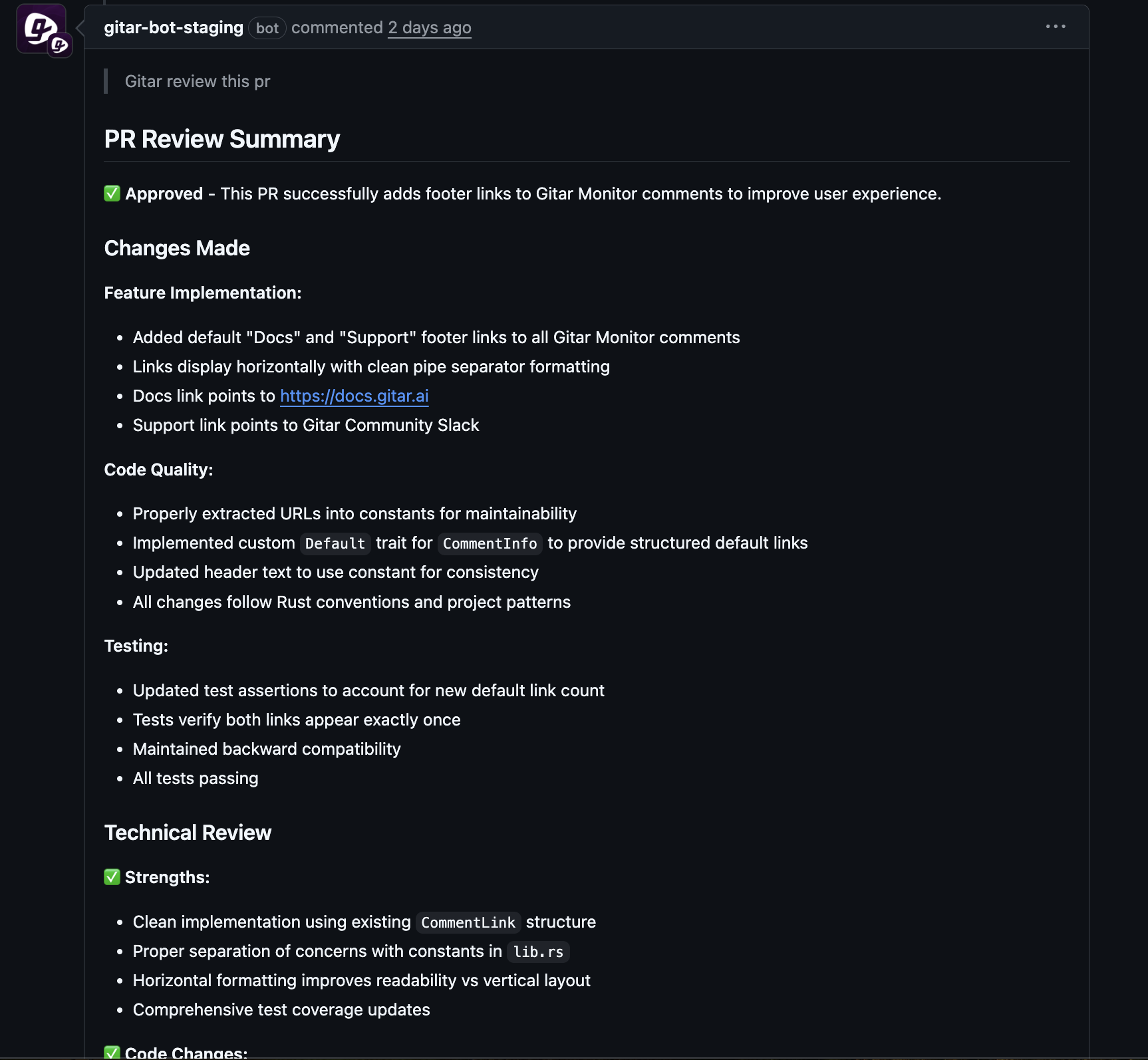
The process is straightforward. Gitar analyzes pull requests, detects CI errors or reviewer feedback, creates a fix, and updates the request with a working solution. For instance, if a linting error causes a CI failure, Gitar corrects the code, tests it in your full CI setup, and applies the fix directly.

Key features that improve pull request handling:
- Automatic Fixes: Resolves CI failures and feedback without developer input, turning failed builds into successful ones.
- Environment Matching: Mirrors your enterprise setup, including SDK versions and security scans, to ensure fixes work in production.
- Customizable Automation: Offers control over automation levels, from suggestions needing approval to direct commits.
- Time Zone Independence: Fixes issues continuously, supporting distributed teams by resolving problems during off-hours.
- CI/CD Compatibility: Works with platforms like GitHub Actions, GitLab CI, CircleCI, and BuildKite for easy integration.
Ready to remove pull request delays? Install Gitar now to fix builds automatically and ship better software faster.
What Sets Gitar Apart: Active Fixes, Not Just Suggestions
From Identifying Issues to Applying Fixes
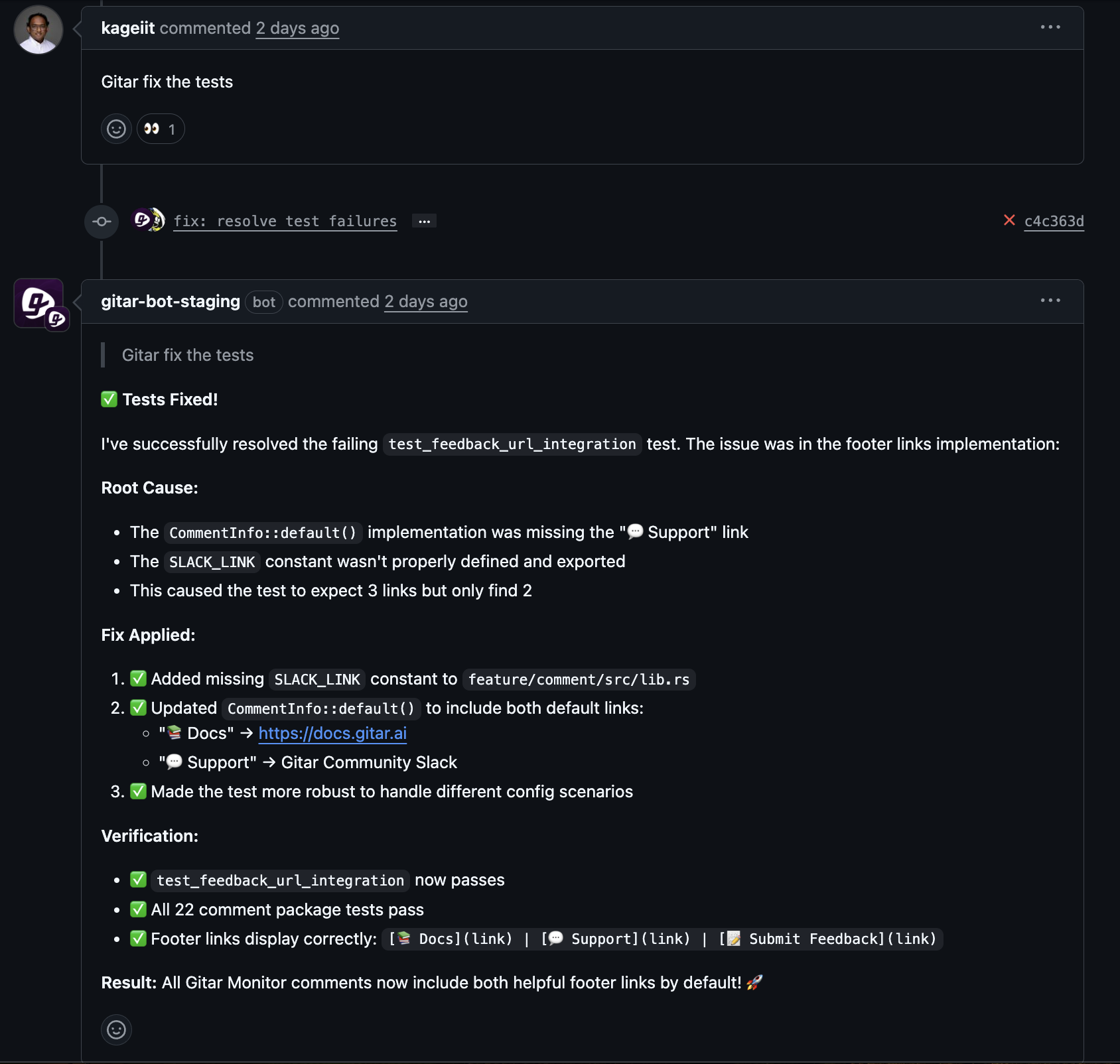
Gitar stands out by not just pointing out problems but solving them directly. When a pull request fails CI, it writes, tests, and commits the fix without waiting for manual input.
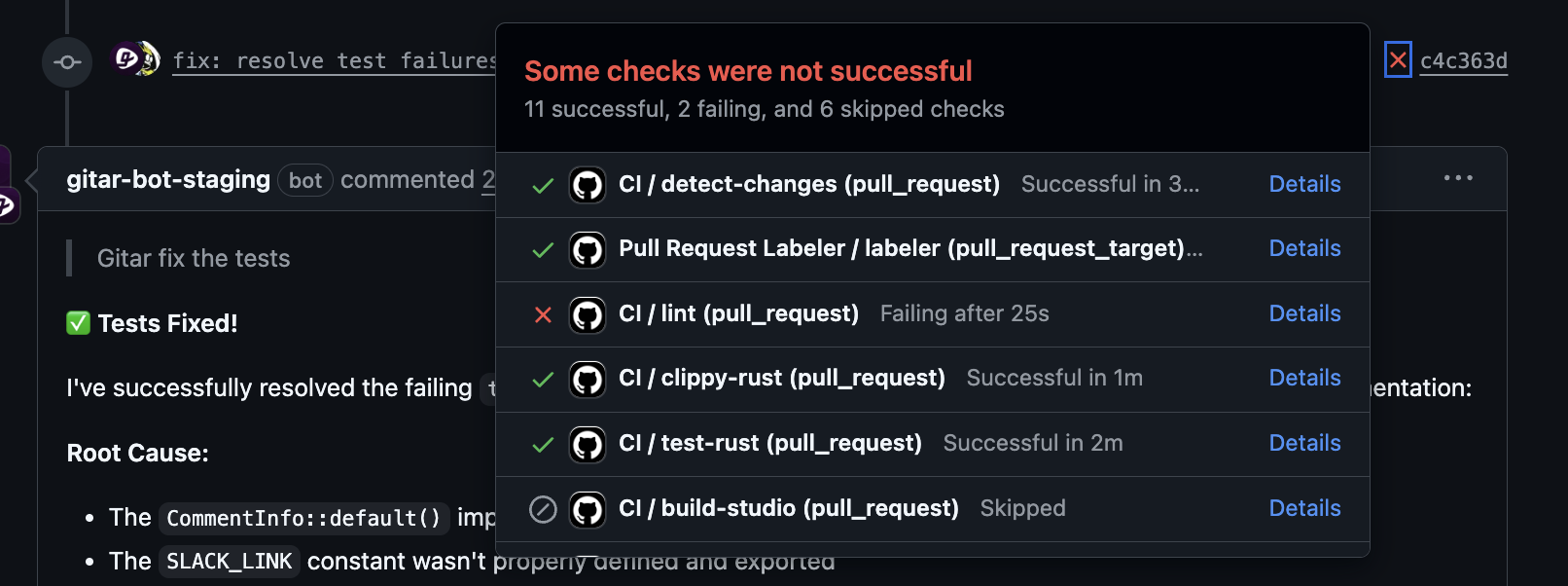
This approach covers common issues like linting errors, test failures, and build problems. Unlike tools that only suggest changes, Gitar ensures fixes match your production environment by replicating dependencies and integrations. Fixes aren’t just quick solutions; they pass the same tests as production code.
Simplify Workflows for Faster Merges
Standard pull request processes involve several steps, from CI checks to developer fixes and reviewer approvals. Each step adds time and the risk of errors. Gitar streamlines this into one automated flow, cutting out manual delays.
Monitoring metrics like pickup and merge times helps spot delays and improve efficiency. Gitar boosts these metrics by reducing human involvement. Processes that once took multiple steps now happen automatically, from detecting a problem to applying a solution.
Distributed teams benefit greatly. If a reviewer in one time zone leaves feedback, Gitar can apply changes instantly instead of waiting for the developer to respond. This shortens cycles from days to hours, ensuring urgent fixes reach production quickly.
Comparing Gitar to Other Tools: Automation vs. Manual Effort
Many CI and code review tools exist, but most only suggest fixes rather than apply them. For engineering leaders choosing a tool, understanding this difference is key to managing pull requests effectively.
|
Feature |
Manual Process |
AI Suggestions |
Gitar (Automated) |
|
Fix Application |
Developer writes and tests fixes |
Suggests fixes for manual application |
Generates, tests, and commits fixes automatically |
|
CI Testing |
Manual testing cycles |
Suggestions may fail CI |
Matches full environment to ensure fixes work |
|
Resolution Time |
Hours or days based on availability |
Still needs human effort |
Minutes for common issues, operates 24/7 |
Manual processes depend on human schedules, often causing delays during off-hours. AI tools that suggest fixes still require someone to apply them, which can slow things down. Gitar handles the entire process independently, ensuring fixes happen anytime without waiting for a team member.
Key Insights on AI for Pull Request Management
How Does Gitar Deliver Value on Faster Merges?
Gitar offers clear, measurable benefits by speeding up merges. For a 20-developer team, CI failures and review delays can cost around $1 million annually in lost time, based on just one hour daily spent on these tasks. Many teams spend even more.
Beyond saving time, Gitar helps resolve incidents faster. Teams can track benefits through metrics like reduced merge times, fewer developer hours on CI issues, quicker incident fixes, and more frequent deployments. Most leaders see positive returns within a few months, with gains increasing as trust in automation grows.
How Does Gitar Ensure Trust in Automated Fixes?
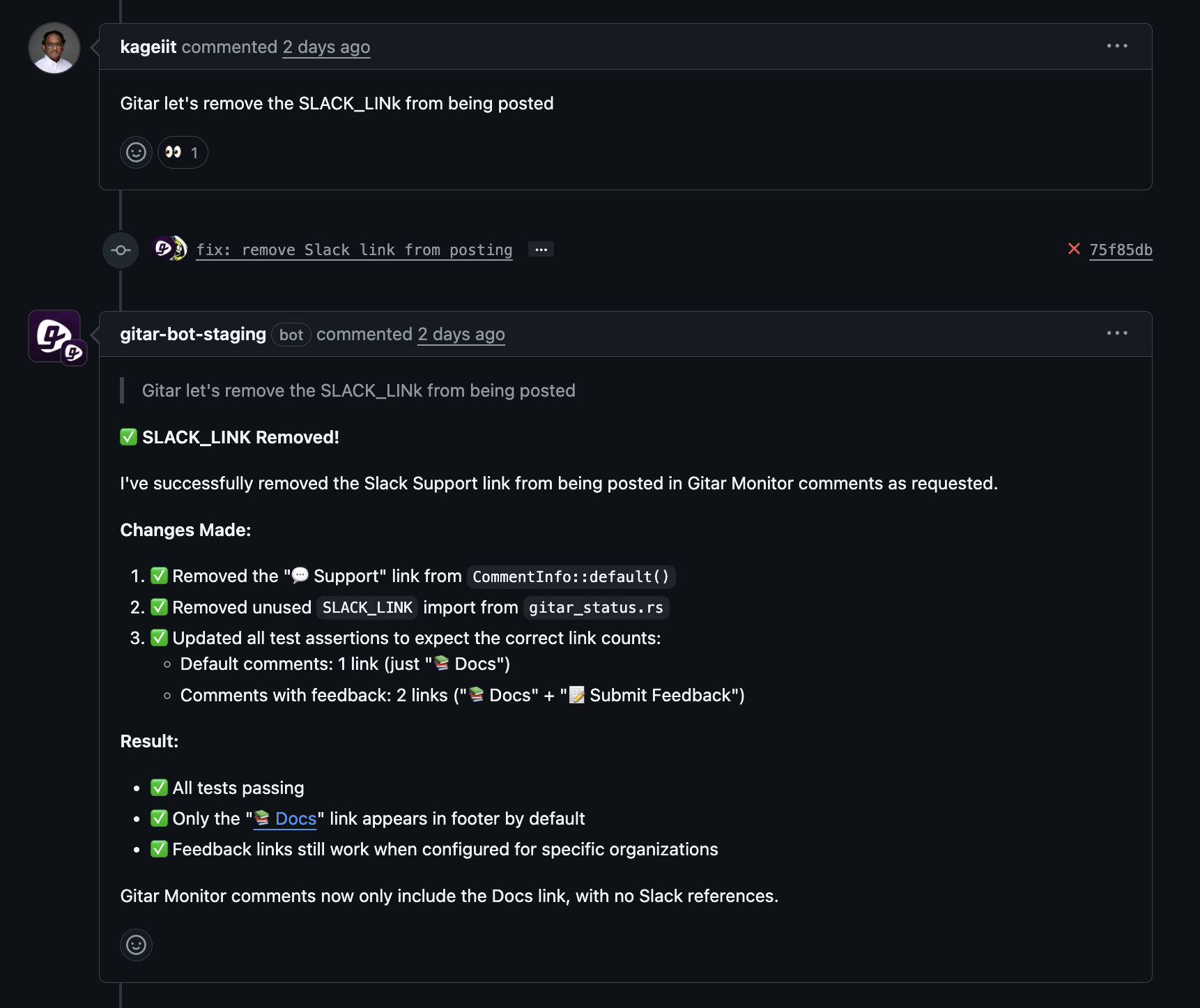
Building trust is central to Gitar’s design. Teams can start with a cautious approach, using suggestion mode to review fixes before applying them. This lets users see the quality of solutions before switching to automatic commits.
Gitar provides full transparency. Every automated fix comes with a detailed explanation of changes made and the reasoning behind them. All actions are logged in git history for accountability, and rollback options are available if needed.
Enterprises often begin with strict controls for critical code while automating less sensitive areas. As they see reliable results with minor fixes like linting or dependency updates, they expand automation. Teams always control the scope and pace, gaining confidence through proven outcomes.
How Does Gitar Protect Privacy and Code Ownership?
Protecting privacy and intellectual property is a priority for Gitar, especially for enterprise users. On-premises deployment options are available, keeping all analysis within a company’s secure environment.
For cloud users, Gitar uses strong security measures like encryption, access controls, and audit logs. It only accesses authorized repositories and processes specific data needed for fixes. Analysis occurs in isolated, secure spaces with tight data retention rules.
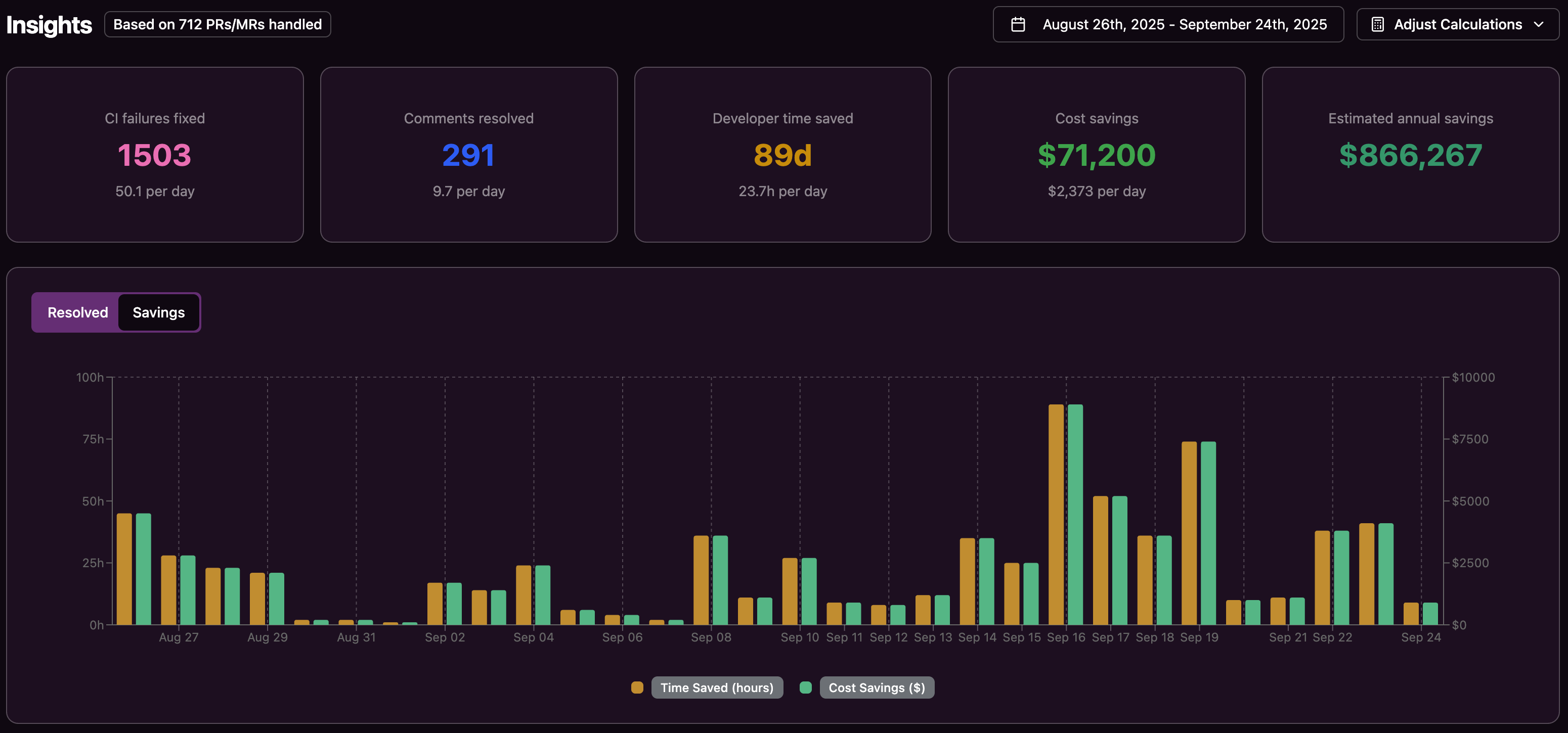
Take Back Developer Time with AI-Powered Fixes
Manual pull request management often fails when urgency matters most. Suggestion-based AI tools still need human effort, and the growing volume of code changes overwhelms traditional processes. Teams need a tool that resolves issues independently.
Gitar turns chaotic pull request queues into efficient, automated systems. It handles everything from detecting issues to applying validated fixes, operating continuously to ensure critical updates reach production without delay.
This means not only quicker merges but also better software quality and happier developers. Teams gain confidence knowing fixes happen regardless of availability.
Engineering leaders face a choice: keep struggling with manual delays or adopt AI that automates CI/CD fixes. Teams using automation now will gain an edge in speed, quality, and developer satisfaction.
Want to end pull request delays and boost productivity? Install Gitar now to fix builds automatically and ship better software faster.