
Written by: Ali-Reza Adl-Tabatabai, Founder and CEO, Gitar
Key Takeaways
- AI coding tools boost PR volume 113% but also create CI failure backlogs that drain over $1M in productivity each year.
- Traditional tools like Kluster.ai only suggest changes, while stronger alternatives add varying levels of autonomous fixes and CI analysis.
- Gitar ranks #1 by delivering full CI failure resolution, multi-platform support (GitHub, GitLab, CircleCI, Buildkite), and automatic fix validation.
- Most competitors stop at suggestions or partial fixes, but Gitar’s healing engine commits validated changes and consistently restores green builds.
- Teams focused on ROI should start a 14-day trial of Gitar’s autonomous code review and see CI failures resolved automatically.
How To Evaluate Kluster.ai Alternatives for Real CI Fixing
Evaluations should focus on tools that fix code instead of only suggesting edits. Weigh autonomy and auto-fixes at 40%, multi-CI platform support at 20%, ROI and pricing transparency at 15%, ease of implementation at 10%, analytics depth at 10%, and security compliance at 5%.
To keep rankings grounded in real performance, use 2026 benchmarks from Who Codes Best, CircleCI ROI data on autonomous validation, and technical details from the Gitar documentation. This evidence-based approach allows you to prioritize tools that actually fix CI failures over Kluster’s suggestion-only model.
With these criteria in place, the list below moves from basic detection tools to fully autonomous platforms that resolve CI failures end-to-end.
Top 10 Kluster.ai Alternatives for Autonomous AI Code Review That Fixes CI
10. SonarQube: Static AI Code Review with Basic CI Checks
SonarQube Community Edition delivers AI-assisted static analysis with quality gates in CI/CD pipelines. It flags code smells, security vulnerabilities, and technical debt across many languages and offers AI-powered CodeFix suggestions. Its focus on detection instead of full CI failure resolution places it at the bottom of this ranking.
Ideal for: Teams that care most about code quality metrics, and organizations already invested in SonarQube.
9. Codacy: Automated Quality Gates with Limited Fixes
Codacy builds on simple detection by integrating with GitHub and GitLab to enforce automated code quality checks and fail builds based on thresholds. It aggregates analysis from tools like ESLint and includes some autofix support for basic issues. Its limited fix coverage and lack of deep CI failure resolution keep it just above SonarQube.
Ideal for: Teams that want quality enforcement without full automation, and projects that rely on specific linters.
8. DeepSource: Semi-Automated Code Review with Selective Fixes
DeepSource advances beyond Codacy with broader automated code review, actionable feedback, and autofix for selected issue categories. It connects to GitHub, GitLab, and Bitbucket and streamlines routine cleanups. Its CI failure analysis still trails fully autonomous solutions, so it ranks below tools that address CI more directly.
Ideal for: Teams seeking incremental automation and projects with straightforward codebases that benefit from basic fixes.
7. Snyk: Security-Focused Semi-Automation
Snyk narrows the focus to security and excels at finding vulnerabilities in code, dependencies, and infrastructure as code. It can open pull requests with security fixes and plugs into CI/CD pipelines. This strong but specialized security focus improves risk posture, yet it does not handle broader CI failures, which limits its position in a CI-centric ranking.
Ideal for: Security-conscious teams and organizations that prioritize vulnerability management over general CI automation.
6. Greptile: Context-Aware Suggestions at $30/Seat
Greptile moves back toward general code understanding by building detailed code graphs using multi-hop investigation and git history analysis. At $30 per developer each month, it offers deep context-aware bug detection and insights. It still operates as a suggestion-only tool without automated fix application or CI failure resolution, so it ranks below platforms that close the loop with applied fixes.
Ideal for: Teams that value rich codebase understanding more than automation, and projects that need detailed context analysis.
5. CodeRabbit: Popular but Suggestion-Limited
CodeRabbit scales suggestion-based review, processing over 13 million PRs across 2 million repositories with line-by-line comments, severity rankings, and one-click fixes. Its reach and usability stand out, yet it lacks true CI failure analysis and automated fix validation. Manual implementation of suggestions keeps it in the middle of the list.
Ideal for: Teams that want structured feedback and organizations comfortable with suggestion-driven workflows.
4. Graphite Agent: Stacked Workflow Optimization with GitHub Focus
Graphite Agent provides one-click fixes and resolves CI failures inline, cutting median PR merge time from 24 hours to 90 minutes for teams using stacked PRs. It integrates mainly with GitHub and also supports GitLab and Bitbucket, although GitHub receives the most advanced features. Its reliance on Graphite’s specific workflow keeps it below more flexible autonomous platforms.
Ideal for: GitHub-centric teams and organizations that adopt stacked PR workflows.
3. GitHub Copilot Code Review: Native but Limited Scope
GitHub Copilot Code Review offers native GitHub integration and automatic PR analysis with context from source files and CodeQL security scanning. It fits naturally into existing Copilot setups and simplifies basic review tasks. Its limited CI failure coverage and lack of multi-platform support prevent it from ranking higher.
Ideal for: GitHub-focused teams and organizations with existing Copilot usage that want light automation.
2. Qodo Merge: Multi-Platform with Configurable Automation
Qodo Merge steps closer to full autonomy with support for GitHub App, GitHub Action, and webhook integrations across several git providers. It delivers configurable PR reviews and structured feedback that adapt to different workflows. Its CI failure analysis and automated fix validation still fall short of what modern teams expect from a true CI fixer, which keeps it just below the top spot.
Ideal for: Multi-platform teams and organizations that need flexible integration options.
1. Gitar: The Complete Autonomous AI Code Review Platform
Gitar sits at the top of this list because it moves beyond suggestions and delivers real fixes. Gitar’s CI failure analysis automatically reviews failures and surfaces clear insights, while its CI agent maintains full context from PR open to merge, finds root causes, applies fixes, and verifies results.

Unlike competitors that charge $15–30 per seat for suggestions, Gitar offers a full 14-day trial of its Team Plan with no seat limits, so entire teams can test the complete platform. Central to this value is the healing engine, which analyzes CI logs, generates validated fixes, and commits them automatically. Gitar’s CI Failure Analysis deduplicates failures across jobs, surfaces causes without log diving, and updates in real time.
Key differentiators include support for GitHub, GitLab, CircleCI, and Buildkite, natural language repository rules instead of complex YAML, and single dashboard comments that prevent notification overload. Integration with Jira, Slack, and Linear completes workflow automation. Gitar auto-links PRs to relevant issues and retries flaky CI jobs, which creates a continuous CI intelligence layer. See the Gitar documentation for full technical details.
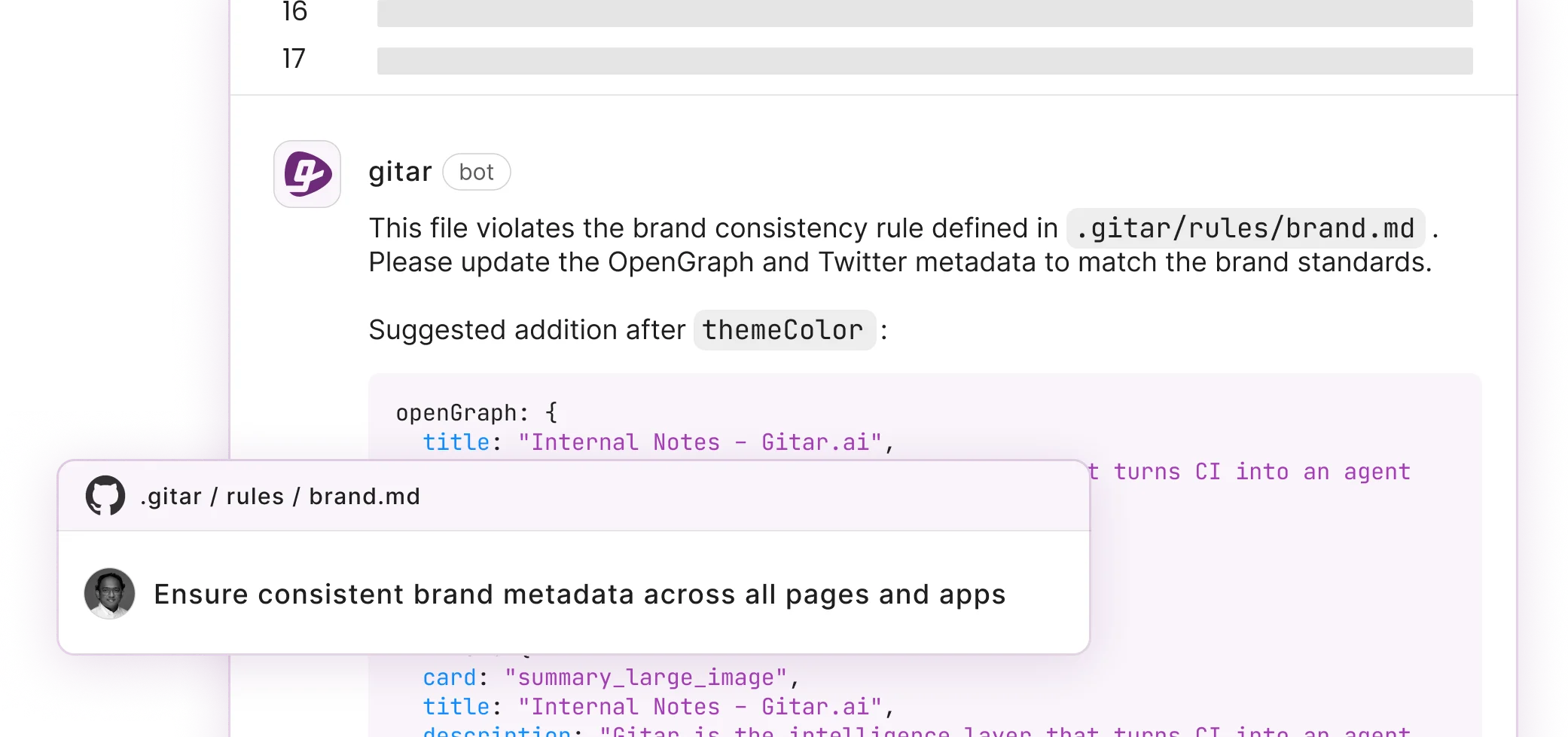
Ideal for: Engineering teams that want real automation, organizations that rely on multiple CI systems, and leaders who need measurable ROI from AI tools.
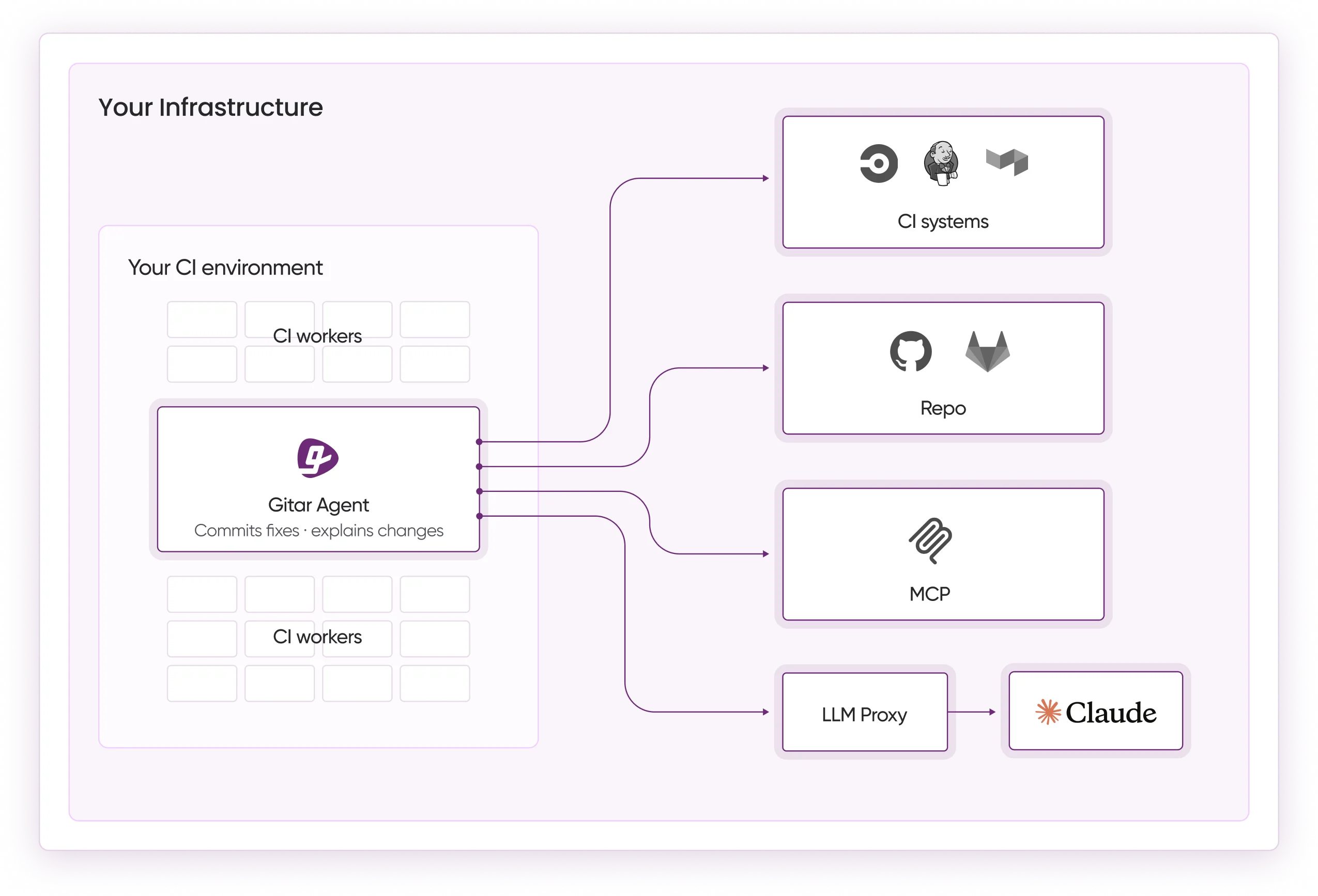
Try Gitar’s Team Plan free for 14 days and experience autonomous CI fixing with full platform access.
Kluster vs. Top Alternatives: Who Really Fixes CI?
The comparison below highlights the gap between suggestion-based tools and platforms that resolve CI failures. Only Gitar delivers complete CI failure analysis and automatic fixes across multiple environments.
|
Capability |
Kluster |
CodeRabbit |
Gitar |
|
PR Summaries |
Yes |
Yes |
Yes |
|
Inline Suggestions |
Yes |
Yes |
Yes |
|
Auto-Apply Fixes |
No |
Limited |
Yes |
|
CI Analysis & Auto-Fix |
No |
No |
Yes |
|
Multi-CI Support |
Limited |
Limited |
Yes |
|
Trial Access |
Max plan $30/mo |
Limited |
14-day full Team Plan |
Key Considerations When Replacing Kluster.ai
Engineering leaders comparing Kluster.ai alternatives should focus on ROI and delivery speed, not just feature checklists. DevOps teams need multi-CI support and real failure resolution instead of more alerts. CircleCI’s data shows autonomous validation can reclaim 1,000 R&D hours monthly for 50-developer teams, which directly addresses the million-dollar productivity drain caused by CI failures.
Gitar’s 30-second installation and proven productivity gains make it a strong choice for teams that want autonomous code review. Get started with Gitar’s 14-day trial and see autonomous CI fixing in action.
Frequently Asked Questions
What is the best AI code review tool that actually fixes CI failures?
Gitar delivers autonomous CI failure resolution that goes beyond suggestions. Tools like CodeRabbit and Greptile provide helpful comments, while Gitar analyzes failure logs, generates validated fixes, and commits them automatically. Its healing engine restores green builds through real automation.
Do AI code review tools offer trial periods?
Most tools provide limited trials or freemium tiers with restricted features. Gitar offers a complete 14-day trial of its Team Plan with no seat limits, so entire teams can experience autonomous fixing, custom rules, and full integrations before making a decision.
Which Kluster.ai alternatives support GitLab and CircleCI?
Gitar offers the broadest multi-CI support, including GitHub, GitLab, CircleCI, and Buildkite. Many alternatives focus mainly on GitHub and provide only partial coverage elsewhere. This wider support makes Gitar especially valuable for teams with diverse CI/CD toolchains.
How should teams measure ROI from AI code review tools?
Teams can track time saved on CI failures, review cycles, and context switching. A 20-developer team that spends 1 hour each day on CI issues loses roughly $1M in annual productivity. Tools that fix problems instead of only suggesting changes deliver measurable velocity gains and reduce developer frustration.
Is automated code fixing safe for production environments?
Gitar supports configurable automation levels that match each team’s risk tolerance. Teams can begin in suggestion mode to build trust, then enable auto-commit for specific failure types such as lint errors or test fixes. The platform validates all fixes against the actual CI environment before committing, which keeps changes aligned with real production conditions.
Conclusion: Move from Suggestions to Autonomous Fixes
The 2026 landscape favors AI code review tools that fix code instead of adding more manual work. Gitar leads this shift by providing validated CI fixes, broad multi-platform coverage, and clear ROI tracking.
While many competitors charge premium prices for basic commentary, Gitar offers a risk-free way to test autonomous CI fixing with a two-week Team Plan trial. Experience the difference between suggestions and solutions. Begin your free 14-day trial and transform your development workflow with autonomous CI fixing today.