
Key Takeaways for AI Code Review in 2026
- AI coding tools generate code 3 to 5 times faster, yet PR review times have surged 91%, creating a serious validation bottleneck.
- Traditional tools like CodeRabbit charge $15-30 per developer for suggestions that still require manual fixes, slowing teams down.
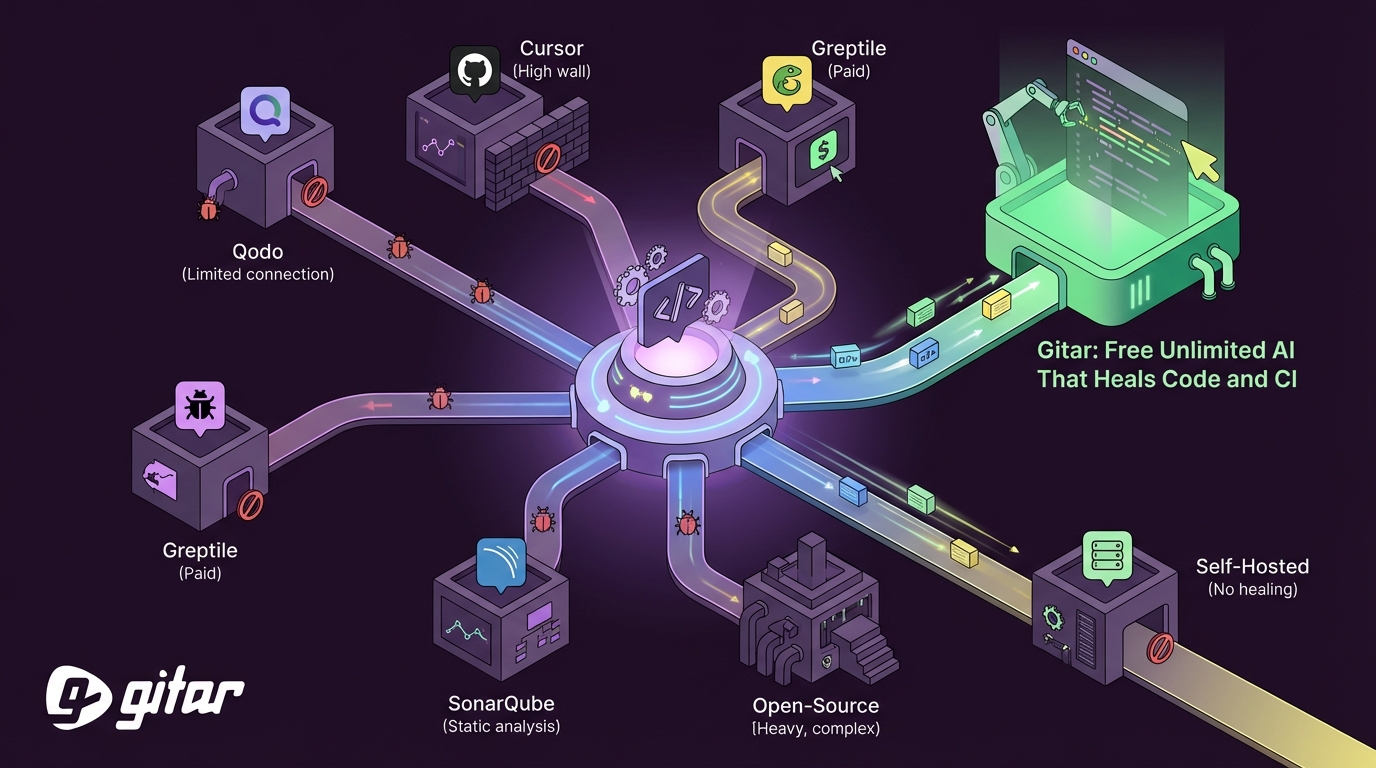
- Gitar leads as the top free alternative with unlimited repos, auto-fixing CI failures, and full PR healing.
- Competitors like Qodo, Greptile, and Cursor Bugbot impose PR limits, high costs, or lack auto-fix capabilities.
- Teams can switch to Gitar for free unlimited AI code review that guarantees green builds and accelerates shipping.
How We Evaluated Free AI Code Review Platforms
Our evaluation criteria focus on real-world development needs, not marketing claims. We assessed each platform on auto-fix capabilities versus suggestion-only models, support for unlimited repositories and users, CI integration depth, and scalability for enterprise codebases like Pinterest’s 50+ million lines of code.
The analysis incorporates 2026 benchmarks and vendor documentation, with emphasis on platforms that provide actionable fixes instead of notification spam. We tested integration ease, setup times, and validation mechanisms that confirm fixes work in production environments.
#1 Gitar: Free Unlimited AI That Heals Code and CI
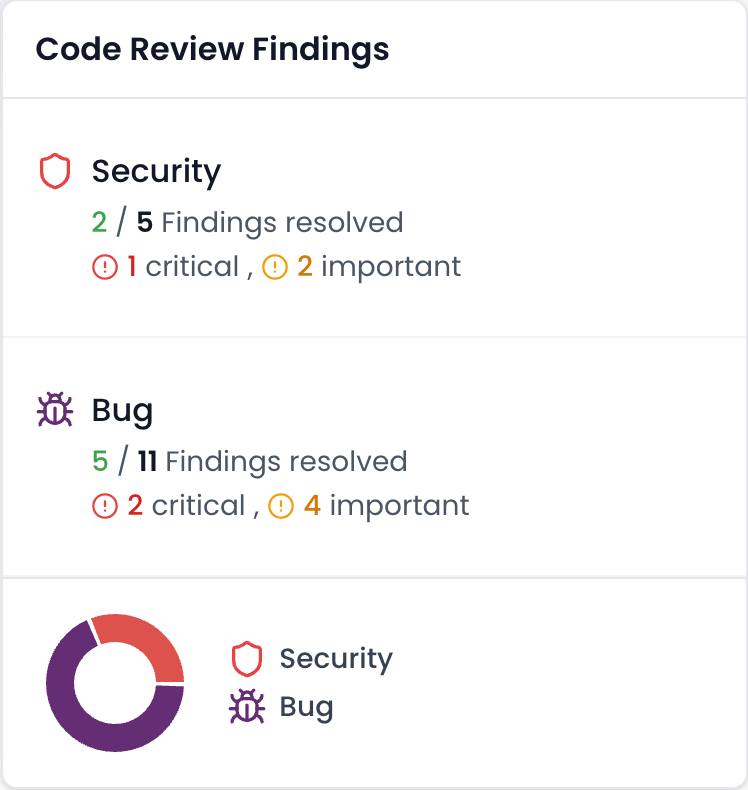
Gitar stands apart as a free AI code review platform that automatically resolves CI failures and addresses review feedback. Competing tools charge $15-30 per developer for comments that require manual implementation, while Gitar delivers full PR analysis, security scanning, bug detection, and performance review at no cost for unlimited repositories.
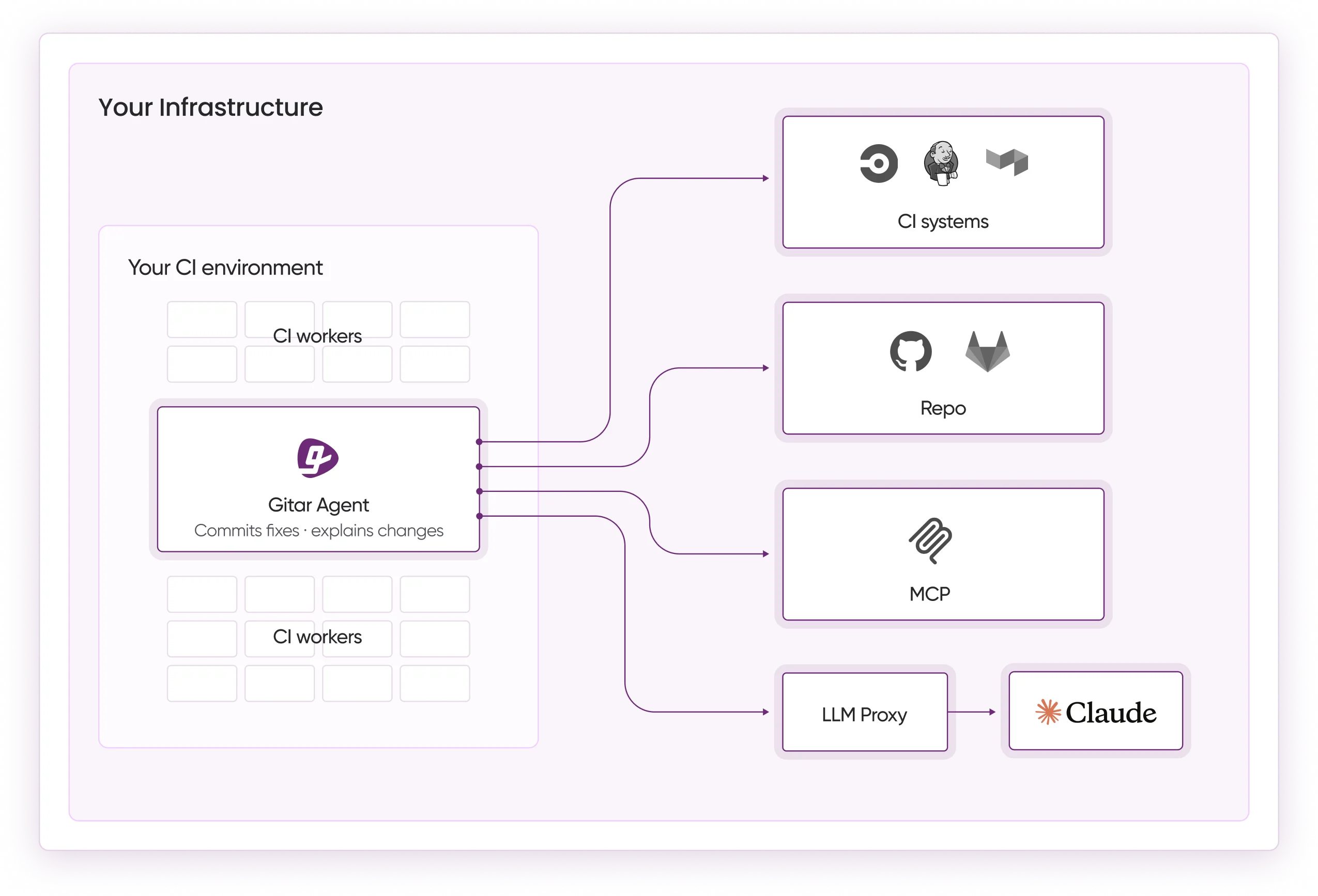
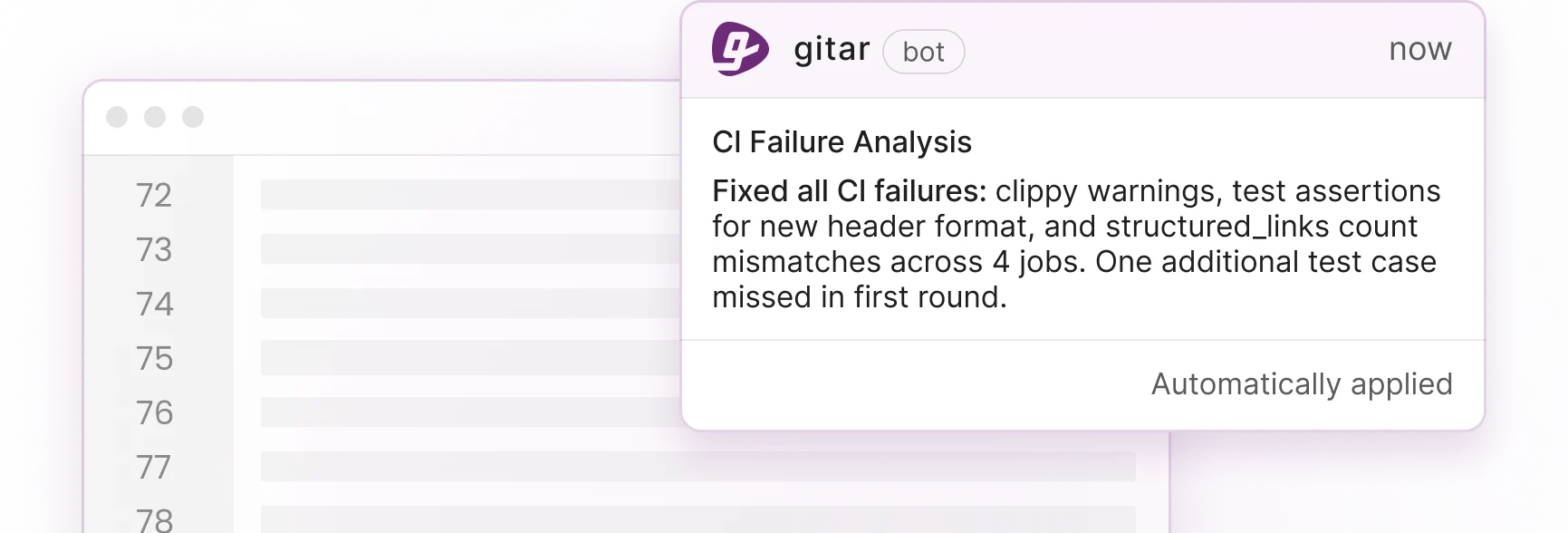
The platform’s healing engine reads CI failure logs to identify the root cause, generates the correct fix, validates it, and commits it to your PR. When reviewers leave feedback like “refactor this to use async/await,” Gitar applies the changes. Autofix features run on a 14-day free trial and include full CI integration with GitHub Actions, GitLab Pipelines, CircleCI, and Buildkite.
Enterprise validation comes from teams like Tigris, who report Gitar’s PR summaries are “more concise than Greptile”, and from Pinterest’s deployment across 50+ million lines of code. Gitar supports enterprise scale while remaining free.
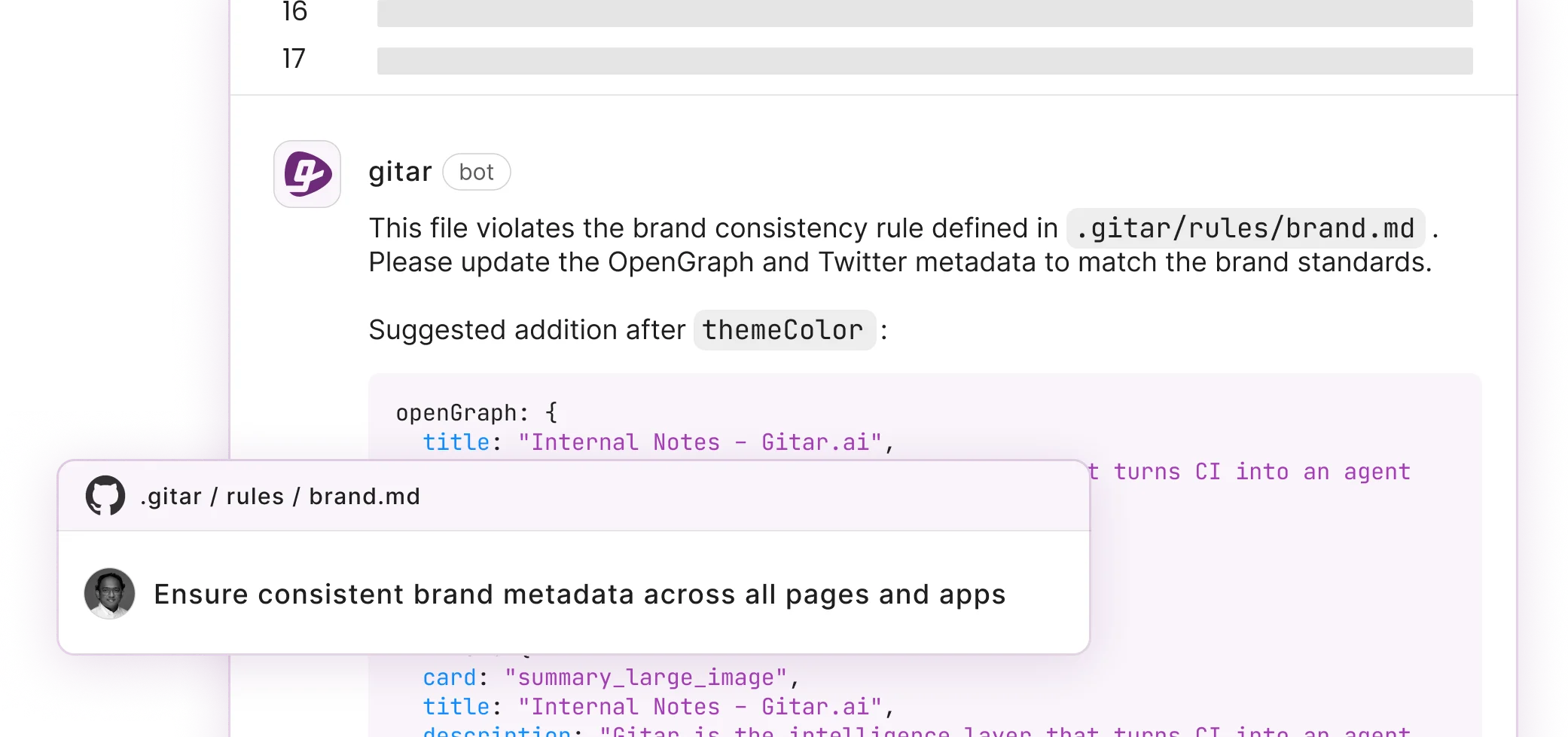
Gitar’s natural language rules system lets teams automate workflows without complex YAML, and deep Jira and Slack integrations keep context aligned across platforms. Gitar’s hierarchical memory system learns your team’s patterns over time instead of starting from scratch on every PR.
#2 Qodo: Free Tier Limits and Manual Fixes
Qodo offers a free tier capped at 75 PRs per month per user, which does not fit active development teams. The Teams plan costs $30 per user monthly, placing it among expensive suggestion engines without auto-fix capabilities.
Qodo provides solid PR analysis, yet developers must manually implement every suggested change and then wait to see if CI passes. This manual loop slows feedback cycles and increases review fatigue.
#3 Cursor Bugbot: GitHub-Only and High-Priced
Cursor Bugbot requires a separate $40 monthly subscription on top of Cursor Pro, limiting teams to 200 PRs monthly with GitHub-only integration. The tool scans for logic bugs and security vulnerabilities but offers no fix validation and no CI integration.
Teams using GitLab, CircleCI, or other platforms cannot benefit from Bugbot’s features. The lack of automated fixes and platform flexibility reduces its value for most engineering organizations.
#4 Greptile: Paid-Only Suggestion Engine
Greptile charges $30 per developer monthly and does not provide a free tier. Its full-repository context through syntax tree indexing still functions as a suggestion-only system without auto-fix capabilities.
The high cost and absence of automated healing make Greptile a weaker choice for teams that want CI to recover automatically from failures.
#5 SonarQube Community Edition: Static Analysis Only
SonarQube Community Edition delivers free static analysis and quality gates but does not provide PR-specific auto-fix functionality. Its bug detection complements PR workflows yet still requires pairing with additional tools for full code review coverage.
Teams must rely on separate solutions to implement fixes and manage PR feedback, which increases tool sprawl and setup time.
#6 Open-Source Agents: Powerful but Heavy to Run
Open-source tools like PR-Agent use free MIT licensing but demand significant infrastructure investment. Their self-hosted deployment requires GPU evaluation and ongoing maintenance, which slows adoption for teams that want quick productivity gains.
These solutions also lack CI healing capabilities, so they behave more like advanced linters than automated repair systems.
#7 Self-Hosted Platforms: Resource Hungry Without Healing
OneDev and similar self-hosted platforms provide AI-assisted code explanation and build failure investigation but require substantial setup effort. They run under MIT licensing yet still lack automated fix generation and validation.
Teams invest time and infrastructure without reaching the level of automated CI resolution that true healing engines deliver.
CodeRabbit vs Free Alternatives: 2026 Feature Comparison
The current market shows a clear gap between paid suggestion engines and free healing platforms.
| Feature | CodeRabbit | Qodo/Greptile | Gitar |
|---|---|---|---|
| PR Summaries | Yes ($24/dev) | Limited/Paid | Free Unlimited |
| Auto-Fix CI Failures | No | No | Yes (14-day trial) |
| Repository Limits | Paid tiers | 75 PRs/month per user | Unlimited |
| User Limits | Per-seat pricing | Per-seat pricing | Unlimited |
| CI Integration | Basic | Available | Full (GitHub/GitLab/CircleCI) |
This comparison highlights Gitar as the only platform that offers unlimited free code review with real fix implementation, while competitors charge premium prices for suggestion-only functionality.
How AI Healing Impacts ROI for Engineering Teams
Development teams evaluate AI code review tools through different lenses. Individual developers care about reduced context switching and faster CI resolution. Engineering leaders look for measurable velocity improvements and clear cost savings.
Platform engineers focus on self-healing CI that cuts rerun costs and maintenance overhead. Configurable approval workflows address concerns about automated commits, since teams can start in suggestion mode and then enable auto-commit for trusted fix types.
| Metric | Before AI Healing | After Gitar |
|---|---|---|
| Daily CI/Review Time | 1 hour per developer | ~15 min/day/dev |
| Annual Team Cost (20 devs) | $1M/year | $250K |
| Tool Subscription | $450-900/month | $0 (Gitar) |
Teams exploring migration from CodeRabbit can use Gitar’s 30-second installation process to compare results immediately without workflow disruption.
Frequently Asked Questions About Free CodeRabbit Alternatives
What free AI code review tools have no limits on repositories or users?
Gitar is the only platform that offers unlimited repositories and users at zero cost, including comprehensive PR summaries, security scanning, and bug detection. Other tools like Qodo restrict free tiers to around 30 to 75 PRs monthly or require per-seat pricing.
Gitar supports both public and private repositories across GitHub and GitLab with full CI integration, which makes it suitable for startups and large enterprises.
Which CodeRabbit alternative fixes CI failures automatically?
Gitar provides automated CI failure resolution through its healing engine architecture. When builds break, tests fail, or lint errors appear, Gitar analyzes failure logs, generates validated fixes, and commits them directly to your PR.
Suggestion-only tools such as CodeRabbit, Qodo, and Greptile can identify problems but still require manual implementation of fixes.
How do I migrate from CodeRabbit to a free alternative?
Migration to Gitar takes about 30 seconds through GitHub App installation or GitLab integration. You do not need an account or a credit card.
Gitar starts providing PR analysis in a single dashboard comment, which replaces CodeRabbit’s scattered inline notifications. Teams can run both platforms in parallel during evaluation and then disable CodeRabbit after confirming Gitar’s auto-fix performance.
What is the best free AI code review platform for GitLab in 2026?
Gitar offers the most complete GitLab integration among free platforms, including GitLab Pipelines, merge request analysis, and automated fix implementation. GitLab CE and similar tools provide basic AI-assisted validation but do not include a healing engine.
Gitar’s natural language rules system also simplifies workflow automation compared with complex YAML-based setups.
Do free AI code review tools integrate with Jira and Slack?
Gitar includes native Jira and Slack integrations that preserve context across platforms by pulling product requirements into the review process. This context helps Gitar understand the “why” behind code changes and produce more accurate fixes.
Most free alternatives focus on basic code analysis and skip these broader workflow integrations, which limits their usefulness for larger teams.
Conclusion: Why Gitar Replaces CodeRabbit for Modern Teams
The 2026 landscape shows a clear divide between expensive suggestion engines and platforms that solve the post-AI coding bottleneck. CodeRabbit and similar tools charge $15-30 per developer for comments that still require manual work.
Gitar delivers unlimited free code review with automated fix validation and CI healing, which directly supports teams that want guaranteed green builds. Its healing engine, enterprise scalability, and zero-cost model position Gitar as the leading CodeRabbit alternative for teams that prioritize delivery speed over vendor lock-in.