
Key Takeaways
- Engineering teams still lose significant time to CI failures, code review delays, and repetitive debugging, even as about 67% of organizations report mostly automated SDLCs and 78% use or implement AI automation.
- Autonomous platforms such as Gitar reduce this waste by detecting CI and review issues, generating fixes, and committing validated changes with minimal manual work.
- AI-native, multi-agent development platforms and autonomous testing systems help small teams operate at near enterprise scale by coordinating code, tests, security, and releases.
- Governed low-code and no-code ecosystems extend productivity gains to non-engineers while preserving security, compliance, and architecture standards.
- Gitar helps teams automatically fix CI failures and review comments so developers can focus on shipping features.
1. Gitar: The Autonomous CI/CD Healing Engine
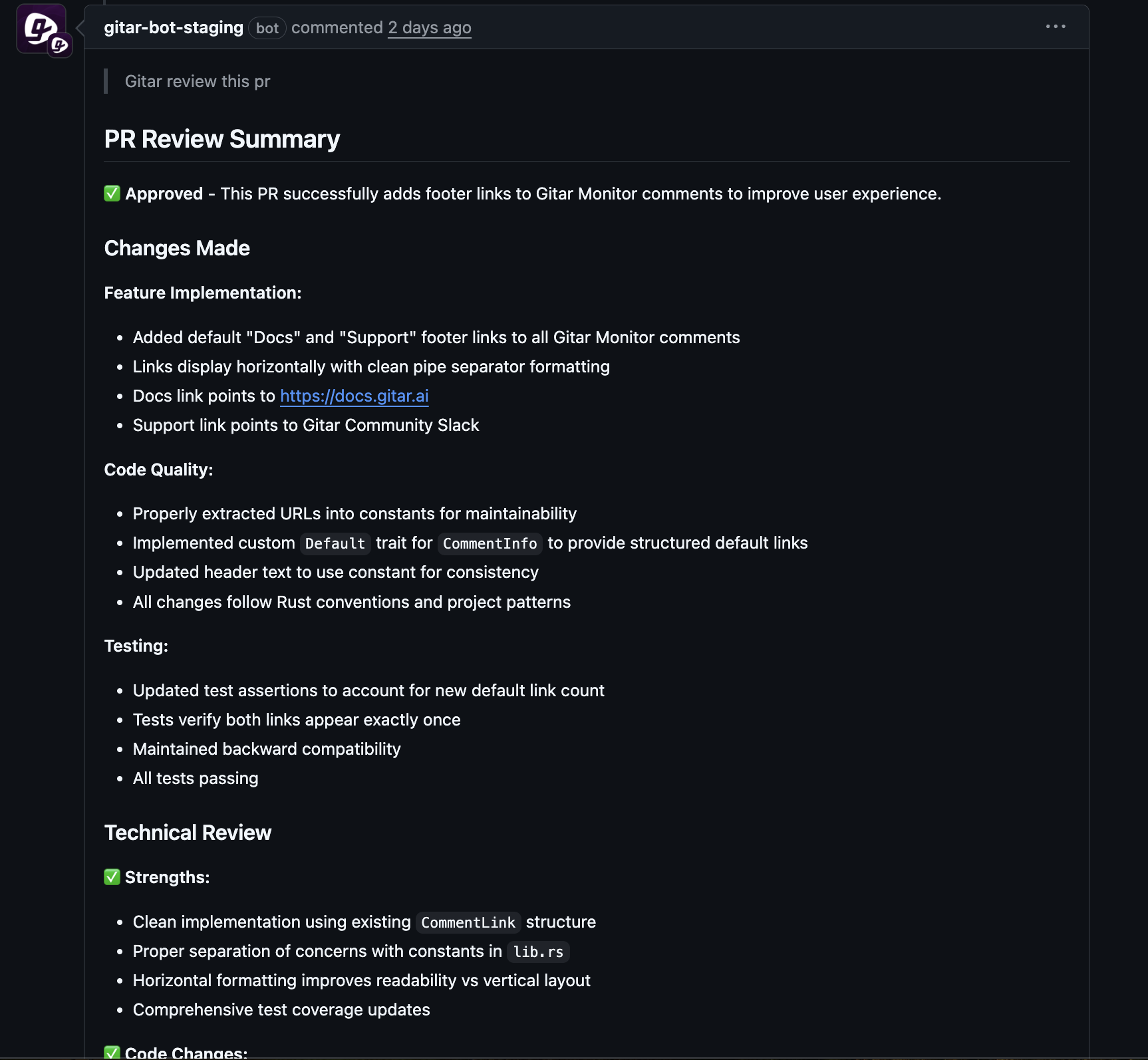
Gitar focuses on turning CI failures and review feedback into resolved work, not more notifications. The platform acts as a healing engine that detects problems, identifies root causes, and applies fixes directly in pull or merge requests.
When a pipeline fails due to lint errors, dependency conflicts, or test failures, Gitar analyzes logs and code, generates a targeted patch, validates it in a replicated CI environment, and pushes a commit with an explanation. Developers often see a green build or resolved comment before opening the PR again.

Gitar adapts well to complex enterprise setups. The agent mirrors project-specific SDK versions, dependencies, and tooling so that fixes match real CI conditions. It covers common failure types such as:
- Linting and formatting issues
- Unit, integration, and end-to-end test failures
- Build and packaging errors
The trust model lets teams control automation. Many teams begin with suggestion mode, where Gitar posts proposed fixes for review and one-click acceptance. As confidence grows, teams enable fully autonomous commits for low-risk changes.
2. AI-Native Development Platforms with Multi-Agent Orchestration
AI-native development platforms now coordinate multiple specialized agents across the lifecycle. More than half of agentic systems are expected to use standardized communication protocols by 2028, which enables coordinated workflows instead of isolated assistants.
These platforms often include agents for:
- Code generation and refactoring
- Automated test creation and maintenance
- Security scanning and policy checks
- Deployment orchestration and rollback
Shared context and policy enforcement keep these agents aligned with architecture, security, and compliance rules. The emergence of “Tiny Teams” of 2–3 people augmented by AI agents shows how much coordination overhead these systems can absorb, especially work that previously required dedicated DevOps support.
3. Autonomous Testing and Reliability Orchestration Platforms
Autonomous testing platforms aim to keep verification continuous and targeted. AI-driven tools now generate test cases and mocks, identify flaky tests, and support canary analysis, chaos experiments, and automated rollbacks.
Stronger platforms go beyond raw test generation. They interpret code changes semantically, identify high-risk areas, propose or update relevant tests, and prioritize runs to minimize pipeline time. They also integrate resilience practices by safely injecting failures in pre-production to validate reliability under stress.
Reported results include 40–51% reductions in development time from LLM-based automation and up to 20% less unplanned downtime. Tools like Gitar complement these gains. When automated tests detect issues, Gitar generates and commits fixes so teams maintain velocity while honoring quality and reliability goals.
4. Governed Low-Code/No-Code Productivity Ecosystems
Governed low-code and no-code platforms give non-engineers controlled ways to build internal tools. Modern platforms let business teams ship applications quickly while platform teams define approved building blocks.
In 2026, these ecosystems increasingly connect to Internal Developer Platforms. Typical capabilities include:
- Pre-approved UI, API, and data components
- Built-in security scanning and policy checks
- Automated performance and reliability baselines
Organizations now expect end-to-end autonomous workflows spanning planning, execution, and monitoring, not disconnected bots. The strongest implementations route low-code outputs through the same CI/CD, testing, and observability stacks as engineer-built services so that governance and reliability remain consistent. Gitar then helps keep these pipelines healthy by fixing build and test failures automatically.
Integration Strategy: Building Your Automation Stack
Successful teams in 2026 treat automation as a cohesive stack. They select platforms that integrate cleanly with existing CI/CD, observability, and artifact systems so automation runs where work already happens. Tight integration with CI/CD pipelines, monitoring stacks, and artifact repositories remains a foundation for realizing automation benefits.
Clear ROI metrics support adoption. Useful measures include:
- Cycle time reduction from commit to production
- Defect escape rate and incident frequency
- Engineer hours previously spent on CI failures, reviews, and manual fixes
For a 20-person engineering team, time lost to failing builds and slow reviews can reach hundreds of thousands of dollars per year, even with partial automation. Quantifying this baseline helps justify investment in tools like Gitar and complementary platforms.
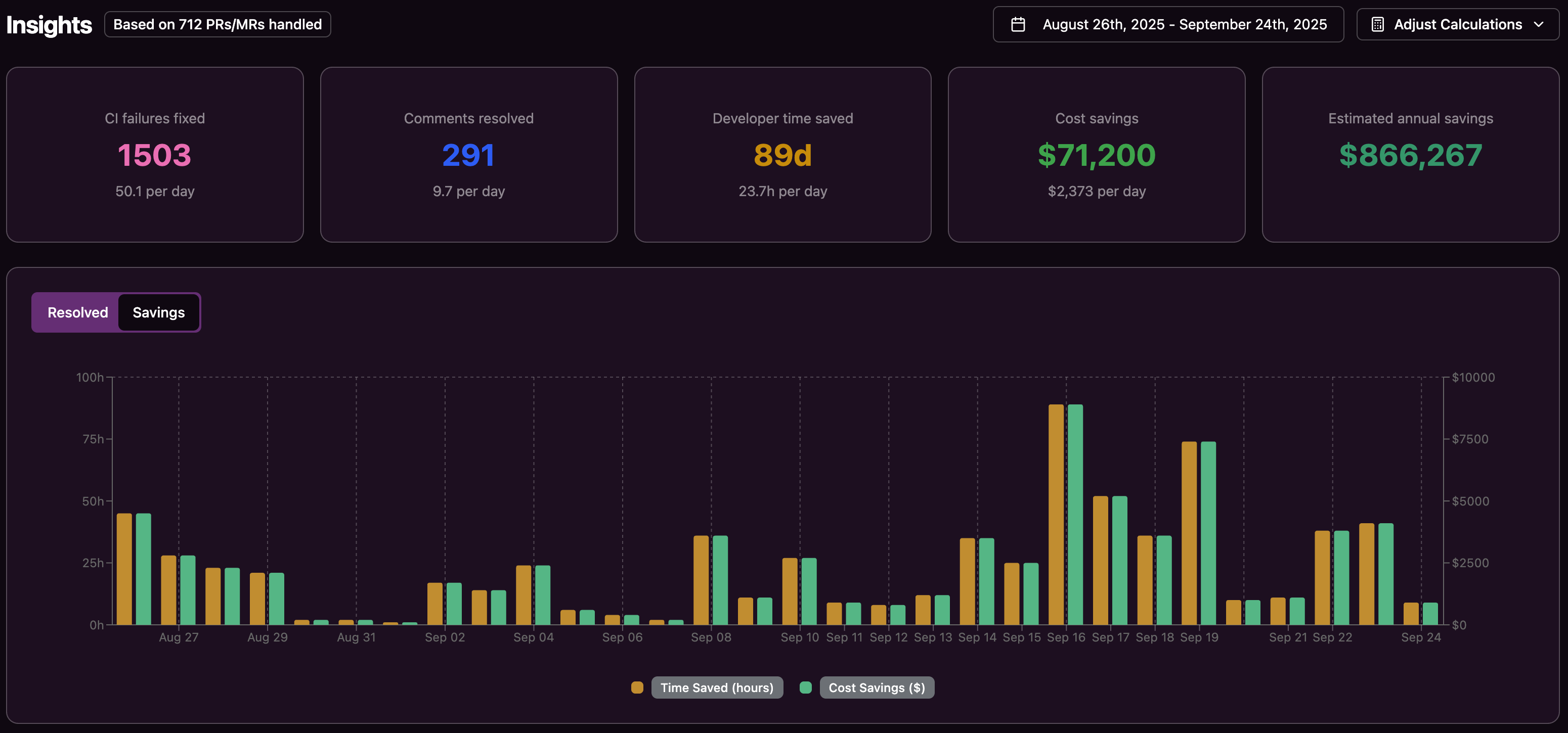
Teams that get the most from AI-driven platforms invest in upskilling and in process changes, not only in tools. Many organizations start with conservative automation modes, validate results, and then expand autonomy as trust grows. That approach works well with Gitar’s configurable trust levels and clear audit trail of automated fixes.
Frequently Asked Questions
How do I know if my team needs an engineering productivity automation platform?
Teams that spend more than 30 minutes per developer per day on CI failures, slow reviews, or repetitive debugging typically benefit from automation. Signs include frequent context switching due to broken builds, long review queues, frustration with manual deployments, and inconsistent code quality. For teams of 10 or more developers, these patterns usually justify a platform within the first few months.
What’s the difference between AI suggestion tools and autonomous automation platforms?
AI suggestion tools such as CodeRabbit help by proposing code changes that developers review and apply. Autonomous platforms such as Gitar handle detection, fix generation, validation, and commits. The system not only suggests a change but also runs tests, verifies the result, and lands the patch, which removes most manual work around known classes of issues.
How can I ensure automated fixes don’t introduce security or quality issues?
Safety comes from validation and control. Many teams begin with modes where every automated change requires human approval. Gitar replicates the full CI environment to validate fixes before presenting them and supports configuration by repository, branch, or change type. Over time, teams often move low-risk fixes, such as lint corrections, to fully autonomous mode while keeping human review for sensitive areas.
What ROI can I expect from implementing an engineering productivity automation platform?
Most ROI appears as time savings and fewer defects. Teams often spend 5–10 hours per developer per week on failing builds, debugging, and review overhead. At common loaded cost rates, a 20-person team can save hundreds of thousands of dollars per year even if automation only removes part of this effort. Better consistency and fewer production issues add further value that is harder to quantify but visible in incident metrics.
How do automation platforms integrate with existing development workflows and tools?
Modern platforms connect through standard APIs to Git hosting services and CI/CD providers such as GitHub Actions, GitLab CI, CircleCI, and Buildkite. Setup usually involves installing the platform as an app in your Git provider and linking it to your CI system. Gitar then operates inside existing pull-request and pipeline flows, without requiring changes to how developers create branches or run tests.