
Key Takeaways
- AI coding tools have increased PR sizes by 17-23% and review times by 91%, creating $1M annual productivity losses for 20-developer teams.
- Gitar leads as the top free AI code review tool with auto-fixing capabilities that heal CI failures, unlike suggestion-only competitors.
- Tools like CodeRabbit and Greptile offer mature reviews but lack Gitar’s automatic commits, green build guarantees, and cross-platform support for GitHub, GitLab, and CircleCI.
- Healing engines validate fixes in CI environments before committing, which ensures production-ready changes instead of risky manual implementations.
- Teams save $450-900 per month with Gitar’s free tier and 14-day auto-fix trial, so install Gitar now for faster, higher-quality software delivery.
How We Compared AI Code Review Tools in 2026
We evaluated nine AI code review automation tools using 2026-specific criteria. These included auto-fix capabilities, CI failure resolution, integrations with GitHub, GitLab, and CircleCI, pricing and ROI, scalability for enterprise codebases, community feedback from Reddit and engineering forums, and security or setup complexity. Our analysis draws from independent Copilot statistics, vendor documentation, hands-on testing, and testimonials from teams managing more than 50 million lines of code. We focused on team-scale solutions and excluded basic static analysis tools that do not provide AI-powered fixing.
Quick Comparison Table: Top Tools for Teams
| Tool | Price | Auto-Fix CI Fails & Integrations | Scalability/Key Strength/Gitar Edge |
|---|---|---|---|
| Gitar | Free code review (autofix 14-day trial) | Yes, GitHub, GitLab, CircleCI, Buildkite, Jira, Slack | Enterprise scale, healing guarantees green builds, leads with free auto-fixing |
| CodeRabbit | $24-30/seat | Limited suggestions, GitHub focus | More than 2M repos, but no auto-commit like Gitar’s validated fixes |
| Greptile | $30/seat | Suggestions only, GitHub and GitLab | Strong codebase context, but notification spam compared with Gitar’s concise approach |
| SonarQube | Free OSS | No AI fixes, basic static analysis | Open source foundation, lacks the AI depth of Gitar’s healing engine |
#1 Gitar: Free Healing Engine for CI Auto-Fixing
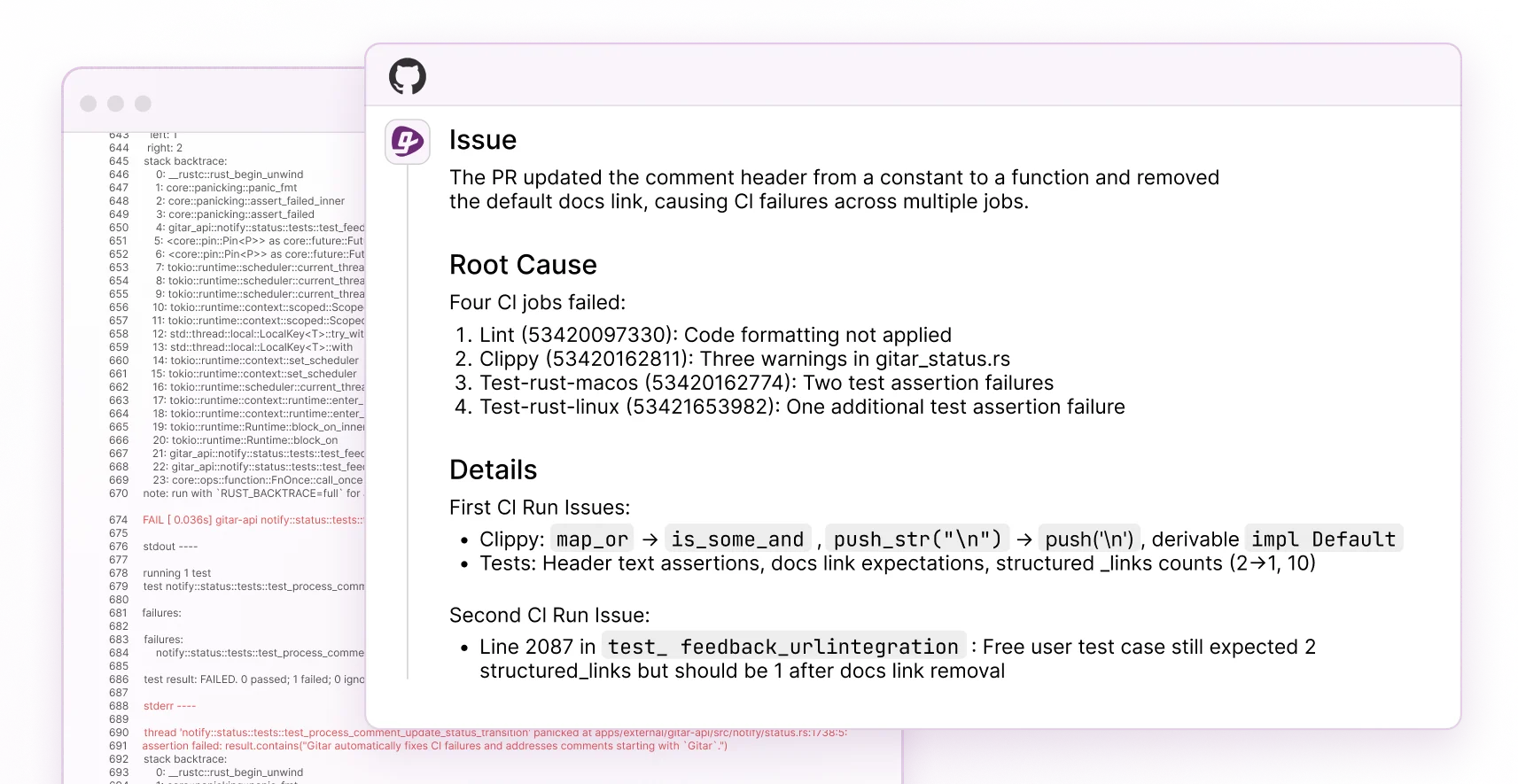
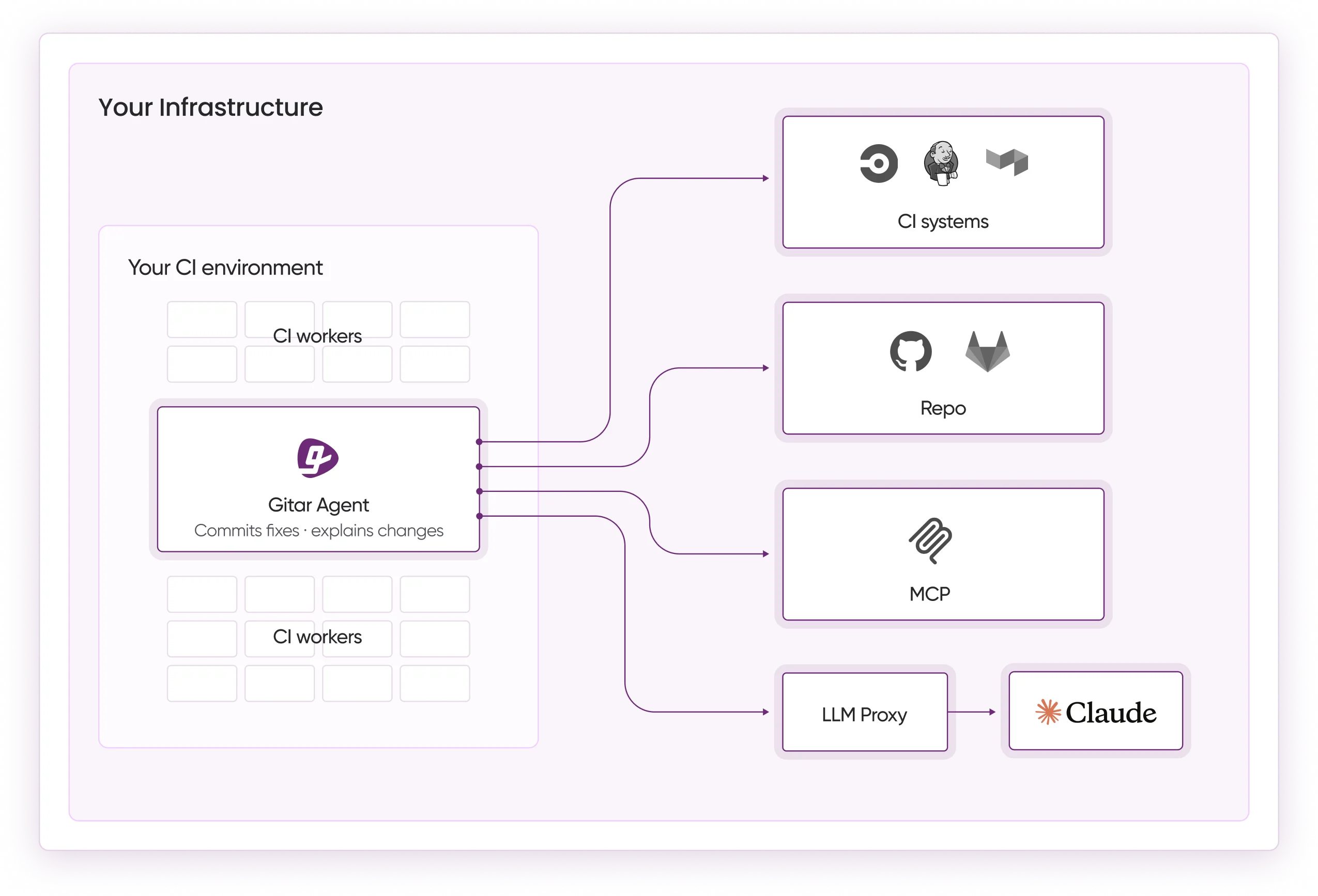
Gitar stands apart as the free AI code review platform that fixes code instead of only suggesting changes. When CI fails with lint errors, test failures, or build breaks, Gitar analyzes failure logs, generates validated fixes, and commits them to your PR while competitors leave comments that still require manual work.
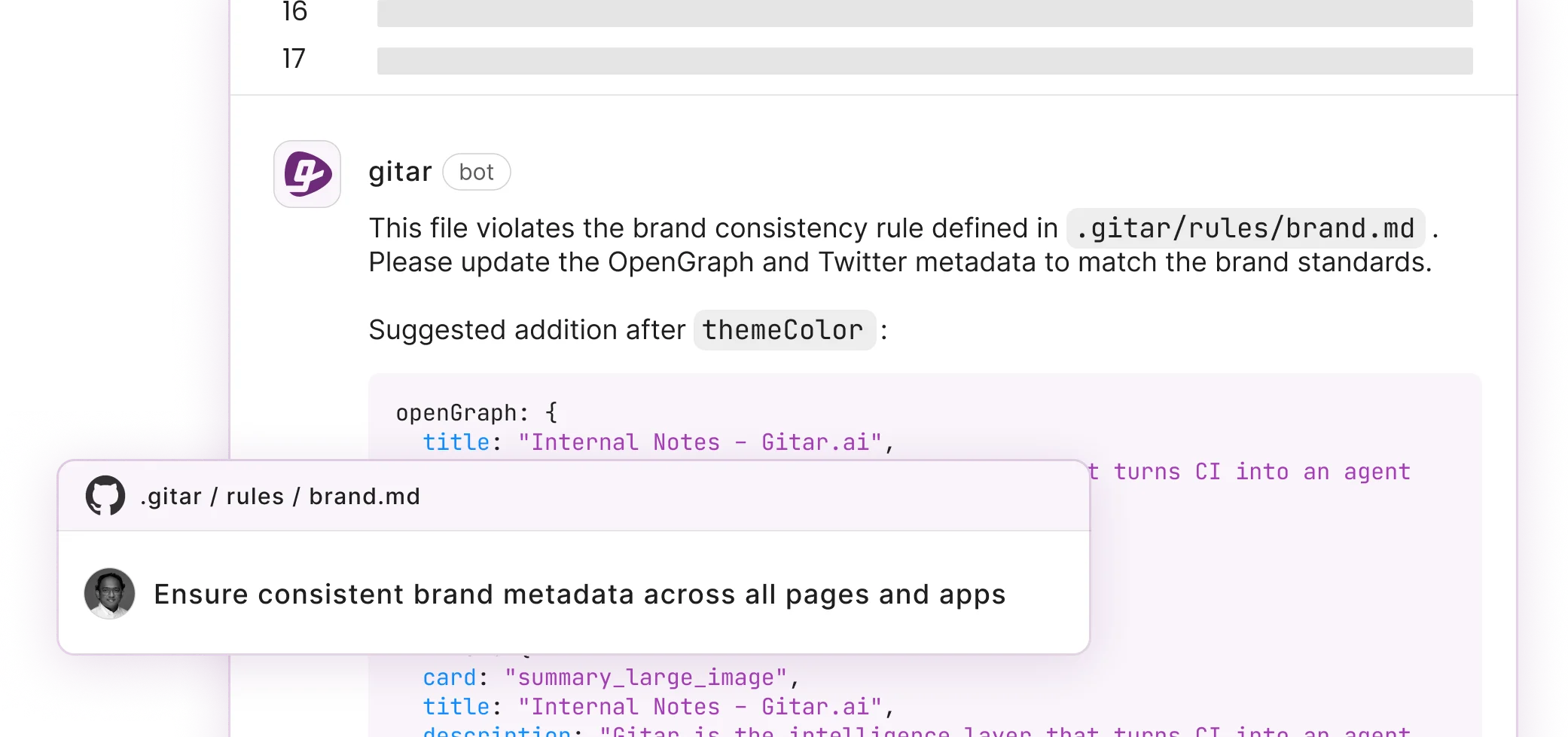
The platform moves beyond suggestions with a healing engine that guarantees green builds. Teams report more concise summaries than Greptile because Gitar posts a single dashboard comment that updates in place, which reduces notification spam. Gitar’s natural language rules system lets teams automate workflows without YAML complexity, and deep integrations with Jira and Slack provide context that competitors do not match.
Key features include a 14-day free auto-fix trial, support for GitHub, GitLab, CircleCI, and Buildkite, and enterprise scalability proven with more than 50 million lines of code. Teams typically save $450-900 per month compared with CodeRabbit or Greptile. Installation takes about 30 seconds with no credit card required, and the progression from suggestions to auto-commit builds trust step by step.
Install Gitar now to automatically fix broken builds and ship higher quality software faster.
#2 CodeRabbit: Mature Suggestions with Limited Auto-Fixing
CodeRabbit delivers a mature AI code review experience with auto-fixing capabilities for smaller issues and strong GitHub integration. It has processed more than 10 million PRs across 2 million repositories and provides reliable inline comments and PR summaries at $24-30 per developer each month.
CodeRabbit’s auto-fixing stays limited to minor issues, so complex CI failures still require manual implementation that Gitar handles automatically. The tool generates many inline comments that can create notification fatigue, while Gitar consolidates feedback into fewer, richer updates.
#3 Greptile: Context-Rich Reviews with High Per-Seat Costs
Greptile excels at understanding codebase context and generating comprehensive PR summaries, but it costs $30 per developer each month, which is the highest among major competitors. It supports both GitHub and GitLab and focuses on suggestions instead of automated fixes, so teams must manually implement recommended changes.
Teams that switch from Greptile to Gitar often report more concise, actionable feedback and lower overall costs.
#4 SonarQube: Open Source Static Analysis Without AI Fixes
SonarQube delivers solid static analysis and code quality metrics as an open-source solution, which helps budget-conscious teams. It does not include AI-powered fixing, so developers must manually address every identified issue.
SonarQube remains free, but it does not solve the post-AI coding bottleneck that teams face in 2026. Gitar’s free healing engine provides broader automation for teams that need CI failure resolution, not just issue detection.
#8 Codacy: Static Analysis with a Light AI Suggestion Layer
Codacy combines traditional static analysis with AI-powered suggestions and autofix capabilities starting at $15 per developer each month. The platform integrates with major version control systems and focuses on identifying and suggesting fixes instead of full CI failure automation.
Teams that want comprehensive auto-fixing for CI failures usually find Gitar’s healing approach more effective for cutting manual work.
#9 DeepCode: AST-Based Analysis with Inline Fixes
DeepCode uses abstract syntax tree analysis for deep code understanding and offers inline fix suggestions at $9-39 per developer each month. It provides technically sophisticated analysis with CI and CD integrations but stops short of full CI failure healing, which remains a key advantage for Gitar.
DeepCode works well for code quality improvements, yet it does not match Gitar’s healing guarantees for modern development workflows.
#7 Bugbot: GitHub-Only Reviews with Premium Pricing
Bugbot targets GitHub-only teams with AI code review at more than $40 per developer each month and also requires Cursor subscriptions. The 14-day free trial covers basic functionality, but the single-platform focus and high costs limit adoption.
Teams that use multiple platforms usually prefer Gitar’s cross-platform support and free pricing for broader coverage.
#11 Qodo: CI Cards and Patches for Large Enterprises
Qodo generates remediation patches and provides CI failure detection through automated analysis cards, with custom pricing for enterprise teams. It offers an innovative CI integration model and supports massive codebases, but the custom pricing model creates friction for growing teams.
Gitar’s proven enterprise scalability and transparent free pricing give teams of all sizes a clearer value path.
#12 CodeAnt: Basic AI Reviews with One-Click Fixes
CodeAnt provides AI-powered code reviews starting at $10-24 per developer each month with AST-based analysis and support for GitHub and GitLab. It offers one-click fix suggestions with validation but does not match Gitar’s comprehensive CI healing and production validation guarantees.
Without full CI validation against production-like environments, automated suggestions from CodeAnt require more developer oversight than Gitar’s approach.
Install Gitar now to automatically fix broken builds and ship higher quality software faster.
Best Free AI Code Review Tools for 2026
Among free AI code review automation tools, Gitar clearly leads alternatives such as SonarQube’s open-source offering. SonarQube provides basic static analysis at no cost, but it lacks the AI-powered fixing capabilities that teams now expect in 2026. Teams using Gitar report ROI calculations that show $1M annual savings for 20-developer groups through faster CI failure resolution and eliminated tool costs, which makes the free tier’s feature set stand out in the market.
Suggestions vs Fixes: Why Healing Engines Win in 2026
The gap between suggestion engines and healing platforms has become critical as AI-generated code shows 75% more bugs, with only 30% of AI suggestions accepted. Gitar’s healing engine validates fixes against real CI environments before committing, which ensures that changes work in production instead of relying on manual implementation.
| Capability | Competitors | Gitar |
|---|---|---|
| Auto-apply fixes | No | Yes |
| CI failure healing | No | Yes |
| Green build guarantee | No | Yes |
What Engineering Teams Should Focus On
Software engineers gain reduced context switching and faster CI resolution when they adopt healing engines. Engineering leaders see clear ROI through lower tool costs and improved delivery velocity. Platform and DevOps engineers benefit from natural language rules that reduce YAML maintenance and make onboarding easier.
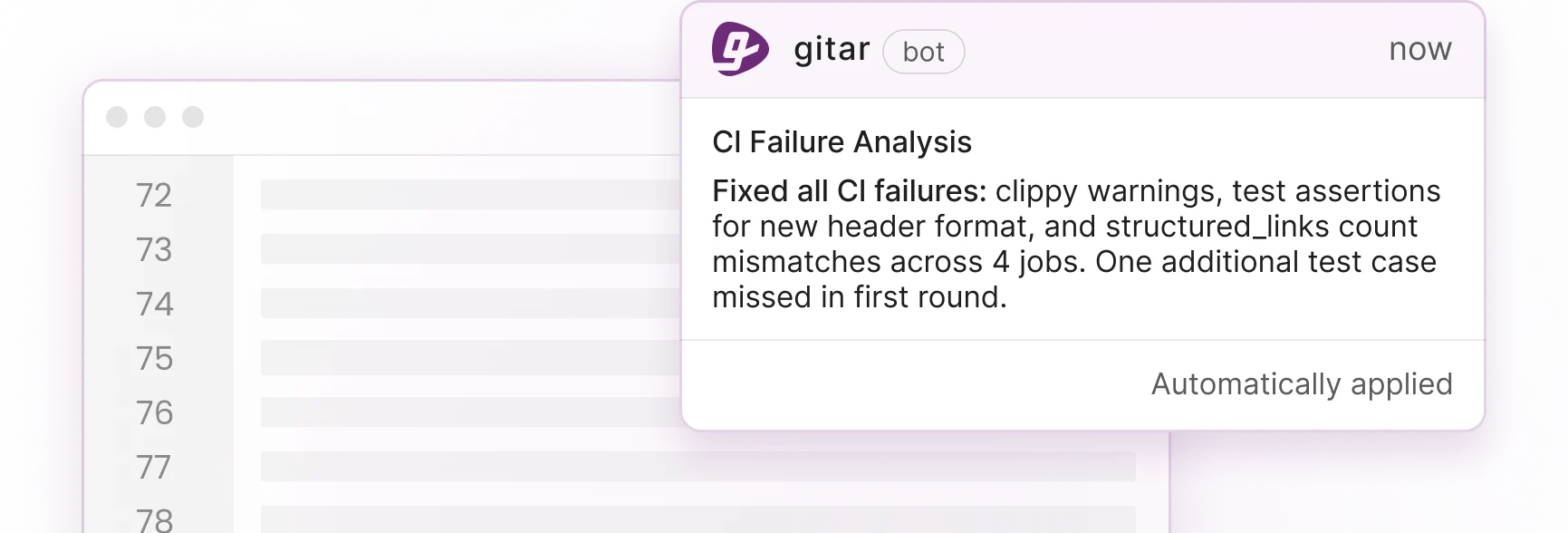
Common concerns about free tools, trust, and CI complexity are addressed through Gitar’s no-credit-card signup, configurable suggestion modes, and full environment emulation capabilities.
Frequently Asked Questions
What is the best free AI code review tool for engineering teams?
Gitar provides the most comprehensive free AI code review platform, with unlimited repositories, unlimited users, and advanced features such as PR summaries, security scanning, and bug detection at no cost. Unlike alternatives that only provide basic static analysis, Gitar includes AI-powered review capabilities and a 14-day free trial of auto-fixing that delivers immediate value to development teams.
Which AI code review tools work best with GitHub and GitLab?
Gitar offers the strongest cross-platform integration, supporting GitHub, GitLab, CircleCI, and Buildkite with native CI healing. CodeRabbit provides mature GitHub integration but limited GitLab support. Most competitors focus mainly on GitHub, which makes Gitar the most practical choice for multi-platform teams.
How do AI code review tools calculate ROI for engineering teams?
ROI calculations usually focus on time saved from automated fixes, fewer manual review cycles, and reduced tool costs. A 20-developer team that spends one hour daily on CI and review issues faces $1M in annual productivity losses. Gitar’s free platform with auto-fixing can cut this to about $250K annually through automation and faster resolution.
Are automated code fixes safe for production environments?
Modern AI code review platforms such as Gitar validate fixes against full CI environments before committing, which ensures that changes behave correctly in production contexts. Teams can start with suggestion-only modes to build trust and then gradually enable auto-commit for specific failure types while keeping full control over automation levels.
What AI code review tools do engineering teams recommend on Reddit and forums?
Engineering communities consistently highlight the value of real fixing capabilities over suggestion-only tools. Teams praise platforms that reduce notification spam and provide consolidated feedback. Gitar receives positive mentions for concise summaries and effective CI integration, while expensive suggestion engines often face criticism for weak ROI relative to their per-seat costs.
Conclusion: Why Gitar Leads AI Code Review in 2026
Gitar stands out as the leading AI code review automation platform for engineering teams in 2026, with free features that surpass expensive alternatives by delivering real fixes instead of comments. The healing engine model addresses the bottleneck created by AI code generation tools and provides validated solutions that guarantee green builds.
Teams that want to move beyond suggestion engines and adopt true automation can install Gitar in about 30 seconds and experience the difference between comments and actual fixes.
Install Gitar now to automatically fix broken builds and ship higher quality software faster.