
Key Takeaways
- Slow merges and frequent merge conflicts create sizable, recurring productivity losses for engineering teams.
- Autonomous AI that fixes CI failures and merge issues directly in pull requests can cut resolution time from hours to minutes.
- Semantic merge tools, proactive CI checks, and DVCS best practices reduce the number and complexity of conflicts before they reach reviewers.
- Automating the implementation of code review feedback shortens review cycles for distributed teams and keeps work moving across time zones.
- Teams can use Gitar to automatically fix broken builds, resolve review comments, and speed up safe merges across their existing CI setup.
The Hidden Costs of Slow Merges and Merge Conflicts
Slow merges erode developer productivity and delay releases. Merge conflicts affect roughly 16% to 43% of merges, and for a 20-developer team this often represents close to $1 million per year in lost productivity once engineer fully loaded costs are factored in.
Merge conflicts also strain collaboration. Resolving conflicts usually requires extra coordination and meetings, which is especially disruptive for distributed teams working across time zones. A conflict that could be fixed in an hour can stretch into days if the right people are not online at the same time.
Context switching amplifies this cost. Developers pulled away from feature work to troubleshoot CI failures or resolve conflicts must rebuild mental context later. The result is slower delivery, lower morale, and more schedule risk for critical releases.
Install Gitar to automatically fix broken builds and reduce merge delays so developers can stay focused on building features instead of repairing pipelines.
Top 5 Tools to Speed Up Merge Processes
1. Autonomous AI Fixers for Merge Conflicts and CI Failures
Autonomous AI fixers shorten merge cycles by diagnosing failing builds, generating code changes, and validating fixes directly in your CI environment. Instead of only suggesting code, these systems apply and verify fixes, then update the pull request.
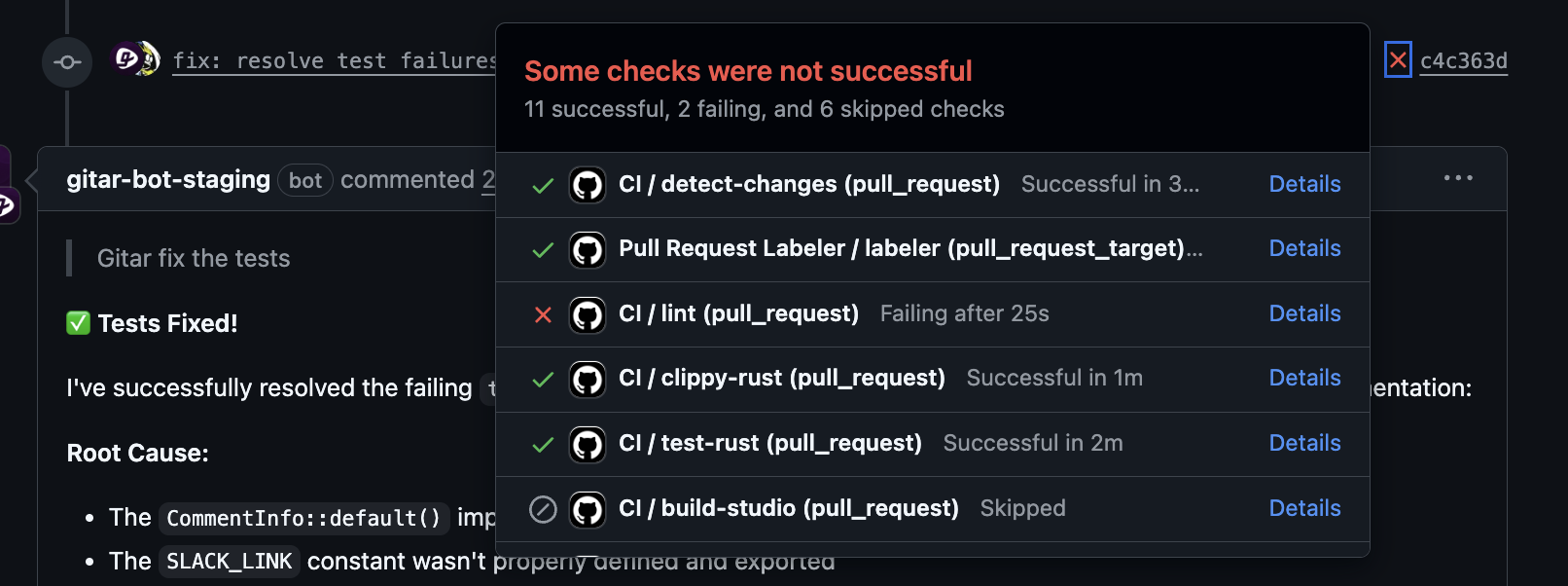
Gitar operates as a CI healing engine across platforms such as GitHub Actions, GitLab CI, CircleCI, and BuildKite. When a pipeline fails because of lint errors, test failures, or build issues, Gitar analyzes the logs, proposes code changes, runs CI, and commits verified fixes back to the branch. This supports complex enterprise setups, including specific SDK versions and third-party integrations.
Teams can start with a review-first mode where Gitar suggests fixes that developers approve with a click. As trust grows, teams can switch to a more autonomous mode where Gitar commits fixes automatically while still allowing rollbacks and policy controls.
2. Semantic Merge Tools to Reduce Conflict Noise
Semantic merge tools understand code structure instead of treating files as plain text. This allows them to distinguish between real logic changes and cosmetic edits such as reformatting or reordering.
These tools reduce false conflicts and often resolve routine issues automatically. For complex refactors or long-lived branches, graphical tools such as KDiff3 or Beyond Compare give developers side-by-side views that clarify intent and speed up decisions, especially when aligned with clear branching strategies.
3. Proactive CI Platforms with Early Conflict Detection
Proactive CI platforms cut merge delays by detecting conflicts before developers open a pull request or attempt to merge. They run speculative merges against the main branch, trigger tests, and highlight problems early.
These systems keep branches close to main and provide timely alerts so developers fix issues while changes are still fresh in their minds. Gitar complements this approach by not only identifying failing pipelines but also resolving the underlying CI failures, turning early detection into automatic healing.
4. Automated Code Review and Feedback Implementation
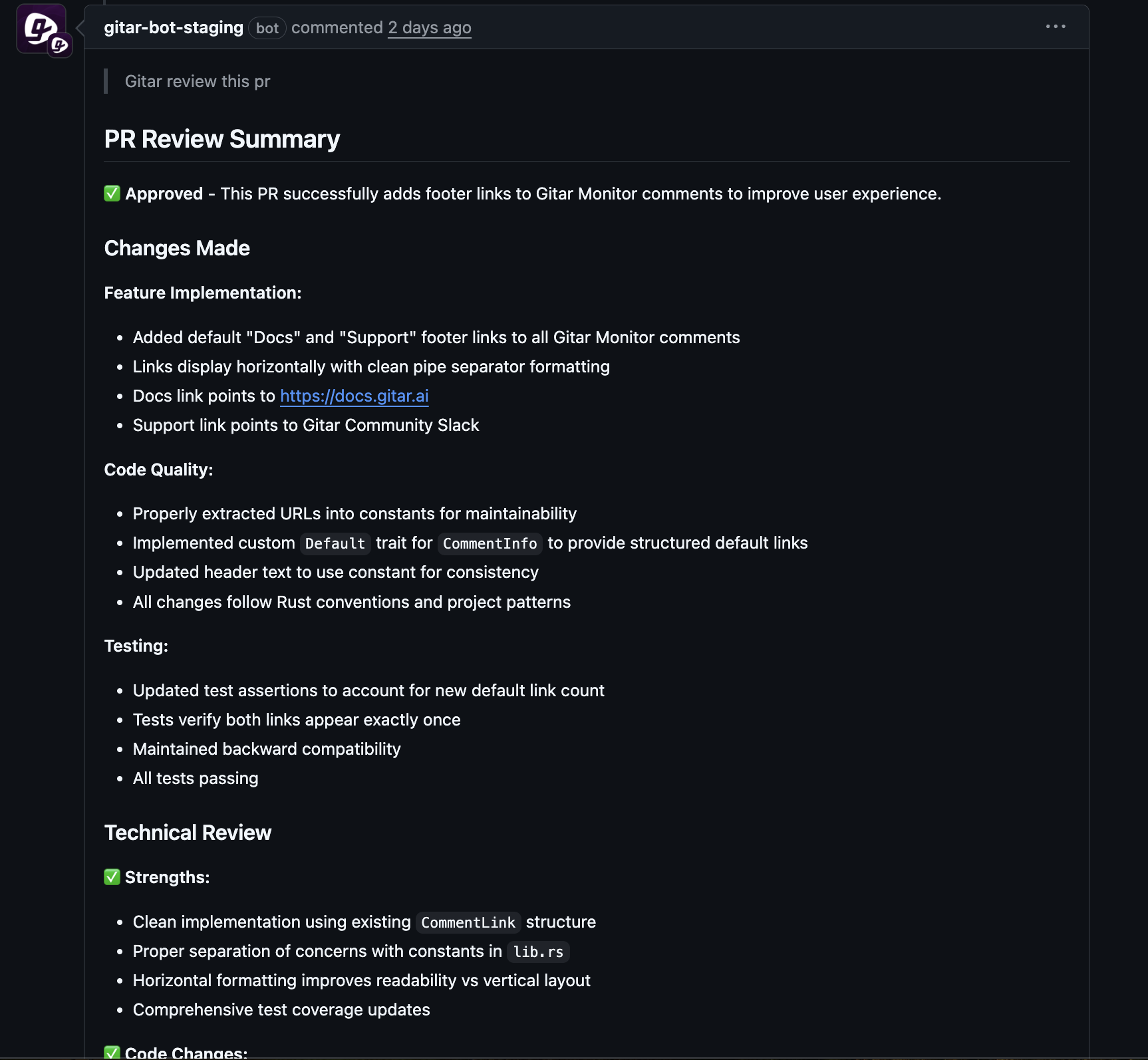
Automated review systems increase merge speed by turning reviewer feedback into direct actions. Instead of reviewers requesting a refactor and waiting for the author to respond, the system interprets the feedback and applies the change.
Gitar supports this pattern through natural language instructions in pull request comments. A reviewer can write a comment like “@gitar refactor this function to use a map for faster lookup” and Gitar updates the code, commits the change, and posts an explanation. Distributed teams benefit most, since reviewers and authors do not need overlapping work hours for routine edits.
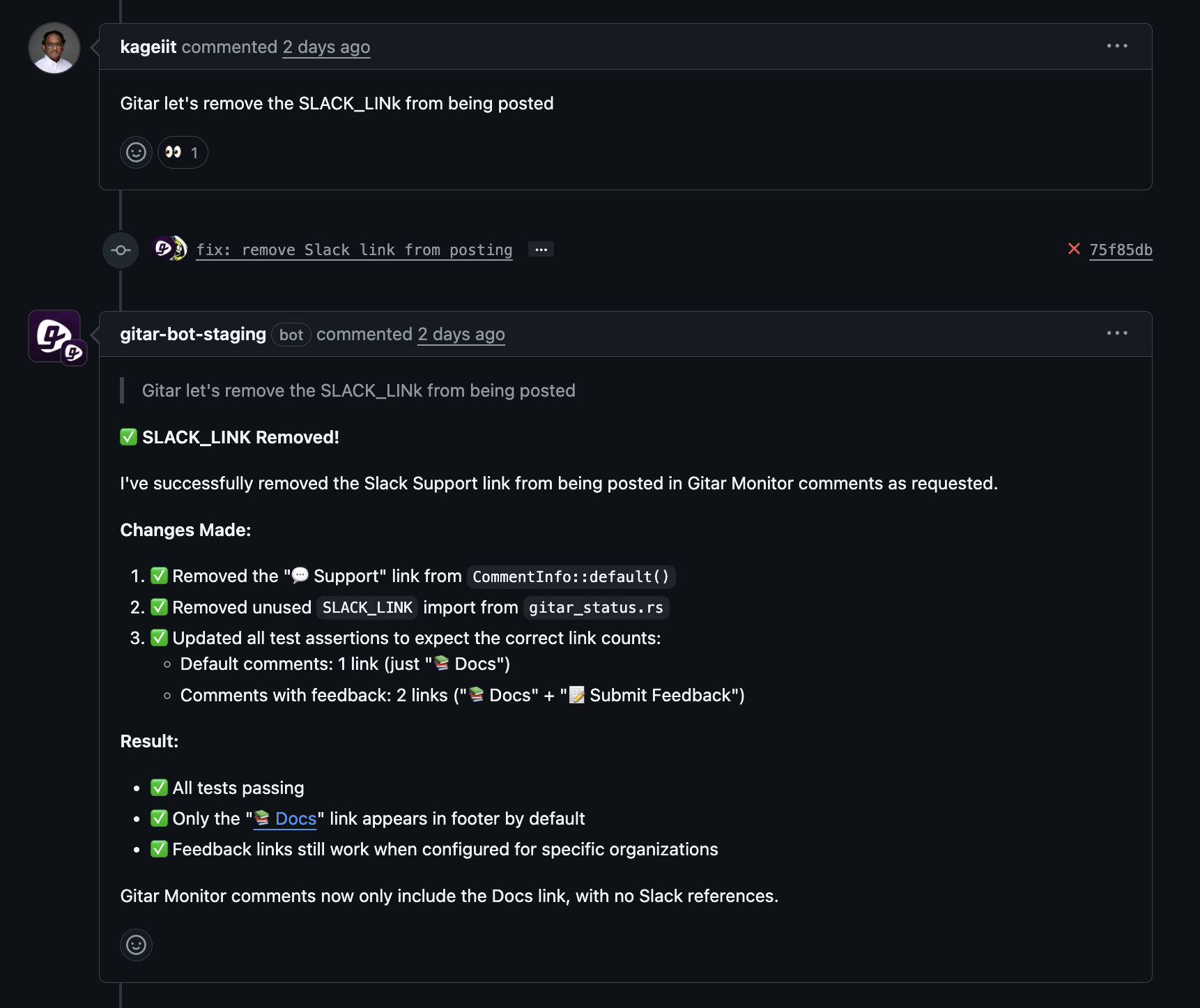
Teams can define which types of comments Gitar acts on and which require explicit approval, so human reviewers keep ownership of standards while delegating repetitive edits.
5. DVCS Best Practice Enforcers to Prevent Conflicts
Version control policies that enforce good branching and integration habits reduce merge conflicts before they start. Tools that apply these rules consistently remove guesswork from day-to-day workflows.
The most effective policies encourage short-lived branches and frequent integration with main. Long-lived feature branches tend to diverge as the main branch evolves, creating harder conflicts later. Repository rules around branch lifetimes, small focused pull requests, and feature flags for gradual rollouts help keep merges simpler and safer.
Install Gitar to pair DVCS best practices with automatic CI failure resolution so branch policies and autonomous fixes work together to reduce merge friction.
Comparison: Gitar vs Traditional Merge and CI Management
|
Feature or Benefit |
Manual or Traditional Method |
AI Suggestion Tools |
Gitar |
|
CI failure resolution time |
30–60 minutes per failure |
15–30 minutes with suggestions |
Autonomous, often under 5 minutes |
|
Developer context switching |
High, frequent interruptions |
Moderate, still requires implementation |
Low, runs in the background |
|
Handling complex CI failures |
Manual debugging and fixes |
Unvalidated suggestions |
End-to-end diagnosis, fix, and validation |
|
Distributed team collaboration |
Time zone delays remain |
Some reduction in delays |
Automated fixes between time zones |
Frequently Asked Questions About Tools That Speed Up Merges
How is Gitar different from AI code reviewers for speeding up merges?
Many AI code reviewers focus on suggestions. Gitar focuses on execution. It analyzes failures, updates code, runs CI, and ensures the build passes before handing work back to developers. This reduces hands-on time per failure and removes much of the back-and-forth that slows merges.
Can Gitar handle complex or custom CI setups?
Gitar runs inside the same CI environment your team already uses, including language-specific dependencies, SDK versions, and third-party services. This design allows it to resolve failures that depend on your exact stack instead of relying on simplified local assumptions.
What if our team wants control over automated fixes?
Teams can configure Gitar to require approval before any fix merges. In this mode, Gitar still handles the work of proposing and validating changes, while developers review and approve them like any other pull request update. This preserves code ownership while reducing the manual effort of debugging and re-running CI.
How well does this approach work for distributed teams?
Gitar reduces time zone friction by acting on reviewer comments whenever they are added. A reviewer in one region can leave instructions, Gitar applies the changes and re-runs CI, and the author in another region finds an updated, passing pull request at the start of their day.
Conclusion: Reclaim Developer Velocity with Faster Merge Processes
Slow merges, frequent CI failures, and manual conflict resolution consume significant engineering time. Autonomous tools, semantic merge engines, proactive CI checks, automated review actions, and DVCS best practices all contribute to smoother, faster merges.
Gitar brings these benefits together by automatically fixing CI failures, implementing review comments, and working within existing pipelines. Request a Gitar demo to see how autonomous CI healing can shorten merge cycles and give developers more time for high-impact work.