CI/CD pipelines are growing more complex, and technical debt from build failures slows down modern engineering teams. This guide offers a clear strategy for leaders to address these challenges. It highlights how autonomous AI tools like Gitar can turn reactive debugging into a self-healing process, boosting productivity and speeding up delivery.
Understanding the Real Impact of CI/CD Technical Debt
CI/CD technical debt costs more than just failed builds on your dashboard. For a team of 20 developers, lost productivity from CI failures and code review delays can add up to about $1 million each year. This includes time spent debugging, context switching, delayed releases, and developer fatigue.
Identifying the main causes is key for finding lasting solutions. Common CI build failures stem from syntax errors, incompatible dependencies, and misconfigured builds. These issues ripple through workflows, blocking pipelines and slowing down entire teams.
Here are the key areas where CI technical debt hits hardest:
- Disrupted Developer Focus: Failed builds pull developers away from their tasks to dig through logs and revisit old code. A quick fix can turn into a major time sink due to mental overhead.
- Slower Delivery: CI job failures often delay projects and raise costs, especially in pre-merge stages with countless checks. These delays affect release schedules and customer experience.
- Resource Strain: Failed builds waste computing power and developer hours. Adding more servers doesn’t always reduce technical debt and may increase flaky tests or random issues.
- Team Morale: Constant debugging and repetitive tasks wear developers down. They want to solve real problems, not wrestle with failing lint checks or intermittent tests.
Traditional methods often tackle symptoms instead of root causes. CI failures frequently come from automated test issues, flaky tests, build errors, deployment hiccups, configuration errors, environment mismatches, and dependency clashes. While pre-merge tests and reviews help, they don’t solve the need for manual fixes when things go wrong.
Autonomous CI solutions offer a better way. They actively fix problems instead of just flagging them, shifting from reactive debugging to proactive healing. Install Gitar today to automatically resolve broken builds and speed up your delivery.
How Autonomous CI Cuts Technical Debt with Self-Healing Solutions
Gitar changes the game by moving from reactive CI fixes to proactive, self-healing systems. As an AI agent, Gitar doesn’t just spot failures, it corrects them, tests the fixes, and delivers passing builds without human effort. This tackles a major productivity drain: constant interruptions from failed builds and review cycles.
In a typical CI/CD workflow, a developer submits code, a failure occurs, work stops for troubleshooting, a manual fix is applied, and the cycle repeats. Gitar breaks this loop by handling fixes in the background, keeping developers focused on their tasks.

Core Features of Gitar for Self-Healing CI
Gitar offers specific capabilities that make CI maintenance effortless for teams. Here’s what sets it apart:
- Complete Fix Process: Gitar goes beyond suggestions. It analyzes failure logs, creates fixes for issues like linting errors or test failures, applies them to the branch, and validates against the full CI pipeline for guaranteed results.
- Environment Matching: Gitar handles complex enterprise setups by mirroring exact configurations, including SDK versions and tools like SonarQube or Snyk, ensuring fixes work in your specific context.
- Adjustable Automation: Teams can start with suggestion-only mode for manual approval of fixes, then move to automatic commits as confidence grows, maintaining control while adopting automation.
- Support for Distributed Teams: Gitar cuts delays for global teams by applying reviewer feedback instantly. A comment left in one time zone gets actioned before the developer in another zone starts their day.
- Enhanced AI Context: With MCP Server integration, Gitar connects local developer tools to CI systems for deeper insight into changes, leading to more accurate fixes.
Book a demo with Gitar to see self-healing CI in action.
Steps to Adopt Self-Healing CI with Gitar
Introducing autonomous CI works best with a phased approach. This builds team trust and reduces manual workload over time, ensuring a smooth rollout with clear benefits.
Step 1: Easy Setup and Building Confidence
Gitar integrates into your workflow as a GitHub App with minimal setup, connecting to repositories without changing existing CI tools. The focus here is starting small to gain trust.
Setup includes linking Gitar to chosen repositories and integrating with platforms like GitHub Actions, GitLab CI, BuildKite, or CircleCI. A web dashboard lets you set rules, starting in suggestion-only mode for safety.
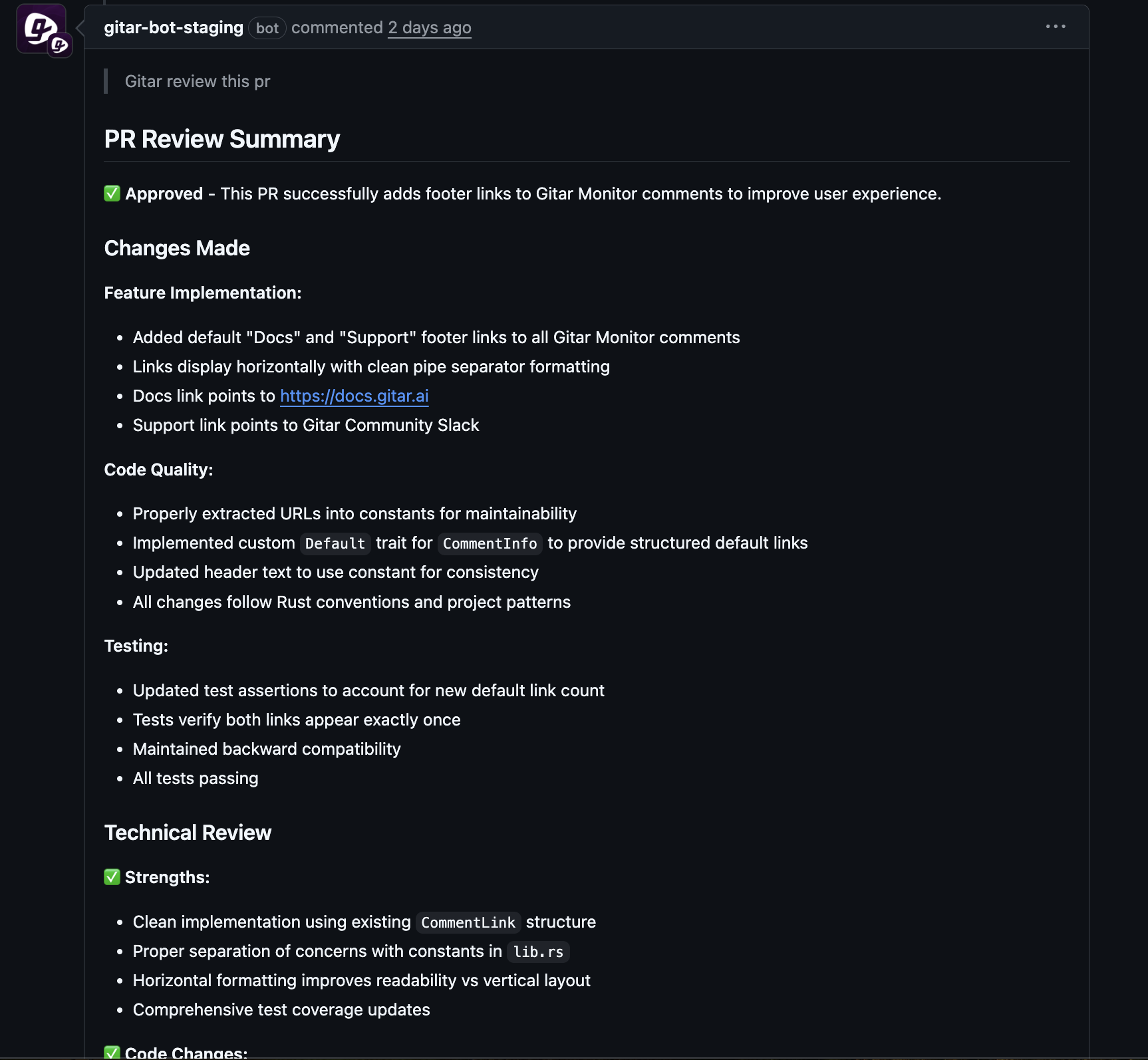
In this early stage, Gitar posts detailed comments on pull requests, explaining issues and suggesting fixes. Teams can review the logic behind each fix before approving, ensuring comfort with the process. Install Gitar now to start with suggestion mode and build trust.
Step 2: Moving from Reactive to Proactive Fixes
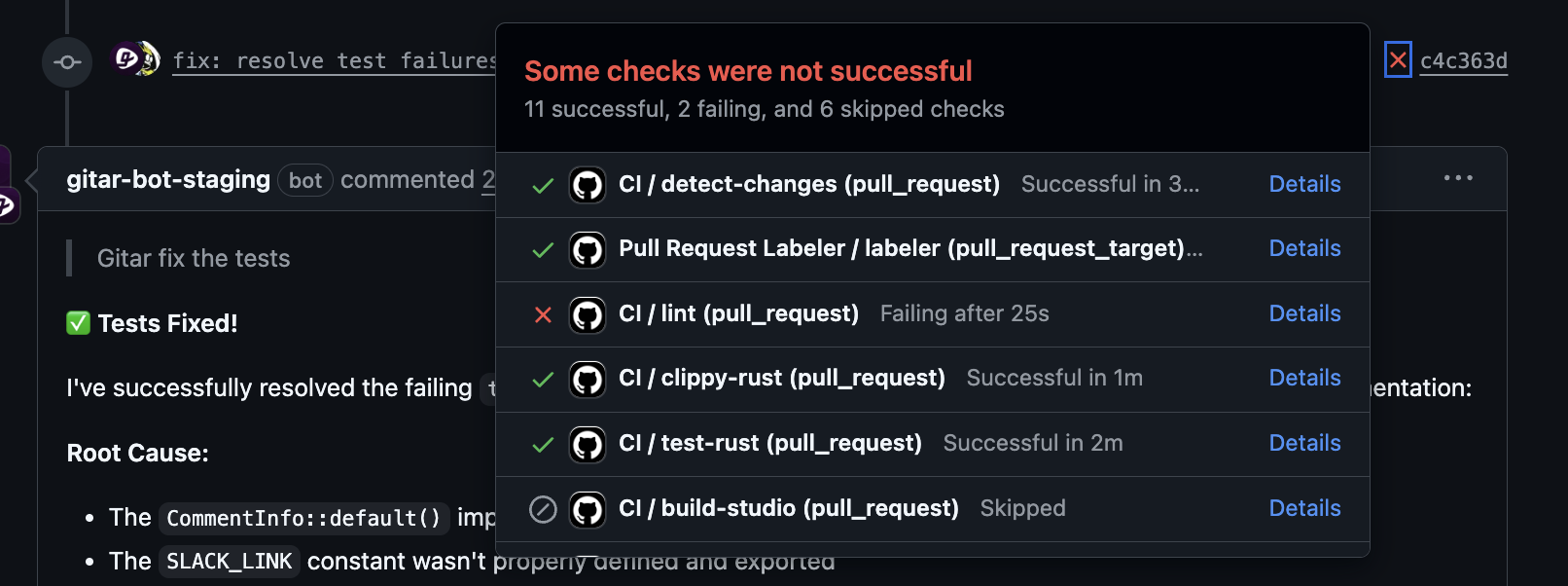
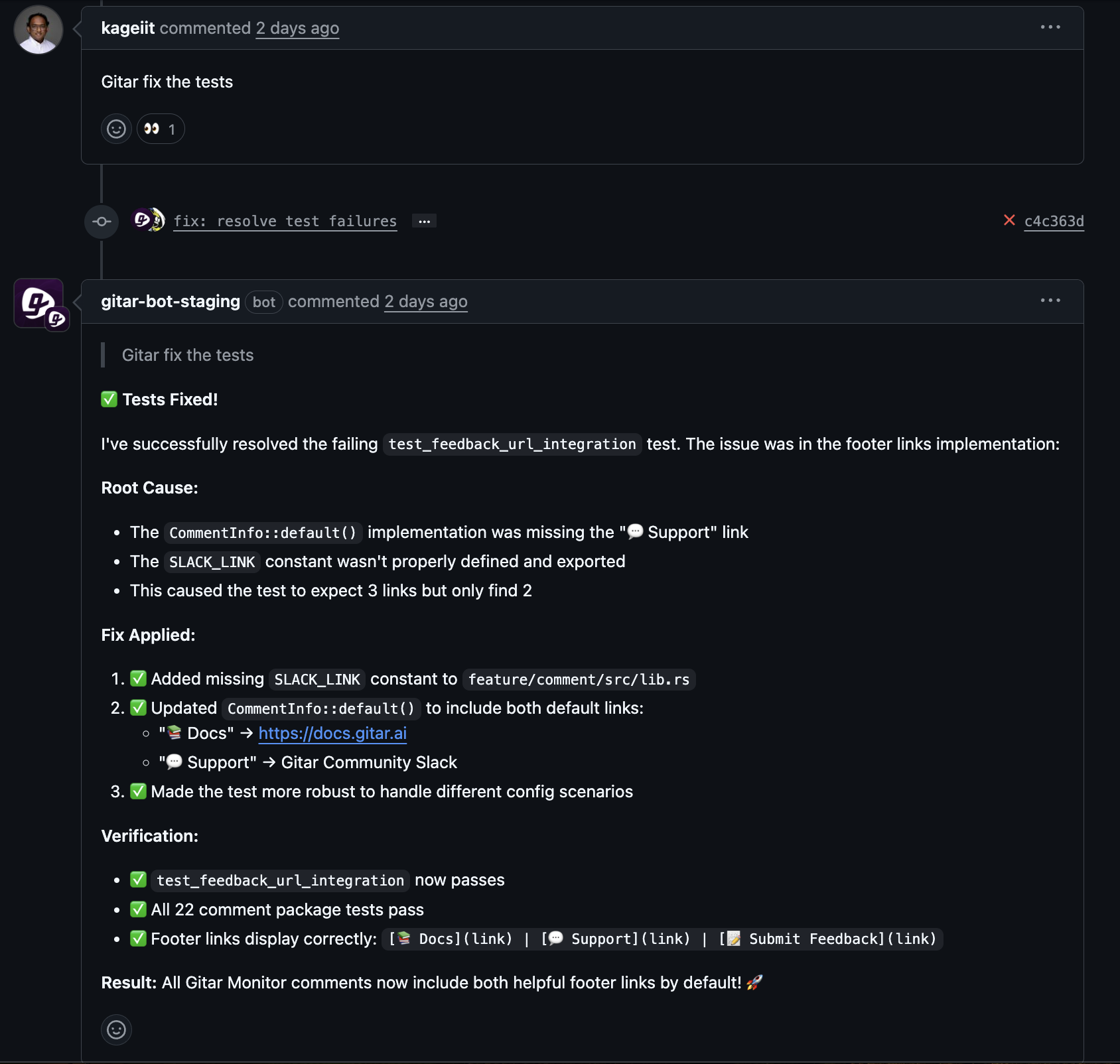
The shift happens when teams see Gitar fix issues on its own. Picture this: a developer submits a pull request, a linting error pops up, and within minutes, Gitar comments with a fix. One click accepts it, updating the PR with a clear commit message.
This changes how teams view CI failures, turning them from disruptions into handled tasks. As trust grows with small fixes like updated imports or style corrections, teams often enable more automation for proven repositories.
Step 3: Unlocking Advanced Workflows
With trust in place, Gitar handles complex tasks. Senior developers can request specific changes, like refactoring code for performance, and Gitar executes them independently.
For distributed teams, time zone delays disappear. Reviewers request changes asynchronously, and Gitar applies them accurately, speeding up the review process and team output.
Comparing Gitar to Other CI Approaches
|
Feature |
Gitar (Autonomous Healing) |
Manual Fixing |
AI Suggestions Only |
|
Issue Handling |
Automatic fix and validation |
Manual debugging |
Suggestions needing manual effort |
|
CI Results |
Ensures passing builds |
Needs re-runs |
No validation included |
|
Environment Fit |
Matches enterprise setups |
Uses local setups |
Limited to code only |
|
Developer Disruption |
Minimal or none |
High due to switching tasks |
Moderate with manual steps |
Calculating the Value: ROI and Developer Gains from Autonomous CI
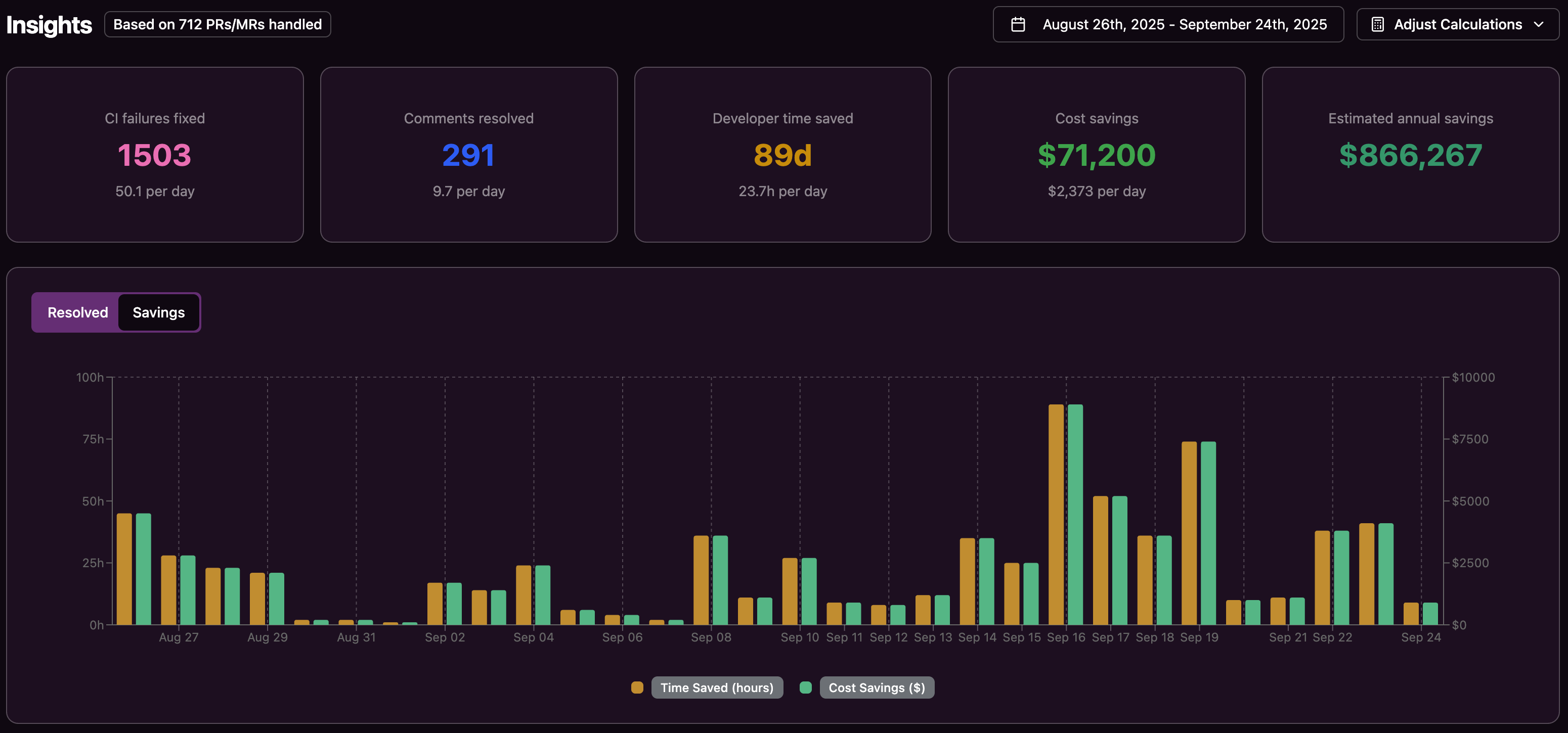
Measuring the benefits of autonomous CI involves both direct savings and wider productivity boosts. The impact goes beyond hours saved to real business outcomes.
For a 20-developer team, the numbers are significant:
- Time Spent: Developers lose about 1 hour daily on CI issues and reviews, totaling 5,000 hours yearly (20 developers x 1 hour/day x 250 days).
- Cost Impact: At $200 per hour for developer costs, this equals $1 million in yearly losses from CI debt, excluding delays in feature releases.
- Additional Benefits: Autonomous CI keeps developers focused, improving code quality and speeding up feature work. Teams also report better morale with less repetitive debugging.
Key ways to track the impact include:
- Workflow Efficiency: Shorter time to merge, fewer CI failures, less retrying builds, and higher first-pass success rates.
- Developer Satisfaction: Less task switching, better feedback scores, reduced CI-related stress, and easier onboarding.
- Business Outcomes: Faster feature releases, improved customer trust from reliable updates, lower costs from failed deployments, and quicker market response.
Even at 50% effectiveness, autonomous CI can save a mid-sized team $500,000 yearly while improving satisfaction and delivery reliability. Estimate your savings with Gitar’s autonomous CI tools.
Avoiding Common Mistakes in Tackling Technical Debt
Many teams trip up by addressing symptoms of CI debt instead of root issues. Knowing these missteps helps build better, lasting solutions.
- Scaling Without Analysis: Adding infrastructure without fixing core problems can increase flaky tests and failures. More servers often magnify issues rather than solve them.
- Overlooking Flaky Tests: Flaky tests grow worse with scale if ignored. They often result from timing, API issues, or network conditions. Autonomous tools like Gitar fix these with context-aware solutions.
- Relying on Suggestion Tools: AI tools that only suggest fixes still burden developers with implementation, adding work instead of saving time. Gitar applies and validates fixes for true relief.
- Poor Change Management: Teams may resist automation without gradual trust-building. Transparent operations and adjustable settings help ease the shift to autonomous CI.
- Fragmented Tools: Using separate tools without integration creates a disjointed experience. Gitar unifies workflows across version control, CI platforms, and reviews for consistent results.
Final Thoughts: Boost Delivery and Productivity with Autonomous CI
Moving from reactive CI fixes to self-healing systems changes how software development works. CI failures and review delays cost millions yearly, drag down developer morale, and disrupt delivery schedules.
Gitar solves this by fully automating fixes, matching enterprise environments, validating solutions, and offering customizable trust levels. It turns CI from a hurdle into a background task.
The benefits go beyond savings. Teams using autonomous CI see happier developers, quicker feature rollouts, and stronger market positioning with reliable updates. Less manual debugging means more time for innovation.
For leaders aiming to cut technical debt, autonomous CI is the next step in tooling. It delivers immediate gains, better morale, and faster cycles with clear value. Request a Gitar demo to experience self-healing CI today.
Key Questions About Autonomous CI and Technical Debt
How Does Gitar Handle Flaky Tests in CI Pipelines?
Gitar fixes flaky tests by addressing non-deterministic issues like outdated snapshots or broken assertions. It works within a replicated environment to tackle causes such as timing or external dependencies, stabilizing pipelines without manual effort.
Can Gitar Work with Our Custom CI Setup and Unique Tools?
Gitar adapts to complex setups by mirroring full enterprise environments, including specific SDKs and integrations like SonarQube or Snyk. Fixes are tailored to match your exact system for reliable results.
What Makes Gitar a Healing Engine Instead of Just a Suggestion Tool?
Gitar stands out by autonomously applying fixes, testing them against your full CI pipeline, and ensuring builds pass before notifying you. Unlike suggestion tools, it doesn’t leave the workload on developers.
How Does Gitar Fit Into Existing CI/CD Without Major Changes?
Gitar connects easily as a GitHub App or with platforms like GitHub Actions, GitLab CI, or CircleCI. It starts in suggestion mode and scales to full automation as trust grows, needing little setup and no overhaul.
What If Gitar’s Fix Introduces a New Issue?
Gitar validates fixes against the full CI pipeline to minimize errors. It also logs all changes for easy tracking and rollback if needed. Teams can set approval requirements for critical projects to stay in control.