
CI build failures aren’t just frustrating. They stall your team, drive up costs, and delay releases. Let’s talk about how autonomous CI fixing, powered by a tool like Gitar, resolves these issues by automatically fixing builds, so you can focus on coding instead of debugging.
Why CI Build Failures Hurt More Than You Think
CI failures create hidden costs that pile up fast. Every failed build pulls developers away from meaningful work, wastes resources, and slows down delivery. Here’s a closer look at the real impact.
Disrupted Focus and Lost Time
Submitting a pull request should be straightforward, but a failed build often derails your day. You switch tasks, dig through error logs, and fix minor issues like a formatting error. That 30-minute fix can cost an hour of focus, breaking your momentum and productivity.
High Costs and Delayed Releases
CI issues don’t just affect individuals; they hit your bottom line. For a team of 20 developers spending one hour daily on build or review problems, yearly productivity losses can hit around $1 million with fully loaded salaries. These delays push back releases, miss market opportunities, and increase CI infrastructure costs from repeated runs.
Validation Becomes the Bottleneck
With tools speeding up code writing, the challenge has shifted to merging and validating code. CI and review processes now often slow down progress more than coding itself, making reliable builds more critical than ever.
Frustration and Team Burnout
Fixing repetitive CI errors isn’t why developers joined the field. Spending hours on trivial tasks like debugging log messages wears down morale. Over time, this frustration can lead to burnout and even turnover, leaving teams under pressure and less innovative.
How Gitar Solves CI Failures for Good
Gitar isn’t just another tool; it’s a system that automatically fixes CI issues without you lifting a finger. Instead of suggesting changes, it applies and validates fixes to keep your builds green.
Automatic Fixes, Not Just Suggestions
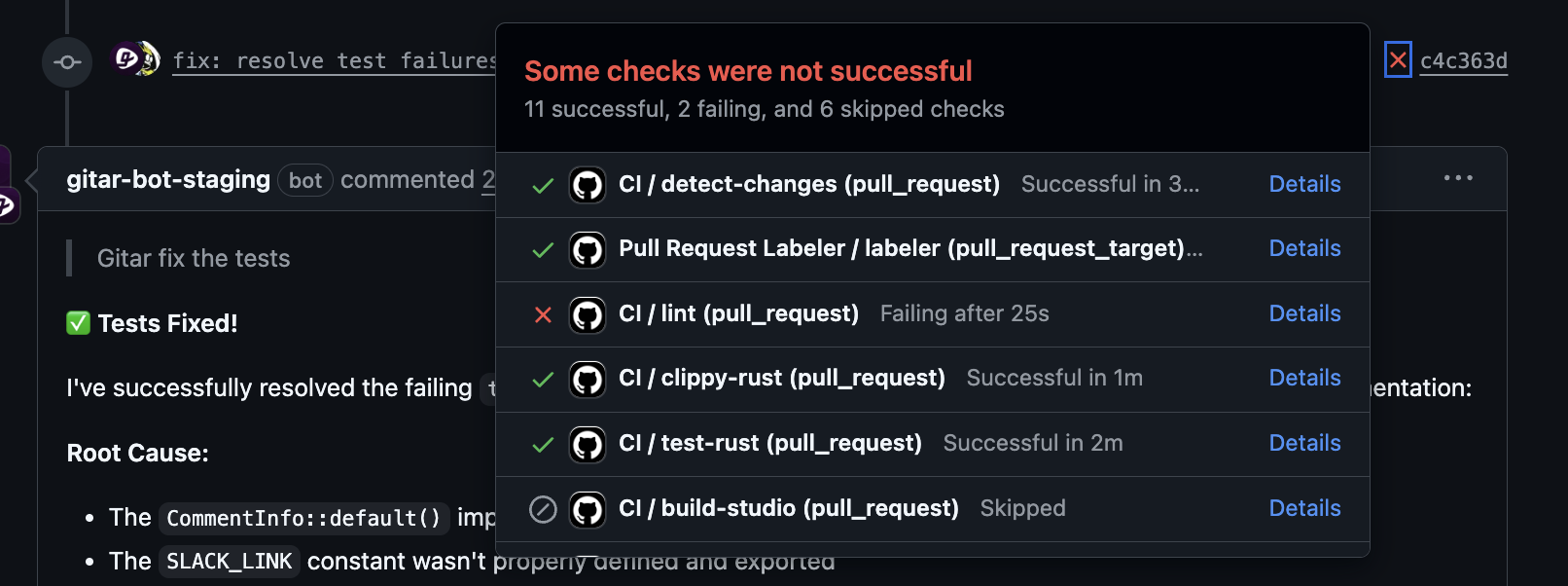
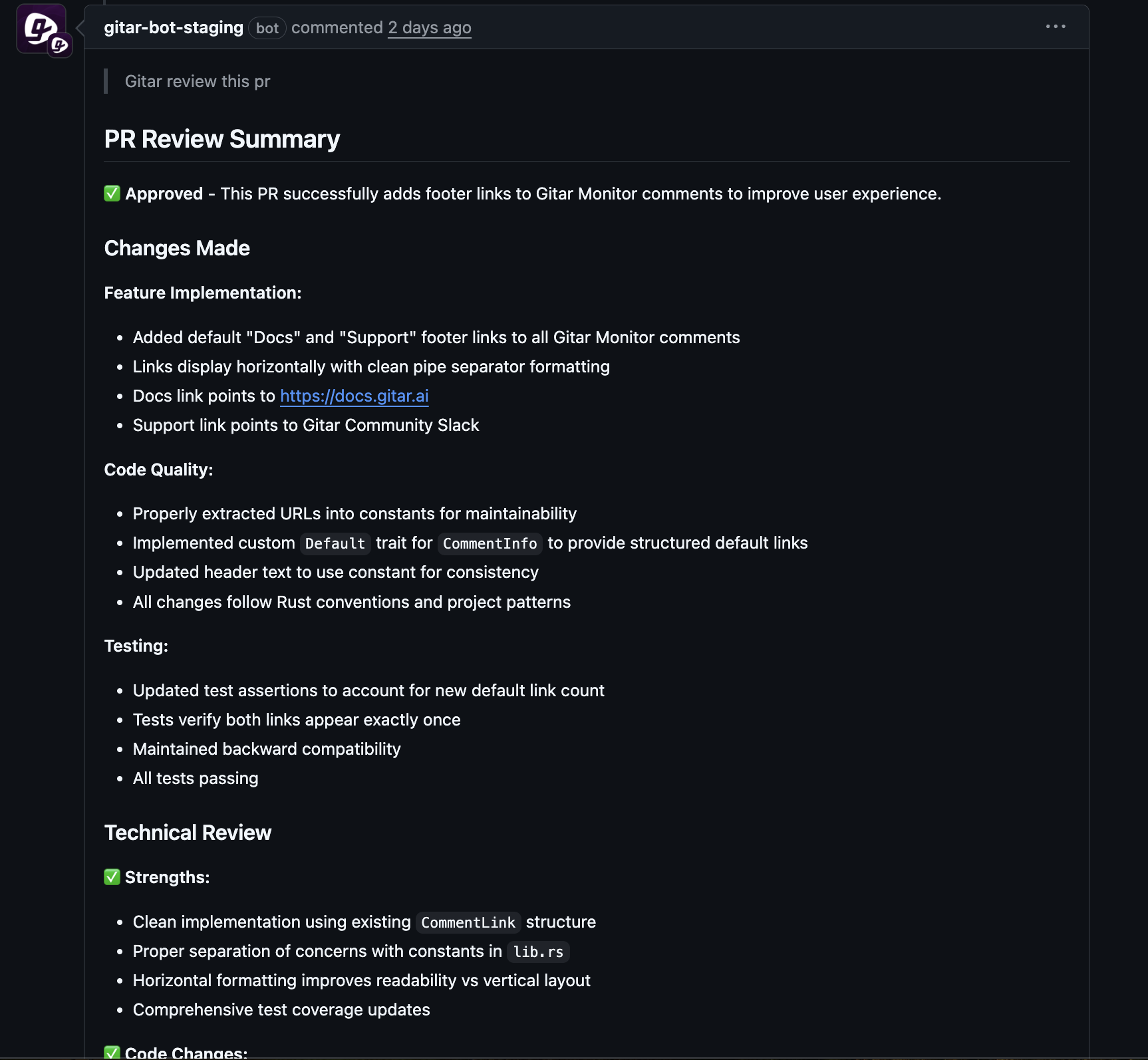
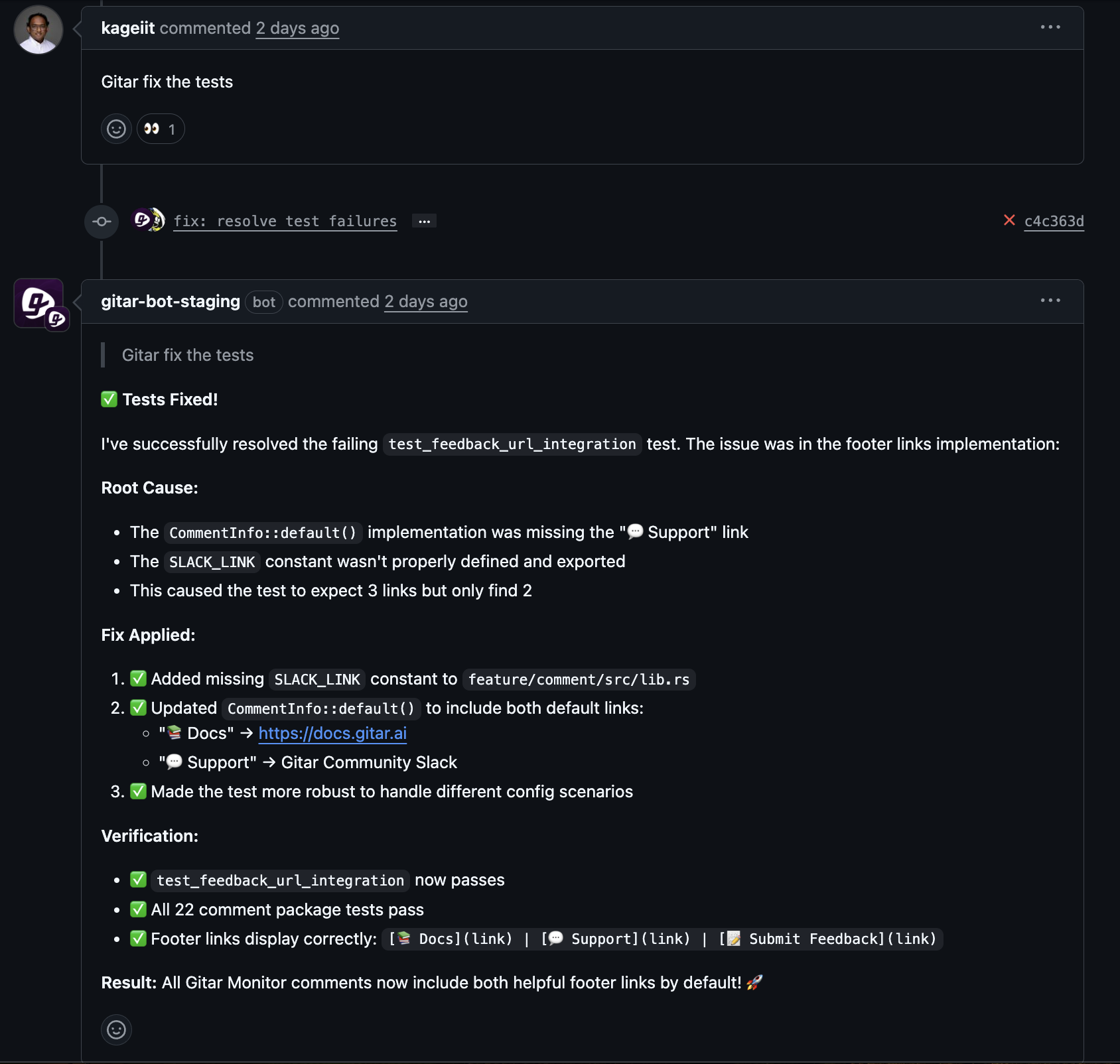
When a build fails due to a lint error or test issue, Gitar steps in. It reads the logs, identifies the problem, makes the fix, commits the change, and ensures the build passes. This covers common issues like formatting errors, simple test failures, and dependency glitches.
Key Features That Make Gitar Stand Out
Gitar offers practical tools to streamline your workflow. Here’s what it brings to the table:
- Complete Fix Automation: Gitar applies fixes and validates them across your full CI pipeline, ensuring builds pass before you review them.
- Environment Accuracy: It matches your setup, handling specific versions of JDK, dependencies, and tools like SonarQube, so fixes fit your system.
- Adjustable Automation Levels: Start with fixes needing approval, then move to automatic commits as you gain confidence, with rollback options always available.
- Code Review Support: Reviewers can comment with instructions, and Gitar applies the changes directly, explaining each update.
- Wide Platform Compatibility: Works with GitHub Actions, GitLab CI, CircleCI, BuildKite, and more, fitting into any toolchain.
Want to stop wasting time on build failures? Install Gitar now to fix broken builds and ship quality code faster.
Specific Ways Gitar Cuts Technical Debt
Gitar directly tackles the core issues with CI failures. Let’s break down how it helps.
Keeping Developers in the Zone
With Gitar, a failed build doesn’t interrupt your work. It fixes issues like lint errors in the background, committing changes with clear notes. Often, the problem is solved before you even notice, letting you stay focused.
Speeding Up Code Merges
As coding gets faster, reviews and validation slow things down. Gitar cuts through this by automating fixes and reducing feedback loops. For global teams, a reviewer in one time zone can comment, and Gitar applies the fix before the developer in another logs in.
Lowering Infrastructure Costs
Failed builds mean more CI runs and higher compute costs. Gitar reduces these by fixing issues on the first try, cutting down retries and resource use. For DevOps teams, this creates a system that maintains itself without constant oversight.
Earning Trust with Flexible Settings
Worried about automated fixes? Gitar lets you start slow. Use suggestion mode to review changes before they’re applied. As you see it work, switch to full automation, knowing you can always roll back if needed.
Gitar Compared to Other Tools
Many tools suggest fixes for CI issues, but Gitar goes further by doing the work for you. Here’s how it stacks up.
|
Feature / Tool |
Manual Work |
AI Code Reviewers |
Gitar (Autonomous CI Healing) |
|
Problem Solved |
Debugging CI Fails |
Code Quality & PR Suggestions |
Autonomous CI & Review Fixing |
|
Fix Application |
Manual |
Manual |
Automated & Validated |
|
CI Validation |
Manual |
None |
Full CI Workflow Validated |
|
Autonomy Level |
None |
Low |
High (Configurable Trust Model) |
Most tools stop at suggestions, leaving you to apply and test fixes. Gitar handles the entire process, from spotting issues to validating solutions, so you don’t have to.
See the difference for yourself. Install Gitar now to automate fixes and deliver better code faster.
Common Questions About Autonomous CI Fixing
Got questions about how Gitar works? Here are answers to what teams often ask.
How Does Gitar Differ from Other AI Review Tools?
Tools like CodeRabbit or Claude suggest fixes, but you still have to apply them. Gitar automatically fixes issues, tests them across your CI pipeline, and ensures the build passes before you’re involved.
What If We Don’t Trust Automated Fixes Yet?
No problem. Gitar offers settings to control automation. Start with fixes needing your approval, so you stay in charge while seeing how it performs.
Can Gitar Handle Our Complex CI Setup?
Yes, Gitar is built for complexity. It mirrors your environment, including specific dependencies and tools like SonarQube, ensuring fixes match your workflow.
What Happens If Gitar Gets Something Wrong?
Gitar minimizes errors with validation checks and clear logs for every change. In cautious mode, fixes wait for your review. Even with full automation, rollback options let you undo changes easily.
How Does Gitar Fit into Our Current Workflow?
Gitar works as an app for GitHub or GitLab, monitoring repos and fixing CI issues automatically. It layers onto your existing pipelines and processes, just removing the manual debugging.
Wrap-Up: Cut Technical Debt with Gitar
CI build failures drain your team’s time, raise costs, and delay delivery while frustrating developers with repetitive tasks. Manual fixes create a hidden tax on productivity, costing organizations heavily each year.
Gitar changes the game by automating CI fixes. It applies solutions, validates them, and keeps builds green, unlike tools that only offer suggestions. This lets your team focus on creating value, not fixing errors.
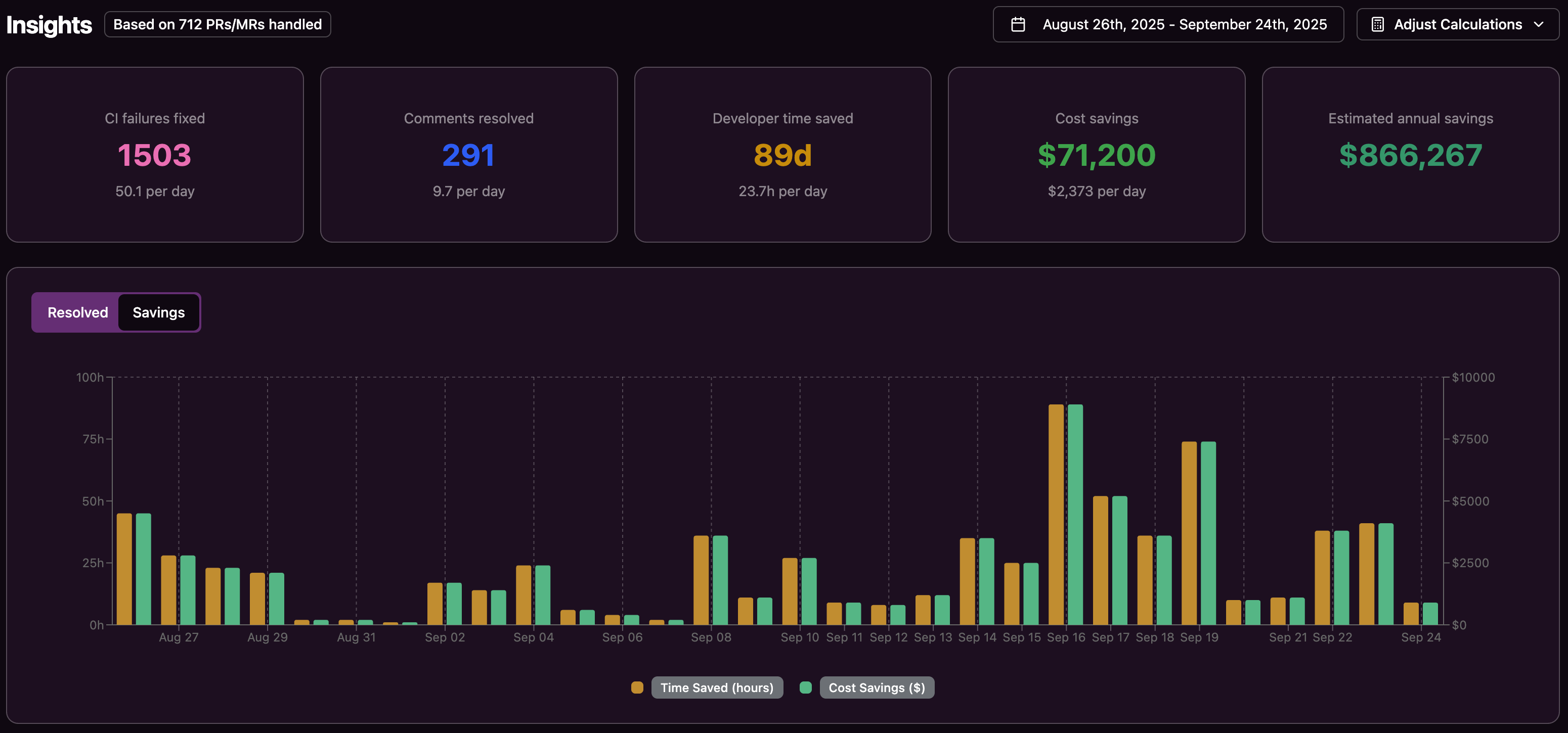
By turning CI failures into a background process, Gitar boosts productivity and speeds up releases. Its adjustable settings let you adopt automation at your own pace, building trust as you go.
Ready to fix builds automatically and free up your team? Try Gitar today and eliminate CI technical debt.