
Key Takeaways
- Developer flow breaks quickly when CI feedback arrives late, and repeated context switching compounds into significant productivity and morale costs.
- Flow protection protocols combine automation, clear ownership, and streamlined communication to reduce interruptions across CI/CD and code review.
- Autonomous incident resolution and self-healing pipelines free developers from routine fixes so they can focus on higher-value engineering work.
- Gradual rollout, clear guardrails, and security-aware automation help leaders introduce autonomy without losing trust, quality, or compliance.
- Gitar provides an autonomous CI healing engine that fixes failing builds and applies review feedback for you, helping teams protect flow and ship faster. Try Gitar to automatically fix broken builds and reduce context switches.
The Silent Productivity Killer: Why Flow Protection is Essential for Vibe Coding
The High Cost of Context Switching for Developer Flow
Deep focus or “vibe coding” depends on uninterrupted concentration. A 30-minute delay in build feedback often arrives after developers have already switched tasks, breaking their flow state. Each return to a task requires rebuilding mental context, which turns small issues into large time sinks.
For a 20-developer team, one hour per day on CI failures and code review changes adds up to about 5,000 hours per year. At a $200 loaded hourly rate, that is roughly $1 million in productivity diverted from product work to pipeline recovery and rework.
Every CI failure pulls developers out of their current problem, forces log analysis, environment switching, and cognitive reset. These repeated interruptions turn simple fixes into long, frustrating sessions that drain energy and reduce overall throughput.
The Ripple Effect: Business Consequences of Flow Disruption
Flow disruption slows releases and delays recovery work. CI failures propagate through teams, extending timelines and pushing back delivery commitments. Missed windows for features or fixes can translate into real revenue loss and market exposure.
Constant context switching contributes to burnout and higher attrition, especially for senior developers who carry critical system knowledge. Unstable delivery also erodes customer trust in environments where reliability is an expectation rather than a bonus.
Flow protection therefore becomes a strategic concern. Teams that spend their days in reactive troubleshooting have less capacity for innovation, technical debt reduction, and proactive product improvements.
Gitar: Your Autonomous Solution for Team Collaboration Protocols and Flow Protection
Gitar provides an autonomous AI agent for CI/CD that focuses on flow protection. It automatically fixes many failing CI pipelines and applies common code review feedback, so developers spend less time unblocking pull requests and more time on core engineering tasks.
How Gitar Ends Flow-Breaking Context Switches
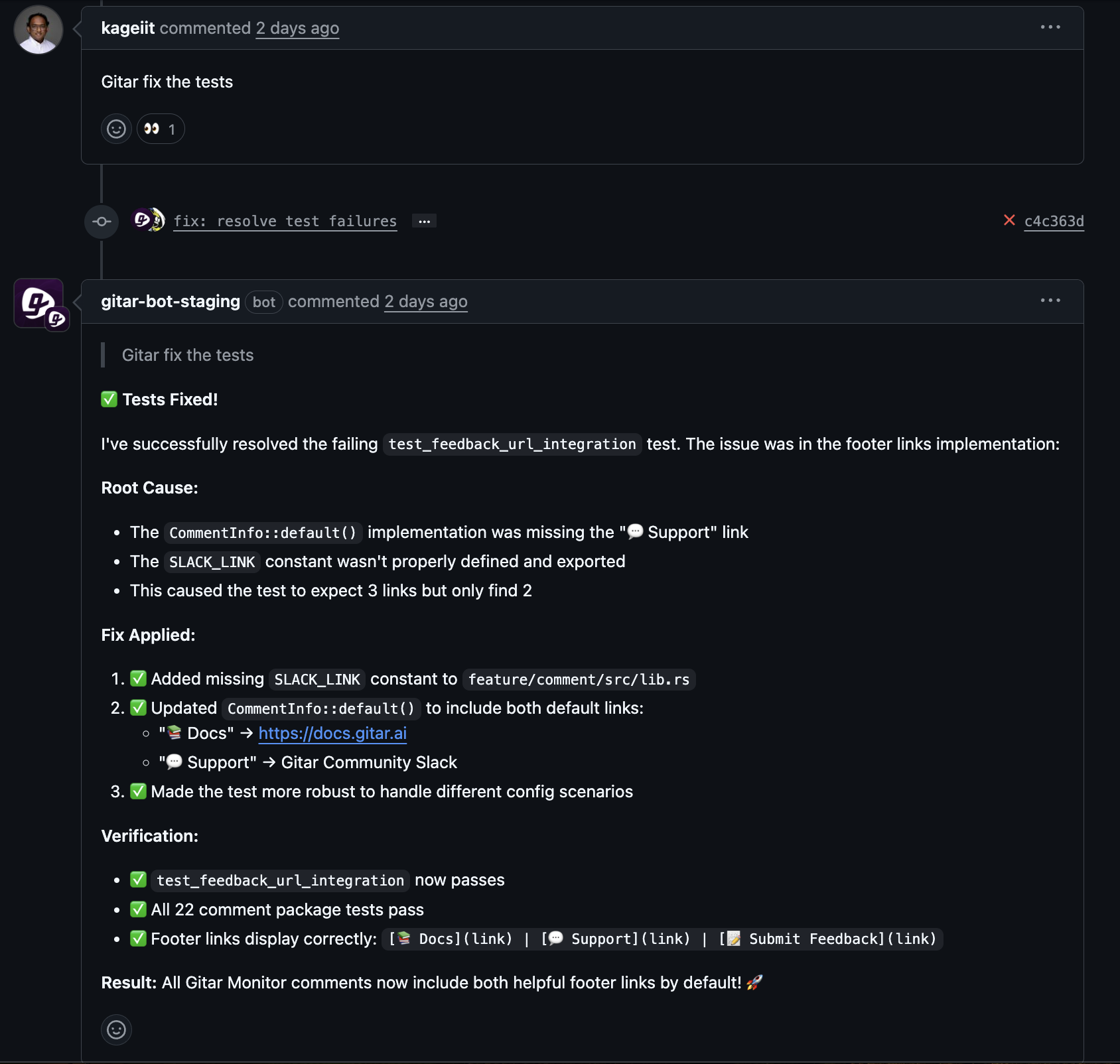
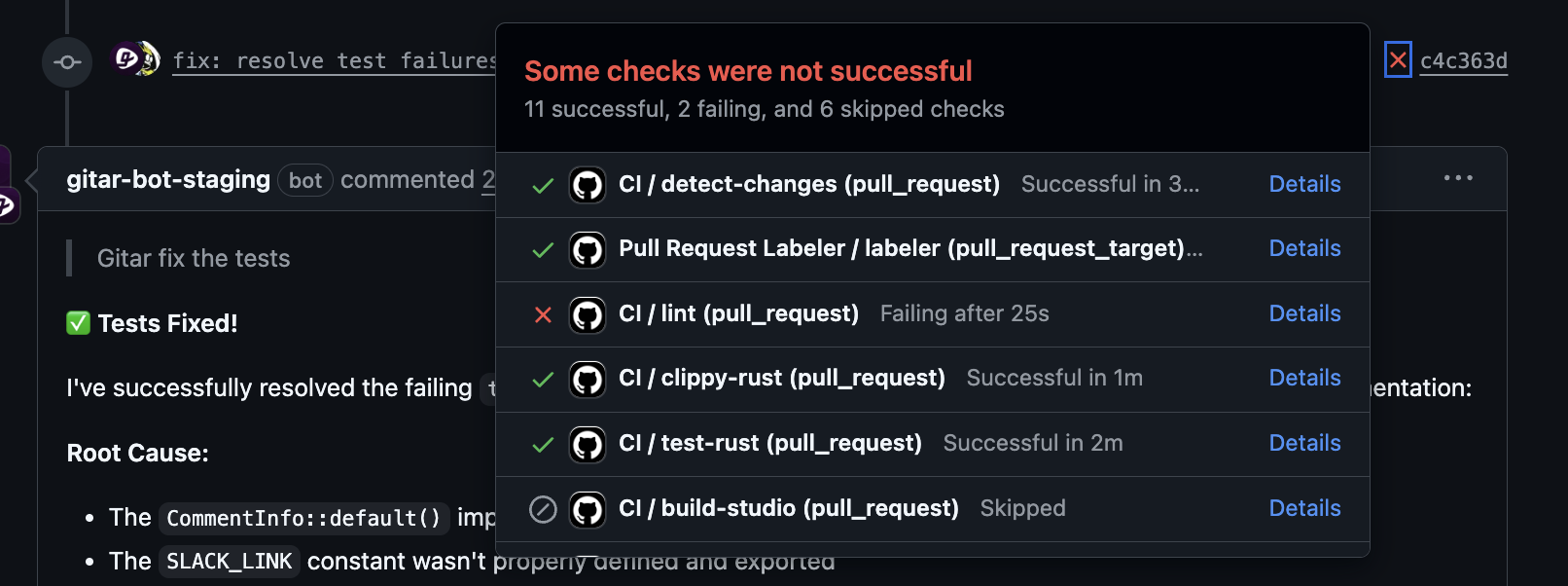
When a CI check fails, such as npm run lint, pytest, or build steps, Gitar analyzes logs, identifies the cause, generates a fix, and commits it back to the pull request branch. Typical autonomous fixes include:
- Linting and formatting corrections that align code with team standards.
- Simple test fixes such as snapshot updates or assertion adjustments.
- Build fixes for dependency issues or script errors.
Developers can push a pull request, move on to the next task, and later see that Gitar resolved the failure with a clear commit message describing the change. This self-healing behavior limits interruptions and keeps work moving.
Enhancing Code Review Without Interrupting Flow
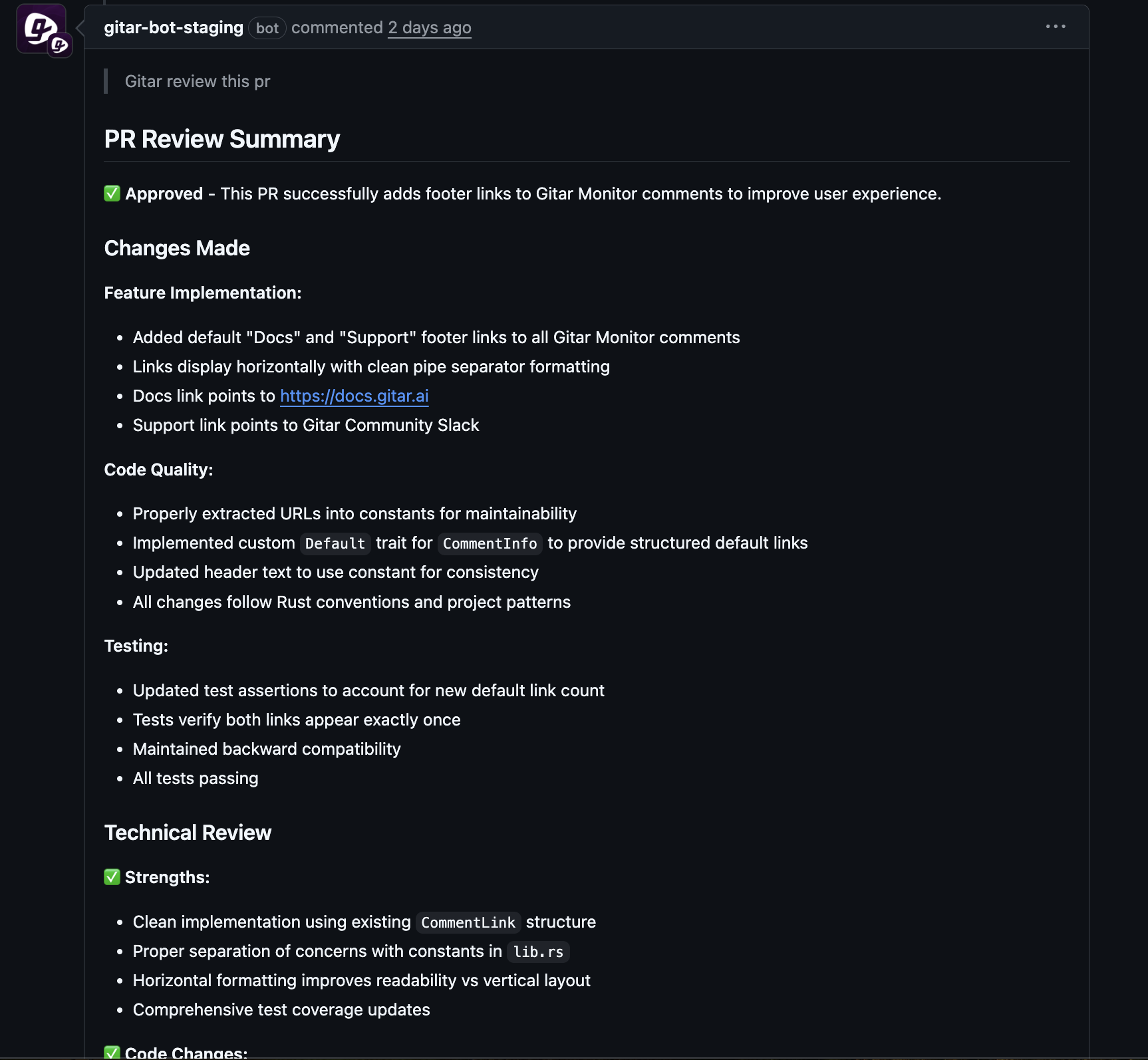
Gitar also supports human code review. When tagged on a pull request, it provides a first-pass review that summarizes changes, highlights risks, and surfaces potential impacts.
Reviewers can leave natural-language comments such as “remove this feature from this PR” and Gitar applies the requested change, then commits with an explanation. Distributed teams benefit from this automation because feedback from one time zone can be implemented before the other side comes online.
Guaranteeing Green Builds in Complex Environments
Enterprise CI pipelines often include specific JDK versions, multiple SDKs, and tools like SonarQube, Snyk, and snapshot testing. Gitar replicates these environments and validates its fixes in context, so changes respect your full workflow and constraints.
The agent maintains context across concurrent runs and multi-stage pipelines. This approach allows Gitar to fix issues in complex setups instead of only handling simple, isolated failures.
Strategic Pillars of Team Collaboration Protocols for Optimal Flow Protection
Pillar 1: Proactive and Autonomous Incident Resolution
Fast build feedback keeps developers in a productive flow state rather than jumping between tasks. Flow protection protocols prioritize immediate, often autonomous, responses to common failures instead of waiting for human intervention.
Self-healing pipelines that resolve routine failures on their own reduce investigation time and context switching. This lets engineers focus on design, architecture, and complex defects.
Pillar 2: Streamlined Feedback Loops and Communication
Poor communication and siloed workflows allow failures to linger and disrupt multiple developers. Effective protocols connect CI/CD systems with messaging and issue tracking so the right people see the right events at the right time.
Short feedback loops with strong observability help teams react before delays accumulate. Teams benefit from clear ownership, escalation paths, and notifications that are informative rather than noisy.
Pillar 3: Balancing Automation with Human Accountability
Automation bias, where teams over-trust systems without verification, can hide critical issues. Flow protection protocols need guardrails that keep humans responsible for high-risk decisions.
Gitar supports configurable modes that start with suggestion-only fixes. Teams can inspect results, build trust, and then enable auto-commits for well-understood patterns. Hard breaks that require human approval before production protect releases while still benefiting from automation speed.
Pillar 4: Eliminating Pipeline Bottlenecks and Drift
Slow builds, long tests, and infrastructure queues quietly erode delivery speed and morale. Flow-aware teams track where developers wait and optimize those steps first.
Careful configuration, solid error detection, and modular pipelines reduce disruptions. Regular retrospectives on pipeline performance keep improvements continuous and aligned with developer experience, not just infrastructure metrics.
Implementing Flow Protection Protocols: A Practical Guide for Engineering Leaders
Phase 1: Assess, Integrate, and Build Trust
Implementation starts with a clear picture of current pain. Low visibility into tests and weak coordination between development, QA, and DevOps create repeated failures and rework. Leaders should estimate hours lost to CI issues, review queues, and handoffs.
Teams can then integrate Gitar on a small set of repositories with high failure rates. Setup involves installing the GitHub App, connecting existing CI providers, and starting in suggestion-only mode. This limited rollout offers real-world data while keeping risk low.
Phase 2: Gradually Automate and Embed into Team Workflows
After teams see consistent, accurate suggestions, they can allow Gitar to auto-fix frequent, low-risk issues such as formatting and simple tests. Early detection of failures reduces flow disruption, especially when fixes apply automatically.
Pull request comments from Gitar act as a status feed for ongoing resolution work. Teams can combine this with regular pipeline retrospectives that track metrics like time-to-merge and number of context switches avoided.
Phase 3: Scale Autonomy and Quantify Impact
As trust grows, organizations can enable more aggressive auto-commit behavior for clear patterns while preserving reviews for risky changes. Impact tracking typically includes reduced CI failure handling time, faster merges, and improved satisfaction scores.
Error analysis and shared knowledge about recurring issues help teams solve root causes, not just symptoms. Senior engineers can also direct Gitar with natural-language refactor requests to offload mechanical edits.
The Competitive Landscape: True Flow Protection vs. Half-Measures
Flow protection solutions fall into three broad groups: autonomous healing engines, AI code reviewers, and on-demand AI fixers. Gitar operates as a healing engine, while other tools focus more on suggestions or manual triggers.
Comparison Table: Flow Protection Protocol Solutions
|
Capability |
Gitar (CI Healing Engine) |
AI Code Reviewers (e.g., CodeRabbit) |
On-Demand AI Fixers (e.g., Claude CI Action) |
|
Autonomous Fix and Validation |
End-to-end fix with validated build |
One-click fixes for faster implementation |
Manual trigger and limited validation |
|
Full Environmental Context |
Replicates enterprise CI environment |
Primarily code-level context |
Supports multi-file and repository context |
|
Flow Disruption Impact |
Minimizes context switches with automation |
Reduces context switches in review |
Reduces some toil but still requires task switching |
|
Platform Support |
GitHub, GitLab, CircleCI, BuildKite |
GitHub, GitLab, Jira, Linear, and others |
GitHub, GitLab, and local workflows |
Suggestion-focused tools improve the review experience, but developers still need to stop and apply changes. On-demand fixers reduce effort but require explicit triggers. Healing engines like Gitar aim to reduce how often developers leave their current task at all.
Strategic Pitfalls to Avoid When Implementing Team Collaboration Protocols
Underestimating the Cost of Inaction on Flow Protection
Some leaders treat CI friction as a nuisance rather than a strategic issue. Limited visibility and reactive troubleshooting extend incident resolution and damage flow. The cumulative impact includes slower delivery, less innovation, and higher attrition.
Relying Solely on Suggestion-Based Tools for CI/CD Issues
Suggestion engines still require developers to interpret, validate, and apply fixes. This preserves the main source of flow disruption. Sustainable flow protection depends on reducing switches, not just making them slightly easier.
Ignoring Organizational and Cultural Resistance to Automation
Responsibility diffusion in automated pipelines can weaken ownership of quality. Teams need clear rules for what automation handles, what humans review, and how to escalate unclear situations.
Neglecting Security in Automated Flow Control Mechanisms
Weak flow control in CI/CD introduces security risk if attackers can push malicious changes. Flow protection protocols must include audit trails, approvals for sensitive modifications, and alignment with security scanning and compliance tools.
Install Gitar to combine autonomous flow protection with clear controls and tracking.
Frequently Asked Questions
How does Gitar build trust with automated fixes when human approval is traditionally required?
Gitar uses configurable aggression modes so teams can start with suggestion-only behavior. Developers review and approve proposed fixes, then gradually enable auto-commits for safe categories as confidence grows. Each automated change carries a detailed commit message, which preserves transparency and makes audit and rollback straightforward.
Our CI/CD pipeline is extremely complex and unique. Can Gitar truly integrate and provide accurate fixes?
Gitar runs fixes in a replica of your CI environment, including language versions, dependencies, and third-party tools such as SonarQube or Snyk. It validates changes against the full pipeline before committing them so fixes account for multi-stage workflows and organization-specific checks.
How do team collaboration protocols for flow protection impact developer morale and retention?
Flow protection reduces repetitive work such as debugging simple CI failures and implementing mechanical review feedback. Developers spend more time on design, complex debugging, and feature work, which often results in higher satisfaction and lower burnout. Teams that feel effective on a daily basis are more likely to stay and grow within the organization.
Conclusion: The Imperative of Advanced Team Collaboration Protocols for Sustainable Flow Protection
Modern engineering teams need protocols that protect developer attention as much as they protect system stability. As code volume and release expectations increase, manual CI firefighting and suggestion-only tools fall short.
Teams that reduce context switching with autonomous resolution and clear collaboration patterns often see faster delivery, better morale, and more capacity for innovation. Gitar helps by turning CI from a source of friction into an automated safety net that keeps work moving.
Engineering leaders can treat flow protection as a core capability rather than a nice-to-have. Install Gitar to implement autonomous flow protection, keep builds green, and help your developers stay focused on meaningful work.