
AI-powered coding tools have reshaped software development, helping developers write code faster. Tools like Tabnine and GitHub Copilot boost individual productivity in the early stages of coding. Yet, this speed has created a new challenge, often called the “right-shift bottleneck.” With more code written quickly, pull requests, CI failures, and code reviews pile up, slowing down the delivery pipeline.
While suggestion tools assist with writing code, they don’t address issues that arise after code is committed, such as passing CI checks or resolving review feedback. This gap is where Gitar, a healing engine, steps in. It offers autonomous fixes to streamline CI/CD, turning bottlenecks into efficient, self-healing processes.
This comparison highlights the key differences between suggestion engines like Tabnine and GitHub Copilot, and healing engines like Gitar. It focuses on how each impacts the software development lifecycle, helping engineering leaders and developers choose the right tools for their needs.
Why Post-Commit Healing Matters in Today’s Development
The surge in code generation from AI tools has led to a bottleneck after code is written. Developers using tools like GitHub Copilot and Tabnine create more pull requests, but the manual steps of passing CI checks, fixing issues, and addressing reviews remain slow and cumbersome.
Developers often spend up to 30% of their time on CI and code review tasks. This time drain grows as code output increases. If coding speed improves by 50% but post-commit delays persist, the overall benefit to delivery timelines is minimal.
This bottleneck creates real costs. Context switching, when developers must stop their current work to fix a CI failure or respond to feedback, wastes valuable time. A quick fix can stretch into an hour-long interruption due to lost focus.
For distributed teams, delays worsen. A developer in one time zone waiting for feedback from another can face days of back-and-forth over minor issues. Suggestion tools often add to this by offering advice that still needs manual effort to apply.
The financial hit is clear. Teams with frequent CI failures see project delays increase by 60%. For a team of 20 developers, lost productivity from delays can top $1 million yearly in engineering costs.
Healing engines like Gitar tackle these post-commit challenges directly. Unlike suggestion tools, they work after code is submitted, detecting and fixing issues without developer input. This creates a smoother CI/CD flow, cutting down manual debugging time significantly.
How AI Tools Differ: Suggestion vs. Healing Engines
Suggestion Engines: Speeding Up Code Writing
Suggestion engines, such as Tabnine and GitHub Copilot, focus on helping developers write code faster within their IDEs. They offer smart code completion, generate templates, and suggest improvements based on patterns from large code datasets.
Tabnine uses machine learning to predict and complete lines or functions as developers type. It fits neatly into popular IDEs, tailoring suggestions to match a project’s coding style, saving time on routine tasks, and exposing developers to new approaches.
GitHub Copilot goes a step further by turning plain English comments into working code blocks. Developers can describe a task, and Copilot builds the solution. This helps with repetitive coding, common algorithms, or unfamiliar APIs.
Both tools improve individual efficiency during coding. They lessen the mental effort of recalling syntax and speed up basic tasks. However, their focus stops once code is committed, leaving integration challenges untouched.
The catch with suggestion engines is that faster coding means more code to review and integrate. This increases pull requests, CI failures, and review cycles, shifting the slowdown to later stages of development.
Healing Engines: Automating Fixes with Gitar
Gitar introduces a shift from AI support to full autonomy in the development process. It targets post-commit hurdles like CI failures and code review feedback, which slow down integration.
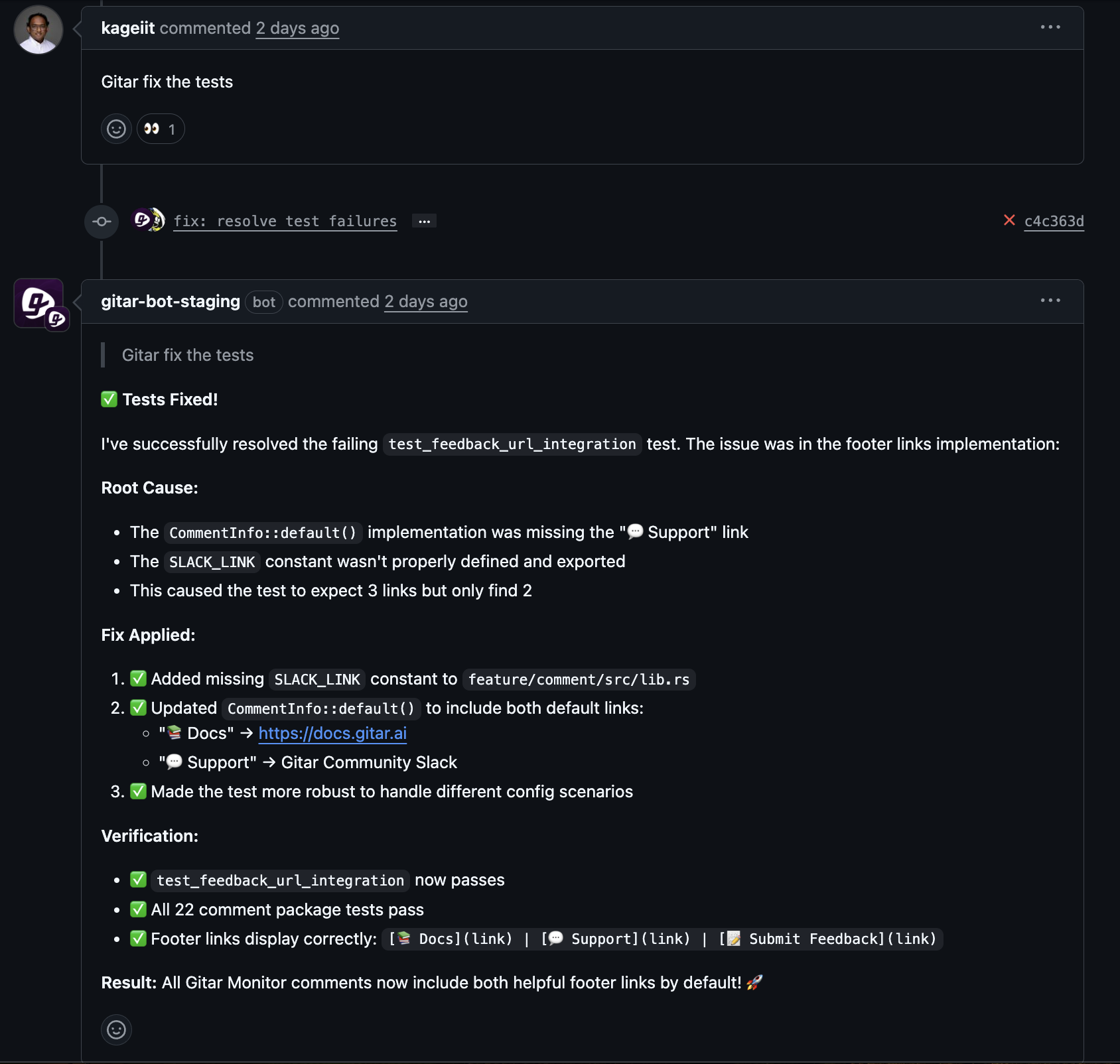
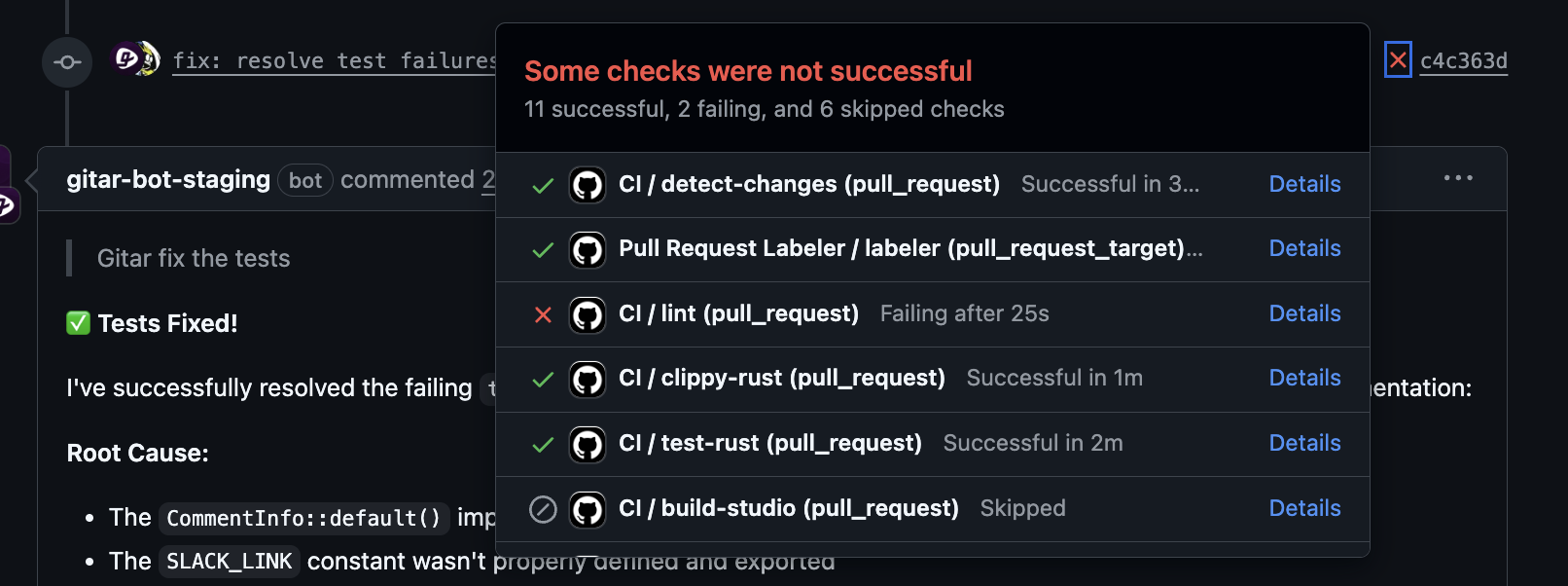
When a pull request fails a CI check or gets reviewer comments, Gitar steps in. It analyzes the problem, creates a fix, and applies it directly to the branch. This results in a passing build ready for merge, avoiding lengthy manual intervention.

Gitar handles common CI issues like linting errors, simple test failures, and build problems from dependencies. It mirrors complex enterprise CI setups, including specific SDK versions and tools like SonarQube, ensuring accurate fixes.
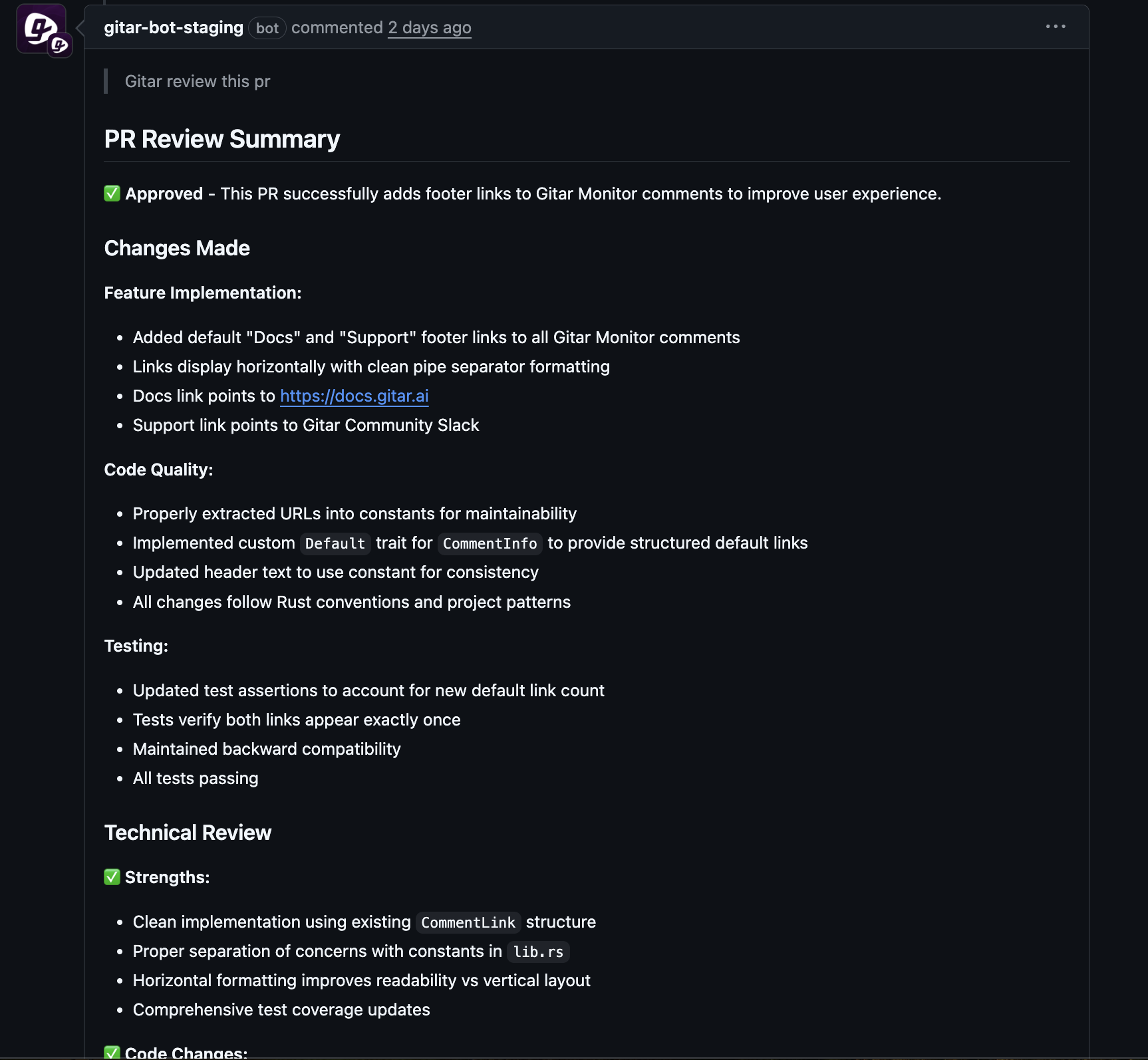
During reviews, Gitar acts on direct instructions from reviewers to make changes. It offers flexible trust settings, from a cautious mode where fixes are suggestions for approval, to an active mode where it commits changes with rollback options.
See how Gitar can streamline your CI/CD with autonomous fixes. Schedule a demo now.
Comparing Tools: Gitar’s Fixes vs. AI Suggestions
Gitar vs. Tabnine: From Writing Help to Automatic Corrections
Gitar and Tabnine serve distinct purposes in development. Tabnine boosts coding speed within IDEs through smart suggestions and autocomplete features. It also aids with pull requests and reviews inside the IDE. However, it doesn’t fix CI or review issues in pipelines after code is committed.
Gitar picks up after code submission. If a PR fails due to a linting error or test issue, Gitar resolves it independently, keeping developers focused on their next tasks instead of backtracking.
These tools work well together. A developer might use Tabnine to code a feature quickly, then rely on Gitar to handle any CI or feedback issues, ensuring a smooth path to merge.
In terms of workflow, Tabnine cuts down coding time while Gitar speeds up integration. Teams using both gain efficiency from start to finish, combining faster coding with automated issue resolution.
Gitar vs. GitHub Copilot: From Coding Support to Pipeline Automation
GitHub Copilot and Gitar target different stages of development, making them complementary. Copilot acts as a coding partner, creating functions from descriptions and suggesting solutions during development. It helps build code that works locally with efficiency.
Gitar automates the pipeline after submission. When Copilot-generated code fails CI due to formatting or compatibility issues, Gitar steps in to fix them without developer input, ensuring the code meets team standards.
Their scope differs too. Copilot integrates with IDEs like VS Code and GitHub workflows. Gitar supports multiple CI systems, including GitHub Actions, GitLab CI, and CircleCI, addressing issues across various platforms.
Trust levels set them apart as well. Copilot offers suggestions for developers to accept. Gitar can work independently with adjustable settings, from suggesting fixes to applying them directly, validated against the full CI setup.
Comparison Table: Healing vs. Suggestion for CI/CD
|
Feature/Criterion |
Gitar (Healing Engine) |
Tabnine & GitHub Copilot (Suggestion Engines) |
|
Primary Focus |
Autonomous post-commit issue resolution (CI fixes, code review) |
Pre-commit code generation and IDE assistance |
|
Action Type |
Applies and validates fixes in CI/CD automatically |
Suggests code, requires manual acceptance |
|
Environmental Awareness |
Replicates full CI/CD environment for accurate fixes |
Focuses on local IDE context and code analysis |
|
Impact on Developer |
Reduces context switching, keeps focus on core tasks |
Speeds up coding, shifts delays to integration |
|
Integration Points |
Works with GitHub, GitLab, CircleCI, BuildKite (CI/CD focus) |
Supports IDEs like VS Code, IntelliJ, GitHub workflows (Copilot) |
Key Benefits: Completing Your SDLC with Gitar
Cut Merge Times and Increase Team Speed
Gitar directly improves critical metrics like time-to-merge, which defines engineering speed. While suggestion tools help individual coding, Gitar enhances team-wide efficiency across the development cycle.
Top teams deploy multiple times daily with lead times in hours, compared to slower teams with monthly releases. The gap often comes from integration delays, not coding speed.
Gitar cuts PR merge times by fixing CI issues automatically, often before developers notice a problem. This speeds up delivery, allowing more frequent releases and quicker customer feedback.
Shorter merge cycles compound benefits. Teams can release often, reduce deployment risks, and respond faster to market needs, gaining a clear edge in delivery pace.
Improve Developer Focus by Reducing Repetitive Tasks
Developer satisfaction ties directly to team performance and retention. Context switching and repetitive fixes rank high as sources of frustration, lowering productivity.
Gitar eliminates interruptions from CI failures or minor feedback, letting developers stay focused on meaningful work. Confidence in automated fixes means less time spent on routine debugging.
Beyond time savings, reducing these tasks boosts morale. Developers value focusing on creative problem-solving over fixing small errors, improving job satisfaction and team stability.
For managers, this means more predictable planning. When CI issues don’t derail schedules, teams stick to priorities without constant urgent fixes disrupting sprints.
Drive Measurable Returns for Leadership
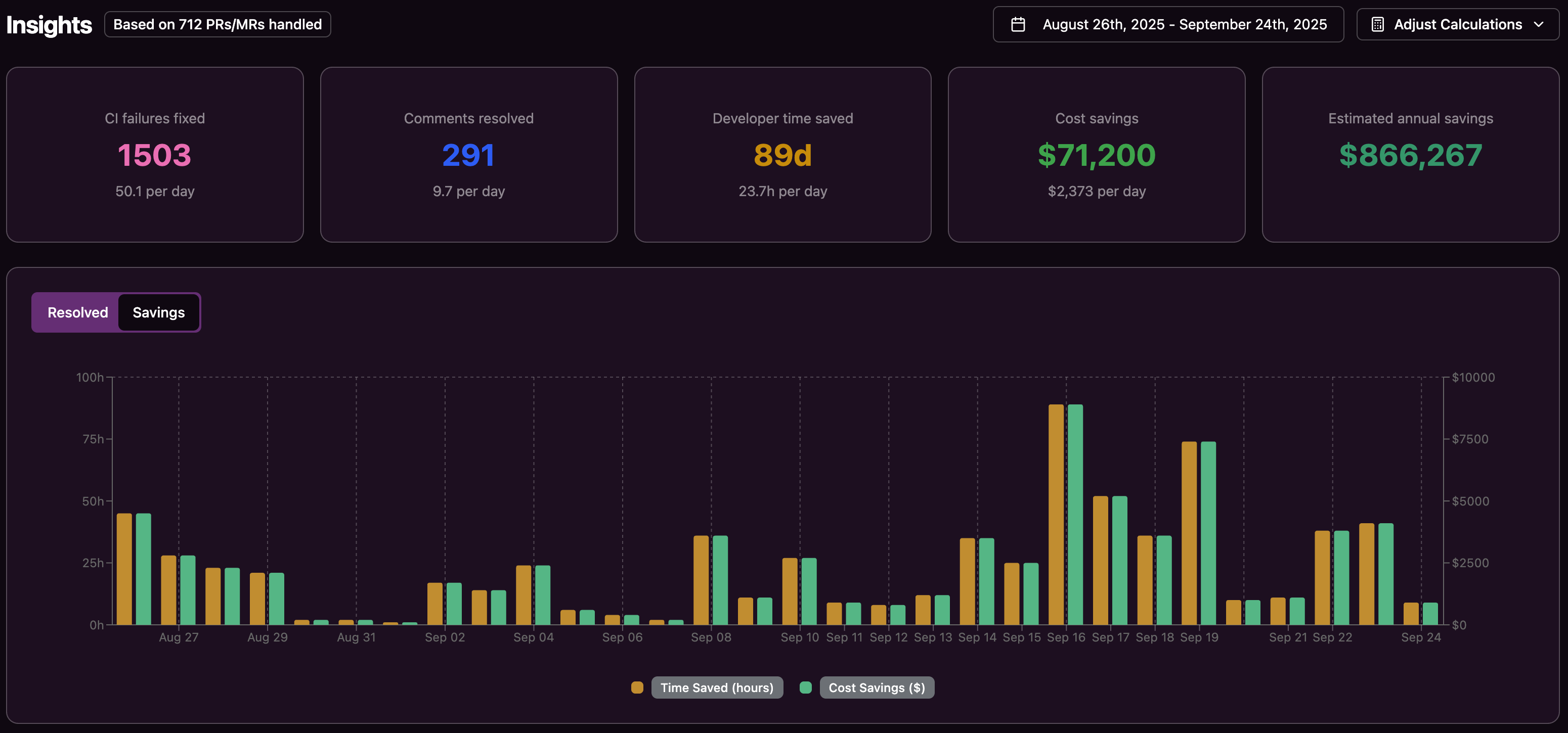
Gitar offers clear financial benefits through efficiency gains. Engineering teams are a major cost, with senior developers often exceeding $200,000 yearly. Tools that boost productivity deliver significant savings.
For a 20-developer team losing one hour daily to CI and review tasks, yearly costs top $1 million. Gitar can recover half of this lost time, saving around $500,000 annually for mid-sized teams.
Benefits extend further. Faster merges lead to quicker releases and market response. High-velocity teams see revenue growth 4-8 times faster than slower ones, amplifying returns on efficiency tools.
CI cost savings add up too. Failed runs waste cloud resources, and Gitar’s fixes reduce repeated failures, lowering infrastructure expenses while improving reliability.
Learn how Gitar can enhance your CI/CD efficiency. Request a demo today.
When to Choose a Healing Engine Like Gitar
Deciding on a healing engine depends on your team’s main bottlenecks and current AI tool usage. Leaders should assess whether coding speed or integration delays are the bigger issue.
If coding itself is slow, with developers struggling on syntax or repetitive tasks, suggestion tools like Tabnine or GitHub Copilot offer immediate help. They speed up the early development phase effectively.
If delays happen during integration, with PRs stuck in review or CI failures disrupting flow, Gitar becomes essential. Teams already using coding assistants often face this, as faster coding highlights slower shipping.
Signs your team needs a healing engine include frequent manual fixes for CI issues, extended review cycles, or developer frustration with interruptions. Distributed teams especially benefit from fixes during off-hours.
Mature CI/CD setups with automated testing and clear quality rules maximize Gitar’s impact. It excels on routine, fixable issues, not deep design flaws.
Financially, teams of 15 or more developers often see clear returns from automation. Smaller teams might start with suggestion tools, adding healing engines as scale brings integration challenges.
The best approach layers both tools: suggestion engines for coding speed, then Gitar for integration efficiency, addressing the full development cycle.
Ready to boost team speed with self-healing CI/CD? Book a Gitar demo today.
Common Questions About Autonomous AI Fixes
Does Gitar Replace Coding Assistants Like Tabnine or GitHub Copilot?
No, Gitar works alongside tools like Tabnine and GitHub Copilot. They focus on different stages. Suggestion tools help with coding before submission, while Gitar automates fixes after code enters version control. Using both types ensures efficiency from coding to merge.
How Does Gitar Handle Security for Automated Code Changes?
Gitar offers a customizable trust model for automation control. In cautious mode, it suggests fixes for developer approval, ensuring transparency. As trust grows, teams can enable direct commits with rollback options, maintaining control over changes.
Can Gitar Work in Complex CI Environments with Custom Tools?
Yes, Gitar is built for enterprise complexity. It replicates full CI environments, including specific SDKs and tools like SonarQube. This ensures accurate fixes. It also supports platforms like GitHub Actions and CircleCI, fitting diverse setups.
What Returns Can Teams Expect from Gitar?
For a 20-developer team, CI and review delays can cost over $1 million yearly, assuming one hour daily on these tasks. Gitar can halve this loss, saving over $500,000 annually. Additional gains include better morale and faster feature rollouts.
How Does Gitar Fit Into Existing Workflows?
Gitar integrates easily with tools like GitHub and GitLab, and CI systems like CircleCI. Installed as an app or integration, it monitors PRs and CI results, acting only on issues. Developers keep using their preferred setups, while a dashboard manages settings without workflow changes.
Looking Ahead: Self-Healing CI/CD with Gitar
AI in software development has hit a turning point. Suggestion tools like Tabnine and GitHub Copilot have tackled coding speed, but integration delays remain a hurdle. As teams produce more code, CI failures and reviews limit overall progress.
Gitar’s autonomous fixes mark the next step, shifting CI/CD from a barrier to a smooth, self-repairing system. This keeps development moving without constant manual effort.
The value goes beyond one developer’s output to team-wide speed and efficiency. Combining suggestion tools for coding and Gitar for integration covers the entire process, maximizing results.
For leaders planning AI adoption, the focus is on timing and fit with current practices. Teams embracing autonomy will deliver better software faster, with happier, more effective developers.
Ready to elevate your CI/CD with autonomous AI? Schedule a Gitar demo now.