
CI pipeline failures can stop development in its tracks. A Python microservice might pass local tests but fail in CI due to a Go dependency issue. A React frontend could build fine on your machine yet encounter a Node.js error in GitHub Actions. These challenges, common in multi-language environments, waste valuable time and delay releases.
Modern software development spans diverse languages and frameworks like Python, React, Go, and Java. This variety fuels innovation but complicates CI/CD pipelines. Failures often need specific expertise to resolve, slowing down engineering teams. Let’s explore how autonomous tools address these issues and improve workflow efficiency.
Developers spend up to 30% of their time on CI and code review challenges. For a team of 20, this can mean $1 million in lost productivity each year, not counting delays and team frustration.
Understanding the Polyglot Pipeline Challenge
Why Manual CI Fixes Slow Down Diverse Teams
Fixing CI failures manually in a multi-language setup is a drain on resources. A developer submits code, only to face multiple errors across languages. Python linting issues, JavaScript test failures, Go dependency conflicts, and Java classpath errors can all appear at once.
Each error requires a shift in focus and tools. Resolving a Python formatting issue differs from debugging a Node.js conflict or adjusting a Java build setting. Navigating pip, npm, go mod, and Maven adds complexity, especially when CI environments differ from local setups.
This constant switching between languages and systems is not just slow. It tires out developers, turning small issues into hours of lost time across a team.
Limitations of Standard AI Tools in Mixed Environments
Many AI tools for developers struggle with multi-language projects. GitHub Copilot helps with code in single files but misses broader impacts across a stack. CodeRabbit offers review suggestions but can’t confirm if those changes pass CI for all languages involved.
These tools often stop at suggestions. They might point out a fix for a Python error but fail to address how it affects other parts of a project. This leaves developers to test and apply changes manually, adding extra steps to the process.
How Gitar Solves CI Issues Across Languages
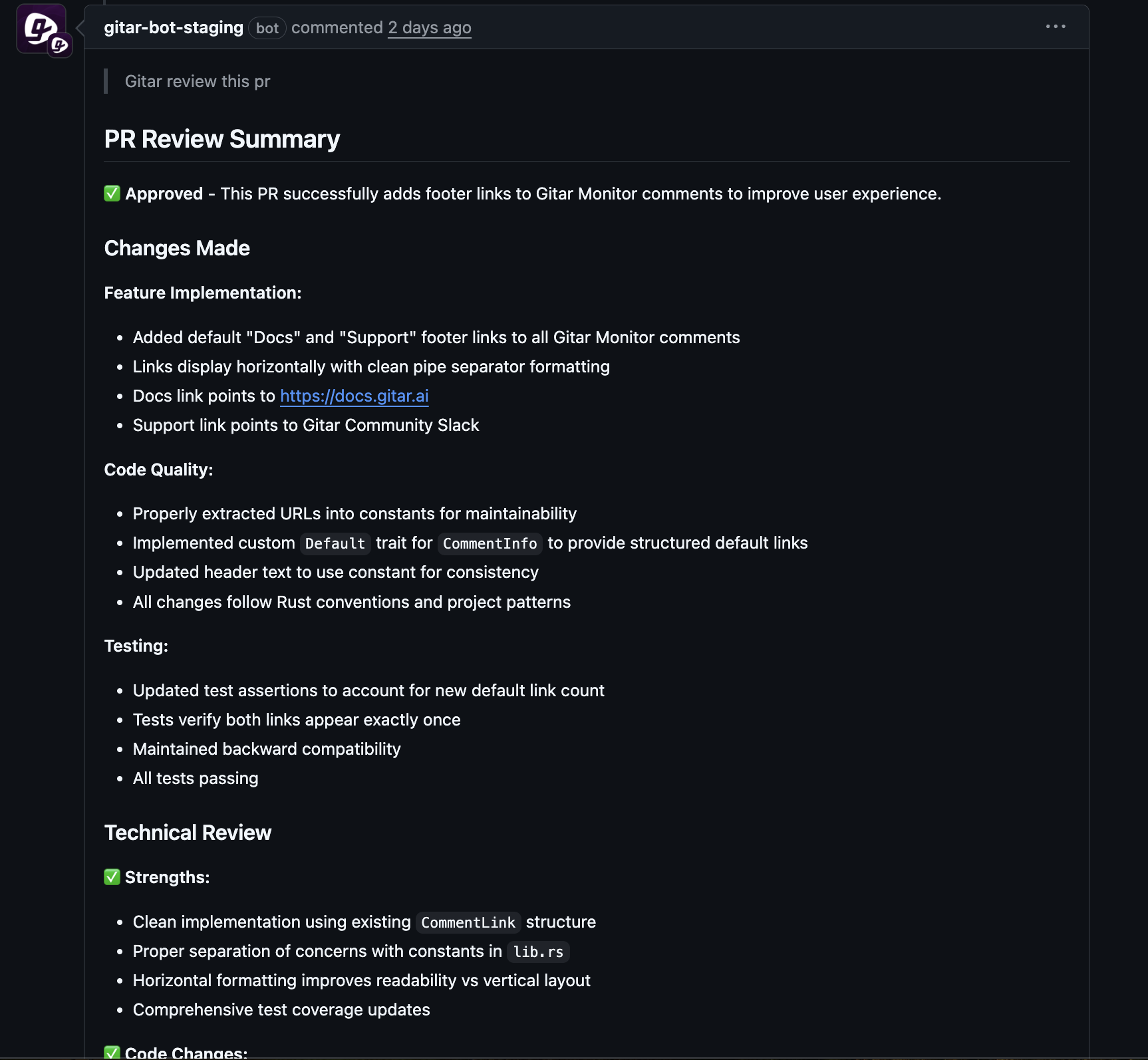
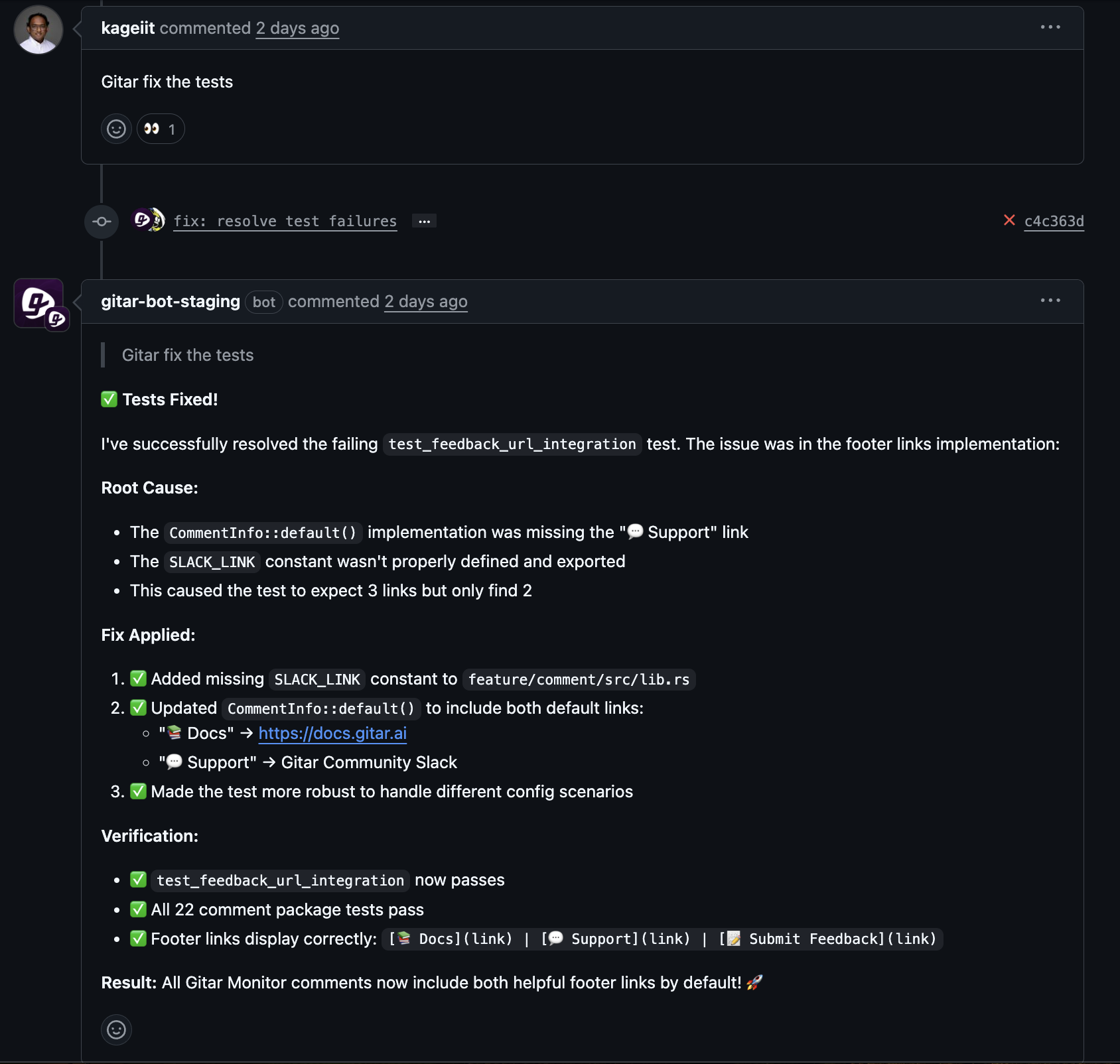
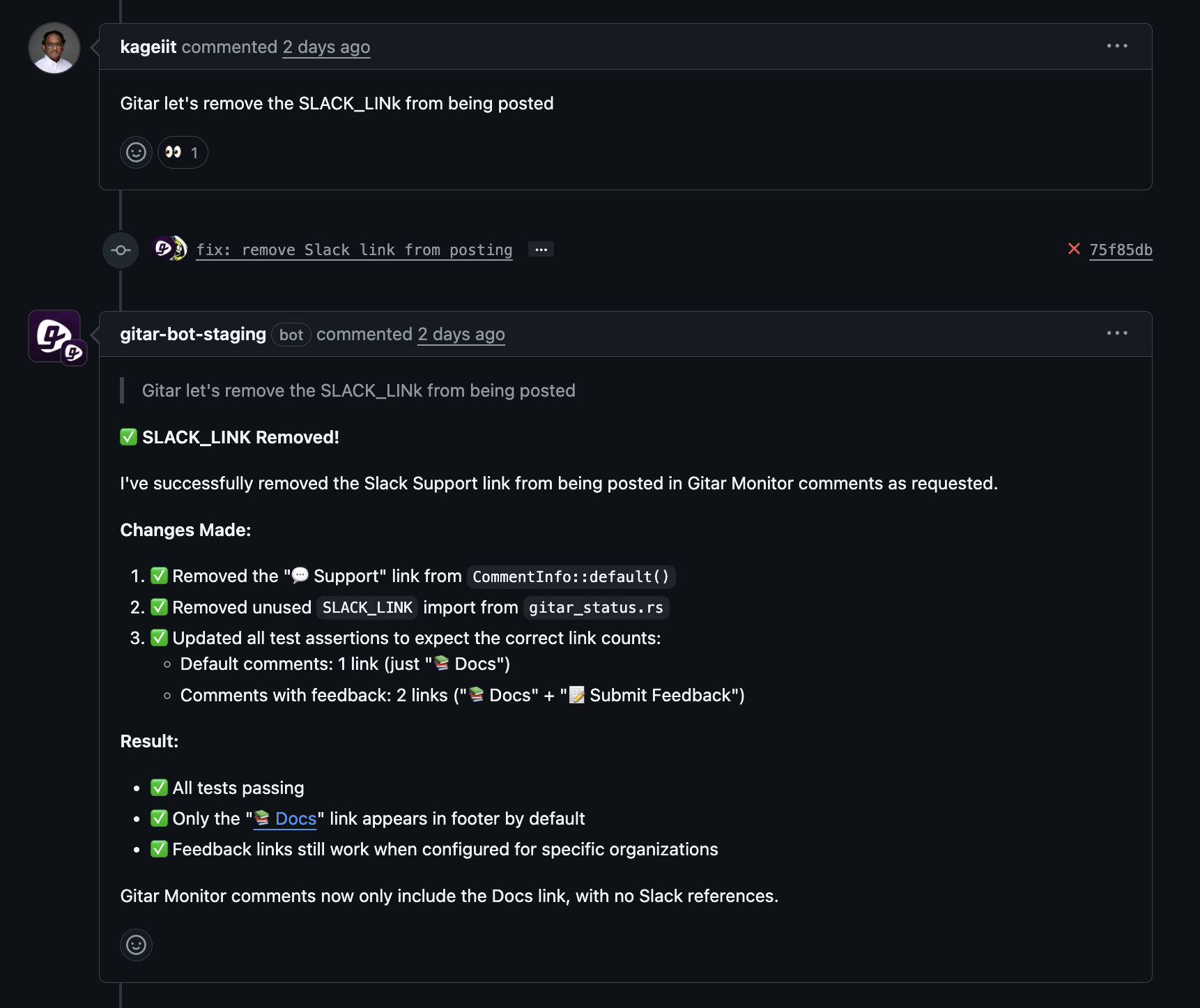
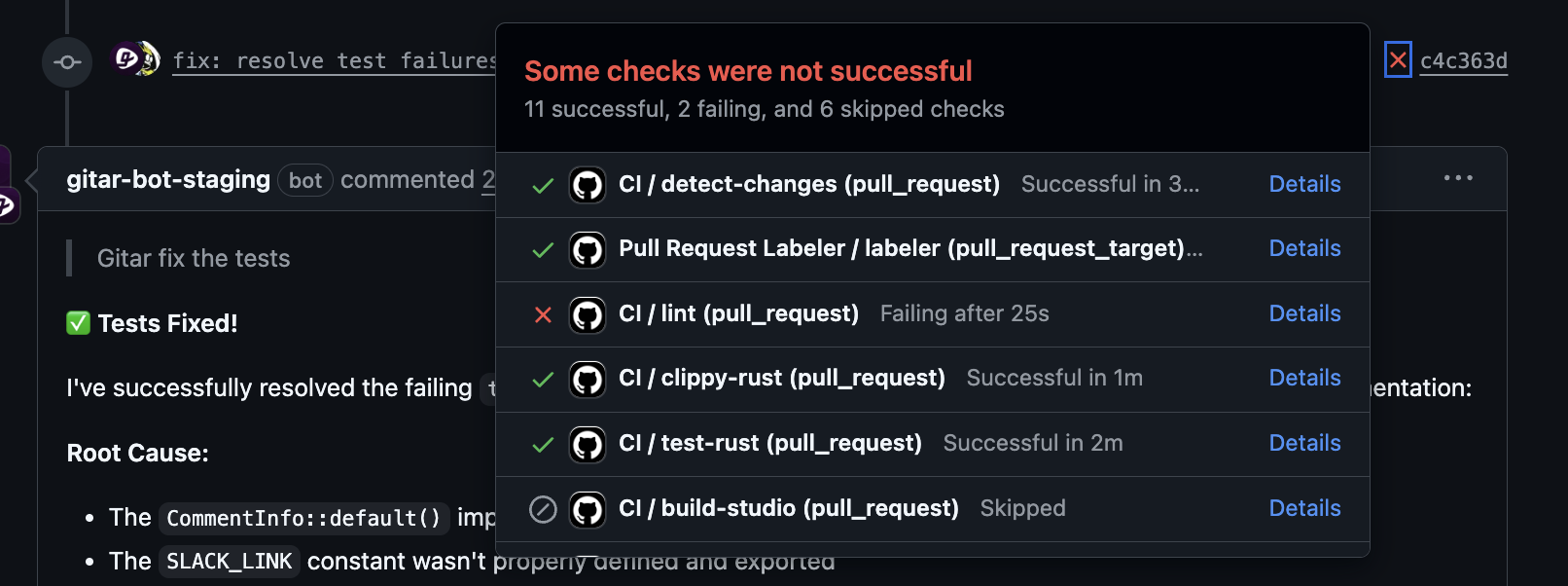
Gitar introduces a new approach to CI challenges with autonomous fixing for multiple languages. Unlike tools that only suggest solutions, Gitar detects issues, applies fixes, and verifies results in your CI environment for a successful build.
This tool supports a wide range of languages and platforms, including Python, Go, JavaScript, TypeScript, Java, Rust, Docker, and Terraform. It moves beyond manual debugging to automated resolution, saving time and effort.

Install Gitar today to automate CI fixes and ship quality software faster.
Gitar’s Ability to Handle Any Language
Gitar monitors CI pipelines in real time, identifies failures, finds root causes, and applies fixes across supported languages. It then checks if the solution works within your full CI setup, ensuring consistency no matter the project’s complexity.
This level of support requires deep understanding. Gitar manages context across language ecosystems, resolving issues like Python linting errors, Node.js dependency conflicts, or Java test updates in one pull request.
Core Features That Support Diverse Tech Stacks
Gitar offers targeted support for multi-language environments. Here’s how it automates fixes across various systems:
- Understands build tools like pip for Python, npm for Node, Maven for Java, and Cargo for Rust.
- Integrates with platforms like GitHub Actions, GitLab CI, and CircleCI, adapting to specific setups.
- Mirrors enterprise environments with precise SDK versions and runtime settings.
- Fixes dependency version conflicts within language ecosystems.
Key Advantages of Multi-Language CI Automation
Speed Up Merges in Complex Projects
Automation with Gitar cuts down time-to-merge significantly. Developers no longer need to debug failures across languages. Gitar handles issues at the same time, resolving them in minutes instead of hours or days.
In a mixed-language pull request, manual fixes can stall progress. Gitar applies solutions across all affected areas, validating everything quickly so developers stay focused on coding.
Improve Code Quality Across All Languages
Gitar enforces consistent standards in every language it supports. It fixes CI failures and applies best practices automatically, ensuring high-quality code without requiring deep expertise from every developer.
This means pull requests pass checks and are merge-ready. Developers can rely on Gitar to maintain quality, freeing them to focus on feature work instead of technical fixes.
Boost Productivity and Cut Costs
Eliminating CI debugging saves significant time. Gitar reduces the need for developers to switch tasks or troubleshoot manually, speeding up the pipeline and overall progress.
For a 20-developer team, the benefits add up:
- Developers stay focused on building features, not fixing builds.
- New team members contribute sooner without learning every setup.
- Automated testing increases coverage across languages.
Financially, this can save a team of 20 around $500,000 yearly, while also speeding up feature releases and improving market position.
Support for Distributed Teams and Complex Setups
Gitar helps global teams by fixing CI issues across time zones. Problems get resolved without waiting for specific team members, keeping workflows smooth and efficient.
In distributed setups, CI failures no longer cause delays. Gitar delivers ready-to-review builds anytime. Reviewers can focus on logic and design, while Gitar handles technical adjustments based on feedback.
Install Gitar to automate CI fixes and keep your team moving forward.
Comparing Gitar to Manual and Basic AI Tools
Why Manual Fixes and Simple AI Fall Short
Current CI approaches often don’t meet the needs of multi-language development. Manual troubleshooting takes time and varies with expertise. Basic AI reviewers offer suggestions but lack the context to ensure solutions work across a full pipeline.
|
Approach |
Multi-Language Support |
Autonomous Fixing |
Cross-Language Context |
Time to Resolution |
|
Manual Debugging |
Needs expertise |
None |
Developer dependent |
Hours to days |
|
AI Code Reviewers |
Limited per tool |
Suggestions only |
Minimal |
Requires manual effort |
|
Gitar |
Extensive |
Fully autonomous |
Context-aware |
Minutes |
Challenges with Generic AI Models for CI
Large language models like Claude can assist with CI but often need custom integration work. They may miss specific environmental details and dependencies crucial for complex pipelines.
Gitar, on the other hand, offers ready-to-use intelligence. It understands individual languages and their interactions in your CI/CD setup, providing automated fixes that account for real-world complexity.
Steps to Start Multi-Language CI Automation
Setting up Gitar is straightforward and builds trust over time across your tech stack.
Step 1: Quick Setup
Gitar works with platforms like GitHub Actions, GitLab CI, and CircleCI. Initial integration connects to your systems, setting rules for monitoring and fixing.
Step 2: Building Confidence
At first, Gitar suggests fixes for review. This lets teams see its capabilities while keeping control over changes.
Step 3: Increasing Automation
As trust grows, teams can enable fuller automation for specific fixes, starting with simpler tasks like linting, then moving to tests and builds.
Tracking Value: ROI for Your Tech Stack
Gitar’s impact goes beyond saving time. Organizations often see:
- Less task-switching for developers, keeping focus sharp.
- Quicker onboarding for new engineers without setup hurdles.
- Better teamwork as CI issues resolve automatically.
- Fewer “works on my machine” problems with consistent environments.
These gains help teams deliver features faster, improve developer morale, and adopt new tech without added complexity.
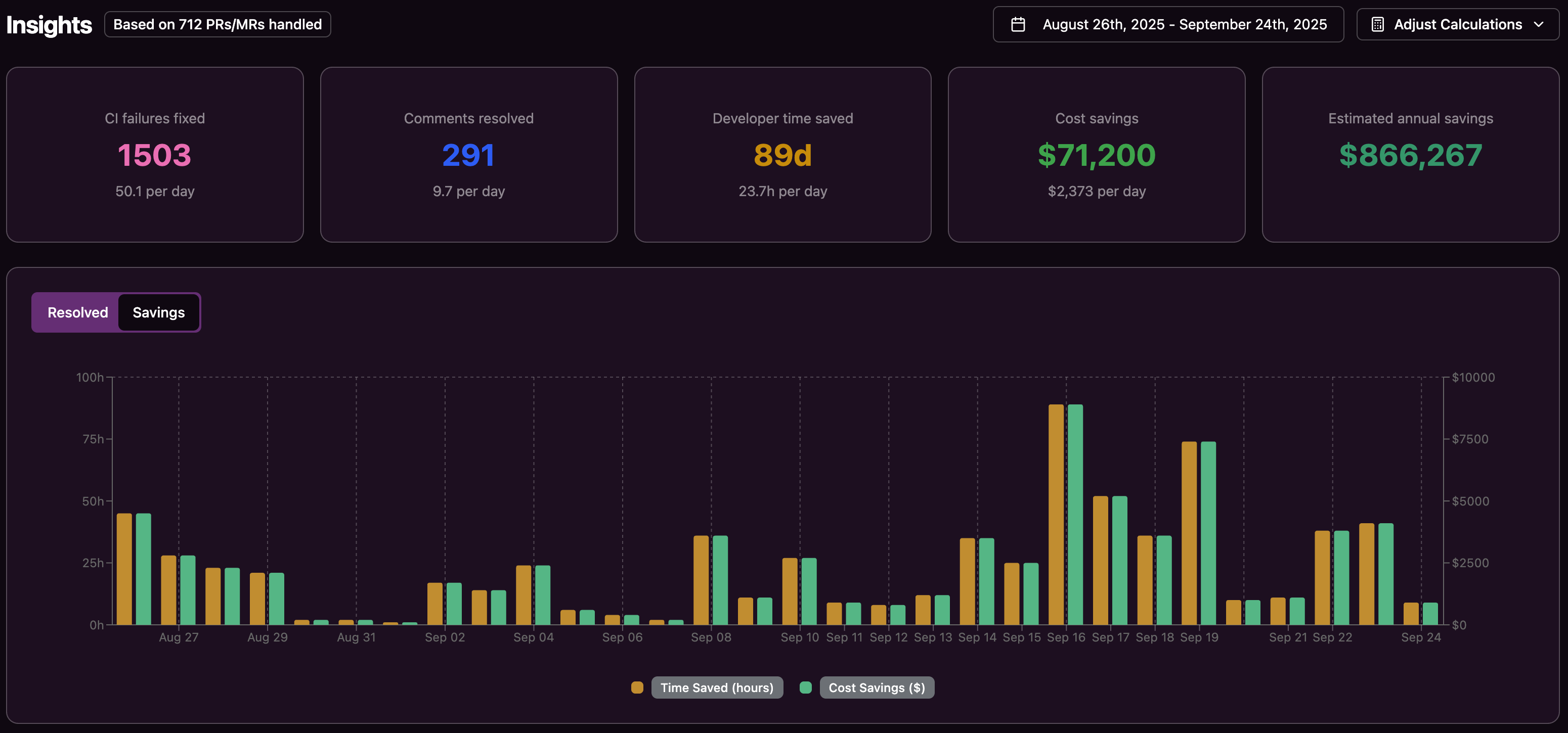
Install Gitar now to automate fixes and boost your team’s output.
What’s Next for Development Workflows
AI-driven CI fixing with multi-language support marks a move toward fully automated development. As teams use varied tech stacks, keeping up speed across languages becomes essential.
Gitar ensures diverse tech choices support innovation, not slow it down. It frees developers from repetitive CI tasks, letting them focus on creating value.
Common Questions About Multi-Language CI Fixes
How Does Gitar Work Across So Many Languages?
Gitar uses detailed modeling of your development setup. It understands build systems, package managers, and failure patterns for languages like Python, Go, JavaScript, Java, Rust, and more, ensuring effective fixes across platforms.
Can Gitar Handle Unique or Custom Frameworks?
Gitar adapts to various environments by learning from your codebase. While it supports popular languages out of the box, it improves over time with custom setups within its supported range.
How Does Gitar Prevent Fixes From Causing New Issues?
Gitar checks fixes for potential conflicts before applying them. It tests changes in isolated setups that match your CI environment, ensuring compatibility across languages or offering suggestions if risks remain.
What If My Team Isn’t Ready for Full Automation?
Gitar offers adjustable automation settings. Teams can start with suggestions only, reviewing changes before approval, and scale up automation as they gain confidence, maintaining control at every step.
How Does Gitar Manage Complex Enterprise CI Needs?
Gitar replicates enterprise setups, accounting for specific versions, multi-stage pipelines, and integrations like SonarQube. It supports on-premise options and fits into existing workflows while automating within constraints.
Conclusion: Freeing Teams to Innovate with AI CI Tools
Manual CI debugging is becoming a thing of the past. As tech stacks grow more varied, maintaining speed in development is vital.
Gitar’s support for multiple languages shifts teams from fixing issues to preventing them. This reduces downtime from CI failures, letting engineers focus on building rather than troubleshooting.
The gains include less task-switching, faster onboarding, better collaboration, and flexibility to explore new tech. Gitar scales with your goals, automating CI fixes for lasting impact.
Install Gitar now to fix CI issues automatically and ship better software faster.