
Managing CI/CD pipelines for projects with multiple programming languages often creates complex challenges and slows down development cycles. This article highlights the struggles developers and engineering leaders face with multi-language CI/CD and introduces Gitar, an AI-driven autonomous CI healing engine. Gitar detects, diagnoses, and resolves pipeline failures across diverse tech stacks, improving developer productivity, reducing context switching, and speeding up time-to-market with automated fixes.
Why Multi-Language CI/CD Feels Overwhelming
Handling multiple programming languages in CI/CD pipelines adds layers of complexity that drain developer time and hurt organizational efficiency. A simple need to support varied tech stacks can turn into a maintenance burden, delaying product releases and consuming engineering resources.
How Fragmented Environments Slow You Down
Each programming language comes with unique dependencies, package managers, and runtime needs. Managing these dependencies across environments becomes harder with multiple languages due to differing system packages and library versions. This often leads to the frustrating “it works on my machine” issue that disrupts team workflows.
Environment configuration issues compound the problem. In multi-language CI/CD, different tests and build tools need specific setups, resulting in failed tests and inconsistent results. Developers waste time fixing code that runs locally but breaks in the CI pipeline.
Dealing with Dependency and Tooling Conflicts
Multi-language projects require managing various build tools and package managers like npm for JavaScript, pip for Python, Maven for Java, and Cargo for Rust. CI/CD pipelines must adapt to these language-specific tools and test frameworks, increasing configuration complexity.
Conflicts often emerge from tool compatibility. Some CI tools require specific versions of Java or Python, which can clash in multi-language setups. Updating dependencies for one language might break another, creating a ripple effect of issues.
Struggling with Integration and Testing Gaps
Diverse tech stacks make integration testing difficult. Incompatible toolchains and configuration mismatches in multi-language scenarios complicate CI/CD integration. What should be a simple test turns into a struggle with varied framework setups.
Automating tests becomes tougher as well. Rapid testing in agile environments grows complex with multiple languages and frameworks. Teams often fail to maintain consistent testing standards, leading to incomplete coverage and unreliable deployments.
The Real Cost of CI Failures in Mixed Languages
CI failures hit harder in multi-language settings. Analysis shows many failures come from misconfigured or incompatible build and test environments, a frequent issue with diverse languages. These aren’t just technical problems, they sap productivity over time.
Specific issues, like dependency resolution errors, often surface late. Failures in tools like Maven, npm, or pip can block deployments if a version mismatch occurs. A single error can stall an entire build, forcing lengthy debugging sessions.
Context Switching: A Hidden Productivity Killer
Constant context switching takes a heavy toll in multi-language CI/CD. When a pipeline fails due to a language-specific issue, developers must drop their current task, debug the problem, and then try to refocus. This interruption turns minor fixes into major time sinks.
For a team of 20 developers, even one hour daily on CI/CD issues adds up. This can cost organizations around $1M yearly in lost productivity. Beyond time, the mental strain of switching tasks disrupts flow and deep work.
Fix Multi-Language Pipeline Failures with Gitar
Manual fixes for multi-language CI/CD issues fall short due to the time and effort required. An AI-driven autonomous system like Gitar steps in to analyze, diagnose, and resolve problems across varied programming environments, freeing up developer focus.
What Gitar Offers: AI for Self-Healing CI/CD
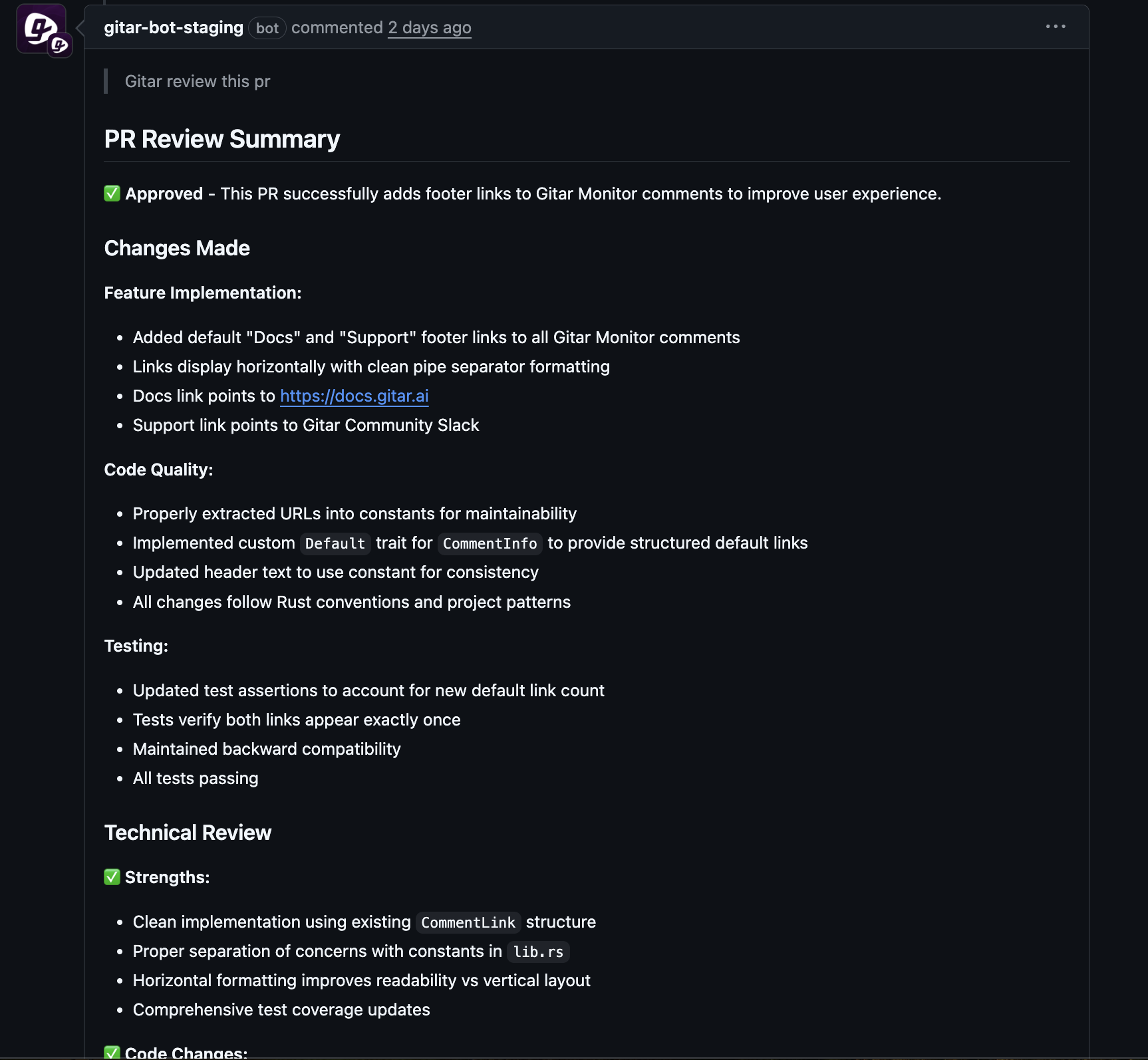
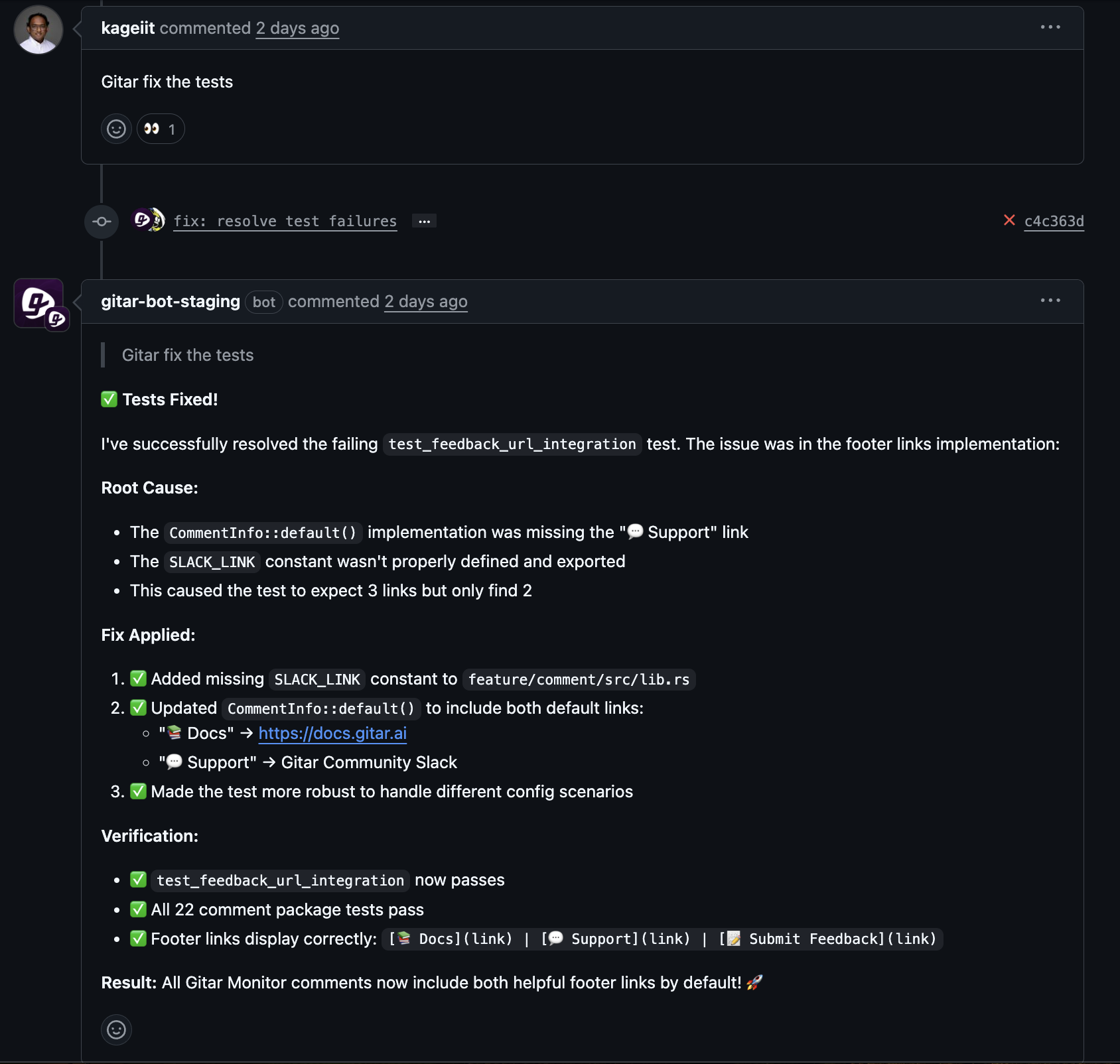
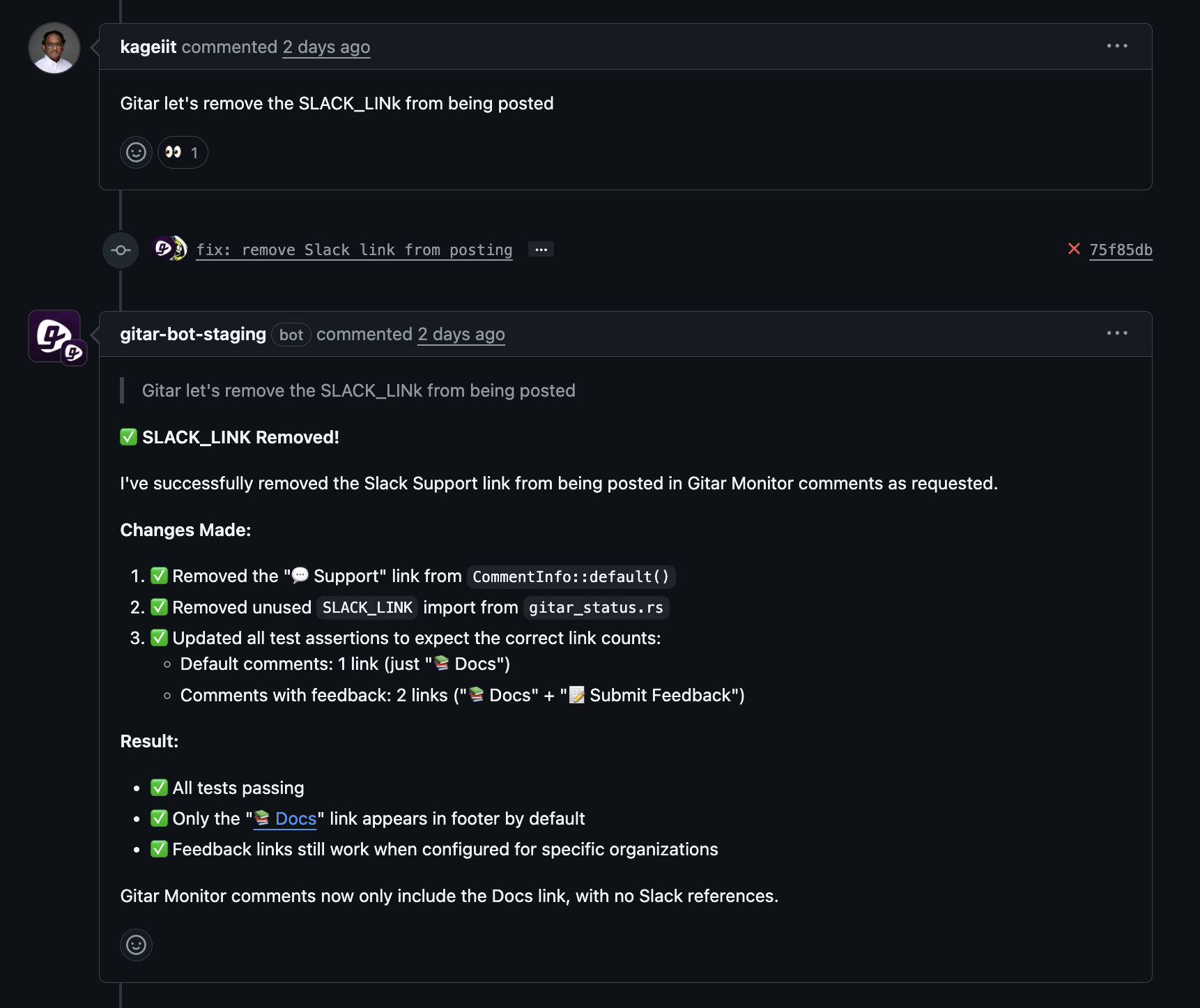
Gitar changes the game by moving from manual debugging to automatic resolution. Instead of developers troubleshooting CI failures, Gitar’s AI agent identifies pipeline issues, finds the root cause, creates a fix, and applies it to the pull request without interrupting workflows.
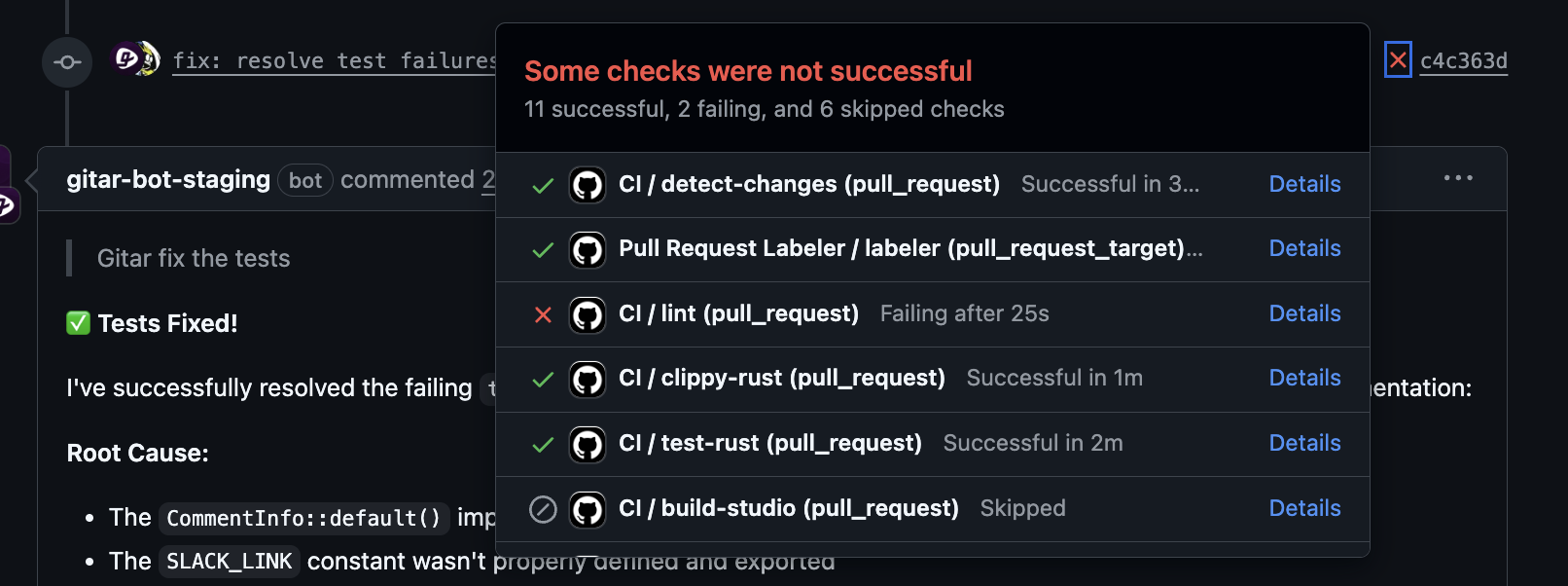
When a CI check fails, whether it’s a linting error or a test issue, Gitar steps in. It reviews failure logs, develops a solution, and commits the fix to the PR branch. This shifts the repetitive “push, fail, debug, fix” cycle into a hands-off process.

Install Gitar today to fix broken builds and ship quality software faster.
Key Features for Multi-Language CI/CD Support
Gitar is built to handle the unique demands of multi-language projects. Here’s what it brings to the table:
- Complete Fix Application Across Languages: Gitar doesn’t just suggest fixes. It applies and validates them across languages like Python, Go, JavaScript, TypeScript, Java, Rust, and more, addressing linting errors, test failures, and build issues.
- Environment Replication for Complex Stacks: It mimics enterprise setups, including specific language versions, multi-SDK dependencies, and tools like SonarQube and Snyk, ensuring context-aware fixes.
- Cross-Platform Support: Gitar integrates with GitHub Actions, GitLab CI, CircleCI, BuildKite, and other CI platforms, supporting diverse systems used by organizations.
- Adjustable Trust Settings: Start with “Conservative Mode” for suggested fixes requiring approval, then move to “Aggressive Mode” for fully automated commits as confidence grows.
- Code Review Support for Distributed Teams: Gitar lets reviewers leave instructions for automatic execution, cutting delays for teams across time zones.
Benefits of Gitar for Multi-Language CI/CD
Using autonomous CI healing with Gitar turns multi-language development challenges into efficiency gains. Here’s how it helps.
Solving Dependency and Configuration Issues
Gitar tackles dependency struggles by analyzing the CI environment and crafting fixes that fit the broader context. This cuts down on “it works on my machine” problems, leading to more reliable builds across languages.
Improving Build Consistency with Automation
With environment-aware automation, Gitar helps maintain consistent builds. It reduces the manual effort of managing separate setups for each language, supporting smoother and more dependable processes.
Speeding Up Releases by Reducing Interruptions
Gitar’s automatic fixes prevent developers from pausing their work to debug pipeline issues. By handling problems in the background, it saves time and helps avoid burnout, getting products to market faster.
Maintaining Reliability in Complex Systems
As projects grow, CI/CD pipelines become harder to manage. Complexity increases risks like configuration drift and slower feedback loops. Gitar acts as a self-correcting tool, keeping pipelines stable even as demands scale.
Easing Onboarding and Cutting Overhead
With Gitar, new developers can contribute faster. They don’t need deep knowledge of every build system or dependency setup upfront. This support reduces learning curves and operational burdens for teams.
How Gitar Stands Out from Other Tools
Many CI/CD tools focus on analysis and suggestions, leaving the heavy lifting to developers. Gitar takes a different approach with autonomous healing.
|
Capability |
Manual Work |
AI Code Reviewers |
Gitar (AI Healing Engine) |
|
Applies Fixes Automatically |
No, Developer Required |
Partial, Suggestions with One-Click Options |
Yes, Fully Autonomous |
|
Validates Against CI Environment |
Manual Validation |
Limited Validation |
Full Environment Replication |
|
Multi-Language Support |
Needs Developer Expertise |
Broad Language Coverage |
Extensive Language Support |
|
Developer Interruption |
High, Frequent Switching |
Moderate, Some Manual Effort |
Low, Background Operation |
While traditional AI code reviewers offer insights and simplified fix options, Gitar goes further by applying, testing, and validating solutions within the CI environment. Unlike on-demand tools that need manual triggers, Gitar works automatically, monitoring pipelines and fixing issues as they arise.
Install Gitar now to fix broken builds and deliver better software faster.
Getting Started with Gitar: A Step-by-Step Plan
Adopting autonomous CI healing works best with a gradual rollout to build trust and show results. Here’s the path to follow.
Step 1: Setup and Basic Configuration
Start by authorizing Gitar as a GitHub App on chosen repositories and linking it to your CI system. Begin in “Conservative Mode,” where Gitar suggests fixes for approval. Customize rules and settings via its web dashboard.
Step 2: Building Confidence with Early Wins
Trust grows after the first CI failure post-installation. When a PR triggers an error, Gitar analyzes it, offers a fix as a suggestion, and waits for approval. As teams see consistent success, they can shift to “Aggressive Mode” for automatic fixes on specific issues.
Step 3: Leveraging Advanced Features
Once comfortable, teams can use Gitar to execute changes based on reviewer instructions. This helps distributed teams manage reviews across time zones, ensuring updates are ready for approval without delay.
Measuring the Financial Impact of CI Efficiency
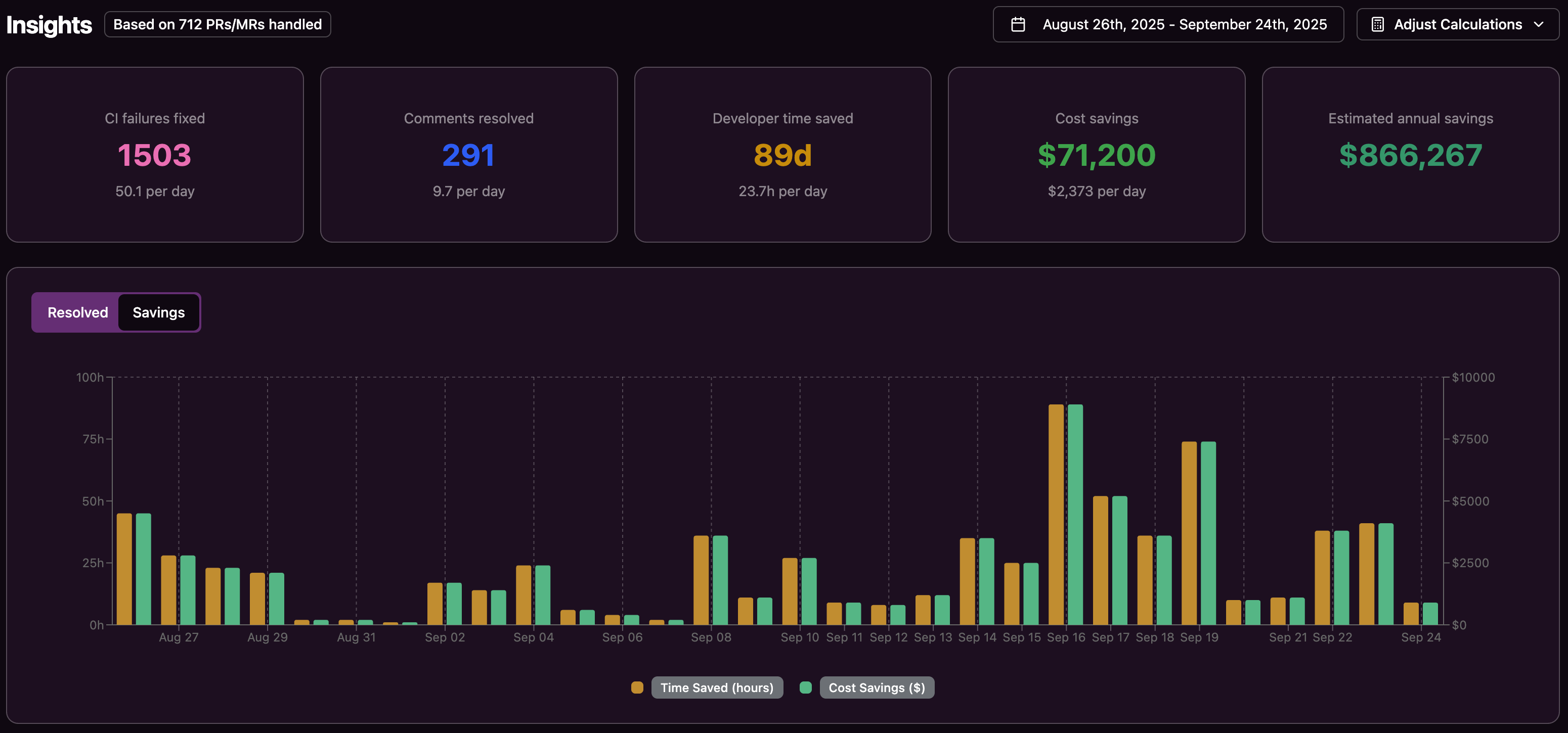
Autonomous CI healing offers more than just time savings. For a 20-developer team spending one hour daily on CI failures and reviews, that’s 5,000 hours or about $1M in lost productivity yearly at standard rates. Gitar can cut much of this manual effort, potentially saving $500K annually even at a modest success rate, while boosting team morale.
Common Questions About Multi-Language CI/CD Support
How Gitar Manages Different Language Versions and Tools
Gitar mirrors your full enterprise environment, including specific language versions, SDKs, and toolchains from your pipeline setup. This ensures fixes align with your exact configuration.
Integration with Mixed CI/CD Platforms
Gitar works across major CI systems like GitHub Actions, GitLab CI, CircleCI, and BuildKite. It monitors and heals pipelines regardless of the platforms your team uses.
Building Trust in AI-Driven Code Changes
With a flexible trust model, Gitar lets you start in “Conservative Mode” for suggested fixes that need review. As confidence grows with proven results, switch to “Aggressive Mode” for direct commits with rollback options.
Preventing Configuration Drift in Pipelines
Gitar enforces build consistency by replicating your CI environment and creating fixes based on expected pipeline behavior. This helps maintain stability and counteracts configuration drift.
Applying Consistent Coding Standards Across Languages
Gitar studies your codebase and CI setup to match your team’s coding standards. It applies these when generating fixes, ensuring uniformity across different languages.
Empower Your Team with Self-Healing CI/CD
Supporting multiple languages in CI/CD pipelines creates significant hurdles for productivity. Gitar’s autonomous healing engine addresses this by detecting and fixing failures automatically, cutting down on context switching. Ready to boost your team’s speed? Install Gitar now to fix broken builds and ship quality software faster across all your programming languages.