
Written by: Ali-Reza Adl-Tabatabai, Founder and CEO, Gitar
Key Takeaways for Sourcery-Style Review Tools
- AI code generation speeds up development 3-5x, but PR review bottlenecks have increased 91%. Teams now need tools that apply fixes, not just suggest them.
- Gitar leads as the #1 healer engine, automatically fixing CI failures, lint errors, and review feedback with validated commits and green build guarantees.
- Competitors like CodeRabbit, Qodo, and Graphite offer strong analysis but lack true CI healing, so developers still implement fixes manually.
- Teams achieve 50-55% review time savings and up to $750K annual ROI with Gitar’s automation across GitHub, GitLab, CircleCI, and Buildkite.
- Start your free 14-day Gitar Team trial at Gitar.ai to eliminate broken builds and ship higher-quality software faster.
How We Tested the Best Sourcery Alternatives
Our evaluation criteria focused on autonomous fixing capabilities, CI failure resolution, platform integrations (GitHub, GitLab, CircleCI, Buildkite), multi-language support, security compliance, and pricing models. We analyzed vendor documentation, reviewed user feedback from G2 and Reddit, and ran real PR simulations to measure fix accuracy and time savings.
Each tool was tested for setup complexity, scalability with team size, integration depth with development workflows (Jira, Slack, Linear), and ability to guarantee green builds after applying fixes. We prioritized tools offering meaningful free trials over basic freemium tiers. Based on these criteria, the following rankings reflect each tool’s ability to deliver autonomous fixing capabilities, CI healing, and measurable ROI.
Top Sourcery Alternatives in 2026
#1: Gitar (The #1 Healer Engine)
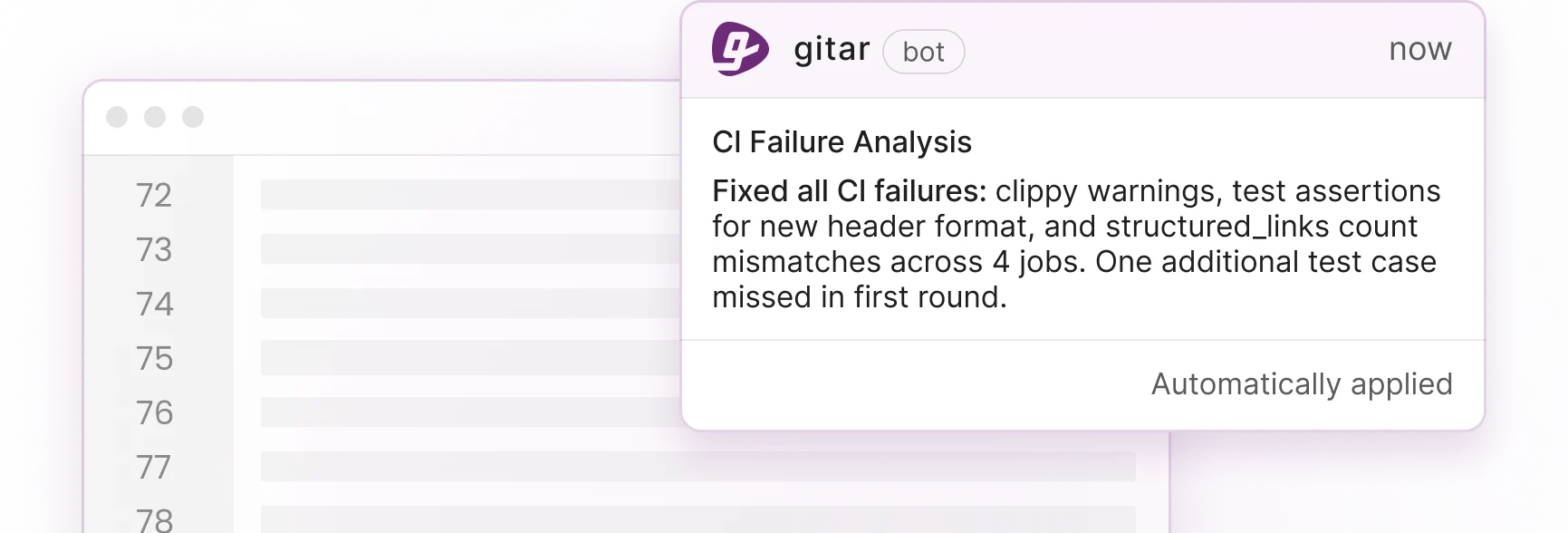
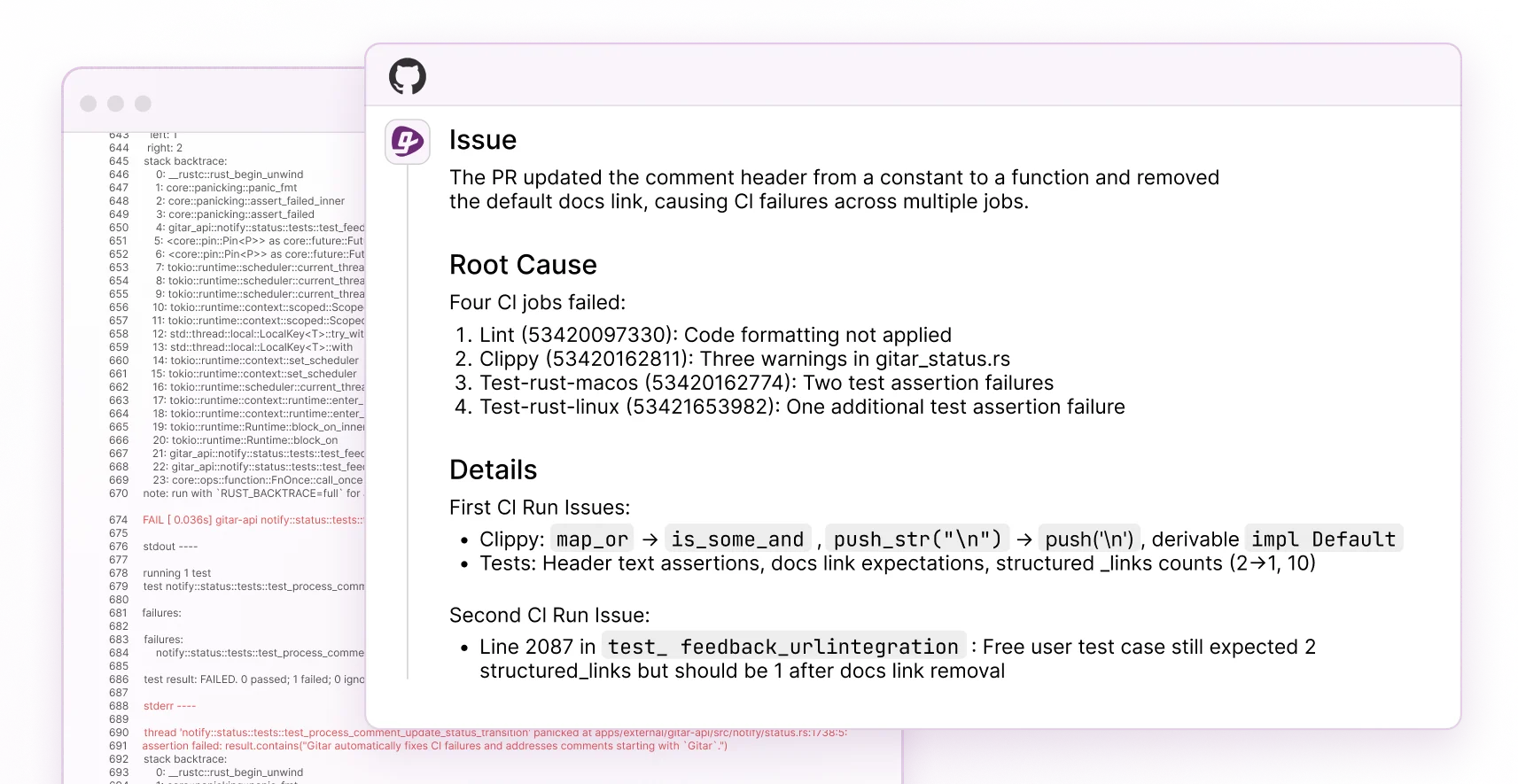
Gitar stands apart as the AI code review platform that automatically fixes CI failures and implements review feedback rather than just suggesting changes. When lint errors, test failures, or build breaks occur, Gitar analyzes failure logs, generates validated fixes, and commits them directly to your PR with full CI validation. See Gitar documentation for details.
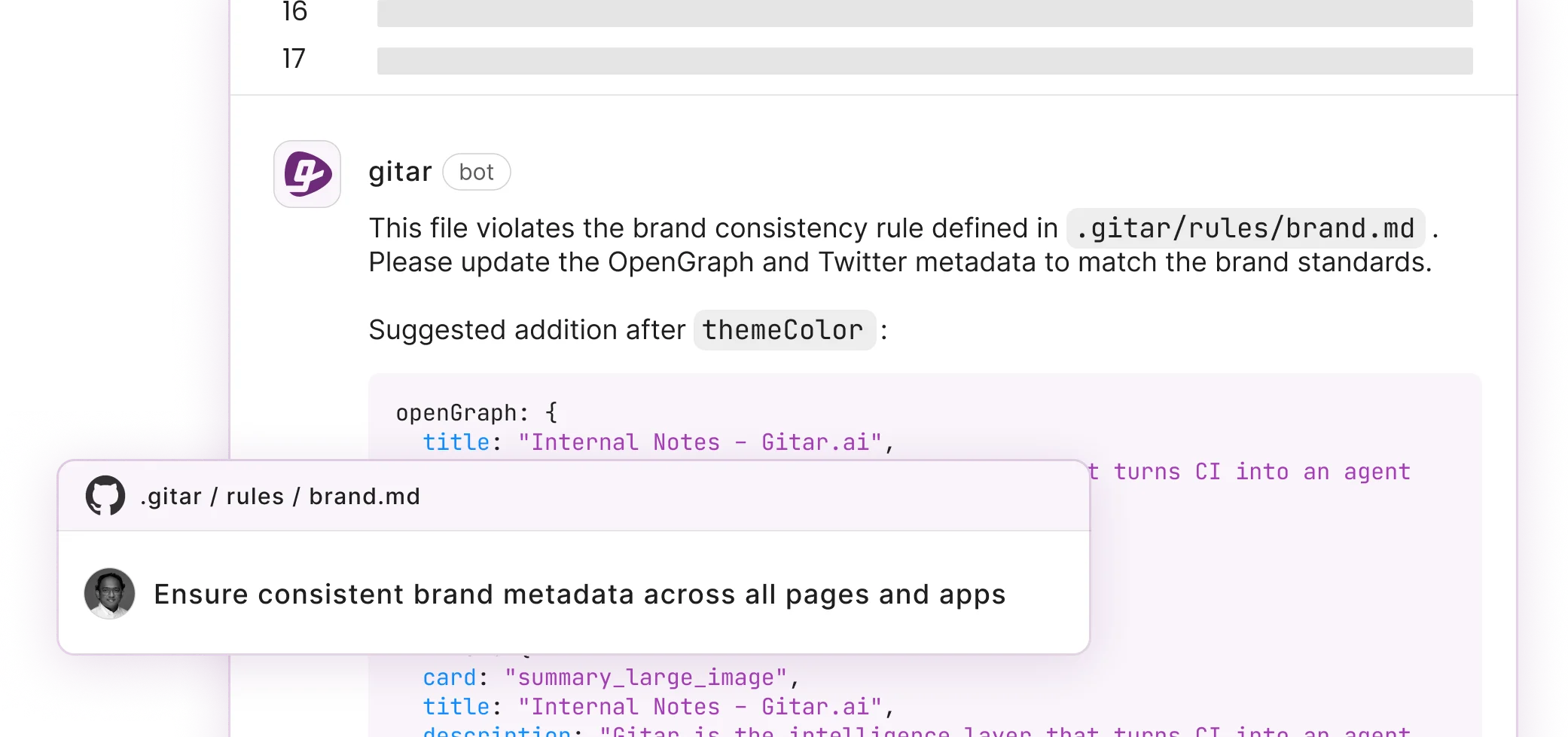
The platform uses a single updating dashboard comment that consolidates all findings, eliminating notification spam that usually comes from scattered inline comments. This consolidated approach relies on natural language repository rules in .gitar/rules/*.md, which enable workflow automation without complex YAML configuration. Supporting these automated workflows, Gitar’s hierarchical memory system maintains context per-line, per-PR, and per-organization, learning team patterns over time to improve fix accuracy.
The following comparison illustrates how Gitar’s autonomous approach differs from competitor suggestion-only models:
|
Feature |
Gitar |
Competitors |
|
Auto-Apply Fixes |
Yes (CI-validated) |
Suggestions only |
|
CI Healing |
Yes |
No |
|
Pricing |
14-day free Team trial |
$15-40/seat/month |
|
Green Build Guarantee |
Yes |
No |
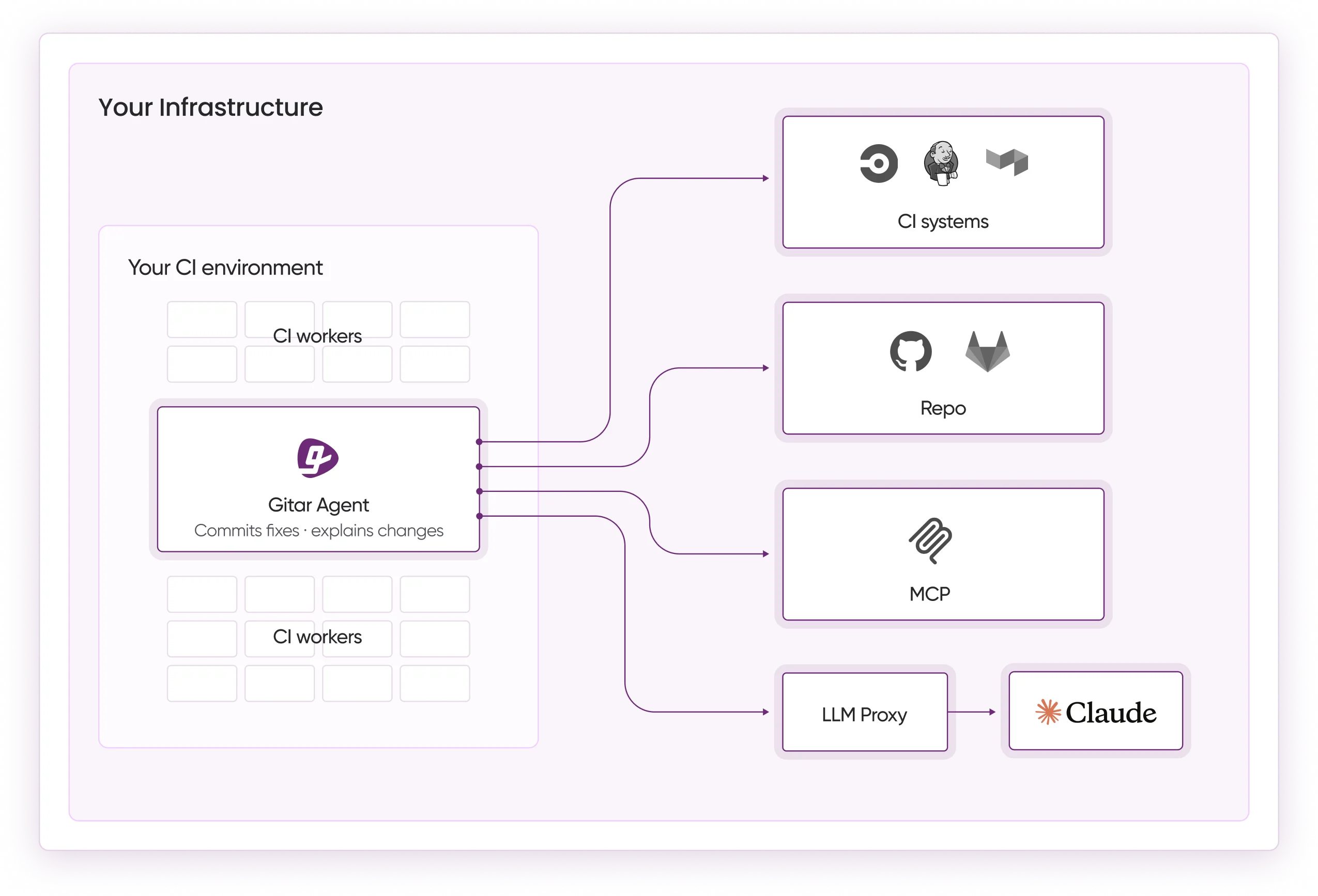
This time savings translates to significant productivity gains through reduced context switching and automated fix implementation. Gitar supports GitHub, GitLab, CircleCI, and Buildkite with enterprise deployment options that run agents within your CI pipeline.
Start your free 14-day trial to experience autonomous CI healing firsthand.
#2: CodeRabbit
CodeRabbit supports GitHub, GitLab, Bitbucket, and Azure DevOps with line-by-line comments and one-click fixes, integrating 40+ linters at $24-30/user/month. The platform provides surface-level diff analysis with SOC 2 Type II certification and ephemeral processing.
Strengths include broad platform support and established enterprise compliance. Limitations include lack of autonomous fixing and CI failure resolution, so teams still apply suggested changes manually. CodeRabbit works best for organizations that prioritize security compliance over deep automation.
#3: Qodo
Qodo provides autonomous PR review across GitHub, GitLab, Bitbucket, and Azure DevOps with multi-language support, automated code analysis, and 1-click resolutions. The platform excels in multi-repo context and offers on-premises deployment for security-conscious organizations.
Qodo’s multi-agent framework handles various review aspects with deep codebase analysis. However, it lacks true CI healing capabilities and can overwhelm users with cluttered interfaces. Pricing starts around $20+/seat with enterprise options available.
Try Gitar’s autonomous fixing to eliminate the manual implementation work that Qodo still requires. Compare features in detail in the documentation.
#4: Graphite Agent
Graphite Agent supports GitHub PRs with deep codebase analysis and low ~3% false positive rate, priced at $40/user/month, optimized for teams using stacked PRs. The platform provides workflow clarity and PR organization with privacy-first architecture.
Strengths include excellent stacked PR support and comprehensive workflow management. Limitations include GitHub-only support, no CI healing capabilities, and premium pricing. Graphite Agent fits teams heavily invested in stacked development patterns.
#5: Greptile
Greptile supports GitHub and GitLab PRs with deep full codebase analysis for maximum bug detection, priced at $30/user/month. The platform provides comprehensive code understanding but does not apply fixes automatically.
Greptile suits teams that prioritize thorough analysis over automation. Self-hosted options support strict enterprise security requirements.
#6: Blitzy
Blitzy specializes in automated refactoring suggestions with a focus on code quality improvements. The platform provides intelligent recommendations for code structure improvements but lacks CI integration and automatic fix application.
#7: Pixee
Pixee focuses on automated security vulnerability fixes with specialized SAST integration. Security-focused teams benefit from targeted remediation, but the platform lacks comprehensive CI healing and general code review automation.
#8: Trag
Trag offers custom pattern detection and enforcement with configurable rules engines. The platform provides flexibility for specific coding standards but requires significant setup and does not apply fixes on its own.
Experience CI healing with Gitar’s free trial and move beyond pattern detection to automatic resolution. Setup guides walk through integration with each platform.
#9: pr-pilot
pr-pilot provides agentic PR management with workflow automation capabilities. The platform offers strong integration options but lacks the depth of CI healing and automatic fix application found in leading solutions.
#10: CodeAnt AI
CodeAnt AI focuses on quality-driven PR analysis with regulatory compliance features including SOC 2 and ISO 27001 adherence. The platform provides solid governance controls but only limited automatic fixing capabilities.
Best Free Sourcery Alternatives and Trials
Free and trial options help teams validate autonomous workflows before full rollout. Gitar’s 14-day Team Plan trial provides full access to healing capabilities across supported platforms. Graphite offers a free tier for individuals, and CodeRabbit includes basic PR summaries in its free plan.
Sourcery Style Autonomous AI Code Review Alternatives for GitHub
GitHub-focused teams can choose among Gitar’s comprehensive platform integration, CodeRabbit’s established ecosystem support, and Graphite’s stacked PR optimization. Gitar leads in automatic fixing and CI healing while still supporting GitLab, CircleCI, and Buildkite.
Gitar vs. Top 5 Sourcery Alternatives
The following feature comparison highlights the critical capability gap between Gitar’s validated automatic fixing and competitors’ manual suggestion workflows:
|
Tool |
Auto-Fix |
CI Auto-Fix |
Pricing |
Platforms |
|
Gitar |
Yes (validated) |
Yes |
14-day free trial |
GitHub/GitLab/CircleCI/Buildkite |
|
CodeRabbit |
No |
No |
$24-30/seat |
GitHub/GitLab/Bitbucket/Azure |
|
Qodo |
Partial |
No |
$20+/seat |
Multi-platform |
|
Graphite |
No |
No |
$40/seat |
GitHub only |
|
Greptile |
No |
No |
$30/seat |
GitHub/GitLab |
Gitar’s healing architecture provides validated fixes with CI integration, while competitors focus on suggestions that still require manual implementation. The 14-day free trial offers risk-free evaluation of complete automation capabilities. Setup guides walk through integration with each platform.
Choosing the Best Free AI Code Review Tools for Your Team
Developers need noise reduction through consolidated feedback rather than scattered inline comments. Engineering leaders require measurable velocity improvements and clear ROI from automation investments. Recent benchmarks confirm these time savings for teams adopting autonomous tools.
DevOps teams benefit from CI cost reduction through fewer failure reruns and simplified workflow management. To realize these benefits while managing organizational change, teams can start with suggestion mode to build trust, then enable full automatic fixing for specific failure types.
Sourcery Alternatives FAQs
What is the best free Sourcery alternative in 2026?
Gitar offers the most comprehensive free trial with 14 days of full Team Plan access, including automatic fixing, CI healing, and all platform integrations. This allows complete evaluation of automation capabilities without seat limits or feature restrictions.
Which tools offer the best GitHub PR integration?
All top tools integrate with GitHub PRs, but Gitar excels with multi-platform support including GitLab, CircleCI, and Buildkite. The single updating comment approach reduces notification fatigue while providing comprehensive CI context that GitHub-only tools lack.
How do autonomous AI code review tools handle security and compliance?
Leading platforms maintain security compliance with encrypted processing and clear data retention policies. Enterprise deployments offer options where agents run within your CI pipeline, so code never leaves your infrastructure.
What ROI can teams expect from autonomous code review tools?
Teams report 50-55% reduction in review-related time with autonomous tools. For 20-developer teams, this translates to the $750K annual productivity savings mentioned earlier, driven primarily by eliminating the context switching cost of manual fix implementation.
How easy is it to migrate from CodeRabbit or other suggestion-only tools?
Gitar’s zero-setup trial allows immediate evaluation alongside existing tools. The platform integrates with current GitHub and GitLab workflows without disruption, enabling gradual transition from suggestion-based to automated fixing workflows. Migration guides provide step-by-step transition instructions.
Pick Gitar: The Top Autonomous AI Code Review Fixer for 2026
Competitors charge $15-40 per seat for suggestion engines that still require manual work, while Gitar’s healing engine automatically resolves PR bottlenecks and CI failures. The 14-day free Team Plan trial provides risk-free access to the complete automation platform that transforms development velocity.
Install Gitar now to automatically fix broken builds and start shipping higher quality software, faster.