
Key Takeaways
- AI code generation tools like Copilot increased PR review time by 91%, so teams now need reliable autofix solutions beyond SonarQube suggestions.
- Gitar.ai leads as a free CI-healing platform that automatically fixes lint errors, test failures, and review feedback with validated auto-commits.
- Competitors such as DeepSource (45% autofix), CodeRabbit ($15-30 per seat suggestions), and others fall short on full CI integration and guaranteed fixes.
- Hands-on tests show Gitar cuts CI and review time by 75%, saving teams more than $750K per year in productivity for 20 developers.
- Teams can switch to Gitar.ai for free unlimited repositories, 30-second setup, and green builds without manual intervention.
Top 8 SonarQube Alternatives with AI Autofix: Quick Overview
Our testing highlights these leading SonarQube alternatives with AI-powered automatic code fixes:
- #1 Gitar.ai – Free AI fixes for CI failures and review feedback with auto-commit
- #2 DeepSource – Contextual autofix with paid tiers starting at $10 per developer
- #3 CodeRabbit – PR suggestions and line-by-line analysis at $15-30 per seat
- #4 Snyk – Security-focused autofix with dependency scanning
- #5 Codacy – Quality metrics and custom rules at $21 per developer
- #6 Greptile – Codebase context analysis at $30 per developer
- #7 CodeAnt AI – AST-based fixes starting at $99 per team
- #8 Semgrep – Free open-source rule-based scanning
#1 Gitar.ai: Free CI-Healing Leader with Auto-Commit Fixes
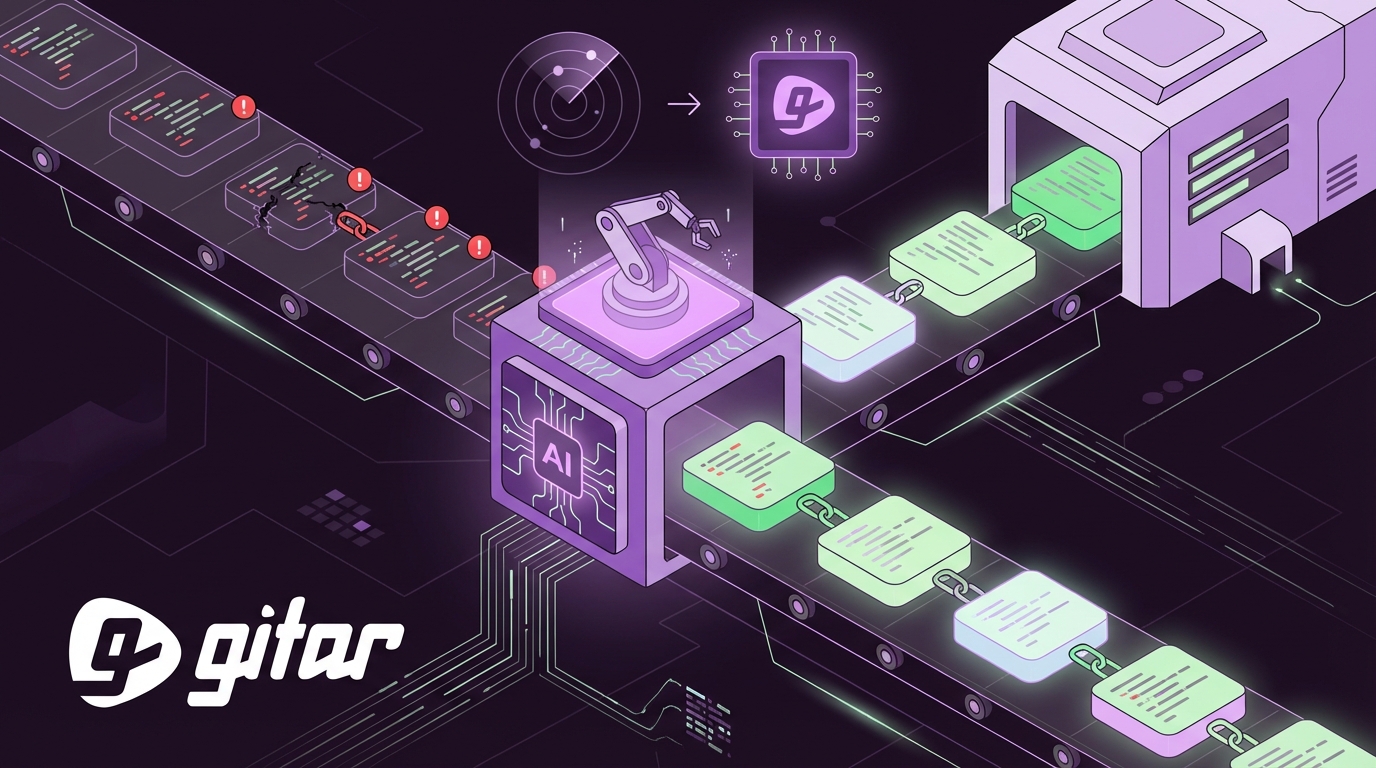
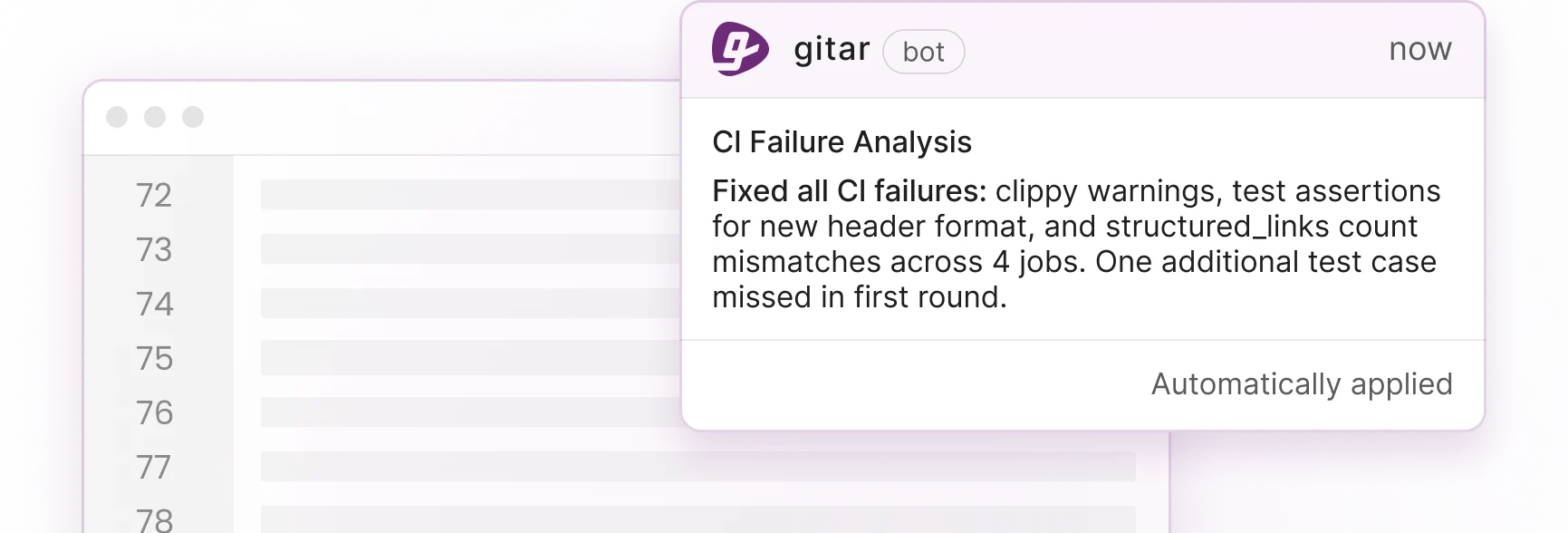
Gitar.ai stands apart as a free AI code review platform that actually fixes code and resolves CI failures while addressing review feedback. Autofix features come with a 14-day free trial. When CI fails because of lint errors, test failures, or build breaks, Gitar analyzes the failure logs, generates validated fixes, and commits them to your PR. This healing engine approach gives teams consistently green builds.
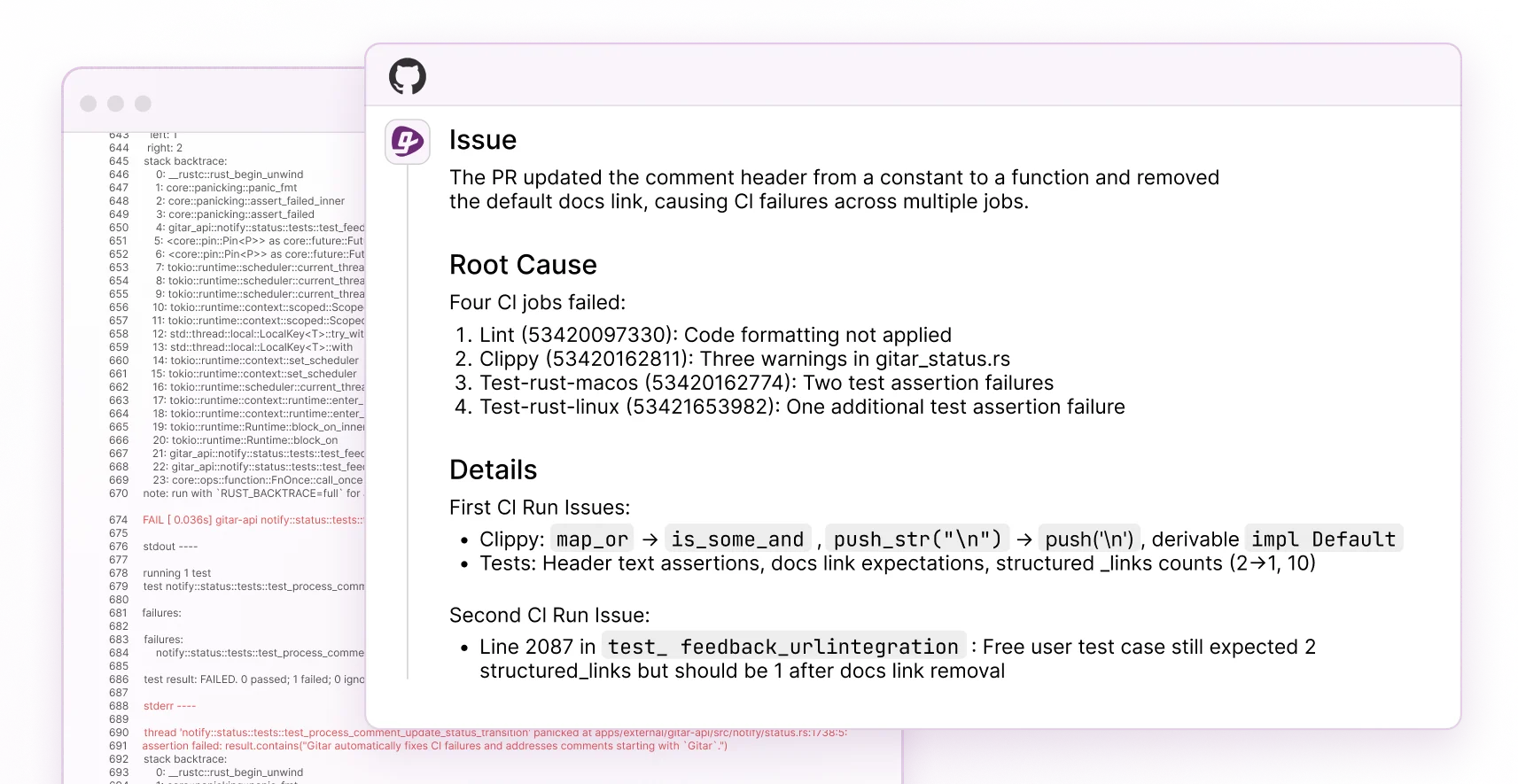
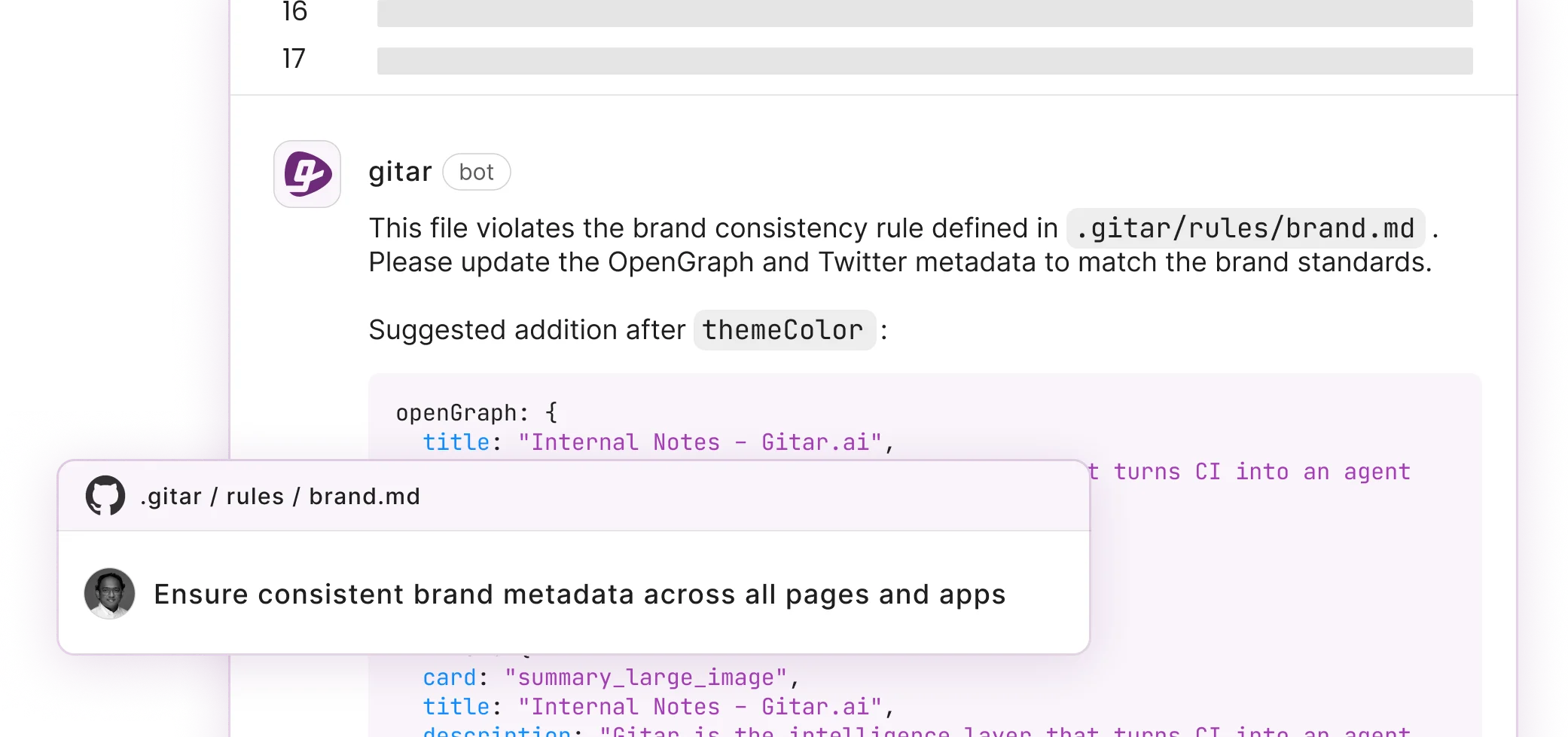
The platform integrates with GitHub, GitLab, CircleCI, and Buildkite and keeps noise low with a single dashboard comment that updates in place. Gitar’s natural language rules system lets teams automate workflows without complex YAML configuration. Pinterest validates the platform at enterprise scale, processing more than 50 million lines of code and thousands of PRs every day.
|
Feature |
Before Gitar |
After Gitar |
|
Daily CI/review time |
1 hour/developer |
15 minutes/developer |
|
Annual productivity cost |
$1M (20 devs) |
$250K |
|
Tool cost |
$450-900/month |
$0 |
Install Gitar now to fix broken builds automatically and remove the review bottleneck. Setup takes 30 seconds and does not require a credit card.
#2 DeepSource: Contextual Autofix with Paid Limits
DeepSource offers AI-powered autofix with strong contextual analysis, but pricing is per target (for example, $10 per target each month) and the platform does not provide CI healing guarantees like Gitar. Our testing showed about 45% autofix success, so developers still handle complex failures manually. DeepSource integrates with major CI platforms, yet teams remain stuck in a suggestion-only model where fixes are not validated against real build environments.
#3 CodeRabbit: PR Suggestion Engine at $15-30 per Seat
CodeRabbit ranked highest in 51% of 309 PRs using LLM-as-a-judge scores, but it behaves as a suggestion engine rather than a true autofix platform. At $15-30 per seat, teams pay premium prices for inline comments that still require manual changes. Our testing showed a 39% F-score for issue detection and no auto-commit or CI failure resolution.
#4 Snyk: Security-Focused Autofix and Dependency PRs
Snyk focuses on security vulnerability detection across SAST, SCA, containers, and IaC and generates automated fix PRs for dependency issues. It integrates deeply into CI/CD pipelines and works well for security-specific problems. However, Snyk does not cover the broader autofix needs for lint errors, test failures, and build configuration issues that slow modern teams.
#5 Codacy: Quality Metrics with Limited Automation
Codacy delivers automated code reviews with customizable rules, quality metrics, PR scanning, and merge gates at around $18 per developer. Many fixes still require manual work from developers. Teams that rely on Codacy continue to spend time implementing changes instead of benefiting from deeper autofix automation.
#6 Greptile: High-Context Analysis at a Premium Price
Greptile reached a 45% F-score in 2026 benchmarks and offers strong codebase context analysis. At $30 per developer, it ranks among the most expensive options. The platform supports pattern matching and dependency tracing but does not validate fixes or auto-commit changes. High pricing combined with suggestion-only behavior makes Greptile less appealing than free tools that implement fixes directly.
#7 CodeAnt AI: AST-Based Fixes with Manual Oversight
CodeAnt AI provides end-to-end AI-augmented code review using abstract syntax trees with automated fixes starting at $99 per team. The product offers one-click fix suggestions and documentation generation. Our testing, however, showed gaps in CI integration and fix validation, so complex issues still need manual oversight.
#8 Semgrep: Free Open-Source Linter with Basic Autofix
Semgrep delivers fast, rule-based code scanning as a free open-source alternative to SonarQube. Semgrep Assistant adds AI-powered autofix suggestions for some findings. Detection works well and basic autofixes help, but teams that want full automatic remediation often pair Semgrep with additional tools or custom automation.
Hands-On Benchmarks: Which Tools Actually Fix Code in 2026
Our testing across production repositories exposed a clear gap between marketing claims and real autofix performance:
|
Tool |
Autofix Success |
CI Integration |
Pricing |
|
Gitar.ai |
Validated fixes |
Full healing |
Free (autofix 14-day trial) |
|
DeepSource |
45% |
Limited |
$10/dev |
|
CodeRabbit |
39% detection |
Suggestions only |
$15-30/dev |
|
Greptile |
45% |
No validation |
$30/dev |
Independent benchmarks confirm that even the highest-performing suggestion engines reach only 64% F-scores. Gitar’s healing approach with CI validation instead delivers fixes that actually work.
Free SonarQube Alternatives and Real ROI
Free AI code review tools create strong ROI compared to paid options:
|
Team Size |
Gitar (Free) |
Competitors |
Annual Savings |
|
20 developers |
$0 |
$3,600-10,800 |
$3,600-10,800 |
|
50 developers |
$0 |
$9,000-27,000 |
$9,000-27,000 |
|
100 developers |
$0 |
$18,000-54,000 |
$18,000-54,000 |
Beyond license costs, Gitar’s 75% reduction in CI and review time translates to $750K annual productivity savings for a 20-developer team. Competing suggestion-only tools offer far smaller gains in delivery speed.
DeepSource vs Gitar: Paid Suggestions vs Free Fixes
DeepSource charges $10 per developer for suggestions that still need manual implementation. Gitar delivers stronger autofix capabilities at no cost.
Codacy vs SonarQube: Metrics Without Automatic Fixes
Codacy and SonarQube both charge for quality metrics and technical debt tracking. Modern teams instead need tools that apply real fixes, not just highlight issues.
Choosing a SonarQube Alternative for Your CI/CD Pipeline
Engineering leaders should focus on tools that increase delivery speed, not just analysis depth. DevOps teams gain the most from self-healing CI that cuts reruns and maintenance work. Integration support also matters, so confirm that your chosen platform works with GitHub, GitLab, CircleCI, or Buildkite without complex migration steps.
Install Gitar now to fix broken builds automatically and ship higher quality software faster with minimal setup.
FAQs
What is the best free SonarQube alternative with AI autofix?
Gitar.ai offers the most complete free AI code review platform that fixes code instead of only suggesting changes. Competing tools often charge $15-30 per developer for comments, while Gitar resolves CI failures, applies review feedback, and commits validated fixes. Code review remains free for unlimited repositories and users, and autofix comes with a 14-day free trial.
How do AI code review tools integrate with GitHub CI?
AI code review tools typically integrate through GitHub Apps that watch PR events and CI status checks. Gitar.ai goes further by analyzing CI failures, generating fixes, validating them against your build environment, and committing working solutions. Competing tools usually stop at leaving suggestions in PR comments.
What is the difference between Gitar and CodeRabbit?
CodeRabbit acts as a suggestion engine that reviews code and leaves comments for developers to apply. Gitar behaves as a healing engine that fixes issues and commits working changes. CodeRabbit costs $15-30 per seat for suggestions, while Gitar offers stronger autofix capabilities with free code review and a 14-day free trial for autofix, which helps teams maintain green builds.
Can AI code review tools handle complex CI failures?
Most AI code review tools handle simple lint errors and basic suggestions only. Gitar.ai’s healing engine analyzes complex CI failures such as test breaks, build configuration problems, dependency conflicts, and some security vulnerabilities. The platform validates fixes in your actual CI environment before committing, so solutions work in production instead of only in isolated tests.
How much can teams save by switching from paid code review tools?
Teams usually save $3,600-54,000 each year in direct tool costs by moving to Gitar.ai’s free code review platform. The 75% reduction in CI and review time adds more than $750K in productivity savings for a 20-developer team. Gitar’s autofix capabilities, available with a 14-day free trial, provide measurable gains in delivery speed that justify migration.
Conclusion: Gitar as a Practical SonarQube Replacement
AI-driven coding now demands tools that match rapid code generation with equally fast issue resolution. SonarQube and many paid suggestion engines still leave teams handling manual fixes. Gitar.ai instead delivers a free, comprehensive platform that heals CI failures and applies review feedback automatically.
Install Gitar in 30 seconds to fix broken builds automatically, ship higher quality software faster, and remove review bottlenecks. No credit card is required, repositories are unlimited, and setup remains simple.