
CI build failures quietly drain your budget by wasting developer time, delaying releases, and hurting productivity. Let’s explore the real financial and operational impact of these issues and how autonomous fixes can help you save money and boost efficiency.
Why CI Build Failures Drive Up Software Maintenance Costs
CI build failures are a major cost factor in software development. They waste developer hours and delay projects, directly impacting your bottom line. For example, developers may spend up to 30% of their time fixing CI and code review problems, costing a 20-person team as much as $1 million yearly in lost productivity. Here’s a closer look at how these failures create unexpected expenses.
Developer Time Lost to Context Switching
Every CI failure pulls developers away from meaningful work. They must stop, analyze error logs, and fix issues like linting errors, test failures, or dependency conflicts. This constant interruption slows progress and increases maintenance costs as projects fall behind schedule.
The financial hit grows with each incident. A single failure can turn a quick task into hours of wasted effort. For teams deploying multiple times a day, these disruptions add up fast, draining resources that could be spent on innovation.
Delays in Time-to-Market and Lost Opportunities
CI failures don’t just slow developers; they push back entire project timelines. Late releases mean missed market windows, lost revenue, and frustrated customers. This problem worsens with tools like GitHub Copilot, which speed up coding but create more pull requests and failures, clogging the CI/CD pipeline.
For businesses on tight schedules, even a short delay can hurt. A failed build at a critical moment might cost you a competitive edge or delay an urgent fix, directly affecting customer trust and revenue.
Burnout and Turnover from Constant Frustration
Dealing with endless CI failures takes a toll on developers. Repetitive troubleshooting and broken builds lead to frustration and burnout, which often result in higher turnover. Replacing skilled engineers adds recruiting and training costs, further increasing maintenance expenses.
Developers want to solve tough problems, not debug routine issues. When their days are filled with tedious fixes, job satisfaction drops, creating hidden costs for teams struggling with poorly managed CI systems.
How Autonomous CI Fixes Save Time and Money
Manually handling CI failures is no longer practical for fast-moving teams. Autonomous solutions that detect and fix issues without human input offer a better way. These systems shift your pipeline from constant firefighting to proactive problem-solving, cutting down on maintenance costs.
Traditional CI tools stop at the first error, waiting for a developer to step in. Autonomous fixing changes this by automatically resolving common issues, keeping workflows smooth even as team size or deployment frequency grows.
Ready to streamline your CI process and reduce expenses? Try Gitar today to automate fixes and save valuable time.
Meet Gitar: Your AI Tool for Smarter CI Management
Gitar is an AI-driven agent built to tackle CI build failures and code review delays, two main drivers of high maintenance costs. It automatically fixes issues in failing pipelines, freeing developers from hours of manual work and keeping projects on track.
Gitar monitors pull requests in real time. When a build fails, it reviews the logs, identifies the problem, creates a fix, and commits it to the branch. This hands-off process lets your team focus on building features instead of fixing builds.

Core Features of Gitar for Cost Savings
Here’s how Gitar helps reduce maintenance expenses with practical, automated solutions:
- Complete Fixes: Gitar applies changes, runs them through your CI workflow, and confirms a successful build, saving hours of manual effort.
- Environment Matching: It mirrors complex setups with specific SDKs and tools like SonarQube or Snyk, ensuring fixes work in your system.
- Flexible Control: Choose between suggestion-only mode or full auto-commit, so you can adjust based on your team’s comfort level.
- Platform Compatibility: Works with GitHub Actions, GitLab CI, CircleCI, BuildKite, and more for easy integration.
- Team Efficiency: Handles code review feedback instantly, cutting delays across time zones and speeding up delivery.
Want to lower costs by automating CI fixes? Install Gitar now and start saving time.
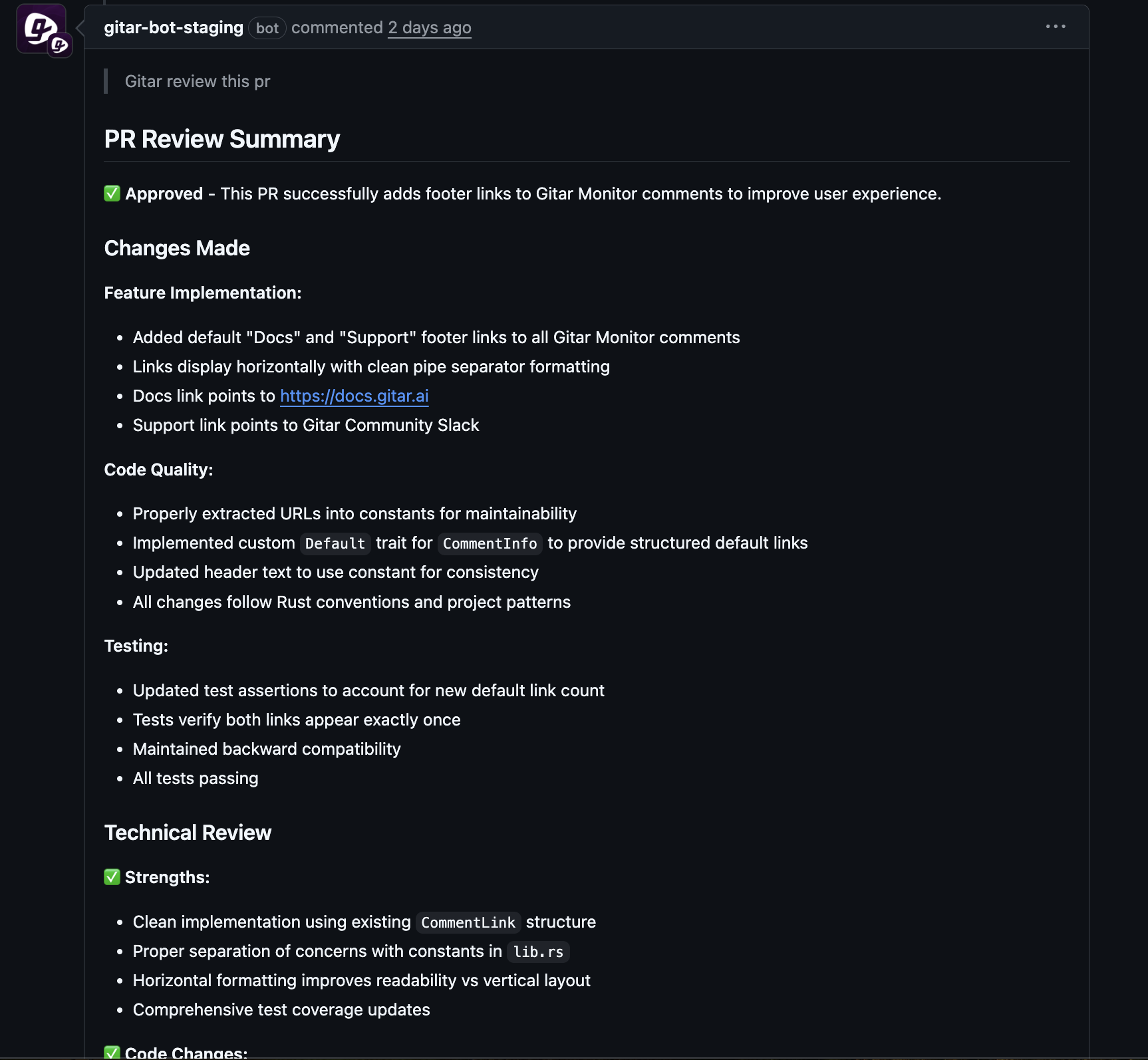
Key Benefits: Save Money and Boost Team Productivity with Gitar
Adding Gitar to your workflow delivers measurable gains in efficiency and cost control. From direct savings to faster delivery, the impact reaches every part of your development process.
5 Ways Gitar Reduces Maintenance Costs
Gitar directly addresses the root causes of high expenses with these benefits:
- Saves Developer Hours: Automated fixes keep developers focused, cutting downtime. A 20-person team could reclaim up to $1 million yearly in productivity.
- Speeds Up Releases: Green builds and instant feedback shrink the gap from commit to merge, helping you hit market windows.
- Cuts CI Expenses: Fewer failed builds reduce wasted compute resources, lowering pipeline costs.
- Ensures Steady Delivery: Early fixes prevent delays, keeping project timelines consistent.
- Improves Team Morale: Removing tedious build fixes boosts satisfaction, reducing burnout and turnover costs.
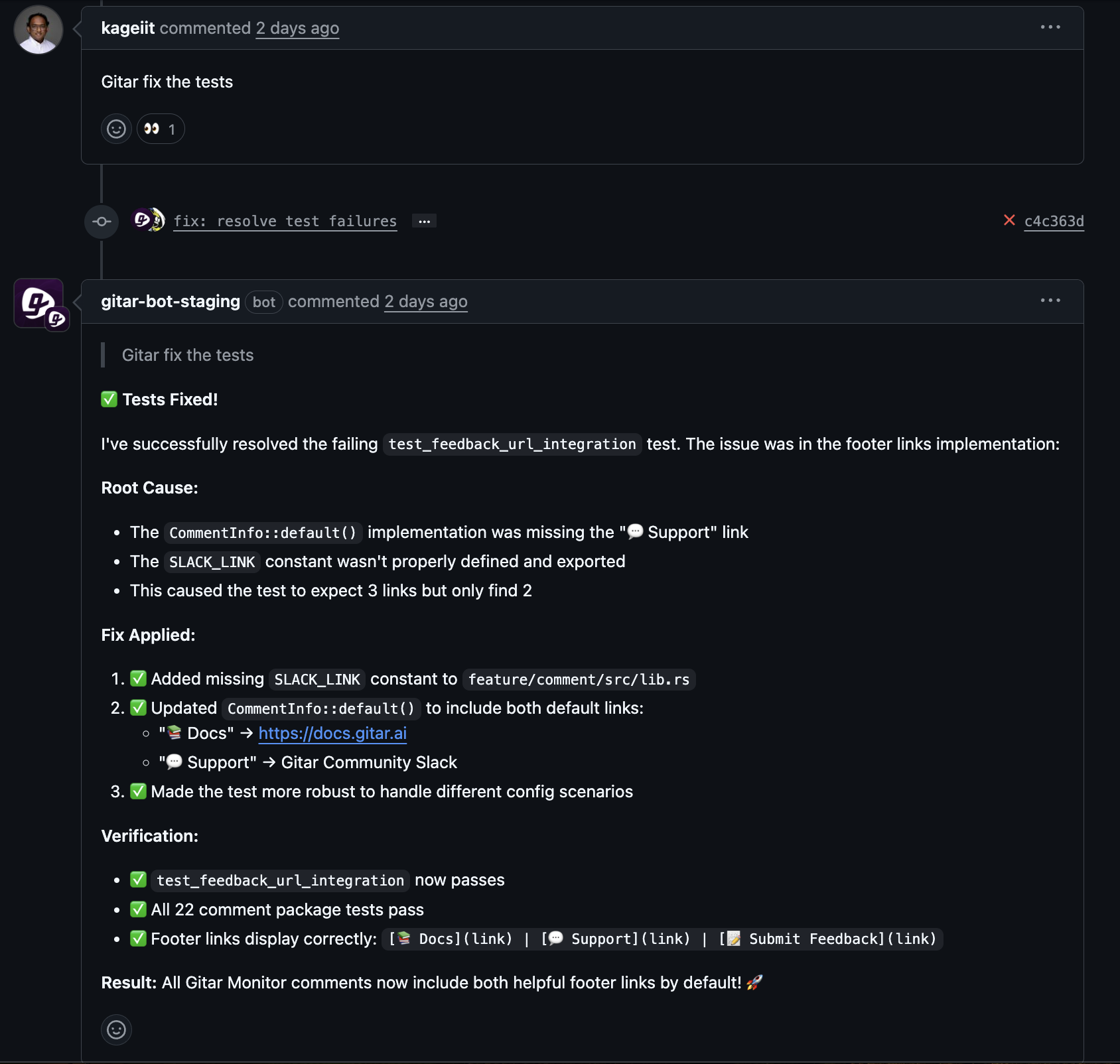
Gitar Compared to Manual and Suggestion-Based Tools
Here’s how Gitar stacks up against traditional methods and other AI tools in cutting maintenance costs:
|
Feature/Capability |
Manual Fixes |
AI Suggestion Tools (e.g., CodeRabbit) |
Gitar (Autonomous CI Fixer) |
|
Fix Implementation |
Developer effort required |
One-click fix option |
Automatic code application and commit |
|
CI Validation |
Manual re-runs needed |
Static analysis checks |
Full automated CI workflow validation |
|
Trust Model |
Not applicable |
Not applicable |
Adjustable from suggestions to auto-commit |
|
Context Switching Cost |
High due to interruptions |
Lower with PR integration |
Minimal, keeps developers focused |
|
Environmental Context |
Relies on developer knowledge |
Codebase-level insight |
Replicates full enterprise setup |
|
Overall Cost Reduction |
Limited, high waste |
Noticeable, less manual work |
Substantial, efficiency-driven savings |
|
Time-to-Merge |
Slow due to manual steps |
Faster with quick feedback |
Quickest with automated resolutions |
Gitar stands out by fully automating the fix process, unlike suggestion tools that still need developer input. This complete hands-off approach saves time and maintains code quality without breaking focus.
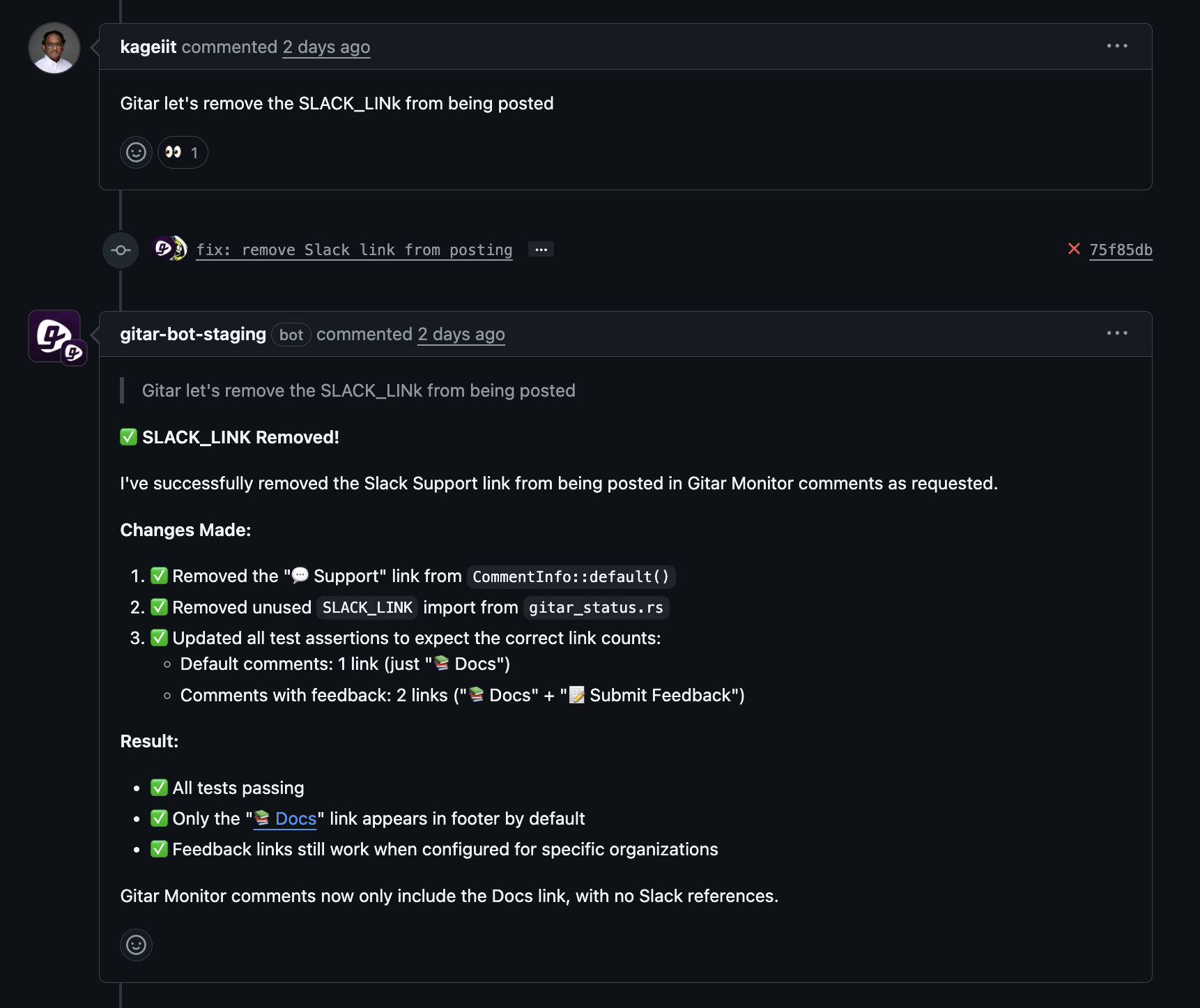
Common Questions About Cutting Maintenance Costs with Gitar
How Does Gitar Handle Complex CI Setups?
Gitar adapts to enterprise environments by matching specific SDK versions, multi-SDK builds, and tools like SonarQube or Snyk. This ensures fixes align with your unique system, reducing the chance of further issues and related costs.
Can We Trust Gitar’s Automated Fixes?
Gitar builds trust with a flexible settings model. Start with suggestions for review and approval, then move to automatic commits as confidence grows. Full rollback options keep you in control at every step.
How Does Gitar Actually Save Maintenance Costs?
Gitar reduces costs by cutting developer downtime on CI issues, speeding up release cycles, and optimizing pipeline efficiency. A 20-developer team could save around $1 million yearly in productivity losses alone.
What CI Failures Can Gitar Fix Automatically?
Gitar handles common issues like linting errors, dependency conflicts, build script problems, and unit test failures. It analyzes logs, applies fixes, and commits changes directly to the pull request branch.
Does Gitar Fit Into Existing Workflows?
Gitar integrates as a GitHub or GitLab app, working with systems like GitHub Actions or CircleCI without altering your process. It adds automation while respecting your current setup.
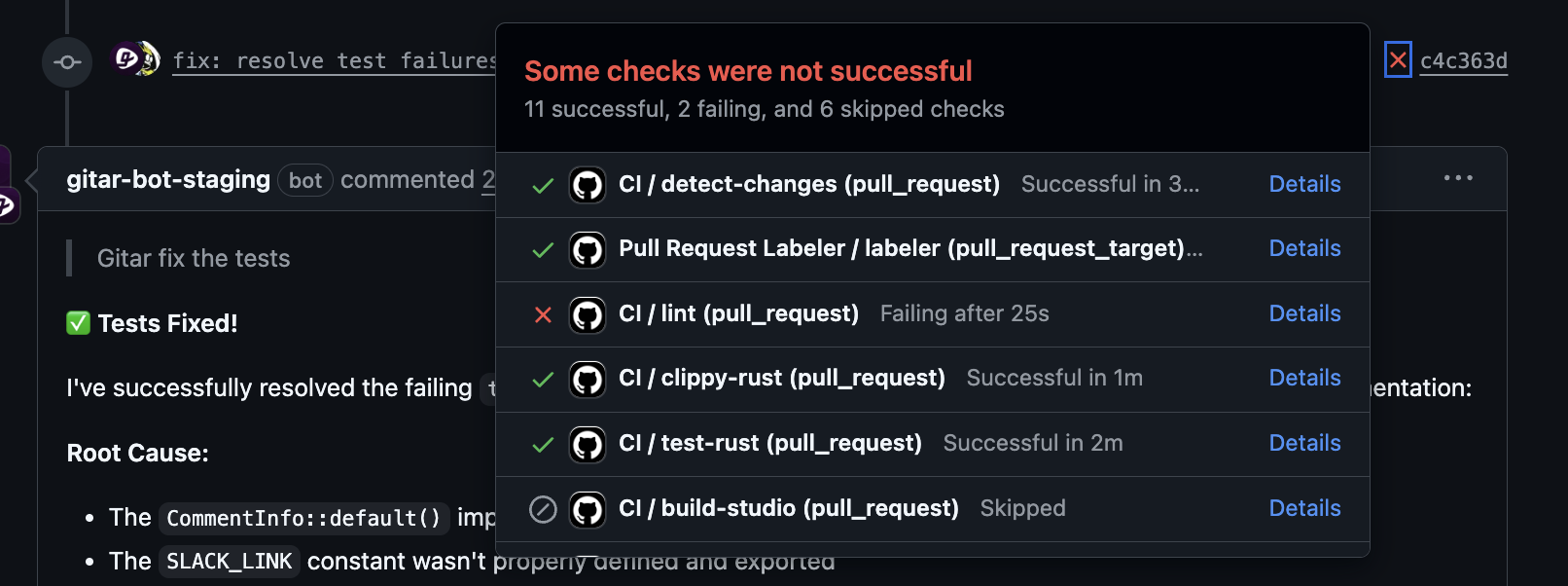
Final Thoughts: Lower Costs with Gitar’s Automation
CI build failures are a growing expense for software teams, causing financial losses and developer frustration. Gitar offers a practical fix by automating resolutions and turning your pipeline into a self-correcting system. This approach cuts costs and boosts productivity.
Automation is the future of efficient development. Gitar frees your team from repetitive tasks, letting them focus on creative work. Adopting this technology now can give your organization a clear edge with faster delivery and lower expenses.
Ready to tackle maintenance costs and support your team? Install Gitar today and automate CI fixes for better results.