
Key Takeaways
- Modern Software Lifecycle Management in 2026 must address validation and integration bottlenecks, not just faster code generation.
- CI failures, code review delays, and context switching now represent a major, measurable drag on developer productivity and delivery speed.
- Autonomous Software Lifecycle Management (ASLM) focuses on self-healing CI, faster code review loops, and preserving developer flow state.
- Engineering leaders can phase in ASLM by identifying current bottlenecks, choosing build vs. buy paths, and managing trust in automation.
- Gitar provides an autonomous agent that fixes CI failures and implements review feedback, helping teams ship reliable software faster; see how it works.
The Evolving Landscape of Software Lifecycle Management (SLM) in 2026
Software now sits at the center of competitive strategy. Global enterprise software spending reached $1.25 trillion in 2025, up 14.2% from 2024, driven by AI and more distributed IT ownership.
Organizations are shifting toward automation in response. Fifty-nine percent of companies planned to expand AI use for automation, analytics, and IT support in 2025, signaling a move away from manual, reactive practices.
Traditional SLM, centered on planning, building, testing, and deploying, no longer matches this reality. AI coding assistants generate code quickly, but the real bottleneck now sits in validation, review, and integration. The core problem has become how to review, test, and merge code at the same pace as it is written.
Install Gitar to start reducing CI failures and code review delays with autonomous fixes.
Why Current Software Lifecycle Management Practices Fall Short for Engineering Teams
The High Cost of Context Switching: A Hidden Tax on Developer Productivity
Frequent interruptions from CI failures and review comments break developer flow and delay delivery. Each time a CI job fails or a reviewer requests changes, the original context fades and must be rebuilt later.
Developers can spend close to a third of their time dealing with CI and review issues, turning minor fixes into repeated context switches and lost momentum across sprints.
The Right-Shift Bottleneck: From Code Generation to Validation
Tools like GitHub Copilot and Cursor improved coding speed, but they also increased the volume of code that must be validated. More changes mean more tests, more CI runs, and more opportunities for small failures to block progress.
Competitive advantage now depends on how efficiently teams can move code through CI, review, and deployment, not just on how quickly they can write it.
Exacerbating Delays: Distributed Teams and Code Review Latency
Global teams amplify these bottlenecks. A pull request opened in one time zone and reviewed in another can sit idle for half a day or more before each round of feedback.
Every manual review comment that requires a code change adds another round trip. Simple refactors or test fixes can stretch into multi-day cycles, slowing feature delivery and frustrating engineers.
Introducing Gitar: An Autonomous Solution for Modern Software Lifecycle Management
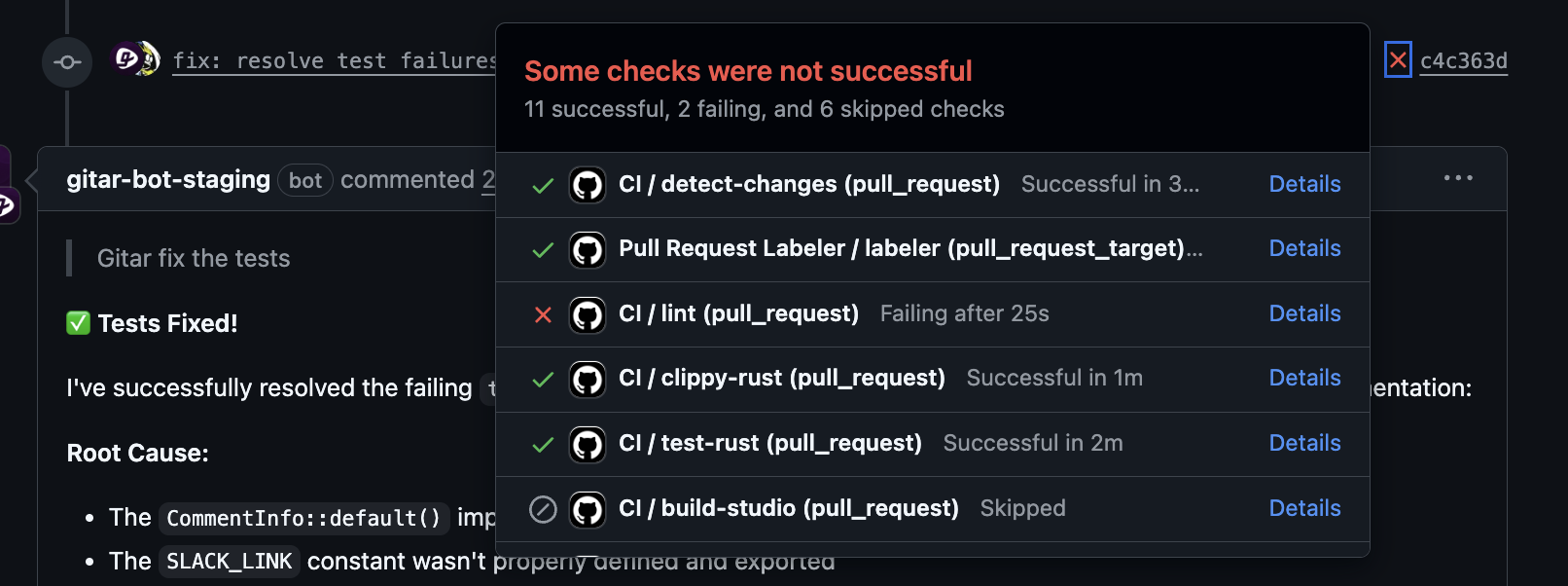
Gitar focuses directly on these pain points by handling failing CI builds and routine code review edits as an autonomous AI agent. It observes your CI pipeline and pull requests, proposes fixes, and can apply them automatically once trust is established.
Key capabilities include:
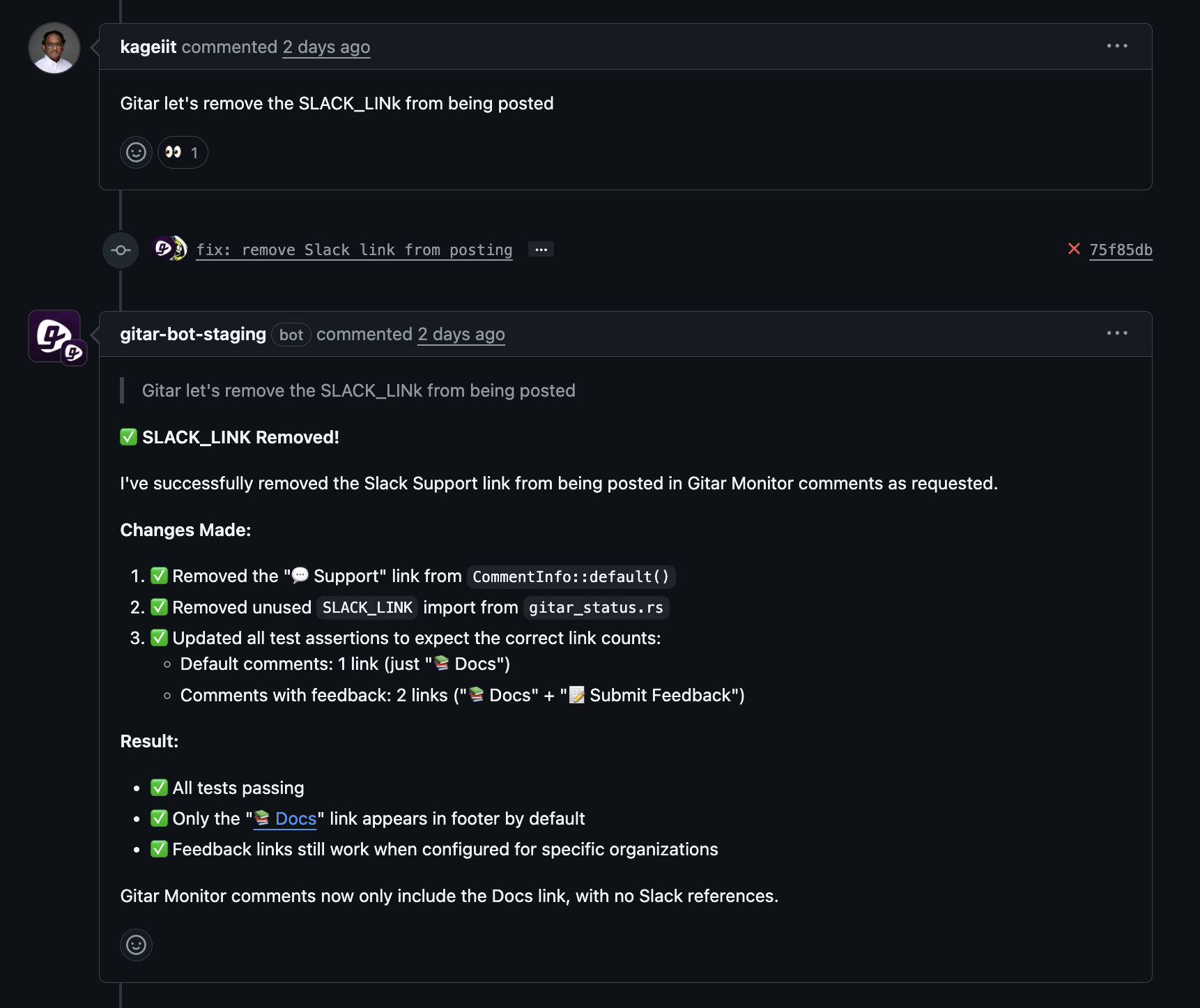
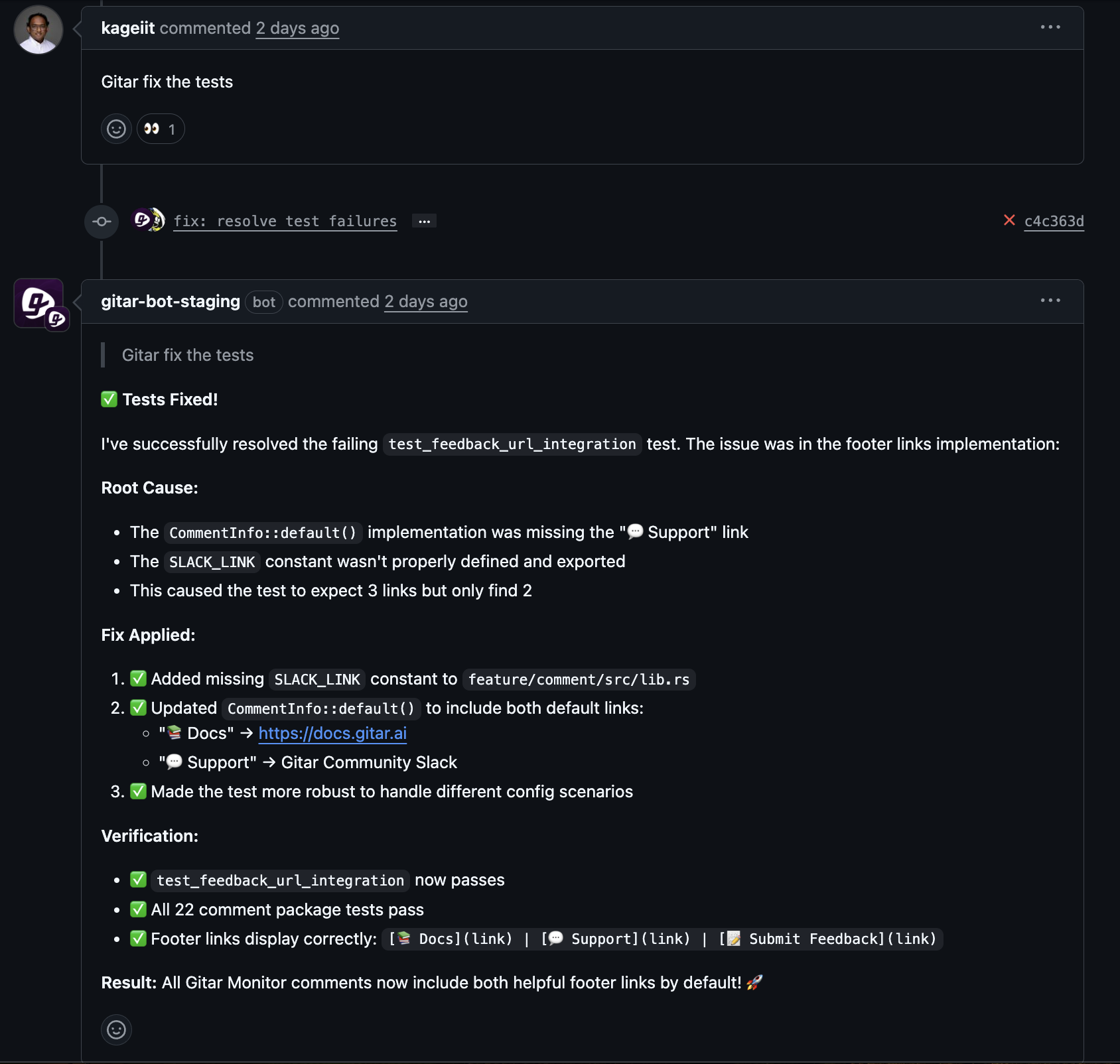
- Autonomous CI fixes for lint errors, test failures, and build issues, with validated updates to pull or merge requests
- Automatic implementation of reviewer feedback, such as refactors or small logic changes, directly in the branch
- Full environment replication for complex enterprise builds, including SDK versions and third-party tools
- Configurable trust modes, from suggestion-only to auto-commit with rollback options
Book a demo to see Gitar working inside your CI and code review workflows.
Strategic Pillars of Autonomous Software Lifecycle Management (ASLM) in 2026
Pillar 1: Automated Remediation and Self-Healing CI
Self-healing CI shifts teams away from firefighting toward automatic remediation. Automation in lifecycle management reduces manual work, downtime, and errors, freeing engineers from repetitive debugging.
Autonomous CI agents monitor pipelines, detect failures, identify likely causes, and apply fixes. Developers review the result instead of spending time on first-pass diagnosis.
Pillar 2: Accelerating Feedback Loops in Code Review
ASLM shortens review cycles by handling routine feedback automatically. An AI system can refactor functions, update documentation, or fix style issues based on reviewer comments, then rerun tests.
Rising cross-functional demand for faster delivery makes these shorter feedback loops essential for keeping schedules realistic.
Pillar 3: Protecting Developer Flow State
ASLM aims to reduce interruptions so developers can focus on design and complex problem-solving. Fewer CI-related pings and faster resolution of review comments translate into longer periods of deep work.
For a 20-developer team, even one hour per person per day reclaimed from CI and review overhead can represent hundreds of thousands of dollars in annual productivity value and higher job satisfaction.
Pillar 4: Improving Software Supply Chain Resilience and Visibility
Autonomous SLM improves line of sight across dependencies, security, and compliance. Better lifecycle visibility and asset tracking help reduce waste and vulnerabilities, and support more accurate capacity planning.
These systems can surface recurring failure patterns, risky dependencies, or slow steps in pipelines, enabling targeted process improvements.
Assessing Your Organization’s Readiness for Autonomous Software Lifecycle Management
Current State Evaluation: Identifying SLM Bottlenecks
Effective adoption starts with clear baseline metrics. Useful signals include:
- Frequency and types of CI failures per repository
- Median and 90th percentile time-to-merge for pull requests
- Surveyed developer time spent on CI fixes and review rework
These measurements help quantify the value of automation and guide where to deploy ASLM first.
Build vs. Buy: Considerations for SLM Solutions
Teams deciding between in-house automation and a platform like Gitar should weigh engineering cost and risk. Building a reliable autonomous agent framework requires orchestration, context management, and deep CI/CD integration.
Specialized platforms deliver tested agents and integrations, allowing internal teams to focus on product features instead of infrastructure tooling.
Organizational Change Management for SLM Adoption
Gradual rollout builds trust. Many teams start with suggestion-only mode, let developers review proposed fixes, and then opt into auto-commit for specific repositories or failure types.
Sharing early successes, such as first green builds fixed automatically, helps drive wider adoption across the organization.
Comparison: Gitar vs. Other Software Lifecycle Management Approaches
|
Feature Category |
Gitar (Autonomous SLM) |
AI Suggestion Engines |
Manual Workflows |
|
CI Failure Handling |
Finds, fixes, commits, and validates for green pull requests |
Suggests fixes, developers apply and validate |
Developers debug, fix, commit, and re-run CI |
|
Code Review Feedback |
Implements requested changes autonomously |
Provides comments or code snippets |
Developers apply all feedback manually |
|
Developer Interruption |
Low |
Moderate, requires context switching |
High, frequent interruptions |
|
Environment Replication |
Replicates enterprise build environments |
Limited context |
Depends on local setups |
Install Gitar to compare autonomous SLM with your current workflows in a live environment.
Strategic Pitfalls for Experienced Teams in Adopting Autonomous Software Lifecycle Management
Underestimating Trust Building in SLM Automation
Immediate use of aggressive automation can trigger resistance. Developers want visibility and control over changes that affect their code.
Phased rollout, transparent logs, and clear opt-in policies help teams adopt ASLM with confidence.
Ignoring Legacy System Integration Challenges
Legacy build systems, custom scripts, and unique security tools can block simple automation approaches. Legacy integration remains a core challenge for modern lifecycle initiatives.
Platforms must replicate real environments, including SDK versions and third-party integrations, so automated fixes behave correctly in production-like contexts.
Focusing on Cost Cutting Over Productivity Gain in SLM
ASLM does reduce waste, especially as annual software costs increased around 10% in 2025, but the stronger outcome is improved throughput and developer experience.
Positioning ASLM as a way to ship features more reliably and make engineering work more engaging tends to drive better adoption than framing it only as a cost reduction tool.
Treating AI as a Magic Bullet in Software Lifecycle Management
AI agents require configuration, monitoring, and iteration. Effective leaders set clear success metrics, define appropriate automation boundaries, and adjust behavior as the system learns.
Regular reviews of CI outcomes, fix quality, and developer feedback keep ASLM aligned with team goals.
Frequently Asked Questions (FAQ) about Autonomous Software Lifecycle Management
Q1: How can an autonomous SLM solution handle our unique and complex CI setup?
Gitar replicates your development environment, including language versions, dependencies, and CI configuration, so fixes respect your actual build and test processes.
Q2: We already use AI reviewers for code. How is an autonomous SLM solution different?
AI reviewers highlight issues and suggest changes, while Gitar identifies problems, applies fixes, and validates results against your full CI workflow before updating the pull request.
Q3: What if we do not fully trust automated fixes in our Software Lifecycle Management?
Gitar supports suggestion-only and approval-required modes so teams can inspect changes before they merge, then move to higher automation levels when ready.
Q4: Can an autonomous SLM system help with the current developer productivity concerns?
Gitar reduces time spent on CI failures and review rework, which helps teams reclaim hours each week for feature work, design, and technical strategy.
Q5: How does autonomous SLM integrate with our existing development tools and processes?
Gitar integrates with GitHub, GitLab, and common CI systems such as GitHub Actions, GitLab CI, CircleCI, and BuildKite, so developers continue using existing workflows while the agent operates in the background.
Conclusion: The Future of Your Software Lifecycle Management Is Autonomous
Software teams in 2026 face higher expectations, larger codebases, and more distributed collaboration than ever before. Manual, reactive SLM practices cannot keep pace with AI-accelerated development and complex CI pipelines.
Gitar provides an autonomous layer that fixes CI failures and resolves routine code review feedback, allowing engineers to focus on higher-value work and helping organizations ship software more reliably.
Request a Gitar demo to evaluate autonomous CI and review automation in your own environment.