
Written by: Ali-Reza Adl-Tabatabai, Founder and CEO, Gitar
Key Takeaways
-
92.6% of developers use AI coding assistants in 2026, generating code 3-5x faster but facing 91% longer PR reviews due to CI failures.
-
Vibe coding pairs natural language intents with AI implementation and requires tools that support both generation and post-generation workflows.
-
The practical stack includes Cursor IDE, Node.js 22+, Vercel CLI, GitHub CLI, .cursorrules, and Gitar for CI healing and review handling.
-
Follow a 6-phase setup that covers 10 essential configuration steps, from core installations and branching strategies to Gitar integration for green builds and automated fixes.
What Vibe Coding Looks Like in 2026 and Why Environment Quality Matters
Vibe coding transforms traditional development by letting developers describe intent in natural language while AI handles the technical implementation. Cursor’s Composer 2 achieves 61.3 on CursorBench, representing a 37% improvement over previous versions and enabling complex multi-file operations through conversational interfaces.
The main friction appears in review and deployment. Teams using vibe coding report 41% higher code churn and 7.2% decreased delivery stability, while AI-authored code now comprises 26.9% of all production code. Without tooling that handles CI failures and review bottlenecks, the productivity gains from rapid generation disappear into manual debugging and rework.
Essential Vibe Coding Tools for a Full Lifecycle Stack
The solution to these bottlenecks lies in assembling a tool stack that supports the complete development lifecycle. When evaluating tools for your vibe coding environment, prioritize those that handle both generation and the post-generation workflow. Focus on coverage from local iteration through CI, review, and deployment.
The following comparison highlights a critical gap. Most tools excel at code generation or deployment but lack CI automation and review integration required for production readiness.
|
Tool |
Primary Function |
Auto-Fix CI |
Review Integration |
|---|---|---|---|
|
Cursor |
AI-native IDE |
No |
Limited |
|
Node.js 22+ |
Runtime environment |
No |
No |
|
Vercel CLI |
Deployment platform |
No |
No |
|
Gitar |
AI code review & CI healing |
Yes |
Yes |
The essential 7-step tool installation sequence follows a logical dependency chain. Start by downloading Cursor from cursor.com as your development environment foundation. Next, install Node 22+ via brew install node to provide the runtime that powers your applications.
With Node available, set up Vercel CLI using npm i -g vercel for deployment capabilities. Configure GitHub CLI through gh auth login to enable version control integration. Create .cursorrules to provide AI context that guides code generation.
Establish a branching strategy that supports iterative AI-assisted development. Finally, install Gitar for automated CI fixes and review handling to complete the workflow from generation to production.
Cursor’s Supermaven autocomplete engine achieves a 72% acceptance rate with sub-100ms latency, which makes it ideal for rapid iteration. Real productivity gains, however, come from combining Cursor with tools that manage testing, CI, review, and deployment in a single continuous flow.
Phase 1: Install Core Stack (Steps 1-3: Cursor, Node, Vercel)
Begin with the foundational development stack that supports rapid prototyping and deployment. Install Node.js 22+ using brew install node on macOS or download from nodejs.org for other platforms. Verify installation with node --version to confirm compatibility with modern JavaScript features.
Create your first vibe coding project using the scaffolding tool that matches your framework preference. For React-based applications, use npm create vite@latest my-vibe-app, which provides a minimal, fast development server suited to rapid iteration. For applications that need server-side rendering or API routes, choose npm create next-app@latest for a Next.js setup instead.
Set up Vercel for instant deployments with npm i -g vercel followed by vercel login. This configuration enables a tight iteration loop: generate code with Cursor, test locally, deploy quickly, and gather feedback. If authentication fails, troubleshoot with gh auth login to restore proper GitHub integration.
Phase 2: GitHub CLI & Repo Setup (Step 4)
Initialize version control with gh repo create vibe-app --public to create a new repository directly from the command line. This approach removes context switching between terminal and browser during the initial setup phase and keeps your focus inside the development environment.
Establish a branching strategy tuned for AI-assisted development. Maintain a stable main branch, use a staging branch for integration testing, and create feature branches for each AI-generated component or refactor. This structure supports the experimental nature of vibe coding while protecting production stability through controlled merges.
Phase 3: .cursorrules & Prompt Templates (Step 5)
Create a .cursorrules file in your project root to provide consistent context for AI code generation. Include coding standards, architectural preferences, and project-specific constraints that guide AI behavior across all interactions. This shared context keeps AI output aligned with team expectations.
Vibe Coding Prompt Template for Consistent Output
Use structured prompts that clearly define scope and constraints. For example, write: “Refactor the authentication component to use async/await patterns, maintain existing error handling, and ensure no new files are created.” This level of specificity prevents scope creep and preserves architectural consistency.
Include context about your stack, testing requirements, and deployment constraints in every significant prompt. Cursor’s self-summarization technique compresses prior context to maintain accuracy beyond context window limits. Detailed initial context therefore becomes crucial for sustained productivity across long sessions.
Phase 4: Physical & Workflow Vibe Optimization (Step 6)
Sustained productivity in vibe coding depends on more than software configuration. Your physical workspace and daily workflow patterns strongly influence your ability to maintain the focused collaboration that AI-assisted development requires. A well-tuned environment keeps you in flow while AI handles repetitive work.
Optimize your physical environment for long coding sessions. Position your monitor at eye level to reduce neck strain, use a mechanical keyboard for tactile feedback during rapid iteration, and ensure adequate lighting to minimize eye fatigue during extended AI collaboration.
Configure keyboard shortcuts for common vibe coding actions such as quick access to Cursor’s chat interface, terminal commands, and deployment triggers. Remove nonessential notifications during focused coding sessions to protect the flow state that makes AI collaboration productive.
Phase 5: Integrate Gitar for Production-Ready Vibe Flow (Steps 7-10)
With your development environment and workflow tuned, the remaining bottleneck sits in CI failures and review cycles that erode the gains from rapid AI code generation. Integrating Gitar closes this gap by turning CI and review into an automated feedback loop rather than a manual firefight.
Install the Gitar GitHub App to address the critical gap between rapid code generation and production readiness. Experience comprehensive AI code review with a 14-day trial and use the Gitar documentation to complete setup.
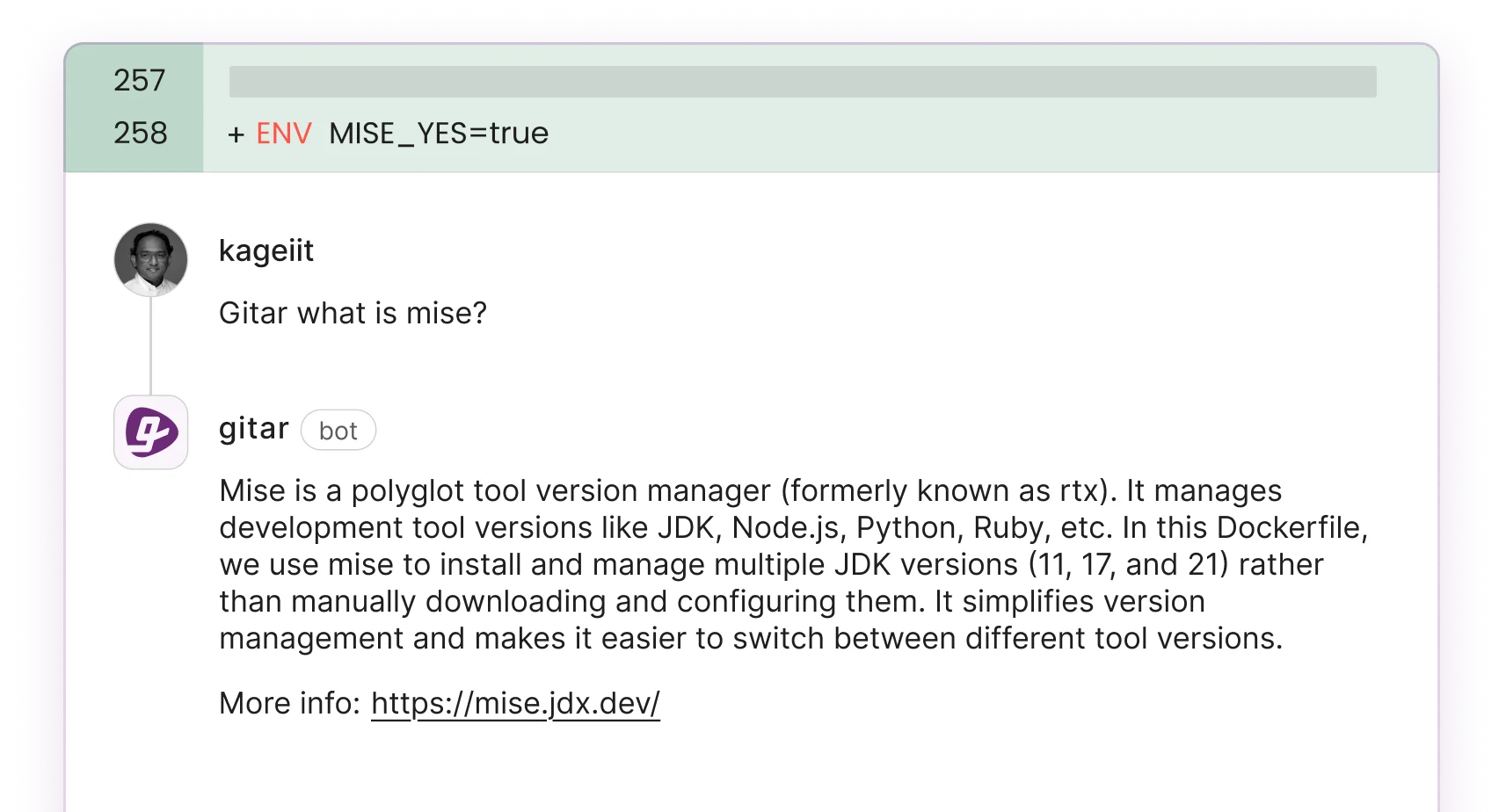
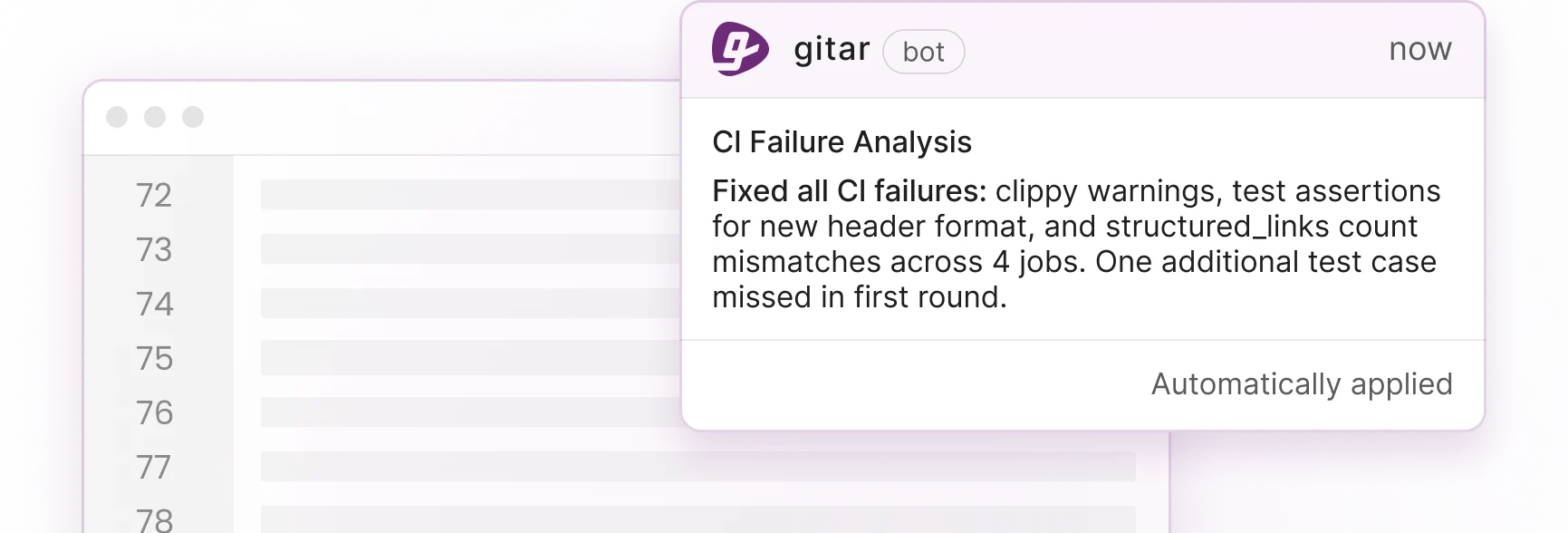
Configure Gitar’s capabilities for common CI failures including lint errors, test failures, and build breaks. Gitar’s CI failure analysis automatically analyzes failures and provides insights in the dashboard comment, updating dynamically with new commits. This behavior removes the manual debugging cycle that usually follows AI code generation.
Create a .gitar/rules directory for your team’s specific requirements. Gitar supports natural language rules that trigger automated actions based on PR content and context, such as enforcing test coverage thresholds or requiring review on sensitive modules.
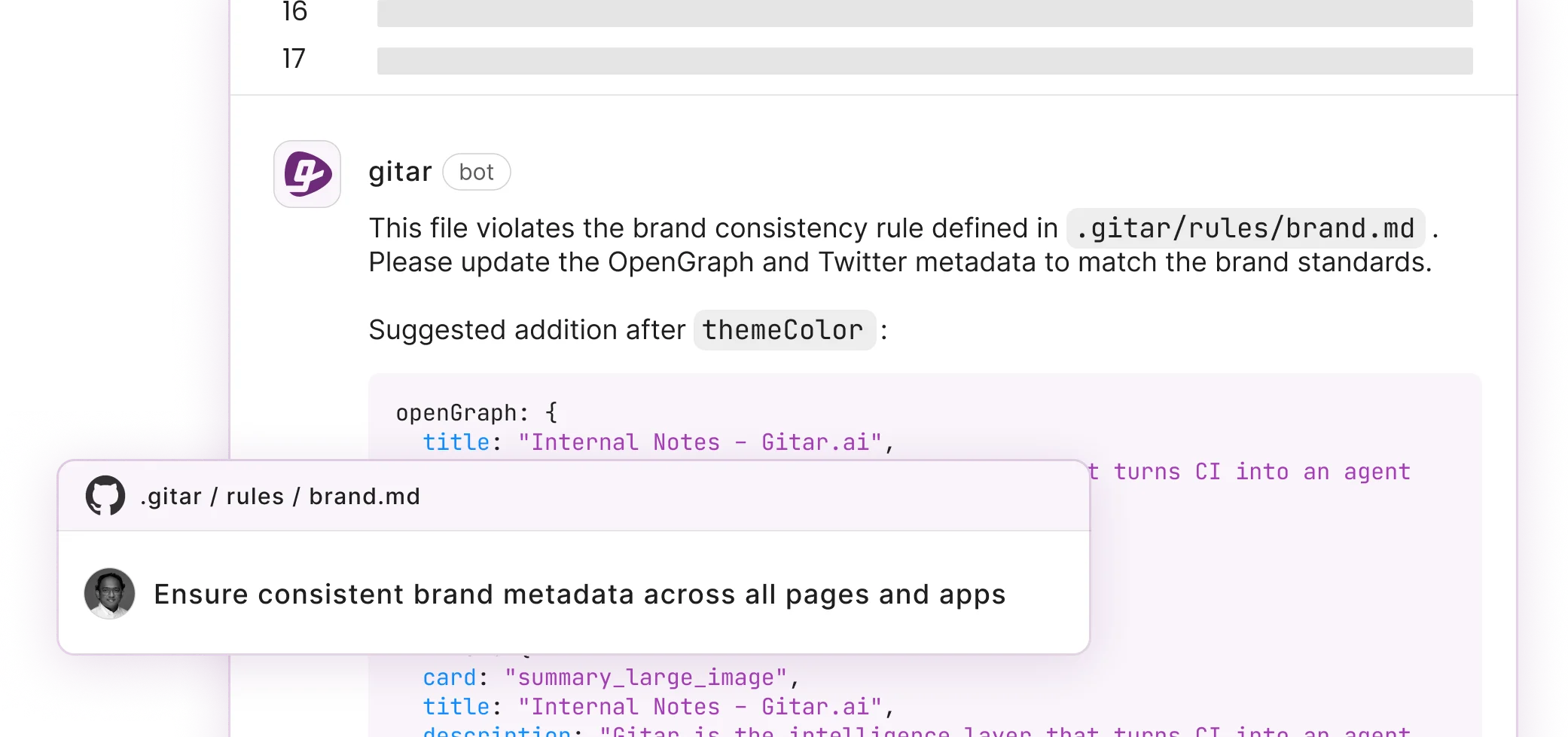
When you evaluate AI code review tools, focus on CI failure automation as the key differentiator. The comparison below shows how Gitar’s approach to CI handling and build guarantees differs from alternatives.
|
Feature |
CodeRabbit |
Greptile |
Gitar |
|---|---|---|---|
|
Auto-fix CI failures |
No |
No |
Yes (Trial/Team) |
|
Single comment interface |
No |
No |
Yes |
|
Green build guarantee |
No |
No |
Yes |
|
Pricing per developer |
$15-30 |
$30 |
14-day trial |
Gitar’s CI agent maintains full context from PR creation to merge, working continuously to keep CI green by finding root causes, implementing fixes, and verifying results. This capability turns the traditional generate-fail-debug-fix cycle into a smoother flow where AI manages both creation and resolution.
Transform your CI pipeline with Gitar and start shipping higher quality software faster.
Productive Vibe Coding Strategies & Troubleshooting
Use iterative branching workflows that align with AI generation patterns. Create small, focused branches for each AI-generated feature or refactor so you can iterate quickly without destabilizing the main codebase. This practice supports experimentation while preserving a reliable release branch.
Address common CI flakiness by using Gitar’s intelligent failure detection. Gitar’s CI Failure Analysis deduplicates failures across multiple jobs, surfaces causes without digging through logs, and keeps information updated in real time. This capability removes the guesswork involved in separating infrastructure issues from actual code problems.
The productivity impact of these bottlenecks translates directly into financial cost. For teams of 20 developers, the ROI calculation is compelling: traditional CI and review bottlenecks cost roughly $1M annually in lost productivity. Automated fix systems can reduce this overhead by about 75%, even after accounting for tool expenses.
FAQ
What is the best way to start vibe coding?
Begin with the core stack installation in Phase 1 and upgrade to Cursor Pro at $20/month for unlimited completions and premium AI access. Focus on small, well-defined projects at first to build confidence with AI collaboration patterns before you move into complex applications.
How does Gitar fix vibe coding PRs?
As described in the setup section, Gitar handles the complete CI failure cycle from analysis through validated fixes, then updates your pull request. This process removes most manual debugging work that typically follows AI code generation and keeps development momentum high.
What are the essential vibe coding tools for 2026?
The practical stack combines Cursor for AI-native development, Node.js for runtime flexibility, Vercel for instant deployments, and Gitar for automated CI resolution. Together, these tools support the full lifecycle from generation through production deployment.
How do you start vibe coding with Cursor?
Follow the 7-step installation sequence described earlier: download Cursor, install Node 22+, configure Vercel CLI, set up GitHub CLI, create .cursorrules, establish a branching strategy, and integrate Gitar for CI automation. This foundation supports sustained productivity throughout the development cycle.
What should a vibe coding beginner’s guide include?
A comprehensive guide must cover both code generation and the post-generation workflow. Include AI tool setup, prompt design, version control strategies, deployment automation, and CI failure resolution. The gap between rapid generation and production readiness is where most vibe coding initiatives struggle.
Conclusion
Building a productive vibe coding environment requires more than installing AI coding tools. A complete 6-phase process that covers 10 essential steps, from Cursor installation through Gitar integration, creates a sustainable workflow that preserves AI speed while removing review delays and CI failures.
The shift from traditional development to vibe coding changes how software gets built. By 2026, successful teams will master not only AI code generation but also the surrounding ecosystem that supports rapid iteration, automated quality assurance, and dependable deployment.
Transform your vibe coding workflow with Gitar’s CI automation to fix failures, streamline reviews, and ship higher quality software faster. The future of productive development belongs to AI systems that manage the complete workflow, not just the initial code generation.