
Software development faces a persistent challenge: manually fixing CI failures and addressing code review feedback eats up valuable time. For GitLab users, this often means lost productivity and delayed projects. Autonomous AI agents offer a practical way forward by directly resolving issues without constant developer input. This article looks at how these tools, especially in GitLab environments, streamline workflows and deliver real efficiency gains for engineering teams.
Why CI Failures and Code Reviews Slow Down GitLab Teams
CI failures can derail even the most confident merge request in GitLab. Linter errors over small syntax issues, failing unit tests due to mismatched environments, or broken builds from dependency conflicts turn quick fixes into time-consuming tasks. Developers often switch between debugging, updating code, and waiting for pipelines to rerun, losing focus in the process.
This problem impacts more than just convenience. Developers spend nearly 30% of their time on CI and code review tasks, with some teams losing an hour per day per person. For a 20-person team, this adds up to about $1 million in annual productivity losses, considering developer costs and delayed feature releases.
Constant context switching makes it worse. After submitting a merge request, developers often shift to other tasks, only to be pulled back by failures or feedback. These interruptions break focus and increase the true cost of fixing issues beyond just the time spent.
Distributed teams face extra hurdles. A developer in one time zone might wait hours or days for feedback from a teammate halfway across the world. Many AI tools add to this delay by offering suggestions that still need manual effort to apply and verify.
With AI code generation tools increasing output, teams face growing pressure to validate and merge larger volumes of code. Keeping workflows moving requires efficient solutions to handle this increased load.
How Autonomous AI Resolves CI Issues in GitLab
Autonomous AI shifts the focus from merely suggesting fixes to actively solving problems. Unlike tools that stop at recommendations, these agents handle the entire process, from identifying CI failures in GitLab to applying and validating solutions without needing developer input.
Ordinary AI tools often leave the hard work to developers, requiring manual steps to test suggestions in complex environments. Autonomous agents step in to analyze failures like linting errors or test issues, implement fixes, and commit changes directly, saving time and effort.
This approach directly tackles pain points like context switching and delays across time zones. It also reduces the buildup of rushed, temporary fixes. Beyond helping individual developers, autonomous AI supports team leaders and distributed groups in maintaining steady progress.
Meet Gitar: Your AI Agent for GitLab CI/CD Fixes
Gitar is an autonomous AI agent built to cut down the manual work in CI/CD processes. Unlike tools that only suggest fixes, Gitar acts as a full-resolution system, handling CI failures and code review feedback across GitLab and other platforms.

Here’s what sets Gitar apart:
- Complete resolution: Automatically applies and tests fixes within full CI pipelines for reliable builds.
- Environment accuracy: Mirrors complex enterprise setups, including specific SDKs, dependency versions, and tools like SonarQube.
- Feedback handling: Directly implements changes requested by reviewers without extra steps.
- Customizable automation: Provides options from cautious suggestion modes to full auto-commit with rollback features.
- Platform flexibility: Supports GitLab CI, GitHub Actions, CircleCI, BuildKite, and more.
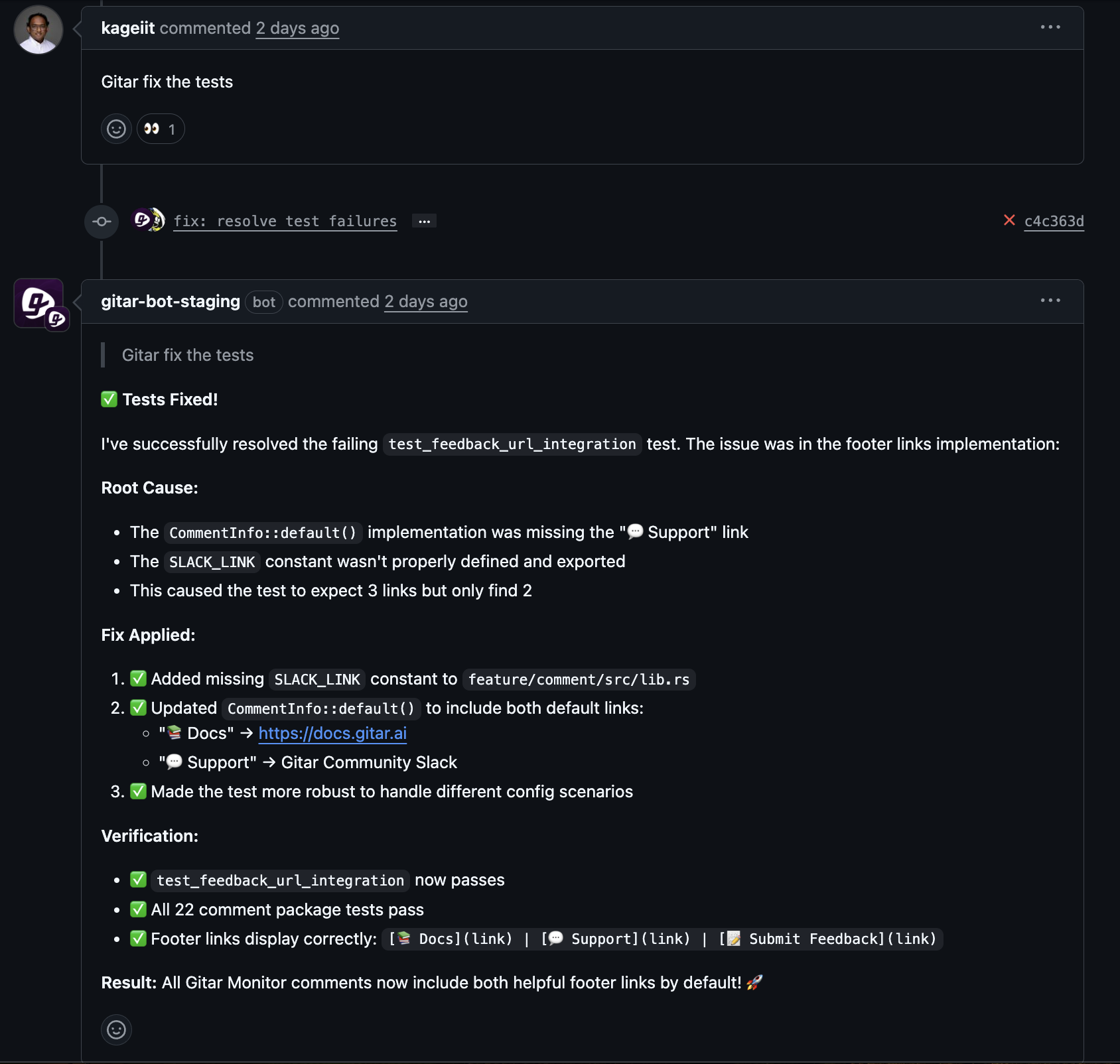
Gitar transforms CI failure resolution into a hands-off process. When a merge request triggers errors in GitLab, it reviews logs, identifies causes, makes code changes, tests them against the pipeline, and commits fixes, often before developers notice the issue.
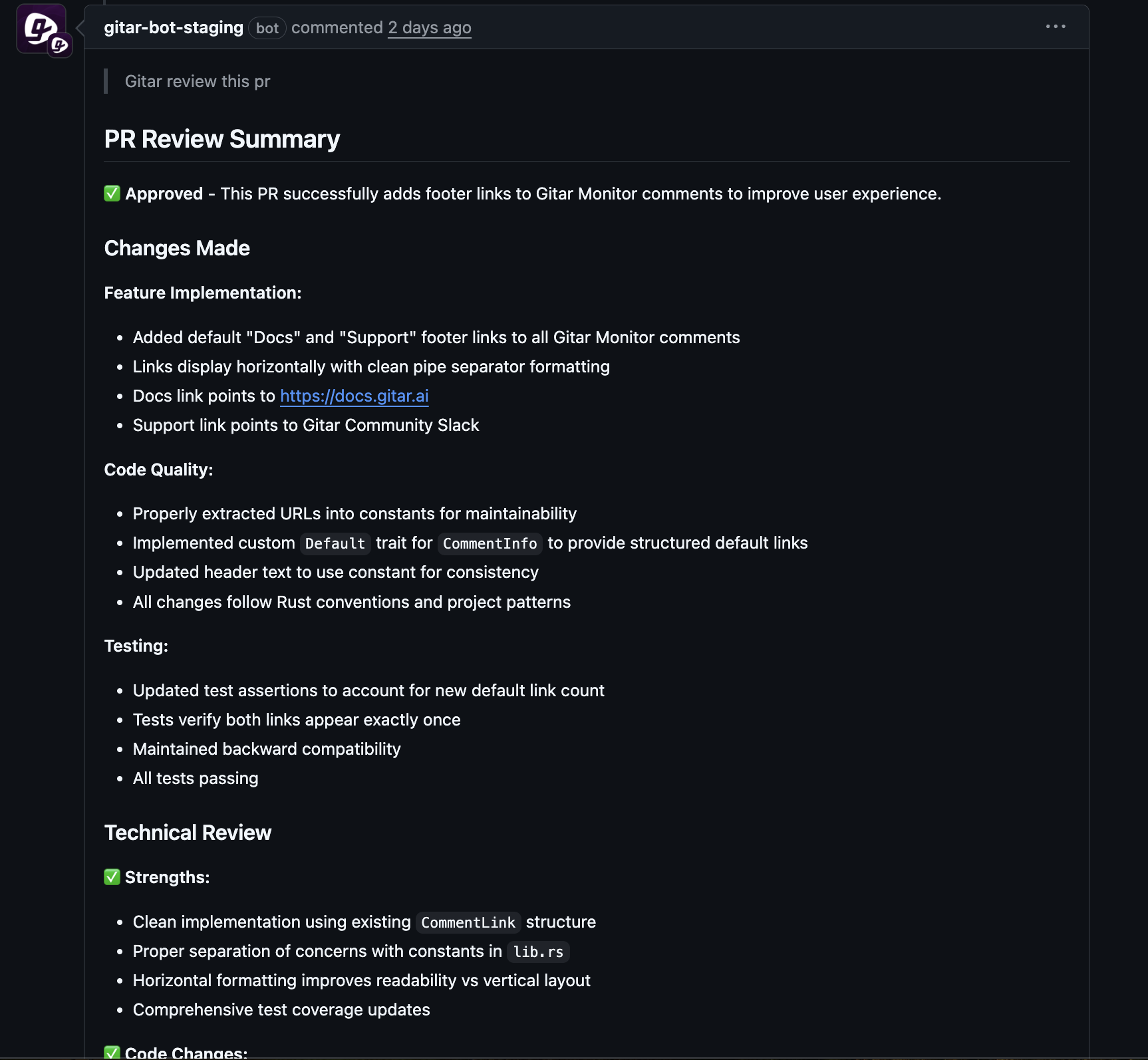
Install Gitar now to fix broken builds and ship quality software faster.
Choosing the Right Autonomous AI Tool for GitLab CI/CD
Why Healing Engines Beat Suggestion Tools
Suggestion tools offer ideas for fixes but leave the work of applying and testing them to developers. Healing engines like Gitar go further by managing the entire process. They implement solutions for GitLab CI failures, validate them in the pipeline, and ensure successful builds, reducing manual effort.
This difference matters in enterprise settings where CI issues often involve complex systems. Healing engines confirm fixes work in real environments, cutting out guesswork and follow-up errors.
Matching Enterprise Environments for Reliable Fixes
Enterprise CI/CD setups often use specific SDK versions, dependency structures, and custom configurations. Autonomous AI tools for GitLab must replicate these environments to ensure fixes don’t create new problems. Accurate emulation prevents costly failed solutions by testing changes in realistic conditions before applying them.
Cutting Down Developer Interruptions with AI Agents
Autonomous AI agents save developers from constant interruptions caused by CI failures. By handling issues from start to finish, these tools let developers submit merge requests and move to other tasks without worrying about pipeline errors. For teams of 20 or more, this can save thousands of hours each year, leading to notable cost reductions and faster project timelines.
Ensuring Compatibility with Your GitLab Workflow
Autonomous AI tools need to fit smoothly into existing GitLab processes and work with other CI platforms if needed. Support for multiple systems is key for organizations using mixed setups. These agents should also handle various programming languages like Python, JavaScript, and Java, while understanding framework-specific testing needs.
Building Confidence with Adjustable Automation
Trust is a common concern when adopting autonomous AI in enterprise settings. Tools like Gitar address this with flexible automation settings. Teams can start with a cautious approach, reviewing suggested fixes before approval. As confidence grows, they can shift to full automation, where fixes are applied directly with options to undo changes if necessary.
Comparing Autonomous AI Fixes to Traditional CI/CD Methods
|
Feature |
Gitar (Autonomous Healing Engine) |
AI Code Reviewers (e.g., CodeRabbit) |
Manual Workflow |
|
Approach |
Automatic Fixes and Validation |
Suggestions Only |
Manual Detection and Fixes |
|
CI Integration |
Full Environment Match, Auto-Fix |
Suggestions on PRs, No Fixes |
No AI Support |
|
Fix Validation |
Ensures Successful Builds |
No Validation, User Applies |
Manual Testing |
|
Developer Input |
Minimal, Optional Review |
High, Must Implement |
Fully Manual |
This table highlights key differences. While AI reviewers offer insights, they leave the hard work to developers. Healing engines like Gitar manage the full resolution process, turning CI failures into a background task that gets handled automatically.
Install Gitar now to fix broken builds and ship quality software faster.
Common Questions About Autonomous AI for GitLab
How Does Gitar Differ from Standard AI Code Review Tools?
Gitar acts as a healing engine, applying and validating fixes within GitLab CI pipelines to ensure successful builds without manual steps. Tools like CodeRabbit focus on suggestions for merge requests, requiring developers to handle implementation. Gitar manages the entire process, while others stop at recommendations.
Can AI Handle Complex CI Environments with Custom Dependencies?
Yes, agents like Gitar are built for enterprise-level complexity. They replicate full build environments, accounting for specific SDK versions, diverse dependencies, and tools like SonarQube, ensuring fixes match unique setups.
How Can We Trust AI Fixes Won’t Cause New Problems in GitLab?
Gitar builds trust with adjustable automation levels. Teams can begin with a review-first mode, approving fixes before they’re applied. Over time, they can move to direct commits with rollback options. Fixes are tested against full CI workflows, minimizing risks compared to manual changes.
Does Autonomous AI Change Existing GitLab Team Workflows?
Gitar integrates seamlessly into current GitLab merge request and CI processes. It adds status comments to keep teams updated on actions, maintaining clarity. For distributed groups, it handles feedback across time zones, ensuring merge requests are ready without delays.
What’s the Financial Benefit of Autonomous AI Fixes?
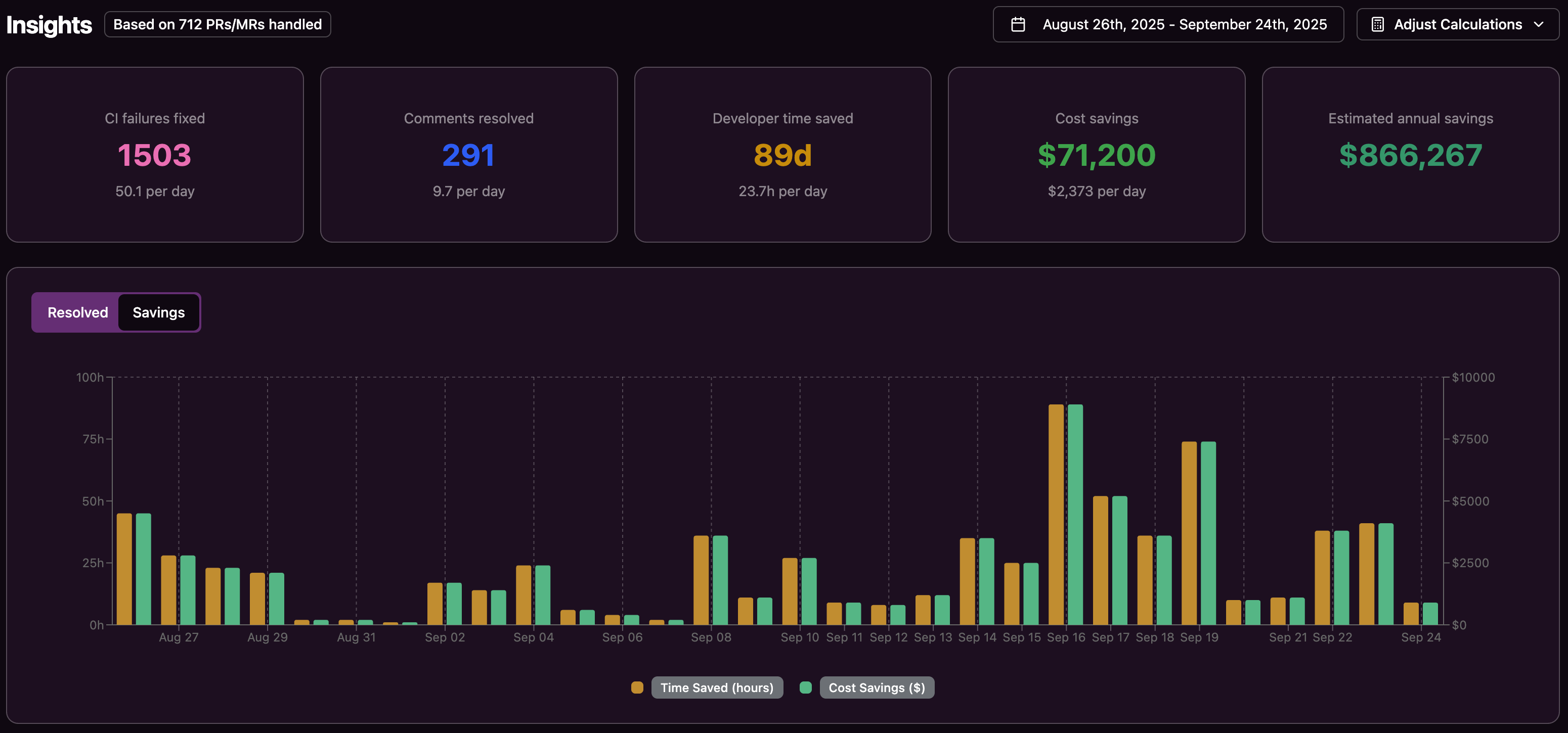
For a 20-developer team losing an hour daily to CI and review tasks, annual productivity losses reach about 5,000 hours. At $200 per hour, that’s $1 million yearly. Tools like Gitar reduce much of this manual effort, potentially saving $500,000 or more annually for mid-sized teams, while speeding up merges and boosting satisfaction.
Speed Up GitLab Development with Autonomous AI
CI failures and code reviews remain a major drag on development speed, costing teams significant time. Autonomous AI agents like Gitar take over the resolution process, from identifying issues to deploying fixes. For GitLab users, this means shorter merge cycles, fewer interruptions, and more reliable pipelines.
Customizable automation settings let teams adopt these tools at their own pace, balancing control with efficiency. Organizations using such solutions see faster feature releases and lower engineering expenses. As development moves toward AI-driven operations, tools like Gitar help teams stay ahead with improved speed and reliability.
Install Gitar now to fix broken builds and ship quality software faster.