
CI build failures can stop developers in their tracks. You’re deep into coding a new feature when a failed pipeline notification interrupts your focus. What should be a straightforward push-and-merge turns into hours of debugging logs and fixing errors. This issue doesn’t just annoy individual developers, it slows down entire teams, delays releases, and costs organizations millions each year.
Manual debugging is a outdated method that pulls developers away from their work. But there’s a better way. Self-healing CI pipelines use AI to detect, diagnose, and fix failures automatically, freeing developers to focus on coding. Let’s explore how this approach, powered by tools like Gitar, can change your workflow for the better.
Why CI Failures Hurt Productivity and Cost More Than You Think
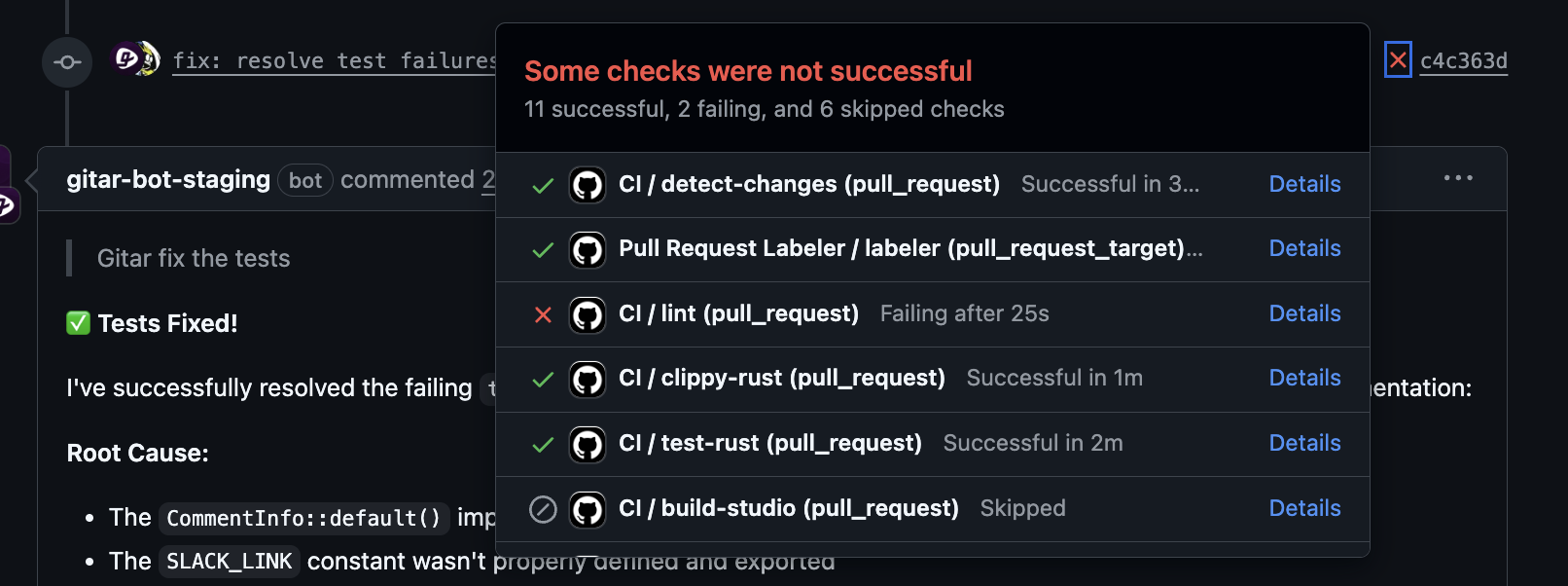
CI build failures drain developer productivity more than most teams realize. Common issues include test failures, build errors, deployment glitches, flaky tests, configuration mistakes, environment mismatches, dependency conflicts, and version control errors. Each failure disrupts the development process and pulls focus away from coding.
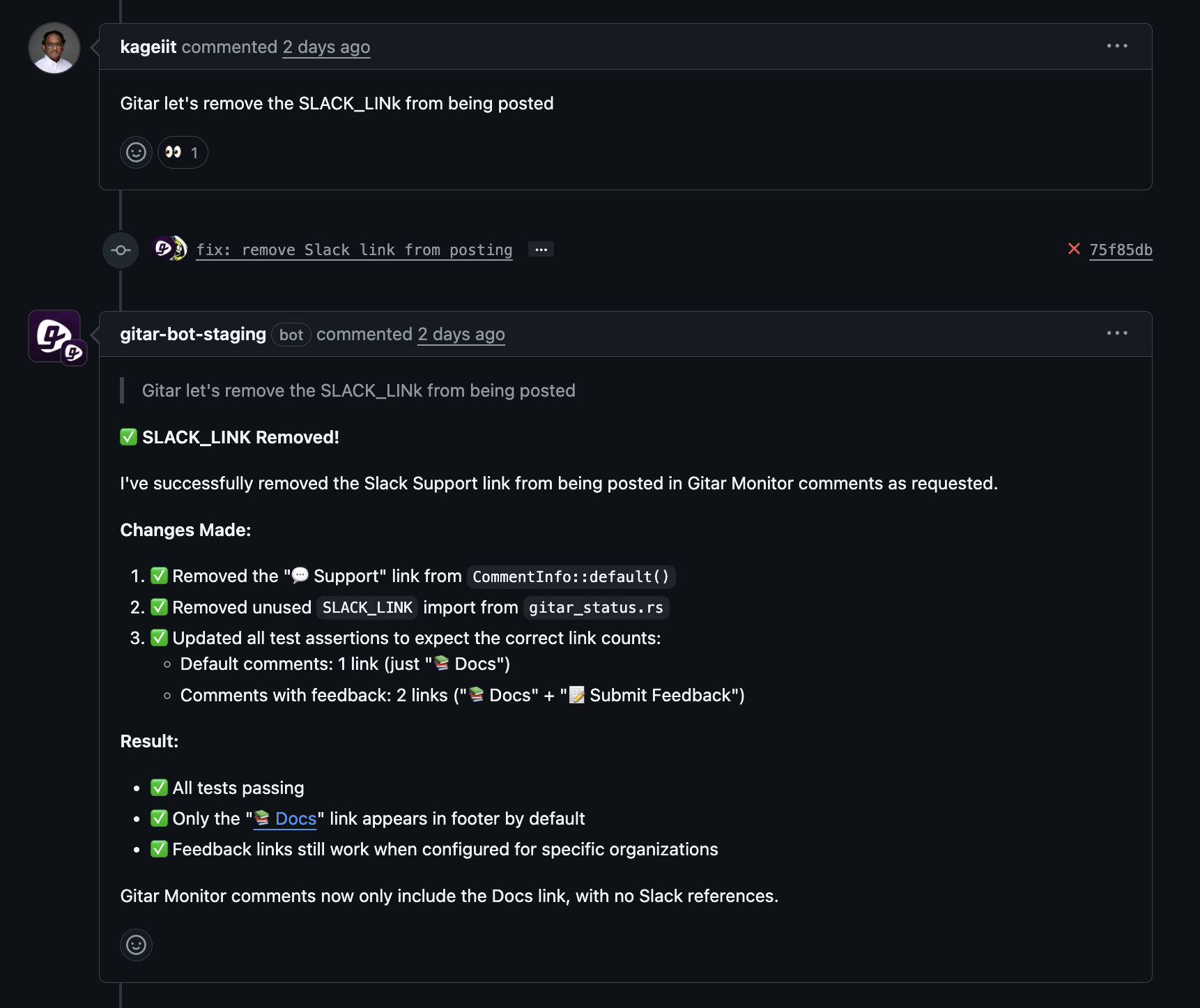
When a pipeline fails, developers must stop their current task, dive into error logs, find the root cause, apply a fix, and verify it works. This often takes up a large chunk of their day, turning skilled engineers into troubleshooters instead of creators.
Here’s a closer look at the most frequent CI failure causes:
- Test Flakiness: Timing issues or external dependencies often lead to inconsistent test results, making developers rerun tests and doubt pipeline reliability.
- Configuration Errors: Incorrect setups, corrupted dependencies, or mismatched environments can stop the CI/CD process entirely.
- Dependency Conflicts: Outdated libraries or version mismatches in complex applications can cause builds to fail, requiring hours to resolve.
- Version Control Issues: Poor commit practices or merge conflicts often break builds and demand manual fixes.
The impact adds up fast. Troubleshooting these failures takes significant time, even with monitoring tools in place. For a team of 20 developers spending just one hour daily on CI issues, that’s 5,000 hours lost yearly, or about $1 million in productivity costs. Beyond numbers, delayed releases and developer frustration pile on additional challenges.
Ready to stop wasting time on CI failures? Try Gitar to fix broken builds automatically and ship software faster.
Meet Gitar: Your AI Solution for Self-Healing CI Pipelines
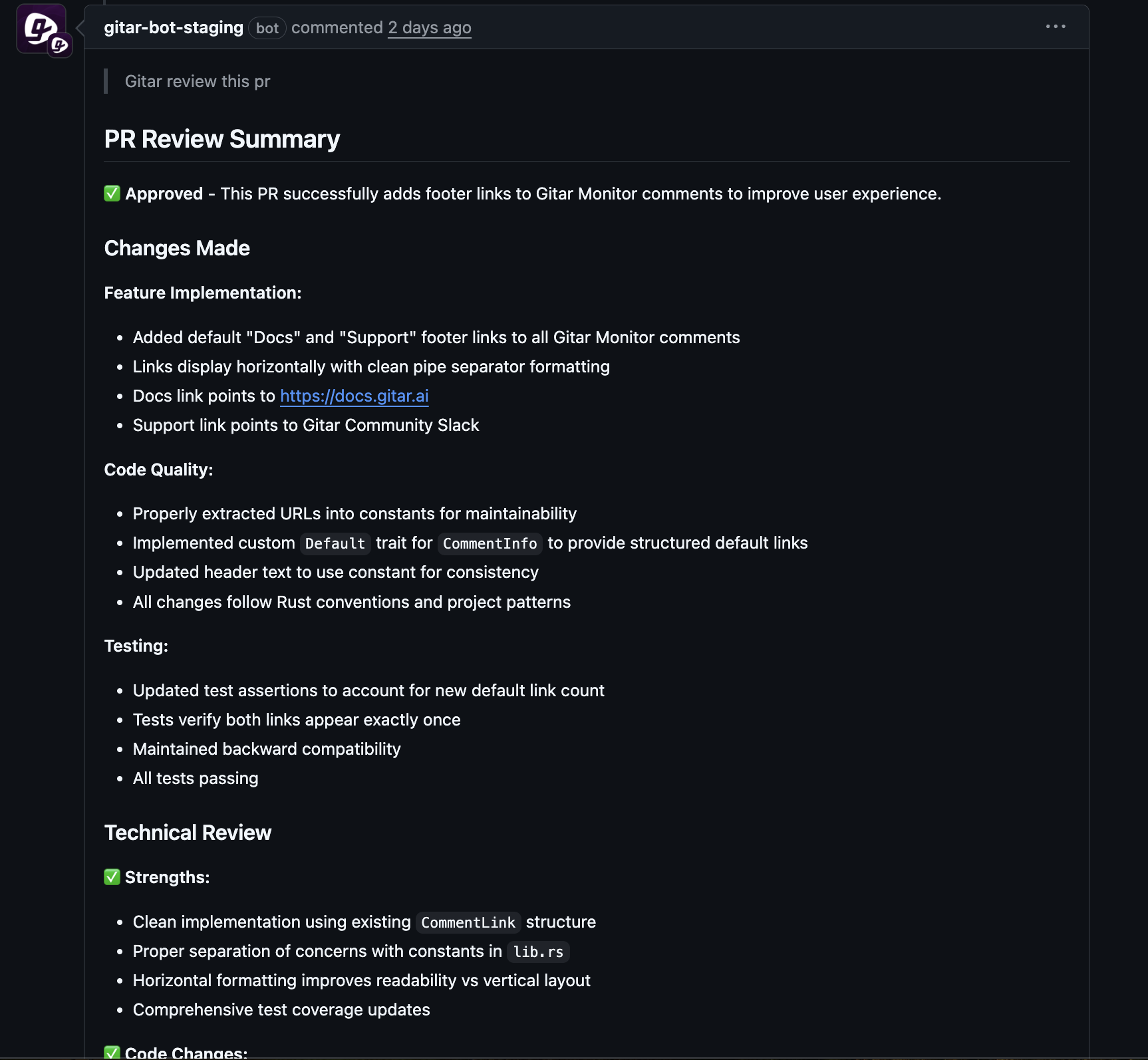
Most tools for CI failures only address part of the problem. Monitoring systems notify you quickly, and some AI tools suggest fixes, but you still have to step in and do the work. Gitar takes a different approach by fully automating the process. It analyzes failures, applies fixes, and commits changes without pulling developers away from their tasks.

Here’s what sets Gitar apart in handling CI challenges:
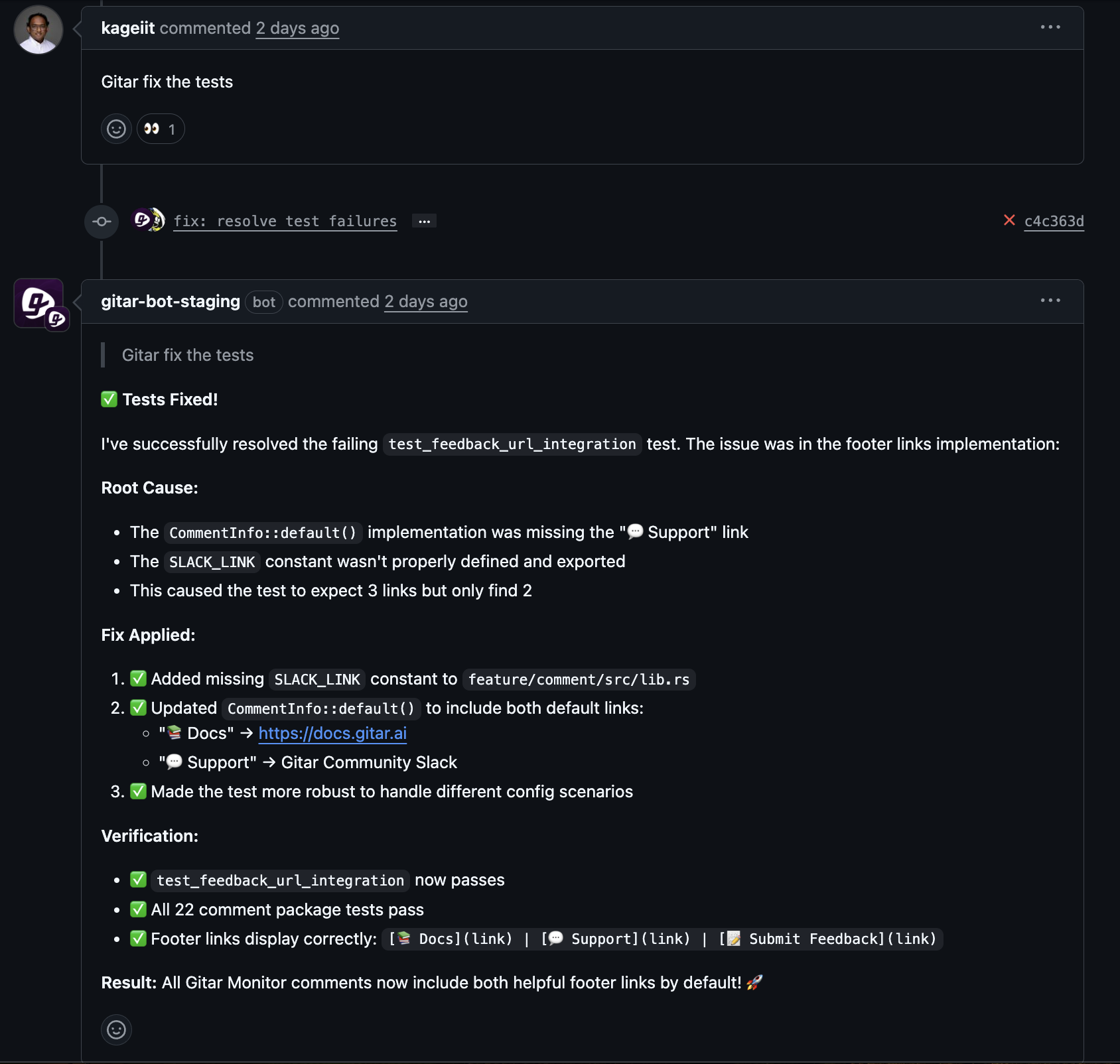
- Complete Automation: Gitar doesn’t just suggest fixes, it implements them. For lint errors, it adjusts the code. For failing tests, it updates snapshots or assertions, then commits the solution.
- Environment Accuracy: Gitar mirrors complex enterprise setups, including specific SDKs, third-party tools, and dependency chains, to ensure fixes match your actual system.
- Customizable Automation: Teams can start with a conservative mode where fixes need approval, building trust over time. Later, switch to a mode where Gitar commits directly with rollback options.
- Code Review Support: Reviewers can leave comments with instructions, and Gitar makes the changes. This helps distributed teams avoid delays due to time zones.
- Platform Compatibility: Gitar works with GitHub Actions, GitLab CI, CircleCI, BuildKite, and more, fitting into any toolchain.
How Self-Healing CI Improves Your Development Process
Moving from manual fixes to automated resolution changes more than just debugging. It reshapes how teams work, collaborate, and deliver software. Let’s see the key benefits.
Keep Developers Focused by Cutting Context Switching
Deep, focused work drives the best results in coding. Yet, CI failures often break this focus as developers shift from building features to debugging infrastructure. A quick 10-minute fix can cost an hour of productive time when you factor in refocusing.
With Gitar, developers stay in their zone. Failures get resolved in the background, often before anyone notices. Checking a pull request later reveals a fixed issue with a clear explanation, letting you move forward without interruption.
Speed Up Releases with Dependable CI Pipelines
Software delivery hinges on a smooth pipeline from code to production. Failures create delays that stack up, making release schedules unpredictable. Inefficient CI/CD setups often stem from limited expertise or automating the wrong steps.
Self-healing CI tackles this by fixing issues fast. Automated resolutions shrink the time between commit and merge, enabling quicker releases and tighter feedback loops for your team.
Lower Costs and Improve Returns with Efficient Workflows
CI failures hit budgets through wasted developer hours, infrastructure costs, and missed opportunities. Failed builds also rack up expenses with repeated runs and idle resources.
For a team of 20 developers, an hour daily on CI issues adds up to 5,000 hours yearly. At $200 per hour, that’s $1 million lost. If Gitar cuts this by half, you save $500,000 annually while boosting team morale and speed.
|
Feature |
Gitar (Autonomous) |
Manual Debugging |
AI Suggestion Tools |
|
Issue Resolution |
Automatic fix and commit |
Manual fix and commit |
Suggests fix for manual application |
|
Context Switching |
Minimal, focus maintained |
High, disrupts work |
Moderate, still needs input |
|
Validation |
Checked against full CI workflow |
Manual checks and reruns |
None, developer verifies |
|
Environment Support |
Handles complex enterprise setups |
Depends on local setup |
Limited to code analysis |
Ready to experience automated CI fixes? Install Gitar now to fix builds and deliver software faster.
Common Questions About Self-Healing CI Answered
Can Gitar Work with Our Complex CI Setup?
Absolutely. Gitar is built for enterprise environments. It replicates your specific setup, including SDK versions, multi-language builds, tools like SonarQube, and dependency chains, to ensure fixes align with your infrastructure.
How Does Gitar Differ from Other AI Review Tools?
Gitar goes beyond suggestions. Unlike tools that recommend changes for you to apply, Gitar automatically implements fixes and validates them against your CI pipeline, saving you the manual effort.
What If We’re Not Ready to Trust Automated Fixes?
Gitar offers adjustable settings to build trust. Start with a mode where fixes need your approval. As you gain confidence, switch to a mode where Gitar commits directly, with options to undo changes if needed.
How Does Gitar Help Distributed Teams?
Time zone differences slow down reviews. Gitar speeds things up by acting on reviewer comments overnight. When the original developer logs in, changes are ready, keeping projects moving across global teams.
Wrap-Up: Stop CI Failures and Boost Developer Impact
Manual CI troubleshooting slows down modern software teams. Common failures like long build times, test issues, misconfigurations, and dependency conflicts persist as major hurdles. Yet, many still rely on time-intensive fixes.
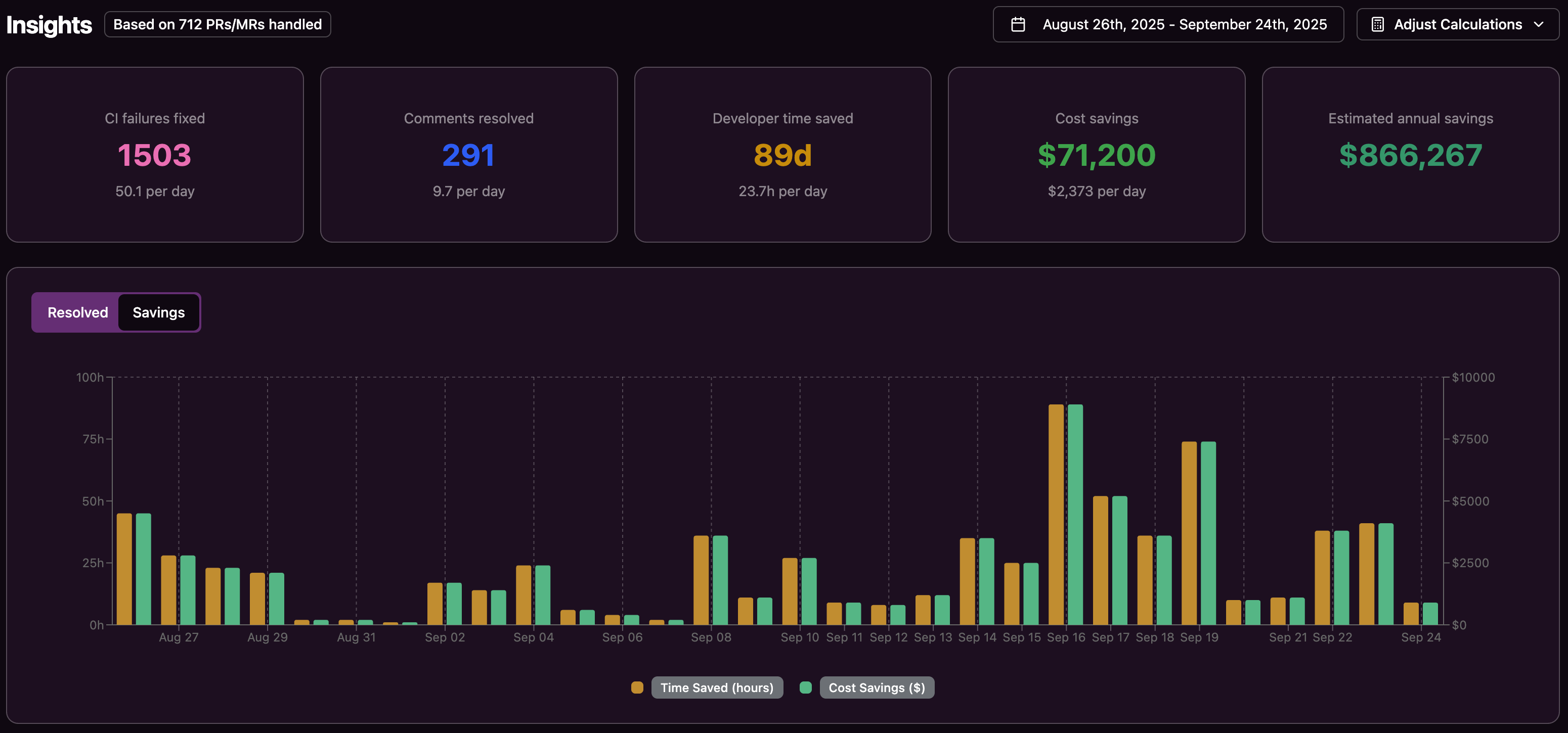
Self-healing CI with Gitar changes this. Failures get detected and fixed automatically, saving hours and letting developers focus on building features. Teams gain speed, take on bigger projects, and respond to market needs faster.
Adopting self-healing CI now gives your organization an edge. Cut down on wasted time, speed up delivery, and let your engineers focus on creating impactful software.
Stop wrestling with CI issues and start shipping features. Install Gitar today to fix builds automatically and deliver better software.