
Key takeaways
- A scalable automated testing infrastructure is essential in 2026 as AI-assisted coding increases release frequency and complexity.
- Traditional manual fixes and suggestion-only tools cannot keep up with multi-framework, cloud-native CI pipelines at enterprise scale.
- AI-driven healing engines like Gitar autonomously diagnose CI failures, apply validated fixes, and reduce costly context switching for developers.
- Platform engineering, ephemeral environments, and embedded security and compliance checks form the backbone of modern scalable testing infrastructure.
- Teams can adopt Gitar incrementally, quantify ROI in reclaimed developer time, and evaluate it in their own environment by installing Gitar for autonomous CI fixing.
The Evolving Landscape: Why Scalable Automated Testing Infrastructure Is Critical
The Pressures of Modern Software Delivery
Development velocity continues to rise as AI-assisted coding accelerates feature delivery. Self-healing automation and autonomous testing are identified as core testing trends for 2026, yet many teams still face a developer productivity crisis. Studies indicate that developers can lose up to 30% of their time to CI failures and code review cycles, creating a costly context switching tax when they move between focused work and routine CI firefighting.
Limitations of Traditional Approaches for Scalable Testing
Manual fixes and static, suggestion-only tools struggle in modern, distributed environments. Automation stacks are shifting from single-framework to multi-framework approaches, which increases orchestration complexity. Traditional tools often lack the intelligence to handle dynamic dependencies, varied SDK versions, and third-party integrations across multiple platforms.
Current Trends Shaping Testing Infrastructure
Cloud-based cross-browser and cross-platform testing continues to grow because it offers elastic scaling, broad device coverage, and usage-based pricing. Teams also embrace shift-left testing, ephemeral environments managed through containers and infrastructure-as-code, and AI-first quality engineering that embeds intelligence throughout the development lifecycle.
Gitar’s Autonomous Approach to Scalable Automated Testing Infrastructure
Introducing Gitar: The AI-Driven Healing Engine for CI
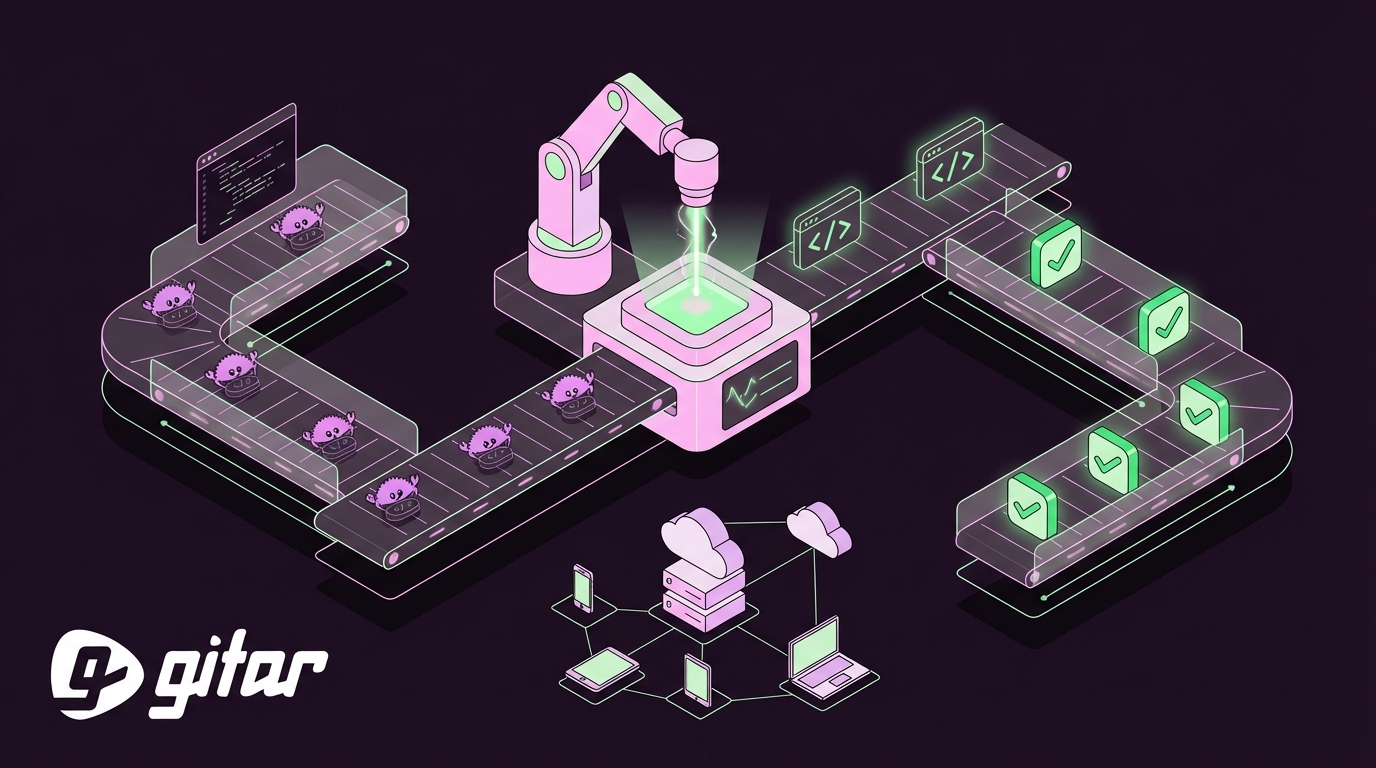
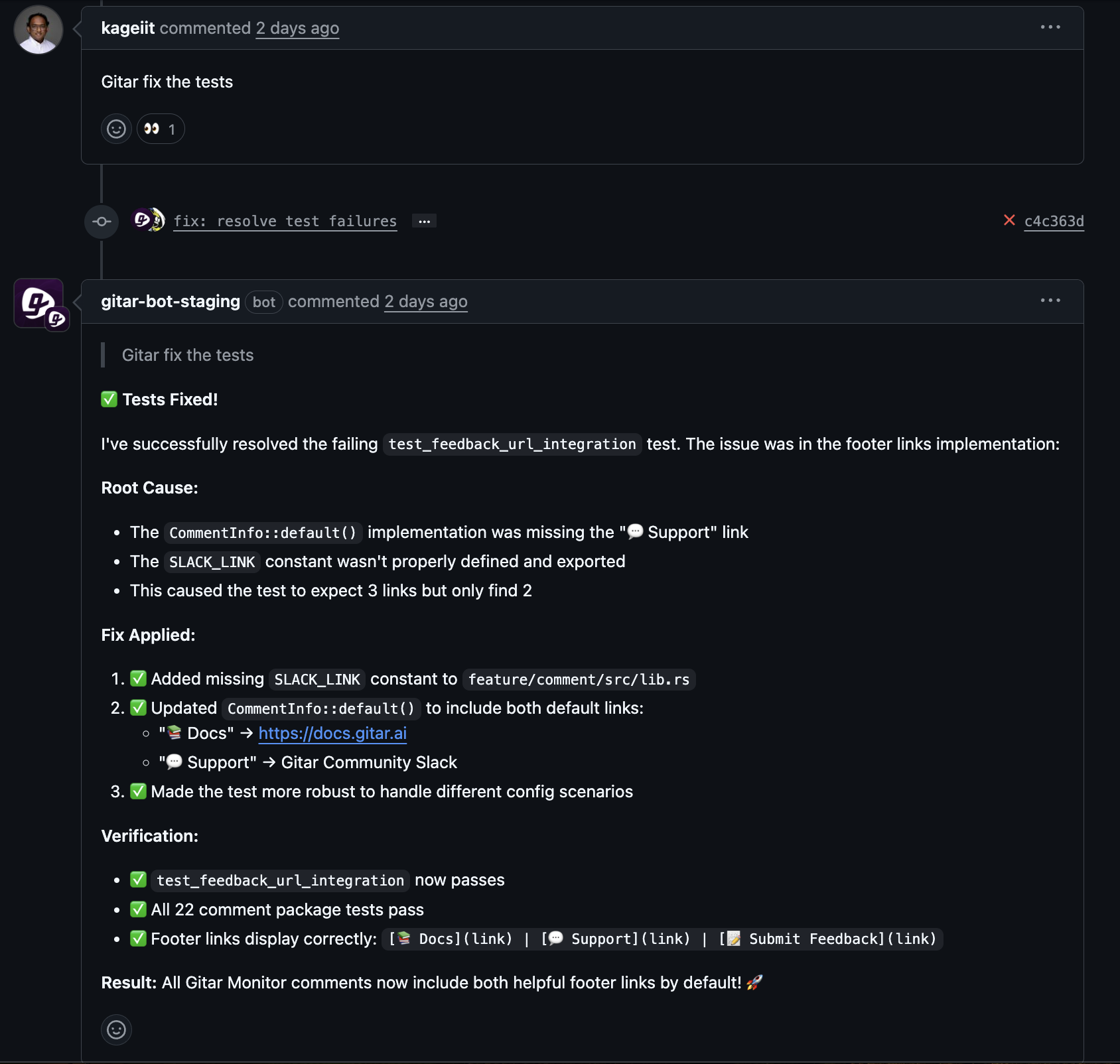
Gitar moves beyond suggestion engines to operate as an autonomous healing engine for CI. The system analyzes CI failures, identifies root causes, generates code fixes, and validates those fixes against full CI workflows. This turns many manual debugging sessions into automated resolution flows that keep builds green with minimal intervention.
Core Capabilities for Building Reliable CI/CD at Scale
Gitar focuses on correctness and reliability in real-world enterprise pipelines. Key capabilities include:
- End-to-end autonomous fixing that applies changes, runs the full CI workflow, and surfaces only passing pull requests.
- Full environment replication that mirrors SDK versions, multi-SDK dependencies, and tools such as SonarQube and Snyk.
- Configurable trust modes that allow teams to start with review-required suggestions and move toward auto-commits with rollback options.
Impact on Developer Productivity and Team Velocity
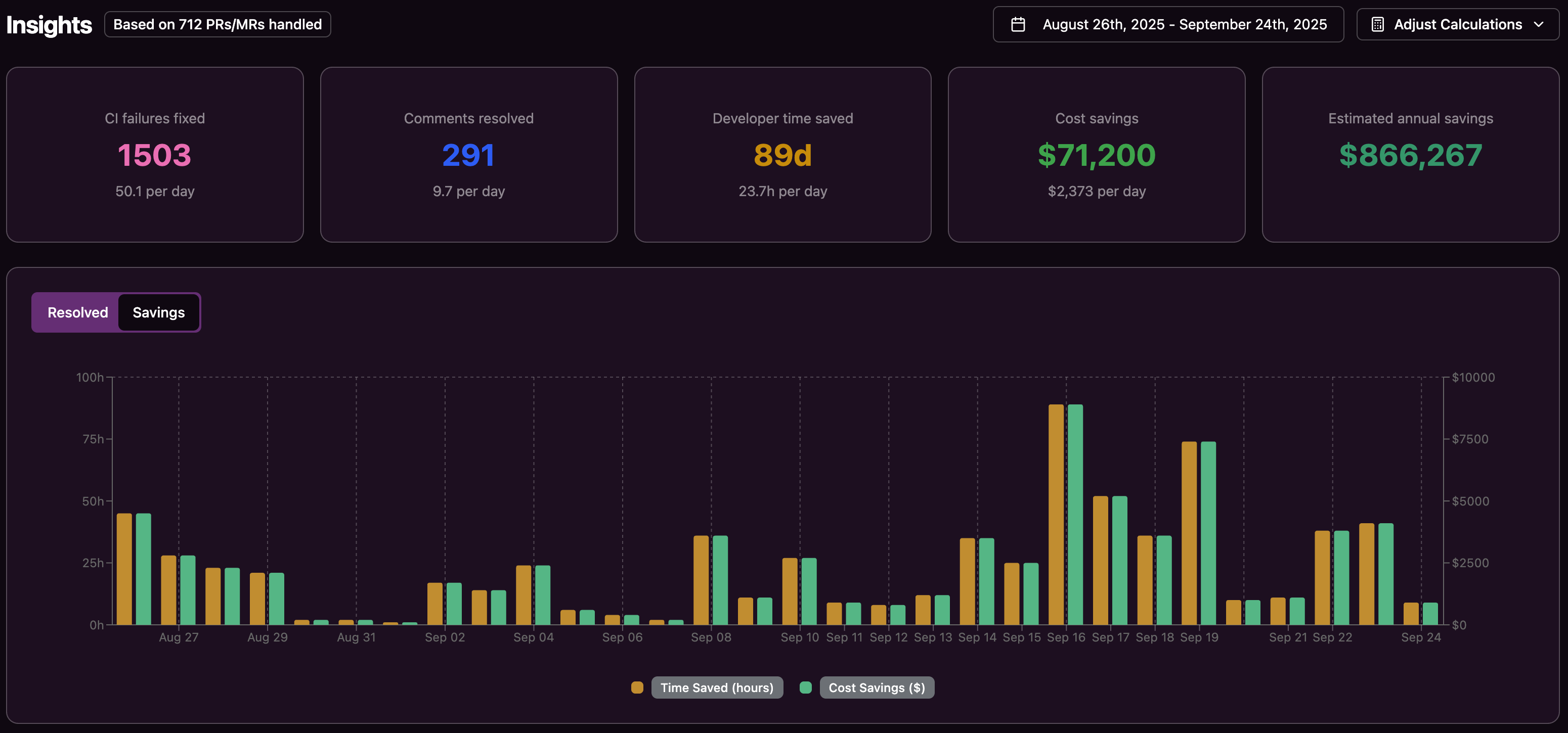
Gitar reduces context switching by handling many CI failures without requiring developers to pause feature work. For a 20-developer team, reclaiming even half of one hour per developer per day can represent roughly $500K in annual productivity gains, while also reducing burnout from repetitive debugging. Teams can evaluate this impact in their own pipelines by installing Gitar to automatically fix broken builds.

Strategic Implementation of Scalable Automated Testing Infrastructure
Build vs. Buy Decisions in the AI Era
Engineering leaders must balance control with time-to-value. Building an internal AI agent for CI requires robust context management, event handling, execution coordination, and security. These capabilities demand ongoing investment and specialized skills. Gitar offers a ready-made platform that includes this infrastructure, which can reduce risk and shorten adoption timelines.
Organizational Readiness and Change Management
Teams benefit from planning how roles and workflows will evolve as AI takes on more execution tasks. AI-native testing platforms are emerging as core infrastructure, shifting testers toward orchestration, governance, and curation of AI-driven automation rather than manual execution. Clear communication and phased rollouts help build trust in autonomous changes.
Calculating ROI for Advanced Automation
Return on investment often centers on reduced developer toil and faster delivery. If a 20-developer team spends one hour per day on CI and review issues, that can approach 5,000 hours per year. At a loaded cost of $200 per hour, this equates to $1M in productivity. Cutting that time in half through autonomous fixing yields about $500K in annual savings while improving delivery predictability.
The Role of Platform Engineering
Platform engineering teams increasingly provide internal platforms that standardize environments, pipelines, and test orchestration. Integrating Gitar into these platforms allows organizations to pair ephemeral environments and infrastructure-as-code with autonomous CI healing, giving developers consistent, self-service workflows.
Common Pitfalls in Scaling Test Automation
Many teams encounter similar obstacles when scaling automation. Typical pitfalls include:
- Underestimating the complexity of building and maintaining AI agents for CI.
- Relying on suggestion-only tools that lack validation in real workflows.
- Overlooking cross-platform compatibility and integration with security, quality, and coverage tools.
- Ignoring concurrency, asynchronous events, and state consistency in noisy CI environments.
The Future of Scalable Automated Testing Infrastructure: Key Trends for 2026
AI-First Quality Engineering
AI-first quality engineering is moving into mainstream adoption. Automation now includes decision-making and orchestration, not just scripting. This shift supports continuous quality across planning, development, testing, and operations.
Cloud-Native and Ephemeral Environments
Ephemeral, container-based environments that mirror production for each branch or pull request are becoming a best practice. Combined with cloud platforms, this pattern enables scalable, parallel execution and helps teams run large test suites in parallel without configuration drift.
Agentic AI and Orchestration
Autonomous agents are taking on more CI/CD responsibilities. Self-healing automation and autonomous testing capabilities reduce manual intervention and increase pipeline resilience. Gitar applies this model directly to CI failures, turning many operational tasks into managed, automated workflows.
Security and Compliance Automation
Compliance-focused automated testing is gaining importance in sectors such as banking, fintech, healthcare, and data protection. Modern infrastructures integrate security scanning, privacy checks, accessibility validation, and auditability into CI/CD, rather than treating them as separate steps.
Gitar vs. The Status Quo: Achieving Scalable Automated Testing Infrastructure
The Cost of Manual Intervention
Manual handling of CI failures leads to delays, context switching, and higher costs. Developers may spend a significant portion of their week diagnosing flaky tests, misconfigurations, and integration issues. For a 20-developer team, this can approach $1M annually in lost productivity.
Comparison: Healing Engines (Gitar) vs. Suggestion Engines and Manual Processes
|
Feature Category |
Gitar (Healing Engine) |
Suggestion Engines |
Manual Intervention |
|
Automation Level |
Configurable autonomous execution |
Passive suggestions only |
No automation |
|
CI Integration |
Replicates environments, applies, and validates fixes |
Suggests code, human applies and validates |
The developer runs and inspects CI manually |
|
Developer Impact |
Reduces context switching and accelerates merges |
Leaves significant manual work and interruptions |
High context switching with slow feedback loops |
|
Cost Efficiency |
Direct savings from reduced toil and faster releases |
Indirect savings from earlier defect detection |
Ongoing cost tied to developer hours |
Teams that want to reduce CI toil and stabilize pipelines can evaluate Gitar in their existing workflows.
Frequently Asked Questions (FAQ) on Scalable Automated Testing Infrastructure
Impact of AI-driven self-healing automation on CI/CD velocity and costs
AI-driven self-healing automation improves CI/CD velocity by taking over many failure analysis and fixing tasks. The AI identifies root causes, proposes and applies fixes, and verifies them in the full pipeline. This reduces manual effort, shortens feedback loops, and frees developer capacity for feature work, which lowers delivery costs.
Support for complex CI setups with unique, multi-platform dependencies
Scalable automated testing solutions must accurately mirror complex enterprise CI environments. Gitar replicates specific SDK versions, multi-SDK dependencies, and integrations with tools such as SonarQube and Snyk. This approach helps ensure that generated fixes align with each organization’s workflows and constraints, even in heterogeneous, multi-platform stacks.
Managing trust in autonomous code changes with Gitar
Trust is managed through configurable workflows. Teams can start in a conservative mode where Gitar posts fixes as suggestions that require explicit developer approval. After observing consistent behavior and results, teams can shift to a more automated mode, where verified fixes are committed with rollback options available. This staged model supports gradual adoption.
Role of ephemeral test environments and cloud-native platforms in scalability
Ephemeral test environments and cloud-native platforms make scalable testing practical. Short-lived, production-like environments per branch or pull request reduce shared-environment contention and configuration drift. Combined with elastic infrastructure, they enable parallel test execution, faster feedback, and more predictable CI runs.
Approach to security and compliance in scalable testing infrastructures
Modern infrastructures integrate security and compliance checks directly into CI/CD pipelines. This includes automated validation of encryption, audit trails, consent handling, accessibility, and privacy requirements. Embedding these checks into routine workflows improves coverage, supports regulatory obligations, and reduces the risk of last-minute compliance issues.
Conclusion: Accelerate Delivery with an Autonomous, Scalable, Automated Testing Infrastructure
The direction of software delivery in 2026 favors organizations that pair scalable, cloud-native infrastructure with AI-driven automation. By 2026, test automation will have become a baseline expectation rather than an optional enhancement, especially for teams working with complex, multi-repository systems.
Gitar applies autonomous, self-healing capabilities directly to CI pipelines, helping teams reduce toil, improve stability, and maintain delivery speed as systems grow. Organizations that want to explore this model in their own environment can request a Gitar demo and assess its impact on their CI/CD workflows.