
CI/CD pipelines are essential for fast-paced software development, but failures slow down progress. This article explores the real challenges of manual fixes, including developer stress and high costs, while highlighting how autonomous automation can solve these issues. You’ll see how self-healing CI systems improve efficiency and support scaling for engineering teams.
Why Manual CI/CD Fixes Fail at Scale
Manual fixes for CI/CD pipelines create major bottlenecks, draining time and resources as teams and codebases grow. These issues compound, impacting productivity and costs across entire organizations.
How CI Failures Disrupt Developer Focus
CI failures pull developers away from their core work, breaking their focus. Up to 30% of a developer’s time can be wasted on CI and code review problems. This isn’t just about lost hours, it’s about the mental toll of constant interruptions.
Switching tasks to fix a CI issue, like decoding error logs or replicating problems, can stretch a quick fix into a significant delay. Often, failures only occur in shared CI environments due to factors like network delays or outdated dependencies. Code that runs fine locally fails in CI, creating frustrating debug cycles.
Additionally, lengthy pipelines discourage frequent commits, slowing development pace and lowering morale. Developers batch changes into larger pull requests, which are tougher to review and more prone to errors.
Costly Delays and Operational Strain for Leaders
CI failures hit engineering leaders hard with substantial financial impacts. A 20-person team spending one hour daily on CI issues can lose around $1 million yearly in productivity, based on typical developer costs of $200 per hour.
These delays have broader consequences. About 60% of companies lose revenue and market position due to delayed projects. Falling behind in today’s tech landscape can cost competitive ground.
Costs rise further with poor pipeline setups, unclear ownership, and testing delays that extend resolution times. Without accountability, teams waste effort on blame instead of fixes, turning CI issues into shared frustration.
Discover how Gitar can automate fixes for broken builds and help ship quality software faster.
CI/CD Bottlenecks Slowing Down DevOps Teams
Tools like GitHub Copilot speed up coding, but CI/CD validation and merging remain bottlenecks. This shift makes pipeline failures a bigger obstacle to development speed.
DevOps teams struggle with managing multiple pipelines, complicating failure analysis and resolution. A single issue in large setups can affect various teams, requiring deep expertise to resolve.
There’s also the risk from single points of failure, like expired tokens or downed services, which can stop delivery and demand immediate attention. Senior engineers often get pulled into urgent fixes, diverting them from strategic priorities.
Empowering Teams with Autonomous CI Repair
Autonomous CI repair shifts the approach from manual fixes to intelligent automation. It tackles the core issues of CI/CD bottlenecks, ensuring reliability and security without constant human input.
Understanding Autonomous CI Repair and Self-Healing Systems
Autonomous CI repair, or self-healing CI, uses smart automation to go beyond just pointing out problems. These systems analyze failures, create fixes, test them in full CI environments, and apply solutions without developer involvement.
This directly handles common issues like flaky tests, build errors, deployment failures, and dependency clashes. Unlike older tools, autonomous repair cuts down on manual effort and errors by completing the entire fix process.
Scaling CI/CD with Automation for Growth
For growing organizations, autonomous CI repair is a critical need, not an optional tool. As teams expand and code gets complex, manual pipeline maintenance becomes impractical.
Faster pipelines see clear benefits. Teams with pipelines under 10 minutes deploy twice as often compared to slower setups. Automation removes the cycle of failure and retry, speeding up workflows.
Resilience also improves with redundancy and elimination of critical failure points. For distributed teams, early checks and quick feedback loops prevent delays across time zones.
Gitar: Driving Autonomous CI for Scalable Automation
Gitar advances CI/CD automation by offering true autonomous repair. As an AI-driven agent, it fixes failing pipelines and addresses code review feedback, turning reactive maintenance into proactive resolution.

Complete Fix Automation Beyond Suggestions
Gitar goes past mere suggestions, offering full repair for CI failures. It detects issues like linting errors or test fails, creates fixes, applies them, and commits changes to the pull request branch. Developers can focus on coding while Gitar resolves pipeline problems automatically.
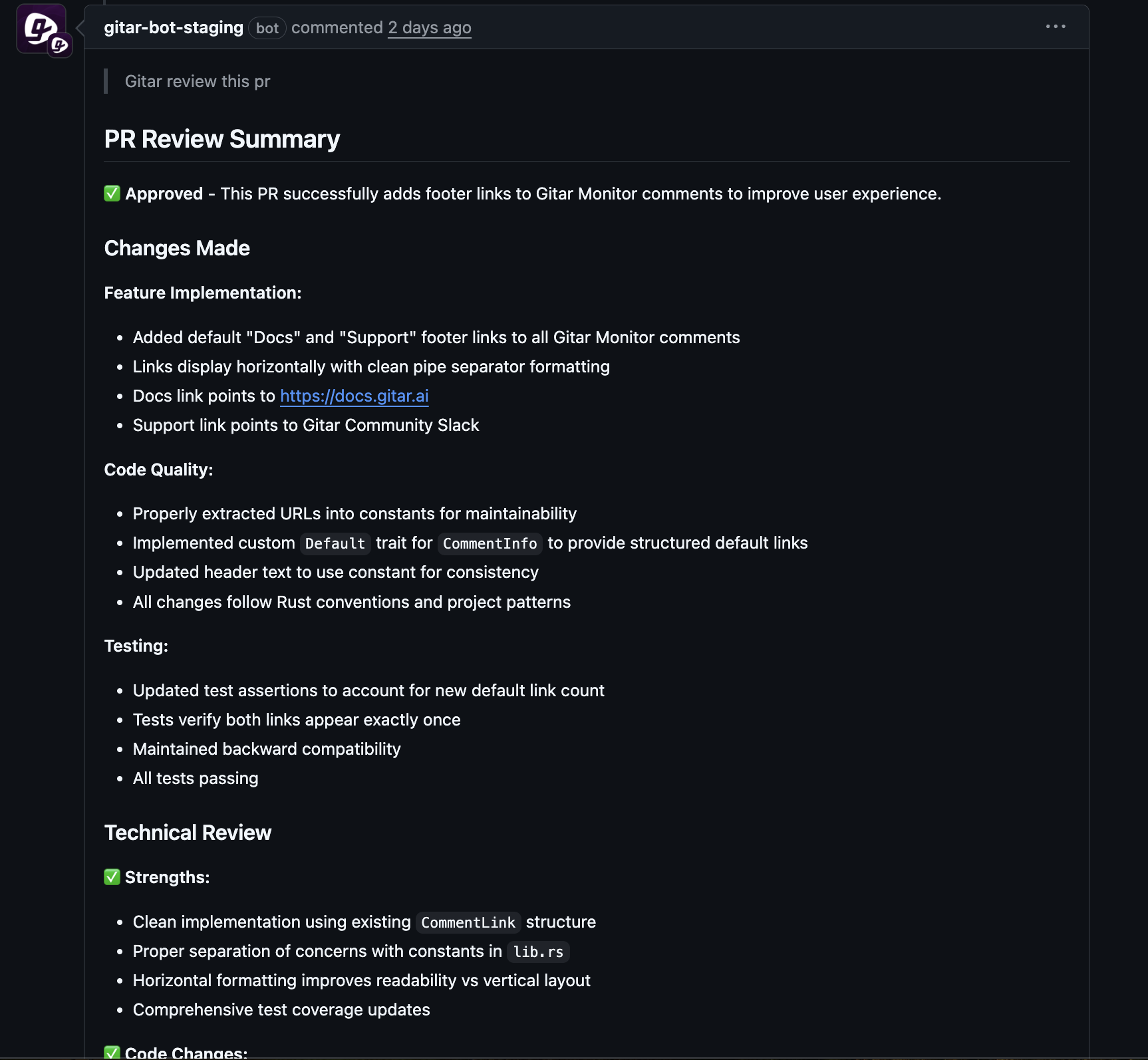
Matching Complex Enterprise CI Environments
Enterprise CI setups often involve varied SDKs, third-party tools, and custom rules. Gitar replicates these environments fully, creating fixes that align with specific versions and integrations like SonarQube, ensuring compatibility and reducing errors.
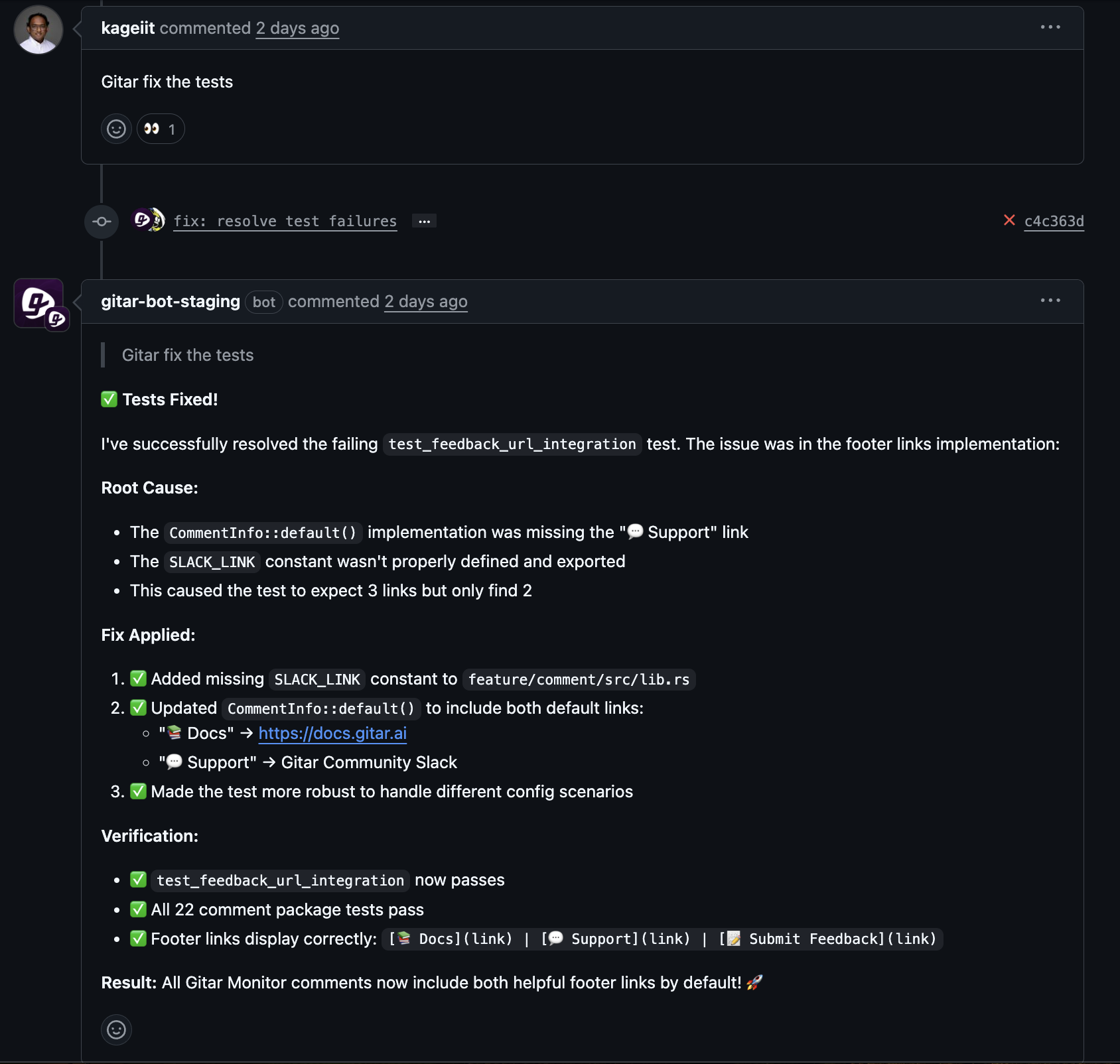
Speeding Up Reviews Across Time Zones
Gitar streamlines code reviews for distributed teams. Reviewers can tag Gitar for initial feedback or to apply changes based on comments. Fixes are ready for approval without waiting across time zones, cutting delays significantly.
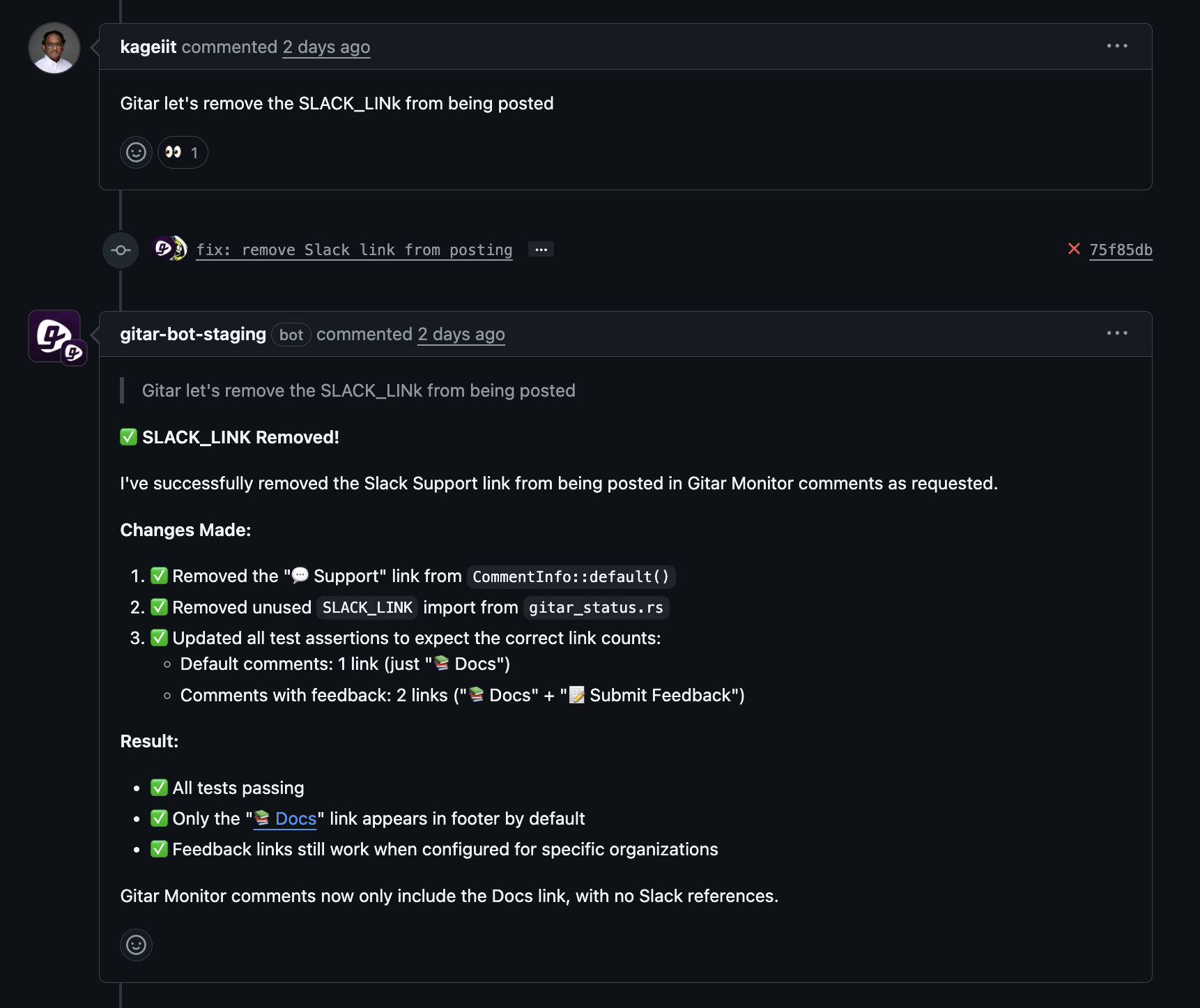
Working Across Different CI/CD Platforms
Gitar integrates with various CI/CD systems, including GitHub Actions, GitLab CI, and CircleCI. This flexibility suits organizations with mixed tools, allowing automation benefits without workflow disruptions.
Building Trust with Adjustable Automation Levels
Gitar offers a customizable trust model to ease teams into automation. Start with a cautious setting where fixes need approval, then move to automatic commits with rollback options as confidence grows. This balances control with efficiency.
Try Gitar to scale CI repair and fix broken builds automatically.
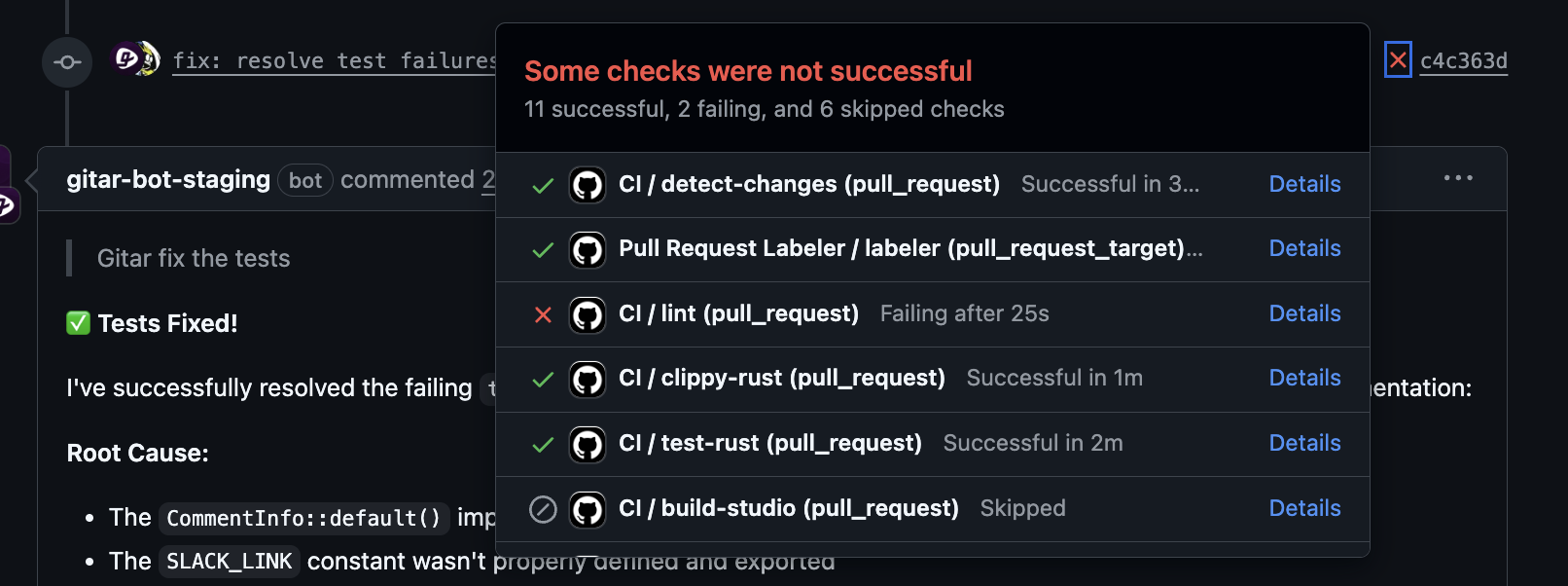
Healing vs. Suggesting: Why Gitar Stands Out
Many CI/CD tools offer suggestions, but few deliver full repairs. Gitar’s healing approach completes the fix process, setting it apart for teams aiming to scale automation effectively.
Gitar’s Full Repair Compared to Other Methods
|
Feature/Capability |
Gitar (Autonomous CI Healing) |
Traditional Manual Fixes |
AI Code Reviewers |
|
Problem Solved |
CI failures, Code Review feedback |
CI failures, Code Review feedback |
Code quality, review efficiency |
|
Core Functionality |
Autonomous fix, validate, commit |
Manual debug, code, commit |
Suggest improvements, detect issues |
|
Validation Against Full CI |
Yes |
Manual re-runs |
No (suggestions only) |
|
Context Switching Eliminated |
Yes (fixes in background) |
No (requires interruption) |
No (requires action) |
|
Feature/Capability |
On-Demand AI Fixers |
IDE Coding Assistants |
|
|
Problem Solved |
Specific CI failure guidance |
Code generation, pre-commit errors |
|
|
Core Functionality |
Suggest fixes, manual application |
Code completion, inline fixes |
|
|
Validation Against Full CI |
Limited, often context-free |
No (local only) |
|
|
Context Switching Eliminated |
No (manual effort needed) |
Limited (pre-commit only) |
Gitar closes the gap by autonomously validating and applying fixes, unlike suggestion tools that leave final steps to developers.
Addressing Concerns About Autonomous CI Fixes
Adopting autonomous CI repair can raise valid questions. Clear answers and flexible options help teams embrace this shift confidently.
Our Team Already Uses AI Review Tools Like CodeRabbit
AI reviewers improve code quality, but they often need manual steps to apply fixes. Gitar automates the entire process, testing solutions in full CI setups and committing them without extra effort.
We’re Hesitant to Trust Automated Fixes for Key Pipelines
Trust takes time, so Gitar offers adjustable settings. Begin with manual approval for fixes, then scale up automation as you gain confidence in the system.
Our CI Setup Is Unique with Legacy Systems
Gitar handles complex setups, including legacy systems, by fully replicating environments. It accounts for specific SDKs and custom tools, ensuring accurate fixes.
See how Gitar adapts to complex CI environments with autonomous fixes.
Common Questions About Autonomous CI Repair
How Does It Support Scalability in Multi-Pipeline Setups?
Autonomous CI repair enables scalability by automating fixes for routine failures. This frees specialists to focus on optimizing pipelines and enhancing infrastructure.
Can It Manage Legacy Code and Dependency Issues?
Yes, solutions like Gitar excel with complex setups, mimicking specific environments to address legacy code and dependency conflicts accurately.
What Returns Can Leaders Expect from Implementation?
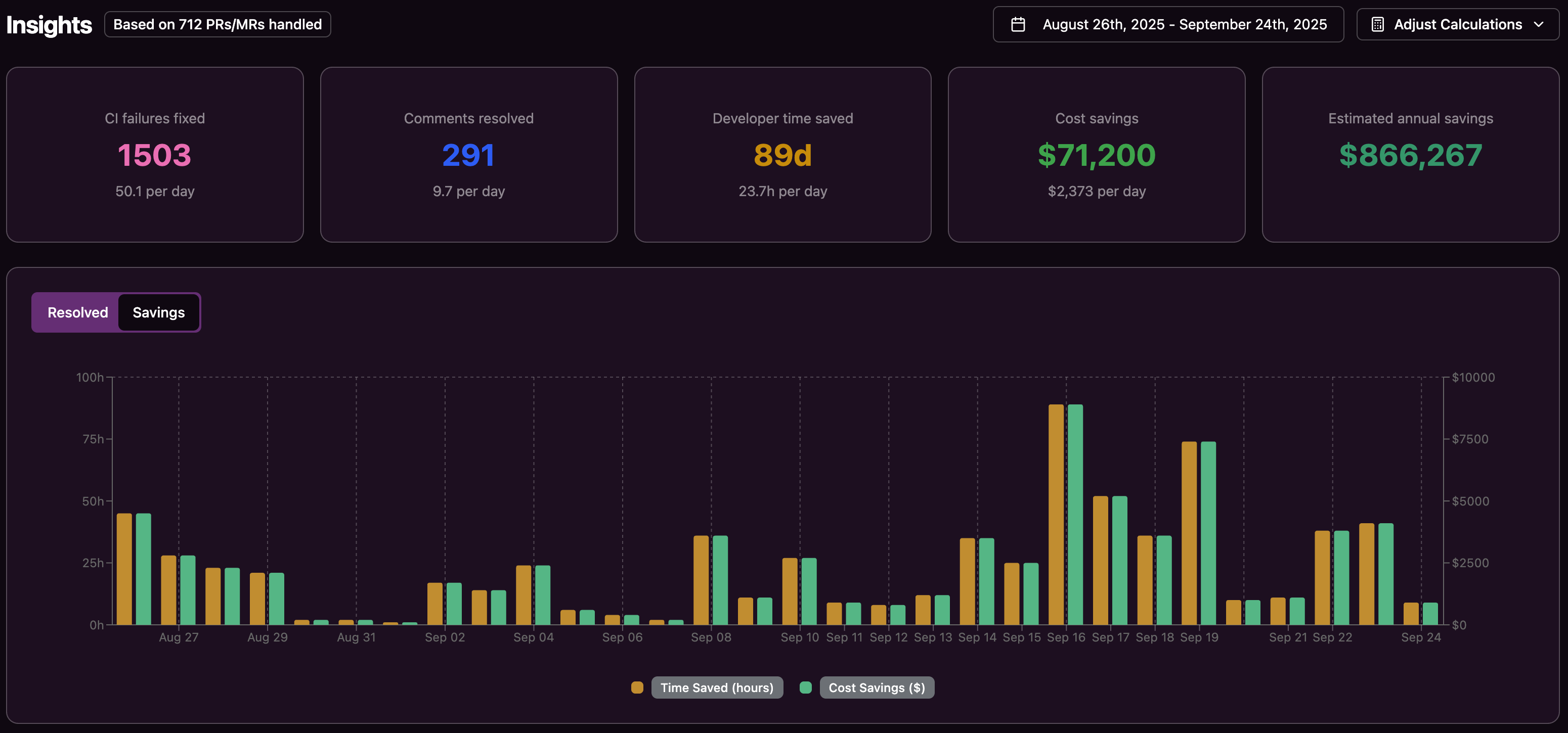
For a 20-developer team losing $1 million yearly to CI issues, automating half of these fixes with Gitar could save $500,000 annually, boosting speed and morale.
How Does It Ensure Security in Enterprise Pipelines?
Gitar integrates with security tools, logs all actions for audits, and provides oversight options. Rollback features allow quick recovery if issues occur.
Conclusion: Autonomous CI with Gitar Is the Future
Manual CI/CD fixes can’t keep up with scaling needs. Autonomous repair frees developers for impactful work by ending constant pipeline troubleshooting.
Gitar offers complete resolution, overcoming the limits of suggestion tools. It’s a vital choice for teams aiming for efficient, scalable CI/CD systems.
Engineering leaders can gain productivity, cut costs, and build reliable workflows by adopting Gitar for faster, dependable software delivery.
Start using Gitar to enhance your CI/CD pipelines and boost developer productivity today.