
Engineering teams face a growing challenge with productivity. While AI tools have sped up coding, the real hurdle now is getting code through CI pipelines and reviews. Developers spend up to 30% of their time fixing CI failures and addressing feedback. This wastes resources, delays projects, and costs companies millions each year. It also slows market delivery, raises costs, and leads to developer frustration. Autonomous CI fixes offer a solution by resolving issues automatically. Gitar’s technology turns hours of manual work into a fully automated process, saving time, reducing costs, and improving team output.
Why Broken CI and Manual Reviews Hurt Productivity
Modern development workflows often stall due to frequent interruptions. Developers push a pull request, only to face failing builds from missing dependencies, flaky tests, or minor style issues. This starts a cycle of checking logs, switching tasks, fixing problems, and waiting for the CI pipeline to rerun.
These small delays add up to significant financial losses. For a team of 20 developers, spending just one hour daily on CI and review issues costs about $1 million yearly. This estimate uses a loaded cost of $200 per hour per developer over 250 working days, totaling 5,000 hours of lost time.
Context switching creates an even deeper impact. After submitting a pull request, developers move to other tasks and build focus. A sudden CI failure or feedback pulls them back, disrupting their flow. A quick 30-minute fix can take over an hour when accounting for lost momentum.
For distributed teams, time zone differences make delays worse. A simple exchange between colleagues in different regions, like the US West Coast and Bangalore, can stretch from hours to days. Traditional AI tools add to this by offering suggestions that still need manual effort, prolonging the process.
Install Gitar now to fix broken builds automatically and ship better software faster.
What Are Autonomous CI Fixes and Why They Matter
Autonomous CI fixes mark a shift in handling development challenges. Unlike older AI tools that only suggest solutions, these systems act as healing engines, identifying and fixing issues without human input.
Standard AI review tools point out problems and propose changes, but developers must still apply and test them. This keeps the workload on the team, causing delays and potential errors while switching tasks. Autonomous systems handle everything, from analyzing failures to applying and validating fixes in the CI environment.
The difference is clear in the workflow. Suggestion-based tools require developers to review, implement, test, commit, and push changes. Autonomous fixes complete all these steps independently, delivering ready-to-merge pull requests with passing builds.
This approach tackles the growing volume of code and pull requests driven by AI coding tools. Tools like GitHub Copilot can speed up coding by 55%, but they also increase the need for efficient validation and integration.
How Gitar Solves CI Challenges with Automation
Gitar provides a robust solution for autonomous CI fixes, acting as a healing engine that resolves issues without manual effort. It goes beyond suggestions to maintain a healthy CI pipeline through continuous automation.

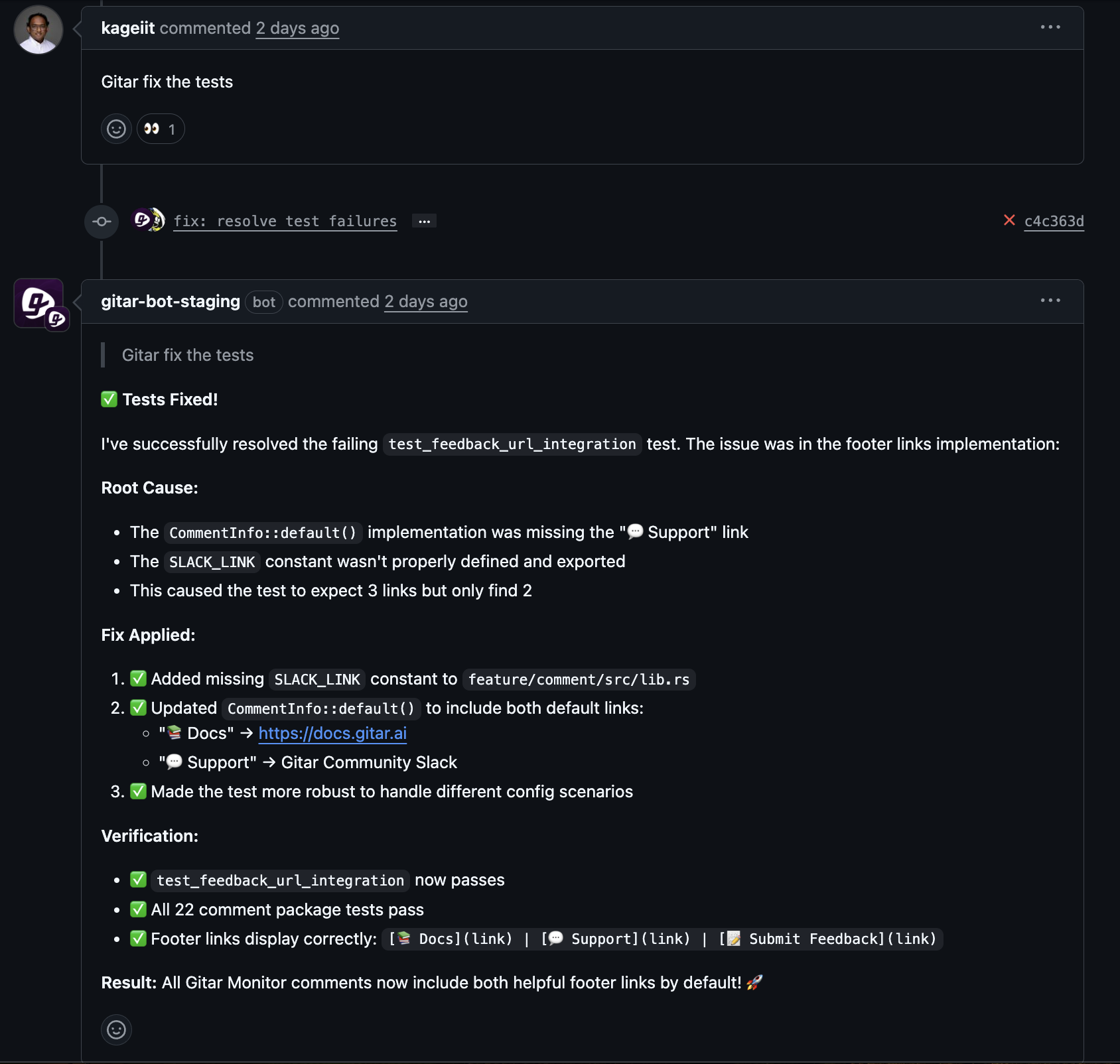
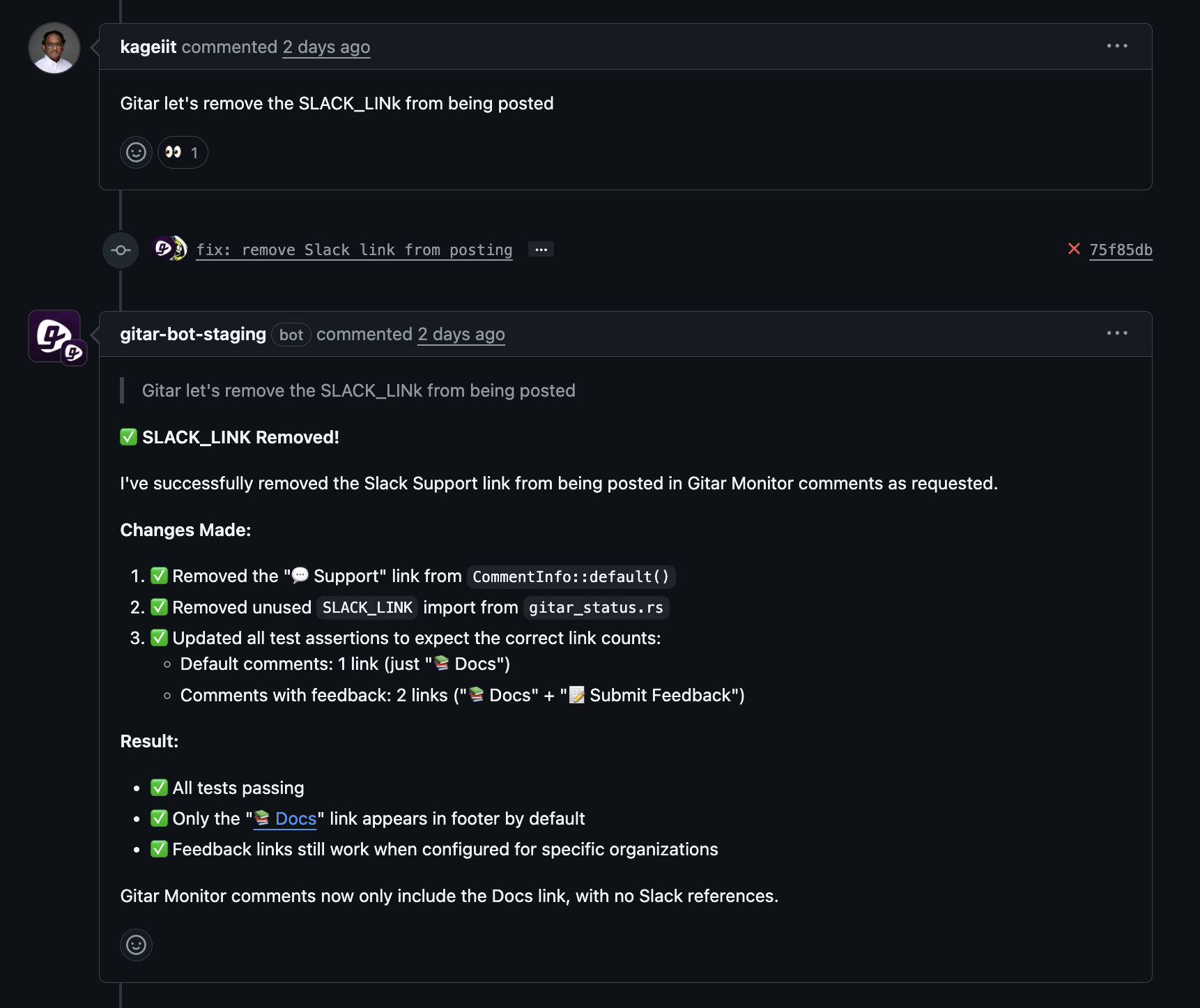
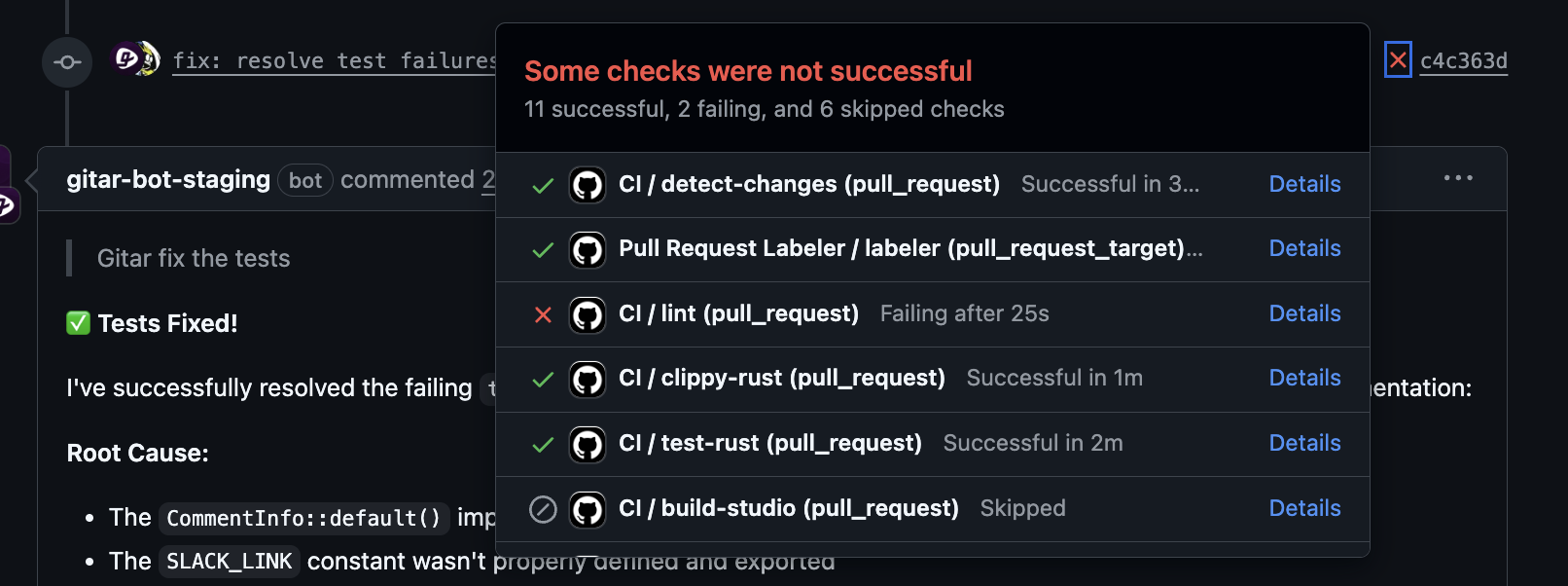
When a CI check fails, whether from a lint error, test issue, or build problem, Gitar steps in. It analyzes the error, creates a fix, applies it to the pull request, validates it against the full CI setup, and confirms all checks pass before notifying the developer. This cuts out repetitive manual steps.
Gitar’s main features include:
- Complete issue resolution, applying fixes directly and validating them for green builds.
- Accurate replication of complex environments, matching specific SDKs, dependencies, and security tools.
- Flexible automation settings, from suggestions needing approval to full auto-fixes as trust grows.
- Support for human feedback, turning review comments into code changes without developer effort.
- Compatibility with platforms like GitHub, GitLab, and CircleCI for varied tech setups.
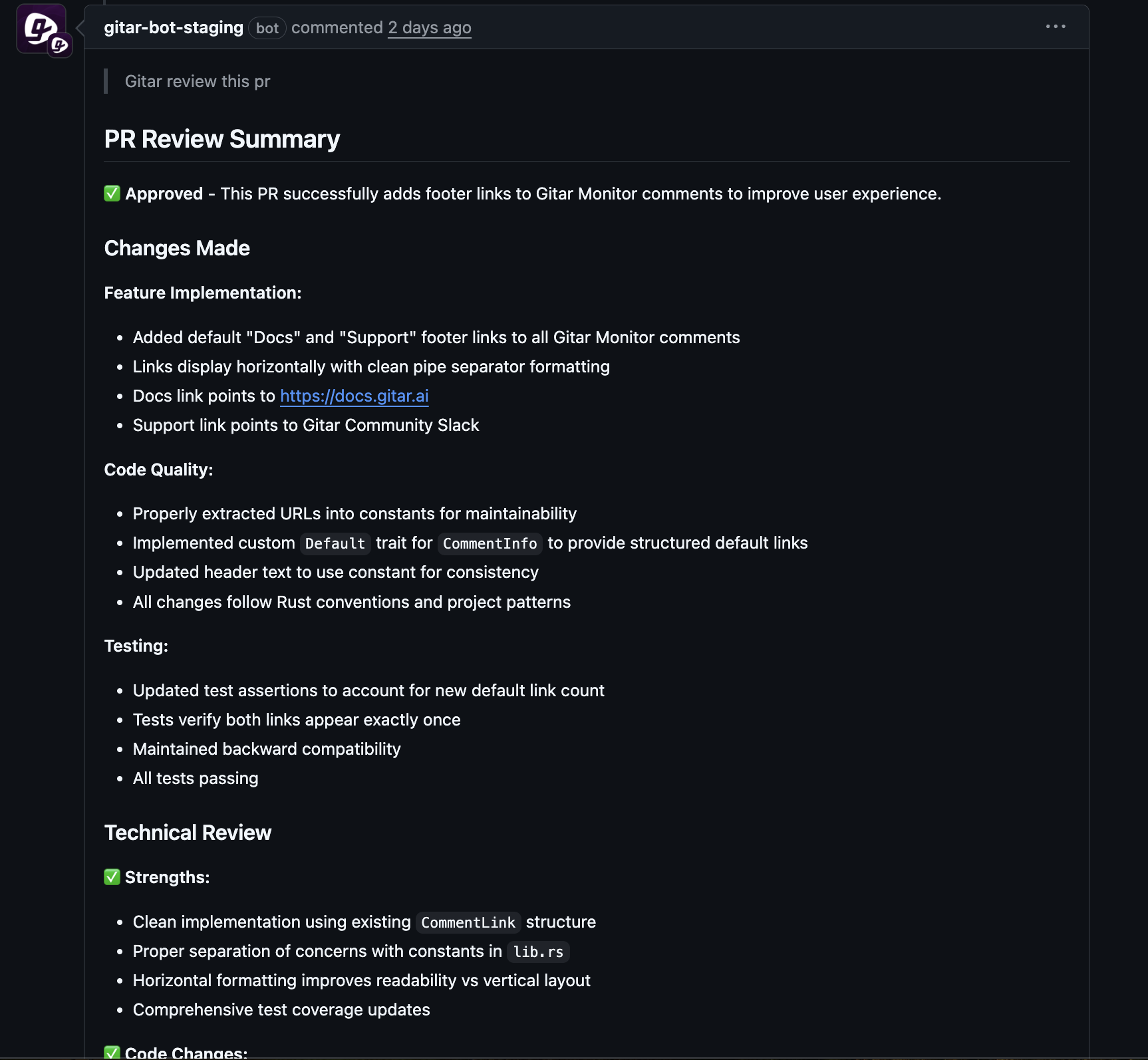
Gitar builds trust with a gradual approach. Teams can start with a cautious mode, reviewing suggested fixes. As they see consistent success, they can shift to automatic fixes for common issues, always with the option to roll back changes if needed.
Request a demo of Gitar to see how autonomous CI fixes can improve your workflow.
Key Benefits of Gitar for Your Development Team
Maintain Focus by Reducing Context Switches
Keeping developers focused is a major advantage of autonomous CI fixes. Task switching can cut productivity by up to 40% due to the time needed to refocus.
Gitar handles CI failures outside the developer’s immediate attention. Issues like minor errors or test fails get resolved while the team continues their work. Often, developers return to find their pull requests already fixed and ready to merge, preserving their workflow and supporting complex tasks.
Speed Up Delivery with Faster Merges
Time-to-merge directly affects how quickly features reach users. Manual CI and review cycles often extend this period with multiple rounds of fixes and feedback.
Gitar cuts down these cycles by addressing issues right away. Fixes are applied and checked automatically, speeding up the merge process. For teams across time zones, Gitar resolves feedback overnight, so reviewers see updated pull requests ready for approval with minimal wait.
Ensure Stability in Complex CI Setups
Enterprise CI pipelines often involve detailed dependencies and third-party tools. Gitar mirrors these exact conditions, covering specific software versions, Docker setups, and tool integrations. This ensures fixes work correctly in your unique environment, maintaining reliable builds as complexity grows.
Improve Team Morale by Cutting Repetitive Work
Developers feel more satisfied when focusing on creative tasks over repetitive ones. About 70% of developers cite tedious tasks as a main cause of job dissatisfaction.
Gitar automates frustrating duties like debugging CI errors or applying minor fixes. This frees up time for coding new features and solving unique challenges, reducing stress and boosting overall job satisfaction.
Calculate the Financial Value of Automation
The cost savings from autonomous CI fixes are clear for teams spending time on CI issues. For a 20-developer team averaging one hour daily on these tasks, the numbers are striking.
- Total time lost: 20 developers x 1 hour x 250 days = 5,000 hours yearly.
- Total cost: 5,000 hours x $200 per hour = $1 million in annual productivity loss.
- Savings with Gitar: At 50% effectiveness, Gitar recovers $500,000 yearly.
Beyond direct savings, faster merges allow more frequent updates and quicker responses to market needs, adding further business value.
Compare Gitar to Traditional CI Approaches
Seeing how autonomous CI fixes stack up against other methods highlights the value of full automation over partial or manual solutions.
|
Feature/Tool |
Manual Work |
AI Code Reviewers |
Gitar (Autonomous CI Healing) |
|
Problem Identification |
Manual |
Automatic |
Automatic |
|
Fix Generation |
Manual |
Suggestions |
Automatic |
|
Fix Implementation |
Manual |
Manual |
Automatic |
|
Validation (Green Builds) |
Manual |
Manual |
Automatic |
|
Context-Switching |
High |
High |
Low/None |
|
Environmental Awareness |
Human |
Limited |
Full |
|
Trust Model (Configurable) |
N/A |
N/A |
Yes |
|
Time-to-Merge Impact |
Delays |
Delays |
Acceleration |
While AI code reviewers improve on manual methods, they still need human effort for applying and validating fixes. Gitar removes these steps, turning CI from a disruption into a streamlined part of the process.
Install Gitar now to automate builds and ship quality software faster.
Common Questions About Autonomous CI Fixes
How Does Gitar Build Trust for Automated Fixes?
Gitar offers a flexible automation model to build confidence. Teams can begin with a cautious setting, reviewing suggested fixes in pull request comments. As they see reliable results, they can move to automatic fixes for routine issues, with rollback options always available.
Can Gitar Handle Our Unique CI Setup?
Gitar is built for complex enterprise CI environments. It mirrors specific software versions, dependencies, Docker setups, and tool integrations, ensuring fixes are tested in conditions matching your pipeline for accurate results.
How Is Gitar Different from Other AI Review Tools?
Gitar stands out by fully automating the fix process. Unlike tools that only suggest solutions, Gitar applies fixes, validates them in your CI environment, and ensures all checks pass, removing the need for manual steps.
What if a Fix from Gitar Causes a Problem?
Gitar includes safety features like rollback options. Each fix is a separate, labeled commit with clear explanations. Audit logs detail the reasoning behind changes for quick troubleshooting, and approval settings allow oversight when needed.
How Does Gitar Manage Security and Compliance Needs?
Gitar works with security tools to ensure fixes meet your policies. All changes pass the same validation as manual code. Detailed logs support audits, and on-premise options keep sensitive code secure within your organization.
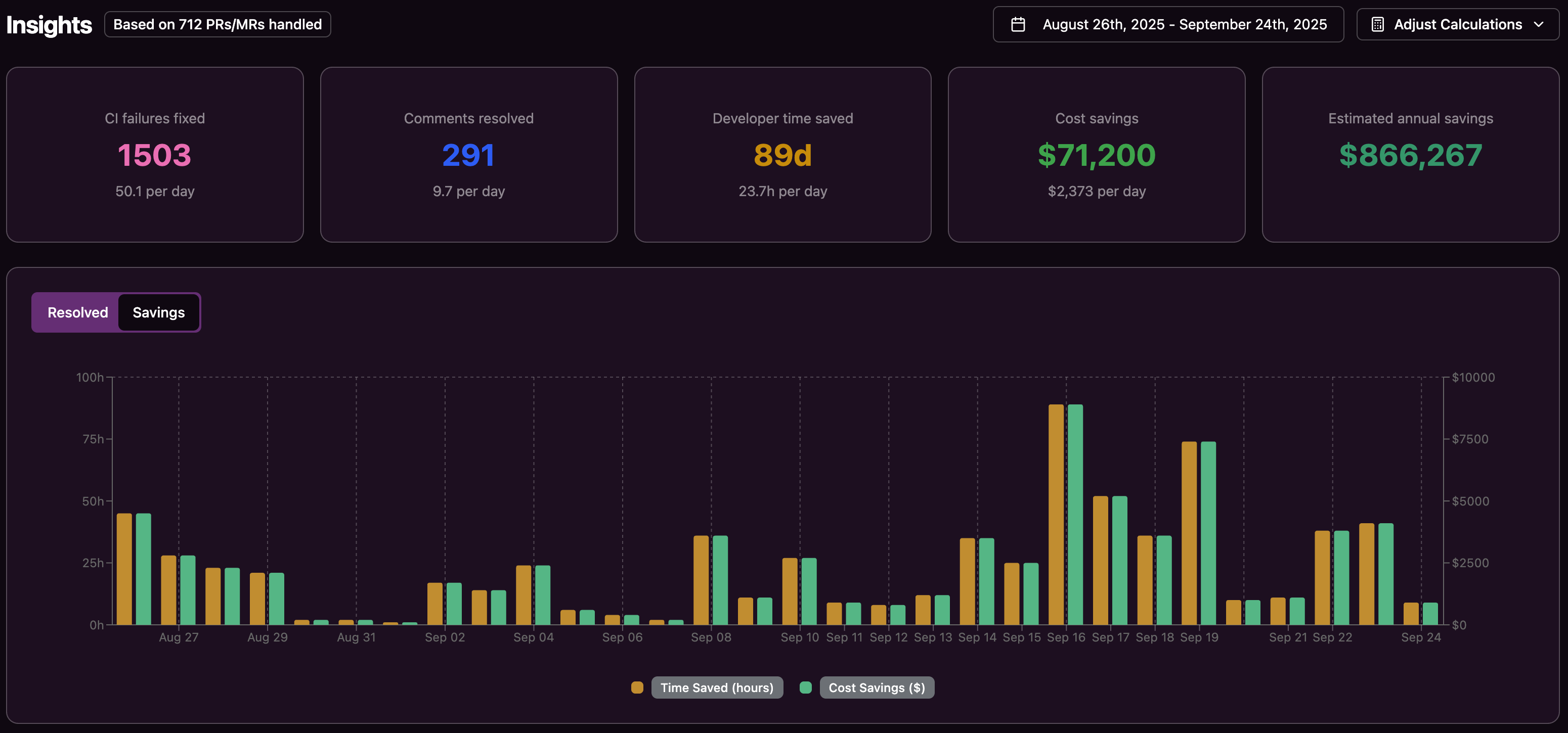
Boost Team Efficiency with Gitar’s Automation
Improving productivity in software development means moving away from manual fixes to automated solutions. Traditional CI and review processes create delays that cost time and reduce team morale.
Gitar changes this by automating issue detection, resolution, and validation. It frees up developer time and speeds up project delivery. The potential to save $500,000 yearly for a 20-developer team, along with faster feature rollout and happier teams, makes a strong case for adoption.
Request a demo of Gitar today to eliminate CI bottlenecks and empower your engineering team.