
Manual linting and refactoring fixes often slow down developers, even with tools like ReSharper, causing context switching and CI delays. This article dives into how pairing ReSharper’s robust IDE features with Gitar’s AI-driven automation creates a self-correcting CI workflow. The result is faster error resolution and improved code quality with less effort.
Why ReSharper Alone Can’t Fully Resolve CI Delays in Visual Studio
ReSharper stands out as a vital tool for .NET developers, offering detailed code analysis, smart refactoring, and instant linting in Visual Studio. Its 2025.2 update, with out-of-process execution, cuts UI freezes by 61% in large projects, letting developers work without delays during indexing, use less memory, and speed up Rename refactoring tasks.
Yet, a gap persists. ReSharper shines with real-time error detection and AI suggestions in the IDE, but when issues reach the CI pipeline or require manual fixes, developers must stop and address them, disrupting their focus.
Even with ReSharper’s extension to VS Code for cloud setups, automating the final step of fixing issues in complex CI environments still demands human input, breaking the workflow.
How Context Switching Impacts CI/CD Productivity
CI failures cost more than just time to fix the issue. When a developer submits a pull request and shifts to another task, a failure notification pulls them back. A quick 5-minute fix can turn into an hour of lost productivity due to refocusing and setting up the environment again.
This issue worsens when ReSharper flags problems locally that differ in CI due to setup or dependency mismatches. Code might look fine in the IDE but fail in the pipeline, leaving developers stuck troubleshooting discrepancies.
Tools like the Kadana plugin for server-side ReSharper analysis in CI catch issues early, but developers still need to apply fixes manually and check if they work in the pipeline, adding more steps to the process.
Install Gitar to fix broken builds automatically and deliver higher-quality software faster.
CI Overload from AI Code Generation
AI tools like GitHub Copilot have sped up code creation, but this pace strains validation and merging. More code means more pull requests, tests, and CI failures, shifting the main bottleneck from writing to validating.
While ReSharper’s navigation and selection tools manage complexity during coding, the volume of AI-generated code overwhelms CI, leading to significant delays. Traditional workflows struggle as teams spend more time fixing CI issues than building features, despite ReSharper’s local support.
Gitar: Your AI Solution for Self-Correcting CI
Gitar changes the game by moving from reactive CI debugging to automatic issue resolution. Unlike tools that only spot problems, Gitar acts as an AI agent that detects and fixes issues, pairing seamlessly with ReSharper to keep your CI pipeline running smoothly.

How Gitar Handles CI Fixes and Code Reviews
Gitar automates error resolution in your CI pipeline with precision. Here’s how it works:
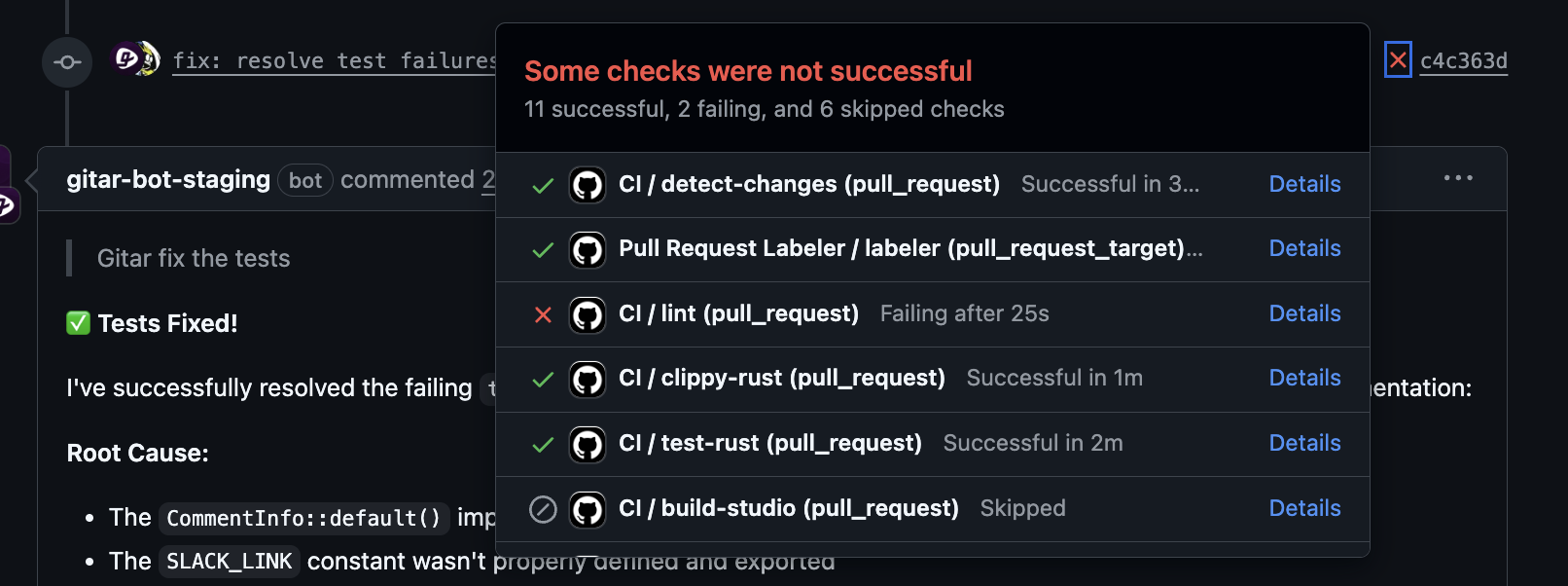
- Automatic CI Fixes: If a linting error, test failure, or build issue occurs, Gitar analyzes logs, pinpoints the cause, applies a fix, and verifies it works, all without developer input.
- Environment Accuracy: Gitar mirrors enterprise CI setups, including SDK versions, multi-language dependencies, and tools like SonarQube, ensuring fixes match your real pipeline conditions.
- Code Review Support: Gitar acts on reviewer feedback in pull requests, making changes and explaining updates, cutting down delays across time zones.
- Flexible Automation: Start with a cautious mode where Gitar suggests fixes for review, then move to full automation with rollback options as trust grows.
- Platform Versatility: Gitar supports GitHub Actions, GitLab CI, CircleCI, and more, complementing ReSharper across diverse setups.
See automated CI fixes in action. Book a Gitar demo now.
Boosting Productivity with ReSharper and Gitar Together
Pairing Local Insights with Automated Fixes
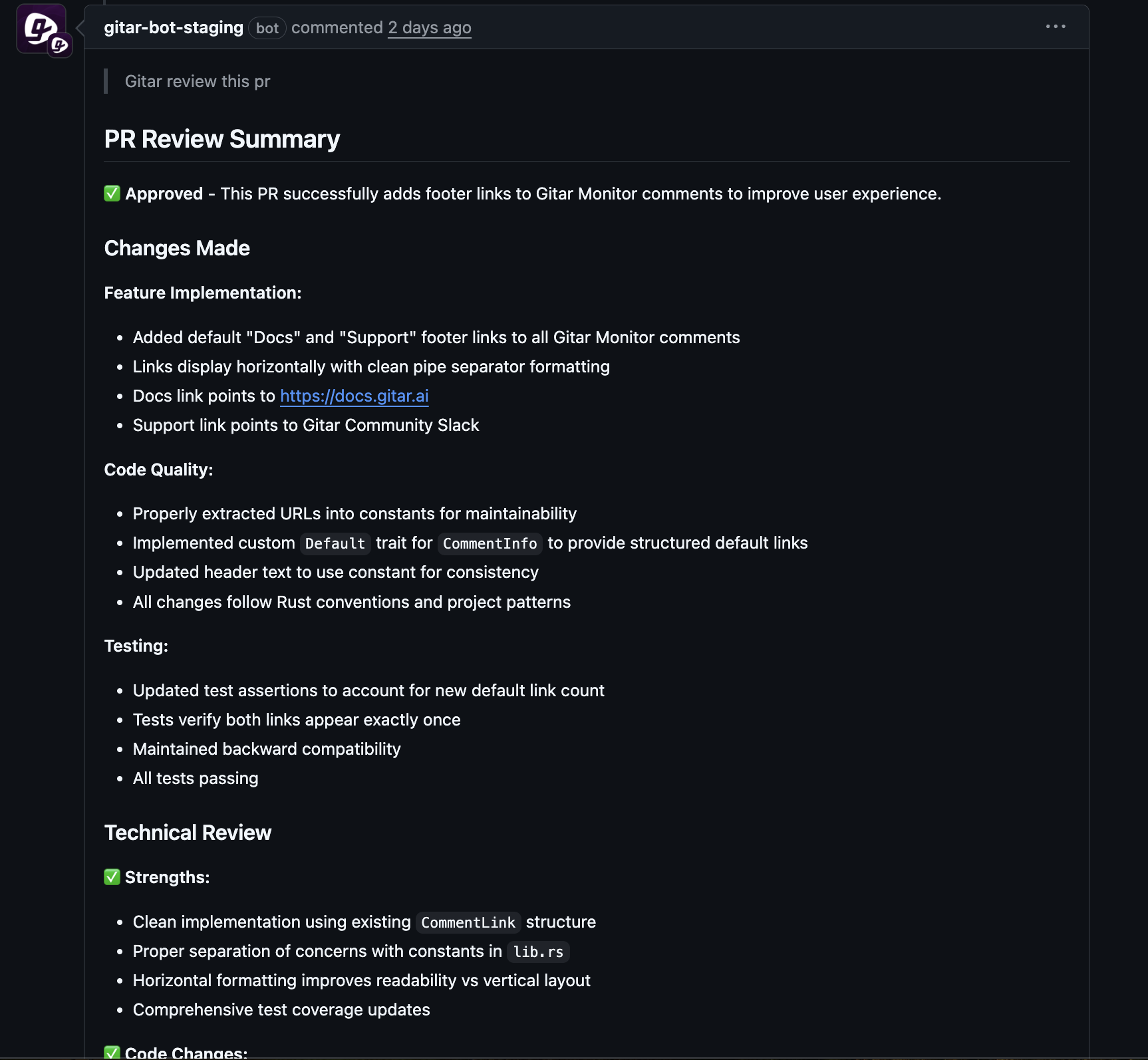
ReSharper and Gitar form a complete quality pipeline from coding to deployment. ReSharper’s real-time feedback and AI suggestions catch issues early in development, maintaining standards across projects. However, CI often reveals unique problems due to environment differences. Gitar steps in, fixing these issues automatically to ensure builds pass without manual effort.
This duo lets developers benefit from instant local corrections via ReSharper and hands-free CI resolution through Gitar, covering all stages of the workflow.
Cutting Down Manual Linting Work
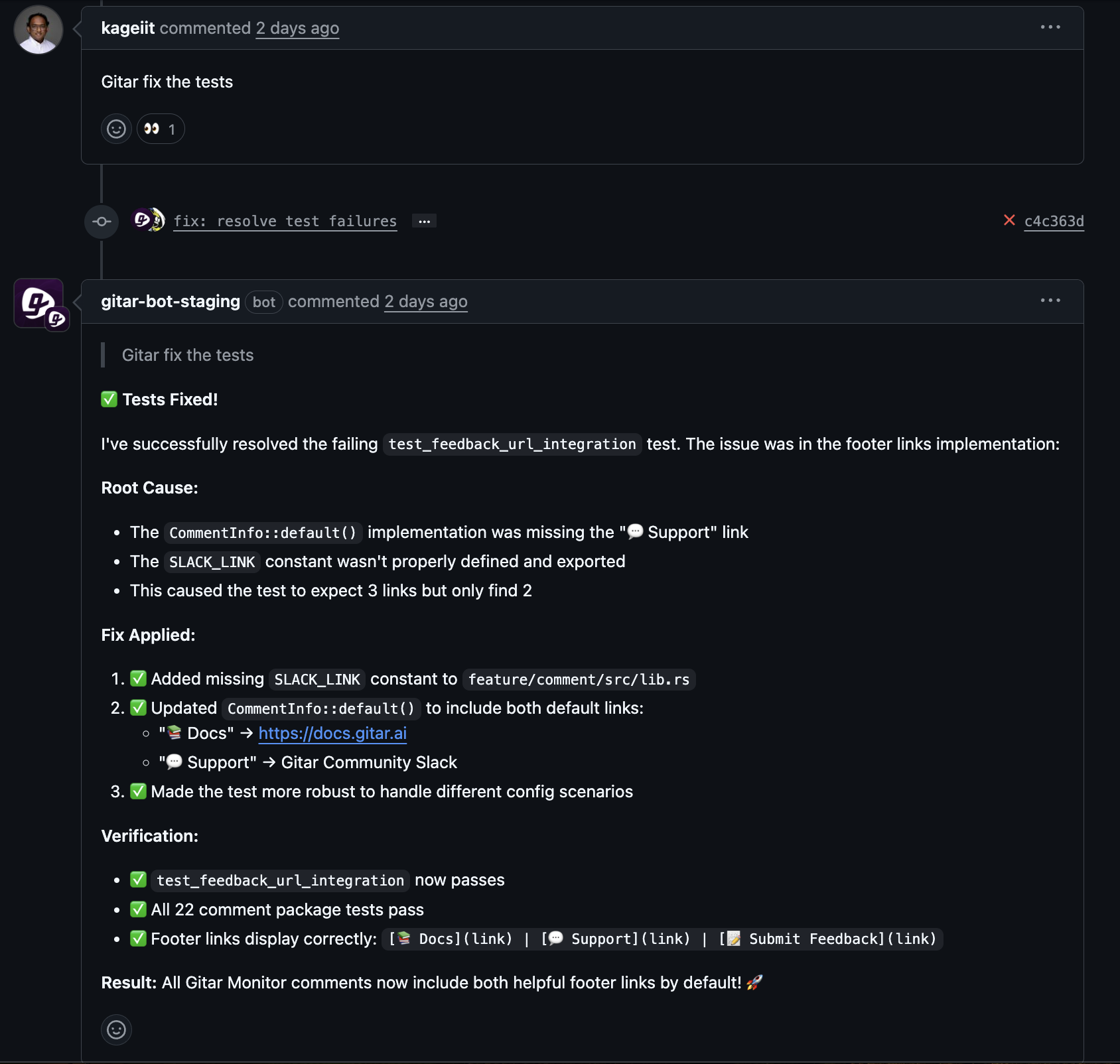
ReSharper excels at spotting syntax errors and style issues instantly. Still, applying fixes across large teams can take time. Gitar automates linting corrections in pull requests, aligning code to standards and confirming fixes in CI, so developers avoid repetitive tasks. For cloud developers using ReSharper in VS Code, this integration streamlines CI consistency even further.
Simplifying Refactoring Across CI
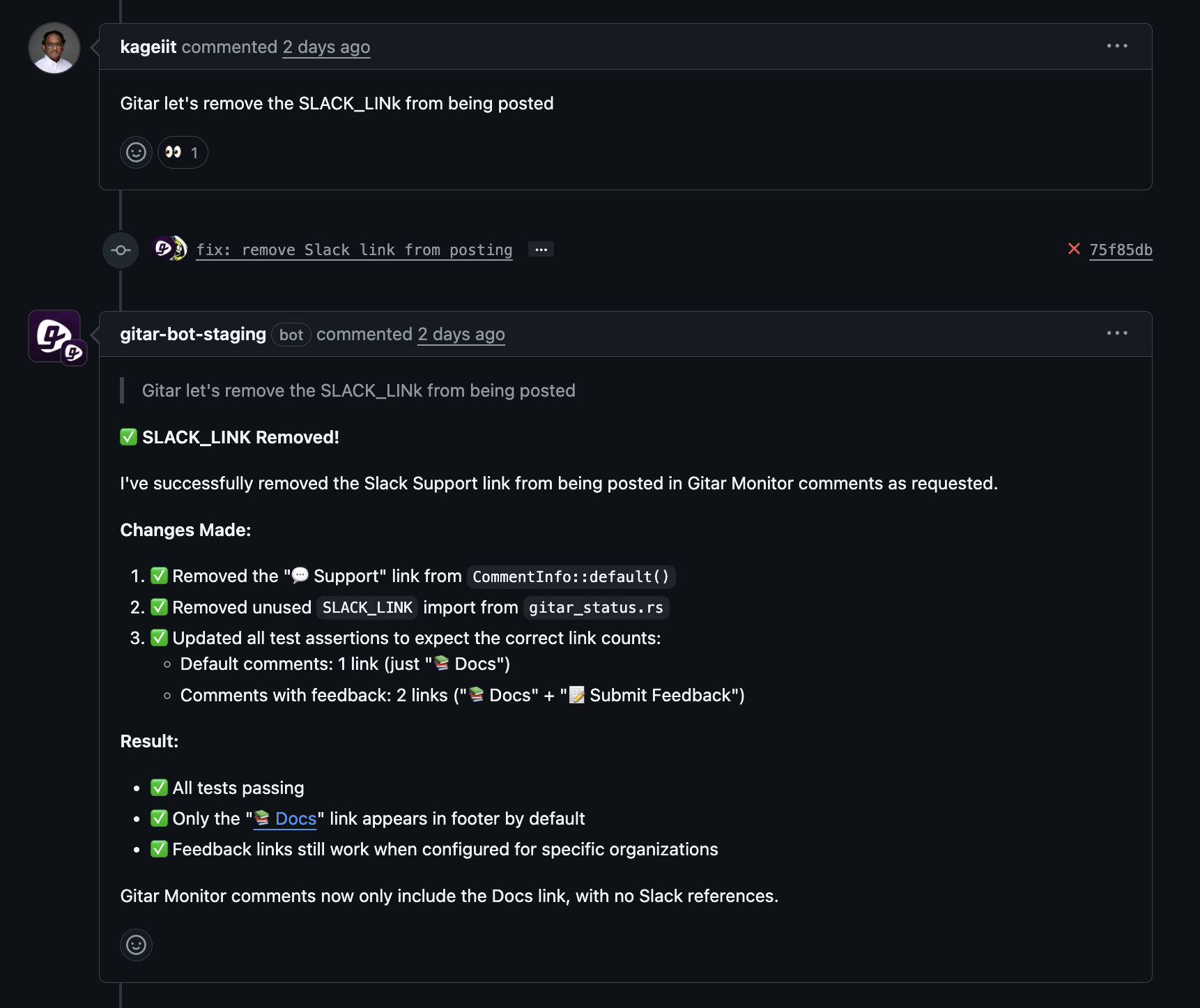
ReSharper’s refactoring tools, like Rename and Extract Method, help developers reshape code confidently. Yet, these changes can cause CI issues such as failing tests or dependency conflicts not seen locally. Gitar resolves these downstream effects by adjusting code in CI, ensuring refactors integrate smoothly without extra developer work, even for large-scale updates.
Combining Local Tools with Cloud Automation
ReSharper’s strength lies in local IDE integration with fast feedback and detailed analysis. Its out-of-process model boosts speed and reliability. Gitar, on the other hand, works in the cloud, replicating CI environments and fixing issues across platforms. Together, they let developers stay focused on coding while CI challenges are handled automatically in the background.
Comparing Linting and Refactoring Fixes
|
Feature / Challenge |
Manual Fixes |
ReSharper Alone |
ReSharper + Gitar |
|
Linting Error Fixes |
Manual, prone to mistakes |
Local fixes, manual CI sync |
Automated in CI, builds pass |
|
Refactoring CI Issues |
Manual spotting and fixing |
Local checks, manual CI fixes |
Automatic CI fixes, validated |
|
Context Switching |
High, interrupts work |
Lower locally, high in CI |
Almost eliminated |
|
Time to Merge PR |
Slow, often delayed |
Better locally, CI delays remain |
Much faster |
Upgrade your workflow with automated CI fixes. Install Gitar today.
Practical Benefits for ReSharper Users with Gitar
Consistent Linting for Large Teams
Maintaining code standards across projects is tough for big teams. ReSharper offers solution-wide checks for consistent formatting, but CI enforcement varies. Gitar fixes linting issues in pull requests to match team standards, freeing reviewers to focus on logic and design over minor style details.
Faster Onboarding for New Developers
New team members often face CI failures due to unfamiliar standards or setups. Gitar helps by automatically correcting issues and explaining changes in commits. This hands-on learning cuts down the need for lengthy guides or senior support, smoothing the transition. Experienced .NET developers note the growing role of cloud and AI tools in modern workflows.
Support for Multi-Platform Development
ReSharper works well in Visual Studio, but CI environments like Linux or containers often introduce inconsistencies. Gitar adapts fixes to these diverse setups, handling file paths, dependencies, or runtime variations, ensuring code performs across platforms without local debugging headaches.
Advanced Ways ReSharper and Gitar Work Together
Validating Complex Refactoring
ReSharper’s advanced refactoring can affect tests or configs beyond local scope. Gitar validates these changes in CI, fixing any integration or deployment issues automatically, so developers can refactor boldly without worrying about downstream breaks.
Checking AI-Generated Code
ReSharper’s AI suggestions optimize coding with smart templates. Gitar adds a layer of CI validation, adjusting AI code to meet team standards or security rules, giving developers confidence to use AI tools without extra review steps.
Modernizing Older Code Safely
Updating legacy code with ReSharper is useful but risky due to potential errors. ReSharper identifies areas for improvement in complex code. Gitar supports this by fixing CI issues or regressions, speeding up modernization while keeping systems stable.
Tracking Results: Productivity and Quality Gains
Clear Improvements in Developer Output
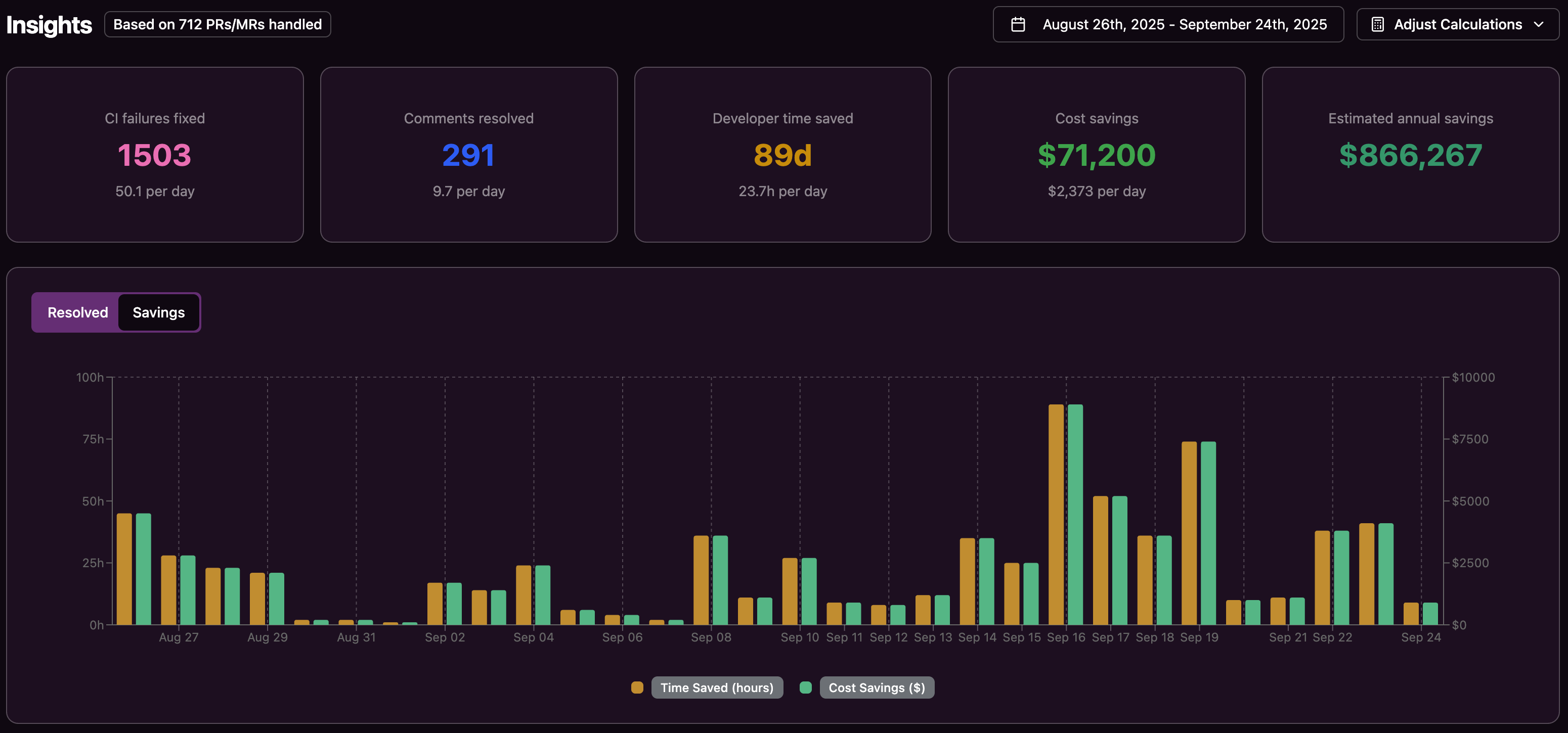
Teams using ReSharper with Gitar see notable boosts in efficiency. Developers spend 60-80% less time on CI debugging, focusing instead on features. Surveys also show higher satisfaction as CI interruptions drop and merge times improve.
Better Code Standards and Reviews
Combining ReSharper’s upfront checks with Gitar’s fixes enhances code consistency and reduces technical debt over time. Reviews shift to deeper discussions on architecture, improving team learning and feedback quality.
Key Questions About ReSharper and Gitar Integration
How Does Gitar Add to ReSharper’s Linting and Refactoring Tools?
ReSharper spots issues and suggests fixes locally in Visual Studio. Gitar builds on this by automatically applying fixes in CI, ensuring they pass all checks without developer input. This setup keeps workflows uninterrupted, as Gitar handles issues that escape local detection or appear only in CI.
Does Gitar Work with Server-Side ReSharper Tools Like Kadana?
Yes, Gitar pairs well with tools like Kadana. While Kadana detects issues in CI, Gitar applies fixes automatically, turning alerts into resolved pull requests. This end-to-end automation maintains code standards across the pipeline without manual steps.
What If I’m Hesitant About AI Making Code Changes?
Gitar offers adjustable automation levels. Begin in a cautious mode where fixes are suggestions for review with one click. As confidence builds, shift to full automation while retaining rollback options. You can also set different automation levels for specific changes or projects.
Can Gitar Manage Fixes in Complex CI Setups with Multiple SDKs?
Absolutely. Gitar replicates enterprise CI environments, handling specific SDKs, dependencies, and tools like SonarQube. Fixes consider your pipeline’s unique setup, ensuring they resolve issues without creating new ones.
How Does This Integration Impact Team Workflow?
ReSharper ensures quality during coding, while Gitar fixes CI issues, cutting context switching. For distributed teams, Gitar applies reviewer feedback across time zones, speeding collaboration. Teams feel more motivated to tackle complex refactors, knowing CI hurdles are managed automatically.
Conclusion: Speed Up Delivery with ReSharper and Gitar’s CI Automation
Even with ReSharper’s advancements, like fewer UI freezes, aligning local coding with CI realities remains a challenge. Pairing ReSharper’s local analysis with Gitar’s automated fixes turns CI errors and refactoring issues into background tasks, not workflow blockers.
This blend of local and cloud tools lets developers prioritize innovation over troubleshooting. Teams report not just faster output but also better morale, as automated quality checks replace manual hurdles.