
Key Takeaways
- Regular CI/CD reviews reduce hidden costs from rework, context switching, and delayed incident response.
- Clear metrics such as DORA and pipeline SLOs reveal where slow builds, flaky tests, and security friction hold teams back.
- Simple architectural changes, including test pyramids, fail-fast feedback, and parallelization, improve pipeline speed and reliability.
- Autonomous tools like Gitar reduce interruptions by analyzing CI failures, applying fixes, and validating them in your real environment.
- Teams that want fewer broken builds and faster pull request turnaround can use Gitar to automate CI/CD fixes and protect developer focus.
Why Regular CI/CD Pipeline Reviews Protect Team Productivity
Neglected CI/CD pipelines create hidden costs that compound over time. Teams with immature pipelines face higher rework, slower incident response, and more cognitive overload. For a 20 person engineering team that spends one hour per day on CI failures and review friction, lost productivity can reach roughly $1M per year.
Developers pay a high context switching tax when they bounce between deep work and debugging broken builds. The ideal flow of opening a pull request and moving on rarely happens. Instead, developers are pulled back to interpret logs, fix style issues, or rerun flaky tests, which disrupts focus and reduces code quality.
Faster product cycles and AI assisted coding increase the volume of changes flowing through CI. Organizations that rely only on manual CI debugging struggle to keep up. Regular CI/CD reviews help maintain developer flow, control operational risk, and keep delivery speed aligned with business needs.
Assessing Pipeline Health With Metrics and Bottlenecks
Clear metrics make pipeline issues visible and measurable. Teams that track a small set of indicators can prioritize improvements with less debate.
Use Delivery Metrics and Pipeline SLOs
DORA metrics provide a concise view of delivery performance. Focus on:
- Deployment frequency
- Lead time for changes
- Change failure rate
- Mean time to recovery (MTTR)
These metrics show whether your pipeline supports frequent, stable releases or slows them down.
Pipeline service level objectives create clear expectations. For example, teams might commit to 99.9 percent of deployments finishing in under 15 minutes. Treating the pipeline as a product makes continuous improvement easier to justify.
Spot Common CI/CD Bottlenecks
Long build and test times often come from monolithic suites that run unit, integration, and end to end tests in sequence. When feedback takes more than 10 minutes, developers usually switch tasks, which fragments attention and delays fixes.
Flaky tests reduce trust in CI results. Developers begin to rerun builds or ignore failures, which undermines the value of automated checks.
Security friction often appears as tool sprawl, manual policy checks, or slow secrets management. When security adds more than about 10 percent latency to builds, teams look for ways around it, increasing risk.
Context switching multiplies these issues. Every time CI drags a developer away from core work, the cost includes both the fix and the time needed to regain focus.
Strategies to Continuously Improve Your CI/CD Pipeline
Targeted changes to test strategy, pipeline design, and security integration produce large gains in speed and reliability.
A test pyramid gives fast, reliable feedback. Most checks should be unit tests, with a smaller layer of integration tests and a thin top of slow end to end tests. This structure catches issues quickly and keeps full runs manageable.
Teams that apply fail fast principles surface failures within minutes instead of hours. Short feedback loops reduce context switching and improve code quality, because developers can fix problems while changes are still fresh.
Parallel builds and tests can cut pipeline duration by half or more. Independent jobs run side by side instead of in a single long chain.
Modular pipeline configurations make it easier to share common patterns and evolve workflows without touching every repository.
Policy as code and early security checks move security from late stage audits to automated, repeatable validation inside the pipeline.
AI driven code generation increases throughput, which raises pressure on CI. More changes can increase change failure rates if feedback loops do not keep pace. Automated assistance in CI becomes more important as pull request volume grows.
How Gitar Automates Fixes in Your CI/CD Pipeline
Most CI/CD optimizations still rely on humans to diagnose and fix failures. This keeps the context switching tax in place. Gitar focuses on removing that manual work by acting as an autonomous healing engine for your pipelines.
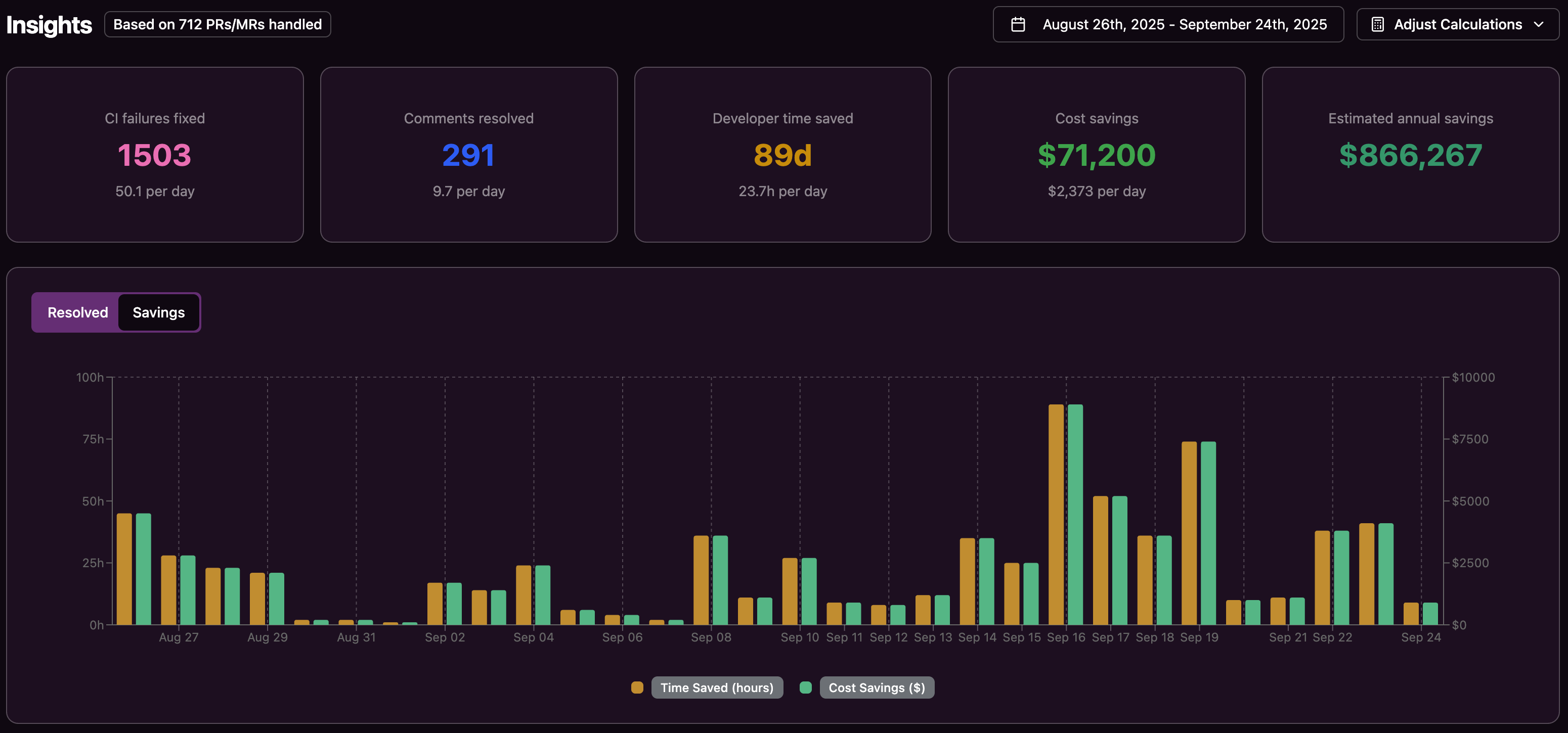
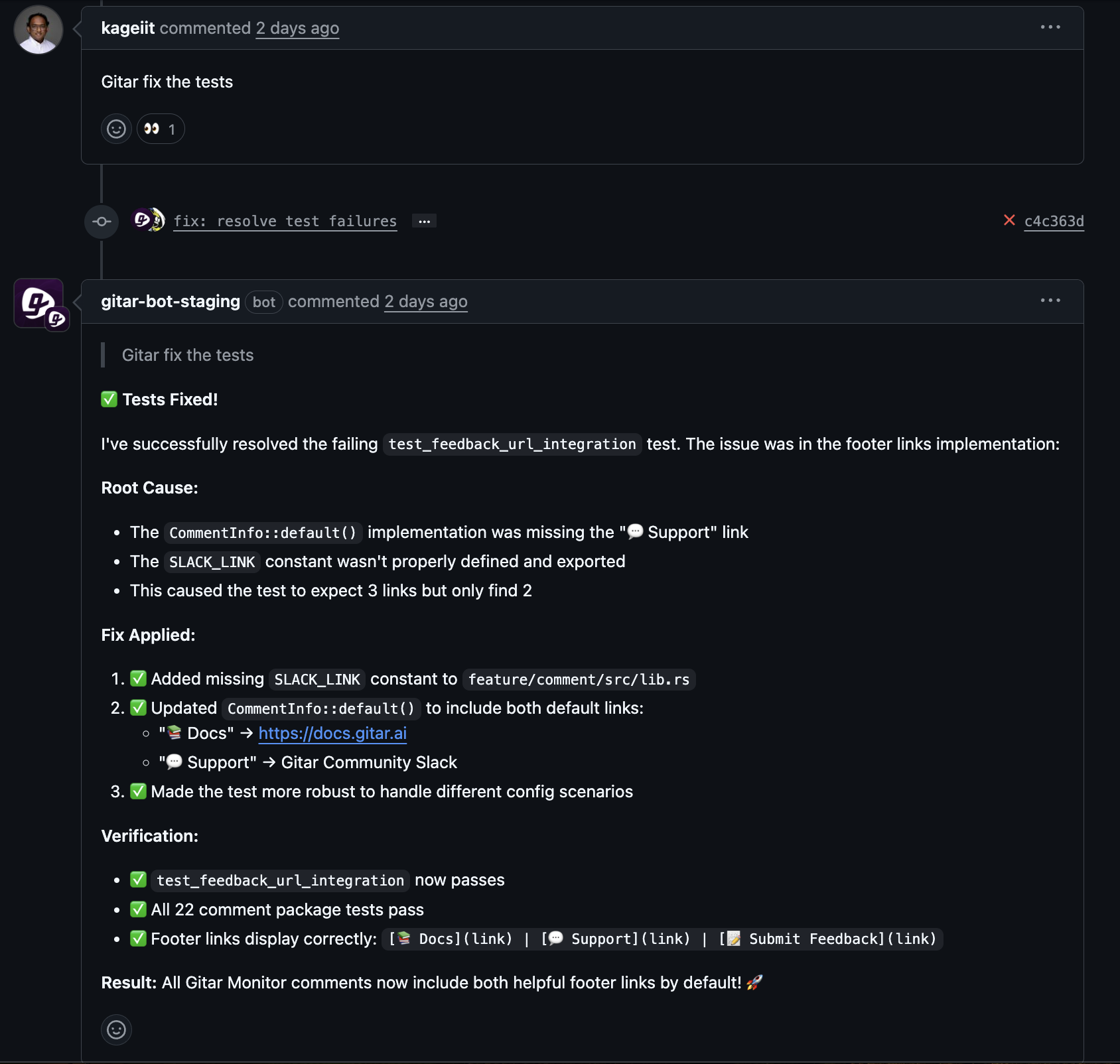
Gitar analyzes CI failures, generates code changes, tests them in your real workflow, and commits successful fixes. Developers stay focused on feature work while the system handles routine breakages.
Key Gitar Capabilities for Automated Fixes
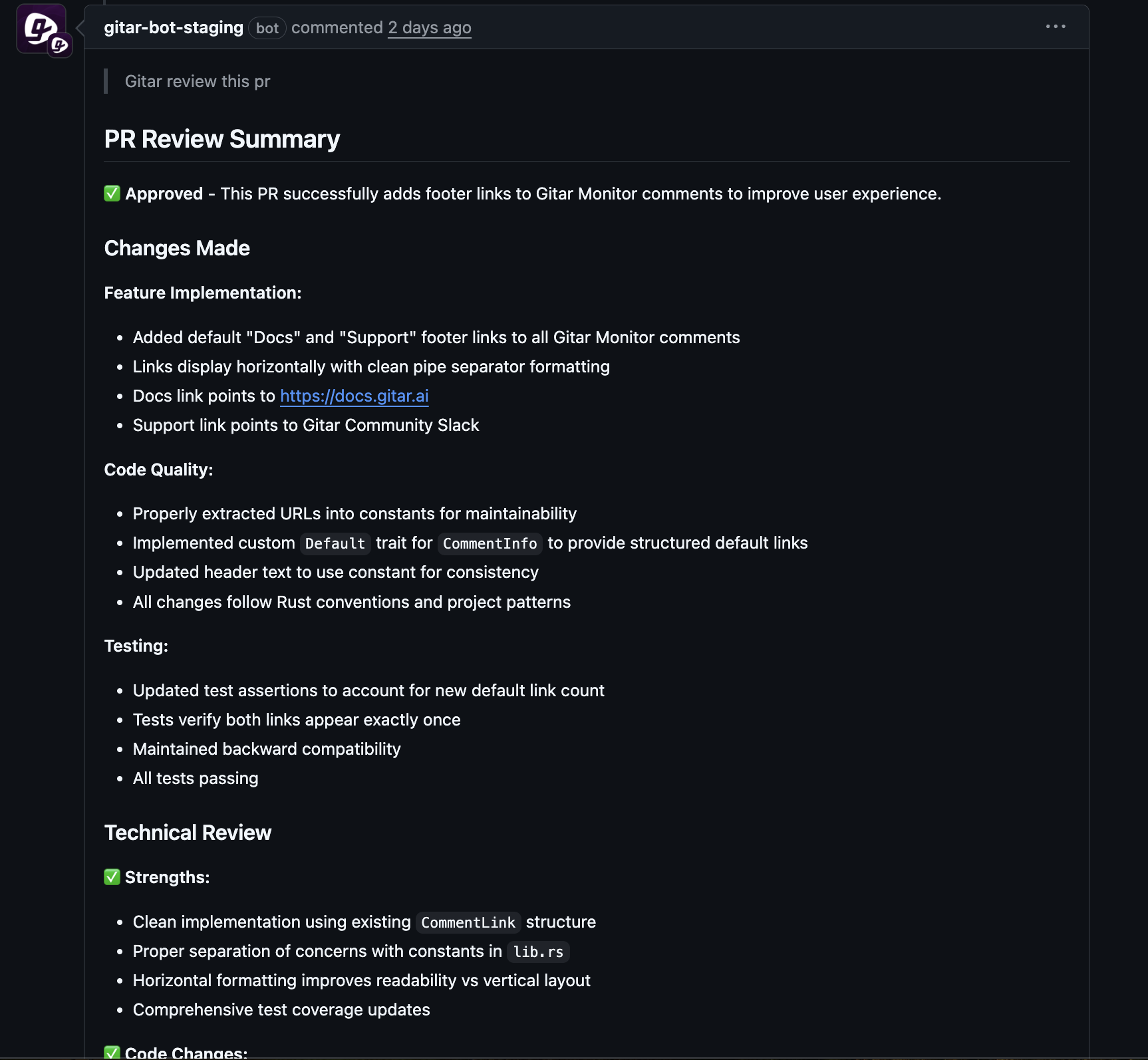
End to end fixing means Gitar does more than suggest patches. When a linting rule fails or a test breaks, Gitar identifies the cause, applies a change, runs the full CI job, and presents a passing pull request.
Full environment replication lets Gitar match your enterprise setup, including specific SDK or JDK versions, multi platform builds, and third party checks such as SonarQube or Snyk. Fixes are validated in the same context where they will run.
Intelligent code review assistance helps distributed teams. A reviewer can leave comments, and Gitar implements the requested changes so the updated pull request is ready when the author returns.
A configurable trust model allows gradual rollout. Teams can start in Conservative mode, where Gitar posts suggestions for one click acceptance, then move to more aggressive auto commit behavior once they gain confidence and rely on rollback options when needed.
How Gitar Differs From Other CI/CD Automation Tools
CI automation tools fall into two broad groups. Suggestion engines recommend changes that developers must apply. Healing engines like Gitar apply and validate fixes on their own.
|
Feature |
Gitar (Healing Engine) |
AI Code Reviewers (for example, CodeRabbit) |
On Demand AI Fixers (for example, Claude for CI) |
|
Primary Function |
Autonomous code fixing and CI healing |
Code review suggestions and analysis |
Ad hoc fix generation |
|
Automation Level |
Apply, validate, and commit |
Suggestions, sometimes one click fixes |
Manual invocation and implementation |
|
CI Integration |
Deep support for GitHub, GitLab, CircleCI, BuildKite |
Git provider level focus |
Limited, custom integration |
|
Impact on Flow |
Reduces interruptions with autonomous fixes |
Can reduce review effort |
Requires more context switching |
Suggestion tools still require developers to pull, edit, test, and push changes. Gitar shortens that loop by owning the entire fix cycle inside the pipeline.
How to Prepare Your Organization for Autonomous CI
Successful adoption of autonomous CI is easier with a phased rollout that builds trust and tracks results.
Phase 1: Install and Observe
Teams start by installing Gitar as a GitHub App on selected repositories and enabling a conservative mode. Fixes appear as suggestions that fit into existing review flows, which keeps engineers in control while they learn how the system behaves.
Phase 2: Build Trust With Real Fixes
Trust grows as developers see Gitar resolve common issues such as lint errors, dependency conflicts, and straightforward test failures. After dozens of successful fixes, teams often promote specific projects to auto commit mode while keeping sensitive areas under manual approval.
Phase 3: Expand Into Advanced Workflows
More advanced use cases include senior reviewers tagging Gitar for refactors, or distributed teams using Gitar to implement requested changes overnight. This reduces review ping pong and shortens cycle time.
A 20 developer team that spends 5,000 hours per year on CI issues at a loaded cost of $200 per hour loses about $1M annually. Even if automation removes only half of that time, the savings can reach $500K per year while also improving morale.
Frequently Asked Questions About CI/CD Pipeline Review and Gitar
How does Gitar ensure trust in automated fixes?
Gitar uses configurable aggression modes so teams can choose how much control to keep. In Conservative mode, Gitar posts suggested changes that require explicit approval. In more aggressive modes, it commits fixes directly, with clear explanations and standard Git rollback options available.
Can Gitar handle a complex or custom CI setup?
Gitar replicates the environment used in your pipeline, including language runtimes, SDKs, third party security scanners, and custom build tools. Fixes are only committed after passing through the same CI workflow that your own code uses.
How does Gitar compare to AI code review tools or IDE assistants?
Code review tools and IDE assistants focus on suggestions during development. Gitar works inside CI after code is pushed. It applies changes, runs the full pipeline, and aims to return passing builds without extra manual steps.
What if Gitar applies an incorrect fix?
Every change from Gitar includes an explanation and can be reverted through normal Git operations. Teams that use Conservative mode can also require explicit human approval before any fix becomes part of the codebase.
Conclusion: Keep Your CI/CD Pipeline Healthy With Regular Reviews
Regular CI/CD reviews help teams control costs, protect developer focus, and keep pace with rising delivery demands. Manual tuning and debugging remain important, but they scale poorly as change volume and complexity increase.
Autonomous CI support from tools like Gitar reduces interruptions by owning the full loop from failure detection to validated fix. Teams that adopt this model gain faster feedback, fewer broken builds, and more time for product work instead of pipeline firefighting.
Explore how Gitar can help your team automate CI fixes and reduce time lost to broken builds.