Written by: Ali-Reza Adl-Tabatabai, Founder and CEO, Gitar
Submitting a Pull Request (PR) should feel like a step forward, but often it’s just the start of endless manual follow-ups, context-switching, and debugging Continuous Integration (CI) failures. These repetitive tasks drain developer productivity, delay projects, and even contribute to burnout. This article explores the real impact of manual processes and explains how Gitar, with its autonomous AI-driven code remediation, tackles review feedback and CI issues automatically. See how it speeds up code merges and helps developers stay focused.
The Hidden Costs of Manual Code Reviews and CI Failures
How Manual Follow-Ups Disrupt Developer Focus
Constant interruptions from code reviews and CI failures kill productivity. You submit a PR expecting a smooth process, only to face failing builds or a stream of review comments. What should be quick turns into hours of switching between tasks. This manual cycle of detecting errors and debugging often delays projects, pulling developers away from meaningful work.
The data highlights the problem clearly. Reviewers often struggle with the mental load of assessing complex code changes, leading to delays in feedback. Developers can lose up to 30% of their workday handling CI issues and review cycles, time that adds up fast.
Staying in a focused state becomes nearly impossible with these disruptions. Imagine spending 20 minutes on a tough problem, only to get pulled away by a minor lint error or a vague comment. Regaining that focus takes far longer than fixing the issue itself, often turning a small task into a major time sink.
Want to stop these interruptions? Try Gitar to automate fixes and keep your team focused.
Why CI Failures and Review Delays Slow Down Merges
Getting code from submission to merge is rarely straightforward. Feedback wait times typically range between 15 and 64 hours, creating delays that ripple across projects. These holdups aren’t just frustrating, they can impact business outcomes by slowing down delivery.
CI failures add to the problem. A single issue, like a test error or dependency glitch, stops everything. Developers have to drop their current work, dig through error logs, fix the problem, and rerun the pipeline, sometimes repeating this loop multiple times for one PR.
For DevOps teams, these issues drive up costs. Failed CI runs and retries inflate expenses, while delays eat into productivity. A team of 20 developers losing just one hour daily to CI problems could see annual losses around $1 million at standard rates. Large code reviews often overwhelm reviewers, leading to missed issues and extra rounds of feedback.
Why AI Suggestion Tools Fall Short
AI-powered code review tools promise relief, but many only offer suggestions without taking action. They point out issues or recommend fixes, yet developers still need to review, apply, and test each change manually. This reduces some effort but doesn’t solve the core issue of interrupted focus.
About 34.5% of review comments don’t lead to direct code changes, showing that many AI suggestions aren’t actionable. Developers must still evaluate each one, decide if it’s relevant, and implement it without breaking anything, which adds to their workload.
These tools stop at suggestions, leaving the final steps of applying and verifying changes to humans. This gap means developers still lose time switching tasks. What’s needed is a system that handles fixes independently, removing manual effort until the code is merge-ready.
Gitar: Autonomous AI for Faster Fixes and Seamless Reviews
Gitar shifts code remediation from manual effort to automated action. Unlike tools that only suggest fixes, Gitar actively resolves CI failures and applies review feedback on its own, streamlining the development process and reducing developer involvement.

- Automatic CI Resolution: When a CI pipeline fails due to linting, tests, or build errors, Gitar analyzes the issue, creates a fix, and commits it directly to the PR branch. No manual debugging needed.
- Smart Review Handling: Reviewers can request changes via comments, and Gitar follows instructions, like removing a feature, then commits the update with a clear explanation.
- Adjustable Automation: Teams can choose conservative mode for suggested fixes with manual approval or switch to full auto-commit with rollback options as trust builds.
- Environment Matching: Gitar mirrors your enterprise setup, including SDK versions and integrations like SonarQube, ensuring fixes align with your specific workflow.
Ready to save time and speed up merges? Install Gitar now to automate fixes.
How Gitar Cuts Delays and Boosts Developer Focus
Speed Up Reviews with Automated Fixes
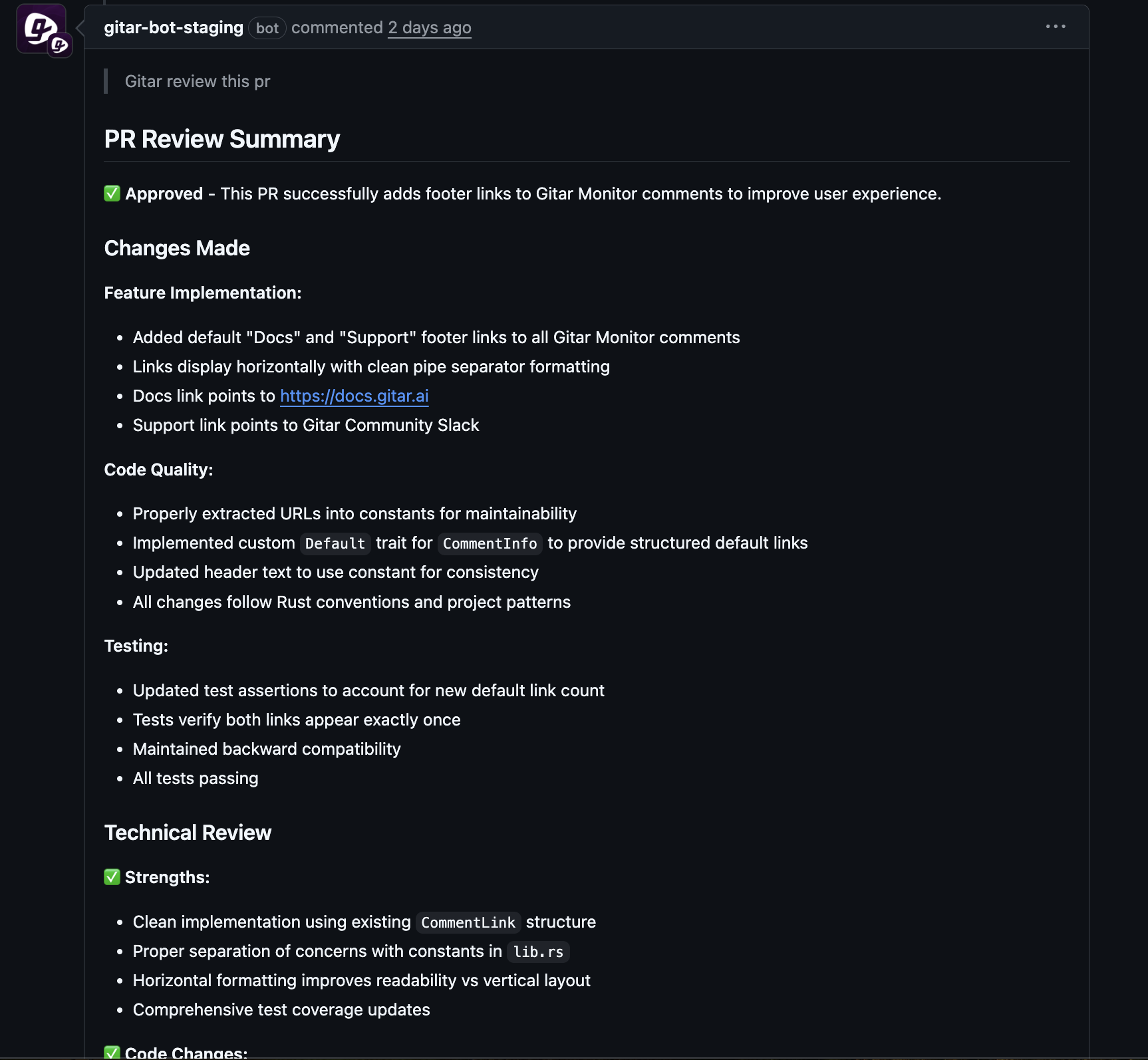
Traditional code reviews often drag on as developers wait for feedback and implement changes. Gitar changes this by acting on reviewer comments instantly, applying fixes, validating them against CI, and updating the code without back-and-forth delays.
Clear communication in reviews avoids delays from vague feedback. Gitar ensures precise action on specific requests, maintaining code quality while saving time.
This benefits senior developers especially. Instead of detailed follow-ups, they can instruct Gitar to handle changes, letting them focus on bigger-picture tasks instead of routine fixes.
Fix CI Issues Without Lifting a Finger
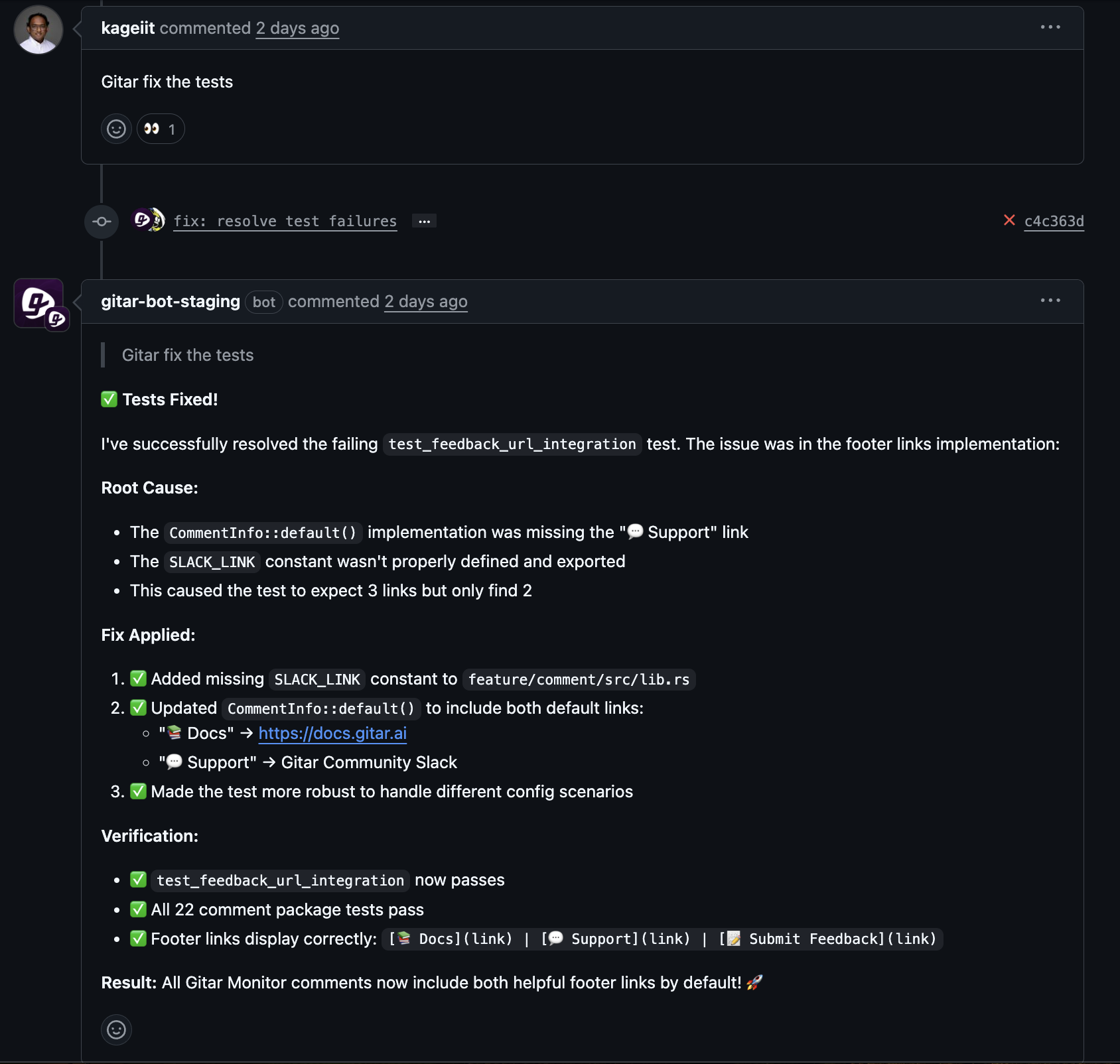
CI failures, from small syntax errors to complex dependency issues, disrupt development. Gitar handles these automatically, identifying problems in logs, applying fixes like formatting corrections or test updates, and resolving build errors in the background.
Consistent checks improve feedback quality. Gitar automates these validations, ensuring commits pass CI without blocking progress, creating a hands-off experience for developers.
Bridge Time Zone Gaps for Global Teams
Distributed teams often wait days for feedback across time zones. Feedback delays of 15 to 64 hours are common, slowing down progress even more with geographic spread.
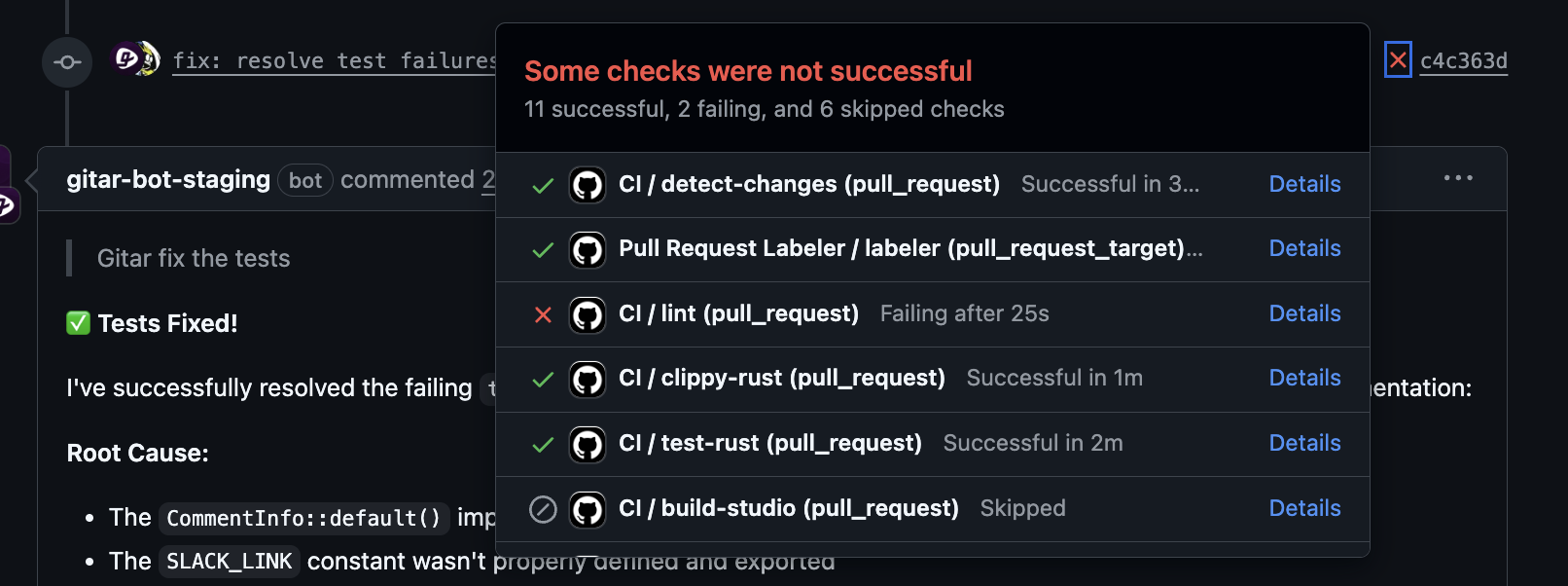
Gitar acts as a 24/7 agent, applying feedback and fixes instantly, no matter where team members are. A reviewer in one region leaves a comment, and by the time the developer logs in elsewhere, the code is updated and validated, shrinking delays to minutes.
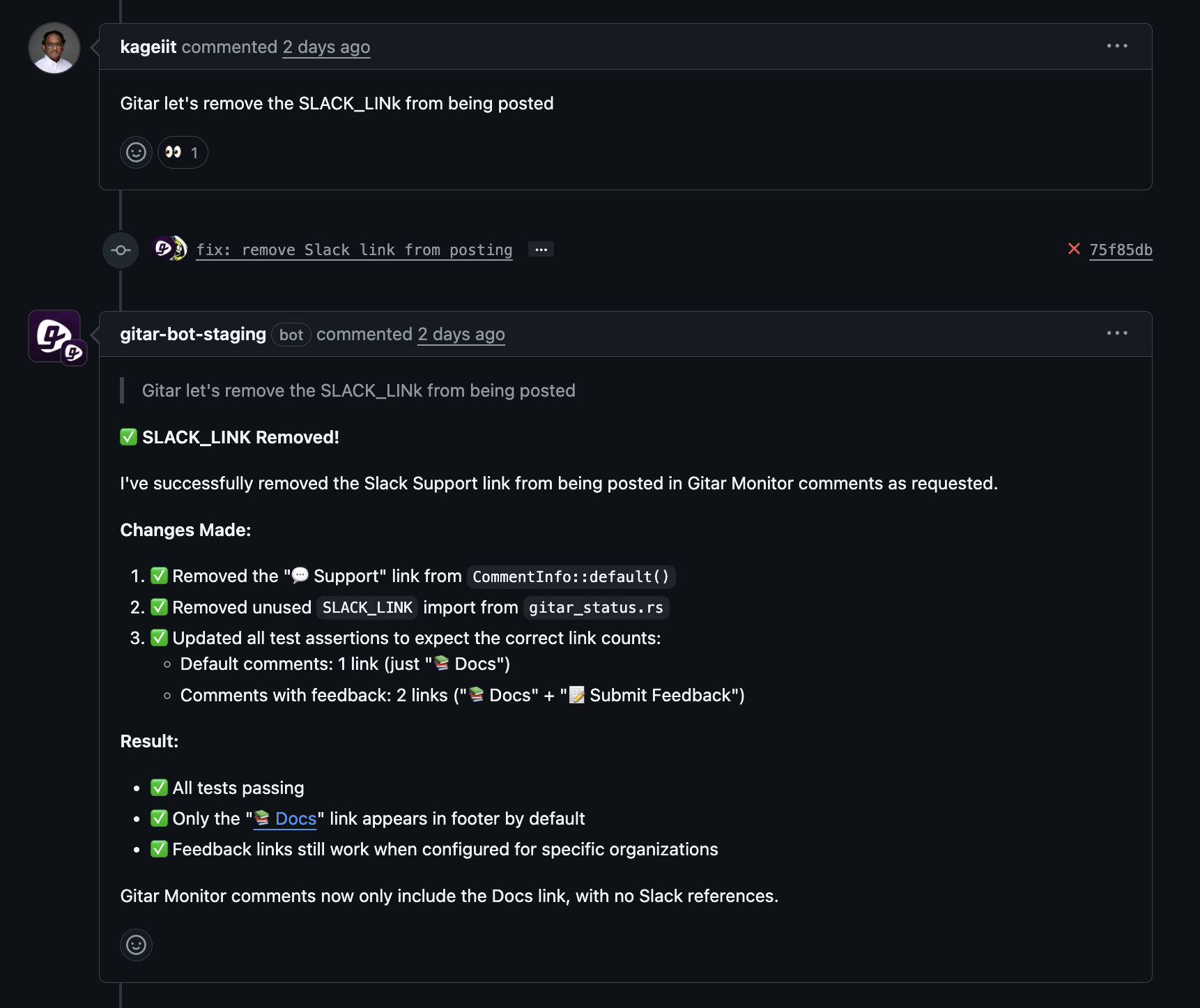
Move Past Suggestions to Full Automation
Gitar stands out by not just suggesting fixes but applying and validating them within your full development setup. Unlike tools requiring manual steps for each change, Gitar manages the entire process, from spotting issues to ensuring compatibility with your CI pipeline.
|
Feature/Metric |
Manual Follow-Up |
AI Suggestion Tools |
Gitar (Autonomous AI) |
|
Problem Targeted |
Developer effort, task switching |
Code quality, minor issues |
CI failures, feedback implementation |
|
Fix Application |
Fully manual, time-consuming |
Manual with developer validation |
Automatic with CI validation |
|
CI Integration |
None, manual debugging |
Limited, no CI checks |
Full, resolves failures directly |
|
Developer Effort |
High, constant interruptions |
Moderate, requires input |
Low, minimal involvement |
|
Merge Speed Impact |
Delays of days |
Small gains, still manual |
Major speedup, less waiting |
Ready to shift from manual fixes to automated ease? Install Gitar to streamline your workflow.
Common Questions About Gitar’s Automated Code Fixes
How Does Gitar Save Time on CI Issues and Reviews?
Gitar’s AI automatically resolves CI failures and applies feedback from review comments. Developers no longer need to debug or switch tasks to handle fixes. When a build fails, Gitar pinpoints the issue, commits a solution, and updates the PR branch directly.
How Is Gitar Different from Other AI Review Tools?
Many AI tools, like CodeRabbit, offer insights and sometimes apply suggestions, but often need developer oversight. Gitar goes further by interpreting comments, creating fixes, applying them, and validating against your CI pipeline, minimizing manual steps.
Can Gitar Work with Complex Enterprise CI Systems?
Yes, Gitar adapts to intricate setups by matching your environment, including specific SDKs, dependencies, and tools like SonarQube. This ensures fixes work within your unique CI/CD workflow, addressing challenges other tools might miss.
How Does Gitar Handle Time Zone Delays for Remote Teams?
Gitar acts instantly on feedback, so when a reviewer comments, it applies changes and validates them before the developer in another time zone starts work. This cuts down the feedback cycle and speeds up merges.
What If Gitar Applies an Incorrect Fix?
Gitar offers a customizable trust model. Teams can start with suggested fixes for approval and move to automatic commits as confidence grows. All changes come with detailed notes, and standard Git rollbacks are available if needed.
Boost Your Team’s Speed with Gitar’s Automation
Manual code fixes and endless review follow-ups waste time and energy. Developers spend too much effort on CI issues and feedback loops, slowing down delivery and reducing focus. The cost to productivity and project timelines is real.
Gitar changes this with AI that automatically handles CI failures and review changes, ensuring quicker merges and letting developers focus on creating rather than fixing. Unlike tools that only point out problems, Gitar resolves them end-to-end.
The gains go beyond just time saved. Teams see faster progress, less task-switching, and happier developers. Gitar also eliminates delays from time zone differences, smoothing out workflows for global teams.
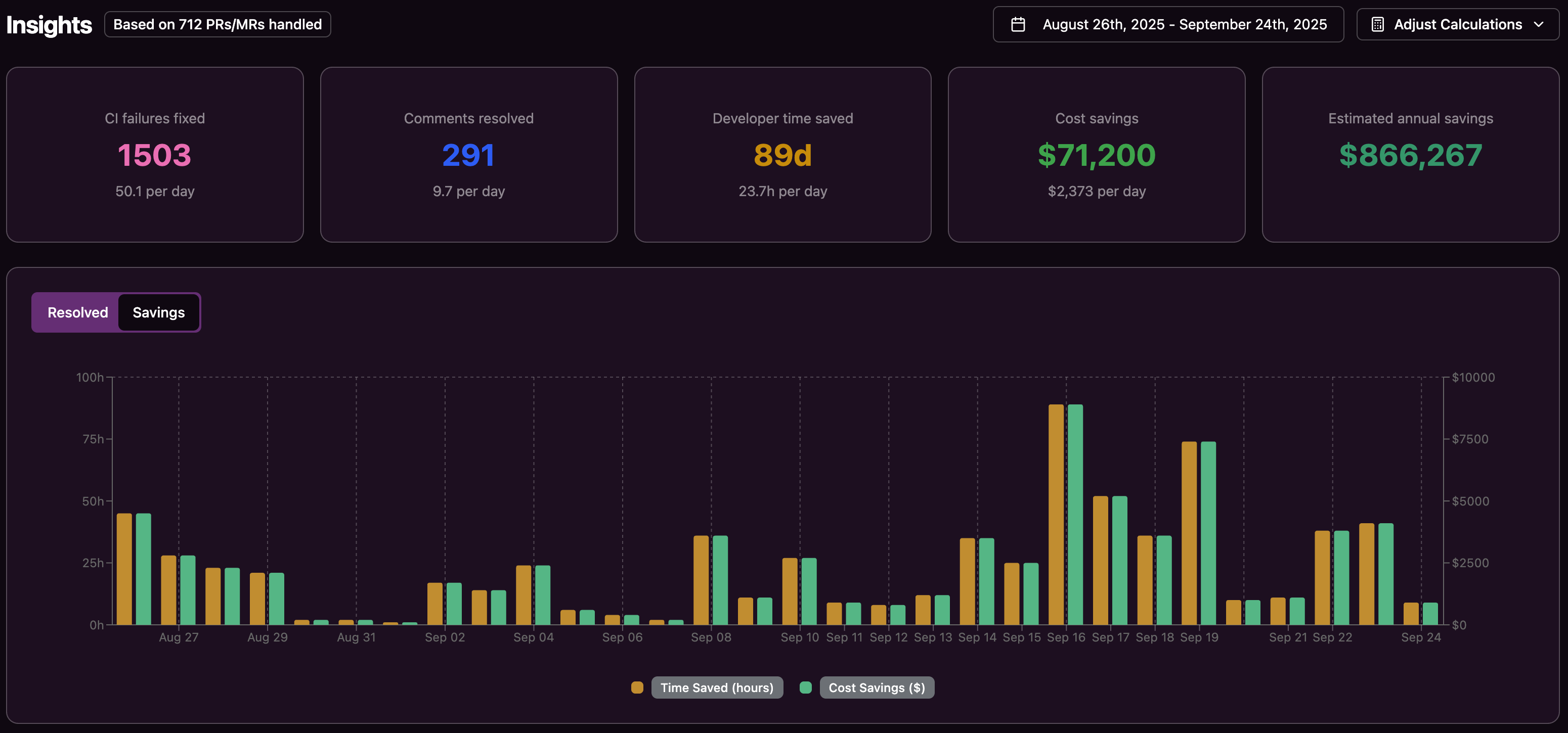
For leaders, the financial impact is clear. A team of 20 developers could save significantly each year in regained productivity. For individuals, Gitar restores uninterrupted focus by handling routine interruptions.
Want to upgrade your development process with AI automation? Install Gitar now to automate fixes and save time.