
Written by: Ali-Reza Adl-Tabatabai, Founder and CEO, Gitar
Key Takeaways for Cutting CI Reruns
- AI-generated code increases PR volume by 3-5x, causing 91% longer review times and 30% developer time wasted on CI reruns, costing teams $1M annually.
- Traditional tools like linters miss AI-specific bugs, while self-healing automated code review fixes failures proactively and keeps builds green.
- Gitar auto-fixes CI failures, implements review feedback, and guarantees green builds, unlike suggestion-only competitors like CodeRabbit.
- Follow 7 steps, including pre-commit hooks, AI pre-reviews, flaky test detection, and ROI tracking, to reach zero-rerun CI.
- Teams using Gitar report 75% less CI time and large cost savings; start your 14-day free Gitar trial today for full auto-fix access.
Why Basic Tactics Fall Short and Automated Review Closes the Gap
Traditional approaches like linters, pre-commit hooks, and static analysis tools provide baseline protection but leave manual loops intact. AI-generated code introduces unique bug patterns that standard tools miss. Preventing vulnerabilities pre-commit means fewer broken builds and faster merges, which directly reduces reruns.
Teams need systems that move beyond suggestion engines to self-healing workflows that automatically fix CI failures and implement review feedback. This shift from reactive comments to proactive automated code review marks the next evolution in reducing CI reruns and protecting developer time.
Why Gitar Eliminates Reruns While Others Only Suggest
Competitors like CodeRabbit and Greptile charge $15-30 per developer for suggestion-only tools, while Gitar provides a comprehensive healing engine that actually fixes code. Key differentiators include automatic CI failure resolution, review feedback implementation, and a single updating comment that eliminates notification spam. For more details on Gitar’s capabilities, see the Gitar documentation.
The table below shows how Gitar’s auto-fix capabilities compare to suggestion-only competitors across critical features.
|
Capability |
CodeRabbit/Greptile |
Gitar |
|
Auto-apply fixes |
No |
Yes |
|
CI auto-fix |
No |
Yes |
|
Green build guarantee |
No |
Yes |
|
Cross-platform support |
Limited |
GitHub/GitLab/CircleCI |
Try Gitar’s auto-fix capabilities free for 14 days with a Team Plan trial that includes full access to auto-fix features, custom rules, and all integrations, with no seat limits during the trial period.
Gitar’s approach uses CI failure analysis that automatically analyzes failures and provides insights while maintaining context across the entire development lifecycle. This continuous context enables the platform to support complex workflows integrated into daily software development with natural language rules instead of complex YAML configurations. See the Gitar documentation for setup instructions.
7 Steps to Zero-Rerun CI with Automated Code Review
Step 1: Enforce Pre-Commit Hooks and Linting
Start by enforcing baseline code quality gates using tools like Husky for Git hooks and ESLint for JavaScript or TypeScript projects. Configure pre-commit hooks to catch syntax errors, formatting issues, and basic code quality violations before they reach CI. This approach prevents the most common causes of immediate build failures and reduces noisy reruns.
Step 2: Add Static Analysis Gates Before PR Creation
Introduce static analysis tools like SonarQube, CodeQL, or language-specific analyzers as required checks before PR creation. Configure these checks to run automatically so developers see issues early, not after CI fails. These pre-PR gates catch security vulnerabilities, code smells, and complexity issues that would otherwise cause CI failures during the review process.
Step 3: Run AI Pre-Reviews on Every PR
Deploy automated code review tools that analyze PRs for logic errors, performance issues, and adherence to team standards. Configure these tools to run immediately when PRs are opened and whenever they are updated. Early feedback reduces the likelihood of reviewer-requested changes that trigger additional CI runs and slows merges.
Step 4: Kill Flaky Tests with AI Detection
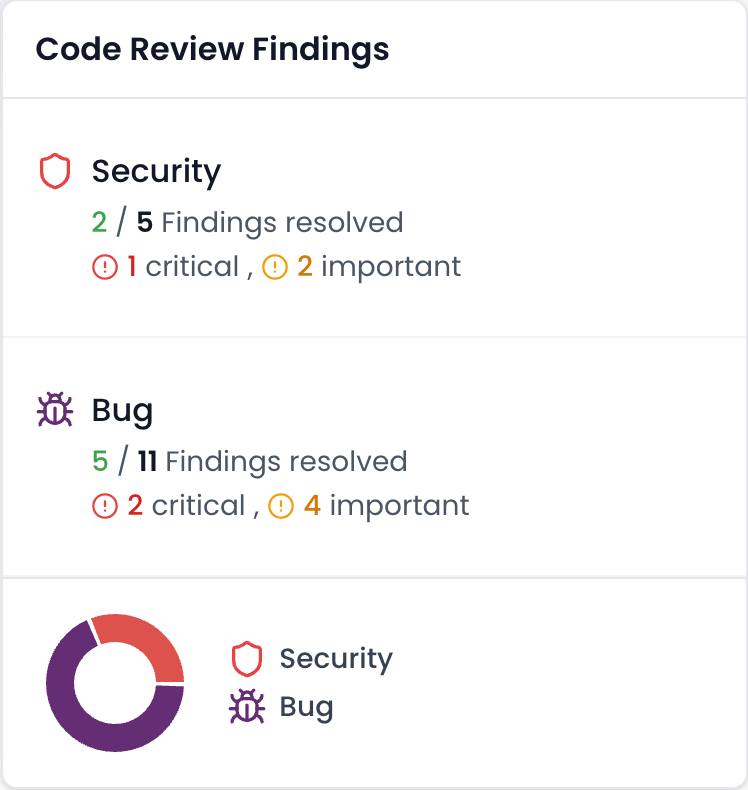
Target flaky tests with AI-powered systems that identify and handle inconsistent CI results. Gitar’s CI failure analysis deduplicates failures across multiple jobs and surfaces root causes without manual log analysis. The platform automatically retries flaky CI jobs and distinguishes between infrastructure issues and actual code problems. For configuration details, refer to the Gitar documentation.
Step 5: Automate CI Failure Fixes
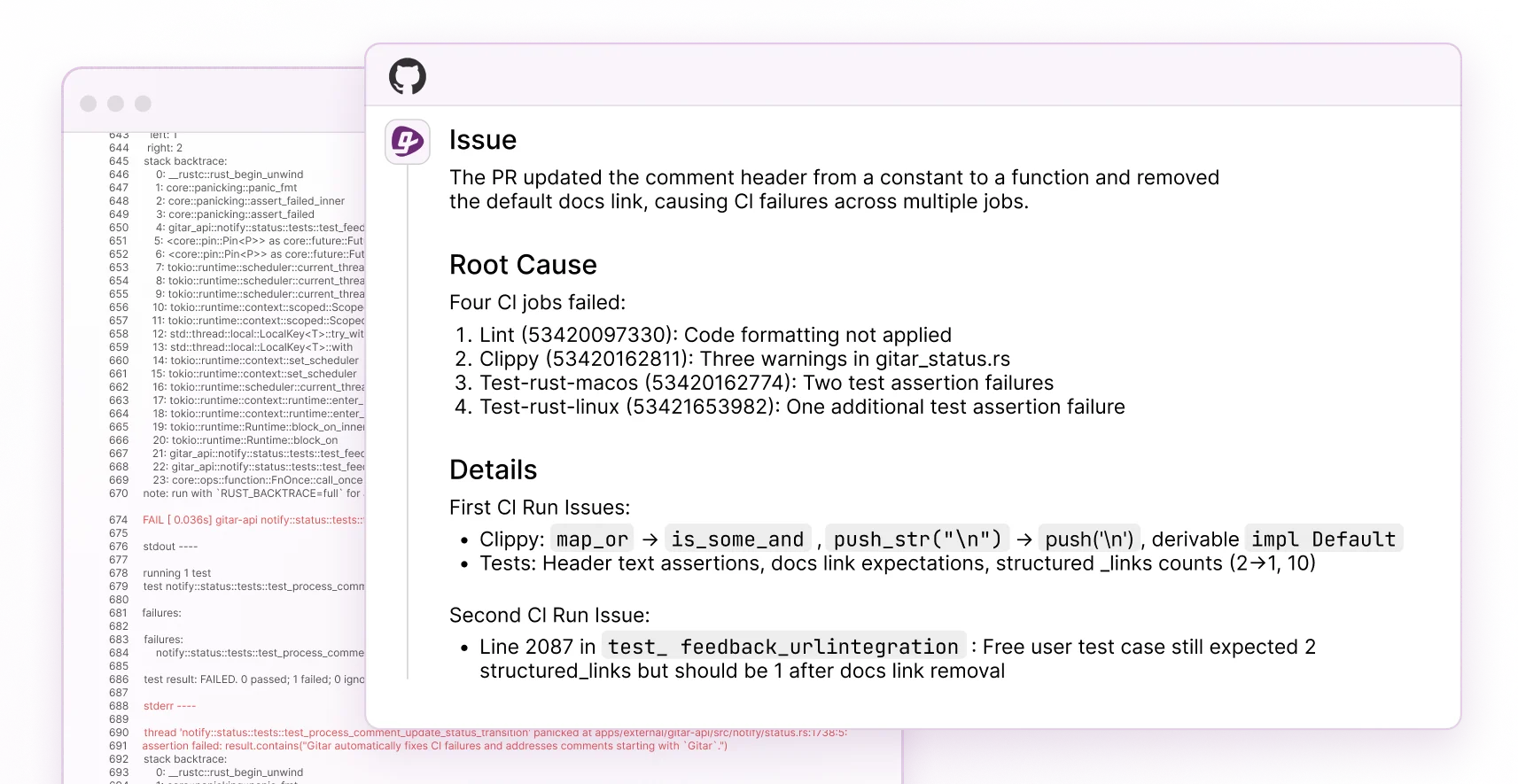
Adopt self-healing CI systems that automatically analyze failure logs, generate fixes, and commit corrections. Gitar’s CI agent maintains full context from PR opening to merge, works continuously to keep CI green, finds root causes of failures, and verifies results within your team’s CI environment. This automation removes the manual cycle of failure investigation and fix implementation. See the Gitar documentation for implementation guidance.
Step 6: Right-Size PRs and Use Natural Language Rules
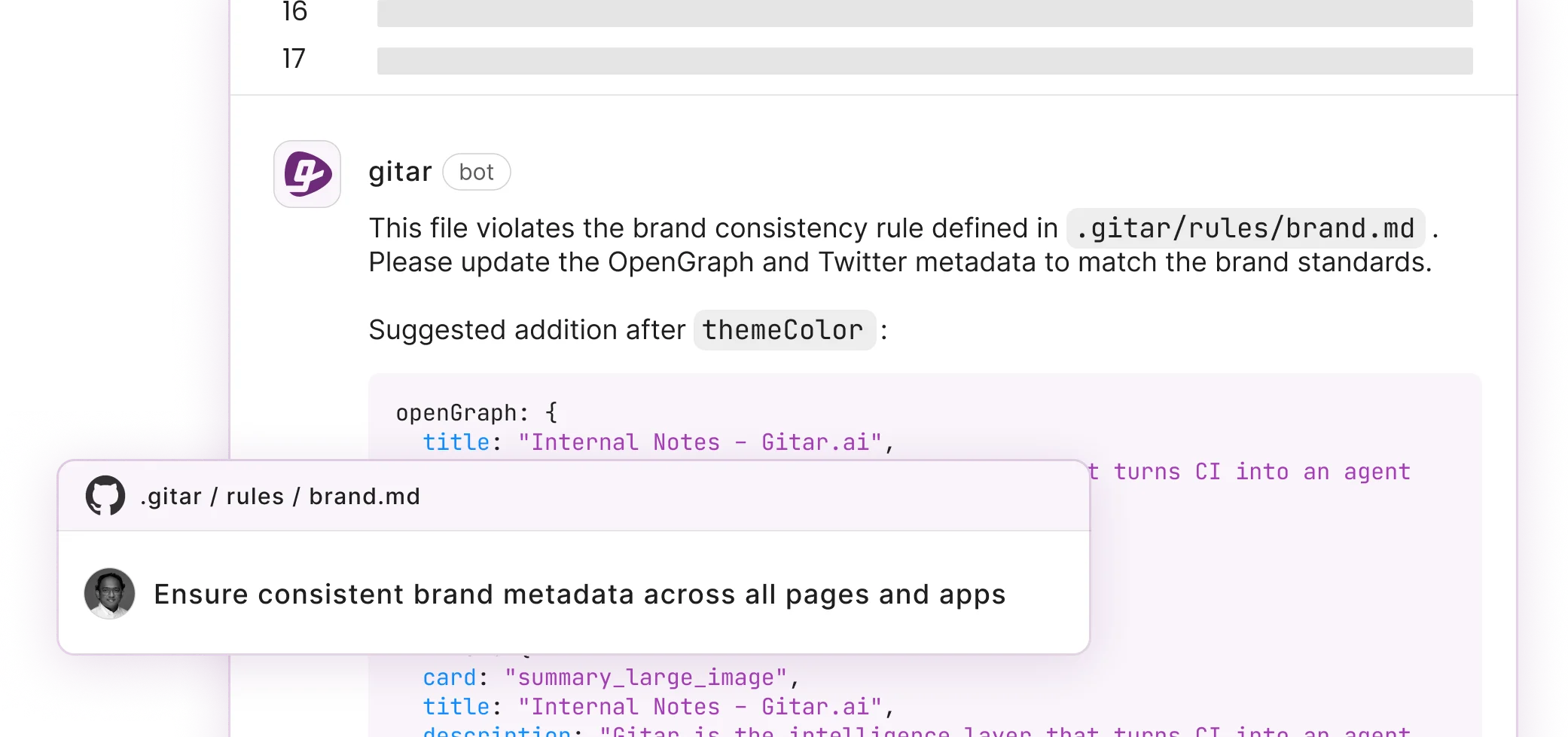
Set policies for smaller, focused PRs that reduce complexity and failure probability. Encourage developers to group related changes and avoid large, multi-purpose PRs that are harder to review and more likely to break. Use natural language automation rules to handle routine tasks like assigning reviewers, adding labels, and triggering specific workflows based on code changes. This approach reduces human error and keeps processes consistent.
Step 7: Track ROI and Iterate on Your Workflow
Track key metrics to quantify improvements and uncover new optimization opportunities. Teams implementing self-healing pipelines report 50% reduction in debugging effort and meaningful productivity gains. The table below shows typical before-and-after metrics from teams that have implemented automated code review with Gitar.
|
Metric |
Before |
After |
Improvement |
|
Daily CI time per developer |
1 hour |
15 minutes |
75% reduction (as highlighted above) |
|
Annual productivity cost (20 devs) |
$1M (as noted earlier) |
$250K |
$750K savings |
|
Context switching interrupts |
Multiple daily |
Near-zero |
95% reduction |
Real Teams Reducing Reruns with Gitar
Engineering teams using Gitar report significant time savings and improved development velocity. Tigris noted that Gitar’s PR summaries are “more concise than Greptile/Bugbot,” which helps reviewers focus on what matters. Collate’s engineering lead highlighted the “unrelated PR failure detection” as saving “significant time” by distinguishing infrastructure flakiness from actual code issues.
The platform’s single updating comment approach reduces cognitive load compared to competitor notification spam, while maintaining comprehensive context that improves over time. Teams feel the difference between suggestion engines and healing engines when lint failures get fixed automatically before developers even notice them.
See these results in your own workflow by starting your free trial.
FAQ: Reducing Reruns with Automated Code Review
How does Gitar’s auto-fix differ from CodeRabbit or other suggestion tools?
Gitar validates fixes against your actual CI environment and commits working solutions, while suggestion tools only provide comments that require manual implementation. Gitar’s healing engine guarantees the fix works by testing it in your specific build environment with access to your dependencies, secrets, and configurations.
Is automated code fixing safe for complex CI environments?
Gitar emulates your full CI environment including specific SDK versions, multi-dependency builds, and third-party integrations. The platform offers configurable automation levels, so you can start in suggestion mode to build trust, then enable auto-commit for specific failure types. Enterprise deployments run the agent inside your own CI with full access to your infrastructure.
What does the 14-day trial include?
The free trial provides complete Team Plan access including auto-fix capabilities, CI failure analysis, custom repository rules, and integrations with GitHub, GitLab, CircleCI, Jira, and Slack. There are no seat limits during the trial period, allowing your entire team to experience the full platform.
How does Gitar reduce GitHub Actions reruns specifically?
Gitar integrates natively with GitHub Actions to analyze workflow failures, identify root causes, and automatically implement fixes. The platform handles common GitHub Actions issues like dependency conflicts, test failures, and build configuration errors while maintaining full context across your workflow ecosystem.
Can I trust automated commits to my repository?
Gitar provides multiple safety modes and approval workflows. You can configure the platform to require approval for all fixes, auto-approve specific types of changes such as lint fixes, or enable full automation for trusted scenarios. All automated commits are clearly marked and include detailed explanations of the changes made.
Guarantee Green Builds Today
The shift from AI code generation to AI code validation represents the next phase of development automation. Suggestion engines charge premium prices for basic commentary, while Gitar’s healing engine actually fixes the code and guarantees green builds. For detailed setup and usage instructions, visit the Gitar documentation.
Experience self-healing CI in your environment with a free 14-day trial and see the difference between suggestions and solutions.