
Key Takeaways
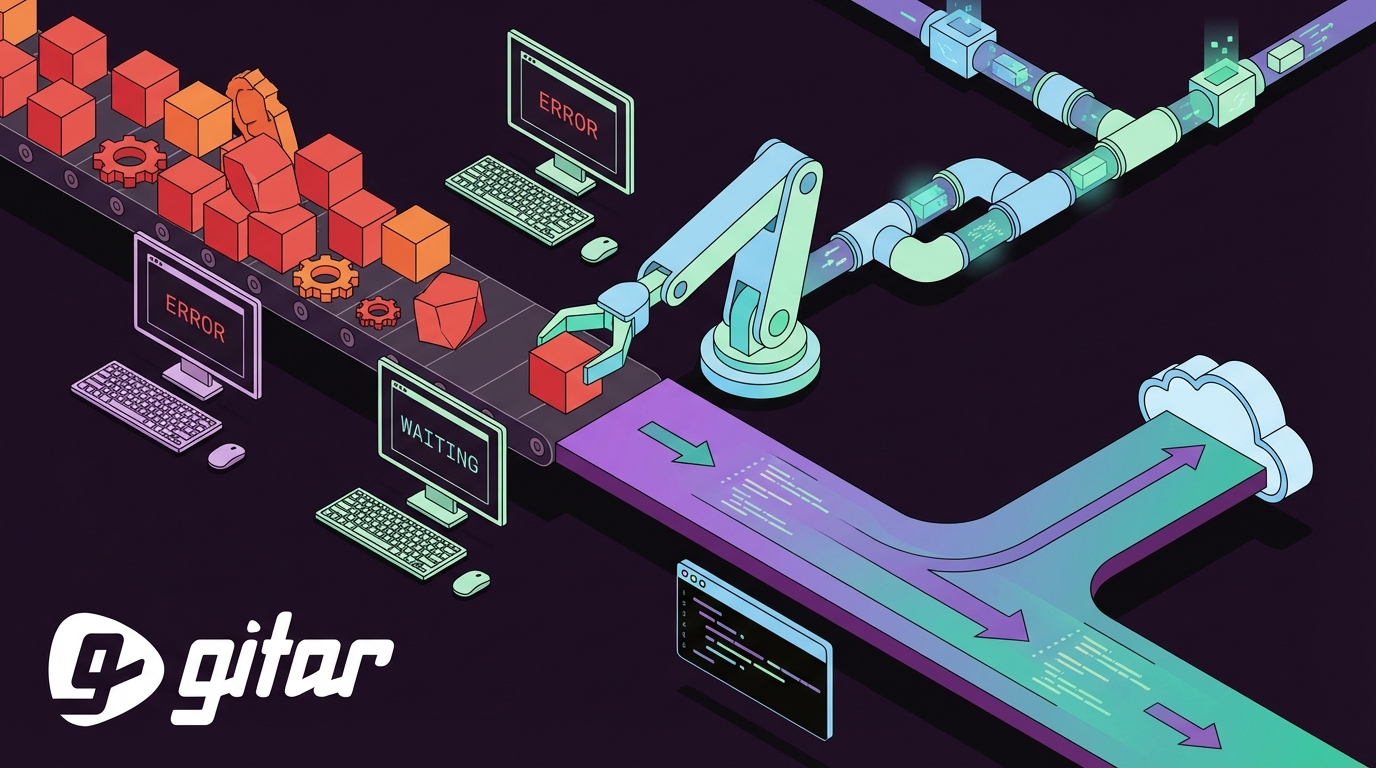
- QA bottlenecks from CI failures and slow code reviews drain developer time, delay releases, and increase costs across engineering teams.
- Self-healing CI pipelines and automated feedback implementation shorten cycle times and protect developer focus from constant context switching.
- Autonomous automation works best with a phased rollout that starts in suggestion mode, then progresses to higher levels of trust and auto-commit.
- Clear success metrics such as CI cycle time, time-to-merge, and developer hours spent on fixes help demonstrate ROI and guide adoption decisions.
- Gitar reduces QA bottlenecks by autonomously fixing CI failures and review feedback, and teams can get started quickly through the Gitar installation flow.
The Hidden Costs of QA Bottlenecks in Modern Software Development
Developer Productivity Drain: The Cost of CI Failures and Code Review Bottlenecks
QA bottlenecks extend far beyond visible debugging time. CI pipeline failures can consume up to 30% of developers’ time, creating a large hidden productivity drain. For a 20-person engineering team, this can reach roughly $1 million per year in lost productivity when factoring in loaded developer costs, context switching overhead, and delivery delays.
The context switching tax hits developer flow state directly. When engineers alternate between feature work and CI troubleshooting, a simple 5-minute fix can expand into an hour of lost focus. CI build failures interrupt concentration and block the deep work needed for complex problem-solving.
Around 60% of companies experience project delays tied to CI pipeline failures, which affects launch timelines and weakens customer trust. Late-cycle fixes then become more expensive than early, automated remediation.
Strategic Imperative: Why Automating QA Bottlenecks Matters
The rise of AI-assisted coding tools created a new bottleneck on the right side of the pipeline. Tools like GitHub Copilot accelerate code generation, yet they still depend on careful validation and review to maintain quality. Without automation that reduces QA friction, post-commit processes can constrain overall velocity.
Pipeline performance correlates closely with delivery speed. Teams with efficient CI cycles tend to deploy more frequently and respond to change faster, which strengthens competitive position in fast-moving markets.
Introducing Gitar: Autonomous Automation to Reduce QA Bottlenecks
Gitar shifts QA from reactive troubleshooting to proactive, autonomous bottleneck reduction. Traditional suggestion engines highlight problems and leave remediation to humans. Gitar functions as a CI healing engine that detects, diagnoses, and resolves common QA failure points.
End-to-end autonomous fixing allows Gitar to apply code changes, run them through the full CI workflow, and only present pull requests once all checks pass. This removes much of the manual validation loop that keeps developers stuck in CI repair work.
Full environment replication lets Gitar emulate complex CI ecosystems, including specific JDK versions, multi-SDK builds, security scans such as SonarQube or Snyk, and snapshot testing. Fixes match real-world environments rather than generic assumptions.
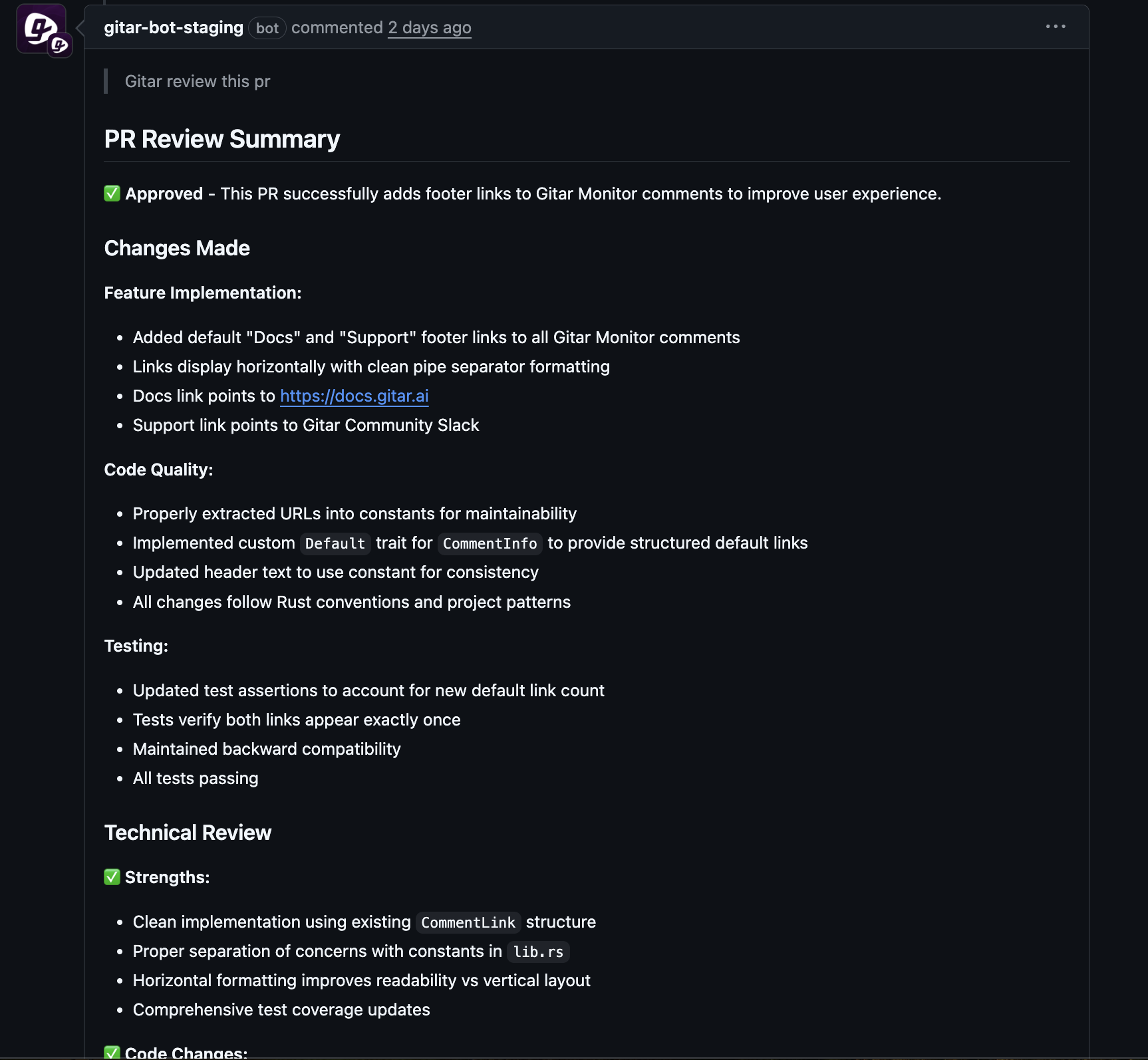
Intelligent code review automation enables Gitar to implement review feedback directly. For distributed teams, this feature shortens review cycles and limits delays caused by time zones.
Cross-platform CI/CD support covers GitHub Actions, GitLab CI, CircleCI, BuildKite, and other major platforms, which simplifies rollout across varied stacks.
A configurable trust model gives teams control over automation levels, from suggestion-only behavior to auto-commit with rollback for higher-confidence workflows.
Install Gitar to automatically fix broken builds and reduce QA bottlenecks.
A Strategic Framework for Addressing QA Bottlenecks with Automation Tools
Understanding the Landscape: Evolution of Automation in QA
The automation landscape evolved from simple test execution to more intelligent remediation. Early test automation improved execution speed but rarely helped with failure resolution. AI-assisted code review tools then emerged as suggestion engines that highlight issues but still require manual diagnosis, fixing, and validation.
Autonomous tools now act as healing engines that close the loop from detection to validated resolution. Autonomous CI fixing tools focus on turning failing builds into green builds without human intervention, which directly targets QA bottlenecks at their source.
Key Strategic Considerations and Trade-offs for Implementation
Build versus buy decisions matter for autonomous CI capabilities. Internal efforts demand investment in agent architecture, context management, event processing, and accurate environment replication. Supporting concurrent operations across multiple CI platforms quickly becomes resource-intensive.
Resource requirements include integration work, team training, and process updates. Even partial success can provide a strong ROI. If a 20-person team cuts CI and review-related interruptions by 50%, the resulting time savings can reach hundreds of thousands of dollars annually while improving satisfaction and retention.
Organizational change management strongly influences outcomes. Phased rollout with conservative modes first helps teams build trust in automation before enabling auto-commit behavior.
Success metrics should cover reduced CI cycle time, shorter time-to-merge, fewer developer hours spent on CI and review fixes, and faster delivery. These metrics support ongoing investment decisions.
Advanced Strategies to Effectively Reduce QA Bottlenecks
Implementing Self-Healing CI Pipelines to Minimize Dev Blockers
Self-healing CI pipelines keep development moving when failures occur. Automated diagnosis and repair reduce context switching, protect focus, and accelerate shipping.
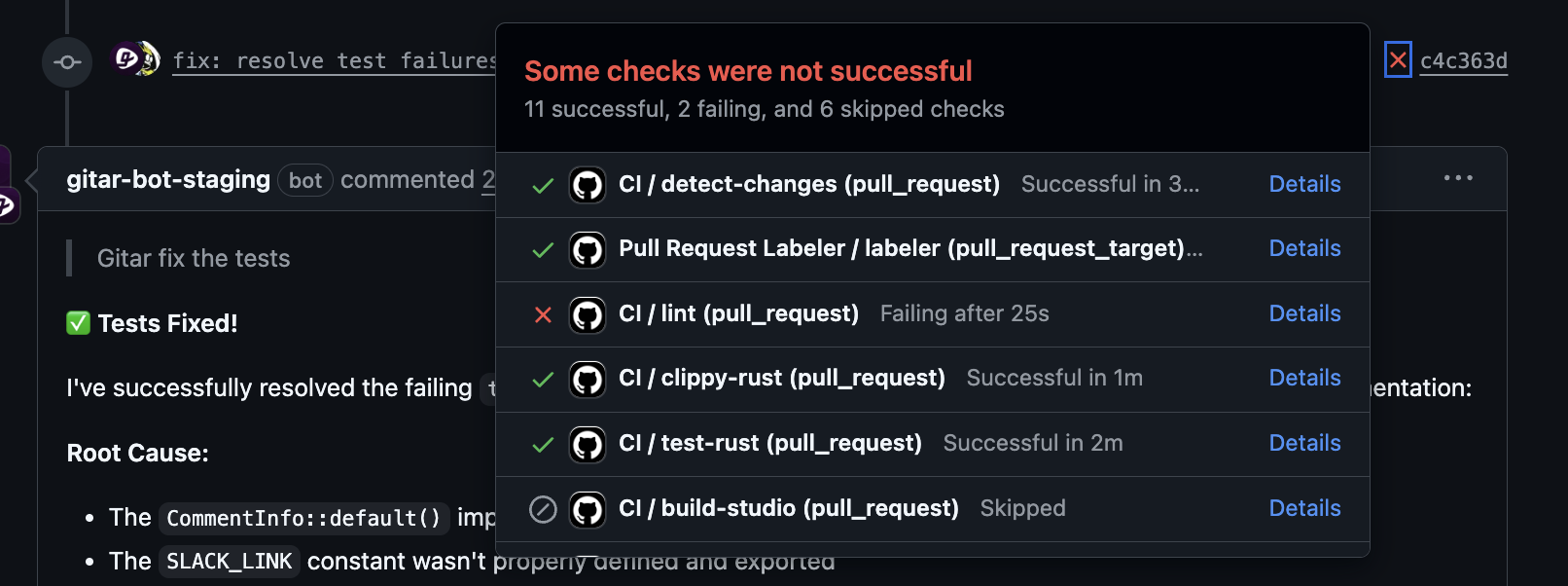
Effective setups monitor CI events in real time, analyze logs, and generate validated fixes. When a check fails because of linting issues, test failures, or build errors, the system identifies the root cause, applies a change, and commits the fix back to the pull request branch.
Advanced pipelines support enterprise needs such as multi-SDK builds, dependency conflicts, and integrations with security scanning tools. Fixes then stay aligned with compliance and security standards.
Accelerating Code Review Cycles with Automated Feedback Resolution
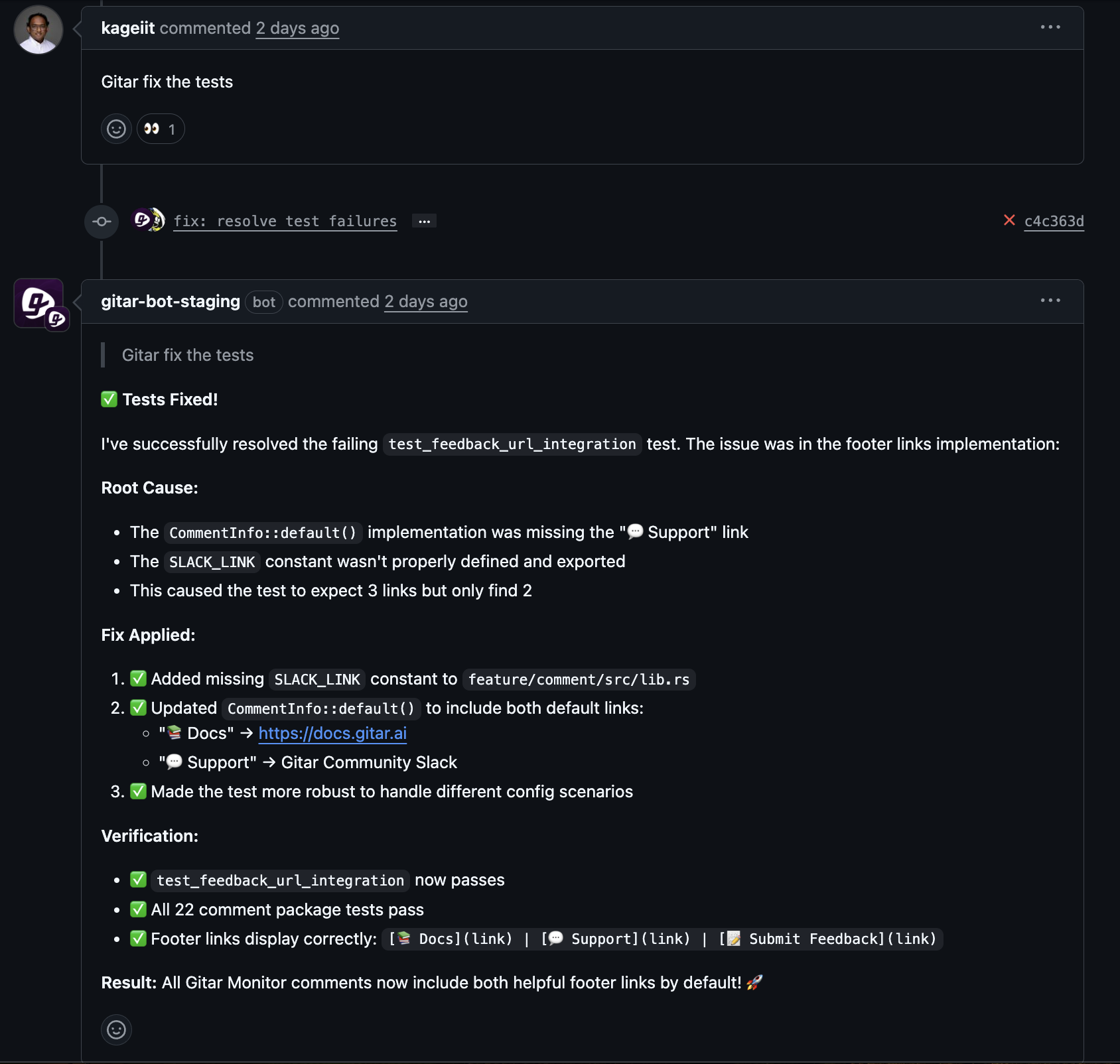
Long-lived pull requests slow down features and raise risk. Automated feedback resolution focuses on implementing review comments, not just highlighting them.
Reviewers can leave clear instructions that the automation system turns into concrete code changes. Distributed teams benefit because reviews can move forward while people are offline, which shortens overall cycle time.
Boosting Developer Flow and Morale by Reducing Context Switching
Context switching imposes a major hidden cost on engineering work. CI failures and review rework force repeated log analysis, debugging, and retesting.
Autonomous QA automation runs remediation in the background. Developers stay focused on feature development while the system detects, analyzes, and resolves many failures. This supports the sustained concentration needed for complex tasks and reduces day-to-day frustration.
A Phased Approach to Implementing Autonomous Automation
Assessing Organizational Readiness for Automation Deployment
Organizations benefit from an initial readiness check before deploying autonomous tools. Useful signals include CI failure frequency, average resolution time, developer hours spent on manual fixes, comfort with AI-assisted tools, and CI/CD complexity.
High-readiness teams often see frequent CI disruptions, heavy time spent on routine debugging, and delays caused by distributed review schedules. Strong rollback and monitoring practices also support faster movement toward higher automation levels.
Step-by-Step Implementation Strategy with Gitar for Reducing QA Bottlenecks
Phase 1 focuses on initial setup and trust building. Teams authorize the GitHub App on selected repositories and configure Gitar in conservative mode, where fixes appear as suggestions that require approval. This preserves control while teams evaluate quality.
Phase 2 introduces gradual automation. Teams allow Gitar to resolve lower-risk issues autonomously. Confidence grows as developers see failing builds repaired automatically, with clear commit messages and traceable changes.
Phase 3 expands to advanced workflows. Teams can enable automated refactoring based on review feedback, optimize workflows for distributed teams, and apply full auto-commit modes where appropriate. This phase maximizes productivity while maintaining safeguards.
Install Gitar to start a phased rollout of autonomous CI fixing and review automation.
Quantifying the Impact: Measuring ROI and Success Metrics
ROI measurement should capture both direct time savings and broader organizational impact. Primary indicators include shorter CI cycles, less time-to-merge, and fewer developer hours tied to CI and review issues.
Secondary indicators include improved development velocity, higher developer satisfaction scores, lower turnover, and faster onboarding for new engineers who benefit from self-healing pipelines.
Financial models often use loaded developer costs, opportunity costs from delayed features, and changes in retention. A 20-developer team that cuts QA bottleneck time in half can unlock significant annual savings and deliver features faster.
Common Pitfalls to Avoid When Adopting Automation Tools to Reduce QA Bottlenecks
Over-reliance on suggestion engines can limit results. Tools that only point out issues but do not apply and validate fixes leave most of the bottleneck in place.
Neglect of organizational change management can slow adoption. Teams need time, transparency, and clear controls to build trust in autonomous behavior.
Underestimating environmental complexity often leads to poor outcomes. Generic tools may struggle with specific dependencies, multi-language builds, and production-grade security checks.
Isolated focus on CI while ignoring code review leaves value on the table. QA bottlenecks often come from both build instability and slow feedback cycles.
Lack of clear ROI tracking makes it harder to sustain investment. Simple, visible metrics help leaders advocate for continued automation work.
Comparative Analysis: Gitar’s Autonomous Approach vs. Traditional and AI-Assisted Tools
|
Tool Category |
Automation Level |
CI Validation |
Impact on Flow |
|
Manual Work (Status Quo) |
None |
Manual re-run |
Highly disruptive |
|
AI Code Reviewers |
Low (insights only) |
None |
Moderately disruptive |
|
On-Demand AI Fixers |
Medium (triggered) |
Manual re-run |
Moderately disruptive |
|
Gitar (Autonomous CI Fixing) |
High (autonomous healing) |
Automatic with successful CI runs |
Flow-preserving |
The key difference lies in Gitar’s healing engine approach compared with suggestion-only tools. AI code reviewers surface insights but leave most remediation work to developers. Gitar completes the cycle from detection through validated resolution.
Install Gitar to compare autonomous CI fixing with your current QA workflow.
Frequently Asked Questions (FAQ) about Reducing QA Bottlenecks
We already use AI reviewers like CodeRabbit. How is Gitar different for reducing QA bottlenecks?
AI reviewers such as CodeRabbit focus on identifying issues and may suggest patches, but they usually require developer oversight for both implementation and validation. Gitar autonomously applies fixes, runs them through your CI workflow, and aims to return green builds with minimal manual intervention.
We are concerned about trusting automated fixes. How do you ensure accuracy and control?
Gitar supports configurable automation levels. Conservative mode posts fixes as suggestions for review to build confidence. Teams can later move to more automated modes that apply fixes directly, backed by rollback options and full visibility.
Our CI setup includes multi-SDK builds and custom security tools. Can Gitar handle this complexity?
Gitar replicates full CI setups, including specific JDK versions, multi-SDK dependencies, and third-party scans such as SonarQube and Snyk. Fixes are generated with this context in mind.
How does Gitar help with context switching that contributes to QA bottlenecks?
Gitar turns many context-switching events into automated workflows. When CI failures or review comments appear, Gitar analyzes them, generates fixes, and validates changes so developers can stay focused on core feature work.
What ROI can we expect from automation tools that reduce QA bottlenecks?
A 20-developer team spending an hour a day on CI failures and review issues carries a substantial annual cost. Cutting that time even by half produces meaningful financial savings and higher effective velocity.
Conclusion: Turning QA Bottlenecks into a Strategic Advantage
QA bottlenecks from CI failures and extended review cycles act as strategic constraints on engineering output. More stable, self-healing pipelines support higher morale and more predictable delivery.
The shift from manual to autonomous systems changes how organizations think about both quality and speed. Early adopters in 2024 and 2025 already treated autonomous QA solutions as a core part of their delivery stack.
In 2026, tools like Gitar provide practical infrastructure for scaling software delivery while maintaining standards. Organizations that implement autonomous QA sooner can move work through their pipelines more reliably and with less developer friction.
Install Gitar to reduce QA bottlenecks and support faster, more reliable releases.