
Written by: Ali-Reza Adl-Tabatabai, Founder and CEO, Gitar
Key Takeaways
- AI code review bots have increased PR review times by 91% because of notification floods and false positives from AI-generated code.
- Tune linters like ESLint and Pylint to ignore AI patterns, which can reduce noise by 50–80% with focused rules.
- Implement severity-based filtering so security and logic issues come first, while style suggestions move to the background.
- Use single-comment consolidation and changed-lines-only analysis to remove spam and keep attention on relevant changes.
- Gitar eliminates noise with autonomous fixing and a single updating dashboard comment. See how Gitar achieves 90%+ noise reduction in your workflow.
7 Practical Ways to Reduce Noise from AI Code Review Automation Bots
The strategies below move from quick configuration tweaks to deeper workflow changes. Start with linter tuning and filtering, then layer on consolidation and auto-fix to cut noise at the source.
1. Tune Linters for AI-Generated Code
Configure ESLint and Pylint to ignore common AI code patterns that generate false positives. Focused rule sets can reduce noise by 50–80% when they match your actual code patterns. To connect these tuned linters with Gitar’s automated fixing workflow, see the Gitar documentation.
For ESLint, add this to your .eslintrc.json:
{ “ignorePatterns”: [“**/*.ai-generated.js”, “**/generated/**”], “rules”: { “no-unused-vars”: “warn”, “prefer-const”: “warn”, “no-console”: “off” } }
For Pylint, configure .pylintrc:
[MESSAGES CONTROL] disable=invalid-name,too-many-locals,line-too-long [BASIC] good-names=i,j,k,ex,Run,_
2. GitHub Bot Suppression Workflows
Use GitHub workflows to keep noisy bot comments out of your main review threads. Route specific bot activity into separate threads so human feedback stays visible.
Create .github/workflows/bot-mute.yaml to route noisy bot comments to separate threads:
name: Bot Comment Management on: pull_request_review_comment: jobs: mute-bots: if: github.actor == ‘coderabbit-ai[bot]’ || github.actor == ‘llamapreview’ runs-on: ubuntu-latest steps: – name: Minimize bot noise run: echo “Routing to consolidated thread”
3. Severity-Based Issue Prioritization
Filter AI review output by impact level so your team sees the most critical issues first. Prioritize security vulnerabilities and logic errors over style suggestions to keep reviews focused on real risk. For implementation details that plug into Gitar’s workflow, see Gitar’s severity filtering documentation:
issues = filter( lambda x: x.severity in [‘security’, ‘logic’, ‘performance’], bot_output ) critical_only = [issue for issue in issues if issue.impact == ‘breaking’]
4. Changed-Lines-Only Filtering
Limit analysis to modified lines so bots stop flagging unrelated legacy code. This keeps reviews tight and aligned with the current pull request.
Configure linters to analyze only modified code, not entire files:
eslint –ext .js,.ts $(git diff –name-only HEAD~1 HEAD | grep -E ‘\.(js|ts)$’)
This approach cuts false positives from untouched legacy code that is not part of the current change.
5. ML Model Tuning for Context
Guide AI reviewers with prompts that focus on issues that actually matter. Clear instructions reduce style chatter and keep attention on correctness and safety.
Customize AI review prompts to focus on actionable issues:
“Ignore style preferences. Flag only: runtime errors, security vulnerabilities, logic bugs, and performance regressions. Provide specific fix suggestions.”
6. Single-Comment Consolidation
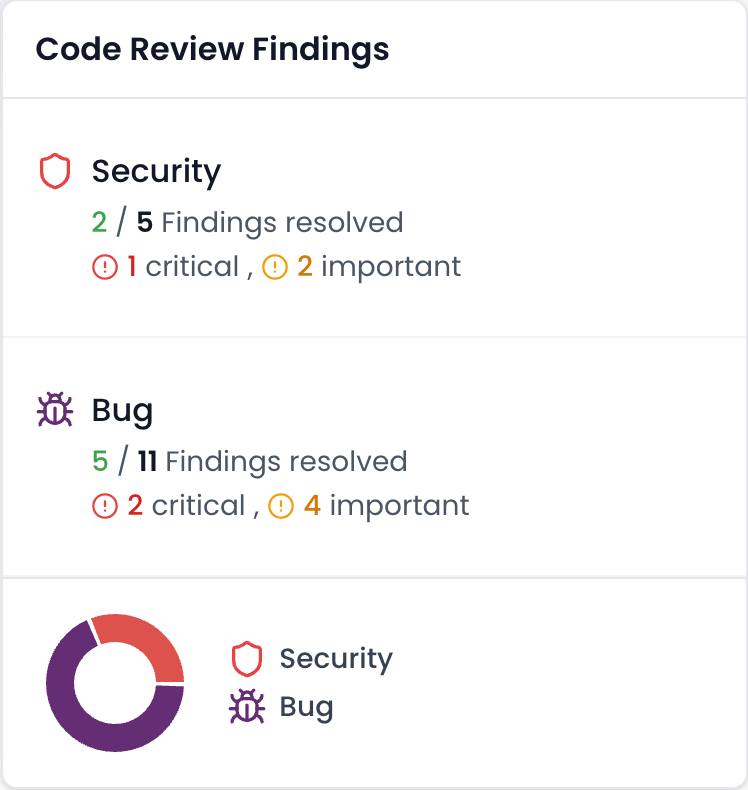
Gitar consolidates all findings into one living Dashboard comment that updates in real time, which removes notification spam from scattered inline comments. Install the GitHub App and enable single-comment mode to bring all findings into a single, easy-to-scan view.
- Phase 1: Install Gitar GitHub App to connect your repositories.
- Phase 2: Configure single-comment mode in settings, which consolidates all findings into one dashboard comment.
- Phase 3: As your team resolves issues, watch them collapse automatically inside that dashboard comment.
- Phase 4: Once you trust the workflow, enable auto-cleanup so the dashboard comment disappears when all issues are addressed.
7. Auto-Fix Elimination of Manual Work
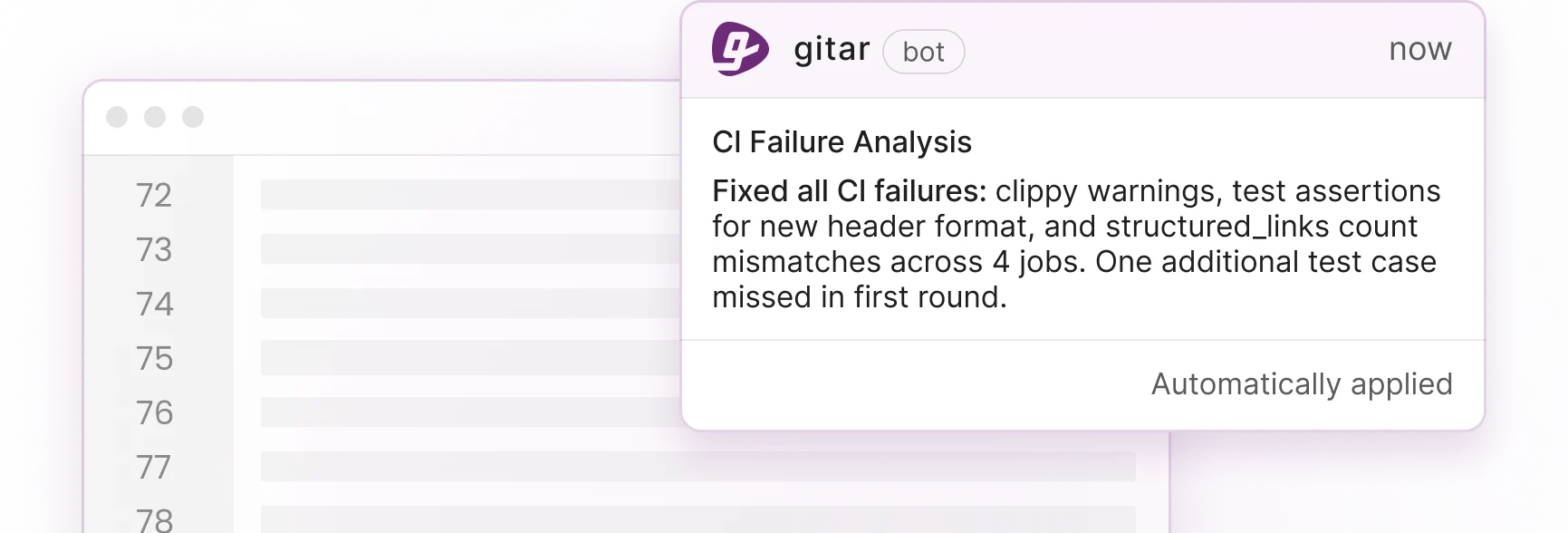
Gitar automatically analyzes CI failures, generates fixes, and commits them. This removes the manual work of turning review suggestions into code changes. For configuration details and supported workflows, explore the Gitar documentation.
The table below shows how Gitar’s healing approach differs from suggestion-based tools in ways that directly affect noise levels and developer effort.
|
Capability |
Suggestion Bots (CodeRabbit/Greptile) |
Gitar |
|
Inline comment spam |
Yes |
No, single updating comment |
|
Manual fix implementation |
Required |
Automatic and validated |
|
CI failure handling |
None |
Full auto-resolve |
Teams using Gitar report meaningful productivity gains and smoother reviews. Gitar supports GitHub, GitLab, CircleCI, and integrates with Jira and Slack for end-to-end visibility.
Cut Bot Noise Directly Inside GitHub
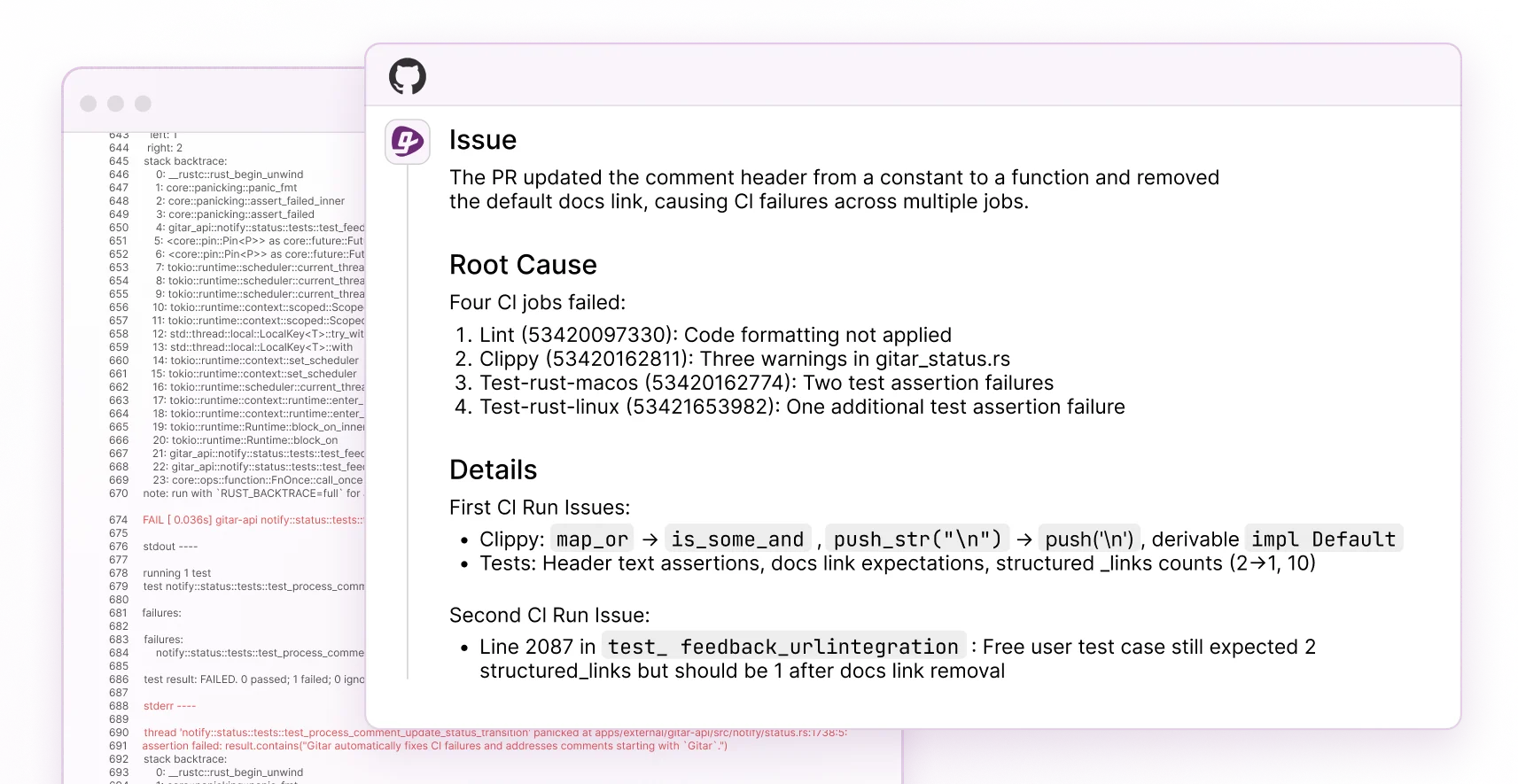
GitHub-specific configurations unlock another layer of noise reduction on top of the seven strategies above. Gitar’s single-comment mode works natively with GitHub’s interface so reviewers see one evolving summary instead of dozens of scattered notes. At the same time, Judge guardrails filter irrelevant inputs and deduplicate outputs across PR comments and code reviews, which keeps only high-signal findings in view. For full setup instructions and examples, refer to the Gitar documentation.
To further reduce clutter, configure GitHub Actions to suppress redundant bot notifications and point reviewers to the consolidated thread:
– name: Consolidate bot feedback if: contains(github.event.comment.body, ‘@coderabbit’) run: | gh pr comment ${{ github.event.number }} –body “Consolidated feedback available in main thread”
From LlamaPReview Tweaks to Gitar’s Healing Engine
LlamaPReview can reduce comment frequency when you adjust its YAML workflows. You can throttle how often it comments and narrow which events trigger reviews. These changes help, but they still leave you with suggestion streams that require manual follow-through.
Switching to Gitar’s autonomous fixing approach brings the noise reduction mentioned earlier by removing most manual review cycles. Instead of reading and applying suggestions, your team reviews validated fixes and focuses on higher-level design and architecture.
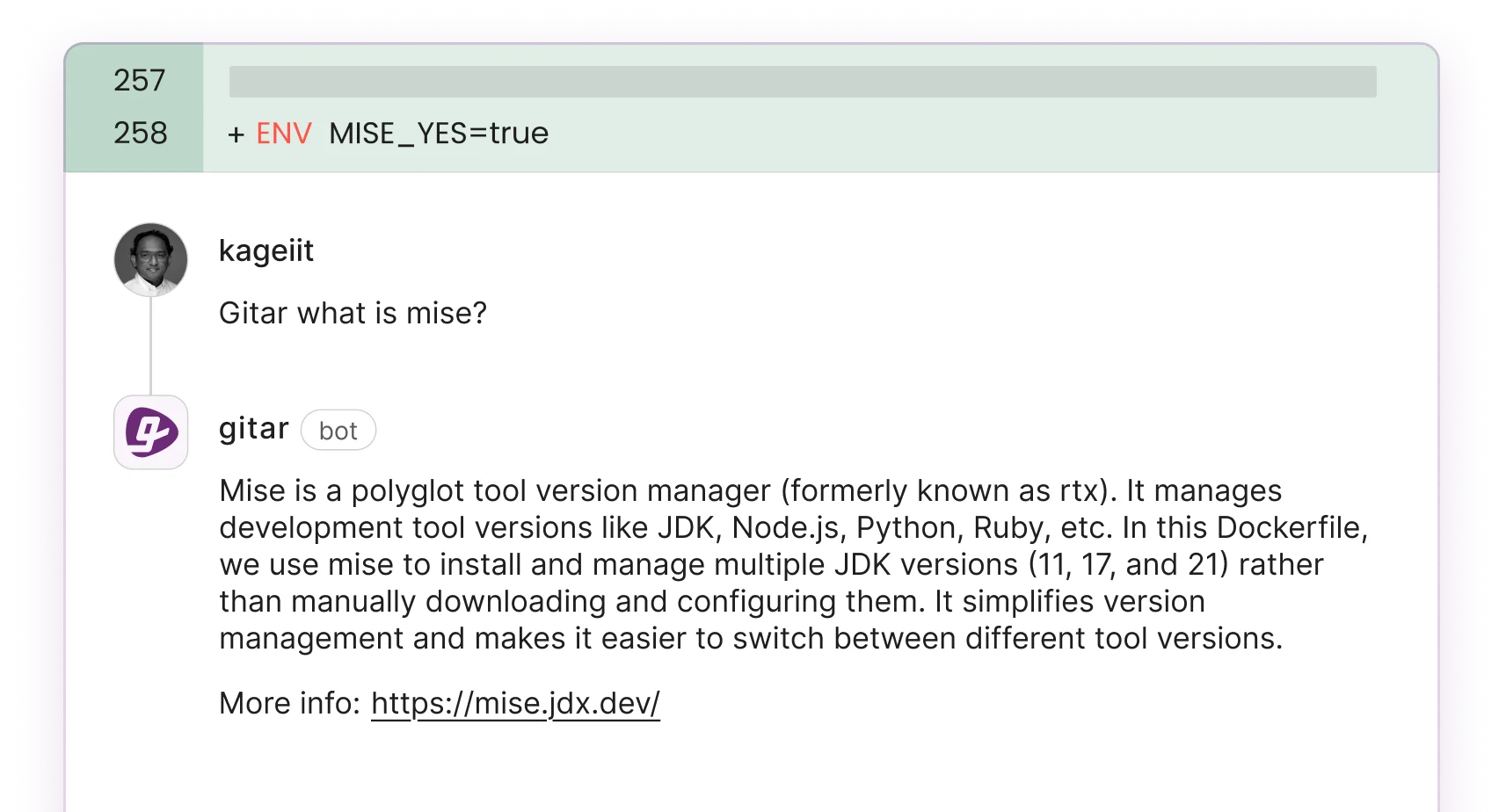
Stop drowning in suggestion threads and start reviewing actual improvements. Try Gitar in your pipeline to experience the shift from suggestion engines to a true healing engine.
Frequently Asked Questions
How does Gitar reduce noise compared to CodeRabbit or Greptile?
Gitar uses a single updating Dashboard comment instead of scattered inline comments. It also fixes issues automatically instead of only suggesting changes, and it collapses resolved findings in real time. This combination delivers the 90%+ noise reduction described earlier, while suggestion-based tools continue to flood your PR timeline with notifications.
Can I trust automated commits from AI code review tools?
Gitar offers configurable automation levels, from suggestion-only mode to full auto-commit. You can start with manual approval for all fixes, then gradually enable automatic commits for specific issue types such as lint errors or test failures. The system validates all fixes against your CI environment before committing, which keeps quality under your control.
What is the difference between Gitar’s healing engine and Greptile’s suggestions?
Greptile analyzes code and leaves comments with suggestions that your team must implement by hand. Gitar’s healing engine analyzes failures, generates fixes, validates them against your CI pipeline, and commits working solutions automatically. The result feels less like advice and more like having an assistant that completes the work.
What ROI can teams expect from reducing AI code review noise?
For a 20-developer team, productivity loss from CI and review issues can reach $1M per year. Gitar reduces that drag by automating fixes and cutting the manual toil that suggestion tools create.
Does Gitar work with our existing CI pipeline and tools?
Yes, Gitar integrates with GitHub, GitLab, CircleCI, Buildkite, and other major platforms. It also connects with Jira, Slack, and Linear for cross-platform context. The system adapts to your existing workflows so your team does not need to change its development process.
Conclusion: Reclaim Velocity with Gitar
AI code review bots have created a new form of technical debt: notification noise that buries actionable feedback. Configuration tricks can reduce the volume, but they rarely change the fundamental pattern of bots suggesting and humans fixing.
The seven strategies above help you tame existing AI review bots and recover some focus. The bigger shift comes when you move beyond suggestion engines to autonomous fixing. Gitar’s single-comment workflow with automatic fixes delivers the dramatic noise reduction outlined above while keeping builds green.
Stop drowning in bot notifications and start shipping faster. Start your 14-day Team Plan trial to experience AI that fixes your code instead of just commenting on it.