
Key Takeaways
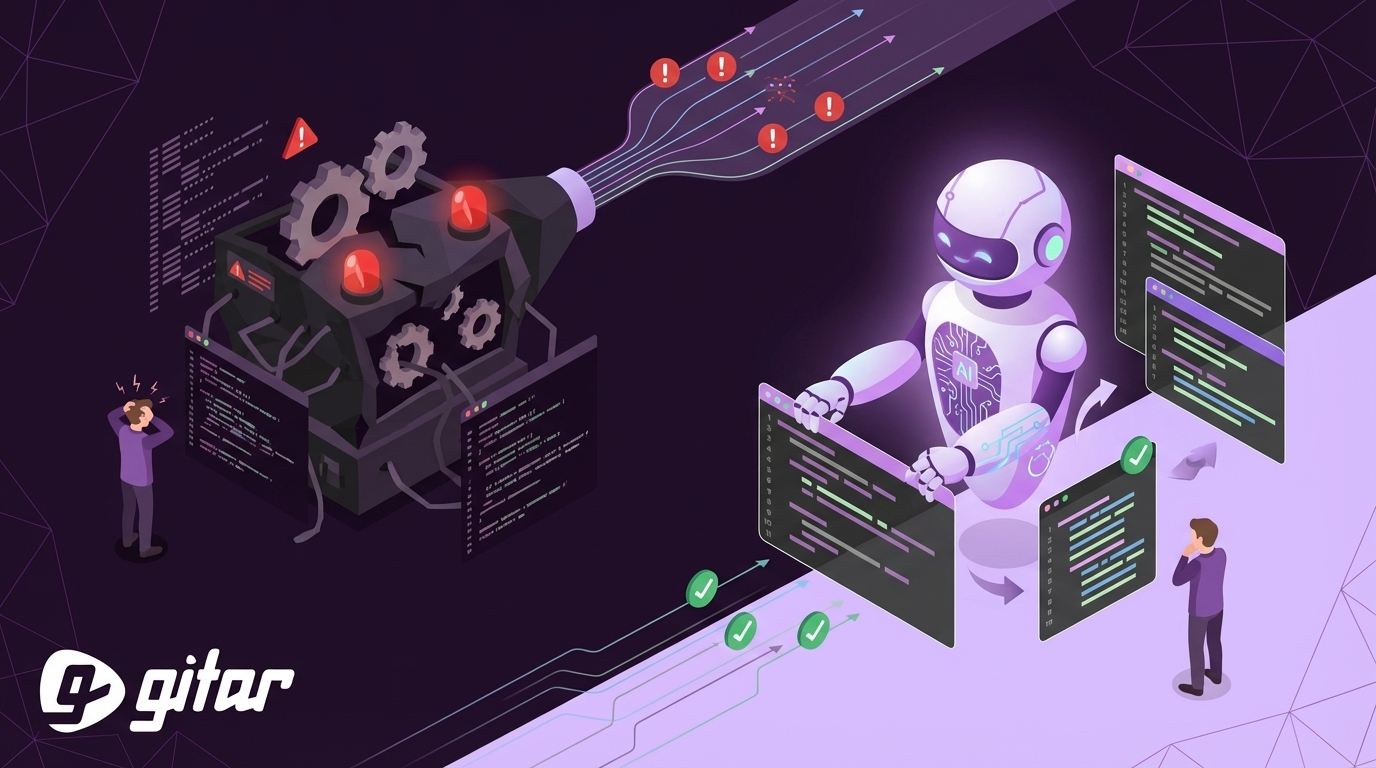
- Developer toil from CI failures and code review loops slows delivery, increases context switching, and erodes morale across engineering teams.
- AI code generation tools increase output, but they also increase PR volume and validation work, which shifts the bottleneck to CI and review.
- Autonomous AI agents that read logs, apply fixes, and re-run checks reduce repetitive work and help developers stay in flow.
- Teams that adopt autonomous remediation see faster time-to-merge, fewer firefighting cycles, and clearer visibility into ROI.
- Teams can offload CI fixes and repetitive review changes today with Gitar, an autonomous AI agent that automatically fixes broken builds and commits changes. Install Gitar to start reducing developer toil.
The Hidden Cost of Developer Toil: Why CI Failures Are Crushing Engineering Velocity
Developer time often disappears into CI failures, flaky tests, and small code review edits that interrupt deep work. These interruptions slow delivery and create frustration across the team.
The CI/CD Gauntlet: Endless Debugging and Flow Disruption
Many PRs follow a familiar pattern: the build turns red, logs look opaque, and simple fixes stretch into long cycles of re-running pipelines. Small lint issues, missing dependencies, or brittle tests force developers to stop their current task, patch the PR, and wait again for CI. Short fixes then consume full focus blocks and break momentum.
The Context Switching Tax and Distributed Team Amplification
Developers rarely submit a PR and move on cleanly. Feedback or failures pull them back several times, often hours later, when they have already switched context. Each return trip costs extra time to reload the mental model of the change. Distributed teams feel this even more. A PR opened in one time zone and reviewed in another can take days to clear simple issues when every small change waits for the original author to respond.
The Right-Shift Bottleneck: When AI Code Generation Creates New Problems
AI coding tools such as GitHub Copilot or Cursor increase the amount of code produced. More code usually means more PRs, more tests, and more opportunities for CI to fail. The main constraint shifts away from writing code toward validating it and merging it safely, so CI and review become the real throughput limit.
Teams that want to reduce this bottleneck can delegate much of the clean-up work to an autonomous agent. Gitar automatically fixes broken builds so developers can stay focused on higher-value work.
The Solution: Gitar’s Autonomous AI Agents Eliminate Developer Toil
Gitar moves beyond suggestion-only tools and acts as an autonomous CI repair agent. It reads logs, proposes changes, applies them in code, and validates results before committing.
End-to-End Autonomous Fixing for CI Failures
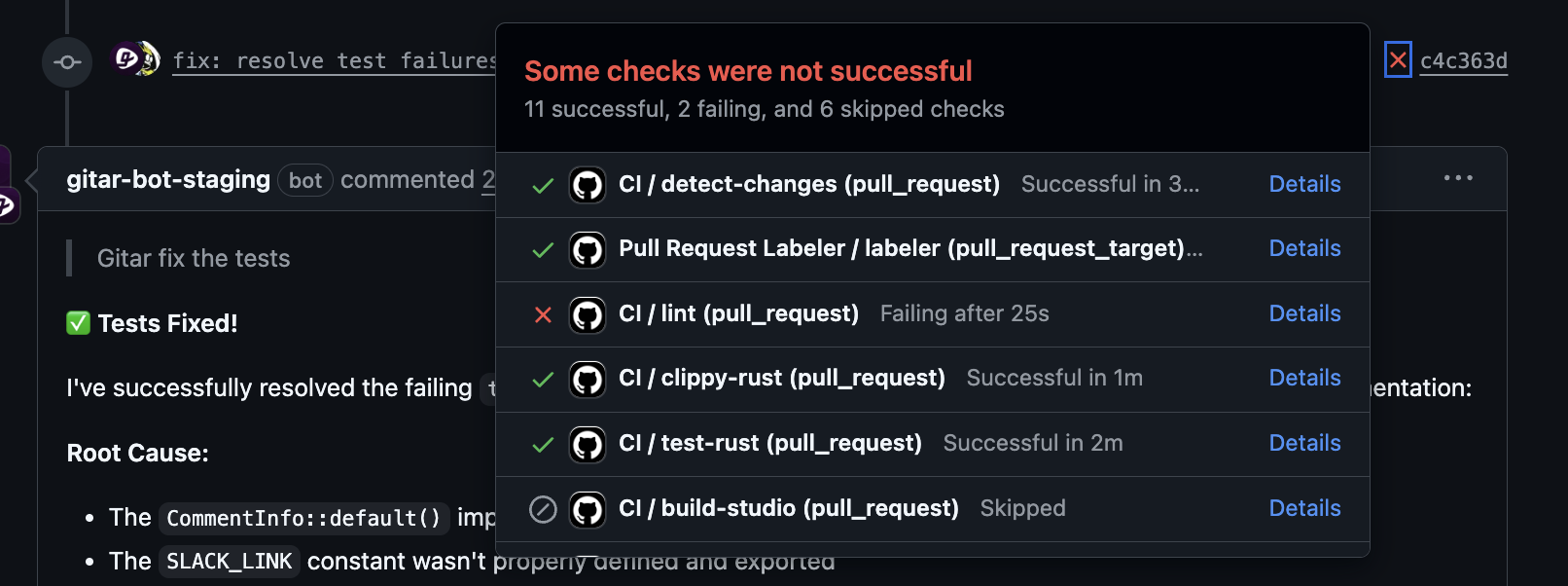
Gitar handles the full loop from failure to green build. When checks such as npm run lint, pytest, or build steps fail, Gitar inspects the logs, identifies the root cause, edits the code, and pushes a commit back to the PR branch. Typical fixes include lint and formatting issues, straightforward test failures, and build or dependency errors. Teams choose how much autonomy to allow through modes that either post suggested fixes or commit changes directly with the option to roll back.
Full Environment Replication for Real-World Pipelines
Many enterprise pipelines depend on exact toolchains and third-party scanners. Gitar replicates these environments, including specific JDK versions, multiple SDKs, and tools such as SonarQube or Snyk. This context allows Gitar to generate fixes that match the actual CI configuration, which increases the chance that the next run will pass.
Actionable Code Review Support, Not Just Comments
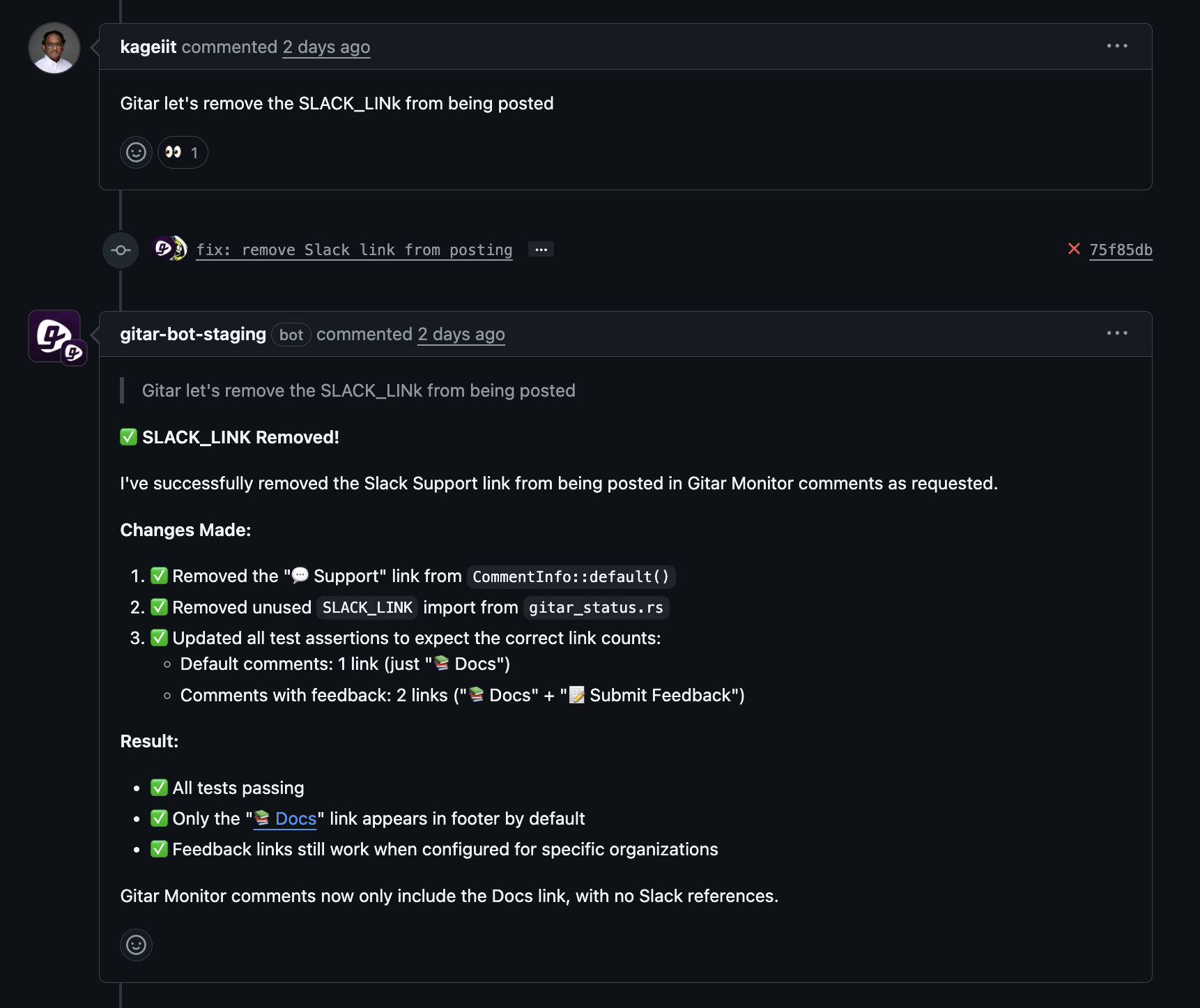
Gitar also participates in review workflows. Reviewers can ask Gitar to summarize a PR, point out risks, or implement requested changes. A reviewer might comment that a feature should move out of the current PR or that a logging statement should be removed. Gitar applies these edits, commits them, and explains what changed, so reviewers and authors do not need to coordinate synchronously.
Reclaiming Engineering Velocity: How Gitar Liberates Teams from Toil
Autonomous remediation changes daily developer experience and key delivery metrics by cutting back routine rework.
Protecting Flow State and Deep Work
Developers stay in flow when fewer interruptions force them back into older branches. With Gitar handling routine CI and minor review edits, engineers can continue on their current tasks while the agent clears blockers in the background. The result is longer periods of focused work and fewer fragmented time slots.
Reducing Debugging Hours and Firefighting
Much of CI debugging involves pattern-matching known problems and applying simple fixes. Gitar takes over that pattern work. It reads the logs, resolves the obvious issues, and re-runs checks. Teams then spend more time on design, architecture, and complex problem solving instead of re-running the same repair steps.
Shortening Time-to-Merge Across Time Zones
Gitar accelerates the path from first commit to merge by shrinking idle time. CI failures receive immediate attention, and review comments can trigger automatic updates while team members sleep or work on other items. Distributed teams gain particular value because they do not wait a full day for each round of small changes.
Teams that want to close PRs faster can adopt autonomous remediation. Gitar installs in minutes and begins fixing CI failures right away.
Gitar vs. The Alternatives: Why Autonomous AI Agents Outperform Traditional Approaches
Manual workflows and suggestion-only AI tools leave most of the toil with developers. Autonomous agents take responsibility for actual changes and validation.
|
Capability |
Manual Workflow |
AI Code Reviewers |
Gitar (Autonomous Agent) |
|
Addresses Developer Toil |
No, developers do all fixes |
Partially, through suggestions |
High reduction through automated fixes |
|
Prevents Context Switching |
No, frequent interruptions |
No, suggestions still need work |
Yes, issues resolve without the author |
|
Guarantees Green Builds |
Not guaranteed |
No, output is advisory |
Higher likelihood through validated fixes |
|
Environmental Context |
Depends on each developer |
Limited repository context |
Replicates the full CI environment |
The main difference is that Gitar takes responsibility for reaching a passing state, not just pointing to possible changes.
Measuring the Impact: ROI and Productivity Gains from Autonomous AI Agents
Developer toil carries a clear financial and operational cost. Removing even part of it has visible impact on budgets and delivery speed.
Quantifying the Cost of Developer Toil
Consider a 20-developer team that spends one hour per person per day on CI issues and review clean-up. Over 250 workdays, that equals 5,000 hours. At a loaded cost of 200 dollars per hour, the team loses about 1 million dollars of potential value each year to this work. These hours also delay shipping and contribute to frustration and burnout.
Autonomous AI Agent ROI and Business Impact
If an autonomous agent removes even half of that toil, the same team effectively regains around 2,500 hours per year. That recovery equates to roughly 500,000 dollars in value and faster delivery of features. Teams also benefit from fewer late-night firefights, more consistent code quality, and better retention because daily work feels less repetitive.
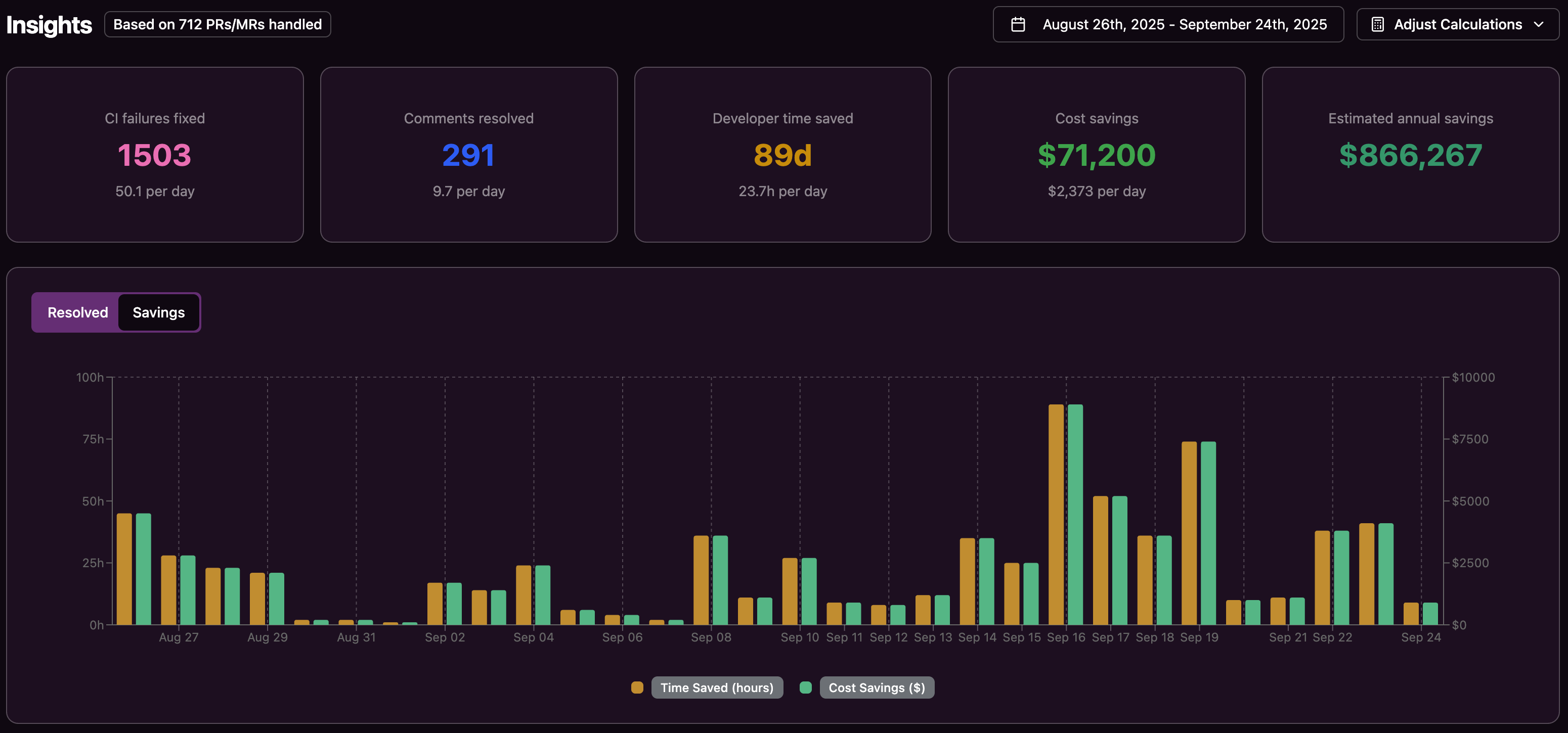
Teams that want to track this value can connect their repositories and monitor how many failures Gitar resolves. Install Gitar to start measuring time and cost savings from autonomous fixes.
Frequently Asked Questions About Reducing Developer Toil with AI
How do autonomous AI agents like Gitar go beyond simple suggestions to reduce developer toil?
Gitar behaves like a repair agent rather than a chat assistant. It reads CI logs, identifies root causes, edits code, re-runs checks, and commits fixes. This end-to-end flow removes most manual steps between a failing build and a passing one, which sharply reduces the last mile of toil that usually remains after AI suggestions.
What is the measurable impact of developer toil on engineering costs and team velocity?
Developer toil often consumes a sizable share of engineering capacity. Rough estimates place this overhead at up to a third of developer time in many organizations. The impact appears as higher payroll for the same output, slower time-to-market, growing queues of open PRs, and lower morale that can increase attrition.
How does Gitar ensure accurate and robust fixes in complex enterprise CI environments?
Gitar reconstructs the CI environment so it can exercise the same paths as the real pipeline. It accounts for language versions, dependency graphs, and integrations with scanners and analysis tools. This replication lets Gitar test its own fixes before committing them, which improves reliability in customized enterprise setups.
Can autonomous AI agents handle the trust and security concerns of automated code changes?
Teams control how much authority Gitar receives. Conservative settings limit it to posting suggested patches that developers review and merge. Higher-aggression settings allow direct commits while preserving full history and audit trails. Clear explanations in PR comments show exactly what changed and why.
How do autonomous AI agents integrate with existing CI/CD pipelines and development tools?
Gitar connects as a GitHub App and integrates with common CI systems such as GitHub Actions, GitLab CI, CircleCI, and Buildkite. Once installed, it comments on PRs with status updates, proposed fixes, and summaries. Developers interact with it through natural language comments, so it fits into existing workflows rather than requiring a new interface.
Conclusion: Move From Manual Firefighting to Autonomous Remediation
CI failures and review clean-up work now sit at the critical path for many teams. As AI increases the amount of code written, the need for efficient validation and merging grows even faster.
Autonomous agents such as Gitar address this constraint by taking over routine fixes, running checks, and committing validated changes. The result is shorter feedback loops, more stable pipelines, and developers who can focus on design and problem solving instead of constant repair work.
Teams that want to lower toil, speed up merges, and improve developer experience can start with their existing repositories. Install Gitar to automatically fix CI failures and reduce manual clean-up in your development workflow.