
Key Takeaways
- CI pipeline downtime creates a major productivity bottleneck and drives up delivery costs for modern engineering teams.
- AI-driven, autonomous fixes reduce context switching, shorten feedback loops, and keep developers focused on shipping features.
- Choosing between building in-house automation and adopting a specialized solution requires clear analysis of cost, risk, and time-to-value.
- Configurable automation and environment-aware fixes help organizations adopt AI safely in complex CI pipelines.
- Teams can reduce CI downtime and recover lost developer time by adopting Gitar for autonomous CI fixes: try Gitar on your CI failures.
The Escalating Cost of CI Pipeline Downtime in Modern Development
CI pipeline downtime now absorbs a large share of engineering capacity. Developers can spend up to 30% of their time dealing with CI and code review issues, which delays projects and increases delivery costs for most teams.
This downtime has a compounding effect through context switching. Each time a developer stops feature work to investigate a failing build, focus drops and ramp-up time increases when they return to their original task.
AI-assisted coding tools generate code faster, which shifts the bottleneck from writing code to validating and merging it. CI systems run more often, fail more frequently, and require more review cycles. Distributed teams feel this impact even more, as every handoff across time zones adds idle time to the pipeline.
The Solution: Embracing Autonomous CI Pipeline Downtime Solutions
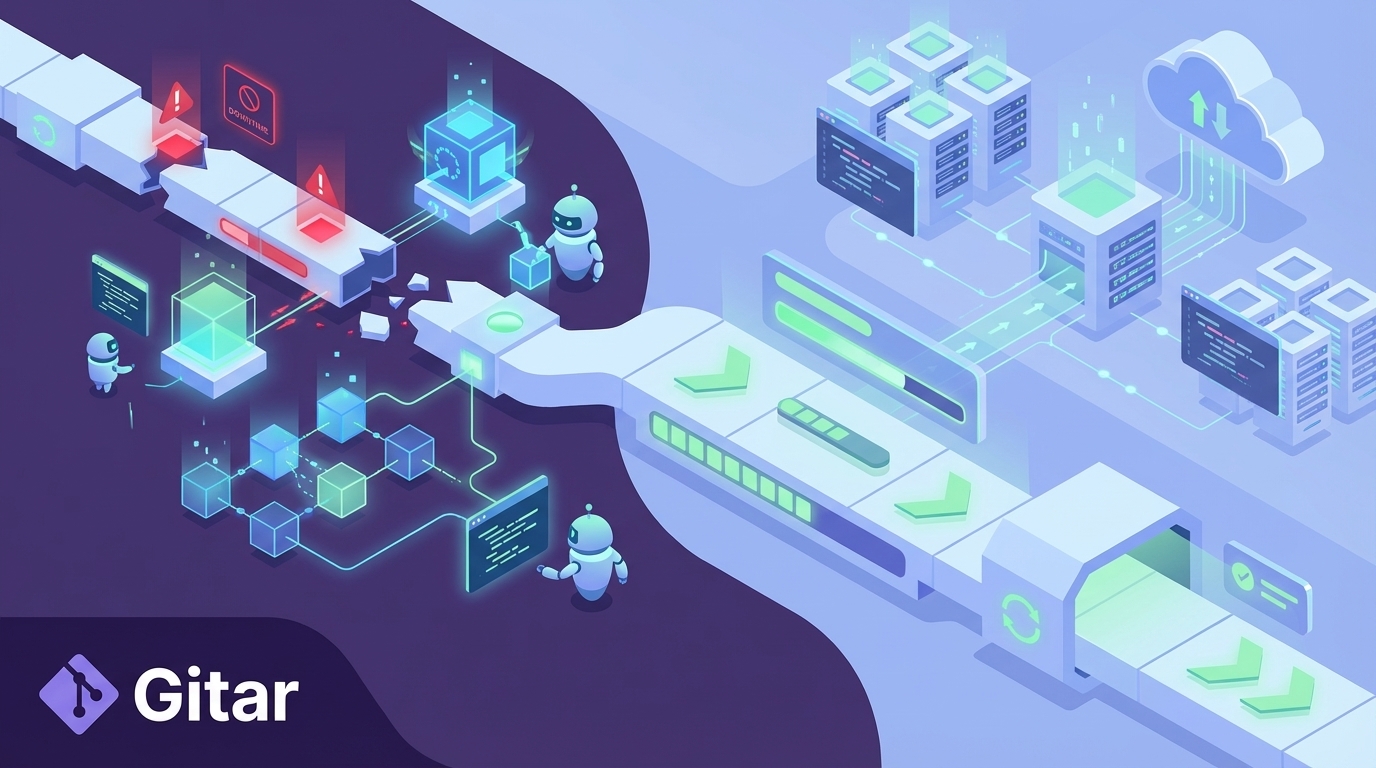
Autonomous CI pipeline solutions address this bottleneck by turning many failure-handling tasks into automated workflows. Instead of treating every broken build as a manual incident, teams can delegate detection, diagnosis, and fixes to an AI agent.
These systems interpret logs, propose or apply fixes, and validate the result in CI before developers need to step in. Engineering teams then spend less time firefighting CI issues and more time on product work and architectural improvements.
Install Gitar to start automatically fixing broken builds and reduce CI downtime
Introducing Gitar: An Autonomous CI Fix Engine for Reduced Downtime
Gitar provides an autonomous CI fix engine that focuses on reducing time-to-green for failing builds. Instead of producing suggestions that developers must implement and validate, Gitar manages the full CI failure lifecycle.
End-to-End Fixing
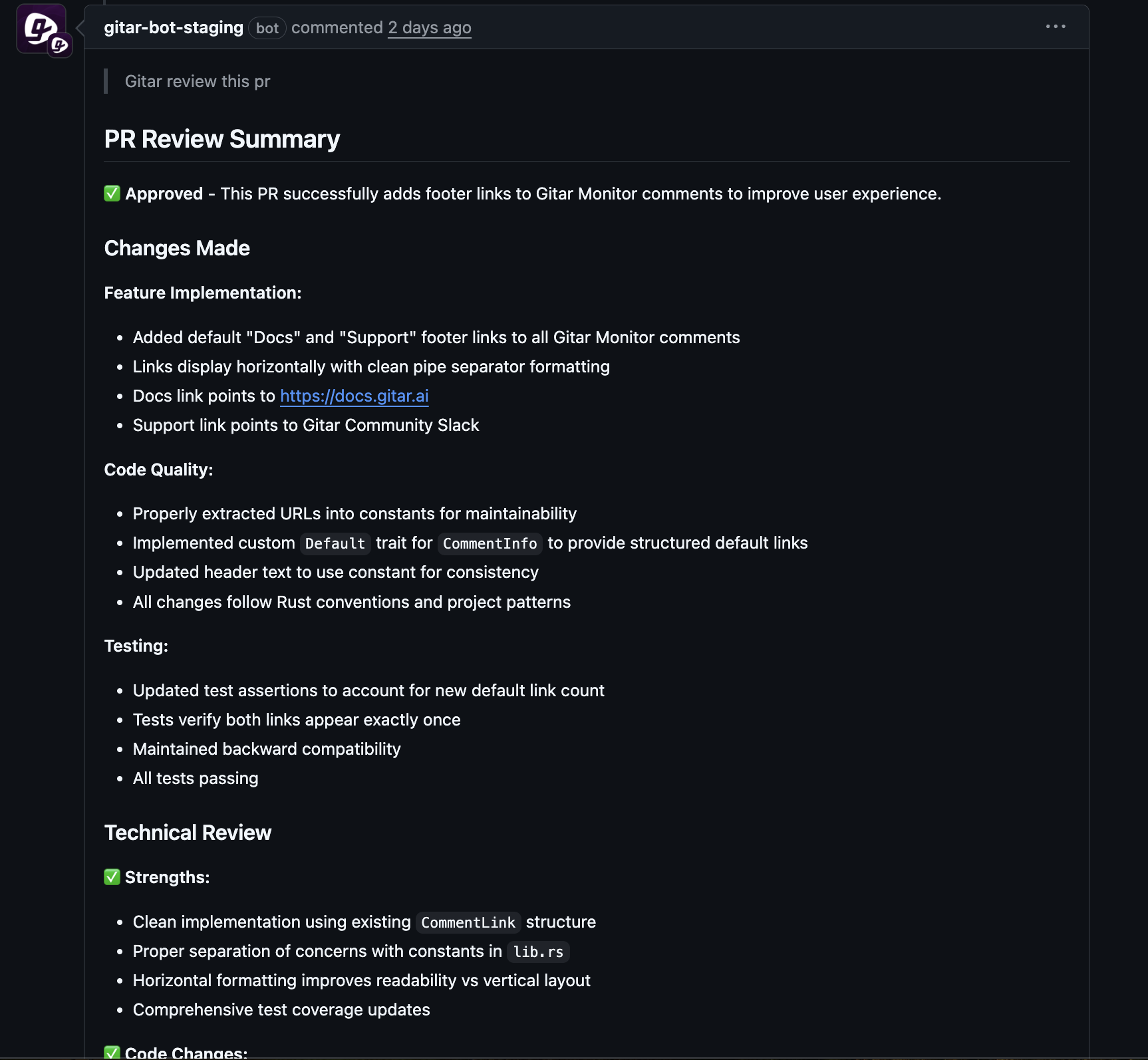
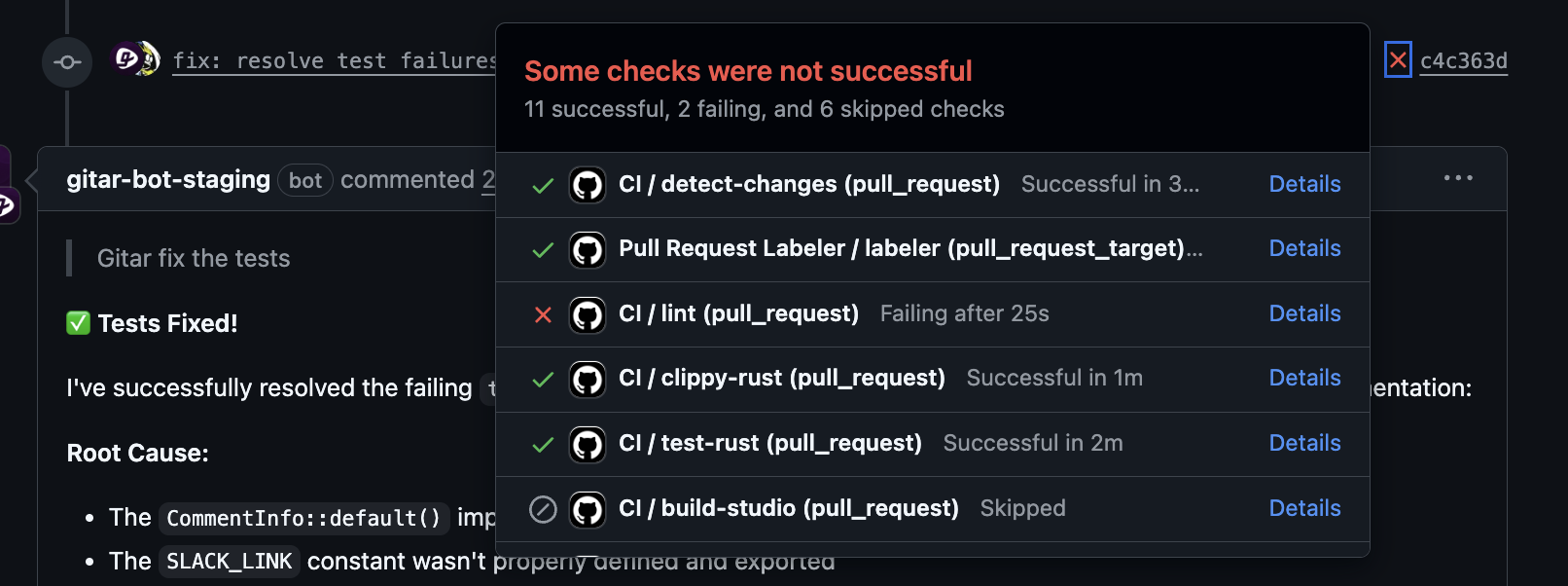
Gitar analyzes failing CI checks, reviews logs, generates a code change, applies it, and commits the fix back to the pull request branch. The system then re-runs the CI workflow to confirm that the build is green before notifying the team.
Full Environment Replication
Gitar reproduces complex enterprise CI workflows, including specific JDK versions, multiple SDKs, security scans, and third-party tools. This environment awareness helps ensure that fixes remain reliable in the same conditions that production code faces.
Configurable Trust Model
Gitar offers configurable modes that range from suggestion-only workflows to fully autonomous commits. Teams can begin with low-risk modes that require human approval and gradually enable more automation as confidence grows.
Support for Distributed Teams
Gitar acts on CI failures and review feedback whenever they appear, not only when developers are online. Global teams gain continuous progress on pull requests without waiting for another time-zone cycle.
Cross-Platform Compatibility
Gitar integrates with GitHub Actions, GitLab CI, CircleCI, Buildkite, and other common CI platforms, which simplifies adoption in heterogeneous environments.
Book a Gitar demo to see autonomous CI fixes in your workflow
Strategic Considerations for Adopting Autonomous CI Fixes to Reduce Downtime
Build vs. Buy for CI Automation
Leaders need to weigh the cost of building in-house automation against adopting a purpose-built solution like Gitar. Internal efforts require significant engineering time, ongoing maintenance, and AI expertise that often competes with core product priorities.
Managing Organizational Change
Engineering teams often approach autonomous systems with caution, especially when code changes occur automatically. Clear communication, transparent logging, and gradual rollout help address these concerns and show value without disrupting existing workflows.
ROI Expectations and Success Metrics
Effective evaluation of autonomous CI fixes should combine both financial and human metrics. Useful measures include:
- Developer hours saved per week from reduced CI toil
- Time-to-merge and lead time for changes
- Number of CI failures resolved without human intervention
- Developer satisfaction with the review and merge process
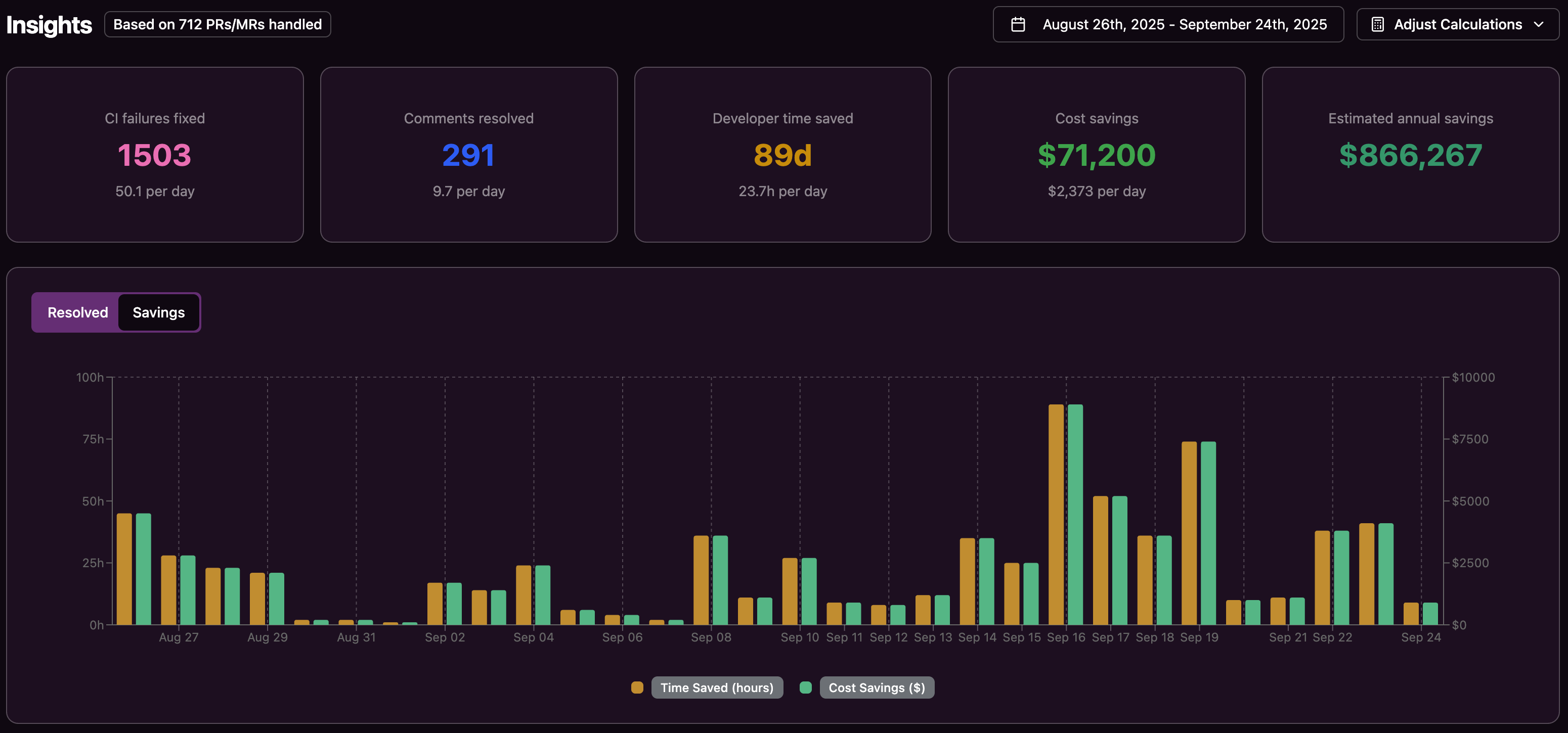
For a team of 20 developers, CI-related interruptions can represent roughly $1M per year in lost productivity. Gitar targets this loss by reducing manual debugging, shortening feedback loops, and keeping developers focused on planned work.
Assessing Readiness for Implementation
Organizations should review current CI maturity before deploying autonomous fixes. This assessment can include:
- Complexity and flakiness of existing workflows
- Coverage of automated tests and checks
- Security and compliance requirements for code changes
- Team appetite for automation and pilot projects
Gitar’s Approach: A Solution for Reducing CI Pipeline Downtime
From Suggestion Engines to Healing Engines
Many AI code review tools act as suggestion engines that highlight issues but rely on developers to apply fixes. Gitar behaves as a healing engine, which applies and validates fixes on the team’s behalf and presents completed work rather than raw recommendations.
Handling Complex Enterprise Environments
Gitar focuses on reproducing the full CI environment for each repository instead of relying only on static analysis. This design makes the system better suited to large organizations that depend on language-specific toolchains, internal libraries, and strict compliance checks.
Keeping Developers in Control
Workflows in Gitar keep developers in the loop. Teams can require review before any change merges, review detailed logs for each autonomous action, and adjust automation levels as policies evolve.
Comparing Solutions: Gitar vs. Traditional Methods and Suggestion Engines for CI Downtime Reduction
|
Feature / Tool |
Gitar (Autonomous CI Fixer) |
Manual Work (Status Quo) |
AI Code Reviewers (General) |
|
Automation Level |
Fully autonomous for configured workflows |
Manual |
Suggestions only |
|
Fix Implementation |
Applies and validates fixes in CI |
Manual coding and debugging |
Requires manual implementation |
|
CI Validation |
Runs workflows and confirms green builds |
Manual re-run and verification |
No end-to-end validation |
|
Developer Flow |
Minimal context switching |
Frequent interruptions for CI issues |
Interruptions for manual fixes |
This comparison shows how Gitar removes manual steps that keep pipelines red for long periods. Automated application and validation of fixes help teams achieve faster, more predictable time-to-green.
Install Gitar to reduce CI pipeline downtime on your next failing build
Frequently Asked Questions About Reducing CI Pipeline Downtime
How Gitar handles complex CI environments with unique dependencies and third-party integrations
Gitar recreates the full CI environment, including language runtimes, SDK versions, package managers, and external scanners or linters. This approach keeps fixes aligned with the conditions that CI uses to approve or reject changes.
Typical ROI from implementing an autonomous CI pipeline solution like Gitar
Teams often reclaim a meaningful portion of the time spent on repeated CI failures and review delays. Gitar contributes by automating common fixes, cutting down on context switching, and improving time-to-merge across many pull requests.
How Gitar differs from existing AI code review tools for managing CI pipeline issues
General AI reviewers analyze code and produce comments or suggestions. Gitar focuses on CI outcomes and takes responsibility for implementing and validating fixes in the pipeline, so developers receive completed changes that already pass checks.
Safety and control when allowing an AI agent to modify a codebase automatically
Gitar supports conservative modes where fixes appear as suggestions that require approval before commit. Teams can enable stricter policies, audit trails, and rollback options to keep full control over what reaches the main branch.
Timeline for seeing results after implementing Gitar to reduce CI pipeline downtime
Teams often notice value soon after connecting Gitar to their CI provider, especially on repositories with frequent failures. As policies mature and automation levels increase, the cumulative reduction in CI downtime becomes more visible in engineering metrics.
Conclusion: Reduce Downtime and Support Developers with Autonomous CI Fixes
Persistent CI pipeline downtime slows delivery, increases costs, and adds friction to developers’ daily work. Autonomous CI fixes provide a practical way to reduce this load without requiring a full rebuild of existing systems.
Gitar offers end-to-end automation, environment-aware fixes, and configurable control that help modern engineering organizations shorten feedback loops and keep pipelines healthy.
Request a Gitar demo to see how autonomous fixes can reduce CI pipeline downtime for your team