
Last updated: January 27, 2026
Key Takeaways
- AI coding tools increase output but also raise CI/CD failures, with 18% build failure rates costing 20-person teams about $1M annually.
- Traditional CI/CD platforms like GitHub Actions and GitLab CI manage infrastructure well but cannot automatically fix the code issues that cause most overhead.
- Gitar uniquely auto-fixes CI failures such as lint errors and test issues, then commits validated solutions directly to PRs across multiple platforms.
- Teams cut debugging time by about 75% with Gitar’s free code review, 14-day auto-fix trial, and natural language workflows that replace complex YAML.
- Teams ready to remove CI/CD overhead can install Gitar now for automatic fixes and consistently green builds.
The Right-Shift Bottleneck in Modern CI/CD
The AI coding boom has created what engineers call the “right-shift bottleneck.” GitHub Copilot users see median pull request sizes increase by 17-23% while code acceptance rates stay near 30%. Teams now ship more code, yet a larger share contains issues that only appear during CI/CD execution.
Traditional platforms like GitHub Actions, GitLab CI, and CircleCI excel at orchestrating builds but stop at the code boundary. When a lint error breaks your build, these tools report the failure but do not fix the syntax issue. When tests fail because AI-generated code misses edge cases, infrastructure platforms restart the job but never address the logical flaw.
Operational overhead shows up in three areas. Teams maintain fragile YAML configurations that demand DevOps expertise. Developers manually debug code-level failures. Reviewers drown in notification noise from scattered inline comments. Each CI failure carries hidden costs not captured in success metrics, and recovery times often stretch from hours to days as developers bounce between new work and broken builds.
About 60% of companies now cite CI pipeline failures as the main reason projects slip. The bottleneck has moved from infrastructure provisioning to code validation and automated healing.
Top 7 Tools to Cut CI/CD Overhead
1. Gitar – AI Healing Engine With Free Review
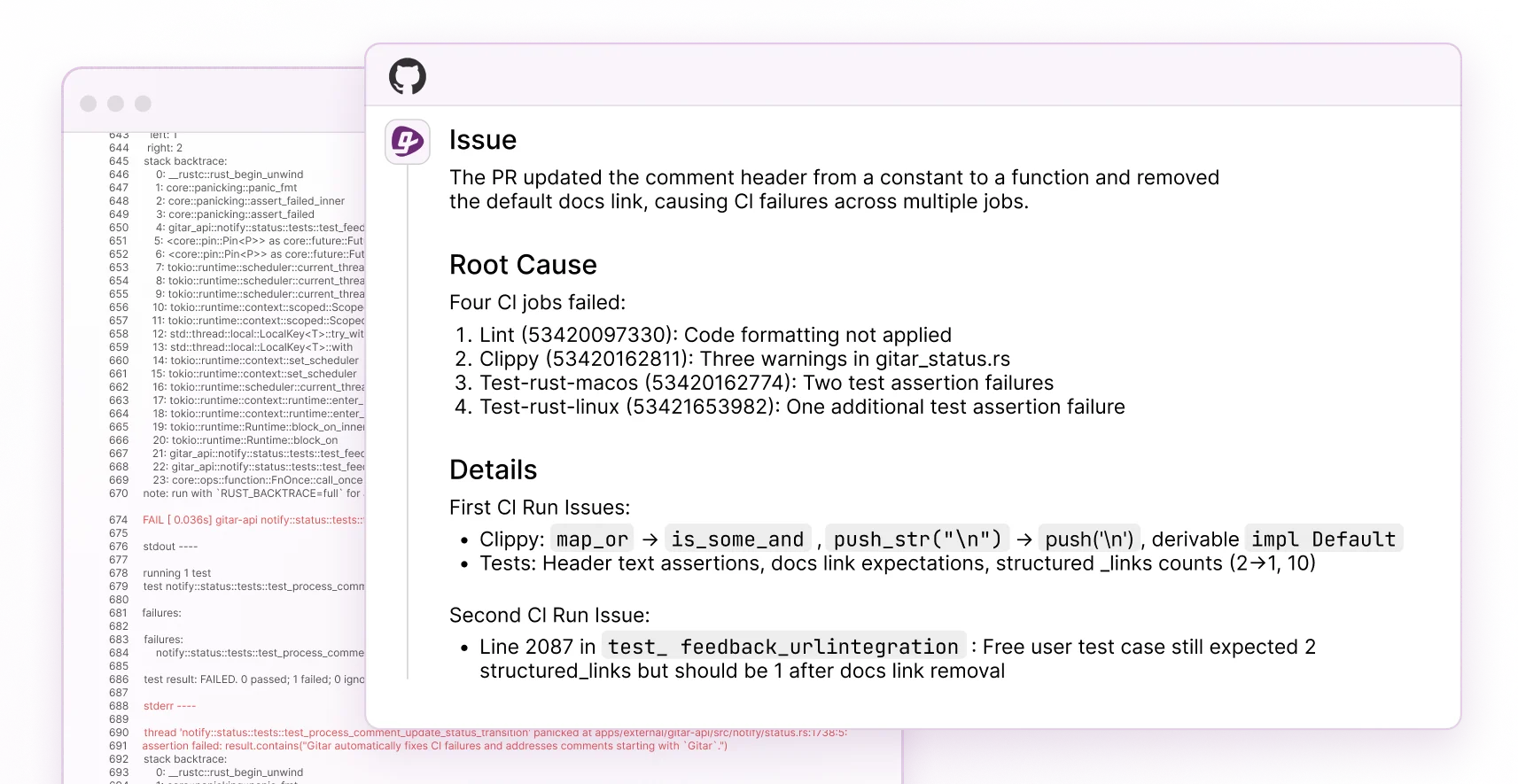
Gitar stands out as the only platform that automatically fixes CI failures instead of only suggesting changes. When your build breaks due to lint errors, test failures, or dependency issues, Gitar analyzes the logs, generates a validated fix, and commits it directly to your PR within minutes.
Pros:
- Free code review with unlimited repositories and users
- Automatic CI failure fixes with validated solutions (14-day free trial)
- Single dashboard comment that reduces notification spam
- Cross-platform support for GitHub, GitLab, GitHub Actions, GitLab Pipelines, CircleCI, and Buildkite
- Natural language workflow rules that replace complex YAML
Cons:
- Auto-fix features require a short trust-building period
- Newer platform with a smaller community than long-standing tools
Install Gitar now to automatically fix broken builds and remove most manual debugging overhead.
2. GitHub Actions – Native GitHub Integration
GitHub Actions offers simplicity and tight GitHub ecosystem integration with 2,000 free minutes each month. The platform focuses on workflow orchestration and provides a large marketplace of reusable actions.
Pros:
- Native GitHub integration with no external setup
- Large marketplace of pre-built actions
- Matrix builds that support parallel testing
Cons:
- Extensive YAML configuration that challenges new users
- No automatic resolution of code-level failures
- Primarily tuned for GitHub repositories
3. GitLab CI – Unified DevOps Platform
GitLab CI delivers an all-in-one DevOps platform with flexible runners and container-native support. Teams reduce context switching because source control and pipelines live in one place.
Pros:
- Integrated source control and CI/CD in a single interface
- Auto DevOps features for common workflows
- Built-in security scanning options
Cons:
- Steep learning curve for advanced workflows
- Manual debugging required for code failures
- Self-hosted runners that add maintenance work
4. CircleCI – Speed and Parallelism Focus
CircleCI focuses on performance with strong Docker support and intelligent test splitting, which attracts teams that care most about build speed.
Pros:
- Strong parallelism and caching capabilities
- Docker-first architecture
- Intelligent test splitting for faster feedback
Cons:
- Credit-based pricing that grows expensive at scale
- Complex configuration for advanced features
- No automatic resolution of failing builds
5. Qovery – NoOps Infrastructure Offload
NoOps platforms like Qovery reduce infrastructure overhead through PaaS-style automation. Many teams avoid hiring a dedicated Ops group by using this model.
Pros:
- Automatic scaling and infrastructure management
- Pay-as-you-go pricing that matches usage
- Minimal configuration for common setups
Cons:
- Dependence on supported cloud providers
- Learning curve for advanced or custom setups
- No automated fixes for code-level failures
6. Northflank – Managed CI/CD Platform
Northflank offers managed CI/CD with automatic scaling and streamlined deployment workflows. The platform targets teams that want infrastructure abstraction while avoiding strong vendor lock-in.
Pros:
- Managed infrastructure with less lock-in than pure NoOps platforms
- Automatic scaling for changing workloads
- Developer-friendly interface and workflows
Cons:
- Manual debugging still required for failing code
- Deeper customization needs platform-specific knowledge
- Higher costs than self-managed alternatives
7. Snyk – Security and Dependency Scanning
Snyk focuses on security vulnerability detection and dependency management. Teams gain strong visibility into risk but usually must fix issues themselves on most plans.
Pros:
- Comprehensive security scanning for code and dependencies
- Ongoing tracking of dependency vulnerabilities
- Integrations with major CI platforms
Cons:
- Suggestion-only model that increases notification noise
- Limited automatic fix application in lower tiers
- High per-developer pricing for full coverage
Gitar vs Other CI/CD Tools: Feature Snapshot
|
Feature |
Gitar |
GitHub Actions |
GitLab CI |
CircleCI |
|
Auto-fix CI failures |
Yes (14-day free trial) |
No |
No |
No |
|
PR consolidation |
Single comment |
Inline spam |
Inline spam |
Inline spam |
|
Pricing |
$0 (code review free; auto-fix trial) |
$0.008/min |
$0.09/min |
Credit-based |
|
Cross-platform |
Full |
Self-hosted support |
Multi-platform runners |
Limited |
How Engineers, Leaders, and DevOps See ROI
Engineers gain back deep work time when Gitar handles CI fixes automatically. A typical developer who spends 1 hour each day on CI and review issues can cut that to about 15 minutes with automated healing. That shift represents a 75% productivity gain worth roughly $37,500 per developer each year.
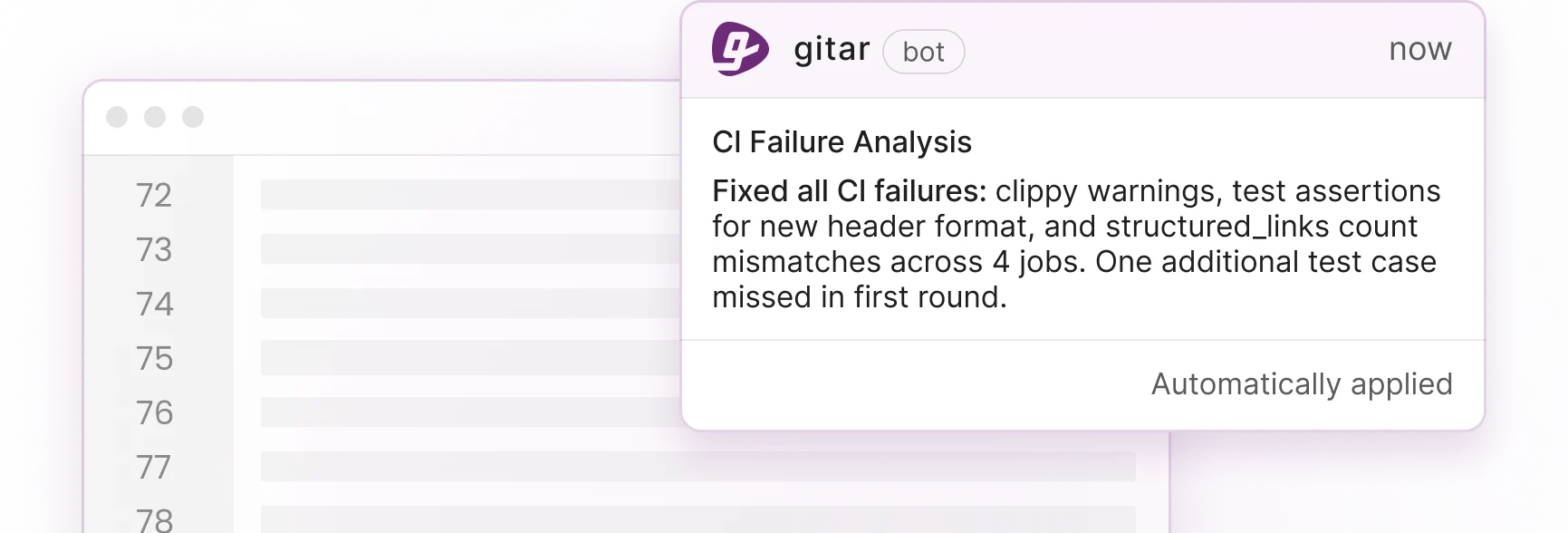
Engineering leaders see direct savings from lower tool costs and higher delivery speed. Teams paying $15-30 per developer each month for suggestion-only tools like CodeRabbit or Greptile can remove those costs and gain stronger functionality through Gitar’s free code review. For a 30-developer team, that change saves $5,400-10,800 annually before counting productivity gains and the 14-day auto-fix trial.
Platform and DevOps engineers benefit from Gitar’s natural language rules that replace complex YAML. Instead of maintaining brittle scripts, teams define workflows such as “When PRs modify authentication code, assign security team and add label.” The rule reads like English and does not require syntax expertise.
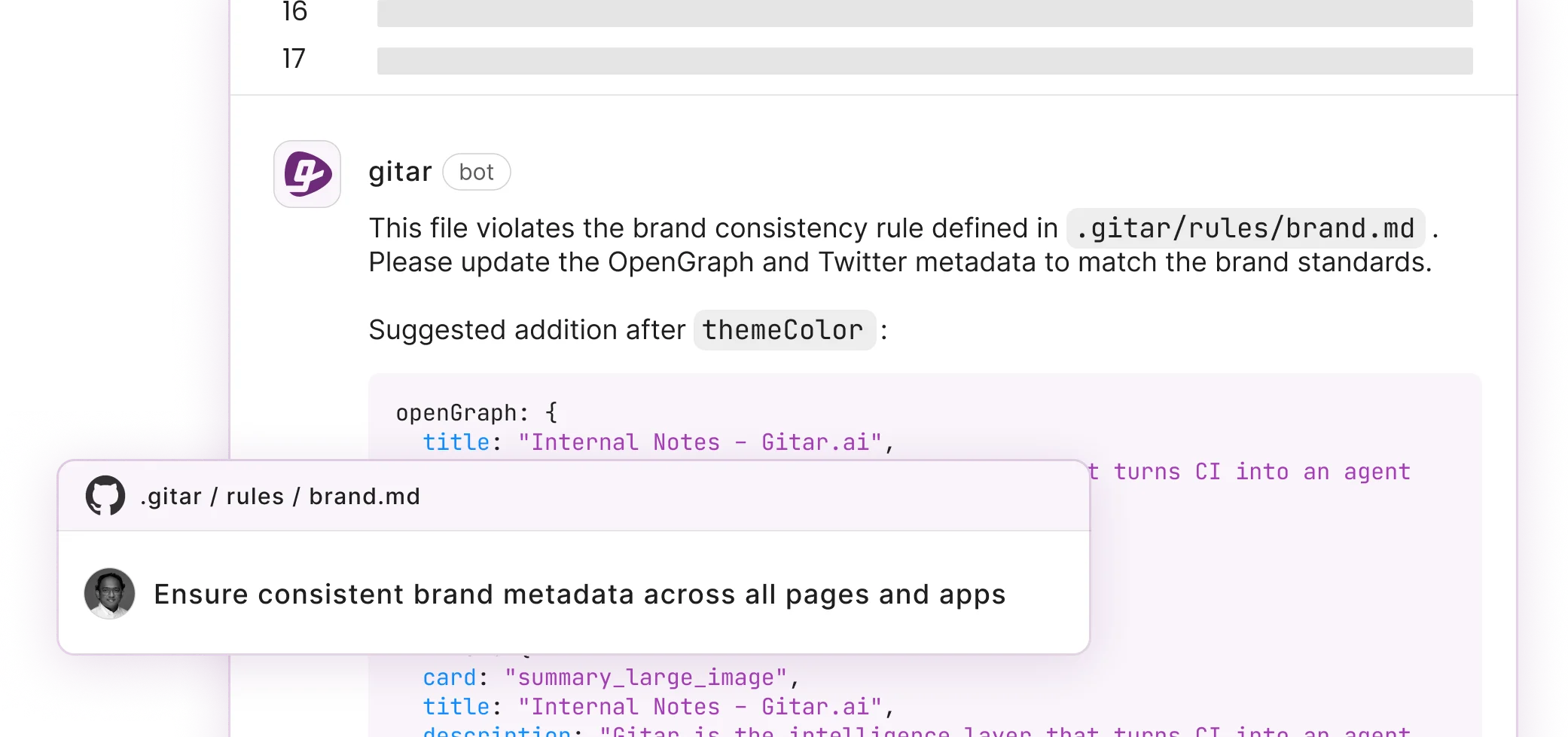
The rollout follows four simple phases. Teams install Gitar in about 30 seconds with no credit card. They start in suggestion mode to build trust. They then enable automation for fix types that look reliable. Finally, they expand into full platform features such as analytics and custom workflows.
Start shipping higher quality software, faster with automated CI healing that keeps builds green.
CI/CD and Gitar: Frequently Asked Questions
Best CI/CD Tools for 2026
Gitar leads for teams that prioritize automatic failure resolution and lower operational overhead. Traditional platforms like GitHub Actions and GitLab CI excel at infrastructure orchestration but still require manual debugging of code-level issues. The key difference lies in execution. Some tools only suggest fixes, while Gitar’s healing engine actually applies them and resolves CI failures instead of leaving comments.
Reducing CI/CD Costs Without Losing Capability
Teams reduce costs fastest by focusing on healing rather than infrastructure migration. Many organizations pay $15-30 per developer each month for suggestion-only tools, yet still spend hours fixing builds. They can switch to Gitar’s free code review and 14-day auto-fix trial. Each automated fix saves about 30-60 minutes of developer time, which creates large annual savings for a 20-developer team.
Choosing Between GitHub Actions and GitLab CI
Both platforms handle infrastructure workflows well, so the choice usually follows your existing ecosystem. GitHub Actions integrates cleanly with GitHub repositories. GitLab CI offers a unified DevOps experience across code and pipelines. Both still benefit from adding Gitar for automatic code-level failure resolution, because they orchestrate workflows but do not repair the issues that break builds.
Value of CI/CD Tools for Small Teams
CI/CD tools pay off even for small teams, especially when they start with free options like Gitar. Smaller groups rarely have dedicated DevOps staff, which makes automatic failure resolution even more valuable. A 5-developer startup can remove nearly all CI debugging overhead and avoid $75-150 in monthly tool costs by using Gitar’s free code review and 14-day auto-fix trial. The benefits grow as the team scales.
Measuring ROI From CI/CD Investments
Teams measure ROI by tracking time spent on CI failures, review cycles, and context switching before and after rollout. Gitar provides analytics that show CI failure categories, applied fixes, time saved, and recurring patterns. Most teams see about a 75% reduction in CI-related interruptions during the first month, along with higher deployment frequency and better developer satisfaction scores.
Next Steps: Move From Monitoring to Healing
The CI/CD landscape in 2026 now rewards tools that heal problems instead of only monitoring them. Traditional platforms still excel at infrastructure orchestration, yet the main bottleneck has shifted to resolving code-level failures. Gitar’s free healing engine moves beyond suggestion-based tools by automatically fixing CI failures and removing the manual debugging that drains developer productivity.
Installation takes about 30 seconds and does not require a credit card. Start with free code review, experience automatic failure resolution during the 14-day trial, and grow into a complete development intelligence platform that supports your team in the AI coding era.
Install Gitar now to reduce CI/CD operational overhead and ship higher quality software, faster.