
CI/CD pipeline failures and code review delays often slow down software development, pulling developers away from meaningful work. Even with advanced monitoring tools, teams spend too much time manually fixing issues that could be handled automatically. This article dives into how real-time monitoring, paired with AI-driven automation like Gitar, creates self-fixing pipelines, cuts down on manual tasks, and speeds up development.
Why Traditional CI/CD Monitoring Drains Time and Resources
Context Switching Harms Focus and Increases Expenses
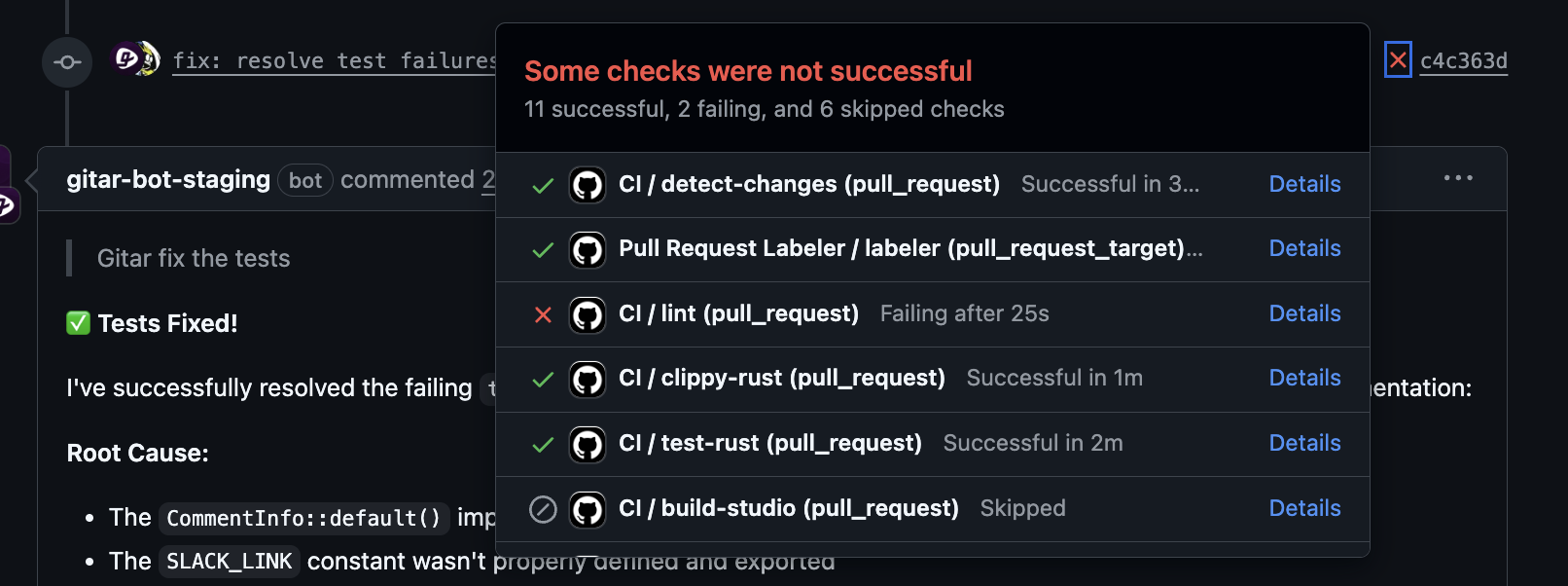
Picture this: you submit a pull request, expecting a smooth process, only to face a failed build. A dependency is missing, a test randomly fails, or a linter flags a small style error. You then spend time decoding logs, switching back to your local setup, applying a quick fix, and waiting for the pipeline to rerun.
These interruptions do more than waste time. They disrupt your focus, turning a brief fix into a major distraction. For a team of 20 developers, just one hour daily spent on CI failures or feedback can add up to a $1 million yearly loss when you factor in loaded costs and broken productivity. A 30-minute fix often stretches into an hour due to the mental effort of refocusing.
Deployment Delays Hurt Velocity and Market Edge
Pipeline issues don’t just frustrate developers, they slow down entire projects. Only 24% of organizations with CI/CD systems can deploy to production whenever needed. This bottleneck delays feature rollouts, weakens competitive positioning, and impacts business outcomes.
In complex pipelines, a single failing test can stall a release, forcing teams to either skip quality checks or spend hours troubleshooting. Distributed teams face even bigger challenges, as time zone differences can turn quick reviews into multi-day waits, further delaying progress.
Complex Pipelines Create Debugging Challenges
CI failures often stem from specific issues like flaky tests or mismatched environments. Common problems include build script errors and deployment misconfigurations, each demanding time and expertise to resolve. Tests passing locally but failing in CI due to dependency issues only add to the frustration.
Large, interconnected pipelines often cascade failures, where one small error halts everything. Monolithic setups frequently cause long delays in feedback. In enterprise settings, with multiple integrations and strict configurations, debugging becomes even more complex.
AI Coding Tools Shift Bottlenecks to Validation
Tools like GitHub Copilot speed up code writing, but they create new challenges in validation. More code means more pull requests, more tests, and more potential failures. Teams now struggle to merge changes quickly, as manual fixes can’t keep up with the pace of modern development. Traditional monitoring spots issues but leaves the fixing to you, becoming a major drag on productivity.
Meet Gitar: Automating Fixes for Self-Healing CI/CD Pipelines
Gitar changes the game by moving from simple alerts to automatic problem-solving. It ensures your CI/CD pipelines stay functional without constant human input. Install Gitar today to fix broken builds and ship quality software faster.

How Gitar Goes Beyond Simple Notifications
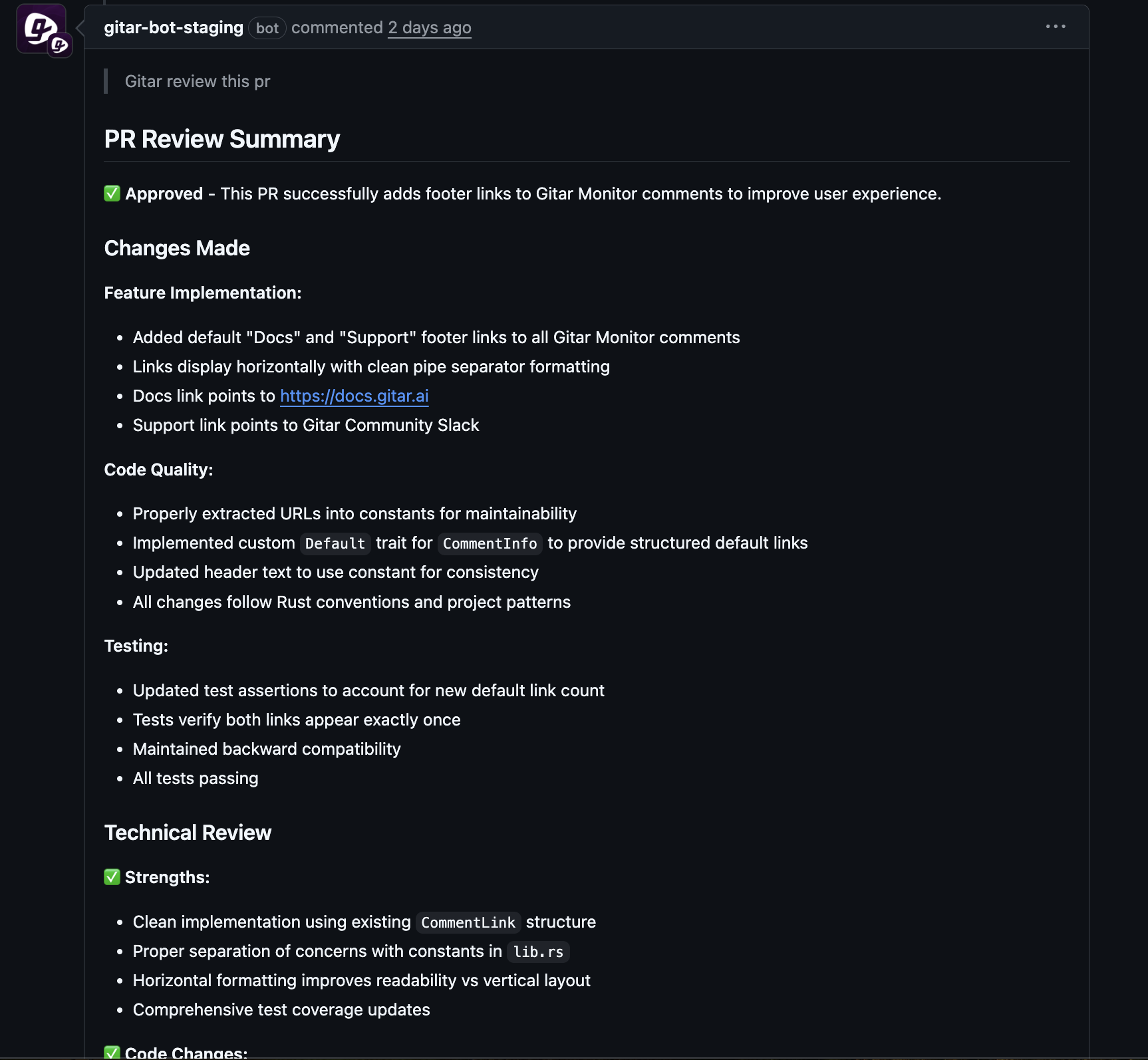
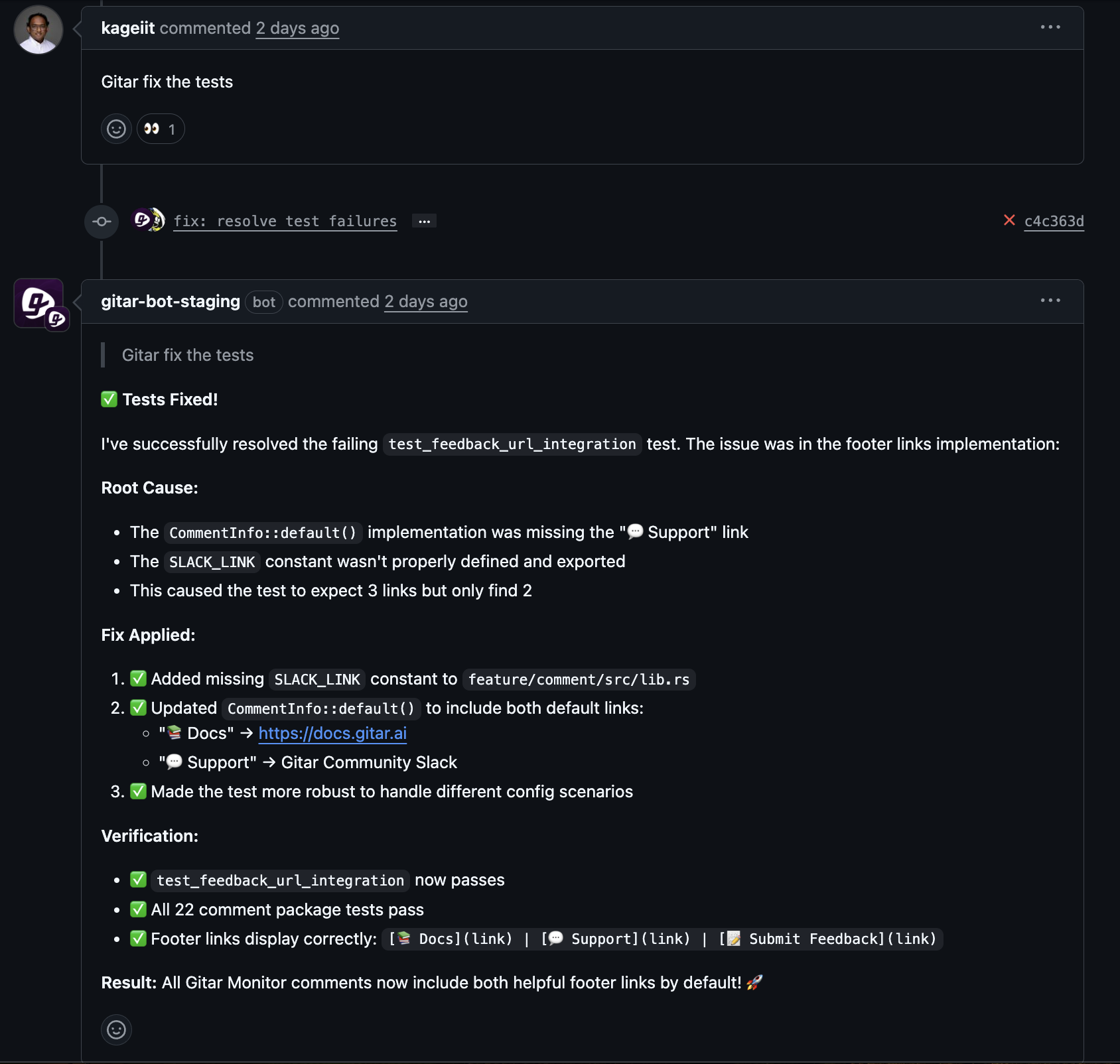
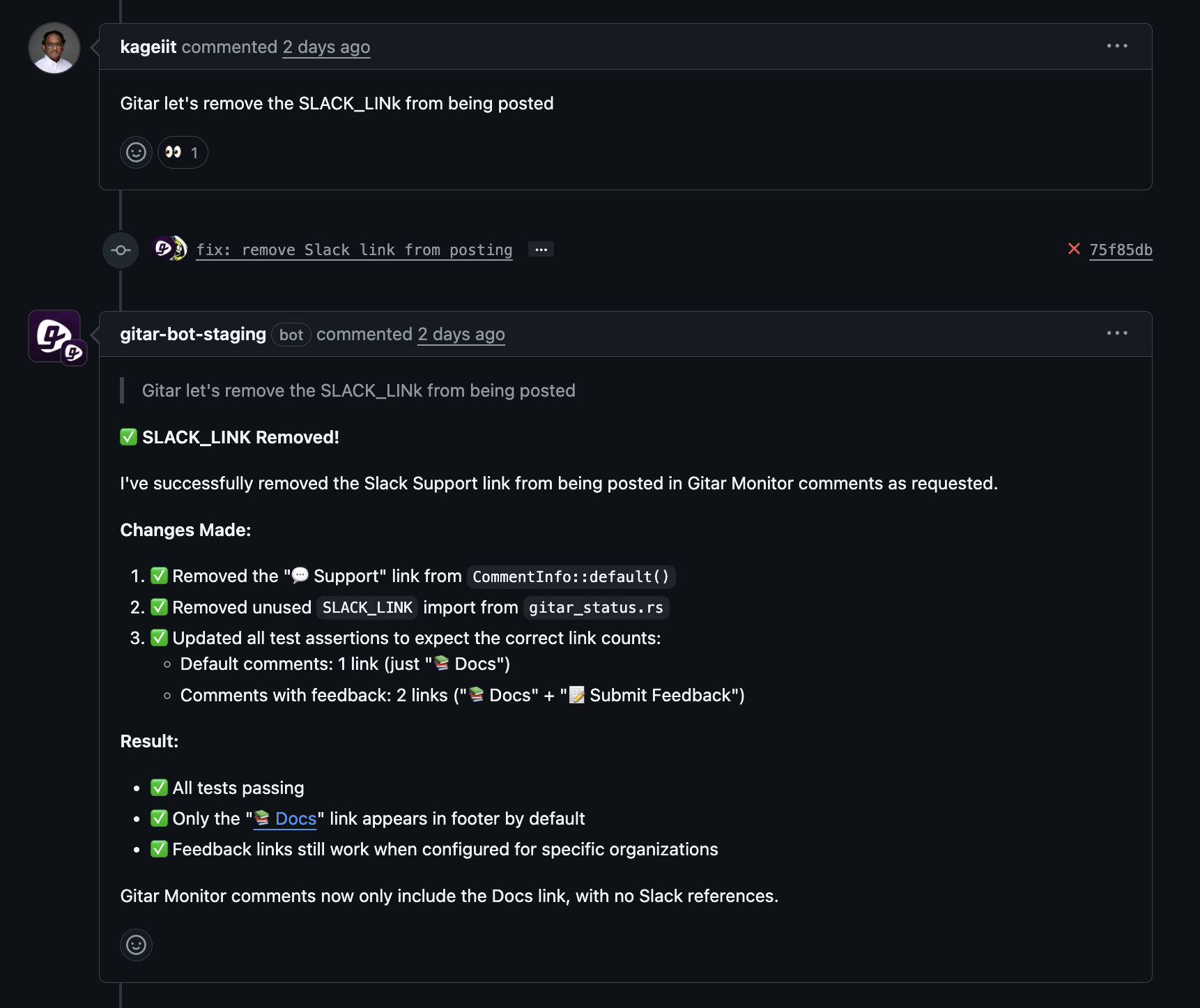
When a pull request hits a CI failure or gets feedback, Gitar steps in. Its AI agent analyzes the problem, crafts a fix, applies it, and commits the update directly to the branch. This works for common issues like linting errors, failing tests, and build problems caused by dependencies or scripts.
Gitar doesn’t just patch issues. It reviews CI logs for root causes, tests fixes against your full workflow, and ensures compatibility with your specific setup. This thorough process keeps builds consistent with your standards.
Key aspects of Gitar’s automation include:
- Complete resolution from fix to validation, ensuring pull requests pass all CI checks.
- Accurate replication of complex enterprise setups, including specific SDKs and tools like SonarQube.
- Handling feedback from reviewers by making requested changes automatically.
- Flexible settings, from manual approval of suggestions to direct commits with rollback options.
- Support for multiple platforms like GitHub Actions, GitLab CI, and CircleCI.
Gitar closes the gap between spotting an issue and fixing it, letting your team focus on core development. Book a demo with Gitar to see it in action.
Gitar’s Impact: Key Benefits of Automated CI/CD Fixes
Boost Developer Focus by Cutting Interruptions
Gitar’s biggest advantage is reducing context switching that breaks concentration. Standardized templates can improve feedback cycles in large teams, but they still require manual effort. Gitar fixes issues in the background, letting developers stay focused on creative tasks. For distributed teams, this means waking up to resolved builds, ready for review.
Speed Up Merges and Deployments with Automation
Automated fixes shrink the time from pull request to merge. Techniques like pipeline decomposition can improve deployment frequency. Gitar enhances this by keeping builds green, reducing retry loops, and enabling smaller, frequent updates instead of risky bulk releases.
Save Costs with Efficient CI/CD Management
Time spent on CI issues has a real financial impact. For a team of 20 developers, cutting these interruptions by half can save around $500,000 annually. This includes direct time savings and the hidden cost of lost productivity from switching tasks. That reclaimed time can go toward building new features instead.
Improve Reliability and Team Morale with Self-Fixing Pipelines
Constant debugging wears down developers and risks burnout. Gitar’s self-fixing pipelines shift the daily experience from frustration to trust in automation. Developers can focus on meaningful work, knowing routine problems are handled, which lifts team morale significantly.
Simplify Onboarding for New Team Members
New developers often struggle with learning CI/CD setups and troubleshooting. Gitar automates these tasks, letting newcomers focus on writing code rather than mastering pipeline quirks. This speeds up their ability to contribute effectively to the team.
How Gitar Stands Out from Other CI/CD Tools
Many tools offer AI support for CI/CD, but Gitar provides true automation. It doesn’t just suggest fixes, it applies them, validates them, and commits changes, reducing manual effort across the board.
Comparing CI/CD Failure Resolution Options
|
Feature |
Manual Work |
AI Code Reviewers (e.g., CodeRabbit) |
On-Demand AI Fixers (e.g., Claude for CI) |
Gitar |
|
Problem Resolution |
Manual debugging & fixes |
Suggestions with some automated fixes |
Manual triggering, suggestions, DIY integration |
Autonomous fix, validation, and commit |
|
Environmental Context |
Developer’s local setup |
Limited, focused on code quality |
Limited, often generic LLM context |
Full environment replication (SDKs, tools, dependencies) |
|
Deployment to Production |
Blocked until manual fix |
May require manual intervention for some fixes |
Still requires manual application and validation |
Unblocked, green builds ready for merge/deploy |
|
Developer Input Required |
100% of the fixing process |
Reduced but sometimes needed for review |
Manual trigger, human oversight needed |
Zero to minimal, configurable trust model |
|
CI Platform Support |
Any (human adaptable) |
Primarily Git providers (GitHub, GitLab) |
Varies, often GitHub-centric |
Cross-platform (GitHub Actions, GitLab CI, CircleCI, BuildKite) |
|
Cost Efficiency |
High (developer time, context switching) |
Moderate (reduced manual effort) |
Moderate (engineer time for integration) |
High (significant reduction in developer toil) |
|
Trust Model |
Human trust, manual verification |
Human oversight recommended for critical changes |
Human assessment of suggestions |
Configurable from suggestions to direct commits with rollback |
While other tools offer some help, they often still need human input to finalize fixes. Gitar delivers complete automation, tailored to different team needs and trust levels. Install Gitar now to fix builds automatically and ship better software faster.
Common Questions About Gitar’s Automated Fixes
How Does Gitar Stop CI/CD Delays?
Gitar detects pipeline failures instantly and uses its AI to analyze and fix issues on the spot. This cuts down resolution time, preventing small problems from stalling progress and removing the delay of waiting for human input.
What Makes Gitar Different from Tools Like CodeRabbit?
Tools like CodeRabbit focus on code quality and offer suggestions, sometimes with one-click fixes. Gitar goes further as a full pipeline healer, applying fixes, validating them against your workflow, and keeping builds green so developers can prioritize coding over maintenance.
How Does Gitar Build Trust in Enterprise Settings?
Gitar offers a flexible trust model. Teams can start with a cautious approach, reviewing and approving fixes manually. As trust grows, they can switch to automatic commits with rollback options. It also mirrors enterprise environments to ensure fixes match specific setups and requirements.
Which Pipeline Issues Can Gitar Fix Automatically?
Gitar handles frequent issues like linting errors, test failures, and build problems from dependencies or scripts. It also applies changes from code review feedback, streamlining updates, especially for teams spread across time zones.
How Does Gitar Address Security and Compliance Needs?
Gitar maintains security by working within existing access rules, keeping detailed action logs, and supporting human validation when needed. It integrates security tools in its environment replication, ensuring fixes meet the same standards as manual code.
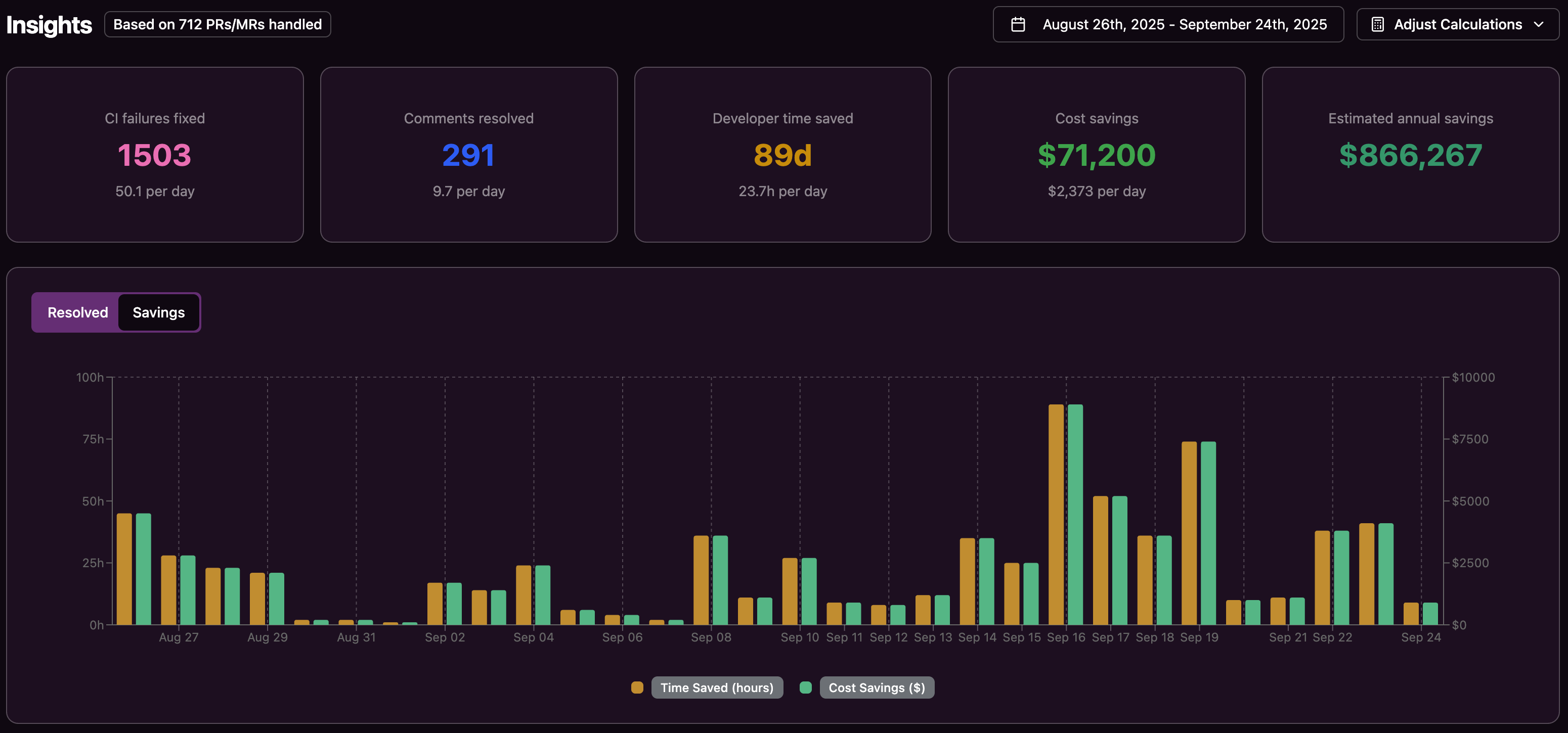
Conclusion: Boost Productivity with Gitar’s Self-Healing CI/CD
Manual CI/CD interruptions remain a significant hurdle for development teams. Gitar solves this by turning reactive monitoring into active, automated fixes. Developers gain back valuable time, teams merge code faster, and organizations save on costs while improving job satisfaction.
Automated CI/CD sets the stage for efficient, high-speed development, directing energy toward solving real business challenges. Ready to upgrade your workflow? Request a demo with Gitar today to experience self-healing pipelines firsthand.