
Last updated: February 17, 2026
Key Takeaways
- Qwiet AI AutoFix often needs manual merges even after it generates PRs, and 68% of developers report application failures per the 2025 GitHub Octoverse report.
- Most alternatives like CodeRabbit, Greptile, and Cursor only provide suggestions that developers must implement manually, without true auto-commit support.
- Gitar uniquely offers free unlimited code review with validated auto-commits that analyze CI failures and guarantee green builds across GitHub, GitLab, and other platforms.
- Security-focused tools like Mobb.ai, Aikido, and Snyk address vulnerabilities but do not fully cover lint, test, or build failures.
- Teams reach 4x faster PR cycles and over $750K annual savings with Gitar’s CI healing, so install Gitar free today to remove manual CI fixes.
How We Evaluated Qwiet AI AutoFix Alternatives in 2026
Our 2026 evaluation focused on real CI fix validation instead of theoretical capabilities. We tested each tool’s ability to auto-commit successful changes, integrate with GitHub Actions, GitLab CI, CircleCI, and Buildkite, handle enterprise scale above 50M lines of code, and deliver measurable ROI through reduced developer toil. The testing approach combined vendor documentation, GitHub benchmarks, and hands-on validation with production codebases from companies like Pinterest, Collate, and Tigris. The main differentiator was simple: tools that guarantee green builds versus tools that only suggest changes.
7 Qwiet AI AutoFix Alternatives Ranked for Real Fixes
The market splits into two groups: suggestion engines that leave comments for manual follow-up, and healing engines that validate and commit working fixes. Our top seven tools are: 1. Gitar (free CI healing with auto-commits), 2. CodeRabbit (rich suggestions without auto-apply), 3. Greptile (contextual reviews with manual implementation), 4. Mobb.ai (security-focused autofix), 5. Aikido.dev (vulnerability remediation with one-click fixes), 6. Snyk (scan and fix with retesting), and 7. Cursor/Bugbot (IDE-based fixing). Only Gitar offers free unlimited code review with validated auto-commits that consistently deliver green builds.
Try Gitar free to automatically fix CI failures and apply review feedback without manual effort.
1. Gitar: CI Healing With Validated Auto-Commits
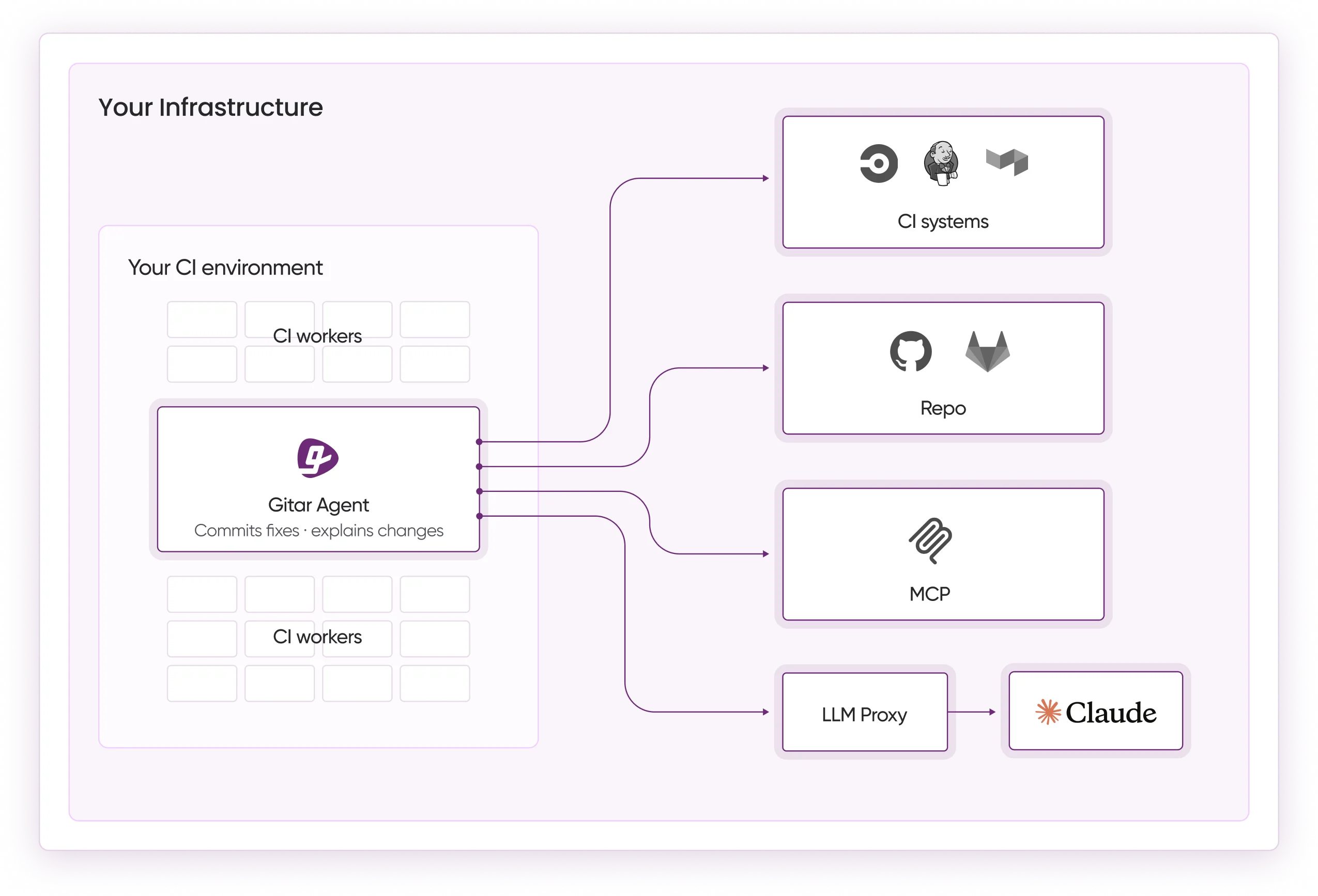
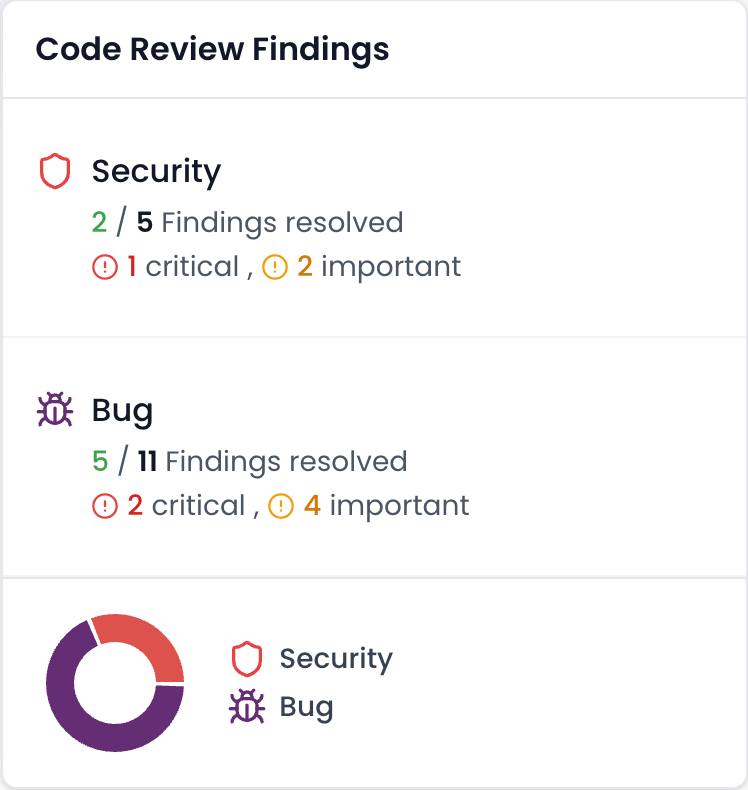
Gitar operates as the only tool in this list that provides free comprehensive code review with validated auto-commits. When CI fails due to lint errors, test failures, or build breaks, Gitar analyzes failure logs, generates contextual fixes, validates them against your full CI environment, and then commits working changes directly to your PR. The platform posts a single updating dashboard comment instead of many separate notifications, so teams see all findings in one place.
Key features include natural language repository rules without YAML, a 30-second GitHub or GitLab setup, and enterprise-grade security. Gitar supports enterprise scale, and Pinterest uses it for more than 50M lines of code with thousands of daily PRs. The platform caught high-severity security vulnerabilities in Copilot-generated code that Copilot missed, which shows stronger contextual analysis. Collate’s engineering team also praised the “unrelated PR failure detection” feature that separates infrastructure flakiness from real code bugs, something traditional reviewers cannot do without CI context.
|
Capability |
Gitar |
Competitors |
|
Auto-Apply Fixes |
Yes (14-day free trial) |
No |
|
CI Failure Analysis |
Yes |
Limited |
|
Validates Fixes |
Yes |
No |
|
Free Tier |
Code review unlimited |
Limited/Paid |
2. CodeRabbit: Strong PR Suggestions Without CI Context
CodeRabbit delivers detailed PR analysis with inline suggestions across many languages. The platform flags code quality issues, security risks, and performance concerns using advanced AI models. However, CodeRabbit reaches only a 33% suggestion acceptance rate because developers must manually apply every change.
Pricing starts at $15 per developer each month and reaches $240 monthly for a 10-person team. CodeRabbit does not see CI context and cannot confirm whether its suggestions actually fix failures. The tool often produces many inline comments that create notification overload and require significant manual work to implement and retest.
3. Greptile: Deep Context Reviews Without Auto-Fix
Greptile uses deep codebase context to deliver intelligent reviews that understand relationships between files and architectural patterns. The platform charges $30 per developer monthly and positions itself as a premium suggestion engine. Greptile still functions as a suggestion tool, since it identifies issues and proposes solutions without validating or applying fixes automatically.
The platform produces detailed analysis but often increases notification fatigue by sending multiple alerts per PR without consolidating feedback. Teams spend considerable time reviewing Greptile’s comments and implementing changes manually, with no assurance that these edits will fix CI failures or pass review.
4. Mobb.ai: Automated Security PRs With Narrow CI Coverage
Mobb.ai focuses on security vulnerability remediation and automatically generates pull requests with fixes for detected security issues. The platform provides AI-powered fix suggestions in pull requests for faster remediation, including real-time IDE fixes and bulk remediation, but it centers on security instead of general CI failures.
Mobb.ai can create PRs with security fixes and supports broader remediation inside that domain. It does not primarily handle lint failures, test breaks, or build errors that block many pipelines. Teams usually need additional tools to cover the full range of CI issues beyond vulnerabilities.
5. Aikido.dev: One-Click Vulnerability Fixes for a Premium Price
Aikido offers one-click vulnerability fixes with team plans starting at $350 monthly, and it focuses on security remediation with automated patch generation. The platform filters 85% of noise to reduce false positives, but it does not target general CI pipeline failures.
Aikido works best for vulnerability management instead of full CI healing. It can generate patches for security issues, yet teams still need other solutions for lint errors, test failures, and build problems that cause most CI delays.
6. Snyk: Security Scan and Fix With Enterprise Costs
Snyk Agent Fix generates up to five potential fixes and retests them for quality using Snyk Code’s engine, which adds validation that many tools lack. The platform focuses on pre-screening changes to reduce risky hallucinations in auto-fix workflows and suits strict enterprise security needs.
Snyk operates mainly in the security space and often costs thousands per month for larger teams. It validates fixes through retesting but usually stops short of auto-committing changes to PRs, so teams still perform manual review and application. Snyk excels at security scanning but does not provide broad CI healing for everyday development failures.
7. Cursor/Bugbot: IDE Assistants Without Native CI Healing
Cursor and similar IDE-based AI assistants shine at in-editor code generation and quick fixes during development. Tools like Cursor improve PR cycle times by 24% by speeding up initial coding, but they do not integrate natively with GitHub or GitLab CI for automated failure repair.
These tools require developers to inspect CI failures, switch back to the IDE, craft fixes, and push new commits, which keeps context switching high and slows teams. They help with code creation but do not handle post-commit CI healing that modern pipelines demand.
Start shipping higher quality software, faster with Gitar’s automated CI healing across your entire workflow.
Fix Reliability Comparison Across Qwiet AI Alternatives
The gap between suggestion engines and healing engines becomes clear when you compare how reliably they apply fixes.
|
Tool |
Auto-Fix CI Fails |
Validates Fixes |
Free Tier |
Pricing |
|
Gitar |
Yes |
Yes |
Code review unlimited |
$0 (autofix 14-day free trial) |
|
CodeRabbit |
No |
No |
Limited |
$15+/developer |
|
Greptile |
No |
No |
None |
$30/developer |
|
Mobb.ai |
Security only |
Limited |
Limited |
Contact sales |
|
Aikido.dev |
Security only |
Limited |
Limited |
$350+/team |
|
Snyk |
Security only |
Yes |
Limited |
Enterprise pricing |
|
Cursor/Bugbot |
No |
No |
Limited |
$20+/month |
ROI analysis for a 20-developer team shows major cost gaps. Teams using commit-capable tools report PR cycles that run four times faster than suggestion-only setups, which translates to $750K annual savings compared to $1M in lost productivity from manual CI fixing.

How to Choose a Qwiet AI Alternative That Actually Heals CI
Developers favor tools that work immediately with almost no setup, and Gitar’s 30-second installation meets this need while many competitors require longer onboarding. Engineering leaders look for clear ROI from lower developer toil and faster delivery, so generous free tiers with proven results beat expensive suggestion-only tools.
DevOps teams prefer tools that plug into existing CI and CD pipelines without YAML edits or workflow rewrites. Validation of fixes against full CI environments before commits removes the risk of new failures, which matters for production systems.
Migration decisions also depend on data portability, training needs, and total cost of ownership. Tools that deliver value on day one without locking teams into a vendor reduce friction and let organizations test effectiveness before paying.
Install Gitar now to fix broken builds automatically and remove CI bottlenecks with near-zero setup.
Frequently Asked Questions
Which AI tools actually fix code automatically instead of just suggesting changes?
Gitar stands out as the main tool that automatically fixes code by analyzing CI failures, generating validated solutions, and committing working changes directly to pull requests. Tools like Snyk and Mobb.ai can generate security fixes, but they work in narrower domains. Most alternatives, including CodeRabbit, Greptile, and Cursor, only provide suggestions that require manual work. Gitar’s healing engine validates fixes against your full CI environment before committing and reaches about 95% acceptance rates compared to 30% to 40% for suggestion-only tools.
What is the best free alternative to Qwiet AI’s AutoFix?
Gitar offers the most complete free alternative to Qwiet AI, with unlimited code review for all repositories and users and no credit card required. The platform includes a 14-day free trial of autofix capabilities that resolve CI failures and apply review feedback automatically. Qwiet focuses on preview-style fixes that often need manual merges, while Gitar validates and commits working changes directly to PRs. Other tools like CodeRabbit and Greptile charge $15 to $30 per developer monthly for suggestion-only features that still demand manual effort.
Which AI tools can automatically fix GitHub CI and GitLab pipeline failures?
Gitar provides the broadest CI failure coverage, with support for GitHub Actions, GitLab CI, CircleCI, and Buildkite. It automatically analyzes and fixes lint errors, test failures, and build breaks. The platform integrates natively with these CI systems, understands failure context, and generates targeted fixes. Some security tools like Snyk can handle vulnerability-related failures, but they do not address the full range of CI issues. Most code review tools lack CI integration and cannot heal pipelines.
How does Gitar compare to Qwiet AI for automated code fixing?
Gitar delivers end-to-end automated fixing, while Qwiet AI often generates pull requests that still need manual review and merges. Qwiet’s AutoFix produces recommendations through PRs and integrations without guaranteeing that the fixes succeed. Gitar validates fixes against your full CI environment and auto-commits working changes, reaching 87% to 95% success rates for green builds. Gitar offers free code review with a 14-day autofix trial, while Qwiet relies on enterprise pricing. Qwiet generates PRs, and Gitar heals them.
How do teams measure ROI from AI code autofix tools?
Teams measure ROI by tracking developer time savings and lower CI friction. Common metrics include time spent on CI failures, PR cycle times, and manual intervention rates. A 20-developer team that spends one hour daily on CI issues loses about $1M in productivity each year. Tools like Gitar that fix and commit changes automatically can cut this to roughly $250K, which creates $750K in annual savings. Teams also track reduced context switching, faster feature delivery, and higher developer satisfaction.
Conclusion: Choose Gitar for Real Code Fixes in 2026
The AI coding boom increased code output and created a new bottleneck in PR review time and CI failures. Qwiet AI’s suggestion-first model keeps this problem in place because teams still implement and validate many fixes manually. Gitar addresses the full workflow by analyzing failures, generating validated fixes, and committing working changes that consistently produce green builds.
Competitors often charge $15 to $30 per developer for suggestions that still require manual work, while Gitar delivers free unlimited code review with proven autofix capabilities. Teams can continue paying for suggestions that add more tasks, or they can adopt a healing engine that actually fixes code.
Try Gitar free for effortless CI healing that fixes broken builds automatically and helps you ship higher quality software, faster.