
Key Takeaways
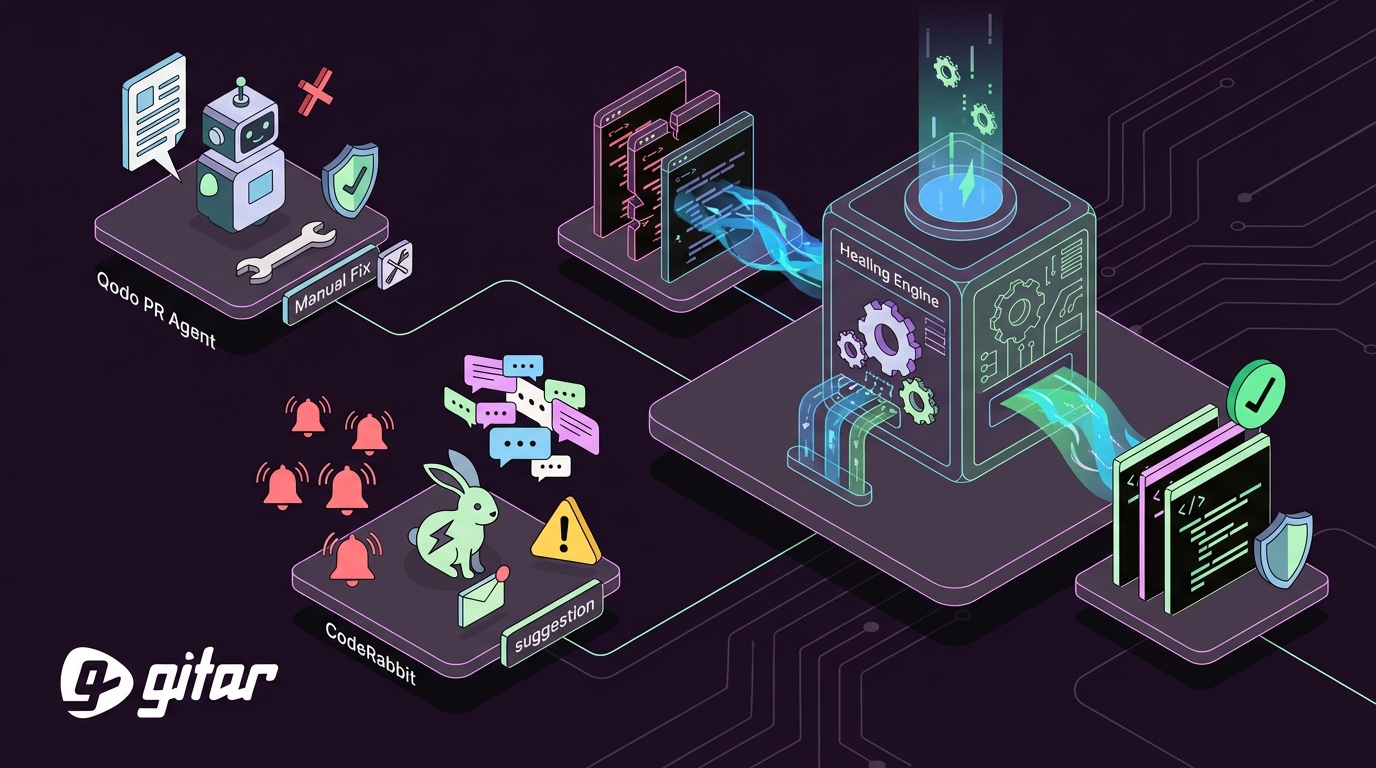
- AI coding tools speed up code generation 3-5x, but PR review bottlenecks have grown 91%, so teams now need auto-healing instead of suggestions.
- Qodo PR Agent offers strong codebase context and SOC 2 Type II compliance but stays suggestion-only at $30+ per developer each month.
- CodeRabbit delivers fast GitHub reviews but creates notification fatigue with heavy comment volume and no CI auto-fix support.
- Gitar delivers free unlimited code review, validated CI auto-fixes (14-day trial), multi-platform integration, and hardened enterprise security.
- Teams save $450-900+ per month compared to competitors; install Gitar now for free auto-fixes and higher shipping velocity.
How We Compared Qodo PR Agent, CodeRabbit, and Gitar for Real Engineering Teams
Our analysis focuses on five core criteria: review quality and context awareness, auto-fix and CI integration, security and compliance, 2026 pricing and total cost of ownership, and scalability for engineering teams. Data sources include official vendor documentation, product specifications, industry benchmarks from Pullflow’s 2025 State of AI Code Review, hands-on workflow testing across GitHub, GitLab, and CI platforms, and Gitar documentation.
We prioritized real-world engineering scenarios such as multi-repository environments, AI-generated PR volume, CI failure resolution, and integration complexity. Testing covered 50+ million lines of code to validate enterprise scalability and to evaluate security posture for teams working with sensitive codebases.
Side-by-Side 2026 Comparison: Qodo PR Agent vs CodeRabbit vs Gitar
The comparison below shows how suggestion-based tools differ from auto-healing platforms for teams managing large volumes of AI-generated pull requests.
| Feature | Qodo PR Agent | CodeRabbit | Gitar |
|---|---|---|---|
| PR Summaries | Yes, codebase-aware | Yes, inline focused | Yes (Free) |
| Auto-Apply Fixes | No, suggestions only | No, suggestions only | Yes (free 14-day trial) |
| CI Failure Auto-Fix | No CI integration | No CI integration | Yes |
| 2026 Pricing | $30+/developer/month | $15-30/developer/month | Free code review, autofix features 14-day free trial |
| Security Certifications | SOC 2 Type II | Standard encryption | SOC 2 Type II, ISO 27001 (Enterprise) |
| Multi-Platform CI | Limited | GitHub focused | GitHub Actions, GitLab Pipelines, Buildkite, CircleCI, Bitrise |
| Comment Interface | Multiple inline | High volume notifications | Single dashboard comment that updates in place |
Gitar’s Healing Engine: From Comments to Validated Fixes
Gitar shifts AI code review from suggestion-only comments to auto-healing development infrastructure. Competing tools charge $15-30+ per developer for feedback that still needs manual implementation, while Gitar delivers free comprehensive code review and adds autofix features on a 14-day free trial. See the Gitar documentation for deeper technical details.
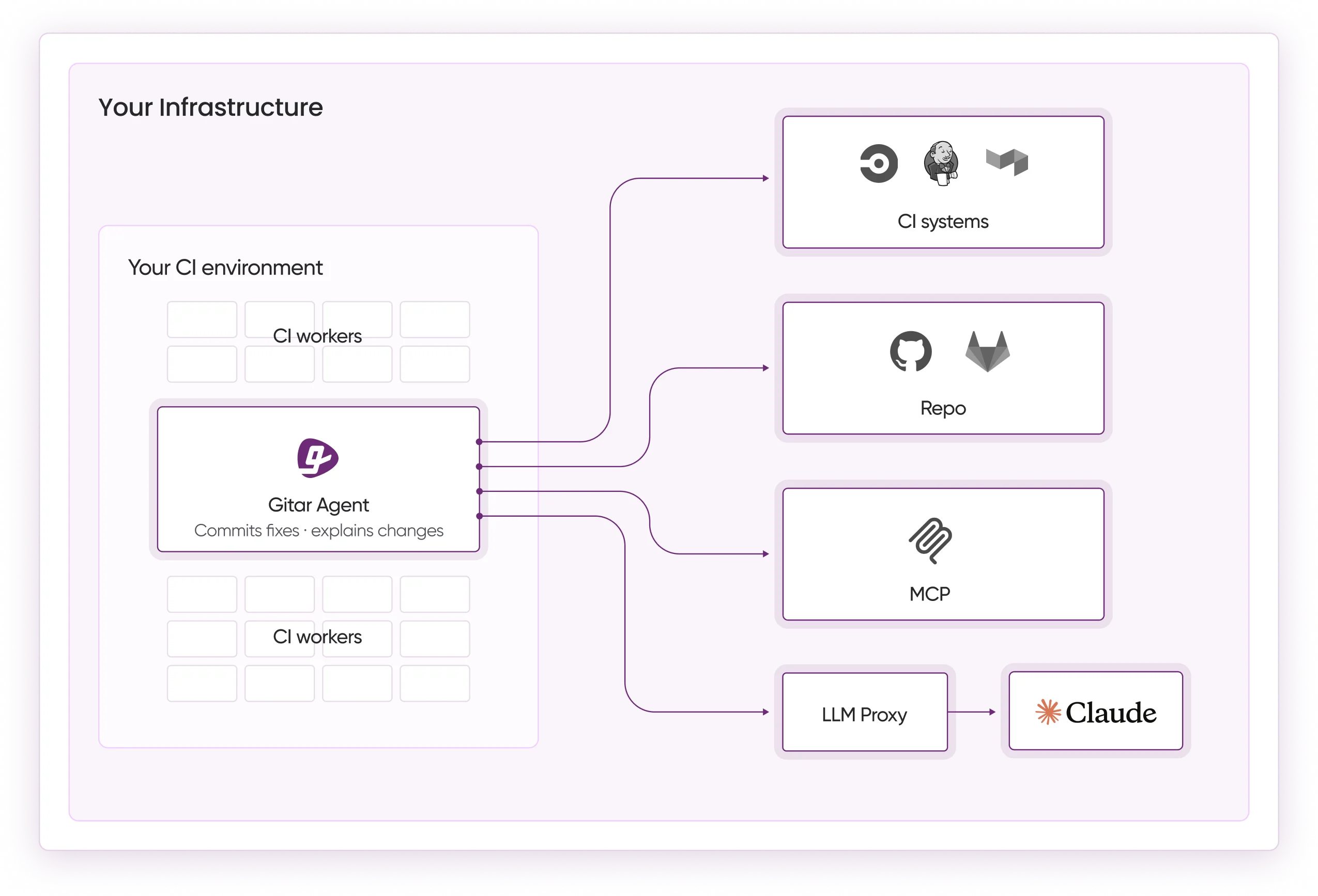
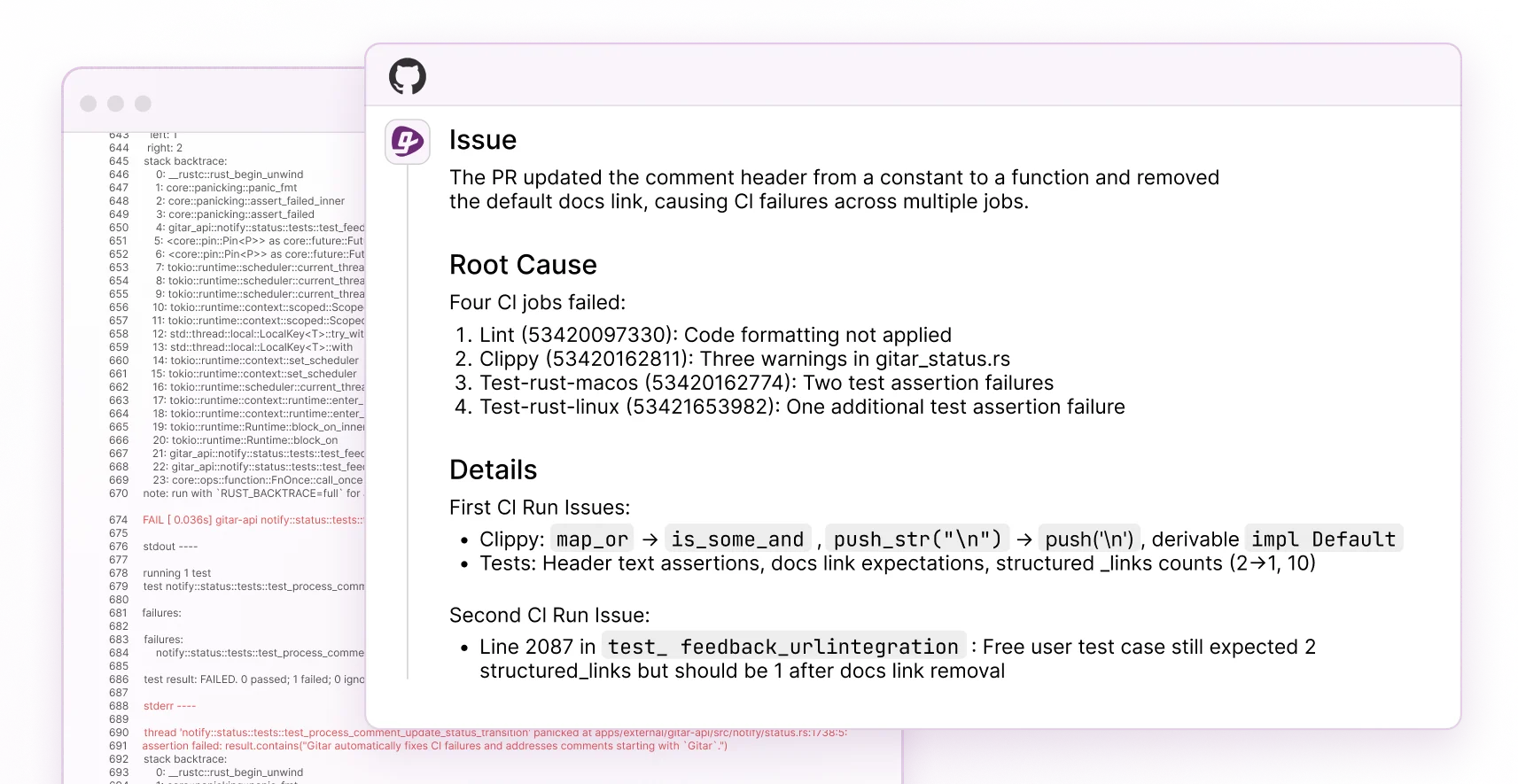
Gitar’s healing engine activates when CI fails with lint errors, test failures, or build breaks. The platform analyzes failure logs, generates fixes with full codebase context, validates them in your CI environment, then commits working solutions. Fixes run against your actual pipelines before application, which avoids guesswork and reduces broken follow-up commits.
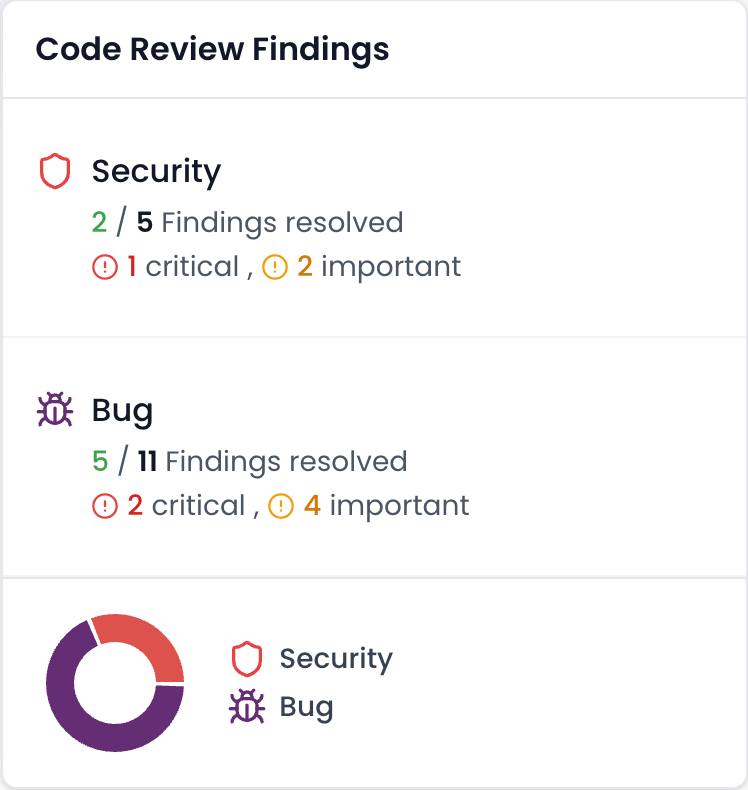
Key capabilities include a single dashboard comment that updates in place to prevent notification spam, unlimited free code review for public and private repositories with no seat limits, and a 14-day free trial of auto-fix features. For a 20-developer team, these features create large annual productivity gains compared to manual fix cycles, while eliminating $450-900 in monthly tool spend versus suggestion-only engines.
Gitar integrates with GitHub, GitLab, CircleCI, and Buildkite and connects natively to Jira, Slack, and Linear. Enterprise deployments support 50 million+ lines of code and thousands of daily PRs, as seen at Pinterest, while still delivering guaranteed green builds through validated fix application.
Experience the difference between suggestions and actual fixes. Install Gitar now to automatically fix broken builds and start shipping higher quality software, faster with minimal setup effort.
Qodo PR Agent: Strong Context and Compliance, Manual Fixes
Qodo PR Agent evolved from CodiumAI’s testing platform into a codebase-aware review system. The platform provides SOC 2 Type II certification with 2-way encryption and secret obfuscation, which suits compliance-heavy environments.
Qodo’s main strength comes from its full codebase context engine that understands cross-repository dependencies and runs 15+ agentic workflows for bug detection. The platform supports self-hosting and air-gapped deployments for regulated industries, with enterprise customers such as Monday.com and large Fortune 100 retailers.
Qodo still operates as a suggestion engine. In 2026, teams pay $30+ per developer each month for deep analysis but still perform manual fix implementation. Teams that value compliance and rich codebase intelligence more than automation gain from Qodo’s context depth compared to simpler tools.
CodeRabbit: Fast Reviews with High Notification Noise
CodeRabbit connects to more than 100,000 open-source projects and serves over 8,000 paying customers. The platform excels at GitHub integration, supports 40+ linters, and pulls external context from Jira and Linear.
CodeRabbit was identified as the “talkative” tool, producing the highest volume of comments per PR, which often creates notification fatigue for developers. While the platform delivers fast average review times of 206 seconds with fewer false positives, teams still spend significant time processing the many comments.
Pricing ranges from $15-30 per developer each month, which works for smaller teams but becomes expensive at scale. CodeRabbit’s GitHub-centric design limits multi-platform CI coverage compared to broader solutions.
Security and Data Privacy Across Qodo, CodeRabbit, and Gitar
Security posture differs sharply across these platforms. Qodo Enterprise provides SOC 2 Type II certification with comprehensive security controls, including proactive compliance validation and organization-specific rule enforcement. Self-hosting and air-gapped deployment options meet strict regulatory requirements.
CodeRabbit uses standard encryption and integrates with enterprise authentication systems but does not match Qodo’s compliance certifications. Regulated industries often treat this gap as a blocker for broad rollout.
Gitar’s Free Plan uses a zero-retention model, so no code data is stored beyond the processing window, which removes long-term exposure. The Enterprise Plan holds SOC 2 Type II and ISO 27001 certifications and runs the agent directly in your CI pipeline with access to configs, secrets, and caches, while code never leaves your infrastructure.
2026 Pricing and Total Cost of Ownership for AI Code Review
Pricing models create large differences in total cost of ownership. For a 20-developer team, CodeRabbit costs $300-600 each month at $15-30 per seat, while Qodo reaches $600+ each month at $30+ per developer. Annual costs reach $3,600-7,200 for CodeRabbit and at least $7,200 for Qodo, before accounting for time lost to manual fixes.
Gitar’s code review remains free and includes full PR analysis, security scanning, bug detection, and performance review for unlimited repositories. Teams face no seat limits and no credit card requirement, and autofix features include a 14-day free trial. Even after upgrading to Team or Enterprise plans, automated CI healing usually offsets costs through faster resolution and less context switching.
The ROI picture becomes clear when comparing $450-900 in monthly spend on suggestion engines with free review plus a 14-day autofix trial that measurably increases delivery velocity.
Developer Workflow and Day-to-Day Experience
Developer experience directly affects adoption and productivity. CodeRabbit’s heavy comment volume creates notification management overhead, since developers must process many inline suggestions across each PR.
Qodo offers more structured feedback through its agentic workflows but still relies on suggestion-only output that requires manual implementation. Integration complexity depends on self-hosting choices and compliance constraints.
Gitar’s single-comment pattern consolidates CI analysis, review feedback, and rule evaluations into one updating thread. When Gitar applies fixes, resolved items collapse automatically. This approach reduces cognitive load and context switching compared to scattered inline comments.
Teams can remove notification noise and manual fix loops. Install Gitar now to automatically fix broken builds and start shipping higher quality software, faster with a smoother developer experience.
Scaling Qodo, CodeRabbit, and Gitar for Large Engineering Orgs
CodeRabbit demonstrates enterprise reach with 13 million pull requests reviewed, and Qodo supports environments spanning 10 to more than 1,000 repositories through its multi-repo intelligence engine.
Gitar’s architecture supports more than 50 million lines of code and thousands of daily PRs, validated through enterprise deployments such as Pinterest. The agent-based design scales horizontally across GitHub Actions, GitLab CI, CircleCI, and Buildkite without noticeable performance loss.
Scalability also covers adoption patterns. Enterprise AI-assisted review deployments report 85% satisfaction and 83% peak adoption across 300 engineers, with 60% long-term usage, which shows that large teams can sustain these tools in production.
FAQ: Choosing and Migrating AI Code Review Tools
Which tool fits most engineering teams: Qodo PR Agent or CodeRabbit?
Tool selection depends on constraints and priorities. CodeRabbit suits GitHub-centric teams that want quick setup and accept higher comment volume. Qodo PR Agent fits compliance-heavy organizations that need self-hosting and deep codebase context. Both tools, however, stay suggestion-only and still require manual fix work. Teams that want real productivity gains from automation usually see better ROI with Gitar’s free review and auto-healing, which removes manual fix cycles.
How do Gitar’s auto-fixes beat suggestion-only tools like CodeRabbit and Qodo?
Suggestion tools analyze code and post comments, then developers read them, implement changes, push commits, and hope the fixes pass CI. Gitar’s healing engine inspects CI failures, generates fixes with full codebase context, tests them in your environment, and commits working solutions automatically. This process removes the manual implementation loop that keeps suggestion tools costly despite their subscription fees. Teams move from “here is what might be wrong” to “here is the working fix, already applied.”
Is CodeRabbit safe enough for enterprise security needs?
CodeRabbit uses standard encryption and supports enterprise authentication, which covers many business environments. It does not provide SOC 2 Type II certification like Qodo, which matters for regulated industries. Qodo’s self-hosting and air-gapped options deliver maximum control, while Gitar’s zero-retention architecture removes long-term data exposure and its Enterprise Plan keeps all processing inside your infrastructure.
What ROI gap exists between free and paid AI code review tools?
Paid suggestion tools such as CodeRabbit at $300-600 per month for 20 developers and Qodo at $600+ per month create ongoing license costs while still requiring manual fixes. Developer time adds a hidden cost, often around one hour daily per developer on CI and review issues, which can reach $1M in annual productivity loss for a 20-person team. Gitar’s free review removes license costs, and auto-healing cuts fix time to about 15 minutes daily, saving $375,000+ annually under conservative assumptions. Free tools that automate the work usually deliver stronger ROI.
How hard is it to migrate from CodeRabbit or Qodo to Gitar?
Migration stays simple because Gitar enhances existing workflows rather than replacing them. Install the GitHub or GitLab integration alongside current tools, start with free review features, then enable auto-fix once the team builds trust. No vendor lock-in or complex configuration transfer is required. Most teams run Gitar in parallel at first, then shift usage as they see the benefit of applied fixes over static suggestions. The 14-day auto-fix trial lets teams evaluate the healing engine with low risk.
Conclusion: Why Gitar Leads AI Code Review in 2026
Engineering leaders now face a clear decision. They can keep paying $15-30 per developer each month for suggestion engines that still demand manual fixes, or they can adopt a free auto-healing platform that resolves issues automatically. CodeRabbit and Qodo PR Agent serve specific niches, such as GitHub-focused teams or compliance-heavy environments, but both keep the manual fix bottleneck in place.
Gitar removes that bottleneck. Free comprehensive code review, validated auto-fixes, a single-comment experience, and multi-platform CI coverage deliver stronger ROI than suggestion-only tools. Teams overwhelmed by AI-generated PRs and CI failures gain meaningful productivity from automated healing, regardless of current tool investments.
The market now shifts from suggestion engines to healing platforms. Early adopters gain faster delivery and lower developer frustration. Stop paying for suggestions that still require manual work. Install Gitar now to automatically fix broken builds and start shipping higher quality software, faster and move from comments to real solutions.