
Key Takeaways
- Qodo PR-Agent is an open-source LLM tool for GitHub and GitLab PR reviews with commands like /review, /improve, and /ask, plus a multi-agent architecture in Qodo 2.0 and 2.1.
- Install it through GitHub Marketplace, GitLab CI/CD, or Docker, then configure API keys and .github/pr_agent.toml for automatic reviews.
- Use /review for analysis, /improve for suggestions, and /ask for questions, and rely on automatic triggers on key PR events.
- Advanced configuration supports self-hosted LLMs, custom proxies, and repository rules, while troubleshooting focuses on API limits, auth issues, and Docker crashes.
- PR-Agent suggests fixes but does not fully heal CI, so teams upgrade to Gitar for automatic code fixes and consistently green builds.
How Qodo PR-Agent Supports AI Code Review
Qodo PR-Agent is an open-source tool that uses large language models to analyze pull requests and provide automated feedback. It supports GitHub, GitLab, and CLI workflows. Core commands include /review for comprehensive code analysis, /describe for PR summaries, /improve for code suggestions, and /ask for specific questions about changes.
Qodo 2.0 introduces a multi-agent architecture with specialized agents, including a judge agent that evaluates findings, resolves conflicts, removes duplicates, and filters low-signal results. The system uses more than 15 specialized review agents for tasks such as bug detection, test coverage checks, and documentation updates.
Qodo 2.1 adds the Rules System for defining, discovering, and enforcing coding standards, learning from PR discussions and code patterns. This upgrade strengthens automated code governance with capabilities such as automated resolutions alongside suggested fixes.
PR-Agent works well as a starter tool for teams exploring AI code review and offers free functionality compared to paid options like CodeRabbit at $15 per seat. Many teams eventually hit limits when they face persistent CI failures and complex review feedback that demand deeper automation.
Step-by-Step Qodo PR-Agent Installation on GitHub
GitHub installation for Qodo PR-Agent follows five clear steps.
1. GitHub Marketplace Installation
Open GitHub Marketplace and search for “PR-Agent”. Click “Install”, then select the repositories or organization where you want to enable the tool. Grant permissions for pull requests and issues access.
2. Configure API Keys
Add your LLM API key as a repository secret named OPENAI_KEY. PR-Agent supports OpenAI, Anthropic, and other providers. Go to Settings > Secrets and variables > Actions, then add your key.
3. Create Configuration File
Create a .github/pr_agent.toml file in your repository root with basic configuration:
[pr_reviewer] auto_review = true require_focused_review = false [pr_description] publish_description = true
4. Enable PR Settings
Configure automatic triggers for pull request events such as opened, reopened, and ready_for_review. Set permissions for pull-requests: write and issues: write in your workflow configuration.
5. Test Installation
Create a test pull request and comment “/review” to confirm that PR-Agent responds with automated analysis. The tool should post a structured review within two to three minutes.
GitLab Installation Workflow
For GitLab repositories, configure GitLab CI/CD variables and create a .gitlab-ci.yml workflow that triggers PR-Agent on merge request events. GitLab users may encounter authentication errors such as “Repository access denied” when running automations, which require correct token configuration.
Docker Deployment Option
Teams that prefer containerized deployment can run PR-Agent with Docker using the following command:
docker run -e OPENAI_KEY=$OPENAI_KEY -e GITHUB_TOKEN=$GITHUB_TOKEN qodoai/pr-agent:latest
Use Docker Buildx for multi-platform builds with registry cache and multi-stage builds for stronger performance. Pin base image versions and test on actual hardware before production rollout.
Core Qodo PR-Agent Commands in Daily Use
PR-Agent responds to specific commands that you post as comments on pull requests.
1. /review Command
Comment “/review” on any pull request to trigger comprehensive code analysis. PR-Agent examines the diff, flags potential issues, and provides structured feedback categorized by severity as critical, high, medium, or low.
2. /improve Command
Use “/improve” to request specific code improvement suggestions. The tool evaluates code quality, performance implications, and best practices, then returns actionable recommendations.
3. /ask Command
Post “/ask [your question]” to explore particular aspects of the code changes. For example, “/ask how does this change affect performance?” prompts targeted analysis.
4. Automatic Triggers
Configure PR-Agent to review pull requests automatically when they are opened, reopened, or marked ready for review. This setup removes the need to type commands on every PR.
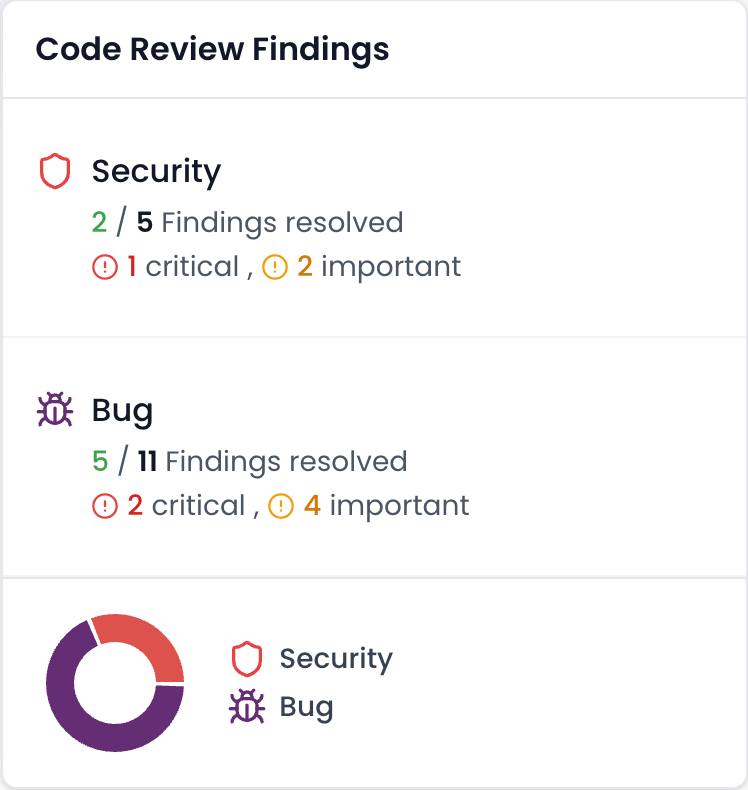
PR-Agent generates structured reviews with clear categorization, which helps teams prioritize fixes. It also offers automated resolutions through /implement, although many teams still look for tools with built-in CI healing for full automation.
Advanced Qodo PR-Agent Configuration Options
Advanced configuration unlocks self-hosted LLMs, custom proxies, and repository rules.
Self-Hosted LiteLLM Proxy
Configure PR-Agent with a self-hosted LiteLLM proxy by setting environment variables for local LLM endpoints. Create a .env file with:
LITELLM_MODEL=local-model LITELLM_API_BASE=http://localhost:8000 OPENAI_API_KEY=local-key
GitLab-Specific Configuration
For GitLab integration, configure merge request triggers and set CI/CD variables. Create .gitlab-ci.yml with PR-Agent job definitions and confirm that authentication tokens have the correct scopes.
Custom Model Integration
PR-Agent supports Ollama and other local models through configuration files. Update .github/pr_agent.toml to define custom model endpoints and authentication methods.
Repository Rules and Governance
Fixing Common Qodo PR-Agent Errors
Teams often encounter a small set of recurring PR-Agent issues.
|
Error |
Cause |
Solution |
|
LiteLLM .env not recognized |
Configuration file not loaded |
Verify .env file location and environment variable syntax |
|
API rate limits exceeded |
High PR volume or large diffs |
Implement request throttling or upgrade API plan |
|
GitLab authentication failure |
Incorrect token permissions |
Ensure GitLab token has api and read_repository scopes |
|
Docker container crashes |
Missing environment variables |
Verify all required API keys and tokens are set |
Users report difficulty configuring PR-Agent to use local self-hosted LLMs via .env file, as the agent defaults to GPT models despite OpenAI-compatible local LLM setup. This behavior shows how complex self-hosted configurations can become and why teams ask for stronger automation.
Why Teams Outgrow Qodo PR-Agent and Move to Gitar
PR-Agent delivers useful code review automation but still behaves as “a co-pilot, not an autopilot,” offering feedback as a first pass while relying on human oversight for code suggestions and approvals. This model creates a “review paradox” where verifying AI logic can be cognitively harder than writing the code yourself, which often results in weak oversight when tools only suggest instead of autonomously fixing issues.
The table below summarizes the differences between suggestion-based tools and automated solutions.
|
Feature |
Qodo PR-Agent |
Gitar |
|
PR Reviews |
Suggestions and /implement |
Auto-fixes and commits |
|
CI Failures |
CI integration and analysis |
Analyzes, fixes, validates |
|
Implementation |
/implement command available |
Automatic application |
|
Pricing |
Free (API costs apply) |
14-day free trial of the Team Plan |
Gitar’s healing engine moves beyond suggestions and command-based fixes by implementing changes, validating them against CI, and committing working solutions automatically. This approach removes manual overhead for high-velocity teams. For more detail on Gitar’s automated fix capabilities, review the Gitar documentation.
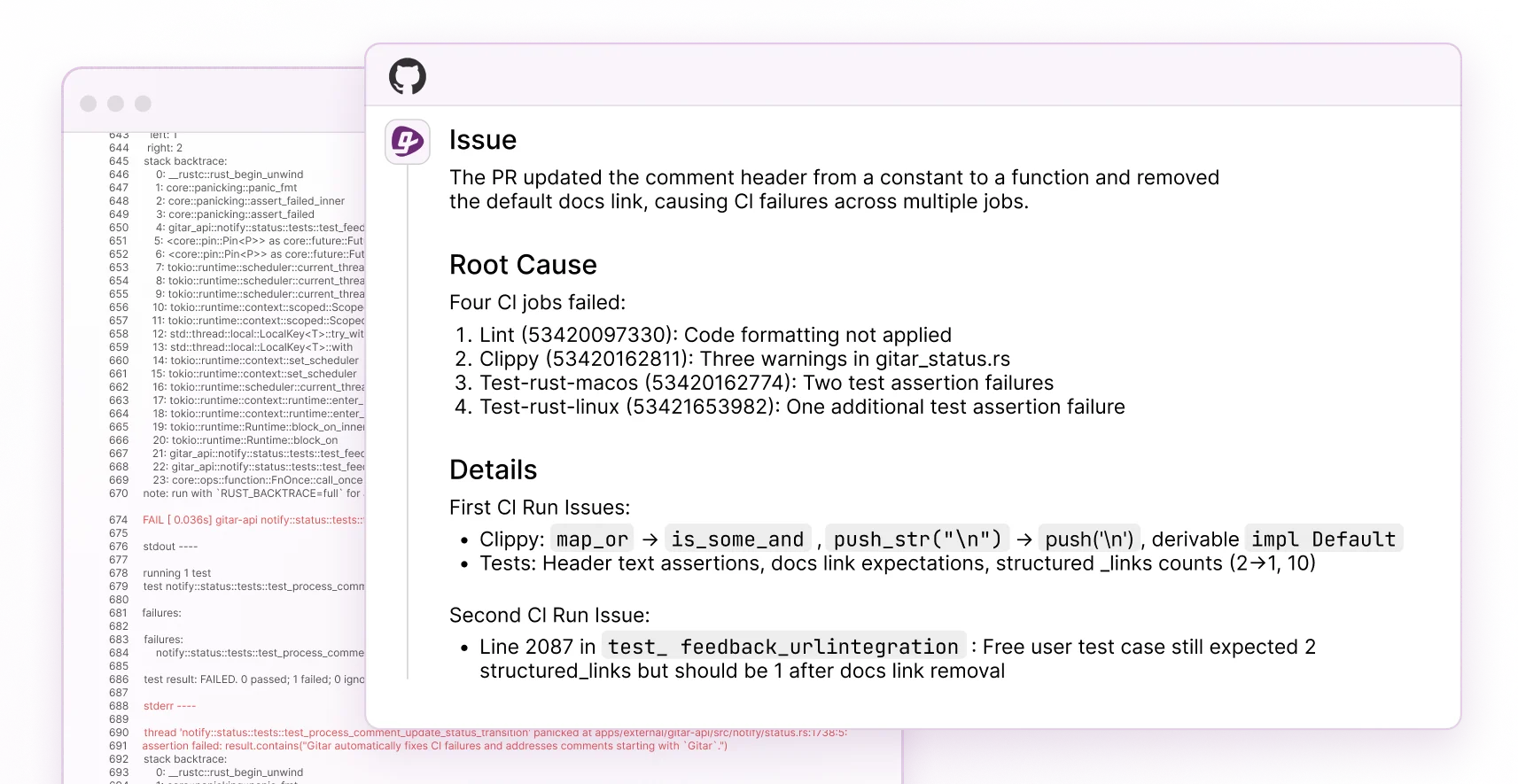
Teams report saving substantial time by removing the suggestion and implementation back-and-forth. When CI fails, Gitar analyzes failure logs, generates fixes with full codebase context, validates solutions, and commits them, all through a single comment that updates in place.
FAQ: Qodo PR-Agent Setup and Tradeoffs
How do I set up Qodo PR-Agent on GitHub?
Install the PR-Agent GitHub App from the marketplace, add your OPENAI_KEY as a repository secret, create a .github/pr_agent.toml configuration file, then test with the /review command on a pull request. Most teams complete this basic setup in about 10 minutes.
Does Qodo PR-Agent work with GitLab?
Yes, PR-Agent supports GitLab through CI/CD integration. Configure GitLab CI/CD variables with your API keys, create a .gitlab-ci.yml workflow that triggers on merge request events, and confirm that authentication tokens are correct. GitLab integration usually requires more manual configuration than GitHub.
Can I run Qodo PR-Agent with Docker?
PR-Agent supports Docker deployment with containerized execution. Use the official qodoai/pr-agent Docker image, set required environment variables for API keys and tokens, and configure volume mounts for persistent configuration. Docker deployment works well for self-hosted environments.
What are the main limitations of Qodo PR-Agent?
PR-Agent provides suggestions and /implement capabilities, but often needs extra steps for complex fixes. It offers CI integration without full automated healing, can create notification noise with many inline comments, and may require tuning for smooth workflow automation. These traits make it useful for initial automation, while many teams later upgrade to Gitar for seamless CI healing.
How does Qodo PR-Agent compare to paid alternatives?
PR-Agent offers free basic functionality compared to tools like CodeRabbit at $15 per seat or Greptile at $30 per seat. It may not match the automatic CI healing and end-to-end workflow automation that some paid platforms provide. While PR-Agent includes /implement and CI integration, tools like Gitar deliver full automation with auto-fixes and advanced CI healing.
In the 2026 AI-accelerated development landscape, PR-Agent acts as an entry point for automated code review. Teams that want stronger velocity gains move to platforms that heal code automatically. For more detail on Gitar, see the Gitar documentation.