
Key Takeaways
- AI coding tools like Qodo PR-Agent provide suggestions but require manual implementation, which creates bottlenecks despite 84% developer adoption.
- Qodo struggles at enterprise scale with false positives, weak CI context awareness, and performance issues in repositories over 1 million lines.
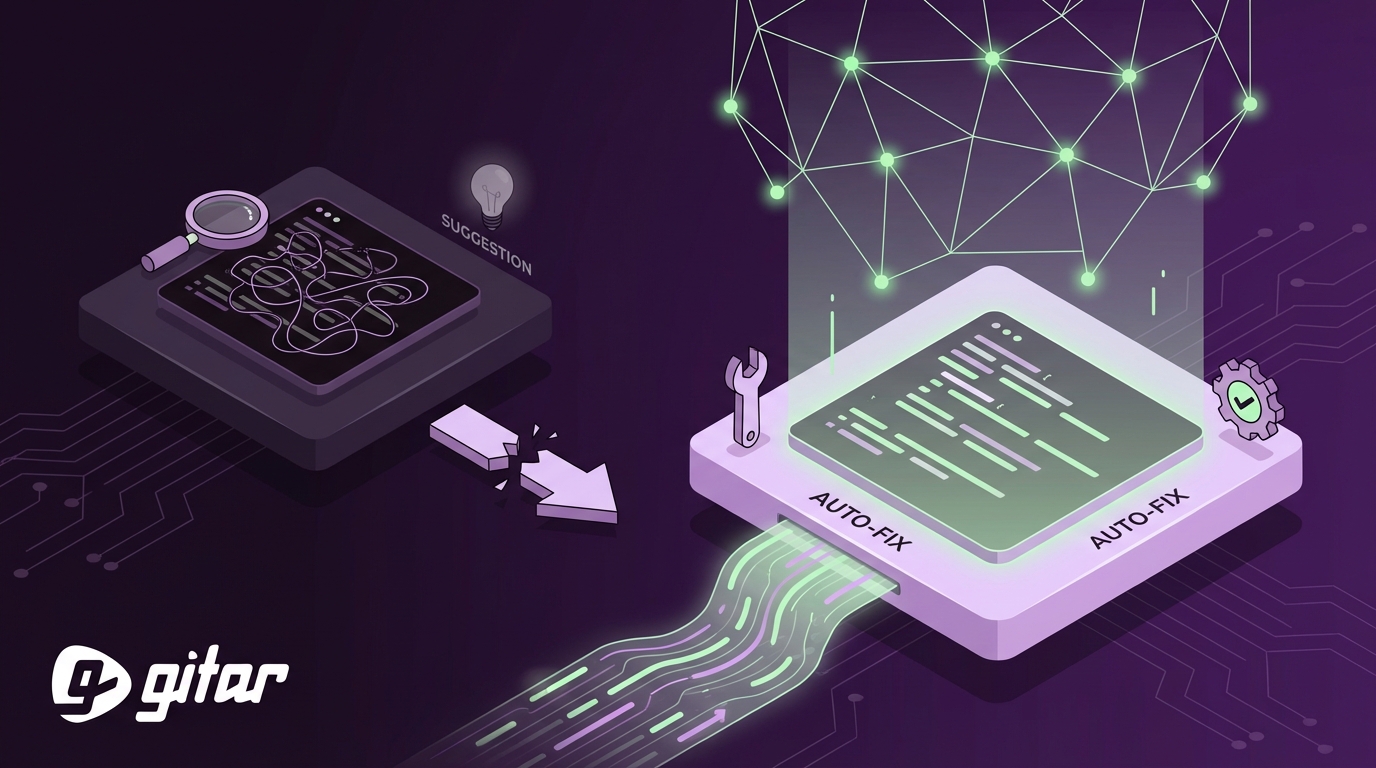
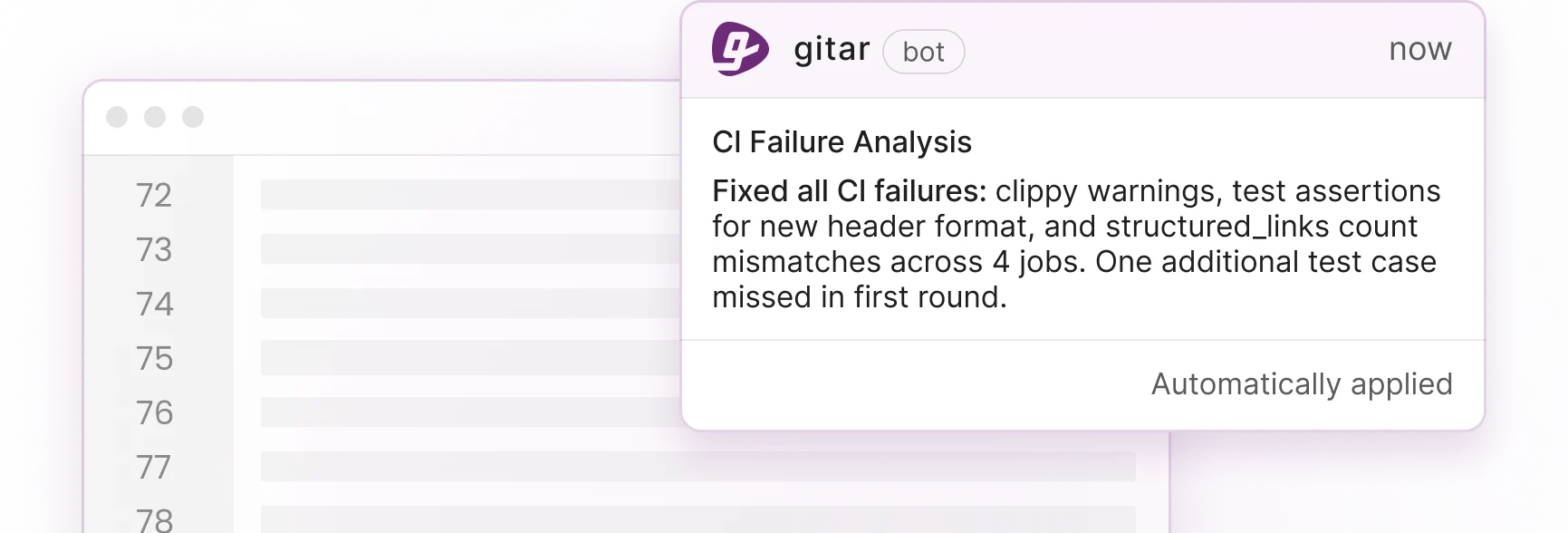
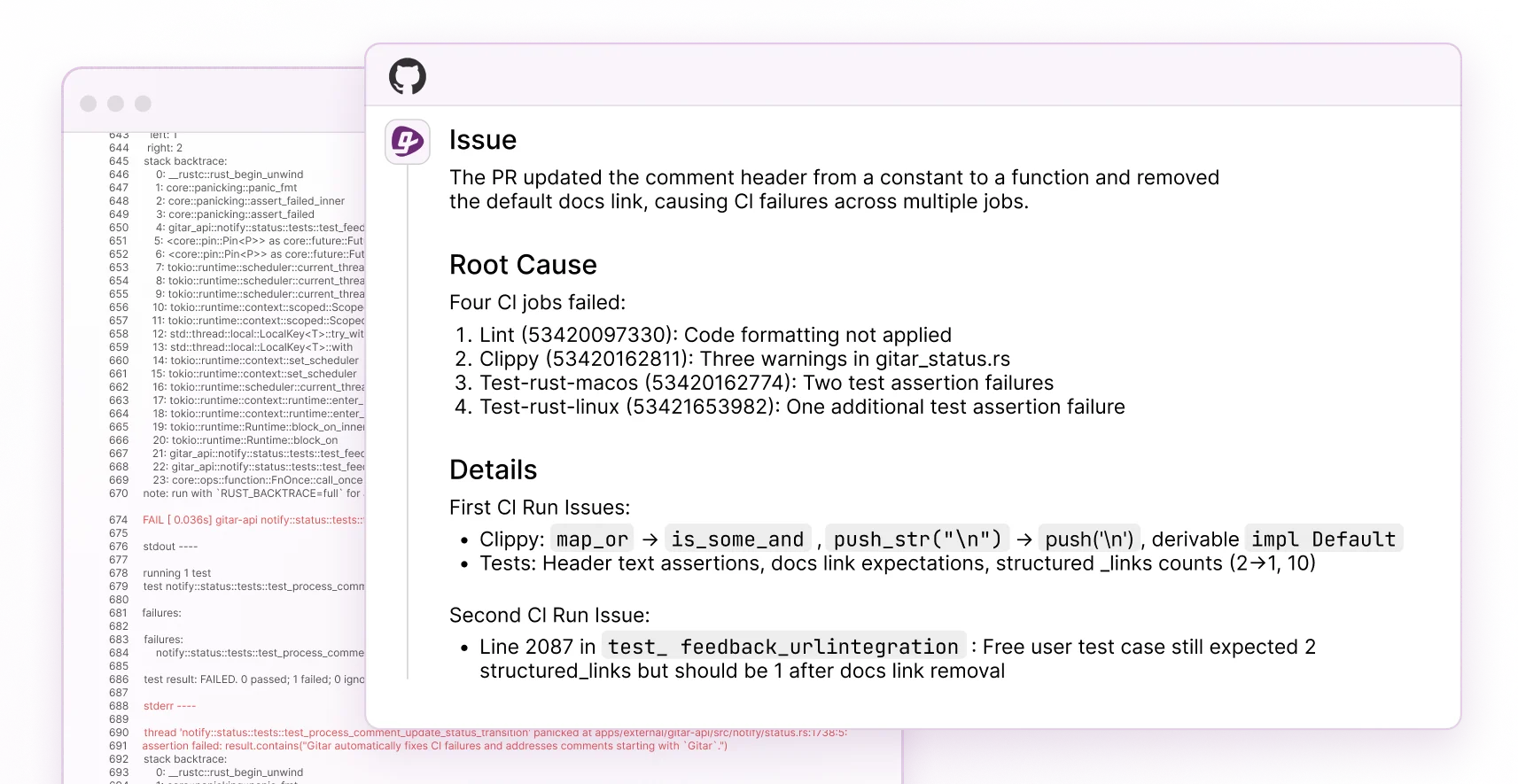
- Gitar auto-fixes CI failures and review feedback, handling 50M+ line codebases like Pinterest while keeping builds green.
- Teams save 75% on review time and eliminate $3,600-10,800 in annual tool costs by switching to Gitar’s free core features.
- Experience Gitar’s healing engine today, install free and ship higher quality software faster.
How Qodo PR-Agent Works in Real Teams
Qodo PR-Agent is an open-source GitHub tool that provides AI-powered PR analysis, summaries, and inline code suggestions. The qodo pr-agent github repository offers free access to basic code review functionality, which appeals to teams looking for low-cost AI support. Its suggestion-only architecture requires manual implementation of all recommendations, creating what industry experts call the “manual fix trap.”
The tool integrates directly with GitHub pull requests, analyzes code changes, and generates comments with improvement suggestions. Qodo PR-Agent’s open-source version remains free but lacks auto-fixing capabilities, so it falls short in modern workflows where developers estimate 42% of committed code is AI-assisted.
Install Gitar now, automatically fix broken builds, start shipping higher quality software, faster
Qodo PR-Agent in Practice: Where Teams Get Stuck
Enterprise teams that implement Qodo PR-Agent usually share a similar journey. They start with a goal to scale AI-powered code review and keep up with rising PR volume from AI-assisted coding. Real-world friction appears as soon as the tool runs in production.
The main limitation shows up during implementation. Qodo generates suggestions, but developers must manually apply every recommendation. This creates a bottleneck where teams report 35% quality improvements but experience longer debugging cycles because each suggestion still needs manual validation.
Key implementation phases expose systematic gaps:
- Analysis Phase: Qodo identifies issues, while developers handle manual validation of suggestions.
- Implementation Phase: Manual fixes introduce human error and delay.
- Validation Phase: Limited automated testing of fixes before commit.
- Scale Phase: False positives increase sharply in large repositories.
The outcome contradicts the promise of automation. Teams using suggestion-only tools still experience the 91% increase in PR review time because the cognitive load of implementing suggestions often exceeds the time saved by having them identified.
Why Qodo Breaks Down at Enterprise Scale
Developer communities repeatedly describe specific limitations when they deploy Qodo PR-Agent in production. GitHub issues and Reddit threads highlight recurring problems such as false positives in repositories with more than 10,000 files, suggestion noise that buries real feedback, and weak context awareness in complex codebases.
The core architectural constraint becomes obvious at enterprise scale. Qodo analyzes code diffs in isolation and lacks a full view of CI pipeline context or build dependencies. When a suggestion breaks downstream tests or introduces compatibility issues, developers only discover the problem after they apply the change and run CI.
Enterprise teams face several recurring challenges:
- Repository Scale: Performance degrades significantly in codebases that exceed 1 million lines.
- CI Integration: The tool offers limited ways to validate suggestions against real build processes.
- Platform Limitations: It is primarily optimized for GitHub, with partial support for GitLab, Bitbucket, and others.
- Context Awareness: Suggestions may miss project-specific conventions even when configuration options exist.
The 1.7× increase in defects from AI-generated code amplifies these issues, because suggestion-only tools cannot guarantee that their recommendations actually fix root causes.
Gitar in Action: Auto-Fixing at Pinterest Scale
Gitar supports true enterprise scale, including 50 million+ lines of code and thousands of PRs per day, while remaining free. Customer deployments such as Pinterest show that Gitar’s healing engine automatically resolves CI failures, implements review feedback, and keeps builds green.
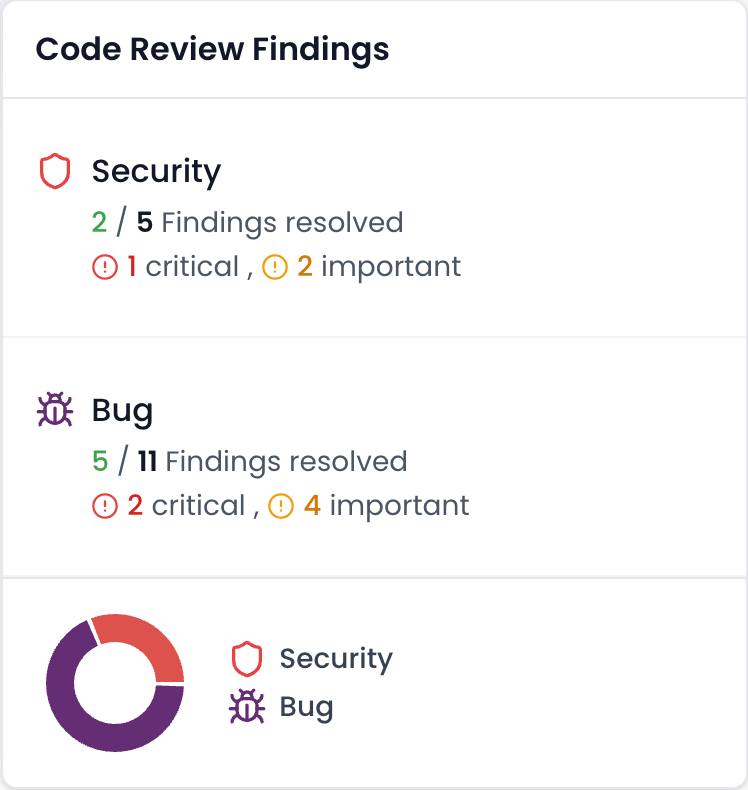
Customer results highlight clear advantages over suggestion-based tools. Gitar’s code review agent caught a high-severity security vulnerability in a Copilot-generated PR that Copilot itself missed. This outcome shows the strength of a dedicated review architecture compared with general-purpose code generation models.
Implementation phases show measurable improvements:
| Phase | Description | Gitar Impact |
|---|---|---|
| Install | 30-second GitHub App setup | Install free |
| Trust | Suggestion mode for validation | Noise reduction vs. competitors |
| Automate | CI auto-fix enabled | Green builds guaranteed |
| Scale | Analytics and custom rules | Enterprise workflow integration |
Collate’s engineering team validates this impact and highlights Gitar’s “unrelated PR failure detection” capability. Gitar automatically distinguishes between code bugs and infrastructure issues, which saves significant debugging time in complex CI environments.
The Tigris team also calls out Gitar’s “more concise” summaries compared with tools like Greptile and Bugbot. Gitar achieves this by consolidating feedback into a single comment instead of flooding PR diffs with notifications.
Qodo PR-Agent vs. Gitar vs. Codeium: Feature Comparison
A direct comparison shows clear architectural differences between suggestion engines and healing platforms.
| Capability | Qodo PR-Agent | Gitar | Codeium |
|---|---|---|---|
| PR Summaries | Yes (free) | Yes (free) | Available via error detection |
| Inline Suggestions | Yes | Yes (free) | Yes |
| Auto-Fixes | No | Yes (14-day trial) | Limited via agentic editing |
| CI Integration | Yes (via GitHub Actions) | Yes | Partial |
This comparison explains why teams facing post-AI bottlenecks need more than suggestions. Qodo provides free analysis, yet the manual implementation overhead often cancels out the time savings. Gitar’s auto-fixing architecture removes this bottleneck by validating and applying fixes automatically.
Codeium focuses on code generation and adds review features such as error detection and agentic editing. It still lacks deep PR-focused analysis and full CI integration. The missing automated validation across these tools creates a gap for teams that want reliable, end-to-end workflows.
ROI and Rollout: Moving from Suggestions to Gitar
Financial analysis shows clear gains for teams that replace paid suggestion engines. A 20-developer team paying $15-30 per seat each month for tools like CodeRabbit or Greptile spends $3,600-10,800 per year on features that Gitar offers free.
| Metric | Before Gitar | After Gitar |
|---|---|---|
| Daily CI/review time | 1 hour per developer | 15 minutes per developer |
| Annual productivity cost | $1M (20 developers) | $250K |
| Tool licensing | $450-900/month | $0 |
Implementation stays simple from day one. The Gitar documentation (docs.gitar.ai) walks through GitHub App installation and configuration. Teams do not need a credit card or account to start. They define custom rules using natural language in .gitar/rules files, which removes the need for complex YAML workflows. See the Gitar documentation for full details.
Common concerns about “free” tools overlook Gitar’s business model. Code review acts as table stakes functionality that should be commoditized. Gitar’s platform strategy focuses on broader development intelligence, so basic review features work as sustainable loss leaders.
Install Gitar now, automatically fix broken builds, start shipping higher quality software, faster
Conclusion: Why Gitar Replaces Suggestion-Only Tools
Qodo PR-Agent’s suggestion-only design creates manual implementation bottlenecks that erase many productivity gains from AI-assisted code generation. The tool remains free and GitHub-native, yet its limits appear quickly at enterprise scale where auto-fixing becomes essential for sustained velocity.
Gitar’s healing engine closes these gaps by automatically implementing and validating fixes while providing enterprise-scale capabilities without licensing fees. Proven success at Pinterest and strong feedback from teams like Collate and Tigris show real-world impact, not just theoretical improvements.
Install Gitar now, automatically fix broken builds, start shipping higher quality software, faster
Frequently Asked Questions
How does Gitar’s auto-fixing differ from Qodo PR-Agent’s suggestions?
Qodo PR-Agent analyzes code and leaves comments with improvement suggestions, which developers must implement manually. Gitar goes further by analyzing CI failures, generating validated fixes, and committing them directly to pull requests. This approach removes the manual implementation bottleneck that suggestion-only tools create and confirms that fixes work before they land.
Can Gitar handle enterprise-scale repositories like Pinterest’s 50+ million lines of code?
Gitar supports enterprise scale, including 50 million+ lines of code and thousands of PRs per day, while remaining free. The platform operates as production infrastructure, not a side project, as shown by deployments at companies like Pinterest. Gitar’s architecture uses hierarchical memory systems and context management that grow with repository size, unlike suggestion-only tools that slow down in large codebases.
What makes Gitar’s code review free when competitors charge $15-30 per developer?
Gitar treats code review as a commodity feature rather than a premium product. The business model centers on advanced capabilities beyond basic review, including enterprise analytics, custom workflow automation, and development intelligence. By offering review for free, Gitar builds trust and proves value before teams choose to adopt higher-tier features.
How does Gitar prevent the false positives and notification spam common with AI code review tools?
Gitar uses a single dashboard-style comment that updates in place instead of scattering inline comments across PR diffs. All findings, including CI analysis, review feedback, and rule evaluations, appear in one location. When fixes apply successfully, resolved items collapse automatically. This design cuts cognitive load and notification fatigue compared with tools that post dozens of separate comments per pull request.
What platforms and CI systems does Gitar support beyond GitHub?
Gitar supports multiple version control platforms, including GitHub and GitLab, and integrates with CI systems such as GitHub Actions, GitLab CI, CircleCI, and Buildkite. This cross-platform coverage fits enterprise environments that rely on diverse toolchains, similar to Qodo PR-Agent’s multi-platform support. Gitar also connects with project management tools like Jira and Linear, along with communication platforms like Slack, to cover the full development workflow.