
Key Takeaways
- Qodo PR-Agent runs instant AI code reviews on public GitHub repos using slash commands like /review and /review-improve, with no setup.
- Automatic reviews run through GitHub Actions, while CLI installation supports local testing and custom model configurations.
- Common issues include private repo restrictions, free-tier rate limits, GitHub Actions errors, and no automatic code fixes.
- Qodo provides suggestion-only feedback without CI integration or auto-implementation, which limits its value for production-scale teams.
- Upgrade to Gitar for autonomous code fixing, CI failure resolution, and guaranteed green builds with a 14-day Team Plan trial.
Instant Qodo PR-Agent Commands for Fast Reviews
Qodo PR-Agent runs immediately on public repositories through GitHub slash commands. The core commands deliver instant PR analysis without installation:
- /review – Generates comprehensive PR analysis with inline suggestions
- /review-improve – Provides specific improvement recommendations
- /merge – Analyzes merge readiness and potential conflicts
- /ask [question] – Answers specific questions about the PR changes
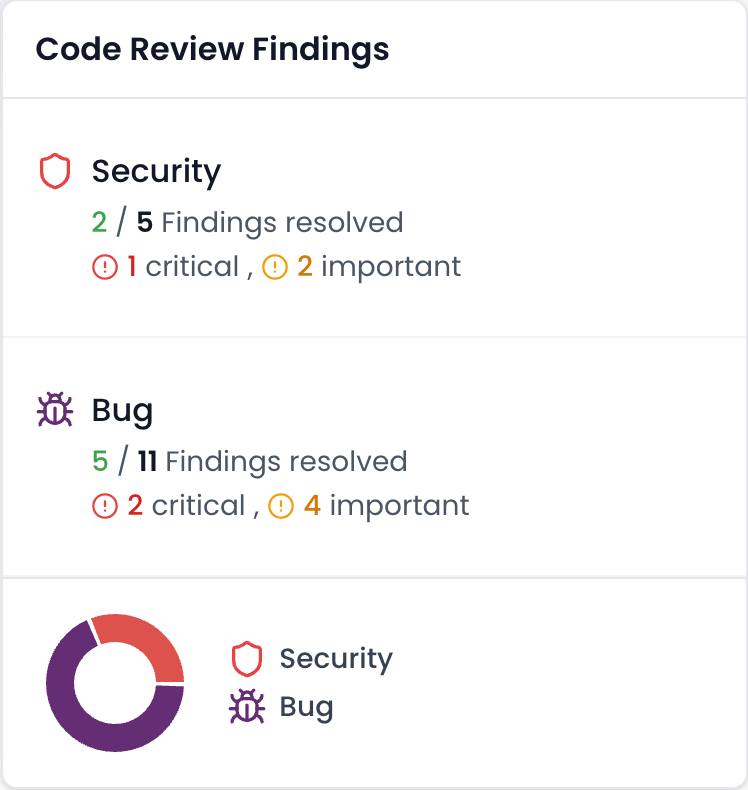
The 2026 Qodo 2.0 update introduces specialized agents that split code review into focused responsibilities. Findings appear grouped by type, such as bugs, rule violations, and requirement gaps, and organized by severity.
The system now uses o1-mini and o1-preview models for deeper analysis. You comment with any of these commands on a PR, and Qodo replies with structured feedback.
The multi-agent architecture delivers more precise analysis than earlier versions. Results still remain suggestion-only, and Qodo does not implement changes automatically.
Configuring Qodo PR-Agent with GitHub Actions
Automatic PR reviews require installing Qodo PR-Agent through GitHub Actions. Create a .github/workflows/pr_agent.yml file in your repository:
name: PR Agent on: pull_request: types: [opened, synchronize] jobs: pr_agent_job: runs-on: ubuntu-latest permissions: issues: write pull-requests: write contents: read name: Run PR Agent steps: – name: PR Agent action step id: pragent uses: qodo-ai/pr-agent@main env: GITHUB_TOKEN: ${{ secrets.GITHUB_TOKEN }}
After installation, configure the agent behavior through the GitHub Marketplace app permissions. The workflow triggers automatically when PRs open or update.
Recent updates add auto-triggering of /add_docs through pr_commands configuration for stronger documentation analysis.
Configure review depth and model selection in your .pr_agent.toml file. Use settings like reasoning_effort = ‘high’ for more thorough analysis.
The 2026 updates support custom reasoning models and richer metadata, which improves context understanding during reviews.
Using the Qodo CLI for Local Testing
Local development and testing work through the Qodo PR-Agent CLI, installed via pip:
pip install pr-agent
Set up GitHub authentication with a personal access token:
export GITHUB_TOKEN=your_token_here pr-agent –pr_url=https://github.com/owner/repo/pull/123 review
The CLI supports local PR simulation and testing before you roll changes into production workflows. Recent releases add support for custom reasoning models and enhanced logging, which helps with debugging and audit trails.
For lower costs, configure a self-hosted LLM proxy using litellm to manage token expenses. This approach matters especially with the free-tier rate limit of about 10 calls per minute.
Frequent Qodo PR-Agent Problems and Fixes
Teams often encounter several recurring Qodo PR-Agent issues:
- Private Repository Access: The free tier cannot access private repositories, so private repo analysis requires a paid plan.
- Token Rate Limits: The free tier allows only 10 calls per minute, which slows reviews in high-volume environments.
- GitHub Actions Errors: Known integration issues include dependency problems and HTTP 422 errors when publishing suggestions.
- Force Push Conflicts: The agent may fail when contributors force-push PRs during active analysis.
- Proxy Configuration: Self-hosted LLM setups need correct litellm configuration for stable token management.
Enterprise environments feel these limitations more strongly as teams scale beyond what the free tier can support.
Where Qodo PR-Agent Falls Short for Production Teams
Qodo PR-Agent delivers useful code analysis but misses several capabilities that production teams expect:
- No Automatic Fixes: Qodo only provides suggestions, so engineers must implement every change manually.
- No CI Integration: Qodo cannot analyze CI failures or fix them automatically.
- Limited Enterprise Features: Support for comprehensive PR review features remains partial compared to competitors.
- Notification Spam: Multiple inline comments increase noise and cognitive load for reviewers.
- Scaling Challenges: The multi-agent design depends on a judge agent to filter outputs, which complicates handling high PR volumes.
AI-coauthored PRs contain about 1.7 times more issues than human-only PRs. At the same time, only 29% of teams fully trust AI-generated code accuracy.
Suggestion-only tools leave teams with the hardest work, which includes implementing and validating every fix.
Why Gitar Outperforms Qodo for Production AI Code Review
Teams that outgrow suggestion-only tools move to Gitar for an autonomous healing engine that actually fixes code. The table below highlights key differences:
|
Feature |
Qodo PR-Agent |
Gitar |
|
PR Summaries |
Yes |
Yes (Trial/Team) |
|
Inline Suggestions |
Yes |
Yes |
|
Auto-Apply & Validate Fixes |
No |
Yes (Trial/Team) |
|
CI Failure Auto-Fix |
No |
Yes (Trial/Team) |
Gitar’s healing engine does more than identify problems. It fixes them with full awareness of your codebase.
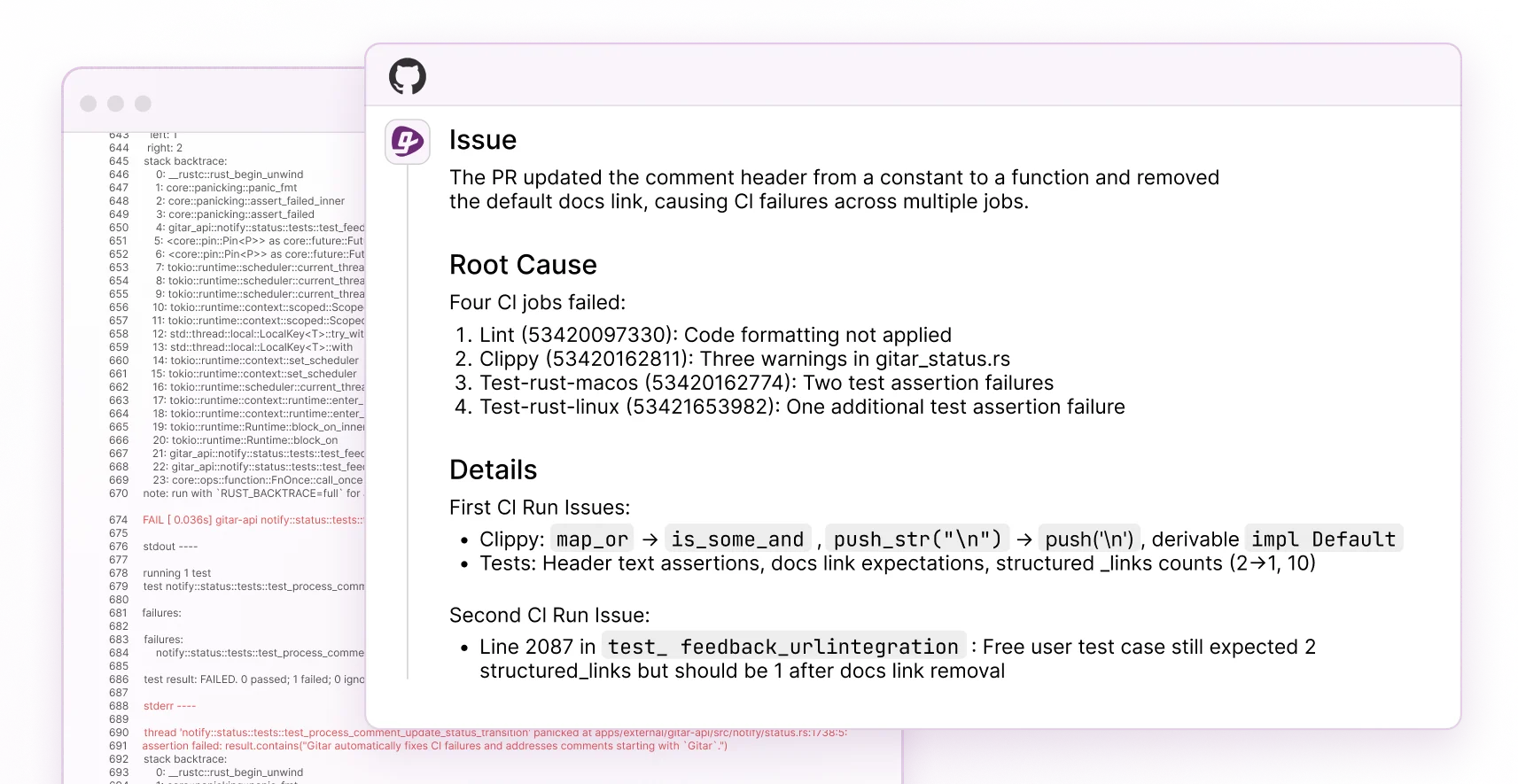
When CI fails, Gitar analyzes failure logs, generates correct fixes using complete repository context, validates that fixes pass CI, and then commits them. When reviewers leave feedback, Gitar applies the requested changes directly.
You can review setup and configuration details in the Gitar documentation.
Many competitors charge 15 to 30 dollars per developer for suggestion-only tools. Gitar instead offers a full 14-day Team Plan trial with no seat limits.
The financial impact is concrete. Teams with 20 developers can save up to 1 million dollars per year by removing manual fix implementation work. Learn more at Gitar.ai.
Install Gitar now to automatically fix broken builds and ship higher quality software faster.
Start Using Gitar in Under a Minute
Teams can start using Gitar in about 30 seconds:
- Install the Gitar GitHub or GitLab app.
- Enable auto-fix for your repositories.
- Start your 14-day Team Plan trial.
- Watch PRs heal automatically.
Qodo focuses on suggestions, while Gitar immediately begins fixing CI failures and implementing review feedback automatically. Gitar proves value through real code improvements instead of extra comments.
For detailed installation steps, see the Gitar documentation.
How to Automate PR Review with AI
Teams automate PR reviews by installing AI tools such as Qodo PR-Agent for basic analysis or Gitar for full automation. Qodo delivers suggestions through slash commands and GitHub Actions.
Gitar extends this model by automatically fixing identified issues, resolving CI failures, and implementing reviewer feedback without manual intervention.
Choosing the Right AI PR Reviewer
The right AI PR reviewer depends on your workflow and expectations. Qodo PR-Agent offers free suggestions and analysis, which suits basic review automation.
Gitar delivers stronger value for production teams by fixing code automatically, guaranteeing green builds, and including a comprehensive 14-day trial of enterprise features without seat limits.
Direct Comparison: Qodo vs Gitar
Qodo PR-Agent focuses on suggestions and analysis and always requires manual implementation of fixes. Gitar provides autonomous code healing that applies fixes, validates them against CI, and guarantees working solutions.
Qodo remains free with clear limitations, while Gitar’s 14-day trial unlocks full enterprise automation features for evaluation.
Gitar Support for GitLab, CircleCI, and Other Platforms
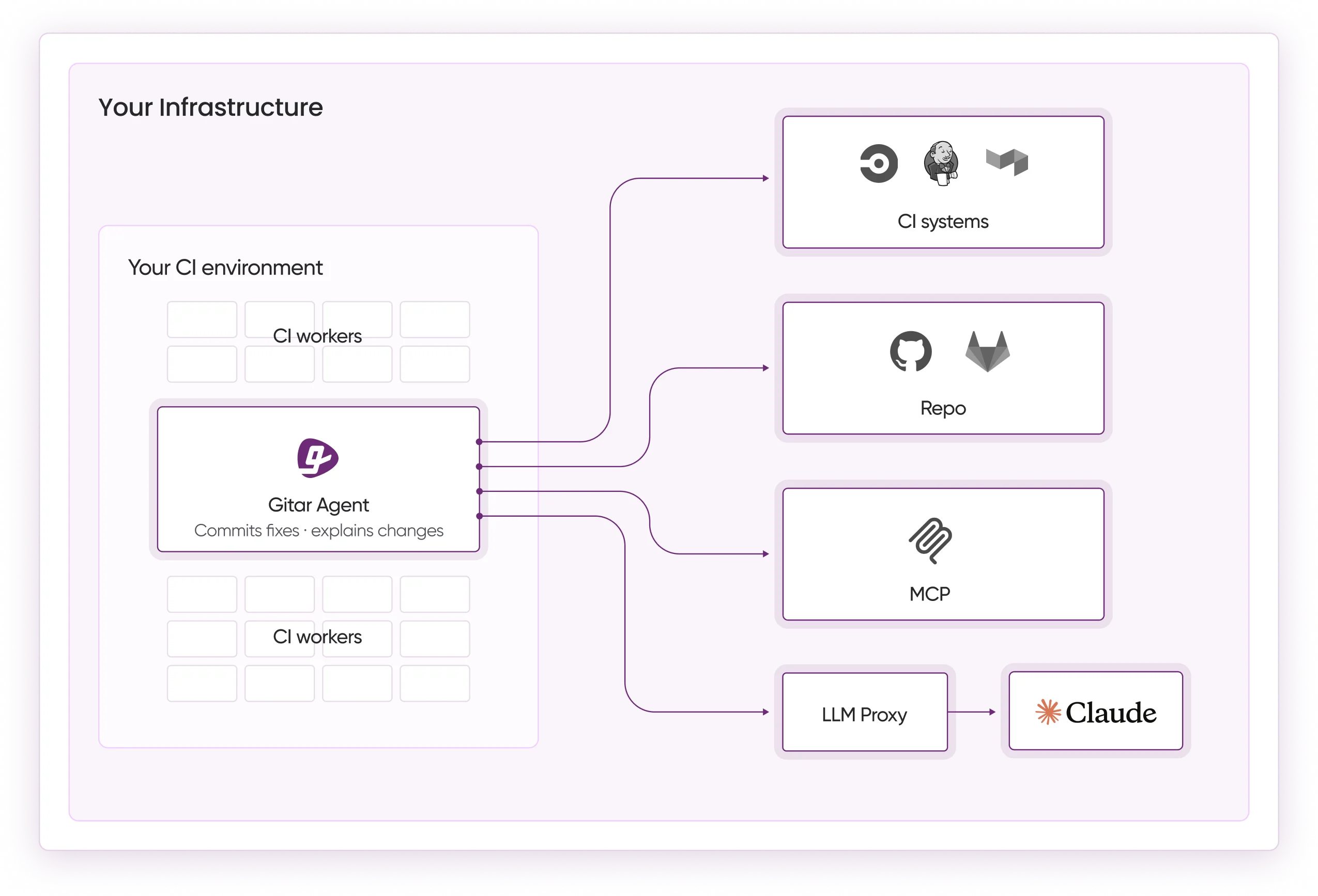
Gitar supports GitHub, GitLab, CircleCI, Buildkite, and other major CI and CD platforms. Tools that only support GitHub cannot match this flexibility.
Gitar delivers consistent auto-fix capabilities across different version control and CI systems, which suits teams with mixed environments. You can find platform details in the Gitar documentation.
How to Build Trust in Automated Code Commits
Gitar uses configurable trust levels so teams can adopt automation gradually. You can start in suggestion mode and review every fix before merge.
Over time, you can enable auto-commit for specific failure types as confidence grows. The system validates all fixes against your real CI environment before committing.
This approach ensures changes work in production-like conditions instead of only in isolated tests. See the Gitar documentation for trust and validation configuration options.
Qodo PR-Agent offers a strong starting point for AI code review with its free tier and 2026 multi-agent improvements. Teams that want higher development velocity, however, need tools that fix code instead of only commenting on it.
Gitar’s healing engine shifts reviews from suggestion management to autonomous problem resolution. Start your 14-day Gitar trial today and see the difference between AI that suggests and AI that solves.