
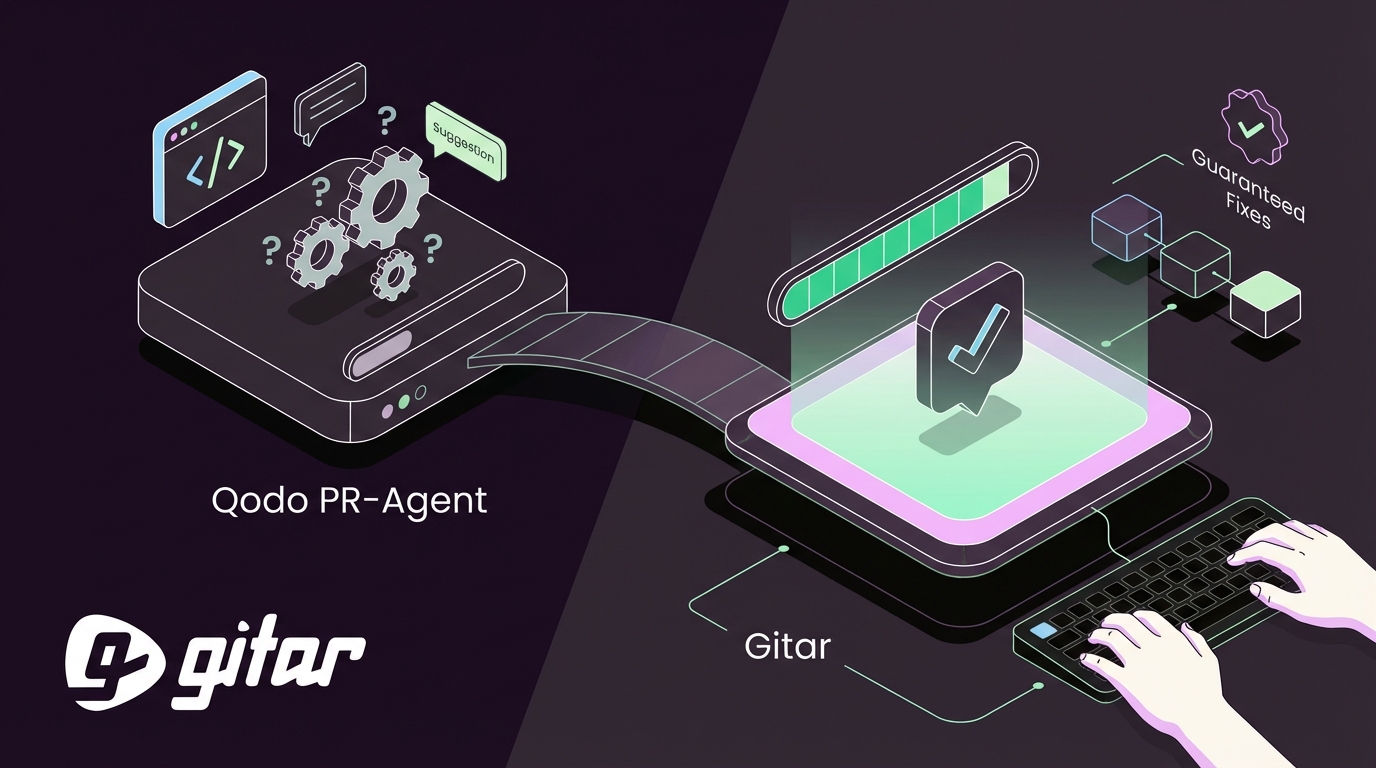
Key Takeaways for Qodo vs Gitar in 2026
- AI coding tools sped up coding by 3–5x, yet PR review times increased by 91%, creating a new post-AI bottleneck.
- Qodo PR-Agent provides free open-source PR summaries, inline suggestions, and security checks but leaves fixes manual and unvalidated.
- Users frequently report noisy notifications, configuration friction, and a 30 PR per month free tier limit that blocks team adoption.
- Gitar delivers unlimited free code review, automatic CI-validated fixes, and a zero-config setup that runs in about 30 seconds.
- Switch to Gitar today for auto-healing that removes manual rework and consistently ships green builds.
How Qodo PR-Agent Works in Your PR Workflow
Qodo PR-Agent is an open-source AI assistant that plugs into GitHub and GitLab to automate parts of code review. The tool generates PR summaries, inline code suggestions, security checks, and interactive Q&A through commands like /review, /improve, and /ask. Qodo 2.0 introduced a multi-agentic architecture with specialized judge and recommendation agents that evaluate findings, resolve conflicts, and use PR history for deeper context.
User feedback still points to the same core gap. Qodo suggests fixes but does not implement or validate them, so developers remain responsible for manual changes and CI verification.
Qodo PR-Agent Features and Setup Experience
Qodo PR-Agent ships with a broad set of automated review capabilities:
- Automated PR summaries and descriptions
- Inline code suggestions and improvements
- Interactive Q&A with /ask commands
- Security vulnerability detection
- Documentation generation
- Customizable review commands and rules
- Multi-language support across popular frameworks
- Integration with GitHub Actions and GitLab CI
Setup typically involves installing the GitHub App or GitLab integration, then configuring environment variables and webhook settings. Many teams report extra effort tuning notification settings to cut comment noise and adjusting AI model parameters so reviews match their codebase and style.
Real-World Pros and Cons of Qodo PR-Agent
Pros: Free open-source access, broad SDLC quality coverage, faster initial reviews, consistent team-wide coding standards, and strong learning support for junior developers. Security features and self-hosting options make it viable for enterprises.
Cons: Noticeable learning curve, noisy output with false positives or stylistic nitpicks, configuration reliability issues, and variable model quality depending on the chosen LLM.
| Aspect | Pros | Cons |
|---|---|---|
| Cost | Free OSS core, no vendor lock-in | Limited to 30 PR per month on free tier |
| Functionality | Quick summaries, customizable commands | Suggestions only, no auto-fixes or CI healing |
| User Experience | Educational for junior devs | Noisy notifications, manual implementation required |
| Setup | Hosted options available | Configuration issues when self-hosting |
Recent user reviews highlight recurring friction. Comments like “too chatty, drowns human reviews” and “configuration issues, model variance” remain common. The main limitation stays the same: Qodo suggests but does not validate or apply fixes, so teams gamble on whether recommendations will pass CI.
Qodo Pricing in 2026 and Free Tier Limits
Qodo uses a tiered pricing model that moves users from free individual plans to paid team and enterprise tiers:
| Plan | Price | Key Limitations |
|---|---|---|
| Developer (Free) | $0 | 30 PR reviews per month, individual use only |
| Teams | $38/user/month (promo $30) | Higher limits, bug detection, standard support |
| Enterprise | Custom pricing | Self-hosting, SSO, priority support |
The OSS core remains free, yet the 30 PR per month limit quickly blocks active teams. Gitar instead offers unlimited free code review with no seat caps and includes a 14-day free trial of auto-fix features with no credit card required.
2026 Benchmarks: Where Qodo PR-Agent Falls Short
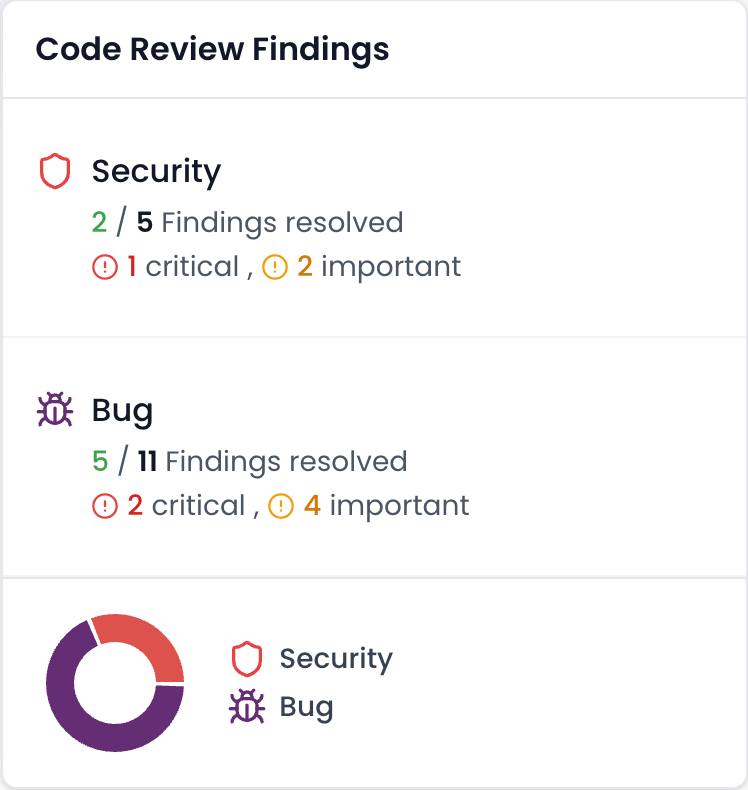
Hands-on tests with Qodo PR-Agent on real PRs show patterns that reduce its impact in daily workflows. The tool spreads many inline comments across diffs, which creates notification noise and hides human reviewer feedback. Suggestions often arrive without validation against the live CI environment, so they may fail with specific dependency versions or build setups.
Key limitations include:
- No CI failure analysis or auto-healing capabilities
- Suggestions that always need manual implementation and validation
- Limited awareness of build logs and infrastructure context
- Confirmation bias when AI reviews AI-generated code
Qodo performs well for surface-level code analysis but does not remove the real bottleneck. Teams still implement suggestions by hand, push new commits, and wait to see whether CI passes.
Qodo vs Gitar: Direct Comparison for Real Fixes
| Capability | Qodo | Gitar |
|---|---|---|
| PR summaries | Yes (often noisy) | Yes (free, single clean comment) |
| Inline suggestions | Yes | Yes (free) |
| Auto-apply fixes | No | Yes (14-day trial, CI-validated) |
| CI failure auto-fix | No | Yes (guarantees green builds) |
| Workflow automation | No | Yes (natural language rules) |
| Integrations | Limited | Jira, Slack, Linear, multi-CI |
| Pricing | Free OSS (limited and noisy) | Free unlimited review |
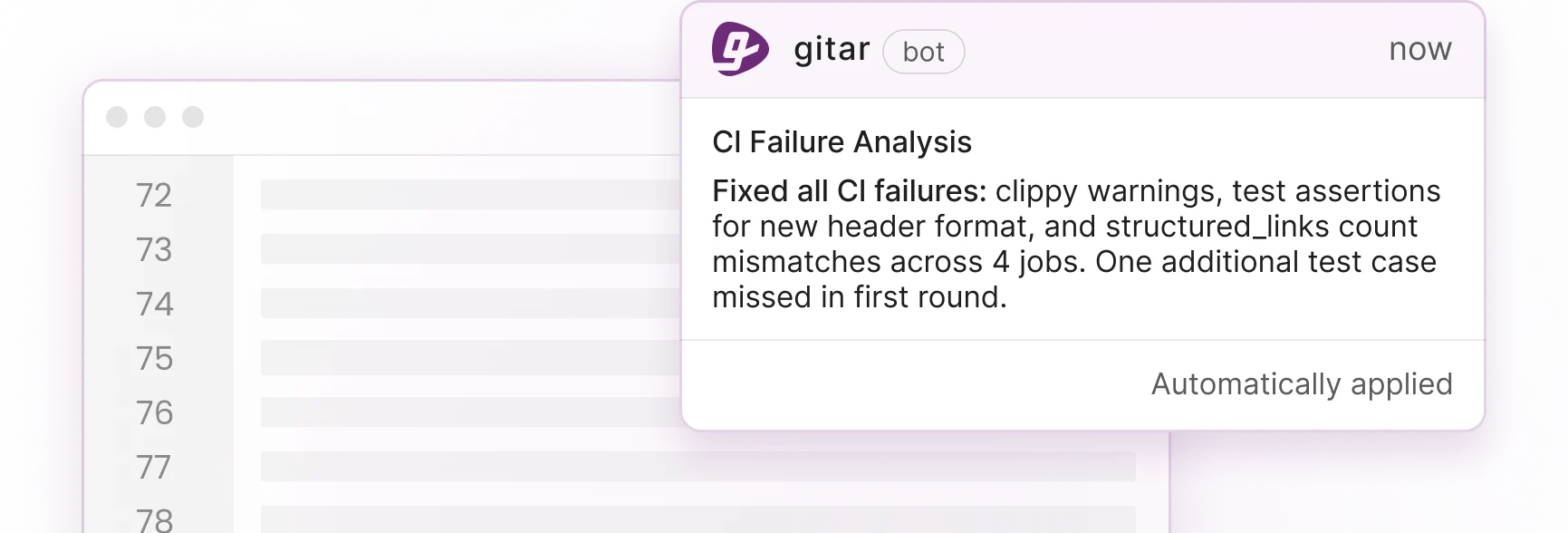
Gitar’s healing engine creates the main difference in outcomes. When CI fails from lint errors, test failures, or broken builds, Gitar does more than highlight the issue. It analyzes failure logs, generates fixes that match your environment, and commits those changes automatically.
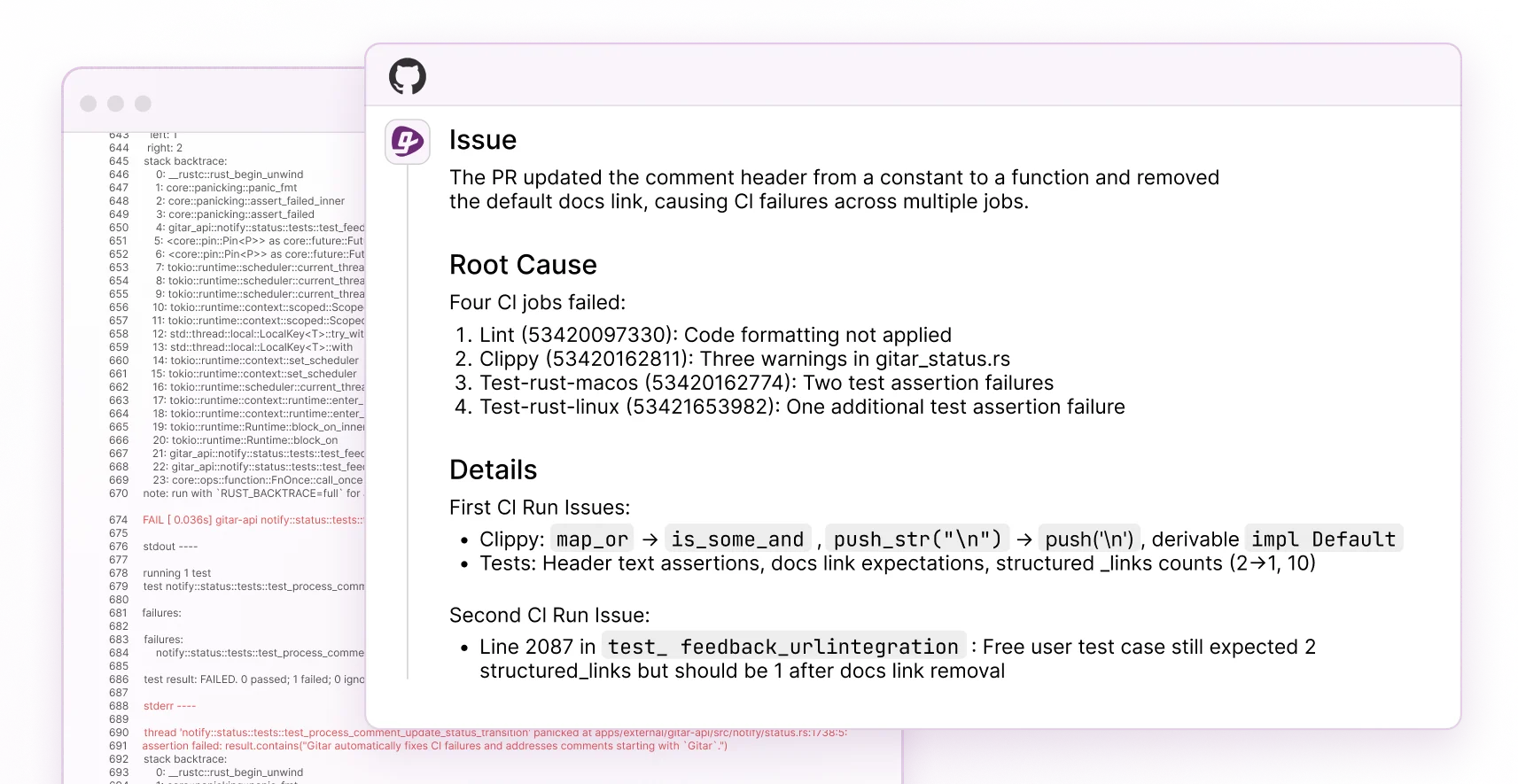
This workflow removes the manual implementation loop that keeps teams stuck with suggestion-only tools. For a 20-developer team, Gitar’s auto-healing can save an estimated $1M per year by cutting context switching and CI failure resolution time. See Gitar’s documentation for details on how it plugs into existing CI pipelines and automates recovery.
Install Gitar in 30 seconds to feel the difference between endless suggestions and actual shipped fixes.
When Qodo Fits and When Gitar Wins
Qodo PR-Agent fits teams that want basic AI suggestions and can live with notification noise, manual fix work, and the 30 PR per month free limit. It suits early experiments with AI-assisted review where automation of fixes is not yet a priority.
Gitar fits teams that want to remove the post-AI coding bottleneck entirely. Free unlimited code review, automatic CI healing, and validated fix application address the root problem that suggestion-only tools leave behind. Gitar’s single-comment summaries reduce noise, while its auto-fix engine removes repetitive manual work from every sprint.
Frequently Asked Questions About Qodo and Gitar
Is Qodo agent free?
Qodo offers a free Developer plan for individuals and open-source projects, capped at 30 PR reviews per month. Teams that need higher volume must upgrade to the paid Teams plan at $38 per user each month. These limits make the free tier unrealistic for most active engineering teams.
What does Qodo cost for teams?
The Qodo Teams plan costs $38 per user per month, with a promotional price of $30 in some cases. This tier increases usage limits and adds bug detection and advanced PR automation. Enterprise plans use custom pricing and include self-hosting, SSO, and priority support with SLAs.
How does Qodo compare to Gitar?
Qodo focuses on suggestions that developers must apply and validate manually. Gitar automatically fixes code and heals CI failures. Gitar also offers unlimited free code review with no seat limits and adds auto-fix capabilities that keep builds green. The healing engine in Gitar replaces Qodo’s suggestion-only approach with concrete, working changes.
What is the strongest PR review agent for 2026?
Gitar currently leads by combining free unlimited code review with automatic fix application and CI healing. The platform validates fixes against your real CI environment and commits working solutions without extra effort from developers. This approach removes the manual implementation bottleneck that slows other tools.
How long does setup take for each tool?
Gitar installs in about 30 seconds through a GitHub App and requires no configuration. Qodo PR-Agent usually needs a more complex setup that includes environment variables, webhook configuration, and troubleshooting of ignored or noisy settings. Gitar’s zero-config approach lets teams benefit from automation almost immediately.
Conclusion: Move From Suggestions to Guaranteed Fixes
Qodo PR-Agent represents a first-generation AI code review tool that helps with suggestions but stops short of real automation. In 2026, teams need tools that resolve issues, not just point at them. Gitar’s healing engine fixes CI failures, applies review feedback, and keeps builds green while still offering free unlimited access for reviews.
The decision is straightforward. Teams can keep paying for suggestion-only tools that demand manual work, or they can adopt a platform that fixes code automatically. Install Gitar now and start shipping higher quality software with less friction and faster release cycles.