
Written by: Ali-Reza Adl-Tabatabai, Founder and CEO, Gitar
Key Takeaways
- Qodo CLI agent framework uses specialized agents for correctness, security, performance, and more, then coordinates their findings into one clear review.
- Setup involves npm installation, authentication, and repo-specific config files, plus CI integrations for GitHub, GitLab, and Bitbucket.
- Qodo excels at analysis and agent workflows but still requires manual fix implementation, per-repo configuration, and offers no build-passing guarantee.
- Gitar’s healing engine goes further by automatically fixing CI failures, validating changes, and delivering consistently passing builds with minimal setup.
- Teams save significant time and costs with Gitar’s true automation. Try the 14-day Team Plan trial to accelerate PRs with far less manual work.
How Qodo’s CLI Agent Framework Works
The Qodo CLI agent framework implements a Specialist-Agent Review pattern that spins up specialized agents, each with a focused objective, tailored prompt, context, and evaluation rubric. A coordinator consolidates the agents’ domain-specific findings into one coherent, deduplicated review with severity ratings. The table below summarizes Qodo’s core components and how they work together.
|
Feature |
Description |
|
Multi-Agent |
Specialist agents (security/performance/correctness) plus a coordinator |
|
Context Engine |
Multi-repo indexing, PR history, permission-aware |
|
Outputs |
PR summaries, inline suggestions, MCP servers |
|
Integrations |
GitHub Actions, GitLab CI, Bitbucket |
The framework includes six key specialized agents. The Correctness agent focuses on logic bugs and edge cases. The Security agent checks authentication and injection risks. The Performance agent reviews hot paths and N+1 queries. The Observability agent evaluates logs and metrics. The Requirements agent validates changes against linked tickets. The Standards agent enforces organization rules. Qodo’s proprietary Context Engine provides multi-repository code understanding across IDEs, Git platforms, and CLI environments. It detects breaking changes and architectural drift beyond simple diff analysis.
Now that the architecture is clear, you can look at what it takes to run Qodo in your own environment.
Step-by-Step Setup and Installation
Teams configure Qodo’s CLI agent framework through several setup steps. Qodo Gen Command is installed globally using npm and requires authentication before use.
1. Install Qodo CLI globally:
npm install -g @qodo/Command
2. Authenticate with Qodo services:
qodo login
3. Configure repository settings:
Create a .qodo/config.toml file in your repository root with your preferred settings for agent behavior and review criteria.
4. Run your first PR review:
qodo review –pr 123 –repo owner/repo
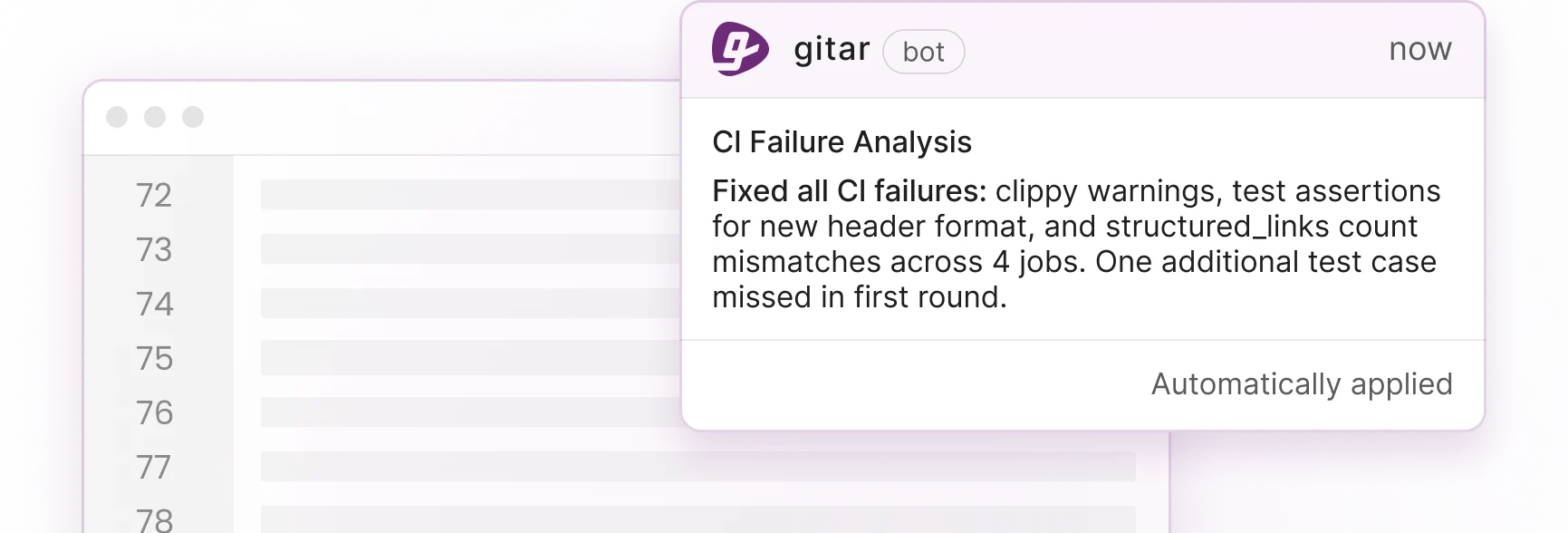
For CI integration, Qodo attaches automated CI analysis cards to pull requests when pipelines trigger. It identifies specific failures and provides root-cause summaries. However, unlike Gitar’s streamlined onboarding, Qodo requires manual configuration for each repository.
Once Qodo is configured, teams can use it across several common workflows that highlight its multi-agent capabilities.
Qodo CLI Agent Framework Examples and Workflows
Basic PR Review with Qodo
The most common workflow runs automated reviews on pull requests.
qodo agent run review –pr 123
Security-Focused Scanning
Teams can run specialized agent workflows for security-focused reviews.
qodo agent run security-scan –pr 123
Qodo in CI Pipelines
Qodo automates PR reviews across code, diffs, and tests with support for 15+ automated PR workflows, including validation and merge gating. The platform can trigger automatically when PRs are opened or marked ready for review.
Qodo delivers strong analysis through its agents. Gitar’s automated workflow system adds another layer by resolving CI failures automatically and turning broken pipelines into passing ones.
These strengths come with tradeoffs, which become clear when you look at Qodo’s limitations and the broader “suggestion-only” pattern.
Limitations of Qodo and the Suggestion Trap
Qodo’s sophisticated multi-agent architecture still introduces configuration and integration overhead for many teams. AI-generated PRs contain 75% more bugs than human-written code, yet only 30% of AI suggestions get accepted because developers must validate recommendations.
The core problems with many AI code review tools stem from this suggestion-only approach. Even when tools provide recommendations, developers face manual implementation overhead for fixes. There is no guarantee that suggested changes work without verification, so teams must test each one. This process creates notification overload as multiple inline comments accumulate across PR diffs, each requiring attention. The situation becomes worse on non-GitHub platforms where many tools offer weaker support for GitLab and other systems. Complex CI failures can then take longer to resolve because suggestions still need human intervention to implement and validate.
This pattern means teams continue to handle manual work alongside AI assistance. Eliminate that manual overhead with Gitar’s healing engine, which fixes your code and validates the results inside your CI environment.
Why Gitar Is the Strongest Alternative for Hands-Off Fixes
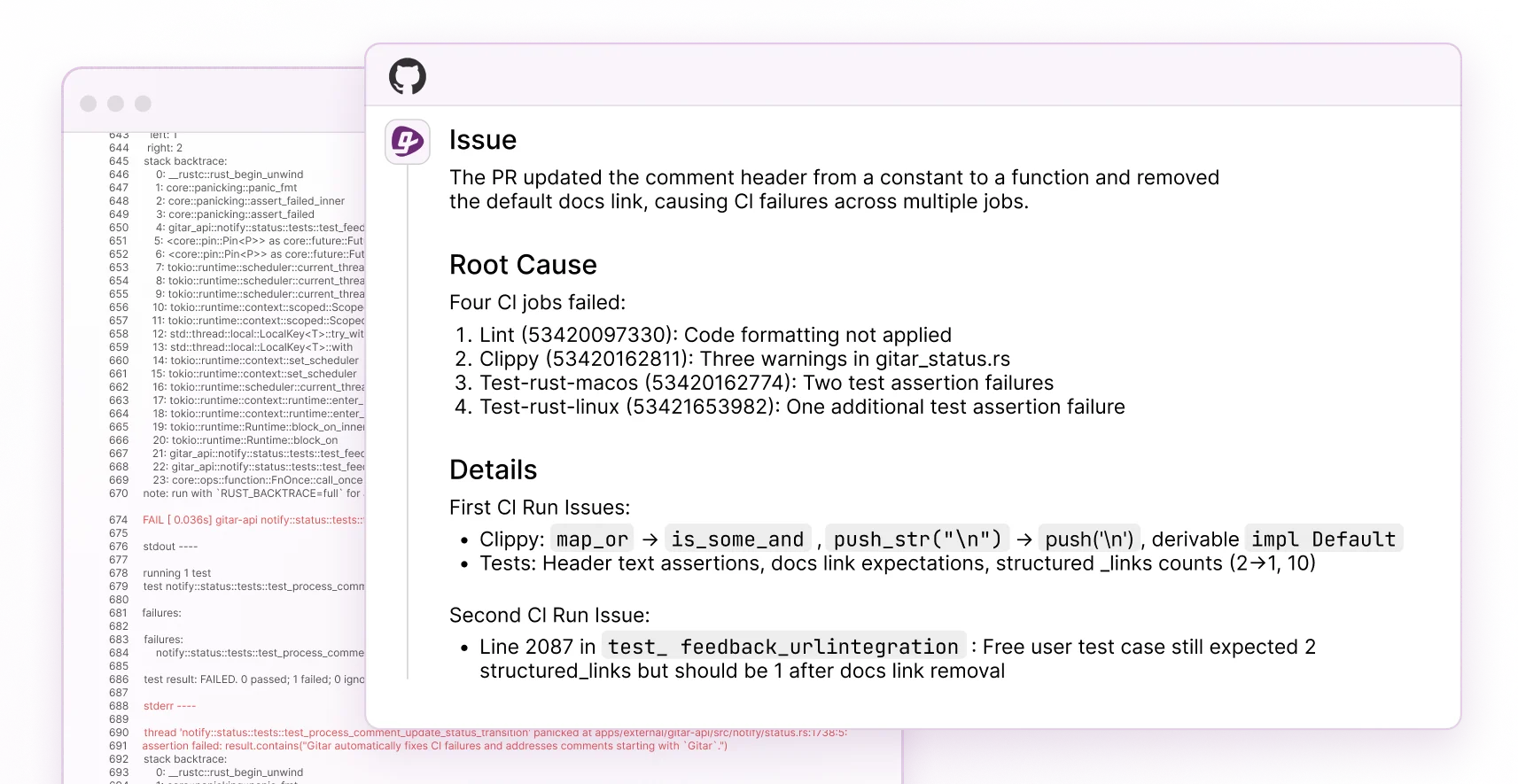
Qodo analyzes and automates via agents, while Gitar’s healing engine actually fixes your code. When CI fails, Gitar analyzes failure logs, generates validated fixes, and commits them to your PR. This approach replaces hope-based automation with reliable outcomes. The healing engine guide explains this workflow in more depth.
The table below highlights the most important differences in review and automation capabilities between Qodo and Gitar.
|
Feature |
Qodo |
Gitar (Trial/Team) |
|
PR Summaries |
Yes |
Yes |
|
Inline Suggestions |
Yes |
Yes |
|
Auto-Apply Fixes |
Agent Workflows |
Yes |
|
CI Auto-Fix |
Agent Workflows |
Yes |
|
Green Build Guarantee |
No |
Yes |
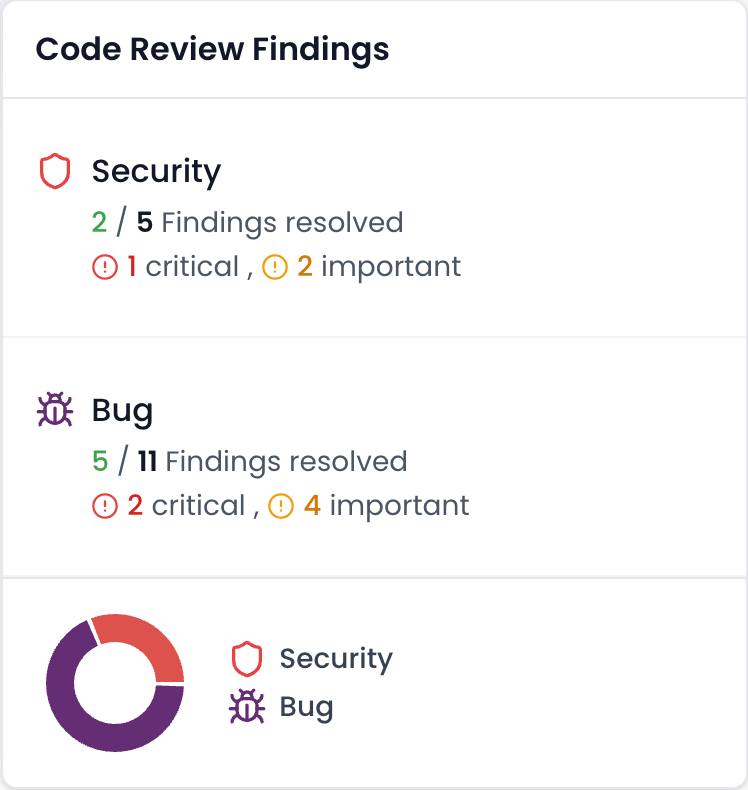
Gitar’s approach removes more manual overhead from the review cycle. Instead of scattered inline comments, Gitar posts a single, updating dashboard comment that consolidates all findings. The platform validates fixes against your actual CI environment before committing, so changes work in production. By eliminating the manual review, implementation, and retest loop for each suggestion, this automation saves a 20-developer team about $1M per year in productivity costs.
Gitar vs Qodo: Practical Comparison for AI Code Review
The most meaningful difference between these platforms appears when you compare how they handle automation and day-to-day workflows.
|
Capability |
Qodo |
Gitar |
|
Auto-Fixes |
Agent Workflows |
Yes |
|
14-Day Trial |
No |
Unlimited Team Access |
|
Cross-CI Support |
Limited |
Full (GitHub/GitLab/CircleCI/Buildkite) |
|
Notification Management |
Multiple Comments |
Single Comment |
While monday.com reports preventing 800+ issues monthly using Qodo across 500 developers, Gitar adds a validation layer through its healing engine. Gitar’s 14-day free trial provides full Team Plan access, so teams can experience automated fixes without commitment. Configurable commit settings address concerns about automated changes and build trust through verified results. The setup and configuration guide in the Gitar docs walks through this process step by step.
Qodo shines at analysis and agentic automation. Gitar focuses on complete resolution with CI-level guarantees. When your CI breaks at 2 AM, Gitar repairs it before you return to your desk. When reviewers request changes, Gitar implements them while you focus on architecture and strategy. Together, these differences separate capable automation from full development acceleration and measurable savings, such as the $1M annual productivity impact for a 20-developer team.
The choice is clear: teams can continue relying on agent workflows or move to a platform that validates and applies fixes for them. Experience this difference yourself with a 14-day Team Plan trial, where passing builds become the default outcome rather than a hopeful target.
Frequently Asked Questions
How does Qodo’s multi-agent architecture compare to single-agent code review tools?
Qodo’s multi-agent architecture deploys specialized agents for different review tasks, such as correctness, security, performance, observability, requirements, and standards, each with focused objectives and evaluation criteria. A coordinator consolidates findings into a single coherent review with severity ratings. This approach provides broader coverage than single-agent tools that attempt to handle all review aspects with one model. Gitar’s healing engine then goes beyond this coverage by directly resolving CI failures instead of only commenting on them.
What are the main setup requirements and technical dependencies for Qodo CLI?
Qodo CLI requires Node.js for global installation via npm, Python ≥3.12 for the PR-Agent components, and authentication through the qodo login command. Setup involves creating repository-specific configuration files, setting up CI integration through GitHub Actions or GitLab CI, and configuring environment variables for API access. The framework supports major programming languages including Python, JavaScript, TypeScript, Java, C++, Go, Ruby, PHP, and C# without extra language-specific configuration. Each repository still needs manual setup and maintenance, unlike more streamlined alternatives that detect and configure projects automatically.
Why do suggestion-only code review tools create a bottleneck rather than solving it?
Suggestion-only tools create bottlenecks because developers receive analysis but must still implement changes. Advanced tools like Qodo offer agentic automation for some fixes, yet manual validation often remains necessary for complex cases. With AI-generated code containing 75% more bugs and only 30% of AI suggestions being accepted, validation overhead persists. True automation comes from tools that both implement and validate fixes reliably inside CI environments.
How does Gitar’s healing engine differ from traditional AI code review approaches?
Gitar’s healing engine shifts from suggestion-based to action-based automation. Instead of leaving comments about what should be fixed, Gitar analyzes CI failure logs, generates appropriate fixes with full codebase context, validates those fixes against the actual CI environment, and automatically commits working solutions. This approach removes the manual implementation overhead that slows suggestion engines. The healing engine also consolidates all findings into a single updating comment rather than scattering notifications across the PR diff, which reduces cognitive load while ensuring fixes work in production environments.
What should teams consider when choosing between CLI-based and platform-integrated code review automation?
Teams should weigh terminal-based flexibility against comprehensive platform integration. CLI tools like Qodo offer scriptability and deep system access but require more setup and ongoing maintenance. Platform-integrated solutions provide seamless workflow integration, automatic setup, and often add analytics and cross-platform support. The key consideration is how completely the tool removes manual work through validated fixes. The most effective approach combines CLI accessibility with platform-level automation so developers keep flexibility while the system delivers reliable, hands-off results.