
Written by: Ali-Reza Adl-Tabatabai, Founder and CEO, Gitar
Key Takeaways for 2026 Code Review Teams
- AI code generation has increased PR review time by 91%, creating bottlenecks that rule-based tools like Qodana struggle to clear.
- JetBrains Qodana enforces static rules across 60+ languages but lacks AI learning, automatic fixes, and CI validation that confirm passing builds.
- AI tools like CodeRabbit and Greptile add contextual suggestions, while Gitar goes further by applying fixes that are validated in real CI environments.
- Gitar’s 14-day Team Plan trial with unlimited seats helps teams measure ROI through less manual CI work and faster delivery. Teams can move beyond Qodana’s limitations by adopting Gitar’s intelligent automation and starting a free trial at Gitar.ai.
How We Compared Qodana and AI Code Review Platforms
Our evaluation framework focuses on five dimensions: automation depth, CI integration, pricing and trial access, measurable ROI, and scalability across team sizes. We analyzed 2026 benchmarks from Gitar’s release notes, JetBrains documentation, and independent developer surveys to establish performance baselines.
The key differentiator is Gitar’s healing engine, which validates fixes against actual CI environments and confirms passing builds instead of hoping suggestions work. This validation step separates intelligent automation from rule-based analysis, because the system proves each fix works before applying it. For technical details on this validation process, see the Gitar Documentation.
Rule-Based Qodana vs AI Code Review Automation: Key Gaps
Traditional rule-based tools like Qodana apply static patterns without learning or adaptation. AI-powered platforms analyze code contextually, understanding intent and relationships across files. The core limitation is clear: rules do not scale with AI-generated code volume or provide the contextual fixes modern teams need.
The following comparison shows how these limitations appear across three tool categories and highlights that only Gitar combines AI-driven analysis with automatic fix application:
|
Capability |
Qodana |
CodeRabbit/Greptile |
Gitar |
|
Analysis Type |
Rule-based patterns |
AI suggestions |
AI auto-fixes |
|
Learning |
Static rules |
Limited context |
Hierarchical memory |
|
Auto-apply Fixes |
Limited Quick-Fix |
No |
Yes |
|
CI Auto-fix |
No |
No |
Yes |
|
Green Build Validation |
No |
No |
Yes |
The synergy opportunity is practical: teams can pair Qodana’s comprehensive rule library with Gitar’s auto-fixing capabilities, using rules for detection and AI for resolution. Try this combined approach in your workflow with Gitar’s 14-day trial.
Top Qodana Alternatives: AI Code Review Tools in 2026
1. Gitar: Auto-Fixing and CI Healing
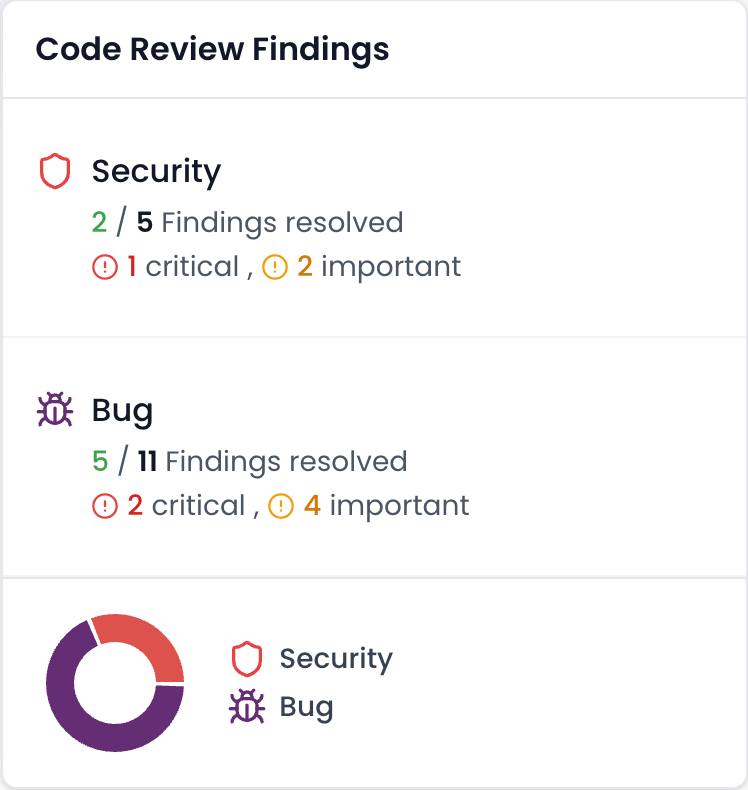
Gitar turns code review from suggestion into action. When CI fails, Gitar analyzes failures and surfaces insights in a single dashboard comment, then generates validated fixes and commits them directly. The 14-day Team Plan trial includes unlimited users and full platform access, which lets teams see impact on PR time and CI stability.
2. JetBrains Qodana for Static Rule Enforcement
Qodana provides 3,000+ inspection rules across 60+ languages with deep IDE integration. Pricing starts at $6 per active contributor monthly with a 60-day trial. Strengths include reliability and broad rule coverage. Limitations include no AI learning, minimal auto-fix capabilities, and weak handling of contextual code relationships.
3. CodeRabbit & Greptile for AI Suggestions
CodeRabbit serves over 1 million repositories at $12–24 per developer each month, while Greptile reports 4x faster PR merges at $20 per developer each month. Both tools provide AI suggestions without auto-fix capabilities, so developers still perform the implementation work.
Move from suggestions to completed fixes. See how Gitar automatically resolves code issues instead of only flagging them.
JetBrains Qodana GitHub Integration and Pricing Details
Before making a final decision, teams benefit from understanding Qodana’s technical setup and cost structure. Qodana integrates with GitHub Actions through the JetBrains/qodana-action@v2025.3, supporting pull request analysis and SARIF report generation. The platform offers three tiers: Community (free, limited languages), Ultimate ($6 per contributor each month with a minimum of 3 users), and Ultimate Plus ($15 per contributor each month with advanced security features).
Qodana’s 60-day trial requires no payment details, but contributor-based pricing can become expensive for larger teams. Quick-Fix functionality exists, yet it requires manual approval and lacks CI validation, which limits its usefulness for fully automated workflows.
Gitar vs Qodana: Automated AI Code Review in Practice
Gitar functions as a development intelligence platform rather than a simple code analyzer. The CI agent maintains full context from PR opening to merge and works continuously to keep CI passing. Setup takes about 30 seconds through GitHub App installation, and all findings appear in one living dashboard comment that updates in real time.
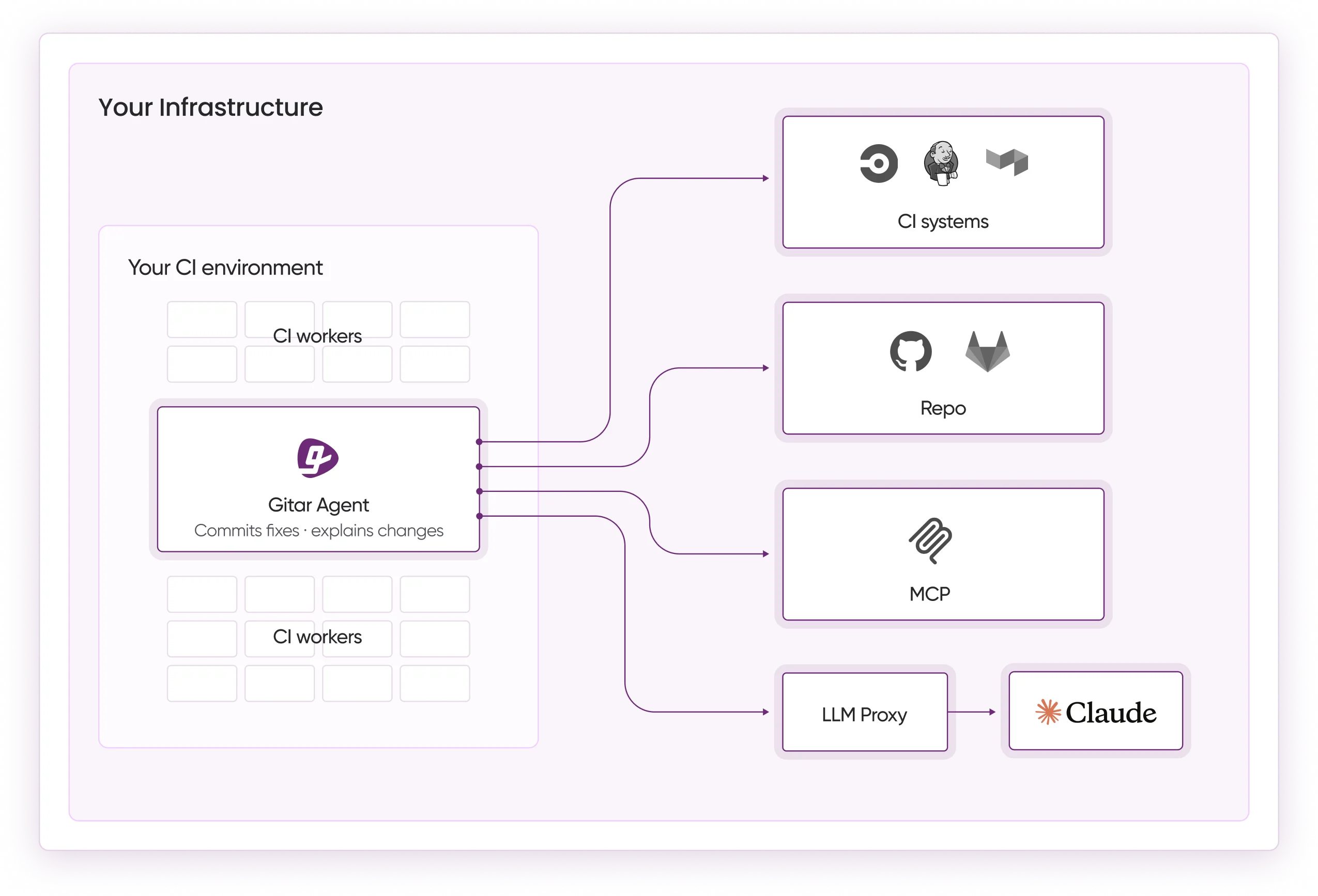
Gitar learns team patterns and provides contextual fixes that are validated against actual CI environments, which contrasts with Qodana’s static rule-based approach. Integration with Jira, Slack, and Linear keeps context flowing into the tools where teams already work. The 14-day Team Plan trial includes unlimited seats and full feature access, so teams can observe real workflow changes.
Stop managing CI failures by hand. See Gitar’s automatic CI healing and validated code fixes in your own pipelines.
Qodana vs GitHub Copilot-Style Suggestion Tools
CodeRabbit and Greptile sit in the “suggestion engine” category, where tools analyze code and leave comments that still require manual implementation. Early AI code review tools flagged nine false positives for every real bug, although modern versions like Graphite Agent keep unhelpful comment rates under 3%.
This suggestion-first model still forces developers to read, implement, test, and validate fixes. The same bottleneck that AI coding tools were meant to remove remains in place. Teams paying $15–30 per seat for suggestions often discover they are buying incremental improvement instead of a step change in productivity.
JetBrains Qodana vs AI Code Review Tools: Feature Comparison
Direct feature comparison highlights capability gaps between rule-based analysis and AI automation platforms. The table below focuses on practical implementation factors such as CI coverage, trial periods, pricing models, and comment management, showing how Gitar’s approach reduces both cost and notification overload:
|
Feature |
Qodana |
CodeRabbit |
Gitar |
|
CI Integration |
GitHub Actions, GitLab CI |
GitHub, GitLab |
GitHub, GitLab, CircleCI, Buildkite |
|
Auto-Fix |
Limited Quick-Fix |
No |
Full automation |
|
Trial Period |
60 days |
14 days |
14 days (unlimited seats) |
|
Pricing Model |
$6–15 per contributor |
$12–24 per developer |
Team Plan trial |
|
Comment Style |
Multiple inline |
Multiple inline |
Single dashboard |
Qodana Pricing Breakdown and Gitar Trial Context
As mentioned earlier, Qodana’s contributor-based pricing starts at $6 each month for Ultimate with a minimum of 3 contributors, and scales to $15 each month for Ultimate Plus with advanced security features. Annual subscriptions require upfront payment, and usage overages add extra fees.
Gitar’s 14-day Team Plan trial provides full platform access without seat limits, which lets teams measure actual velocity improvements before committing to paid plans. The trial includes auto-fix capabilities, CI integration, and workflow automation that reduce manual work and free engineers for higher-value tasks.
JetBrains Qodana GitHub Setup vs AI Tool Installation
Qodana integrates with GitHub Actions and supports SARIF report generation, yet its rule-based approach and limited automation introduce friction compared to AI tools. Qodana also requires Docker with at least 4 GB of memory and careful permission configuration.
Unlike Qodana’s Docker-based setup, Gitar’s installation process, the 30-second GitHub App install mentioned earlier, includes automatic CI integration across multiple platforms. The platform’s intelligence layer understands repository context, commit history, and team patterns without complex configuration.
ROI: Fixing the 91% PR Review Time Spike
The productivity impact is substantial: teams report critical issues getting buried under style nits, such as bots posting dozens of spacing comments while missing null-checks that break production. This noise-to-signal problem forces developers to spend significant time triaging comments instead of fixing real issues. For a 20-developer team spending just 1 hour each day on CI and review noise, the annual productivity loss reaches about $1 million at standard engineering rates.
Gitar’s auto-fix engine addresses this directly by validating fixes against CI environments and applying only those that keep builds passing. This approach cuts review churn and restores focus on meaningful defects.
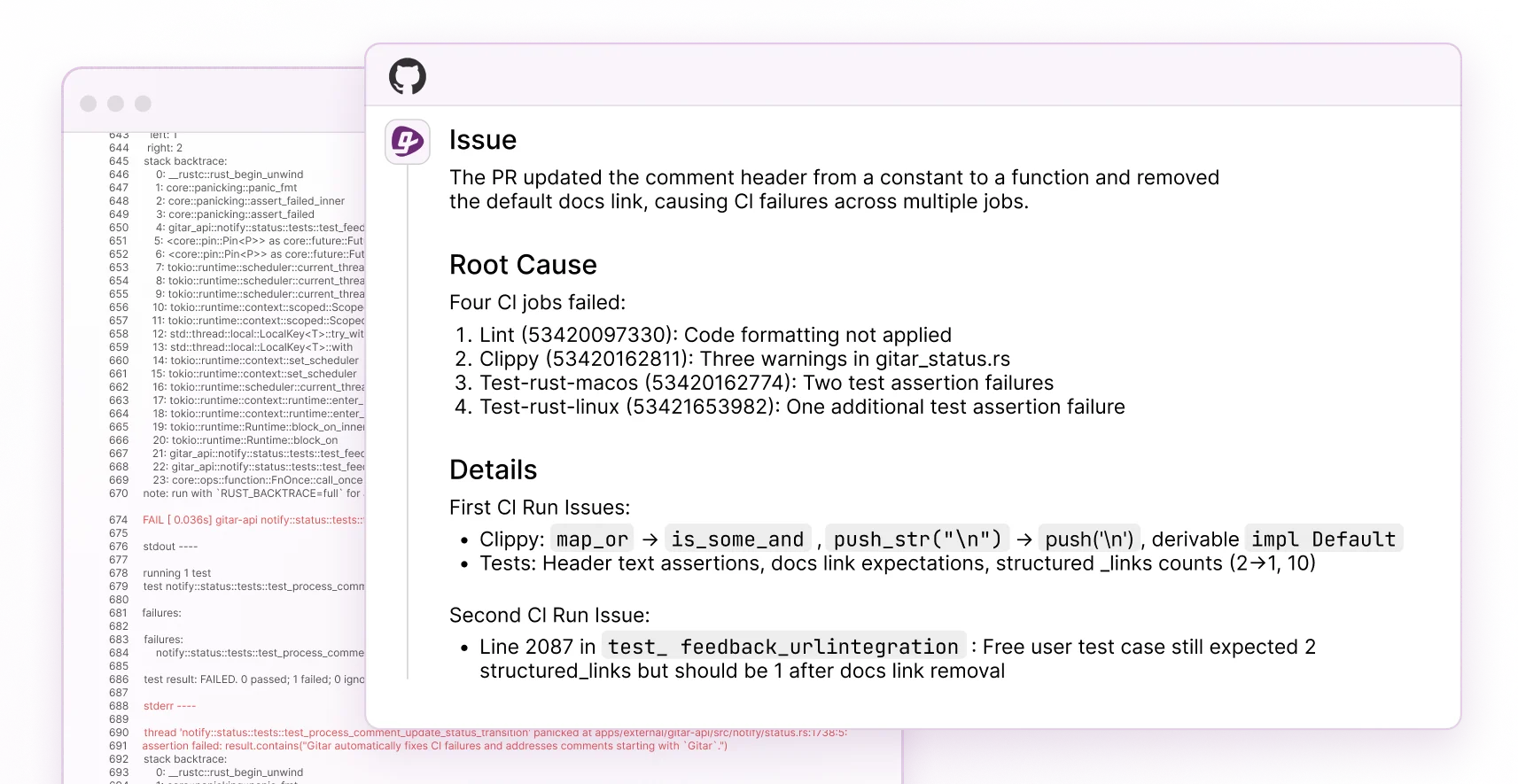
Estimate your team’s ROI from automatic CI healing. Start a 14-day Gitar trial to measure the productivity impact in your own repos.
Qodana vs AI Code Review Tools FAQs
What differs between Qodana’s free trial and AI tool trials?
Qodana offers a 60-day trial of Ultimate features with no payment details required, but functionality stays limited to rule-based analysis without auto-fix. AI tools like Gitar provide 14-day trials with full auto-fix, CI integration, and workflow automation, which lets teams measure real velocity gains instead of only rule compliance.
Which Qodana alternative works best with GitHub?
Gitar provides a seamless GitHub experience with 30-second App installation, automatic CI analysis across GitHub Actions and other platforms, and a single dashboard comment that reduces notification spam. Gitar’s AI-driven approach adds automation that goes beyond Qodana’s rule-based checks.
Does Qodana automatically fix code issues?
Qodana’s Quick-Fix feature offers limited automatic fixes under Ultimate and Ultimate Plus licenses, but it requires manual approval and lacks CI validation. The fixes can modify .idea configuration files and do not confirm passing builds. Gitar’s healing engine validates all fixes against real CI environments before applying them.
How does Gitar compare to CodeRabbit for team productivity?
CodeRabbit provides suggestions at $12–24 per developer each month but leaves all implementation work to engineers. Gitar automatically implements and validates fixes, closing the gap between suggestion and resolution that keeps teams stuck in review queues. The productivity advantage grows as AI-generated code volume increases.
What are the top Qodana alternatives in 2026?
Leading alternatives include Gitar for auto-fixing and CI healing, CodeRabbit for suggestion-based analysis, and Greptile for contextual code understanding. Gitar stands out by actually fixing issues rather than only identifying them, which delivers measurable velocity improvements.
Qodana vs AI Tools Verdict: Why Gitar Leads in 2026
The code review bottleneck now requires solutions that move beyond rule enforcement and suggestion generation. Qodana delivers reliable static analysis and CodeRabbit adds contextual suggestions, but Gitar changes the workflow by automatically fixing issues and validating those fixes in CI.
The ROI picture is straightforward: teams spending around $1 million each year on CI and review friction can recover an estimated $750,000 through automated healing. Gitar’s 14-day Team Plan trial with unlimited seats lets teams test this claim in their own environments without upfront commitment.
Stop nursing broken builds back to health by hand. Try Gitar’s auto-fix engine free for 14 days and track your improvement in shipping speed and stability.