
Failing CI pipelines and slow code reviews can seriously slow down software development. As teams grow, manually fixing these issues wastes time and delays releases. This guide explains how AI-driven autonomous CI fixes, especially with Gitar, can boost productivity, cut costs, and speed up delivery in your GitLab setup. Let’s dive into how Gitar streamlines your CI/CD process.
Why Your GitLab Environment Needs Autonomous CI Fixes
GitLab offers a powerful DevOps platform, but complex CI/CD pipelines often lead to failures. With multiple stages, dependencies, and testing setups, issues can arise frequently and disrupt workflows.
For a team of 20 developers, CI and code review problems can consume up to 30% of their time. This translates to about $1 million in lost productivity each year. Beyond the numbers, these delays impact project timelines and increase expenses.
In GitLab, a failing CI pipeline due to a linting error or test issue forces developers to pause their work, analyze logs, and push fixes. This constant context-switching slows everyone down.
For distributed teams, time zone differences make things worse. Feedback that should take minutes can drag on for days. Autonomous CI fixes solve this by creating self-healing pipelines. These systems analyze failures, find the root cause, generate solutions, and validate them in your GitLab environment without waiting for developer input.
Install Gitar to fix broken builds and ship quality software faster.
Meet Gitar: Your AI Solution for GitLab CI/CD Fixes
Gitar is an AI agent built to handle CI failures and code review feedback in GitLab. Unlike tools that only suggest fixes, Gitar takes action by resolving issues and ensuring they work with your GitLab setup.

Here are Gitar’s core features for GitLab users:
- Complete issue resolution, from identifying problems to validating fixes across your GitLab CI pipeline for ready-to-merge requests.
- Accurate replication of your GitLab environment, matching dependency versions and integrating with tools like SonarQube or Snyk.
- Automated code reviews and direct implementation of reviewer feedback in GitLab merge requests.
- Customizable settings, from suggestion-only mode to full automation with rollback options.
- Support for GitLab CI and other platforms like GitHub Actions or CircleCI.
When a merge request fails due to a linting issue or dependency conflict, Gitar steps in. It reviews CI logs, creates a solution, tests it against the pipeline, and commits the fix.
Book a demo to see Gitar’s autonomous CI fixes in action.
How Gitar Improves Your GitLab Workflow
Gitar integrates smoothly with GitLab, enhancing every part of your development process. It simplifies merge requests and tackles CI pipeline issues effectively.
Effortless Integration with GitLab Merge Requests
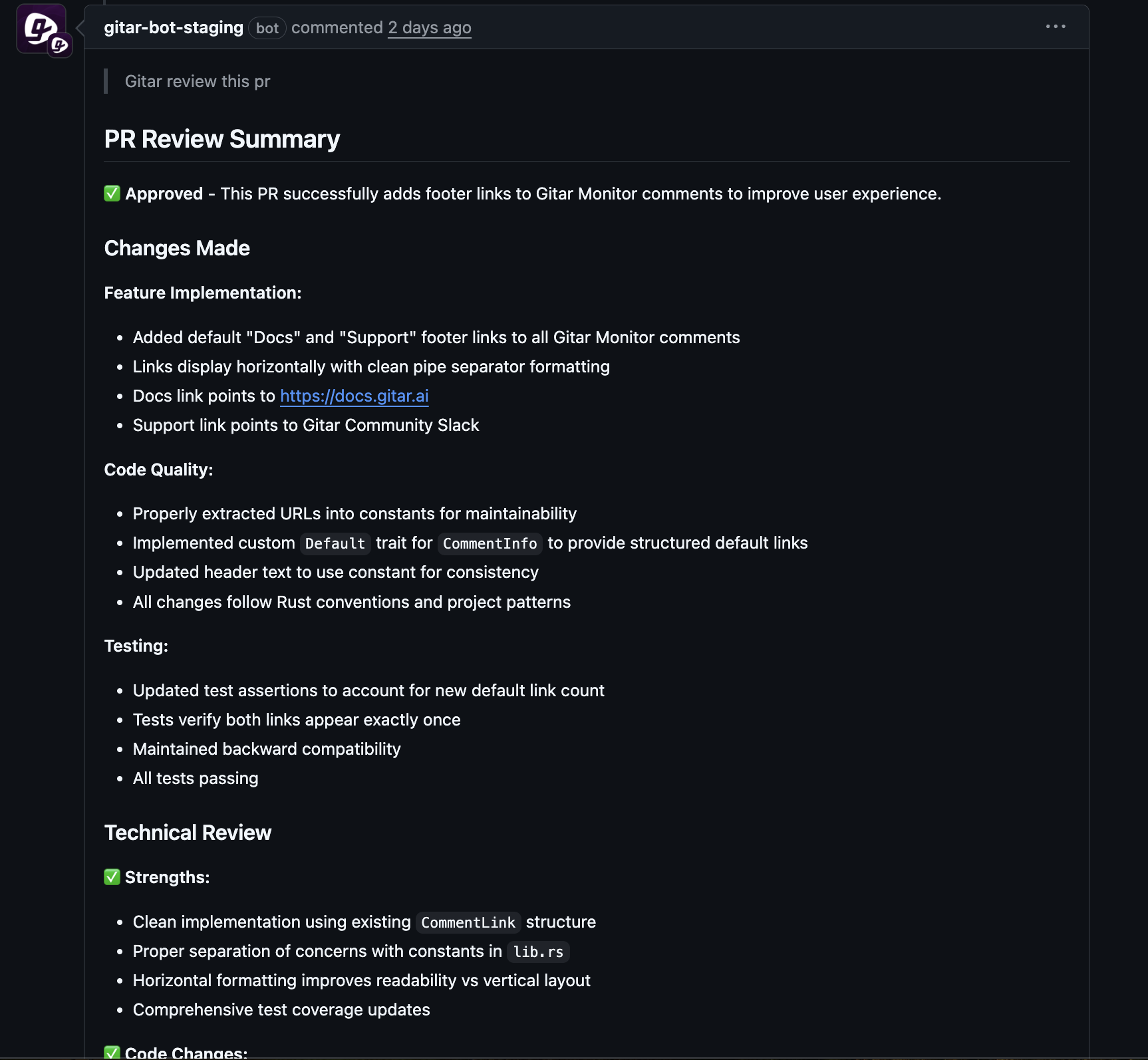
Gitar posts a comment on every merge request, acting as a live status update. This keeps teams informed about its actions throughout the process with full transparency.
It responds to CI failures or reviewer comments instantly, without needing manual prompts. Gitar also adheres to GitLab’s permissions, respecting branch protection and approval rules.
Through its comment updates, Gitar explains each fix, detailing the issue, the solution, and the steps taken. This builds confidence among team members.
Resolving CI Failures in GitLab Pipelines
CI failures can happen at any stage in GitLab. Gitar mirrors your environment, including software versions and settings, to address issues accurately.
When a pipeline fails, Gitar examines the logs to pinpoint the problem and ensures the fix aligns with your setup. It handles various issues, such as:
- Correcting linting and code style violations.
- Fixing broken unit tests and updating snapshots.
- Solving build issues and dependency conflicts.
Speeding Up Code Reviews in GitLab
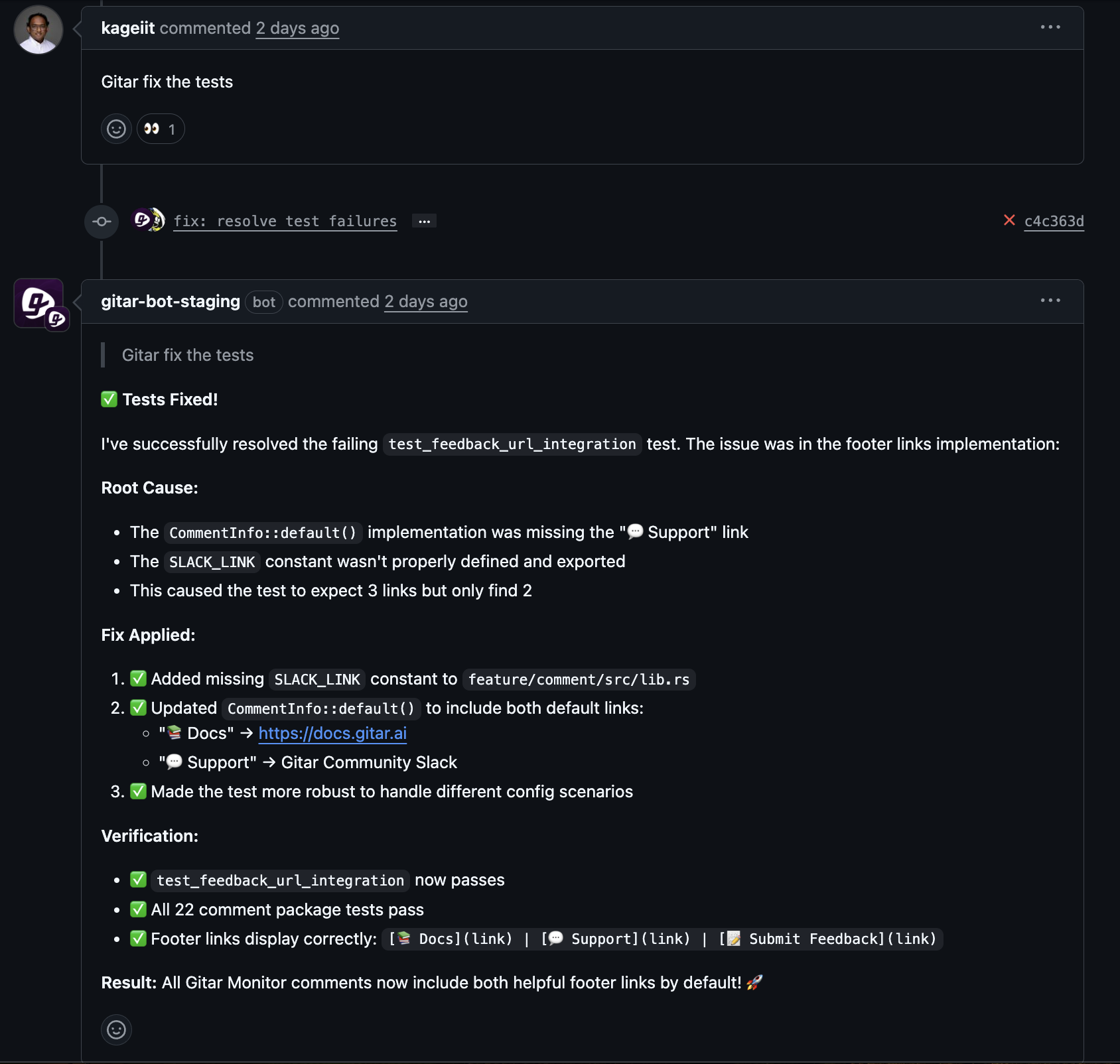
Gitar makes GitLab’s review process faster. Reviewers can mention @gitar in comments to request changes, and it implements them directly.
For teams across time zones, Gitar applies feedback right away. This ensures updates are ready when the original developer logs in, cutting down on long review cycles.
Gitar also offers initial code reviews on request, summarizing changes and evaluating them against GitLab standards.
Seeing Self-Healing CI in Action
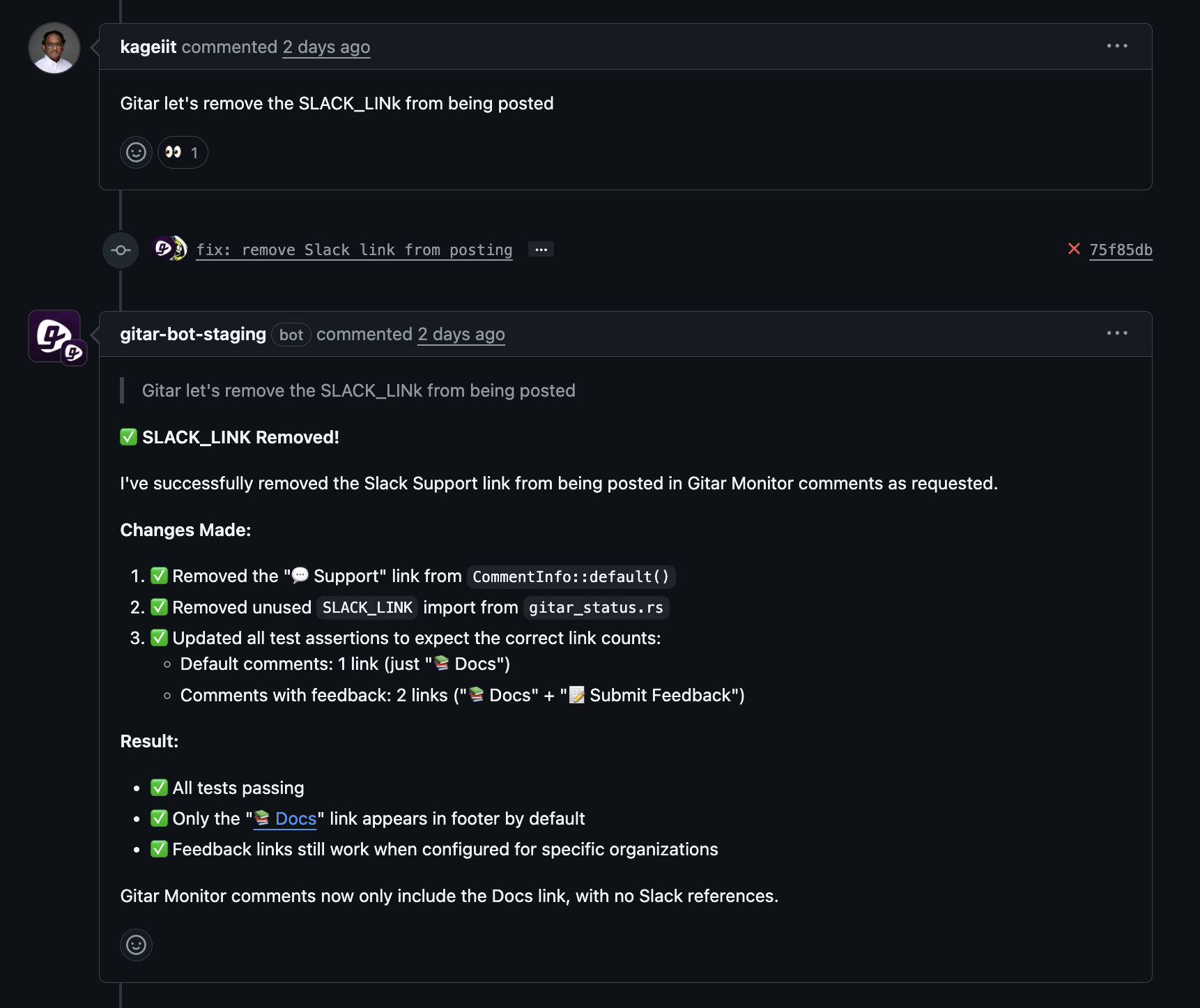
The first time Gitar fixes a CI failure in GitLab, the impact is clear. A developer submits a merge request, a failure occurs, but Gitar resolves it and updates the request with a new commit, often before the issue is even noticed.
This shifts how teams view CI failures. What used to be a time sink becomes a smooth process that keeps development moving forward with less frustration.
Install Gitar to fix broken builds and ship quality software faster.
Key Factors for Adopting Autonomous CI in GitLab
Bringing autonomous CI fixes into your GitLab setup involves assessing team readiness, technical needs, and strategies for managing change.
Building Trust with Gradual Implementation
Trust matters when adopting automation. Gitar provides options to start slow and ramp up as teams feel ready.
In a cautious mode, Gitar suggests fixes for review. As comfort grows, teams can switch to automatic commits with the ability to undo changes if needed. Detailed logs and audit trails ensure transparency for enterprise compliance.
Tracking Success and Cost Savings
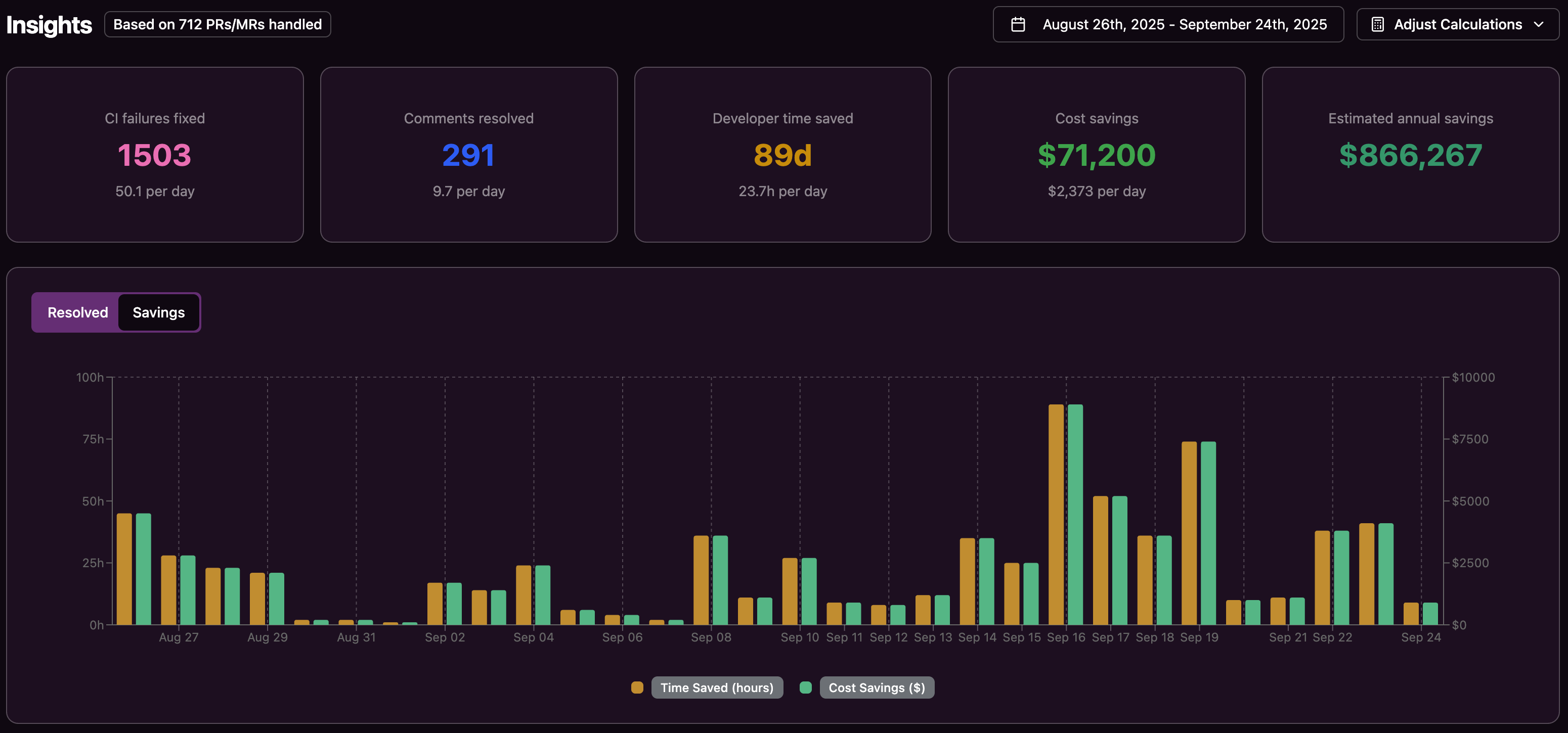
Measuring the benefits of autonomous CI means looking at both technical gains and business results. Gitar’s dashboard shows data on fix success and time saved.
Important metrics to track include:
- Average time from CI failure to resolution.
- Percentage of pipelines passing on the first try.
- Frequency of developer interruptions due to CI issues.
- Time from merge request creation to completion.
By automating resolutions, Gitar delivers measurable reductions in operational costs.
Getting Started with Gitar in GitLab
Integrating Gitar into GitLab is straightforward, offering quick benefits without disrupting your current processes through a clear setup approach.
Simple Setup and Initial Trust Building
Gitar connects to GitLab with an easy authorization step. Admins can choose which projects use it, keeping control over access.
Customization is available through Gitar’s dashboard. You can define triggers for CI failures and align it with your workflow patterns in GitLab.
Building Confidence Through Merge Requests
Gitar starts with a welcome comment on merge requests. Early interactions often involve small CI fixes presented as suggestions, showing value without risk.
As teams see consistent results, they can handle more complex issues and move toward greater automation with confidence.
Advanced Use in GitLab CI Workflows
Over time, teams can explore advanced setups with Gitar, leveraging it for intricate pipelines and testing needs while meeting governance standards.
How Gitar Stands Out in GitLab Environments
Gitar goes beyond typical AI tools by not just suggesting fixes but applying and validating them in your full GitLab CI setup.
Comparing Gitar to AI Suggestion Tools
Many AI tools offer recommendations, leaving the work to developers. Gitar, on the other hand, takes full responsibility for fixes, ensuring they pass all pipeline checks.
|
Feature |
Gitar (Healing Engine) |
AI Suggestion Tools |
Manual Process |
|
Action Type |
Autonomous Fixes & Validated Commits |
Suggestions & Analysis |
Manual Investigation & Fixes |
|
Validation Method |
Full GitLab CI Workflow Validation |
Manual Validation Required |
Developer Testing & CI Runs |
|
Environment Context |
Complete GitLab Environment Replication |
Limited/Local Context |
Local Development Environment |
|
Implementation |
Autonomous Application with Rollback |
Manual Developer Implementation |
Complete Manual Process |
Common Challenges for GitLab Teams
Experienced teams might overlook the broader efficiency gains of autonomous fixes, focusing only on single issues. Gitar excels in managing complex setups through precise environment matching.
For security and compliance, Gitar offers adjustable trust settings and detailed records. Teams should define clear policies before full adoption to address any concerns.
Install Gitar to fix broken builds and ship quality software faster.
Common Questions About Autonomous CI Fixes in GitLab
How Does Gitar Handle Custom GitLab CI Setups?
Gitar matches your GitLab CI configuration, including specific dependency versions and security tools like SonarQube or Snyk, to ensure fixes fit your unique environment.
How Is Gitar Different from Other AI Review Tools?
While many AI tools suggest changes, Gitar goes further by applying fixes, testing them in your GitLab CI pipeline, and committing solutions that work without extra effort.
What If We’re Unsure About AI Committing Fixes?
Gitar allows a suggestion-only mode for manual approval of fixes. As trust builds, you can enable automatic commits with rollback options and detailed logs for oversight.
How Does Gitar Help Distributed Teams with Review Delays?
Gitar lets reviewers leave instructions in merge requests. It applies fixes immediately, so changes are ready for the developer’s next login, avoiding long delays across time zones.
Does Gitar Meet Enterprise Security Needs in GitLab?
Gitar follows GitLab’s access controls and approval processes. It provides audit trails for compliance and works with built-in security features to fix issues as needed.
Final Thoughts: Boost Your GitLab Team’s Efficiency
Moving to self-healing CI pipelines opens up major productivity benefits. With Gitar, AI-driven fixes fit right into your GitLab workflow, reducing delays and cutting expenses.
Teams using Gitar can take on bigger goals and maintain high standards without extra workload, driving faster innovation and dependable results.