
Software development moves fast, and teams need fixes that match the pace with focus on what matters. Many engineering teams struggle with CI pipeline failures and code review feedback, often unsure which issues to tackle first. This article dives into how autonomous AI changes the game, helping teams move from chaotic fixes to a focused, impact-driven strategy that speeds up delivery and makes the most of limited resources.
The Challenge: Why Unprioritized Fixes Hurt Engineering Teams
CI/CD Bottlenecks Slow Down Developers
CI/CD issues drain developer time. You submit a pull request, expecting a smooth process, only to see build failures pop up. Maybe a dependency is outdated, a test fails unpredictably, or a linter flags a minor style issue. Suddenly, you’re stuck decoding error logs, tweaking code, and waiting for the pipeline to rerun.
These delays add up fast. A quick fix that should take five minutes can stretch into an hour, cutting into productivity. Data shows developers can lose up to 30% of their workday on CI and review hurdles, creating a major roadblock for teams.
Context switching makes it worse. After submitting a PR, you move to another task, only to get pulled back by a failure alert. This interruption breaks focus, often doubling the time lost. A 30-minute fix can easily steal an hour of deep work potential.
Technical Debt Piles Up Without Clear Focus
Unmanaged technical debt grows when teams lack a clear plan to prioritize fixes. Tracking metrics like code complexity, time-to-release, or bug density helps align fixes with goals like security and scalability. Without this focus, teams keep fixing surface issues while ignoring deeper risks.
The real struggle is separating critical debt, such as security flaws, from general refactoring that feels useful but doesn’t impact key outcomes. Focusing on high-impact debt ensures fixes deliver direct business value over generic cleanup.
When technical work doesn’t align with business needs, teams stay busy but fail to show real progress. Leadership questions the output, while urgent risks like security gaps or outages get buried under less critical tasks.
Operational Costs of Inefficient Fixes
Unprioritized fixes hit hard financially. For a 20-developer team spending just one hour daily on CI and review issues, lost productivity costs around $1 million yearly, based on average developer rates of $200 per hour.
The impact spreads further. Slower releases mean missed revenue and lost market edge. Manual debugging and constant interruptions also lead to burnout, increasing turnover and onboarding expenses.
Most importantly, customers notice when critical bugs linger or deployments stall due to pipeline chaos. This inconsistency damages trust, raising retention and acquisition costs over time.
The Solution: Gitar’s AI for Smarter Fix Prioritization
Meet Gitar: Automating Fixes with Impact in Mind
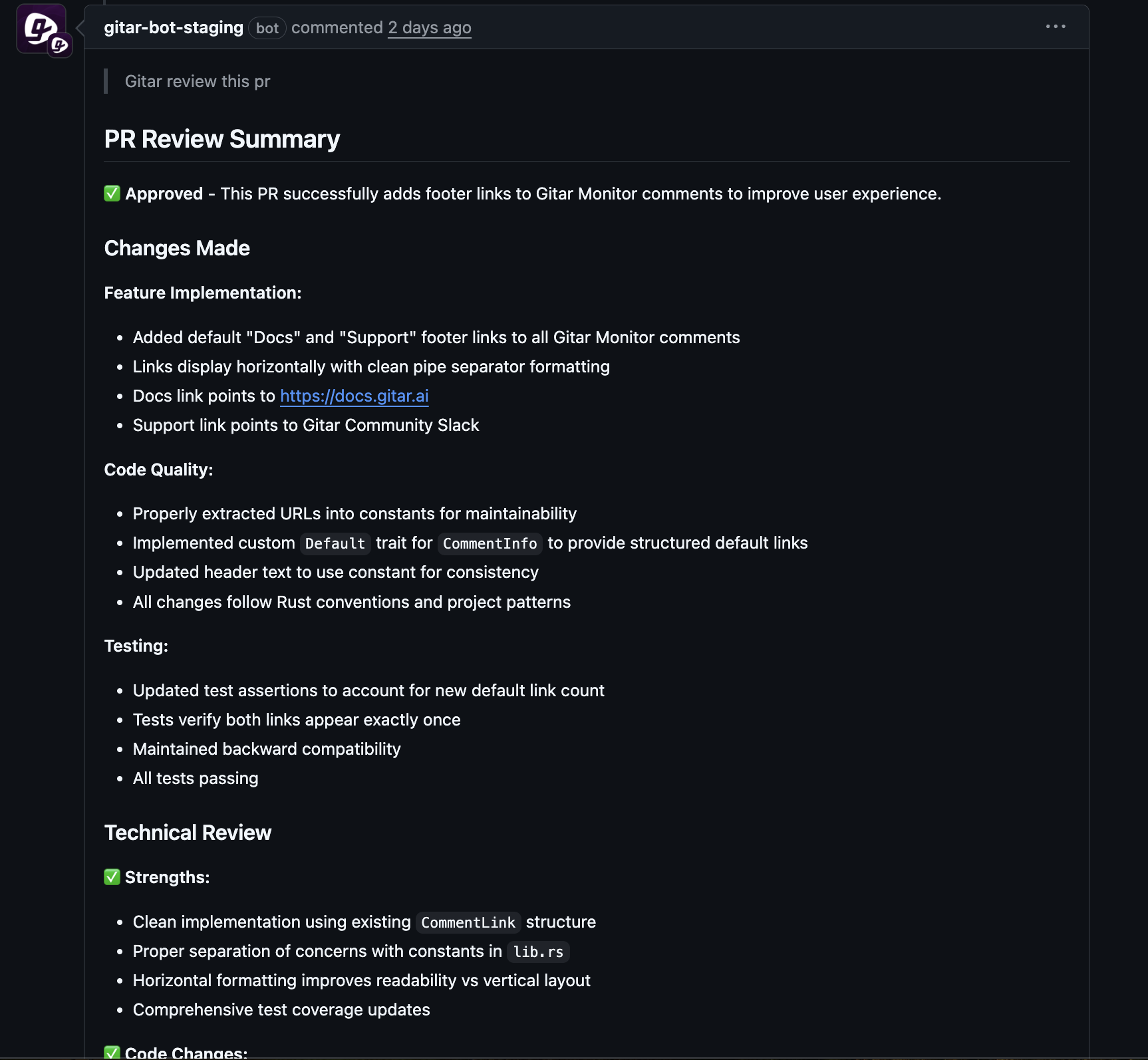
Gitar shifts teams from reactive chaos to proactive fix management. As an autonomous AI agent, it handles CI pipeline failures and code review feedback, saving developers hours of daily grunt work on build and review checks.
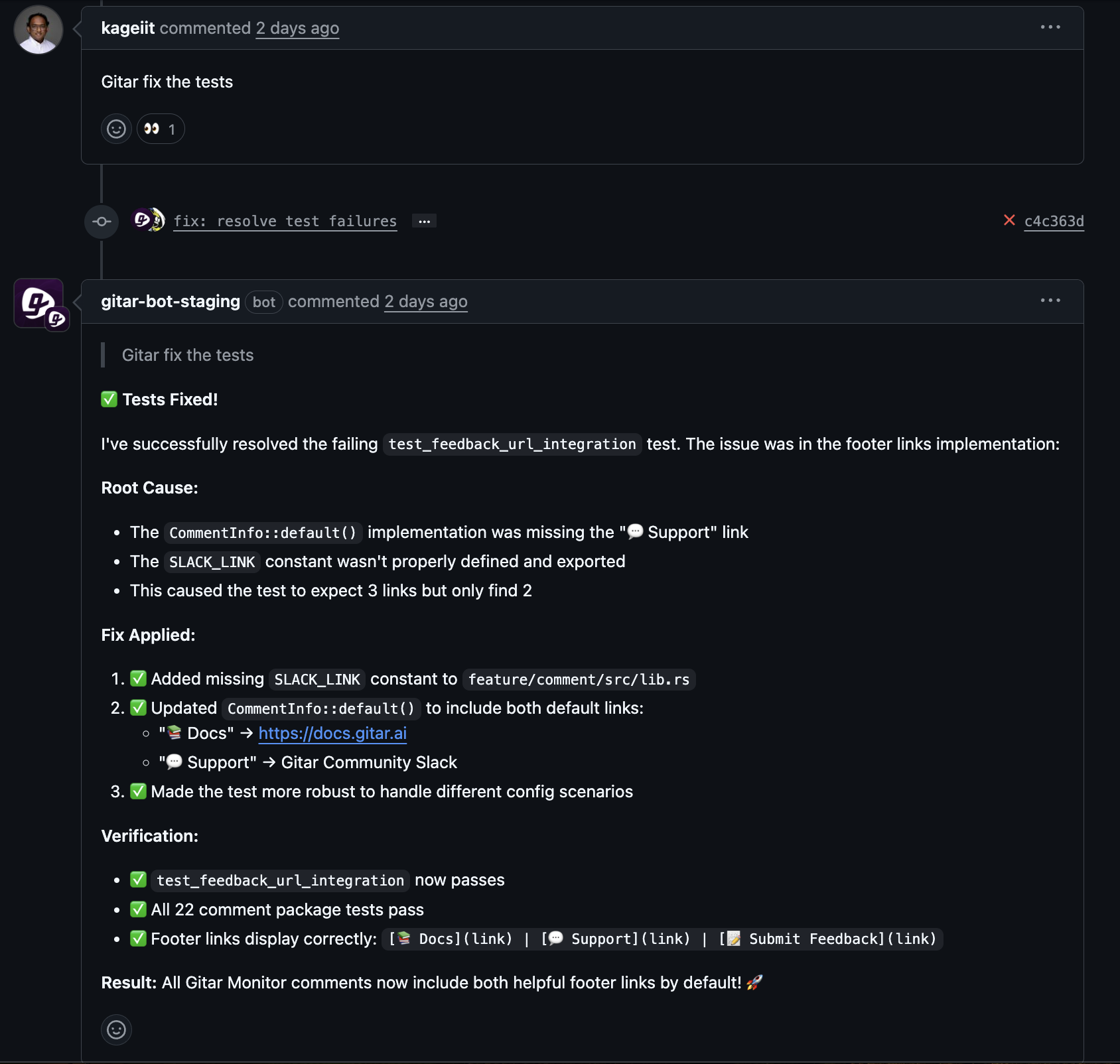
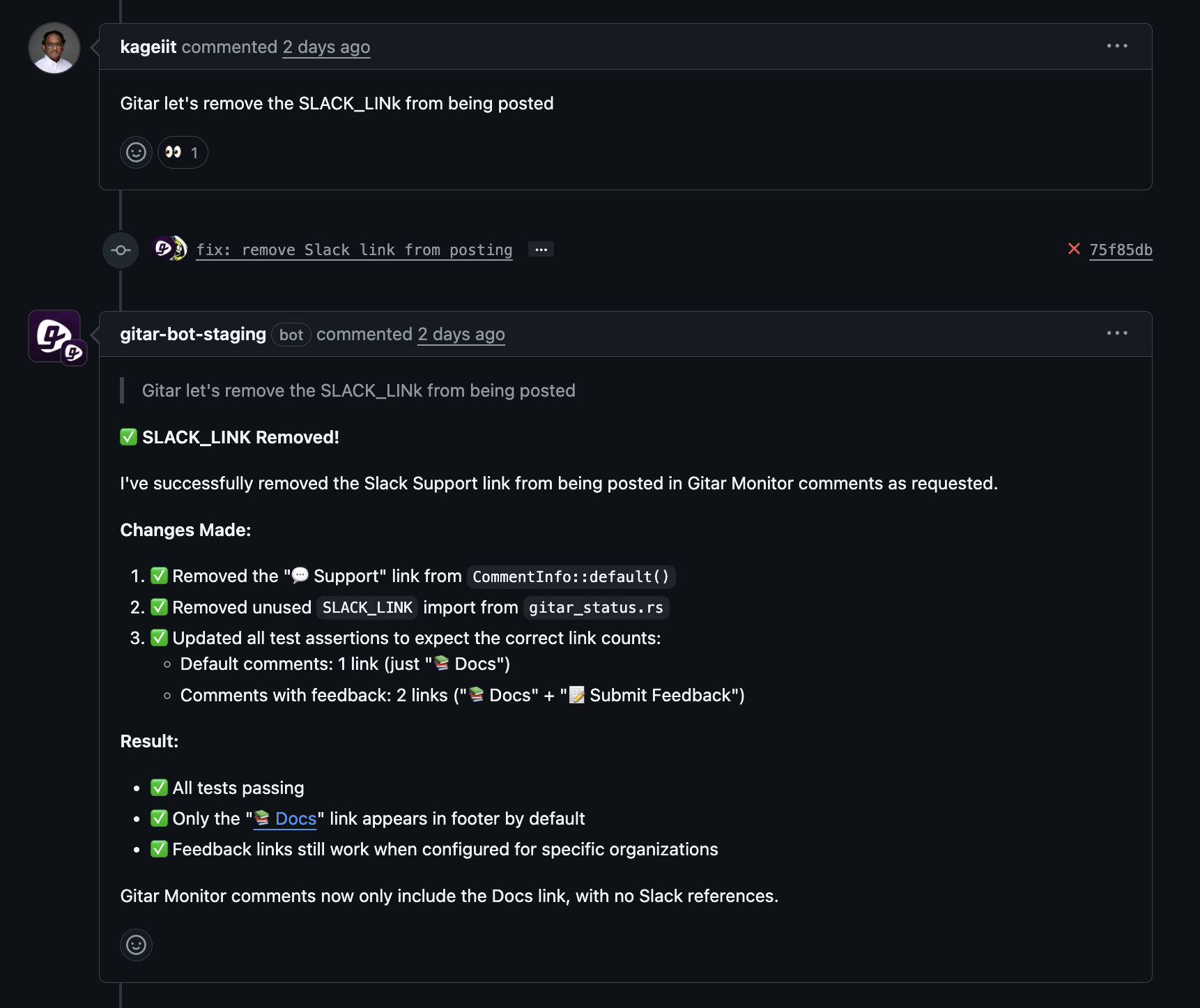
Unlike tools that only suggest fixes for manual application, Gitar acts as a self-healing system. It applies solutions, validates them in full CI workflows, and ensures builds pass before sharing results. This move from suggestions to direct action defines the leap to AI-driven development operations.

How Gitar Targets and Fixes Key Issues
Gitar prioritizes fixes based on clear criteria and executes them with precision. Here’s how it works:
- Impact and Urgency Evaluation: Gitar reviews CI logs, feedback urgency, dependencies, and past failures to rank issues by their effect on merge timelines.
- Root Cause Detection: For failures like linting errors or broken tests, it digs into logs to pinpoint underlying issues, ensuring effective solutions.
- Context-Sensitive Fixes: Generated fixes account for the broader codebase, avoiding new conflicts or bugs during resolution.
- Adjustable Automation Levels: Teams can choose cautious mode for suggested fixes to review, or full automation with rollback options as trust grows.
Key capabilities that support this approach include:
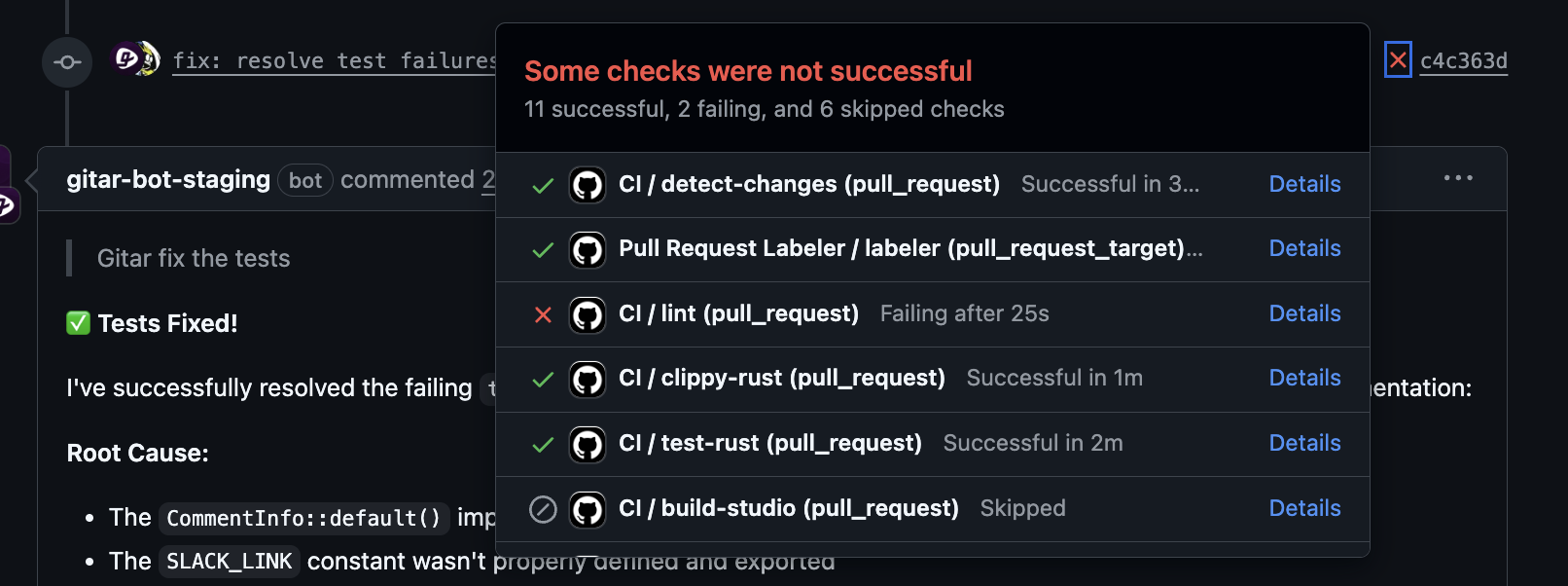
- Complete Fix Validation: Fixes run through full CI checks to guarantee passing builds.
- Environment Matching: Replicates complex setups with specific SDKs, dependencies, and integrations.
- Feedback Implementation: Converts review comments into direct code updates.
- Platform Compatibility: Works with GitHub Actions, GitLab CI, CircleCI, BuildKite, and more.
- Flexible Trust Settings: Shifts from suggestions to full automation based on team comfort.
Install Gitar now to fix broken builds automatically and ship better software faster.
The Results: Faster Delivery with Automated Fix Focus
Boost Developer Focus and Speed Up Merges
Gitar tackles urgent fixes first, letting developers stay in deep work mode without CI or feedback distractions. Merge times shrink as critical blockers clear automatically, smoothing the entire pipeline.
Faster merges mean quicker feature releases, shortening time-to-market. For distributed teams, Gitar eliminates delays from time zone gaps. Feedback left overnight gets fixed by morning, ready for review.
Cut Costs with Targeted Automation
Addressing high-impact issues first prevents small problems from ballooning into expensive crises. Immediate security fixes avoid breaches, and early performance tweaks reduce infrastructure spend.
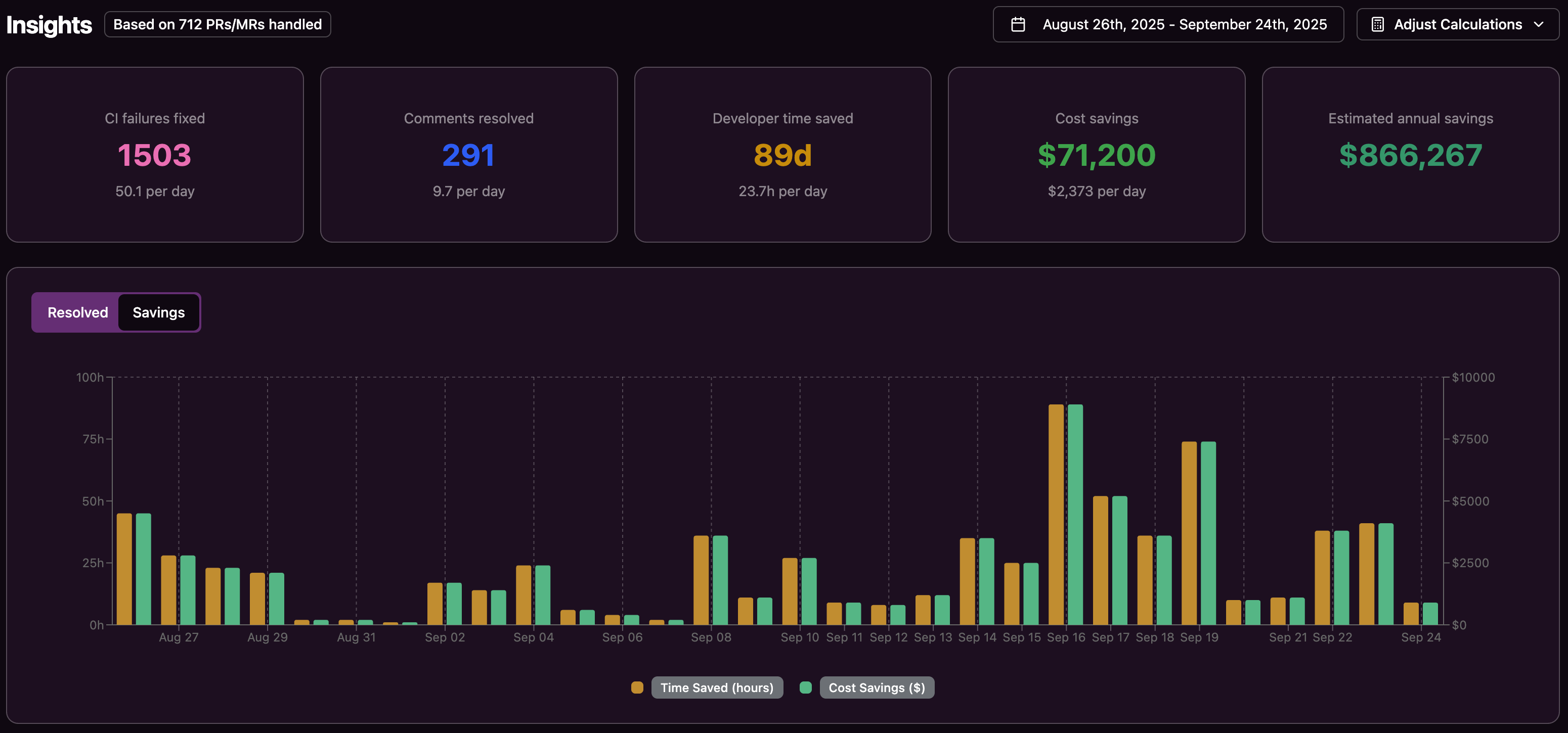
For a 20-developer team, even moderate use of Gitar can save $500,000 yearly in productivity. It also lifts developer morale by cutting repetitive tasks, reducing turnover expenses.
Align Technical Debt Fixes with Business Goals
Incorporating debt resolution into sprints helps maintain velocity while cutting long-term risks. Gitar automates urgent debt fixes, freeing sprint time for strategic work.
It prioritizes fixes like security or compliance issues that tie directly to business needs. This ensures technical efforts support broader objectives, not just isolated tasks.
Gitar vs. Traditional Fix Methods
|
Feature/Approach |
Manual Firefighting |
AI Suggestion Tools |
Gitar (Autonomous AI) |
|
Prioritization Logic |
Reactive, Unplanned |
Issue Identification |
Impact and Urgency Focus |
|
Fix Application |
Manual, Time-Intensive |
Manual Implementation |
Automatic and Validated |
|
Developer Disruption |
High from Switching |
Moderate for Review |
Low with Automation |
|
CI Integration |
None |
Basic PR Comments |
Full Environment Match |
Shift to Gitar’s autonomous AI for smarter fix prioritization and boost your team’s output.
Common Questions About AI-Driven Fix Prioritization
How Does Gitar Rank Fix Impact and Urgency?
Gitar evaluates impact and urgency using multiple inputs. It analyzes CI logs for failure severity, review feedback for priority cues, and dependencies to see wider effects. Past failure trends help predict which issues could escalate if ignored.
Urgency factors include deadlines, critical dependencies, and blocking potential. Teams can adjust automation settings to balance speed and caution based on their risk tolerance.
Can Gitar Handle Security or Compliance Fixes?
Gitar integrates with security tools like SonarQube and Snyk to flag and prioritize vulnerabilities by severity and business impact. It can automatically fix common issues, such as dependency updates or coding standards, ensuring these critical concerns get addressed promptly.
How Does Gitar Fit with Frameworks Like RICE or MoSCoW?
Gitar enhances frameworks like RICE by cutting the effort needed for fixes, shifting focus from implementation to quick approval. It also provides real-time validation data, boosting confidence in impact assessments.
For MoSCoW, Gitar automates ‘Must have’ fixes instantly, letting teams focus on ‘Should have’ or ‘Could have’ tasks that need human input.
What About Long-Term Fixes Like Major Refactoring?
Gitar excels at urgent pipeline blockers but also supports longer-term improvements. Developers can request specific refactoring via commands, and Gitar applies changes while ensuring test coverage.
For bigger architectural shifts, Gitar handles routine execution, letting senior engineers focus on high-level design decisions that need human insight.
Does Gitar Work in Complex Enterprise Setups?
Gitar replicates intricate enterprise environments, handling multi-SDK builds, custom Docker setups, and tools like Jenkins or SonarQube. It analyzes CI configs to ensure fixes fit the specific context, not generic scenarios.
It also meets security needs with on-premise options and configurable integrations, fitting regulated industries while delivering automation benefits.
Conclusion: Autonomous Fixes Are the Future
Manual fix management is fading as AI systems that grasp both technical and business needs take over. Prioritizing fixes by impact and urgency is now a key edge for teams aiming to balance speed and quality.
Gitar leads this shift, turning bottlenecks into efficient workflows. By focusing on critical issues first, it redefines how teams approach productivity and resource use.
Teams adopting this automation gain faster releases, happier developers, lower costs, and assurance that urgent problems get fixed right away.
Step into autonomous fix management with Gitar and reshape your team’s software delivery approach.