
CI/CD pipeline failures can halt your work in an instant. A failing build often means a dependency issue, like an outdated package or version conflict, derailing your progress. Imagine a system that resolves these problems before you even notice them.
Dependency issues, such as outdated packages and version clashes, are a common cause of CI/CD pipeline failures. Addressing these problems after they occur costs organizations millions in lost productivity. Developers can spend up to 30% of their time troubleshooting instead of building features.
AI-driven solutions like Gitar offer a way to automate fixes for these issues. This approach helps engineering teams stay focused, reduces delays, and speeds up the time to merge pull requests.
Ready to solve CI/CD dependency problems? Install Gitar now to fix broken builds automatically and ship quality software faster.
Why Manual Dependency Fixes Don’t Work
Traditional dependency management in CI/CD pipelines often fails to keep up. When builds break due to dependency conflicts, developers must stop their work to troubleshoot, disrupting progress and delaying delivery.
Typical issues include version mismatches between packages, missing dependencies, and differences between local and CI environments. These conflicts frequently cause pipeline failures, especially when environments don’t align.
Each failure forces developers to switch tasks, dig through logs, find the cause, apply a fix, and wait for the build to rerun. A quick dependency update can easily turn into an hour of lost time. For a team of 20 developers losing just one hour daily to CI issues, the yearly cost in productivity can hit around $1 million.
Modern software complexity adds to the challenge. As applications rely on numerous dependencies with specific version needs, identifying the root cause of failures becomes harder, especially when issues surface late in the process.
Many of these problems could be avoided, but current reactive methods keep teams stuck fixing issues that could have been caught earlier.
How AI Solves CI/CD Dependency Issues
AI offers a practical way to handle CI/CD failures by moving from manual fixes to automated resolution. Tools like Gitar analyze failure logs, create targeted solutions, and apply them directly to pull requests, minimizing developer involvement.
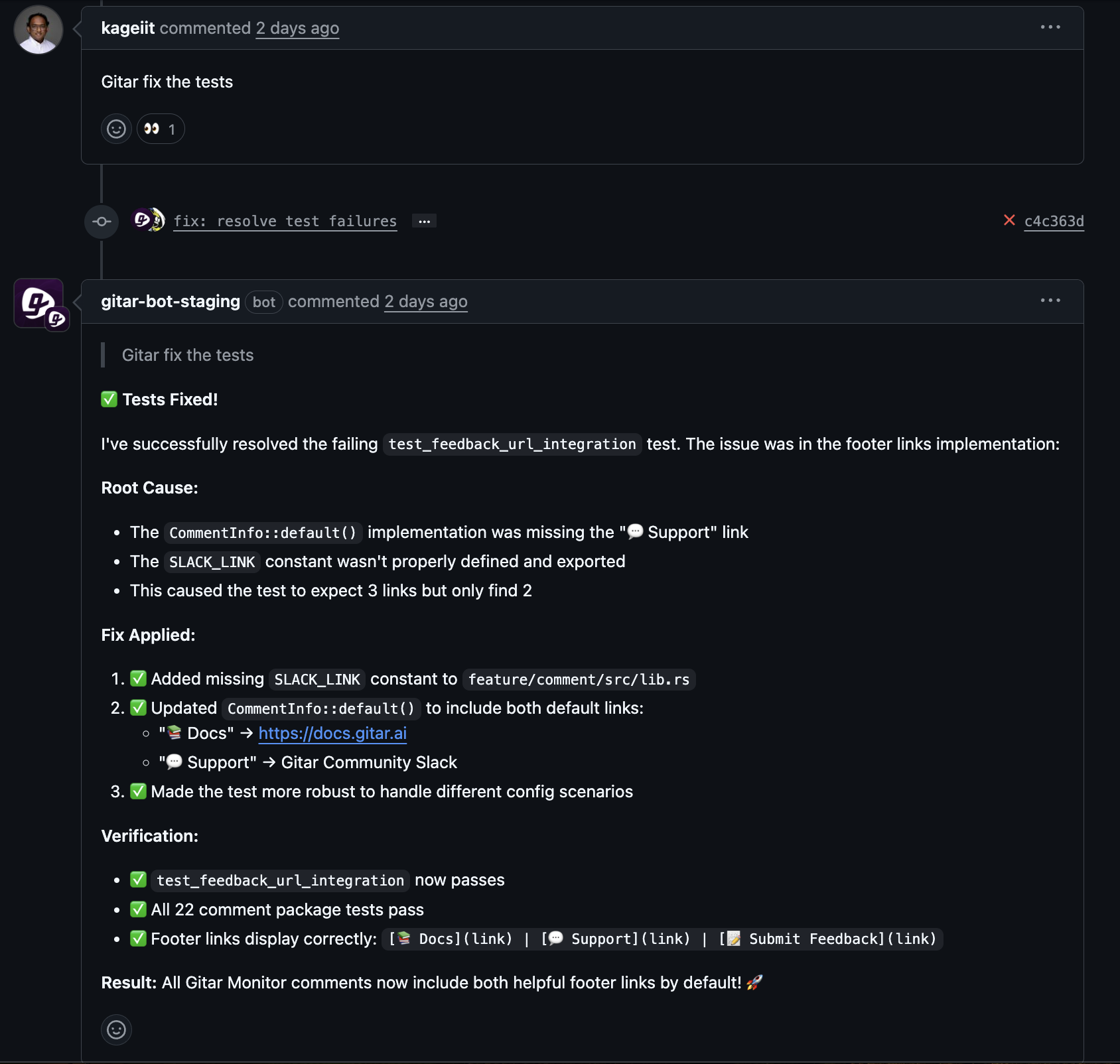
Gitar acts as an AI agent built for CI/CD recovery. Unlike tools that only suggest fixes, it detects dependency problems, develops validated solutions, and commits changes to ensure builds pass all checks.

Gitar’s capabilities include:
- Analyzing CI logs to pinpoint the root cause of failures.
- Generating code fixes for specific issues.
- Replicating full environments to confirm solutions work in complex setups.
- Applying fixes automatically, with options for team oversight.
This shifts the process from detecting and reacting to detecting and resolving. While developers focus on their tasks, Gitar handles dependency conflicts and other failures in the background.
Ready to stop dealing with CI/CD failures? Discover how Gitar fixes them automatically with a demo today.
Understanding Gitar’s AI: Fixing CI Issues Step by Step
Identifying the Cause of Failures
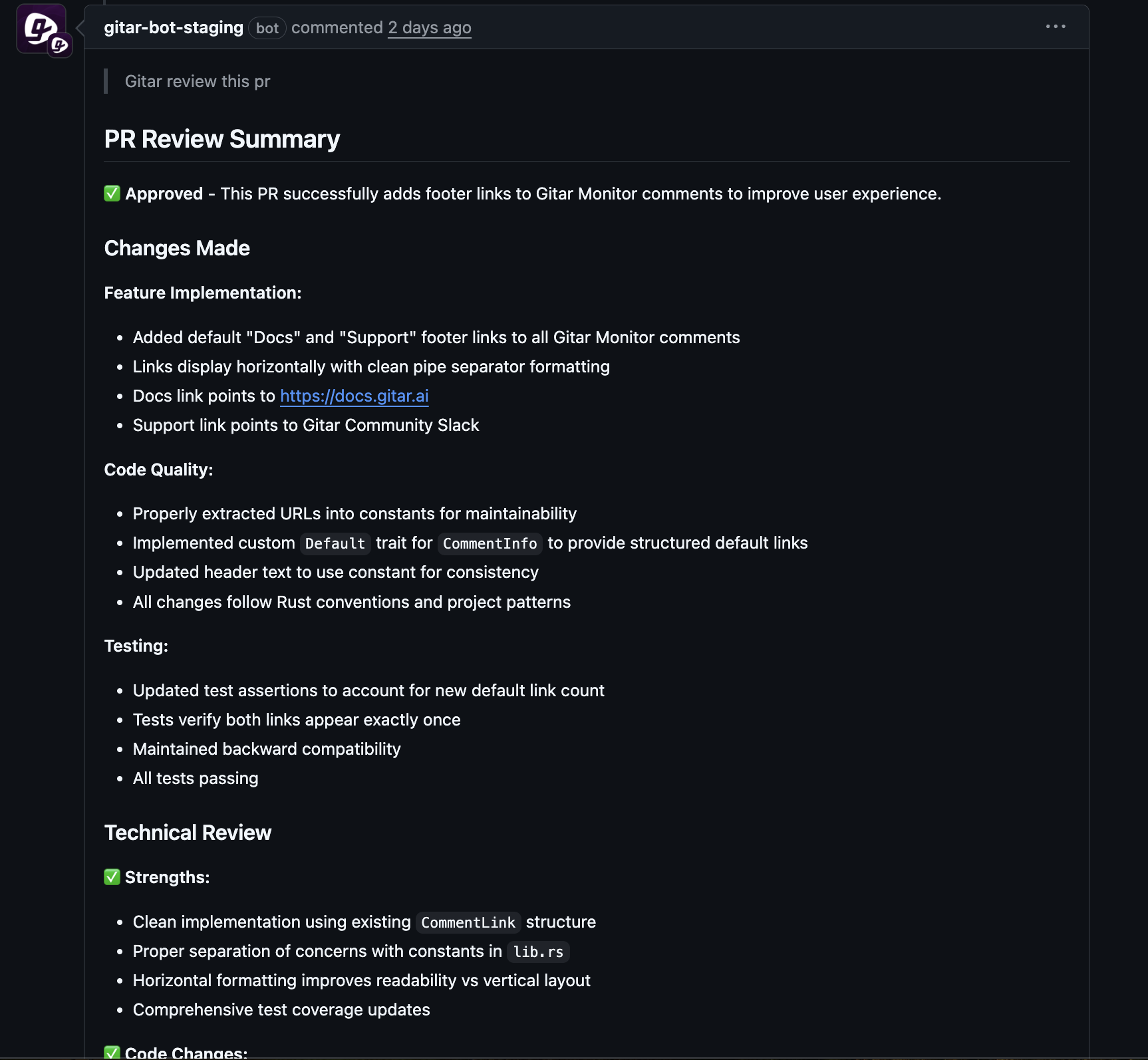
Gitar’s AI reviews CI logs and failure data to determine why builds break, whether due to dependency conflicts or other issues. This precise analysis helps create fixes that address the exact problem, like updating a version or adding a missing package.
By recognizing recurring failure patterns, Gitar learns how to handle frequent issues effectively. This ensures solutions target the root cause rather than just the symptoms.
Creating and Validating Solutions
When a failure occurs, Gitar follows a clear process. It starts by analyzing logs to identify the issue, such as a version mismatch or configuration error.
Then, it develops a fix, like adjusting package versions or updating files. Before applying any change, Gitar tests the solution in a replicated environment matching the enterprise setup, ensuring the fix will work once committed.
Improving Workflow and Reliability
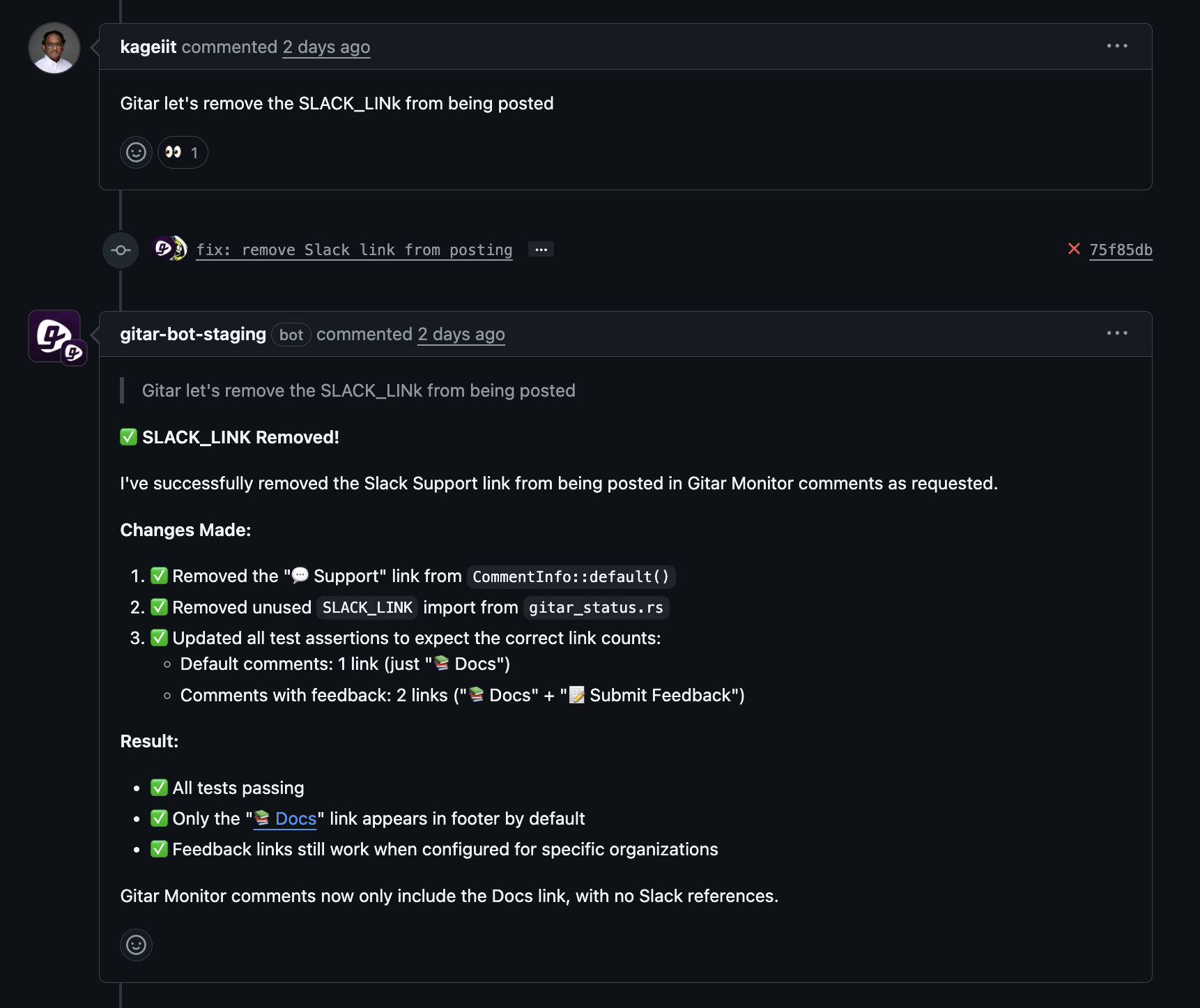
Developers benefit from less interruption since Gitar handles fixes automatically. Many notice a failure is resolved with a new commit in their pull request before they even check the issue.
Engineering managers see clear gains in productivity and cost savings. Teams merge code faster and feel more satisfied without repetitive troubleshooting tasks.
For DevOps, pipeline stability improves with fewer manual fixes. Automated resolution reduces alerts and leads to more consistent build times.
Comparing Gitar to Traditional CI/CD Fixes
|
Approach |
Manual Troubleshooting |
AI Suggestion Tools |
Gitar: AI Healing Engine |
|
Dependency Conflict Resolution |
Manual diagnosis, repeated fixes, high effort |
Identifies issues, suggests fixes, needs manual application |
Diagnoses, creates, applies, and validates fixes automatically |
|
Impact on Developer Workflow |
Constant interruptions, heavy context-switching |
Still needs developer action and review |
Removes context-switching, keeps focus on coding |
|
Time to Resolve Issues |
Hours to days based on issue complexity |
Requires manual work and multiple build attempts |
Minutes, often before developers notice the failure |
|
Environment Awareness |
Relies on local setup and human knowledge |
Limited context, no automatic validation |
Replicates full enterprise setup for reliable fixes |
CI/CD has evolved from manual fixes to AI-driven automation. Manual methods demand time and expertise, while suggestion tools still require developer effort for implementation. Gitar takes full control of the fix process, ensuring solutions are tested and applied without human input.
This shows why many teams are moving past suggestion tools. The need for manual validation in those tools maintains workflow interruptions, while Gitar’s approach removes that burden entirely.
Ready to upgrade your CI/CD process? Install Gitar today to fix builds automatically and deliver software faster.
Real Results: Moving from Fixes to Focus
Teams using Gitar notice a clear difference in their daily work. Developers face fewer CI interruptions, allowing them to concentrate on coding new features instead of debugging builds.
The cost savings add up quickly. A team of 20 developers spending one hour daily on CI issues could save up to $500,000 yearly in productivity with Gitar’s automated fixes. Faster feature delivery adds even more value.
Gitar also supports distributed teams across time zones. If a reviewer in one region leaves feedback on a pull request, Gitar can apply the changes overnight, so the developer in another region sees the update ready for review the next day.
Building Trust in Automated CI Fixes
Adopting AI for CI/CD fixes requires trust from engineering teams. Gitar supports this with adjustable automation settings, letting teams ease into the system at their own pace.
Initially, teams can use a suggestion mode where Gitar offers fixes for review. This helps everyone see the accuracy of the solutions while keeping control over changes.
Over time, teams can move to full automation, where Gitar applies tested fixes directly, with options to undo changes if needed. This gradual shift balances control with efficiency gains.
Gitar works with existing CI/CD platforms through a simple setup process. Teams can start using automated fixes without changing their current workflows.
Keeping Security and Compliance in Focus
Security remains a key concern with automated dependency fixes. Gitar includes features to meet organizational standards and protect against risks.
For enterprise settings, Gitar offers audit logs for all changes, integrates with approval processes, and allows custom rules for fixes that need human review.
This focus on security ensures that faster fixes don’t compromise safety or compliance, making Gitar a fit for teams with strict policies.
Looking Ahead: The Future of CI/CD Automation
Automated CI/CD is just the start of broader changes in software development. As AI improves, dependency management and build fixes will become even more proactive.
The goal is a development process where CI/CD issues resolve themselves, freeing developers to focus entirely on creating and improving features.
Common Questions About Automated CI Fixes
How Does Gitar Handle CI Issues Automatically?
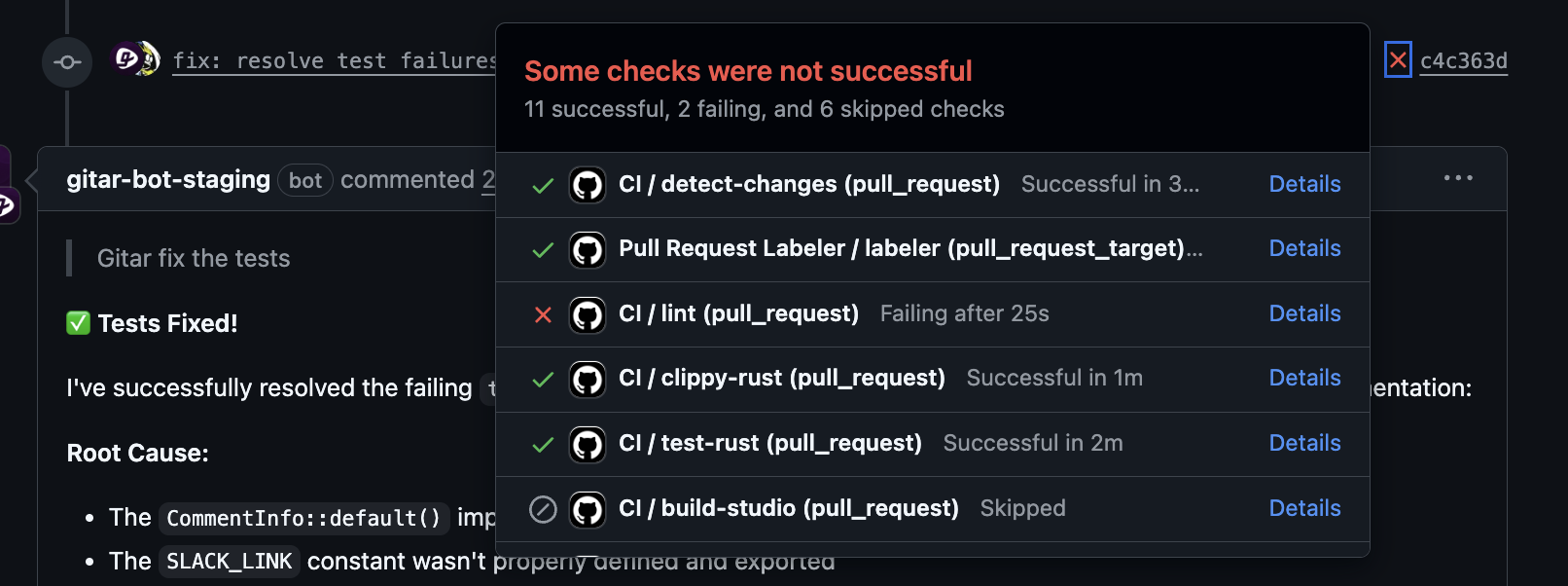
Gitar’s AI examines CI logs to find the cause of failures, such as dependency conflicts. It creates specific fixes, tests them in a replicated setup, and commits changes to the pull request to pass all checks.
Can Gitar Manage Complex Environments with Multiple Languages?
Yes, Gitar supports enterprise environments with various languages and SDKs. It mirrors the full setup, including specific versions and tools, to ensure fixes apply correctly across the stack.
What CI Problems Can Gitar Fix on Its Own?
Gitar addresses issues like dependency conflicts, linting errors, test failures, and build problems. It resolves version mismatches and configuration errors with tested solutions.
How Does Gitar Build Trust with Teams?
Gitar provides adjustable settings, starting with a suggestion mode for reviewing fixes. As confidence grows, teams can enable automatic fixes with rollback options and detailed change explanations for transparency.
How Does Gitar Connect to Existing CI/CD Systems?
Gitar integrates with popular CI/CD platforms using standard APIs and webhooks. Setup is simple, requires no workflow changes, and offers customization through a web dashboard.
Final Thoughts: Speed Up with Automated CI/CD
Manual dependency fixes can’t keep pace with today’s demands. As software grows more complex and delivery timelines tighten, troubleshooting CI failures slows teams down.
AI automation, as shown by Gitar, changes how dependency issues are managed. By identifying problems and applying fixes, it turns a disruptive task into a background process.
The advantages go beyond saving time. Automation keeps developers focused, speeds up merging, stabilizes pipelines, and cuts costs. Engineering leaders can see significant returns, potentially saving hundreds of thousands each year.
As development moves toward intelligent automation, teams using tools like Gitar gain an edge, delivering faster with better quality.
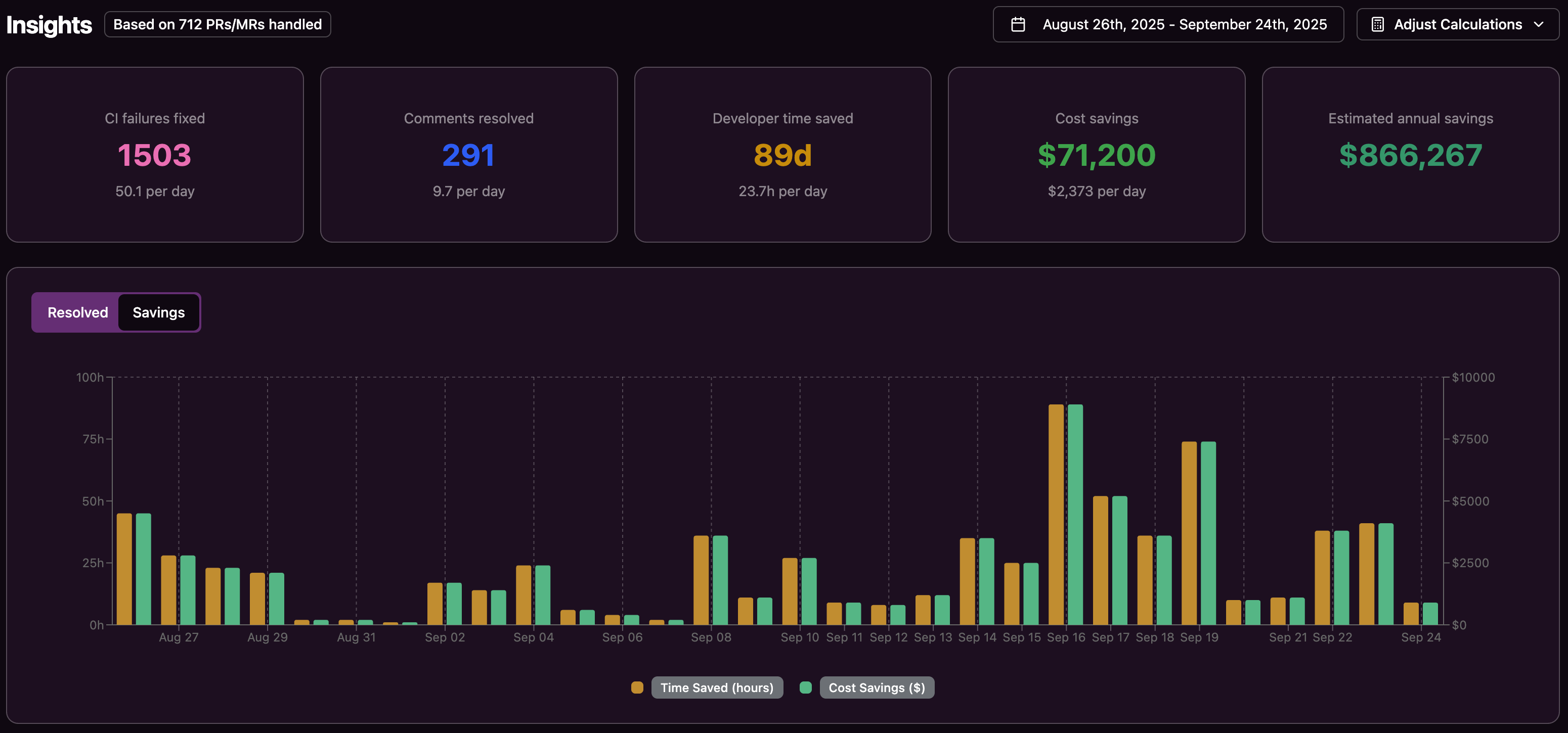
Stop dealing with CI/CD failures manually. See how Gitar fixes them automatically with a demo today.