
Key Takeaways
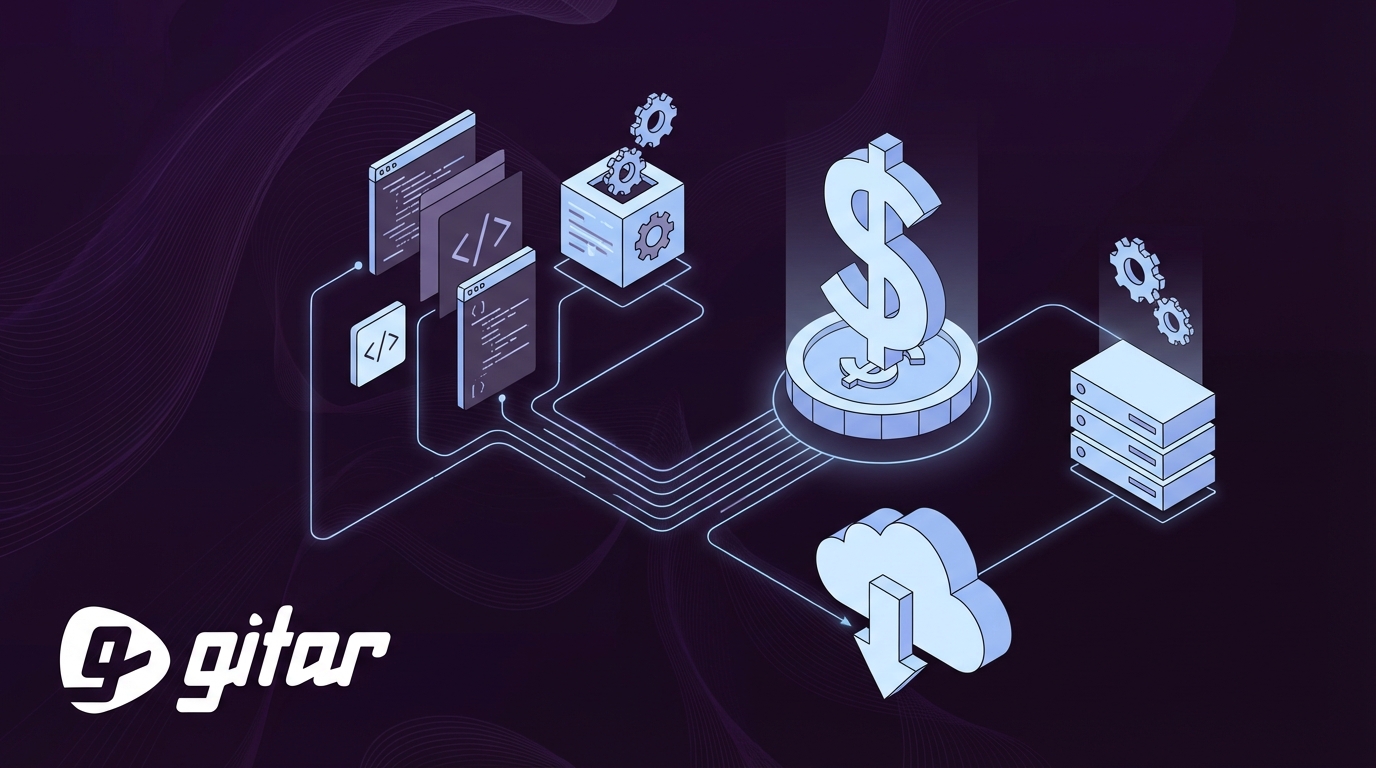
- Manual CI/CD and pull request workflows often consume hundreds of developer hours per year, creating significant but frequently unseen budget impact.
- PR automation tools reduce CI failures, shorten review cycles, and cut redundant compute usage, which together create measurable savings in both labor and cloud spend.
- Autonomous AI tools that implement and validate fixes, rather than just suggesting them, provide the strongest gains in productivity and time-to-market.
- A structured rollout that measures current waste, pilots automation on high-failure projects, and gradually increases autonomy helps teams build trust and capture ROI.
- Gitar offers autonomous CI fixes, review assistance, and environment-aware remediation to reduce CI/CD waste; teams can get started at gitar.ai/fix.
The Hidden Costs of Manual Pull Request Processes
Manual CI/CD workflows create financial drag well beyond visible infrastructure bills. The true cost includes lost developer time, slower releases, and ongoing maintenance of brittle pipelines.
Developers can spend up to 30% of their time on CI failures and PR rework instead of shipping features. For a 20-developer team at a loaded rate of $200 per hour, just 1 hour per day spent on CI and review noise reaches about $1 million per year in lost productivity.
These losses increase when teams factor in context switching. Each interruption to fix a failing build or address minor review comments breaks focus, adds recovery time, and delays completion of deep work.
DIY CI/CD solutions add another layer of cost. Teams must debug fragile pipelines, upgrade dependencies, and keep custom scripts aligned with changing tools and environments. That effort often displaces roadmap work and grows into long-term technical debt.
Slow pipelines and long PR queues also create opportunity costs. When features slip because builds remain red or reviews stall, organizations delay revenue and give competitors more time to respond.
Teams that remove these manual bottlenecks can reclaim budget, reduce delay risk, and redirect engineering capacity to higher-value projects.
How PR Automation Tools Drive Quantifiable Cost Savings
PR automation tools reduce waste at several stages of the CI/CD lifecycle. Savings typically appear first in recovered developer hours, then in lower compute usage and faster feature delivery.
Developer Productivity Gains and Budget Impact
Automation that fixes CI failures and applies review feedback turns recurring chores into background tasks. A simple model for potential savings multiplies developers, hours saved per day, and loaded hourly cost to estimate yearly impact.
For example, if each developer recovers just 15 minutes per day, a 20-person team at $200 per hour frees roughly $250,000 of annual capacity. Larger time savings or larger teams increase that number quickly.
Gitar helps protect flow by handling common failure modes and low-level review changes directly in the PR, so developers can spend more time on design and feature work.
CI/CD Infrastructure and Cloud Cost Reductions
Every failed or retried pipeline run consumes compute, storage, and sometimes paid third-party services. A high rate of flaky tests, linter failures, or configuration errors can inflate bills without delivering any value.
Teams that stop errors earlier in the PR reduce retries and shorten pipeline durations. Automated fixes and smarter test targeting lower the number and length of runs required to achieve a green build.
Shorter and more reliable pipelines reduce pressure to maintain large, always-on staging environments. Well-scoped, on-demand environments for PRs can often replace heavier shared infrastructure when automation manages setup and teardown.
Faster Time-to-Market and Strategic Benefits
Shorter PR cycle times enable more releases per quarter and faster response to customer needs. Automation that clears CI failures overnight or while reviewers are offline prevents queues from forming.
When teams merge clean PRs sooner, they deliver features, fixes, and experiments earlier. That improvement supports revenue growth, better customer experience, and faster learning loops.
Better Code Quality and Lower Technical Debt
Automated checks and fixes at the PR level catch many quality and security issues before they reach production. Consistent enforcement of standards reduces rework, incidents, and the volume of long-lived technical debt.
Automation also makes high standards easier to maintain as teams grow. Reviewers can focus on design and architecture while automated systems handle formatting, basic safety checks, and repetitive updates.
Gitar for Autonomous CI Fixes and Cost Control
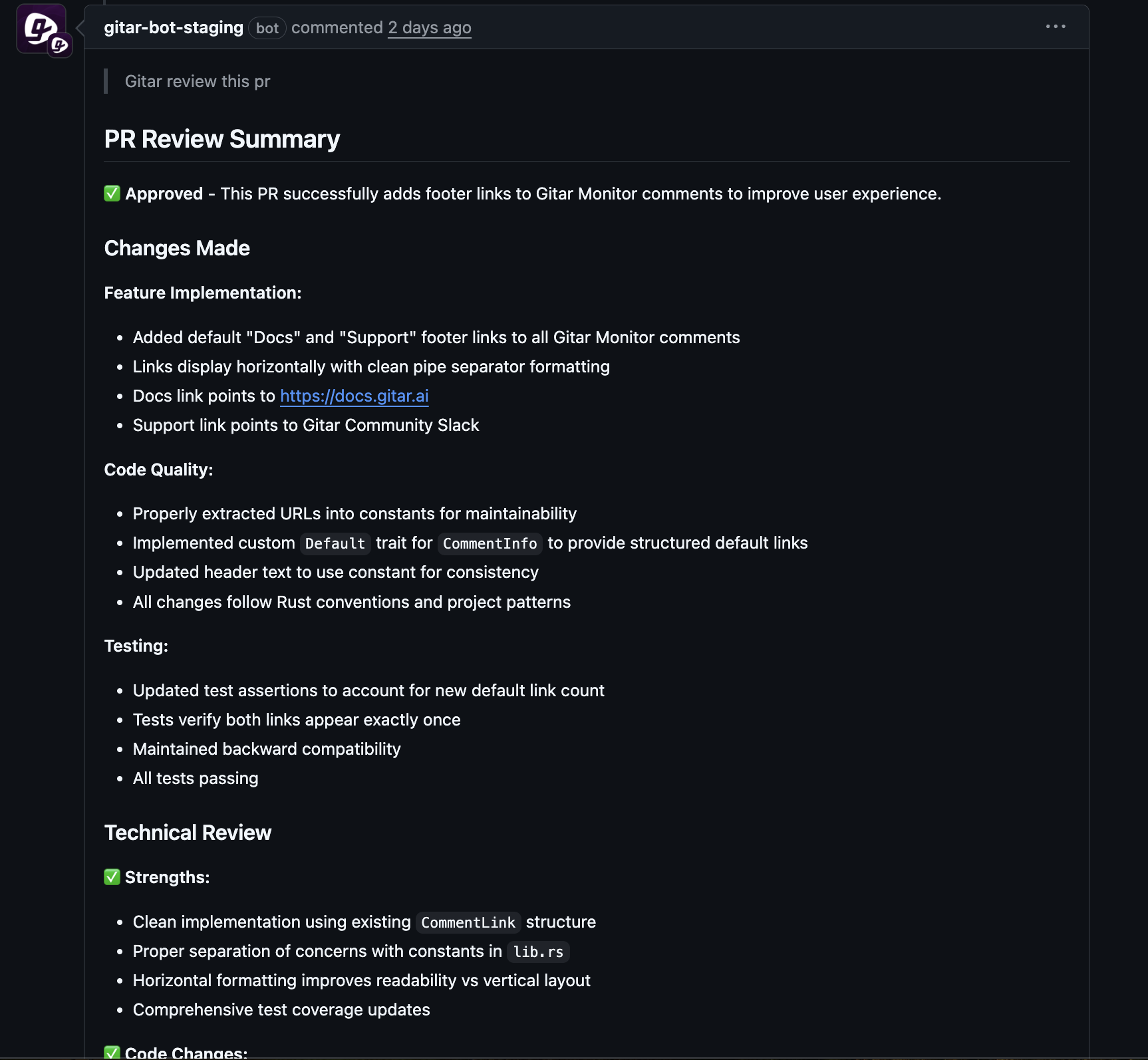
Gitar focuses on autonomous remediation rather than simple suggestions. The system applies fixes, re-runs relevant checks, and aims to return PRs to a green state with minimal human effort.
Key capabilities that support cost reduction include:
- End-to-end fixing: Resolves CI failures and implements review feedback directly in the branch, reducing manual edits and follow-up commits.
- Full environment replication: Mirrors enterprise setups with specific SDKs, dependencies, and security scanners so fixes work in the same conditions as production pipelines.
- Configurable trust model: Let teams start in suggest-only mode, then progress to auto-commit workflows with rollback options as confidence grows.
- Intelligent review assistance: Acts on reviewer comments, handles time-zone gaps, and keeps PRs moving even when human reviewers are unavailable.
- Cross-platform coverage: Integrates with platforms such as GitHub Actions, GitLab CI, CircleCI, and Buildkite to align with existing workflows.
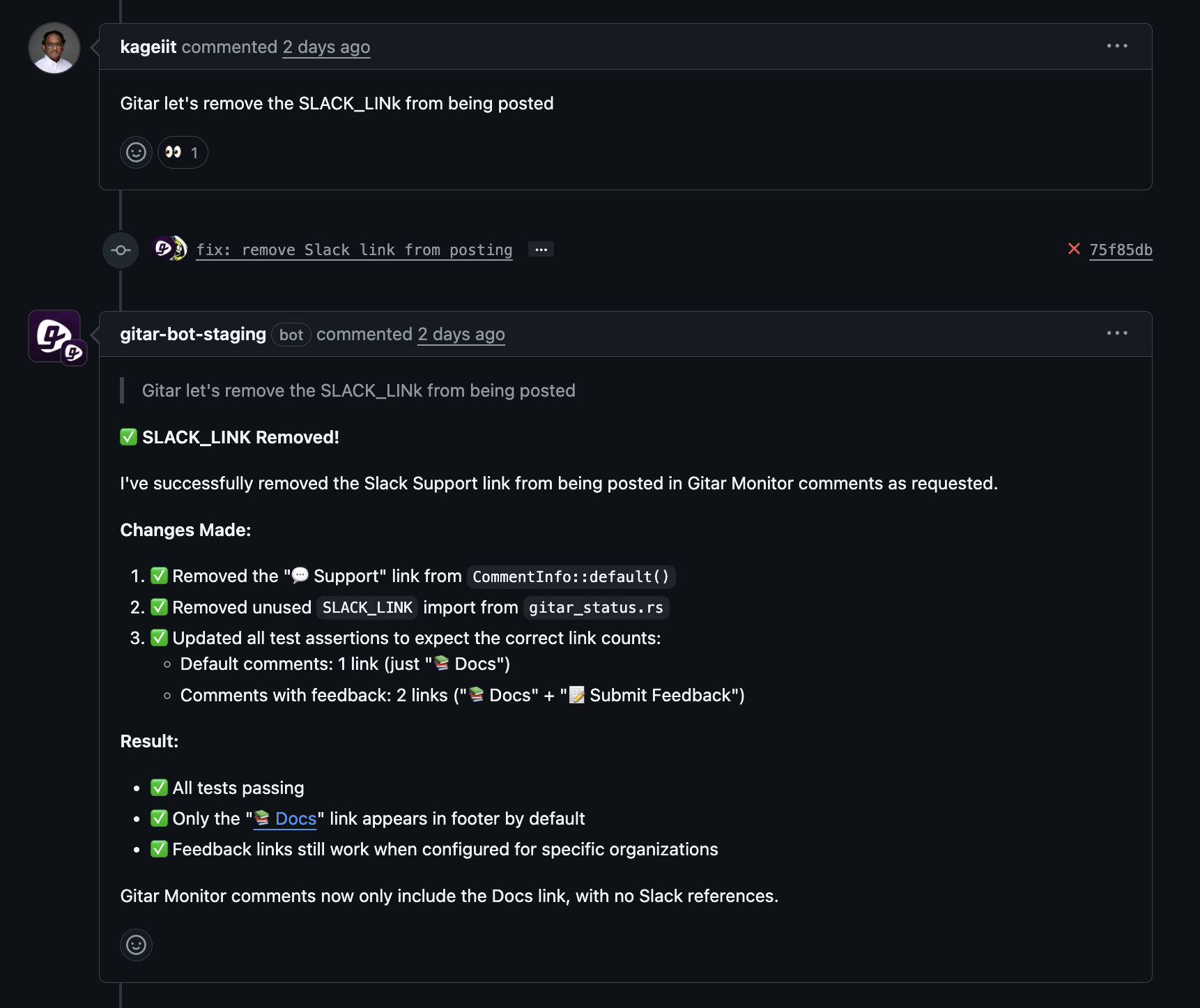
Teams that want to see these capabilities in action can start with a focused rollout at gitar.ai/fix.
Comparing PR Automation Approaches
Different automation strategies create different cost and productivity profiles. The table below summarizes typical tradeoffs.
|
Approach |
Implementation cost |
Developer productivity impact |
Cost savings potential |
|
Manual workflows |
High (hidden time costs) |
Negative (frequent context switching) |
Low |
|
DIY CI/CD solutions |
High (build and maintenance effort) |
Mixed (fragile, operational delays) |
Low to medium |
|
AI suggestion engines |
Low (subscription) |
Moderate (manual implementation required) |
Medium |
|
Autonomous AI fixes |
Low (subscription) |
High (removes manual work) |
High |
DIY pipelines can feel flexible at first, but often accumulate maintenance burdens. Autonomous systems like Gitar seek to minimize that operational load by handling both analysis and implementation.
Strategies to Implement PR Automation for Maximum Savings
Measure Current CI/CD Waste
Effective adoption starts with a baseline. Teams can:
- Track the average time to resolve CI failures per developer.
- Measure failures per developer per week and associated compute cost.
- Monitor PR cycle time from open to merge.
- Estimate opportunity cost from delayed releases for key initiatives.
This analysis highlights where automation will deliver the largest gains.
Roll Out Autonomy in Phases
Many teams begin with suggestion-only mode on a limited set of repositories that have frequent CI issues. After verifying fix quality and reviewing rollback behavior, they expand to auto-commit for low-risk changes such as linting, test repairs, or documentation updates.
Clear communication about which changes the system can make and how humans remain in control reduces hesitation and improves adoption.
Embed Cost Awareness in PR Workflows
Workflows that expose CI costs and failure patterns at the PR level help engineers make more efficient decisions. Teams can pair automation with guidelines on pipeline usage, test scope, and environment expectations.
Organizations that treat CI time and compute as shared, visible resources often see faster improvements in both speed and spend.
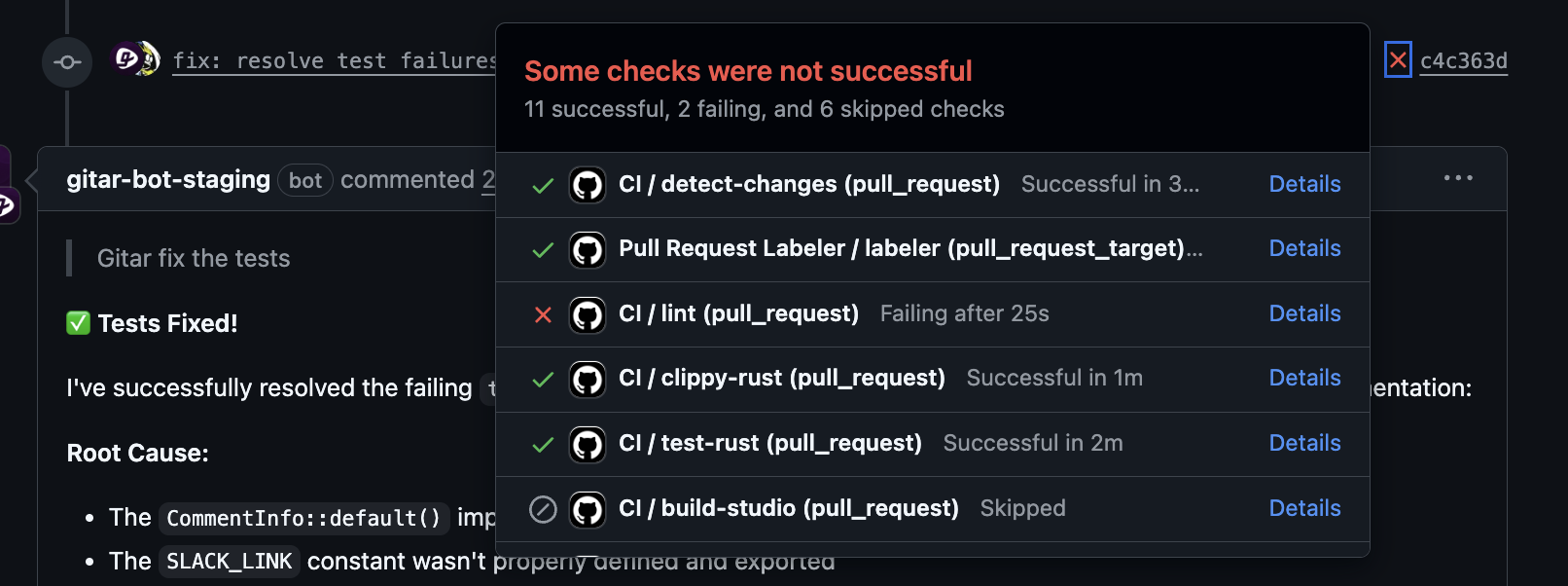
Teams can then reinforce these practices with tools like Gitar that automatically resolve many of the issues that still slip through.
Frequently Asked Questions About PR Automation Cost Savings
What is the typical ROI for PR Automation Tools Like Gitar?
A team of 20 developers spending 1 hour per day on CI and reviewing issues can lose around $1 million per year in productive capacity at a $200 loaded hourly rate. Capturing even half of that waste as reclaimed time delivers a strong return relative to typical automation subscription costs.
What is the impact of Gitar on CI Runner and Cloud Costs?
Gitar reduces repeated failed runs by diagnosing and fixing issues before developers retry pipelines. Fewer retries and shorter runs decrease runner minutes, third-party tool invocations, and overall cloud usage tied to CI.
What is the support for Complex Enterprise CI Environments?
Gitar recreates full enterprise workflows, including specific JDK or SDK versions, multi-language projects, and scanners such as SonarQube or Snyk. That replication increases the likelihood that fixes pass in the same pipelines used for production, which lowers noise and rework.
Conclusion: Protect Your Engineering Budget with PR Automation
PR automation in 2026 offers a direct path to lower CI/CD waste, higher developer productivity, and more predictable delivery. Manual pipelines and review processes now represent a clear source of avoidable cost.
Gitar provides autonomous CI fixes, review assistance, and environment-aware remediation to help teams reduce this waste and redeploy time toward roadmap work. Teams that want to evaluate the impact on their own pipelines can start today at gitar.ai/fix.